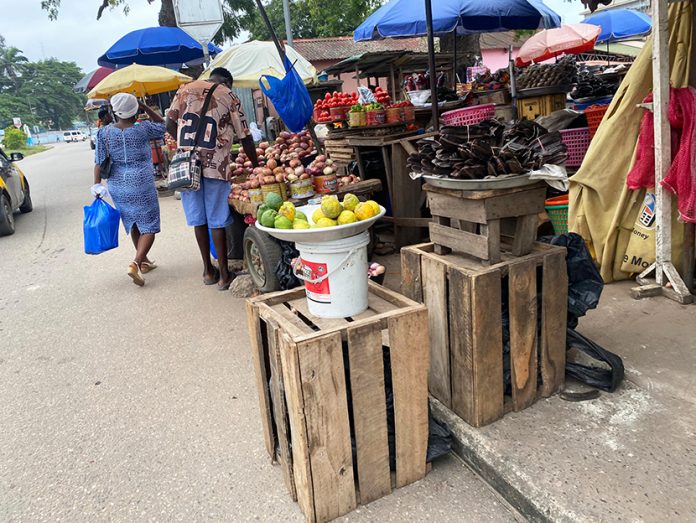
Prices of vegetables and other consumables have experienced a significant rise in the Takoradi Central market. The Ghana News Agency (GNA) observed during a market survey that prices of some vegetables and plantain among others, had shot up within the past months.
Madam Esi Mansa, an onion seller, in an interview with the GNA said the producer price of onions had increased, thereby affecting its sales on the market.
She explained that a sack of onion is now going for GHC1,300 and GHC1,500- with a plastic bowl-size selling at GHC150 and GHC200 instead of GHC100.
“Initially, one could get about 10 to 13 pieces of medium-sized bulb of onion for GHC10, but now hardly would you get that same number going for the same price,” she lamented.
Madam Marian Mensah, a vegetable seller, also shared the same sentiment noting that some of the prices of food commodities were based on their availability, due to the weather condition, saying “When the weather does not favour planting and harvesting it could affect the price.”
She noted that a sack of green bell pepper was going for GHC1,200 instead of GHC800 with other vegetables like okro and garden eggs, also experiencing a hike in price.
Meanwhile, Madam Grace Obeng, a tomato seller, disclosed that the price of tomatoes was stable saying; “We are in the tomatoes season, so it is relatively cheaper and affordable on the market.”
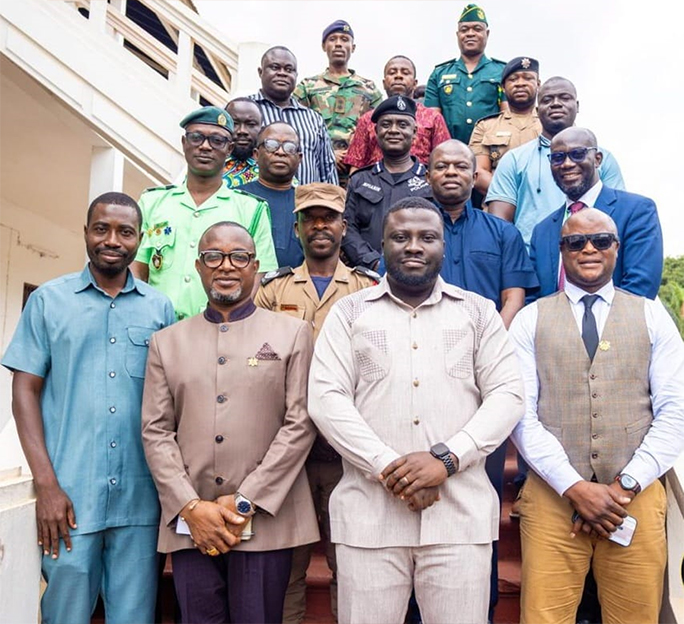
Members of the Committee and stakeholders pose with the Minister after the inauguration
The Ashanti Regional Minister, Dr Frank Amoakohene, has inaugurated a Regional Disaster Management Committee to enhance disaster risk reduction and management in the region.
The Regional Disaster Management Committee comes as the Ashanti Regional Minister’s commitment to enhancing disaster management in the region.
It is expected to impact on reducing the risk and impact of disasters, promote a safer and more resilient community for the people of the Ashanti region.
The committee is tasked with developing policies for disaster prevention, mitigation and response in line with Ghana’s disaster management framework under the National Disaster Management Organisation Act, 2016 (Act 927).
The multifaceted objectives of the Committee include developing regional disaster preparedness and response plans, coordinating with district and national bodies, conducting risk assessments, and identifying vulnerable communities.
It will also mobilise and distribute relief resources and promote public education and community resilience.
The inauguration ceremony was attended by key stakeholders, including the Regional Coordinating Director and representatives from security agencies and NADMO.
Dr. Amoakohene stressed on the importance of collaboration in addressing disaster risk reduction and management and the need for collective efforts to mitigate the impact of disasters in the region.
Meanwhile, the Ashanti Regional National Disaster Management Organisation (NADMO) has intensified flood prevention efforts in preparation for the rainy season.
The interventions include desilting and draining choked streams and gutters, public education campaigns, community sensitization programs, and collaboration with assembly members, sub-metros, and traditional leaders to sustain environmental sanitation.
Nana AgyeiKokooTakyifiriBeyeeman I - Paramount Chief of Tuobodom Traditional area
The Municipal Chief Executive for Techiman North, JohnsonAdom has paid a courtesy call on the Omanhene of Tuobodom Traditional area, Nana Agyei Kokoo Takyifri Beyeeman I and the Tuobodom Traditional Council to discuss development of the Municipality
The visit formed part of his familiarization tour of the Municipality on assumption of office as the new MCE.
The MCE thanked the paramount Chief and the Traditional Council for supporting him when he was nominated by President John Dramani Mahama to head the municipality.
The MCE assured the Chief and his elders that he would collaborate with them, as custodians of the land to develop Techiman North.
Hon. Johnson K. Adom – MCE Techiman North
He appealed to the chiefs to support government policies and programmes towards general development of the Techiman North Municipality.
The MCE called for Peace and unity among them to enhance the developmental agenda under his open door administration policy. He also assured that he would be at their service around the clock.
Nana Agyei Kokoo Takyifiri Beyeewoman I, the Paramount Chief of Tuobodom Traditional area thanked the MCE for the proposed Municipal Assembly and Traditional Council collaboration for the transformation of Tuobodom.
The Paramount Chief drew the attention of MCE to the lack of accessible roads linking Tuobodom and other parts of the area.
He noted that an improved road network would boost farming activities in the Municipality, which is noted for tomato cultivation.
The paramount chief also reminded the MCE on the need to complete the Agenda 111 hospital to serve the people in the Municipality and suggested the establishment of an Agricultural institute at Tuobodom to take care of the youth in agriculture.
He suggested that security personnel in the area be augmented to strengthen general Security to protect lives and property and further called for the extension of electricity supply to parts of the capital town.
Nana Beyeeman promised the MCE that the Traditional Council was ready to release lands for development projects in the area.
Abebrese (right) and Wandusim (2nd right) and a staff of the department at the field demonstration
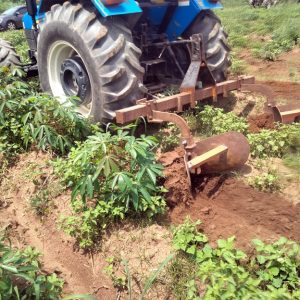
Two Graduate Students of the Department of Agricultural and Biosystems Engineering of the Kwame Nkrumah University of Science and Technology (KNUST) have separately designed and developed a Double-Row Disc Ridger and a Moldboard plough (Ridger) to ease the burden associated with root crops production, especially cassava, by farmers.
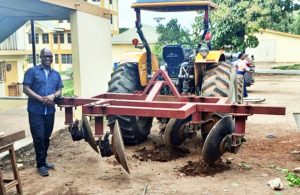
The double-row disc ridger
The Double-Row Disc and the Moldboard plough Ridgers are capable of eliminating the most difficult stages that local farmers have to go through in the cultivation and harvesting of cassava (Manihotesculenta), which is a leading staple crop in many parts of the world, particularly in the Tropics.
Mr David Amidu Wandusim, a PhD student in Agricultural Machinery Engineering designed and developed the performance evaluation of a Double-Row Disc ridger, while Mr. Kwabena AgyemanA bebrese, a Master of Philosophy (MPhil) Agricultural Machinery Engineering student of the same department also worked and developed the Mouldboard Plough or ridger.
During a field demonstration at the KNUST Agricultural Station, near Anwomaso recently, Mr.Wandusim explained to The Chronicle that the introduction of cassava mechanical harvesters has brought a breakthrough in root and tuber crops production, as it has largely reduced drudgery associated with manual harvesting, especially with a potential increase in global cassava production.
Abebrese and Wandusim and other students during the field demonstration
Ridging, he explained, is a mechanised alternative to mounding and flat-land forms and can be done manually, but practical evidence suggests that manual ridging is expensive, laborious, time-consuming and limits the scale of production, hence the need for the innovation to be able to develop seedbeds to accommodate root crops production and effective use of the cassava harvester.
Mr Wandusim said the development of the KNUST Double-Row Disc ridger is not an invention but fabricated from locally available materials and tools, which makes it adaptable, resilient and affordable technology to enhance mechanisation of root and tuber crop production for small-scale farmers in the country.
Manual labour, it is said, is inadequate in cassava growing areas due to rural-urban migration and is currently estimated to cost the farmer between GH¢500.00 to GH¢1,600.00 to weed an acre of a cassava field using manual labour and the ridger has been found through the demonstration, to be useful for weeding purposes.
He also explained that unlike the existing Disc ridgers, furrows produced by the KNUST Double-Row Disc ridger are wide enough to accommodate the track width of a standard wheel-tractor, which makes it possible for mechanical harvesting of root and tuber crops and also enhance efficiency.
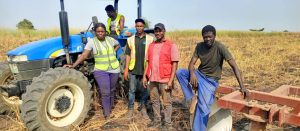
A Cassava harvester at work at the field demonstration
Mr. Kwabena Agyeman Abebrese, who developed the Mouldboard Plough (ridger) explained that the plough was not originally designed at the KNUST, but the department is redeveloping it to see if it can help the local farmers to use it in weeding their farms and also to experiment the possibility of using it for other purposes like ridging, so that it could become an all round machinery for the entire process of production and also encourage those who intend to go into large scale cassava production.
He said the Mouldboard Ridger was initially designed for ridging land for planting cassava, but he was developing and testing the same ridger’s ability to weed in the furrows of the ridges, as weeding is a problematic part of cassava production process and very costly to the farmer.
Mr.Abebrese stressed that Africa was below the minimum production because “we are still using manual methods to control most of the agricultural processes” and it was high time Ghana looked at implementing a full mechanisation system to “cut out human labour and use mechanised method to run the whole value chain”.
This, according to him, could help farmers to make profit and also get enough to export and earn foreign exchange for the country, emphasising that mechanisation is the most important aspect of agriculture now.
Prof. Emmanuel Yaovi Hunnuor Bobobee, Associate Professor in Agricultural Mechanisation of the Agricultural Machinery Engineering department of the Kwame Nkrumah University of Science and Technology (KNUST), who designed and owns the patent for the Tek Mechanical Cassava Harvester and supervising the students, disclosed that the department is designing and developing several mechanised methods of cassava production process.
This includes cutting the stakes mechanically for propagation and topping, which involves cutting the stems near the base of the plant to facilitate harvesting of the tubers.
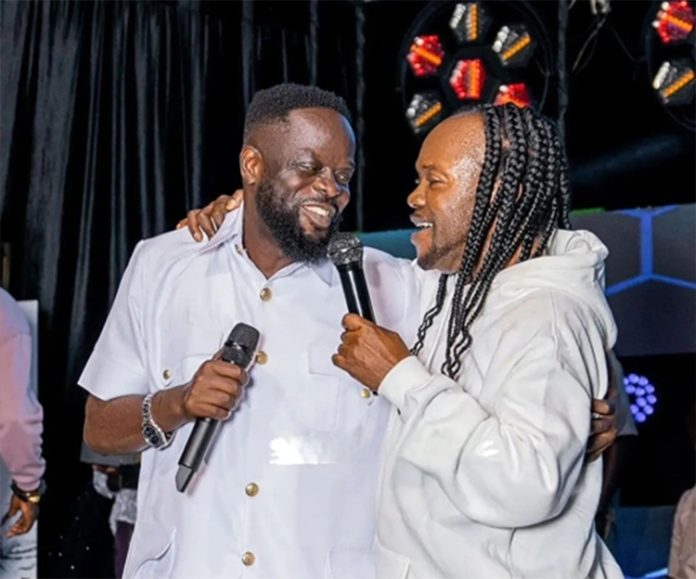
Ghanaian comedian and actor Funny Face has finally reunited with his ex-wife, Vanessa, and agreed to co-parent their three children together.
A video posted on August 2, 2025, shows Funny Face hugging Vanessa and grinning during a meeting where they ultimately decided to co-parent.
In a post shared on Instagram on August 3, Funny Face thanked Vanessa, Kwaku Manu, the Mystic Twins, and a few others for their love and support.
“Thank you Vanessa for the opportunity to co-parent!! God bless Kwaku Manu, Mama Vida, Mystic Twins, Mama Mavis, Ohene and Jah Wisdom… I truly appreciate you all too for your support and prayers,” he posted.
He further apologised to those he had offended, asking for forgiveness.
“Massive apologies to anyone offended. Please find a place in your beautiful hearts to forgive me,” he added.
Their reconciliation has been admired by many fans. This development finally comes after Funny Face’s years of turbulent battles with mental health.
Over the years, the pair had experienced several reconciliations and online banters.
However, many people are hoping that the couple can permanently recover as a result of this recent development.
The 44-year-old said he was “shocked” to receive the diagnosis but it explained why he “would be on stage and in a massive amount of nerve pain or, just feeling crazy fatigue or sickness”.
The Cry Me A River singer shared his diagnosis on Instagram following the conclusion of his Forget Tomorrow world tour.
Lyme disease is a bacterial infection that can be spread to humans by infected ticks. A few people diagnosed and treated for the disease can continue to have symptoms, like tiredness, aches and loss of energy, that can last for years.
Timberlake said he was faced with the decision to stop his tour early but ultimately decided to keep going.
Writing on Instagram on Thursday, he said: “As many of you know, I’m a pretty private person. But as I’m reflecting on the tour and festival tour – I want to tell you a little bit about what’s going on with me.
“Among other things, I’ve been battling some health issues, and was diagnosed with Lyme disease – which I don’t say so you feel bad for me – but to shed some light on what I’ve been up against behind the scenes.
“If you’ve experienced this disease or know someone who has – then you’re aware: living with this can be relentlessly debilitating, both mentally and physically.”
According to America’s Centers for Disease and Control and Prevention (CDC), patients treated with antibiotics in the early stages of the infection usually recover quickly and completely.
It adds most patients treated in later stages respond well to antibiotics, but some may have suffered long-term damage to the nervous system or joints.
Justin Bieber, Shania Twain and Avril Lavigne are among other singers to have struggled with Lyme disease.
Zilla and husband, Reggie Rockstone at the Accra Tourist Information Centre during the inferno
Hiplife legend and Entrepreneur, Reggie Rockstone has provided an emotional update following the fire that ravaged the Accra Tourist Information Centre, the location of his popular eatery, RockzWaakye.
The blaze broke out in the early hours of Monday, August 4, at around 1:00 a.m., with eyewitnesses suspecting it may have originated from the kitchen area of RockzWaakye. However, the Ghana National Fire Service (GNFS) is yet to confirm the exact cause. Fortunately, no injuries or fatalities have been reported.
In a heartfelt video message, Reggie addressed the incident directly:
“I know by now you’ve already heard the news; it’s everywhere. But we felt it necessary to officially let you know what happened and what’s currently happening.”
He expressed gratitude for the overwhelming love and support received from fans and well-wishers
Despite the extent of the damage, he stressed the importance of life over property:
“Yes, there has been a fire, a pretty devastating one. But the good news is, no human being was harmed. Amen. Material stuff we don’t take with us when we check out, so we give thanks.”
Rockstone acknowledged the efforts of the Ghana Fire Service, despite public criticism due to the station’s close proximity to the scene:
The fire at the Accra Tourist Information Centre occurred just hours after another blaze at Madina Ritz Junction destroyed over 50 wooden and metal structures, displacing dozens of residents. That fire reportedly began at a washing bay.
There were a lot of prank calls – especially from Madina. That’s terrible and so wrong. But again, thank you to everyone who has shown love. RockzWaakye is still here. We will carry on. We’ll be back soon, we don’t know exactly when, but we will.
Highlife musician Ofori Amponsah has delivered a heartfelt tribute to the late music legend Charles Kwadwo Fosu, affectionately known as Daddy Lumba, describing the iconic singer as more than a mentor — a father figure whose impact shaped his life and career.
Speaking during a condolence visit to the late artist’s residence, Ofori Amponsah struggled to hold back his emotions as he reflected on the six-year bond they shared.
“I don’t have much to say. Of course, I had my biological father, but Daddy Lumba was someone who equally played the fatherly role, mentored me. I didn’t deserve this, but when he realised the gift and grace upon my life, he took me in and mentored me,” he said.
Ofori recounted the early days of their friendship, revealing the confidence Daddy Lumba had in him from their very first meeting. “For six years of friendship and mentorship, he walked me through life, the industry, and everything I needed to know. I remember the first time we met, he told me I had unique grace and I would be just like him. I’m even short of words,” he recalled.
Struggling to come to terms with the reality of the loss, the Highlife star added, “Sometimes I feel his death is not true, but it’s God who gave him to us, and He has taken him too at the time He feels is right.”
The music industry has been mourning the passing of Daddy Lumba, a legend whose influence has transcended generations.
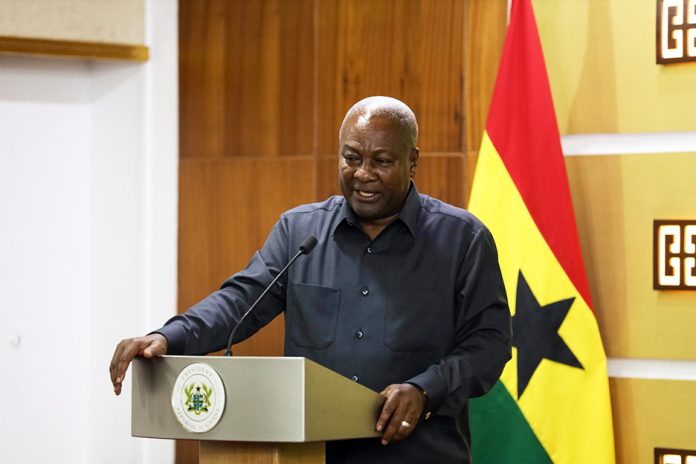
Ghana will host a landmark Africa Health Sovereignty Summit in Accra on Tuesday, August 5, 2025, under the leadership of President John Dramani Mahama.
The summit will bring together African Heads of State, policymakers, and global health stakeholders in a bold effort to reimagine global health governance and assert Africa’s leadership in shaping its health future.
The summit, themed “The Accra Initiative: African Health Sovereignty in a Reimagined Global Health Governance Architecture,” aims to spark a new era where African nations lead the charge in building resilient, equitable, and self-sustaining health systems.
According to a statement signed by Felix Kwakye Ofosu, Spokesperson to the President and Minister for Government Communications, the summit is being convened to respond to the urgent need for health governance reforms that reflect current geopolitical, economic, and demographic realities.
He further stated that although the world has witnessed significant progress in global health with child mortality halved since 1990, maternal deaths reduced by over 40% since 2000, and HIV/AIDS deaths halved since 2010 these gains are under serious threat.
Shifting global power dynamics, weakening multilateralism, declining donor funding, and the rise of new health challenges have revealed deep structural flaws in the current global health system.
“The current global health governance framework designed in a different era no longer adequately reflects today’s political, economic, or demographic realities,” the statement read. It emphasised that African countries must take greater responsibility for their health governance and financing while advocating for global reforms that are more inclusive and representative.
As part of the outcomes of the summit, delegates will formally endorse The Accra Initiative, an ambitious and action-driven roadmap that lays out principles and benchmarks for overhauling global health governance in alignment with national priorities.
Among the key deliverables are:
The creation of a Presidential High-Level Panel to develop a reform agenda for global health governance.
The launch of the SUSTAIN Initiative, a new drive to promote country-led and investment-driven health systems using domestic resources, private sector involvement, and philanthropic partnerships.
A commitment to core values such as inclusivity, leadership, accountability, resilience, and sustainable funding.
The endorsement of the Accra Compact, which outlines Africa’s shared vision for health sovereignty and a more equitable global health order.
The statement further noted that this effort builds on the work of leaders like President Paul Kagame of Rwanda and institutions of the African Union that have long advocated for better continental health coordination and financing.
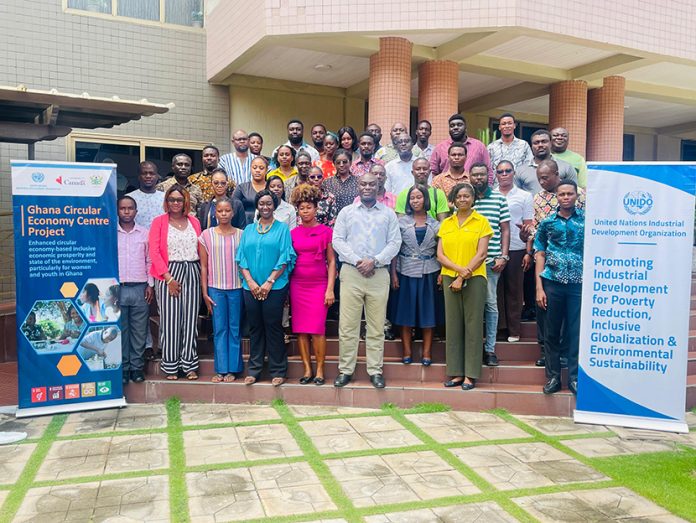
A group picture of participants at the Circular Economy workshop
UNIDO has validated the gender and youth strategies and plans of the Ghana Circular Economy Centre (GCEC) project at a workshop held in Takoradi.
The event sought to strengthen efforts to position women and youth as the key beneficiaries of Ghana’s transition to a circular economy.
The workshop convened stakeholders, including representatives from Metropolitan, Municipal, and District Assemblies (MMDAs) in the Western and Central regions to review and confirm strategies that embed gender equality and youth inclusion across all project interventions.
Implemented by UNIDO in collaboration with the Ministry of Environment, Science and Technology (MEST) and funded by Global Affairs Canada, the GCEC project prioritizes women and youth as key beneficiaries. It aims to harness their potentials for innovation, entrepreneurship, and skills development across its focus value chains, which are plastics, agriculture and agro-processing, and textiles.
Providing an overview of the project, Joseph Yeboah, the Strategic Partnerships and Engagements Lead of GCEC project, said the $5.3 million intervention is designed to drive Ghana’s shift from a linear “take-make-dispose” model to a regenerative circular economy.
“Circular solutions hold strong potential to catalyze inclusive growth, unlock investments, and create jobs,” he said, adding that women and youth are strategically positioned to take centre stage of this transformation.
He mentioned that the project has established a centre of excellence to deliver training, technical assistance, and access to finance for small-scale entrepreneurs on circular economy principles and best practices.
“We are targeting outcomes such as training 2,000 women and youth entrepreneurs, validating 200 circular technologies and business models, and mobilizing at least $10 million in private capital to scale circular innovations,” Mr. Joseph Yeboah stated.
He further noted that the project’s goal is to enhance circular economy-based prosperity and improve environmental sustainability in Ghana.
“By focusing on women and youth while strengthening private sector and informal sector participation, we will build a robust ecosystem that supports inclusive and sustainable industrial development,” he added.
Eric Gyenin, UNIDO’s Country Project Coordinator, emphasized that placing women and youth at the centre of circular initiatives drives equitable economic transformation. He noted that the project aligns with UNIDO’s mandate to advance inclusive and sustainable industrial development in Ghana.
Participants endorsed the strategies and pledged to support local action plans that empower women and youth, create jobs, and promote circular economy practices in their communities.
The validation workshop marks a decisive step in embedding gender and youth priorities into Ghana’s circular economy agenda and building a more inclusive and sustainable future.

 “Initially, one could get about 10 to 13 pieces of medium-sized bulb of onion for GHC10, but now hardly would you get that same number going for the same price,” she lamented.