Home Blog Page 579

2 Arrested Over Ablekuma North By-Election Violence

0
Handcuff

The Ghana Police Service has arrested two individuals in connection with violent disturbances that marred the parliamentary re-run in the Ablekuma North constituency earlier this month.

According to a press release issued by the Accra Regional Public Affairs Unit and signed by Superintendent Juliana Obeng, Head of Public Affairs, the suspects — Musah Muntart, a 46-year-old Station Manager at STC, and Ali Saeed, popularly known as “Mboma,” a 43-year-old businessman — are currently in custody and assisting police with ongoing investigations.

Their arrests form part of broader efforts by the police to ensure accountability and uphold law and order following the violence that erupted during the re-election held on Friday, July 11, 2025.

“The Accra Regional Police Command assures the public of its commitment to ensuring that all persons responsible for acts of violence, intimidation, or misconduct during the elections are brought to justice,” the statement emphasized.

The police are also urging the public to cooperate by providing credible information that could assist investigations. Citizens can report tips through emergency numbers 18555 or 191.

The Ablekuma North by-election was called after the previous results were annulled by the Electoral Commission due to procedural irregularities.

While the re-run was largely peaceful, isolated clashes at certain polling centers drew widespread condemnation and calls for swift action.

Police Gun Down Robbers …At Cantonments In Accra

0
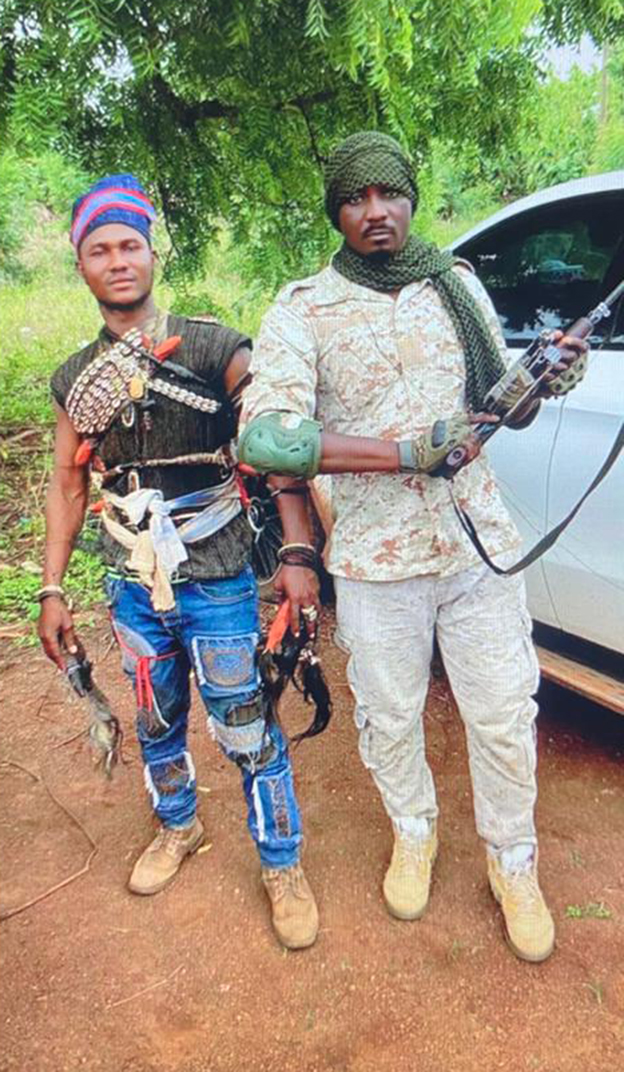
Deceased Abdulai Fatawu (R) with the group's fortifier (L) who managed to 'vanish' during the sporadic shooting

The Police Intelligence Department (PID) on Tuesday, July 15, 2025 thwarted a plot by a gang of armed men to rob an expatriate businessman at Cantonment, a first class residential area in Accra. At least, two of the elements were gunned down during a gun battle with the police.

One of the fallen gangsters, Abdulai Fatawu (R) and another, now at large, display their illegally possessed AK47 Assault Rifles and military camouflage dresses.

Information available to The Chronicle has it that on that fateful Tuesday, acting upon a tip-off that the gang members were planning the onslaught, the PID conducted surveillance on the suspects, who were lodged at a hotel at Labadi, a suburb of Accra.

The suspects, who reportedly travelled from Bimbilla in the Northern Region down south, to primarily embark on the mission to rob the said expatriate at about 20:00hours, mounted a get-away Toyota Yaris salon car and headed to their target area.

The police, based on their intelligence, trailed the gang to a point towards their objective.

However, the armed group, after noticing the surveillance opened rapid fire suspected to have emerged from an AK47 assault rifle, targeted the monitoring team, resulting in one Sergeant Samuel Acocha being struck in the left thigh and right armpit.

At this stage, it became apparent that the group was more sophisticated and deadly than envisaged, so a posture had to be adopted.

Police subsequently returned multiple fires and for minutes engaged the criminal elements in fierce gun battle.

When the dust settled, two of the miscreants fell, while three others, including their talisman bearer, managed to escape with their AK47 assault rifle and pistols they might have possessed illegally.

A search conducted on the two armed men led to the retrieval of two loaded pump action guns, quantity of live ammunition of various types, three iPhones, talismans for fortifications and four finger rings believed to contain their spiritual protection.

Wounded Sergeant Acocha and the two gun men were rushed to the Police Hospital, but the latter were medically declared dead upon arrival at the hospital.

The Policeman is presently responding to treatment as the bodies of the two gang members have been deposited at the mortuary, pending autopsy.

A highly placed source at the Police Headquarters, who pleaded anonymity, was full of praise for the Inspector General of Police (IGP), Mr Christian Tetteh Yohuno, and the Director General of PID, Mr Baba Atianik for the continuous motivation of the men.

That, with such morale booster at the peak, the personnel would always be swift in acting and coupled with bravery they are ready to prevent potentially deadly attacks.

The IGP, according to adeep throat source, has not relented on the declaration of war against criminal elements who, he says, better find jobs to do, for he would render their adopted profession unattractive.

In a related development, Inusa Musah reports from Ashaiman that the Kpone District Police Command, under the Tema Regional Police Command, has shot and killed three suspected armed robbers who attempted to burgle a warehouse at the Kpone Industrial Area.

Acting on a distress call of the attempted burglary by ten armed men on late Monday afternoon, equally armed police team from Kpone in the Kpone-Katamanso Municipality, arrived at the location, where both teams reportedly exchanged fire.

Three of the ten armed robbers were killed while a couple who sustained gunshot wounds managed to escape.

Some exhibits the police retrieved from the robbers included – Bruni mod foreign pistol, double-barrelled locally manufactured pistol with two rounds of ammunition and 11 live BB ammunition from the robbers.

The bodies of the three have been deposited at the Police Hospital Morgue for identification, preservation and autopsy while investigations are ongoing to arrest the remaining suspects.


NPP Minority Want To Present A Petition To Mahama

0
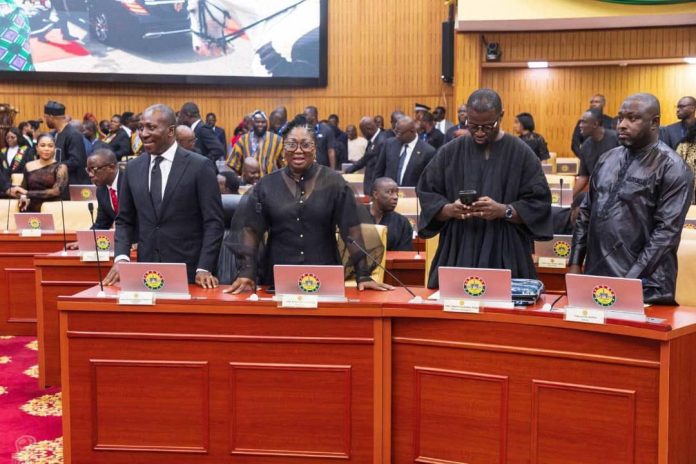
The minority leadership

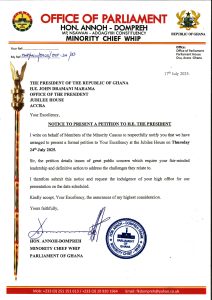
The Minority Caucus in Parliament has written to President John Dramani Mahama for an audience to present a formal petition on what they describe as “issues of great public concern.”

The letter, signed by Minority Chief Whip Frank Annoh-Dompreh, was delivered to the presidency on Thursday, July 17, 2025.

According to the Caucus, the petition will be formally presented at the Jubilee House on Thursday, 24th July 2025.

In the brief letter, the Minority underscored the urgency and importance of the issues they wish to raise, stating that they require “fair-minded leadership and definitive action” from the President.

“I write on behalf of Members of the Minority Caucus to respectfully notify you that we have arranged to present a formal petition to Your Excellency at the Jubilee House on Thursday, July 24,” the letter read.

It continued, “The petition details issues of great public concern which require your fair-minded leadership and definitive action to address the challenges they relate to.”

Mr Annoh-Dompreh concluded the correspondence by expressing confidence in the President’s responsiveness, writing “Kindly accept, Your Excellency, the assurances of my highest consideration.”

MahamaCare Bill Approved, But Minority Oppose 20% Funding From NHIS

0
Frank Annoh-Dompreh

The Ghana Medical Trust Fund, also known as The MahamaCare, would be funded with a 20% cut from the National Health Insurance Fund (NHIF).

This is the only clear-cut source of funding for the policy, which was promised by the ruling National Democratic Congress (NDC) in the 2024 campaign.

However, the Minority in Parliament has vehemently opposed the decision by government to deplete the National Health Insurance Authority of 20% funding to run the MahamaCare.

They argue that the government must look for a different source of funding, instead of cutting the allocation of the already struggling NHIA.

CONSIDERATION

On Tuesday, July 22, 2025 Parliament went through the consideration stage of the bill, where each clause was mentioned, debated with amendments, and voted upon by voice.

The clause one establishes the fund, the clause two talks about the object of the bill and the clause three contains the source of funding for the MahamaCare.

The Member of Parliament for Effia, Isaac Boamah-Nyarko, speaking from the Minority side, raised concern about the 20% allocation and proposed an amendment for it to be reduced to 10%.

“Mr Speaker, I think the 20% is on the high side. Honourable members, there is a proposed amendment that the 20% should be 10%,” he said.

The MP for Asante Akim Central, Kwame Anyimadu-Antwi, argued that the bill had the 20% allocation from the NHIF as the substantive source of funding; thus, reducing it would be synonymous with collapsing it.

He, however, shared in the concern that the 20% may be high, proposing that it should be up to 20%, not emphatically 20% of the total monies allocated to the NHIF.The chairman of the Finance Committee, Isaac Adongo, opposed the tweaking of the 20%, arguing that the bill had a fiscal impact, containing resources to make the bill implementable.

“So if you decide to vary the source of funding, what you are effectively saying is that they should go back and recalibrate the fiscal impact,” he added.

The chairman of the Health Committee, Mark Nawaane Kurt, argued that the 20% funds were not enough, citing that the country currently has about a 40-45% disease burden and a mortality rate around 40-45%.

NOTHING WRONG

The Minister for Health, Kwabena Mintah Akandoh, saw “nothing wrong” with the 20% fund cut from NHIF to feed the MahamaCare.

“And so with respect, I think there is absolutely nothing wrong with the rendition assistance now. If you are not very careful and you get a finance minister who will allocate 1%, if you say up to, and 1% is allocated, he falls within the law,” he stated.

The MP for Manhyia South, Nana Agyei Baffour Awuah, indicated, based on the input by the minister, that financial impact analysis was important.

He argued that if the minister dreads it, a minister may use his discretion to allocate 1% instead of the 20%.

“Clearly, Mr Speaker, it is obvious that we are pursuing this bill with our eyes closed, Mr Speaker, in pursuing something that we don’t even know of.”

The MP for Tano North, Dr Gideon Boako, suggested that if the policy were to be funded by the NHIF, there would be no point in creating the MahamaCare.

The MP for Ofoase-Ayirebi, Kojo Oppong Nkrumah drew the House’s attention to the possible breach of Section 100 of the Public Financial Management (PFM) Act.

Section 100 of the PFM Act states that any legislation to be laid before Parliament, or proposal submitted for the approval of Parliament shall be accompanied by a fiscal impact analysis, stating the estimated effect on revenues and expenditures for the financial year in which the legislation or proposal is expected to come into effect.

He argued that the NHIA may have planned for its medium term with the allocation, but now 20% has to be depleted.

He further added that it was important also for Parliament to understand from the health insurance authorities how they would close that gap of 20% that would be taken out of their medium-term programme.

ABSTAIN

It appeared the majority side was bent on maintaining the rendition in the bill, making no sense of the minority arguments. The ranking member on the Health Committee, Dr Nana Ayew Afriyie, MP for Effiduase-Asokore, told the House that his side was opposed to clause 3 that cuts 20% of NHIF money to the MahamaCare.

He said, “Mr Speaker, with your guidance, the minority, as far as this provision is concerned, [clause] 3A, we (minority) abstain from it.”

The MahamaCare Fund seeks to provide financial assistance to individuals living with chronic diseases across the country. Meanwhile, Parliament passed the MahamaCare Act yesterday under certificate of urgency.

Families Of Murdered 44 Ghanaians Pray For Compensation

0
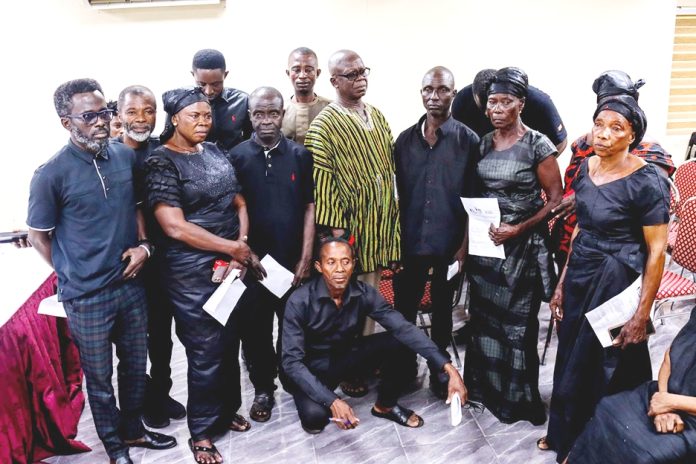
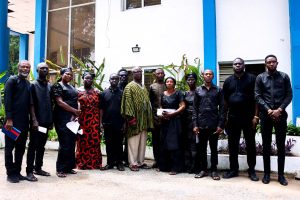
Group photo of the families of Gambia killings. Picture by Anna Liv Myklebust

Families of 44 Ghanaians brutally murdered in The Gambia twenty years ago and the lonely survivor of the brutish crime have renewed their calls for justice, accountability and compensation.

The victims, along with several other West African migrants, were allegedly executed in July 2005 under the regime of the former President of The Gambia, Yahya Jammeh, after being mistaken for mercenaries.

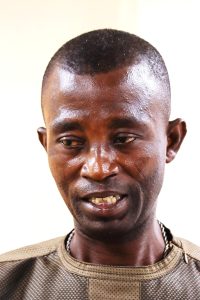
Eric Mana Owes Ansah, the only survivor of The Gambia killings. Picture by Anna Liv Myklebust

At a solemn press conference, attended by relatives of the deceased from the Asante, Bono, Ahafo and Western Regions, family members shed tears while recounting the pain and hardship the killings have brought upon them.

Speaking on behalf of the families, Mr.Oduro-Mensah Emmanuel Gershon delivered a moving address, emphasising the long-standing silence and inaction that has followed the tragedy.

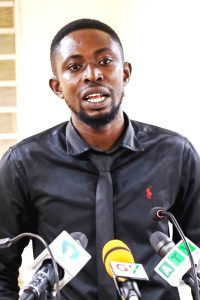
Ampadu Isaac, the son of one of the people killed in The Gambia. Picture by Anna Liv Myklebust

“Twenty years later, we come together to honour the memories of the victims, recognise the suffering of their families and demand justice and reparations for the harm caused,” Mr.Gershon said.

“It is unacceptable that after two decades, the families of the victims have not received the justice and compensation they rightfully deserve,” he added.

He expressed gratitude to President John Dramani Mahama for his efforts during his first official visit to The Gambia, where he pledged Ghana’s support for justice and hinted at the need for a compensation mechanism for victims.

However, the families say words are no longer enough. They are now urging President Mahama’s administration to take concrete actions to initiate a comprehensive and impartial investigation into the events of July 2005.

They are also looking for the prosecution of those responsible, particularly former President Yahya Jammeh.

Additionally, they are fighting to secure sufficient compensation as well as put in place measures to prevent such human rights violations in the future.

The families also appealed to the international community to treat the massacre as a crime against humanity and support calls for a transparent legal process and international accountability.

“The savage murder of defenseless migrants, who were only seeking better lives, shocked the conscience of the world. This was a crime not only against Ghanaians, but against all of humanity,” Mr.Gershon stated.

The 2005 massacre, which occurred under Jammeh’s authoritarian regime, led to international outcry but little tangible justice for the victims.

Reports later confirmed that the migrants, including the 44 Ghanaians, were mistakenly identified as coup plotters and were summarily executed. Families say the lack of justice has compounded their suffering.

Many of them continue to live in poverty, unable to find closure or support after the loss of their loved ones.

“We have travelled far from Ashanti, Brong, Ahafo and Western Regions to be here today. Our tears are not just for our lost relatives, but for the many years of injustice and neglect,” said one bereaved mother, fighting back tears.

Ghana’s ECOWAS Parliament delegation approved with last-minute changes

0
ECOWAS

Parliament has approved the composition of Ghana’s Economic Community of West African States (ECOWAS) Parliament delegation, with some last-minute amendments to ensure compliance with the 30 per cent female quota.

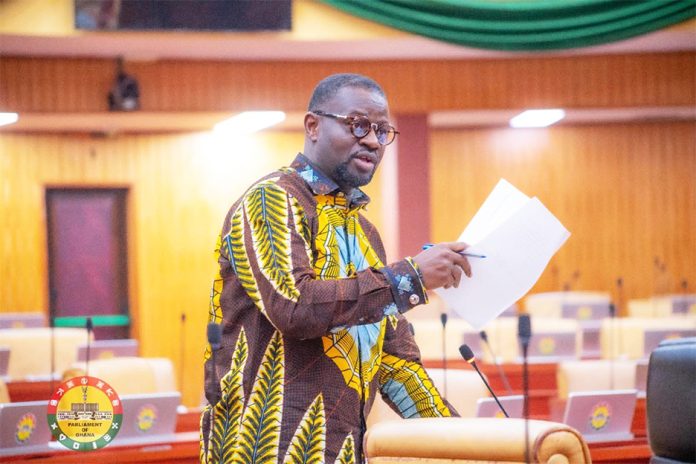
The approved list included Mr. George Ricketts-Hagan, a National Democratic Congress (NDC) Member of Parliament (MP) for Cape Coast South, as Leader.

The new members of the delegation are Mr. Emmanuel Kwasi Bedzrah, NDC MP for Ho West; Madam LaadiAyiiAyamba, NDC MP for Pusiga; Mr. Eric Afful, NDC MP for Amenfi West; Mr. Dominic Napare, NDC MP for Sene East; Madam Patricia Appiagyei, a New Patriotic Party (NPP) MP for Asokwa; Mr. Kwame Anyimadu-Antwi, NPP MP for Asante Akim Central and Mr. Bryan Acheampong, NPP MP for Abetifi.

Madam Millicent Yeboah Amankwah, a first-term NDC MP for Sunyani West, was proposed and accepted as an observer.

“The choice of Honourable Patricia Appiagyei was arrived at due to her designation as deputy minority leader,” Speaker Bagbin said on the Floor of the House on Tuesday.

The amendment, which was proposed by Mr. Mahama Ayariga, the Majority Leader, replaced Mr Alexander Afenyo-Markin, the Third Deputy Speaker of the ECOWAS Parliament, with Madam Patricia Appiagyei, ensuring the delegation met the required female representation quota.

Despite opposition from some members, the Speaker guided that the motion must be taken on the same day.

“Take the list back and resolve those lingering issues,” Mr. Dominic Nitiwul, NPP MP for Bimbilla urged.

The ECOWAS Parliament, also known as the Community Parliament, is one of the institutions of the ECOWAS.

It serves as the representative body of the people of the ECOWAS region and is composed of 115 representatives from the 15 member states.

Parliament’s role is to contribute to the effective implementation of ECOWAS’s objectives and policies, promote democracy, human rights and regional integration and inform and sensitise the population on integration issues.

The Parliament consists of 115 representatives from the 15 ECOWAS member states.

The member states include Benin, Burkina Faso, Cape Verde, Côte d’Ivoire, The Gambia, Ghana, Guinea, Guinea Bissau, Liberia, Mali, Niger, Nigeria, Senegal, Sierra Leone, and Togo.

Parliament aims to strengthen representative democracy, promote human rights and good governance, inform citizens about regional integration, and contribute to peace and security.

The ECOWAS Parliament was established under the Revised Treaty of 1993 and its Protocol, which was signed in 1994 and entered into force in 2002.

The Parliament has an Administrative Secretariat that includes the Office of the Speaker, the Office of the Secretary General and Directorates for Administration and Finance, and Parliamentary Affairs and Research.

Parliament has several standing committees that focus on various areas such as agriculture, health, infrastructure, and human rights.

The Parliament has been working towards enhancing its powers from an advisory role to a co-decision-making body.

GNA

Akyem Asuom chief calls for constitutional reform to extend Mahama’s presidency

0
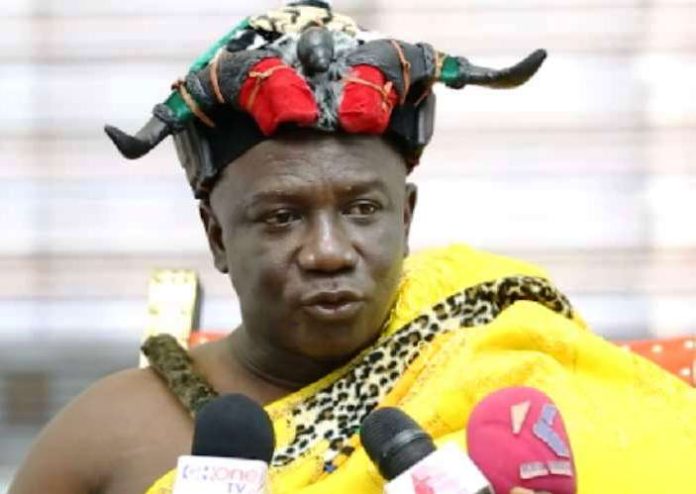
Nana Boadi Amponim Obodade III, Krontihene of Akyem Asuom

The Krontihene of Akyem Asuom, Nana Boadi Amponim Obodade III, has joined the growing chorus of voices calling for constitutional reforms that would allow President John Dramani Mahama to serve beyond Ghana’s current two-term presidential limit.

Speaking passionately at a press briefing, ahead of Mahama’s Thank-You tour in the Eastern Region recently, the traditional leader argued that exceptional leadership should not be constrained by what he called “arbitrary limits.”

Nana Boadi described Mahama as a “Good Samaritan” who had returned at a critical moment to “rescue” Ghana, drawing a powerful comparison to the country’s first president, Dr Kwame Nkrumah.

“In just six months, President Mahama has revived the economy, exposed corruption and restored national hope,” the chief declared.

He referenced recent exposés of alleged corruption scandals, including issues within the National Service Scheme and Public Procurement processes. “It was God’s timely intervention that brought him back,” he said.

The Krontihene extended heartfelt appreciation to former First Lady Lordina Mahama, praising her decision to support her husband’s political comeback.

“If I were her, I would have said – ‘You’ve been MP, Vice President, President, what more do you want?’ But she humbly allowed him to return and for that, we must thank her,” he added.

Nana Boadi voiced strong support for President Mahama’s “Big Push” development agenda, a proposed $10 billion infrastructure and job creation plan, describing it as a vision too important to be constrained by existing term limits.

“The man is doing a yeoman’s job, dependable, diligent, with wisdom and experience. Can such a leader be limited by time?” he asked.

He further disclosed that many traditional leaders and citizens he had engaged share his view, supporting a constitutional amendment that would allow continuity in governance for capable leaders.

The chief also singled out President Mahama’s Chief of Staff, Julius Debrah, for praise, calling him “a strong, respectful, hardworking and humble lion.”

He even proposed that Julius Debrah be considered as a potential running mate, should a constitutional referendum pave the way for President Mahama’s extended leadership.

On national security, Nana Boadi urged vigilance ahead of the upcoming by-election in Akwatia, warning of potential political tensions. He called on Ghana’s security services to remain alert and ensure peace.

He appealed to citizens and policymakers to reconsider the structure of Ghana’s democracy: “If we want continuous progress, we must rethink the structure of our democracy, not for personal gain, but for national prosperity.”

Editorial: President Mahama Should Not Listen To Sycophants

0
Editorial

It is an undeniable fact that the second coming of President John Dramani Mahama can simply be described as ‘so far, so good’. Unlike his previous tenure of office, the president seems to have learnt a lot of useful lessons, which is helping him to successfully steer the affairs of the state.

Though he has come under strong public criticisms for attempting to remove the Chief Justice, Gertrude Torkornoo, from office based on political grounds, a criticism The Chronicle fully endorses, no legal luminary has so far faulted the impeachment process. He is using the due process of the law to remove the CJ from office or otherwise.

Ghanaians will also agree with us that the national economy is gradually bouncing back. The real McCoy, we believe, is the stabilisation of the exchange rate of the cedi to the dollar. Indeed nobody, including The Chronicle, thought Mr Mahama can find an antidote to the cedi-dollar conundrum, but he has done it with precision.

For the first time in many years, traders have reduced prices of their goods and services because of the stability of the cedi against the dollar. The President has also managed to put what we will describe as ‘diplomatic fear’ in his appointees, hence no scandal has so far been recorded.

The ministers and the appointees are aware that any slightest mistake they make can affect their jobs. As a result, they are all careful not to involve in any financial scandal that will force the president to crack the whip. This is, indeed, good governance and The Chronicle applauds Mr Mahama for this great feat.

But notwithstanding all these good performances, The Chronicle is advising the President not to heed the calls coming from individuals that the constitution must be amended for him to contest and become president for a third term. Though Mr Mahama has overwhelming majority in parliament to successful execute this agenda if he wishes to do so, he should not try it, because it will soil his record.

According to a story we have published on page two of today’s edition of the paper, the Krontihene of Akyem Asuom, Nana Boadi Amponim Obodade III, has joined the growing chorus of voices calling for constitutional reforms that would allow President John Dramani Mahama to serve beyond Ghana’s current two-term presidential limit.

The traditional ruler, who was speaking to the media in the Eastern Region, argued that exceptional leadership should not be constrained by what he called “arbitrary limits.” Nana Boadi described President Mahama as a “Good Samaritan” who had returned at a critical moment to rescue Ghana, drawing a powerful comparison to the country’s first president, Dr Kwame Nkrumah.

“In just six months, President Mahama has revived the economy, exposed corruption and restored national hope,” the chief declared. Yes, we have already alluded to the fact that the economy is being revived, but that should not form the basis for the President to listen to some of these sycophantic calls to run for president for the third time.

We believe President Mahama, a staunch Christian, will be guided by the admonition in        1 Corinthians 6:12 which states, “I have the right to do anything you say – but not everything is beneficial. His government is flourishing today because there is absolute peace in the country. However, any attempt to amend the constitution to keep himself in power as other African leaders are doing, could spark violent agitations in the country, thereby destroying the very democracy he himself has toiled to nurture.

What he needs to do now is how to leave a living legacy for both his party and the country. He had already promised to construct a six-lane road from Accra to Kumasi between now and 2028. If this huge project, which those managing his communication failed to properly bring to the attention of the public when it was made in Kumasi, is successfully executed, it would have surpassed all what has been achieved under the Fourth Republic.

To us at The Chronicle, he must focus on his objectives to transform Ghana within the next three and half years and should not be detracted by those claiming to love him, but prescribing wrong prescription for him. Even Jerry John Rawlings, the founder of the National Democratic Congress (NDC) who had military background never made the attempt to perpetuate himself in power. He quietly left office when his constitutional tenure of office came to an end.

We hope Mr President is listening to us.

Beyond the Tests: How Portfolios Whisper of Equity, Engagement in Our Classrooms

0
Wisdom Klu, the writer

Everything is changing; the way teachers teach has become learner-centered. Consequently, when it comes to assessment, we need to do better than merely assigning grades. In other words, our means of evaluation must support learner growth and reflect their learning paths, so that as teachers, we can assist in guiding learners towards meaningful progress.

Against this backdrop, assessment using portfolios provides an alternative option that seems comprehensive, inclusive, and aligns with the actual goals of our education policies.  A portfolio refers to a curated collectionof the creative and or upstanding works of learners over some time. Typically, it encapsulates assignments, project works, feedback, revisions, reflections, and self-assessments. Ultimately, the focus is to show how the learner has grown, not only what they have learned.

Pedagogical Impacts of Portfolios Assessment:

  • Portfolios Highlight the Learning Process, Not Just the Production

What our traditional assessment methods do is that they only offer learners the reward for what the “correct answer” is. On the contrary, portfolios establish the actuals by revealing how learners understand what was learnt through practice, revisions, and reflection. Aljohani (2024) indicates that portfolios enhance learner motivation, resilience, and the zeal to boldly communicate because they can exhibit their talents and improve their learning efforts.

It implies that portfolios guide teachers to determine learner creativity, persistence, and analytical abilities rather than just “correctness”. It also correlates with the fact that portfolios help teachers to address the specific needs of the learners, so that they can device strategies to carry them along in the learning process.

  • Portfolios Assess the Learning and Not Just the End

In many cases, one perceives assessment to be done only at the end of teaching and learning by testing what the learner can recall.  However, the approach needs to be re-examined because it does not establish the opportunity to use assessment to enhance teaching practices while ongoing. According to Black and Wiliam (2021), there is a need for a more dynamic way of finding out what learners learn in what they refer to as “assessment for learning.”

To this end, they suggest a tool like a portfolio to enable teachers and learnersco-regulate learning by setting goals, providing feedback, and adjusting strategies in real time. The above suggests that portfolio assessment must go alongside teaching and learning to help learners get more engaged and take ownership of their progress.

  • Portfolios Support Teacher Reflection and Instructional Improvement

It is essential to indicate that portfolios are not only relevant in learner assessments. Indeed, they empower the teacher to improve upon their practices by gaining more insights into how to address challenges using new strategies. For instance, if many learners fail to understand a concept after hours of instruction, the teacher can retake the lesson by adjusting the earlier strategy.

A study in Cogent Education by Mugo and Nketsia (2021) uncovers that portfolios promote reflection, teacher professionalism, and mindfulness of pedagogical choices, despite the fact that teaching awareness may call for training and backing from school leadership. This echoes the idea that portfolios encourage evidence-based teaching. When teachers understand the impact of trends in their instructional strategies, they make the best instructional decisions.

  • Portfolios Encourage Equity and Deeper engagement

The assertion remains that traditional standardised means of assessments cater to developing narrow skills like test-taking speed and memorization. For this reason, little opportunity is available for learners who are creative, multilingual, neurodiversed, and highly practical to excel.

Alkhateeb and Ghani (2022) establish that metacognition, deeper collaboration, and individual learner responsibility are enhanced when we use portfolios for assessment. This research further suggests that portfolios enable learners with varied characteristics to demonstrate what they know and how best they learn. This gives a more precise perspective of learner capabilities beyond single test scores.

Challenges and Recommendations

Even though using portfolios carries immeasurable benefits, they are not without challenges. One key barrier is time. Most especially, reviewing multiple learners’ works, providing feedback, and keeping records takes effort. Also, it is challenging to use portfolios as an assessment tool when the class size is large. In such circumstances, the teacher needs to cater to every individual, which is very involving, especially where the teacher needs to make use of a consistent rubric in ensuring fairness in the grading procedure.

Nevertheless, a study by Mugo and Nketsia (2021) highlights that these differences can be managed effectively using training, collaborative planning time, and digital tools. Therefore, it is to say that using portfolios in assessment is not only the onus of the teacher but also the general school leadership. By implication, it will make the implementation more sustainable.

Conclusion

Teachers must understand that portfolios are not merely tools for assessment but a shift from how we perceive children’s learning and instructional growth. Rather, they must turn assessments into continuous dialogues and allow learner to reflect and take pride in their development. Going forward, classroom practices must go beyond memorization and standardized tests.

 BYWisdom KoudjoKlu,

wisdomklu@gmail.com

The views expressed in this article are the author’s own and do not necessarily reflect The Chronicle’s stance.

Ibrahim Ishaq Confirmed as District Chief Executive for Atwima Mponua

0
President John Dramani Mahama

Ibrahim Ishaq, the National Democratic Congress (NDC) Constituency Secretary for Atwima Mponua has been confirmed as the District Chief Executive for Atwima Mponua in the Ashanti Region. Thirty nine out of 55 assembly members voted in his favour, securing 70.9% of the votes.

Ibrahim Ishaq’s confirmation follows his nomination by President John Dramani Mahama, as part of efforts to strengthen local governance.

He holds a Master of Science degree in Environmental Science from the Kwame Nkrumah University of Science and Technology and a Bachelor of Science degree in Agricultural Technology from the University for Development Studies.

After his confirmation, Ibrahim Ishaq emphasised the importance of unity among assembly members for effective governance of the district.

He urged members to put aside their differences and work together towards the district’s development.

He also called on the party to maintain unity and bury their differences to ensure vibrancy and success in future elections.

The Ghanaian Chronicle