Home Blog Page 57

BoG, NIA, Fintech Players Push For Integrated Digital Economy 

0

The Bank of Ghana, the National Identification Authority and global fintech industry players have called for stronger integration of digital identity, payment systems and financial infrastructure to accelerate Ghana’s transition into a fully connected digital economy.

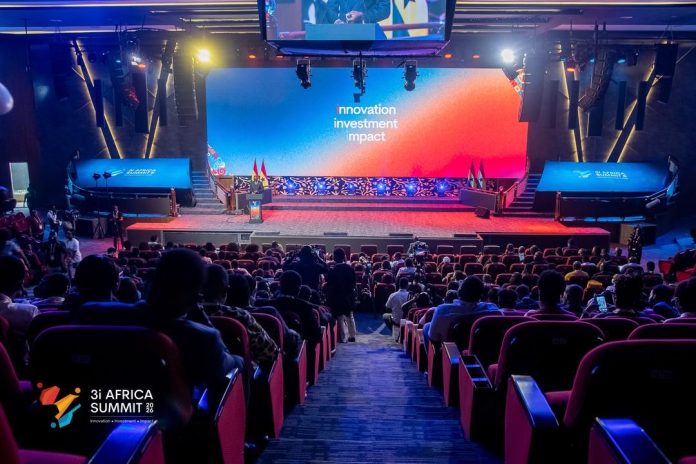
The call was made during a high-level panel discussion at the 2026 3i Africa Summit in Accra under the session theme “One Nation, One ID, Infinite Possibilities: Leveraging National Digital ID for a Connected Digital Economy.”

The session examined some of the toughest governance questions surrounding digital public infrastructure (DPI), including ownership, interoperability, regulation, access and the role of governments and private firms in shaping the future digital economy.

Moderating the discussion, Lorita Akuetteh of the Bank of Ghana said recent public excitement over false reports claiming the Ghana Card had been linked directly to payment systems showed that citizens increasingly desire seamless digital services.

“It tells us that citizens are ready and imagining a future where identity, payments and services can all merge,” she stated.

Dr. Fred Bedzrah, Deputy Executive Secretary of the National Identification Authority, described the Ghana Card as more than a physical identification card, insisting that it should be viewed as foundational economic infrastructure. “We should look at the Ghana Card beyond the plastic card we hold,” he said.

According to him, the Ghana Card provides the trusted identity layer needed for secure transactions and service delivery across the digital economy. “It answers the question: Are you who you claim to be?” he explained.

Dr. Bedzrah noted that once a strong digital identity framework is established, opportunities emerge for integrated payments, digital commerce, stronger anti-money laundering systems and broader financial inclusion. “Once identity is established strongly, the possibilities are infinite,” he stressed.

He further disclosed that the Ghana Card already possesses an e-money capability that could potentially support payment transactions in future. “The Ghana Card has an e-money profile, which can be activated at any time,” he revealed.

However, he cautioned that integrating identity and payment systems into one platform must be approached carefully to avoid creating systemic risks. “We have to balance risk, confidence and innovation,” he added.

Dominic Owusu, Director of Currency Management at the Bank of Ghana, stressed that despite the rapid evolution of digital public infrastructure, central banks must remain at the core of currency issuance and settlement systems.

According to him, while governments should provide trusted public infrastructure and regulation, private firms should continue leading innovation and customer-facing services. “The public infrastructure brings trust and the private sector brings innovation,” he stated.

Mr. Owusu maintained that the responsibility for issuing and redeeming currency must remain with the central bank regardless of future digital finance developments. “The central bank must always remain at the core,” he stressed.

He also argued that digital infrastructure systems must remain open and interoperable to prevent monopolistic control and encourage innovation across the ecosystem.

According to him, settlement systems must also remain properly regulated to preserve public confidence and financial stability as digital transactions expand.

Karim Dia, Senior Mobile Money Regulatory Specialist at the GSMA, also stressed the importance of collaboration between governments and private sector operators.

Mr. Dia noted that governments should focus on trusted infrastructure and regulation while private companies drive innovation, customer reach and service delivery.

Michael Wallis-Brown, Vice President for Payments and Banking at FIS Global, highlighted the growing global convergence between digital identity and financial services.

Drawing examples from Singapore, Estonia and Scandinavian countries, he said digital identity systems are increasingly becoming central to banking, payments and online commerce.

He further described Africa as uniquely positioned to leapfrog traditional financial systems because of its highly mobile and digitally connected population.

“Africa is positioned perfectly to leapfrog into the next generation of digital commerce,” he said.

Mr. Wallis-Brown, however, warned that technology alone would not guarantee success without the right policy environment. “Technology is the easy part. Policy is the hard part,” he stressed.


For more news, join The Chronicle Newspaper channel on WhatsApp: https://whatsapp.com/channel/0029VbBSs55E50UqNPvSOm2z

Feature: Who Dare Criticise Men Of God?

0
Africanus Owusu Ansah (Hot Issues)

“Here I stand accused. I cannot do otherwise… If I am not allowed to laugh in heaven, I don’t want to go there My warrant is the word of God – Naught else is worth believing… where God built a church, there the Devil would also build a chapel”. – Martin Luther (1517)

Tithe, which is mentioned in 2 Corinthians 8:7-8 is said to be a tenth of voluntary and generous proportional offer by the offeror. There is no command and it is not a legalistic requirement. 2 Corinthians 9:7 says; “Every man according as he purposeth in his heart, (so let him give) not grudgingly, or of necessity, for God loves a cheerful giver.”

Maame Frema’s action in confronting Reverend Solomon Bruce at the Methodist Wesley Cathedral, Sunyani and the fallouts seem to be telling some of us a whole lot. The woman was expressing her feeling about the pastor’s charge against those refusing to pay tithe and calling those people armed robbers. She reacted appropriately; “…if it comes to armed robbery (with respect to non-payment of tithe) then it is you, the Bishops, church elders… who are armed robbers.”

And how did the Methodist Church react to this? “The Methodist Church in Ghana through its appropriate agents has extended love and compassion to a member seen in a viral video. We thank God for the maturity demonstrated by the minister in not continuing the exchange and we are grateful to the member for her apology…” Good for the maturity of the Methodist Church.

But what are the other syncretic churches saying? Reverend Sam Korankye Ankrah shocked the Christian Community with his “curse” on the woman; “The woman has brought a curse upon herself and her children.” We do not believe it was Reverend Sam Korankye Ankrah of the Royal Chapel who was saying this?

A curse on the woman and her children? What have the children done? What would he say if he learnt that some of the woman’s children did not support their mother’s “confrontational position”? Sam Korankye Ankrah may be using some of the tithe to buy air-conditioners, support hospitals, … Do the members attend the hospitals free? And when they leave the airconditioned church and go to their “homes” are their homes also air-conditioned?

The congregants at the Royal Chapel would nod sheepishly, grin shamefacedly and clap timorously. You will ask whether he has read this quotation from Socrates: “Don’t force children into your own ways, as they were created for a time different from your own”.

Eastwood Anaba, born in 1961 and graduated at Kwame Nkrumah University of Science and Technology as a pharmacist left the profession and entered into full-time ministry in 1988 with his wife Rosemond, a biological science graduate giving him support in his Fountain Gate Chapel Ministry. Tragedy befell the couple in 2009 when two of their children died in a fatal accident in Tamale on their way to attend an Easter Convention in Bolgatanga.

This priest, a prolific writer and powerful orator does not see anything wrong in tithe-paying. Why should he? See his church in Bolgatanga; see the enormity of the structures he has built in Bolgatanga including hotels; Akayet… where or to whom does he report to? Pharmacy versus Christian evangelism; which one is more profitable? Who owns the Church? Who will inherit the Church? Go on, preach on, Pastor Eastwood.

Evangelist Asiedu admits the Methodist Bishop did not speak well… “whether you pay tithe or not, we (the Church) will come to your aid when you are in trouble… But the woman has insulted Jesus Christ… you are an agent of the devil if you support the woman… who has spoken against a “son” of God” Outspoken Prophet Oduro: “Wo tithe kakra a woatua nti, woredi yɛn atɛm… why are you speaking such nonsense” (Because of the mere tithe you have paid you insult us, men of God.”) And Dr  Bempah will say; “…if you are dying, I won’t give you any support — for refusing to pay your tithe; most of the poor people remain poor…

We found in the Bible Matthew 7:1-3. “Judge not that ye be not judged. For with what judgement ye judge, ye shall be judged and with what measure ye mete, it shall be measured to you again. And why beholdest thou the mote in thy brother’s eye, but considerest not the beam that is in thine own eye.” Who are we to charge at the pastors and damn them as “fake” pastors, preachers evangelists.

Our research into the relationship of Ghana and South Africa revealed South African firms/entities in Ghana: MTN, DSTV, Stanbic Bank, Absa, Shoprite, Goldfields, Protea Hotels, Broli, Lancet. Ghanaian firms/entities in South Africa: Action Chapel, ICGC, Royal House Chapel. No comment.

Syncretic churches, being those which blend elements from two or more distinct belief systems including Christianity with (African) indigenous pagan or cultural practices, thus creating a new distinct faith abound in Africa, more especially, Ghana. The so-called “men of God” use fear, intimidation, to woo congregants to their churches… “In my prayer, I was carried into heaven and God spoke to me…” (then the revelations will flow; you will die tomorrow; your business will succeed; you will win the election…).

It is surprising whether many of our “men of God” have read the church history… The early followers (Peter, Paul, John…) were not called Christians till after the death of Jesus, at Antioch. Jesus challenged the existing rites of the Jews… he drove money changers and merchants from the Temple in Jerusalem who had turned the Temple into a den of robbers” (Matthew 21).

The first Church was Catholic, and in 1054 broke up by the East-West Schism resulting in Eastern Orthodoxy under Pope Leo IX and Patriarch Michael Cerularius who excommunicated each other in 1054…

The Protestant Churches emerged when Martin Luther published his 95 Theses pasted these on the door of Wittenberg challenging Catholic practices like the sale of indulgences, giving birth to Lutheranism in 1517. Thanks to the Gutenberg printing press which provided the means for the rapid dissemination of religious scripts in the local languages (not only Latin).

Anglicanism, otherwise known as Episcopalianism, emerged as a “via media” (middle way). King Henry VIII broke away from the Roman Catholic Church after the Pope in Rome refused the King’s divorce of Catherine of Aragon and his clandestine marriage to Anne Boleyn. The King got the Act of Supremacy passed, declaring King Henry VIII as head of the Church in England, giving him the avenue to annul the marriage with Catherine of Aragon and the marriage of Anne Boleyn in 1527.

The emergence of Methodism is traced to John Wesley and Charles Wesley (with the support of George Whitefield) in the 18th Century. The members believe in these principles establishing it; people are all, by nature, “dead in sin”; They are justified by faith alone; It was started as a movement at Oxford University, a small group (Holy Club) was said to be “methodical” in their approach to Christian observance.

If you follow Matthew 6:19-21 and you plan to store up your treasures in heaven, some people including the “men of God” will exploit your ignorance and naivety to enrich themselves on earth, just as the European explorers came with Christianity and Christian teachings… where is Heaven? Up there? What has the Artemis II found “up there”? The moon — with its own “force of attraction” And why should anybody including Osofo Roja take credit for “revealing” a world crisis in “Hantavirus” pulmonary syndrome.

Police Arrest Man Over Viral Threats Against Security Personnel

0

The Ghana Police Service has arrested a suspect identified as Opoku Emmanuel for allegedly inciting violence and threatening Police and Military personnel in a viral video circulating on social media.

A statement issued by the Police said the suspect was arrested on Wednesday, May 7, 2026 by the Inspector-General of Police’s Cyber Vetting and Enforcement Team (CVET), in collaboration with personnel at Jacobu in the Amansie Central District of the Ashanti Region.

According to the Police, the suspect, who appeared masked in the video, allegedly warned Police officers against attempting to arrest armed robbers and threatened to kill any security officer who confronted him.

The statement indicated that investigations later identified the masked individual as Opoku Emmanuel.

Police disclosed that the suspect is currently in custody assisting with investigations and will be put before court.

The Police statement did not indicate whether any weapons were retrieved during the arrest or whether additional suspects are being pursued.


For more news, join The Chronicle Newspaper channel on WhatsApp: https://whatsapp.com/channel/0029VbBSs55E50UqNPvSOm2z

11 Arrested Over Deepfake Videos Impersonating President Mahama

0
Arrest

The Inspector-General of Police’s (IGP) Cyber Vetting and Enforcement Team (CVET) of the Ghana Police Service has arrested 11 persons, including five Nigerians, for allegedly using deepfake artificial intelligence (AI)-generated videos to impersonate President John Dramani Mahama in online fraud schemes.

The suspects were arrested during coordinated cyber operations carried out between May 1 and May 4, 2026, across Sogakope, Dabala, Tongu, Akatsi and Aflao in the Volta Region.

According to the police, the first operation conducted between May 1 and May 3 led to the arrest of Raphael Ablordeppey, 32; Anipah Jonathan, 23; Dzamesi Bright Kofi, 35; Thomas Ayoyo, 17; and Louis Segbawu, 18, following intelligence on a syndicate allegedly involved in the creation and circulation of AI-generated videos impersonating the President.

Police investigations revealed that the suspects allegedly used the fake videos to deceive unsuspecting members of the public into sending money and disclosing sensitive personal information through online platforms.

A second cyber field tracking operation on May 4 resulted in the arrest of five Nigerians and one Ghanaian in Aflao for allegedly engaging in similar fraudulent online activities.

The second group of suspects were identified as Bishop Esiri, 46; Wisdom James, 25; Ali Lucky, 23; Edwin Edos, 22; John Kofi Darlington, 20; and Danu Peter, 19, the only Ghanaian among them.

During the operations, the police retrieved several items believed to have been used in the alleged criminal activities.

The exhibits included laptop computers, mobile phones, internet routers, 120 pre-registered SIM cards and a Nigerian-registered Mercedes Benz ML 350 with registration number LSR 138HR.

Preliminary investigations, according to the police, indicate that the suspects are part of a wider criminal network involved in the production and dissemination of fraudulent digital content aimed at impersonating high-profile personalities for financial gain.

The suspects were arraigned before court on May 6, 2026. Nine of them were remanded into police custody to reappear on May 25, 2026, while Thomas Ayoyo and Louis Segbawu were granted bail with two justified sureties each.

3i Africa Summit: Inclusive Instant Payments Are Essential Infrastructure— BoG

0

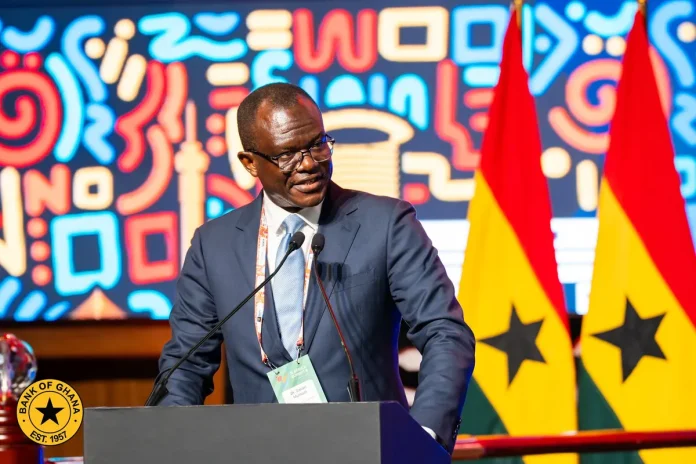
First Deputy Governor of the Bank of Ghana, Zakari Mumuni, has called for urgent action to build inclusive and interoperable instant payment systems across Africa, insisting that such systems are now critical economic infrastructure for the continent’s digital future.

Speaking at the 2026 3i Africa Summit in Accra, Dr. Mumuni warned that fragmented payment systems, high transaction costs and weak interoperability continue to undermine Africa’s digital economic ambitions. 

“Inclusive instant payments are therefore not optional — they are essential infrastructure,” he stressed while delivering a keynote address on the theme “Inclusive Instant Payments as Economic Infrastructure.” 

According to him, Africa has made significant progress over the past two decades through mobile money, fintech innovation, agency banking and digital wallets, but seamless usability across systems remains a major challenge. 

“Africa stands at a decisive moment,” he stated.

“We have achieved remarkable progress in expanding access to financial services, yet the foundations of our payment systems remain fragmented, costly and insufficiently interconnected,” he added. 

Dr. Mumuni explained that properly designed instant payment systems would enable real-time, low-cost transactions across interoperable networks linking banks, fintech firms and consumers into a unified ecosystem. 

“In doing so, they convert fragmented access into meaningful economic participation,” he said. 

The First Deputy Governor noted that inclusive payment systems could improve business cash cycles, strengthen liquidity management and provide underserved communities with reliable and affordable financial services. 

He added that governments would also benefit through improved revenue mobilisation, enhanced transparency and more efficient delivery of public interventions. 

For financial institutions, he said instant payment systems would create valuable transaction data capable of driving innovation in credit, savings and risk management products. 

Despite recent progress on the continent, Dr. Mumuni acknowledged that no instant payment system in Africa has yet achieved inclusivity at scale. 

“This underscores a central reality: building infrastructure is not enough — we must ensure that it works universally and equitably,” he stated. 

He argued that while central banks have already established strong regulatory foundations, regulation alone cannot deliver full integration.

“What is required now is coordinated execution across the ecosystem,” he stressed. 

According to him, regulators, payment system operators, financial institutions and fintech firms must collaborate to build interoperable systems that eliminate friction and expand financial access. 

Dr. Mumuni further called for reforms including harmonised electronic Know Your Customer (eKYC) frameworks, aligned licensing regimes and stronger cross-border cooperation to deepen interoperability across African payment systems. 

“In Ghana, we have made tangible progress, including the deployment of multiple instant payment platforms and ongoing efforts to strengthen inter-scheme interoperability,” he disclosed. 

However, he stressed that Ghana’s ambition goes beyond merely building payment systems.

“The objective is not simply to build systems, but to ensure that they are accessible, affordable and trusted by every segment of society,” he added. 

He therefore urged African governments and financial institutions to move beyond fragmented systems toward full interoperability and integrated payment infrastructure across the continent.

“The path is clear, the technology is available and the benefits are substantial. What is needed now is commitment and execution,” he said. 


For more news, join The Chronicle Newspaper channel on WhatsApp: https://whatsapp.com/channel/0029VbBSs55E50UqNPvSOm2z

3i Africa Summit: Technology Alone Cannot Solve Africa’s Problems— Rwanda Central Bank

0

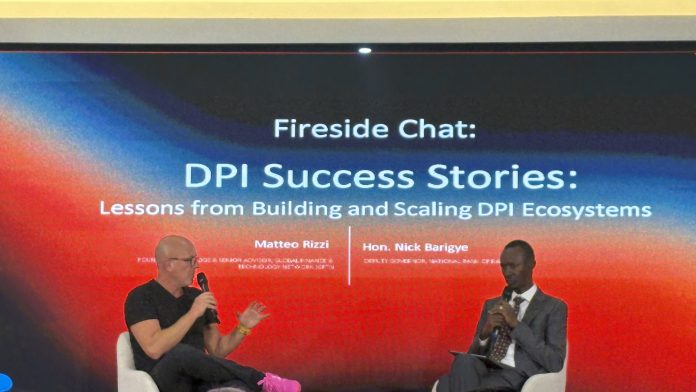
Rwanda’s Deputy Governor of the National Bank of Rwanda, Hon. Nick Barigye, has cautioned African countries against relying solely on technology to drive digital transformation, insisting that governance and policy coordination remain the real engines of progress.

Speaking during a fireside chat at the 2026 3i Africa Summit in Accra on Thursday, May 7, 2026, he said many governments wrongly assume technology by itself can solve economic and social challenges.

“At times, it is tempting to think technology is the answer to society’s issues. It is not,” he stressed.

The fireside chat, held under the sub-theme “DPI Success Stories: Lessons from Building and Scaling DPI Ecosystems,” examined how countries are using digital public infrastructure systems to transform payments, identity management and financial inclusion at scale.

The discussion also explored lessons from successful digital infrastructure models such as India’s UPI, Ghana’s Ghana Interbank Payment and Settlement Systems and Nigeria’s BVN system.

Mr. Barigye explained that Rwanda’s progress in digital infrastructure was achieved through strong governance, institutional coordination and a clear national vision.

“Governance provides clarity. Governance provides vision. Governance provides coordination and the ability to execute very fast,” he stated.

He highlighted Rwanda’s digital platform, “Irembo,” which currently delivers more than 240 services across over 40 institutions through a single integrated system.

According to him, the platform was designed around a government objective of “zero trip, zero error,” allowing citizens to access services digitally without physically moving between offices.

He explained that services such as criminal record checks can now be completed online within hours.

The Deputy Governor also stressed the importance of shared infrastructure, warning that fragmented systems operated independently by institutions increase costs and weaken efficiency.

“Shared infrastructure reduces cost and improves efficiency,” he said.

Mr. Barigye further argued that sustainability in digital public infrastructure should not be measured by who funds it initially, but by whether it solves real societal problems.

“The first question should not be who pays for it. The first question should be what societal problem are we solving?” he stated.

He noted that once citizens and businesses see value in digital systems, large-scale adoption naturally follows, creating long-term sustainability.

The fireside chat was moderated by Matteo Rizzi, Founder of Timepledge and Senior Advisor at the Global Finance and Technology Network.

The summit has brought together regulators, central bank officials, fintech companies and investors to discuss Africa’s digital finance future and cross-border integration.

SIX ARRESTED FOR IMPERSONATING SECURITY OPERATIVES IN CENTRAL REGION

0

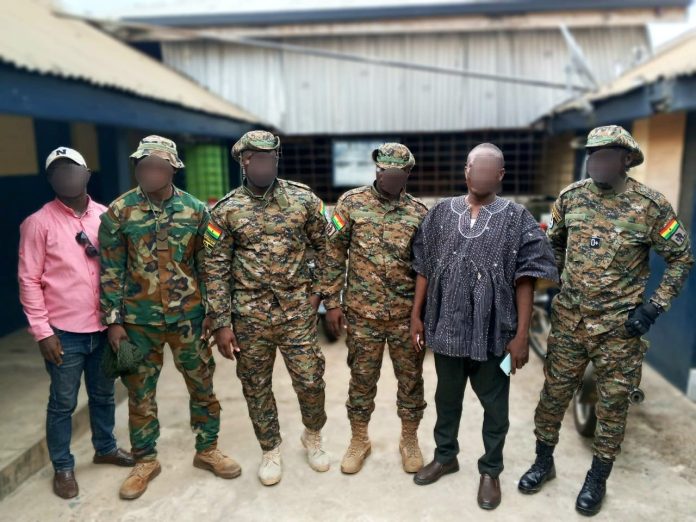
Six men who disguised themselves as military and immigration officers to terrorise Chinese workers at a manufacturing company in the Central Region have been arrested by police, the Ghana Police Service has announced.

The police, in a statement issued through their official X (formerly Twitter) handle, said the incident happened on Tuesday, May 6, 2026, around noon, at S.I. Jun Manufacturing Company Limited at Agona Akwakwa near Mankrong Nkwanta. According to the statement, the suspects arrived in a Toyota Land Cruiser with registration number GW 8887-V, claiming to be National Security operatives.

The police said three of them wore Ghana Immigration Service camouflage uniforms, one wore a military uniform, and two others were in plain clothes. Once inside the company, they assaulted and harassed three Chinese nationals — Man Guan, Chin Min, and MA Kaixiang — and handcuffed all three.

The Agona Swedru District Police Command, the statement noted, received a distress call and quickly deployed officers to the scene. They found the vehicle parked at the location and the three Chinese nationals still in handcuffs.

All six suspects were arrested immediately.
The police identified the suspects as Agyemang Benjamin, 32; Mahama Iddrisu Dawuda Seidu, 48; Ofori Isaac, 35; Adom Bills, 32; Hayford Boafo, 47; and Ato Mchenry, 48.

According to the Ghana Police Service, all six are currently in custody at the Agona Swedru District Police Headquarters.

The Military Police, Ghana Immigration Service, and National Security have been contacted to verify whether any of the suspects hold genuine security credentials.
The police said investigations are ongoing.


For more news, join The Chronicle Newspaper channel on WhatsApp: https://whatsapp.com/channel/0029VbBSs55E50UqNPvSOm2z
Fintech Leaders Push for Stronger Collaboration to Drive Africa’s Digital Finance Growth

0

Fintech leaders at the 3i Africa Summit have called for deeper collaboration, talent development and regulatory alignment to position Africa as a global hub for digital finance innovation.

Speaking at a joint media briefing, Chief Executive Officer of JUMO Ghana, Philip Owusu-Gyamfi, Senior Partner at GFTN, Matteo Rizzi, and Group Chief Executive Officer of JUMO, Paul Whelpton, said Africa had moved beyond simply adopting financial technology and was now producing innovations with global relevance.

According to the speakers, the rapid growth of mobile money, digital lending and fintech services across the continent has demonstrated Africa’s ability to develop solutions capable of transforming lives and economies.

“Africa has been a champion for innovation in financial services in the past 10 years. What we need now is acceleration,” Paul Whelpton stated.

The executives stressed that sustaining the next phase of growth would require deliberate investment in African talent, stronger cooperation between regulators and industry players, and harmonised digital finance systems across borders.

They noted that digital finance has already expanded access to credit and payment services for millions of Africans who were previously excluded from the traditional banking sector.

“We are transitioning from mobile money systems into true digital finance, and that presents enormous opportunities for African markets,” Philip Owusu-Gyamfi said.

The speakers also highlighted that several African innovations, particularly mobile money systems pioneered in East Africa, have become global models replicated in markets across Asia, including Bangladesh.

“We need to start telling our own innovation stories because Africa has genuinely pioneered solutions that the rest of the world is now learning from,” Owusu-Gyamfi added.

The media briefing further focused on the need for regulatory cooperation to accelerate cross-border digital trade and financial inclusion across the continent.

The executives pointed to ongoing efforts aimed at simplifying licensing processes and improving interoperability among African financial systems, arguing that connected digital platforms could significantly reduce barriers to doing business across Africa.

“The benefit of digital finance is that it is cross-border and transferable. Once systems are connected, transactions and customer verification become much easier,” Matteo Rizzi explained.

They observed that the increasing participation of African central banks and regulators at the summit reflected growing recognition of fintech’s role in driving economic development.

The speakers also called for greater investment in skills development, particularly in artificial intelligence, software engineering and entrepreneurship, to help Africa produce the next generation of global technology leaders.

“The speed at which we organise capacity building is the same speed at which Africa can become the next global business hub,” Rizzi stated.

They further noted that collaboration among fintech firms, telecom operators, banks and policymakers was helping to reduce the cost of digital infrastructure and accelerate innovation across the sector.

The 3i Africa Summit brought together fintech companies, regulators, investors and development institutions to discuss the future of digital finance and inclusive economic growth across Africa.


For more news, join The Chronicle Newspaper channel on WhatsApp: https://whatsapp.com/channel/0029VbBSs55E50UqNPvSOm2z
MoMo CEO calls for consumer protection as digital lending expands

0

The Chief Executive Officer of MobileMoney Fintech Ltd, Shaibu Haruna, has called for stronger consumer protection measures to match the rapid expansion of digital lending and mobile financial services across Africa.

Speaking at the 3i Africa Summit, Haruna said the growth of high-speed digital credit markets presents both significant opportunities and emerging risks, warning that financial inclusion without adequate safeguards could expose consumers to harmful debt cycles.

Delivering a keynote address on “Strengthening Consumer Protection in High-Velocity Credit & Banking Markets,” he noted that digital lending has revolutionised access to finance by allowing millions of previously underserved individuals and small businesses to secure credit within seconds.

According to him, the rise of digital finance has accelerated financial inclusion across the continent, but has also introduced challenges such as over-indebtedness, lack of transparency in loan conditions, and potential bias in data-driven credit scoring systems.

“Digital lending has been a game changer. Millions of people who were previously excluded now have access to credit at unprecedented speed,” he said.

He, however, cautioned that the same systems designed to expand access to finance could become harmful if consumer protection is neglected.

“Without protection, there is no inclusion—and inclusion without protection becomes a trap,” he warned.

Haruna identified transparency, fair pricing, and efficient complaint resolution systems as essential to building trust in digital financial services. He stressed that customers must be provided with clear and simple information on interest rates, penalties, and repayment terms.

The MoMo boss also expressed concern over the increasing use of data-driven credit scoring models, warning that algorithmic bias could unintentionally discriminate against some groups of people.

“As we process large data sets, we must be mindful of biases that may exclude customers based on income levels, location, or behavioural patterns,” he stated.

He further called for stronger collaboration among regulators, fintech companies, and consumers to ensure the responsible growth of the sector.

“Consumer protection is not just a regulator’s responsibility—it is a shared duty across the entire ecosystem,” he said.

Haruna urged regulators to adopt smarter and more adaptive supervisory frameworks instead of relying solely on stricter regulations. He proposed measures including risk-based lending rules, real-time data sharing, and outcome-based supervision to improve oversight in the sector.

At the industry level, he encouraged fintech firms to embrace responsible lending practices, including the introduction of cooling-off periods between loans and the simplification of terms and conditions for customers.


For more news, join The Chronicle Newspaper channel on WhatsApp: https://whatsapp.com/channel/0029VbBSs55E50UqNPvSOm2z
NPP Chair Race: Paul Afoko Buckles Down! … Meets Bawumia, Kufuor Et Al

0
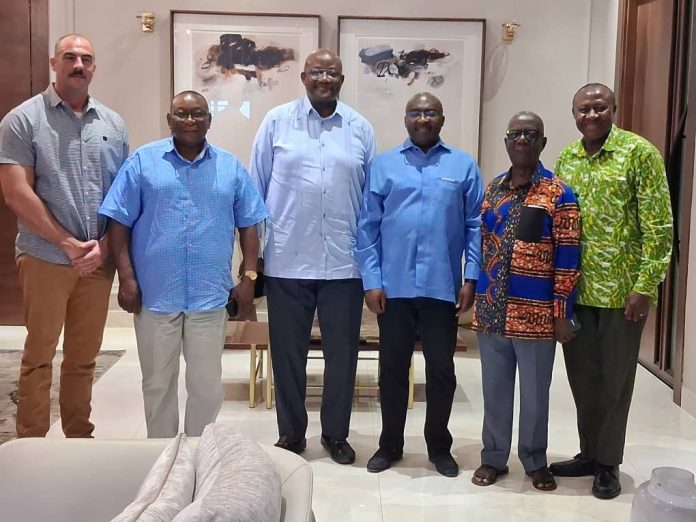
Awentami Paul Afoko with Dr Bawumia

New Patriotic Party (NPP) National Chairman hopeful, Awentami Paul Afoko, has stepped up his campaign with a renewed round of high-level consultations, involving some of the party’s most influential figures, as he pushes a unity-driven agenda, ahead of the 2028 elections.

The latest engagements have seen Mr Afoko meet former Vice President and the current flagbearer, Dr Mahamudu Bawumia; former President Nana Addo Dankwa Akufo-Addo; former President John Agyekum Kufuor; and former Assin Central MP, Kennedy Ohene Agyapong.

The meetings are part of a broader stakeholder outreach ahead of the party’s upcoming National Delegates Conference, aimed at consolidating support and drawing on the experience of past and present leaders following the NPP’s 2024 electoral defeat.

Awentami Paul Afoko

Before the January 31, 2026 presidential primary, Mr Afoko had already engaged all five aspirants, including Dr Bryan Acheampong, Ing. Kwabena Agyei Agyepong, and Dr Yaw Osei Adutwum, in what his team described as efforts to promote party cohesion.

Sources close to him say the current round of consultations is focused on building consensus on the party’s future direction.“You cannot rebuild a house by ignoring the architects,” a member of his team noted.

Insiders describe the meetings with Dr Bawumia and former President Akufo-Addo as particularly significant given their influence, while the engagement with former President Kufuor highlights a call for unity anchored on institutional memory.

Though details remain private, Mr Afoko is said to have urged party members to avoid blame games and embrace collective responsibility. He is also reported to have reiterated his call for competence over ethnicity in choosing the next National Chairman.

Mr Afoko, who served as NPP National Chairman from 2014 to 2015, is campaigning on a “3R Agenda” Reunite, Rebuild, Recapture, which he says will return the party to power in 2028.

The consultations follow earlier meetings with the Ashanti Regional Council of Elders and regional executives in Kumasi, as part of a nationwide effort to engage party stakeholders and mend internal divisions.

The Ghanaian Chronicle