Home Blog Page 556

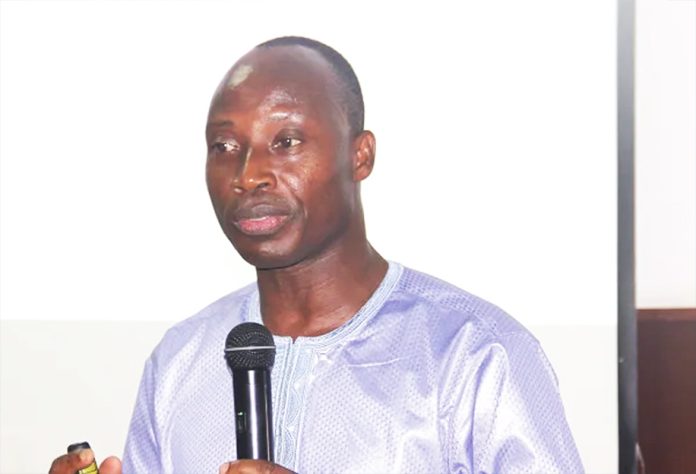
James Gunu promises to woo investors to revive Hohoe Coffee Processing Factory

0

Mr James Gunu, Volta Regional Minister, has revealed plans to woo investors to revive the collapsed Coffee Processing Factory in Hohoe.

He said when fully operationalised, the factory would serve a great purpose under the government’s 24-Hour Economy policy.

Mr Gunu, after visiting the defunct factory during his working visit to the Municipality, said there would also be employment opportunities for citizens in the Municipality when the factory resumed production.

He noted that the Volta Regional Coordinating Council would play an instrumental role in ensuring that investors’ interests were tailored to the revival of the factory.

Mr Gunu said the factory, established by Ghana’s first president, was strategically positioned to process coffee, which was a major production crop in the area.

Mr Prosper Kumi, Hohoe Municipal Chief Executive (MCE) said when the factory begins operation, communities such as Wli and Gbledi, where coffee production is done, would feed the factory.

He said value would also be added to the processed coffee. Mr Frank Amoah Frimpong, Regional Administrator, Ghana Cocoa Board, said the factory, established in 1957, had stopped production for many years.

He said the factory had machines that also processed shea with warehouses.

GNA

ECG cautions Ghanaians against MoMo fraudsters

0
Logo of ECG

The Electricity Company of Ghana (ECG), has cautioned Ghanaians to be vigilant in order not to fall prey to mobile money fraudsters, who are using the name of the company to defraud unsuspecting customers.

According to the company, the ECG Power App and the Short Code *226# are the only digital platforms, which are available to clients to make payments on any services rendered by the company to its customers.

Mr George Amoah, General Manager, Ashanti West Region of ECG, who stated this pointed out that, the company did not have any Mobile Money (MoMo) account for customers to make service payments.

Speaking to the Ghana News Agency in Kumasi in reaction to several complaints by customers, who have been defrauded by unknown persons who posed as ECG officials, he advised customers to desist from engaging third parties when looking for services from the company.

Mr Amoah noted that all the six district offices under the Ashanti West region, made up of Abuakwa, Adum, Ahinsan, Danyame, Kokoben and Suame had received many complaints concerning such fraudulent activities.

According to the reports, the fraudsters usually contacted clients through phone calls or on social media, to render services such as meter installations, meter replacement, debt cancellation and others, at a fee.

Mr Amoah said the victims were therefore, directed by the fraudsters to pay the service charges into a so-called ECG MoMo account, before the services were rendered.

However, after the payments had been made, the fraudsters switch off their phones and block the victims’ contact or do away with the SIM cards used.

Mr Amoah mentioned some of the contacts used by the fraudsters as 0531807230, 0508790801, 05403803302 and 0532752541.

He recalled that recently, a customer, who had applied for a meter with the Adum District office, was asked to make a service payment of GHC 900.00 into an ECG MoMo account – 0508058638, for meter installation.

After the customer made the payment, the fraudster asked the customer to add GHC 500.00, as installation fee for a new connection.

However, Mr Amoah said the customer became suspicious, refused to top up the money and reported the incident to the authorities of the Adum District office.

Additionally, he recalled an instance where an old man was defrauded of GHC 2000.00 for meter installation at Breman.

MrAmoah said the ECG was working closely with the security agencies to apprehend the perpetrators and prosecute them.

He explained that, customers who applied for meters or services were required to pay GHC100.00 at the ECG office after which an estimator would visit the customers’ premises to inspect the installations and prepare a quotation.

“Once the quotation is ready, you will receive an SMS from the ECG with a unique code stating how much to pay depending on the service requested, either a separate meter or a new service,” Mr Amoah said.

The quotation fee, according to him, could be paid through the ECG Power App or at the office, after which no other payment was expected to be made, not even to the contractors to install the meters.

“If you want to even pay via the ECG Power App, you will initiate the transaction yourself but ECG will not call you that your meter is ready so send money to someone’s personal account or any mobile money number,” he explained.

Mr Amoah said the replacement of faulty meters was free and advised citizens against making payments for the replacement of faulty meters to anyone.

Again, he urged the public to disregard the information that the ECG had no meters because the introduction of the Loss Reduction Project (LPG) brought along enough meters for customers who paid for service applications.

Mr Amoah appealed to the public to help the company curb the menace of MoMo fraudsters by dealing with ECG when they needed meters, making payments for meters at the ECG office and reporting anyone who called demanding payment into a MoMo account to the police or the nearest ECG Office.

GNA

Ghana’s economy is rebounding 

0
Dr Alhassan Iddrisu - Government Statistician

Ghana’s economy grew by 6.3 per cent in the three months to June 2025, compared to 5.7 per cent in the same period last year. It means that the economy produced more goods and services than the same time last year, 2024.

Dr Alhassan Iddrisu, the Acting Government Statistician, said it was a sign of growth and recovery and agriculture was still growing after recovery in Q1 of 2025. He said the agriculture sector grew by 5.2 per cent compared to 3.5 per cent in the Q2 of 2024.

“This is good news for farmers and food prices, while livestock grew the largest in agriculture, growing by 5.9 per cent, compared to 4.7 per cent in Q2 of 2024,” he said.

The Acting Government Statistician said growth in industry slowed at 2.3 per cent in Q2 of 2025, compared to 12.2 per cent in Q2 of 2024.

The oil and gas sector declined sharply by22.5 per cent, dragging the industrial sector down, but electricity was strong, growing by 6.7 per cent down from 6.9 per cent in Q2 of 2024, showing increase power production to support growth.

He said the services constituted the biggest share of GDP at basic prices at 42 per cent in Q2 of 2025 with the sector growing by 9.9 per cent in Q2 of 2025 up from 2.0 per cent in Q2 of 2024, with ICT leading the way at 21.3 per cent growth.

The Services, including ICT, Education, Finance & Insurance and Trade, contributed more than half (52.2 per cent) of the Q2 of 2025 growth of the economy.

“If we remove the impact of oil & gas, the rest of the economy grew by 7.8 per cent in Q2 of 2025 compared to 5.7 per cent in Q2 of 2024,” he added.

He said this showed that Ghana’s economy was becoming more balanced, relying less on oil.

Dr Iddrisu said information and Communication, Education, Crops, Manufacturing, Finance & Insurance and Construction were the main drivers of GDP growth in Q2 of 2025, all together contributing 77.6 per cent of the 6.3 per cent growth.

He said the country’s provisional real GDP increased by 1.4 per cent in Q2 of 2025 from 1.6 per cent in Q1 of 2025.

The seasonally adjusted Q2 of 2025 Growth is the highest Q2 growth since Q2 of 2019.

He recommended that households should build skills in fast-growing areas like ICT, education, and health to tap into expanding job opportunities.

Dr Iddrisu said also households should support local agriculture by buying more Ghana-made food products to strengthen demand for farmers’ output.

He urged businesses to invest in digital and service-oriented solutions to ride the wave of growth in ICT, finance, and education.

He called for diversifying beyond oil-related industries and aligning production with rising household demand for food, health, and technology.

He urged the government to prioritize infrastructure and energy investments to sustain growth across all sectors, especially industry and services.

“Strengthen data-driven monitoring to anticipate shocks in oil and gas while supporting non-oil growth engines,” he added.

GNA

Luckiest Team Joins Fetu Afahye celebration with courtesy call on Oguaamanhen

0
The Luckiest Team in a Photo with of Ogua Traditional leaders

As part of activities marking this year’s Fetu Afahye festival, the Luckiest Team on Friday, September 5, 2025 paid a courtesy call on the Chief of Cape Coast and presented assorted items as a token of goodwill to the traditional leadership.

The donation was received on behalf of the Oguaamanhen Osabarimba Kwesi Atta II, by Queen Mother of the Oguaa Traditional Area, Nana Ekua Abookye VI.

She expressed gratitude to the team for their thoughtful gesture and for identifying with the people of Cape Coast during the historic festival.

The Queen Mother further declared her support for The Luckiest, stressing that such initiatives brought excitement and opportunity to the people.

Speaking during the visit, Mikki Osei Berko, Ambassador for the Luckiest Africa, underscored the significance of the initiative, describing it as more than just a game.

He emphasised that the platform was creating wealth and opportunities for Ghanaians across the country and even beyond its borders.

“Let me re-emphasise that this is an opportunity; it’s not just a game. It is making Ghanaians wealthy all across the world,” he said.

Mikki Berko explained that participation in the Luckiest is simple and accessible by dialling *712# – where individuals can purchase tickets for themselves or even gift them to loved ones. He added that the system creates a shared joy of victory, with winners walking away with substantial prizes.

Highlighting the stakes for this year, he disclosed that the winning ticket carries a jackpot of GH¢2.5 million, with ticket prices ranging between GH¢1 and GH¢5,000. Participants also stand chances of winning weekly bonuses leading up to the grand draw in December.

“The Luckiest can change your whole life.

We consider the Luckiest as a festival in itself, which is why we associate with traditional celebrations like Fetu Afahye. It affirms our credibility and shows that the platform is legitimate,” he remarked.

Mr Berko noted that the initiative had already gained wide acceptance, citing strong presence at public events and a recent media launch where some journalists emerged as winners.

He stressed that their engagement with the Fetu Afahye was part of a broader commitment to partner with festivals across Ghana, further solidifying trust with the public.

Clad in orange-themed T-shirts symbolic of the festival’s vibrancy, the Luckiest Africa team joined residents of Cape Coast in celebrating the Fetu Afahye, reinforcing their message that “everyone can become a millionaire.”

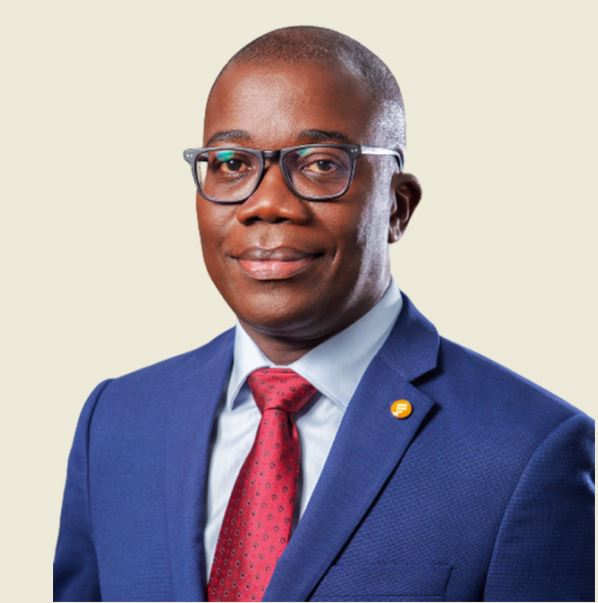
Julian Opuni Champions Fidelity Bank’s Impact and Innovation in Forbes Africa

0
Mr Julian Opuni, MD of Fedelity Bank

Fidelity Bank-Ghana’s ongoing commitment to financial inclusion, digital innovation and sustainable development has earned global attention, as Managing Director Julian Opuni, was recently featured in Forbes Africa’s special series on Ghana.

In the in-depth feature, Mr Opuni offered a comprehensive look into how Fidelity Bank — Ghana’s largest privately owned indigenous bank is bridging the gap between capital and the real economy, while championing initiatives that foster long-term economic resilience.

“Our foundations are built on financial inclusion, innovation, financial access and sustainable development,” said Mr Opuni, emphasising the bank’s mission to create meaningful impact across Ghana’s socio-economic landscape.

Driving Financial Access and Inclusion

Fidelity Bank’s pioneering role in democratising access to financial services was a focal point of Forbes feature.

The bank was the first in Ghana to introduce agency banking and smart accounts, solutions that have dramatically lowered entry barriers for underserved communities.

Today, over 8,000 Fidelity agents operate across the country, extending formal banking services to some of Ghana’s most remote regions.

“We’ve built a platform that brings banking to the doorstep of every Ghanaian,” Julian  Opuni noted.

“It’s not just about opening accounts; it’s about economic empowerment.”

Investing in Innovation and Youth-Centric Solutions

Innovation continues to drive Fidelity Bank’s growth, with a strong emphasis on digital banking solutions that meet the needs of a fast-changing market.

Mr. Opuni highlighted the success of Kukuaa, the bank’s WhatsApp banking service, as well as AI-powered customer support tools that allow users to access banking services with ease and speed.

“We’re reimagining how people interact with banks,” he said. “Young people want speed, simplicity and access — and we’re building tools to match that expectation.”

He also revealed ongoing investments in digital self-onboarding systems, aimed at expanding financial access for Ghana’s burgeoning youth population.

Beyond digital innovation, the bank is also playing a central role in financing Ghana’s real economy.

Over the past year alone, Fidelity Bank has disbursed over GH₵5 billion in new credit to businesses across sectors, a critical move in supporting job creation and economic resilience.

Strategic partnerships with global organisations like the Mastercard Foundation and Proxtera are further enabling small and medium enterprises (SMEs), particularly in agriculture, to access the capital they need to scale sustainably.

“We’re aligning with partners who share our vision for long-term impact,” Opuni said.

Fidelity Bank’s sustainability agenda also featured prominently in the Forbes spotlight. The Greentech Innovation Challenge, one of the bank’s flagship programs, supports agri-tech startups focused on eco-friendly practices. The initiative underscores the bank’s belief that sustainability is not just a corporate responsibility, but a strategic imperative.

“Sustainability is more than just a box to tick,” Opuni affirmed. “It’s how we protect the future.”

Additionally, the Orange Impact Initiative, which has reached over 4,000 students with education and community development programs, stands as a powerful testament to the bank’s commitment to inclusive progress.

Tips for Smooth Digestion

0

Want a “recipe” for smoother digestion? Start with these nine tips. They’ll help you prevent symptoms such as bloating, belches, or heartburn.

Of course, if you have any digestive symptoms that are severe or won’t go away, see your doctor.

  1. Tap Into Plant Power

Plant foods have fiber. This helps you stay regular. Bonus: It fills you up, which is a plus if you want to lose weight.

Go for high-fiber foods, such as:

  • Vegetables
  • Fruits
  • Nuts and seeds
  • Whole grains
  • Beans and lentils

Start slowly. As you gradually add fiber to your diet, also increase the amount of water you drink. Water is fiber’s best friend. Fiber soaks it up, and this will help you avoid cramping or gas.

  1. Have a Side of Soup

Water and other fluids such as soup, broth, and juice can ease things through your system.

Not a soup fan? Try herbal tea or water with a slice of cucumber, lemon, or lime. Or anything, really, as long as it doesn’t have alcohol (which dehydrates you) or too much caffeine (which can stimulate your intestines too much).

If you favor fizzy drinks, keep in mind that they increase stomach acid, which gives some people heartburn.

  1. Break It Down

Eat smaller amounts more slowly. Chew your food thoroughly to make your digestive system’s job a little easier.

  1. Keep Moving

Is there anything exercise can’t do for you? The list of benefits just keeps growing. You already know it’s good for your heart and your waistline. Turns out that active people also have smoother digestion.

Watch the timing. For some people, exercise right after a meal can cause indigestion. So schedule your workouts before meals or wait at least an hour after eating.

  1. Bring on the “Good” Bugs

Probiotics are “good” bacteria that are in your gut. They are in some yogurts and fermented foods. They help with your digestion. You can also add them to your diet with supplements.

  1. Outsmart Fatty Fare

Fats tend to stay in your system the longest, making them harder to digest. You may have even noticed a feeling of fullness or burning after a rich meal.

Limit fatty foods such as chips, burgers, and greasy foods. Instead, eat lean meat and fish. Also, try to grill your meals more often than you fry them.

  1. Dear (Food) Diary

Pay attention to foods that seem to trigger stomach discomfort. Write down what you ate and how you felt so you remember for next time.

Some people find that acidic foods, like tomatoes or citrus fruits, trigger heartburn. For others, wheat, onion, or dairy products such as milk or cheese cause problems.

Spicy food is a common cause of heartburn, stomach pain, or diarrhea, so you may want to stay away from anything that heats up your mouth.

Smoking can also upset your digestion. Add that to your list of reasons to quit. If you’ve tried to quit before, that’s OK! Keep trying and ask your doctor for help.

  1. Soothe Your Stress

Stress affects your whole body, including your digestive system. Ditch stress whenever you can. For those problems you can’t avoid, find ways to relax. It may also help to sign up for a few sessions with a counselor or to take a stress management class. For better digestion, do what you can to keep your stress under control.

  1. 9Get Expert Advice

Some medications or medical problems can interfere with smooth digestion. If you’ve ruled out other problems but still have symptoms, tell your doctor what’s been going on. Bring a list of any medicines you take. This might help spot the source of your problem.

Credit: webmd

Feature: The Gem NPP Threw Away

0
Feature

The New Patriotic Party was built on solid foundations of principles, high standard of discipline, with democratic fundamentals of respect for diverse opinion, rule of law and all others that can be found in any true liberal democratic union. As such in the party, the elders stood out to be counted and they managed affairs as wise and principled elders should.

The over-all leaders were the national executives with the national council of elders. Then the regional executives who held the constituencies under them, together with one aim: victory at the polls. The constituency executives took charge of their constituencies and sanity reigned in the party.

In another section were the parliamentary candidates and flag bearer who worked together with the chairpersons, for the success of the party.

Everything went on well for the NPP under its various national chairmen, until in 2006, after HarunaEsseku, the Establishment came up to take control of the party.

As a well organised group of elderly members from the UNC side, they cleverly plotted an overthrow of the party’s principles by first using the NPP’s standard of separation of powers. The Establishment effectively separated party from government and many members fell for it. So, suddenly they looked at President Kufuor more as a destroyer of the party and rejected anyone perceived to be his own. Soon, the Establishment became the one to decide what should go on in the party and went on to convinced delegates not to vote for people perceived to have the support of H.E. J.A. Kufuor and so it was, that Steve Ntim was rejected for Mac Manu as national chairman.

In 2010, Steve Ntim who could have been a very good chairman as he proved his capability as first-vice chairman under HarunaEsseku, was dumped again for the Establishment’s choice, Jake Obetsebi-Lamptey. Democratic dictatorship started to reign supreme in the party with Nana Addo deciding who should be what.

In 2014, at the Tamale National Delegates Conference, the party elected Paul Afoko, a Northerner, as national chairman. He was a dye-in-the-wool UP Traditionalist and held its principles in high esteem. As the chairman, he intended to re-organise the NPP and bring back its original principles and standards.

On his assumption of office, he resourced the entire grassroot base by paying GH¢10,000.00 into each of the 275 constituencies’ accounts, a whooping GH¢2.75 million or $895,000.00. The Establishment became alarmed because it thought Afoko was going to takeover the grassroot and that could spell danger.

In fact, resourcing of the grassroot was not on the agenda of the Establishment. It wanted to starve them then once in four years, it would just give them some cash and goodies and they would do whatever was asked of them.

This was one of the reasons, Alan Kyerematen was remotely pushed out of the NPP. He had wanted to pay each polling station to constituency executive, a monthly allowance. The Establishment convinced the grassroot that it was impossible to be achieved and instead of accepting Alan as flag bearer for them to earn even a minimum of GH¢500.00 a month, they threw away that chance and preferred to go with the Establishment and earn GH¢2,000.00 every four years.

Paul Afoko’s decision to bring financial discipline into the management of the Party Office by consolidating all national office accounts into one, made the Establishment feel its control over the party was slipping from its hands.

Paul Afoko was bringing back the good old principles where constituencies were given the mandate to choose who they felt fit to become the parliamentary candidate.

Afoko objected to imposition of candidates and allowed the right and proper thing to be done. The people in the constituencies know who best can win the seat. But the Establishment led by Nana Addo would prefer to handpick candidates for the constituencies, and since Paul Afoko would not tow that line, he must go.

But instead of using the laid down party constitution of removal of elected officers as found in Article 10, where only the electoral college which elected that officer had the right to remove him or her, the National Council was used.

When Afoko was thrown out, the Establishment had its chance to impose a candidate on Korle Klottey. Nii Noi who was the grassroot favourite and elected as parliamentary candidate, was pushed out after a court ordered re-election which the Establishment’s choice, Lawyer Addison,won but went on to lose the seat to Zanetor Rawlings, a seat which Nii Nio could easily have won.

Even in the absence Paul Afoko, Sammy Crabbe and Kwabena Agyapong with the already perfectly laid down structures,the NPP won the 2016 General Elections with 169 seats out of the 275 seats in Parliament.

With Afoko out, a dye-in-the wool Nkrumaist and CPP activist, Freddy Blay, who defected to the NPP, became the acting chairman and came to meet the structures already put in place for victory to occur in the 2016 elections.

Looking very obvious that he fully wanted to fulfil the Nkrumaists’ desire to wipe out the UP Tradition from the surface of earth, after Nkrumah was ousted from power in 1966, Freddy Blay gladly pushed the NPP deep down into the ditch. Being the longest ever serving national chairman of the NPP, Freddy Blay was fully supported by H.E. Nana Akufo Addo who was alleged to be a full socialist and Nkrumaist during his university days in Legon between 1964 and 1967.

So, just as Nkrumah imposed parliamentary candidates on constituencies, even to the extent of putting some CPP members to represent constituencies they do not reside in or even hail from, Nana Addo also picked and chose who should represent the constituencies. This brought splits within the ranks which caused loss of thirty-two seats in Parliament in 2020. In the most embarrassing situation, the NPP became the Prodigal Father and had to go down on its knees and begged one MP, Hon Asiamah of Fomena, who it earlier drove out of the party, to forgive its sins and receive the party back.

After damage was done beyond repairs, the chairmanship went to Steve Ntim. He had two years to fix things up. He had to face the Establishment who during Kufuor’s regime made party and government to go separate ways, but now, it had government taking full control of the party.

Steve Ntim could not do enough and led a failed administration which allowed the imposition of candidates on constituencies. The party continued dividing with the gap going beyond the Oort Cloud. Under this current administration, party rules applied only when they benefit the Establishment. So, in the NPP some people live by the law and some die by that same law. And through many absurd actions and inactions, the party managed to make Alan Kyerematen quit. A founding member had to be sacrificed for the Establishment to have its way.

Then came the 2024 General Election and the NPP lost so miserably. For the first time in this Fourth Republic, a ruling party went so low as to secure 41.61% in the presidential elections and lost49 (over 35%) of its seats, tumbling down from 137 seats to 88, now 87 seats in Parliament.

In 2000, the incumbent party the NDC secured 43.10% in the presidential elections and lost 41 seats in Parliament. In 2008, the incumbent NPP secured 49.77% in the presidential elections and lost 21 seats in Parliament. In 2016, the incumbent NDC secured 44.53% in the presidential and lost 42 seats in Parliament. So, comparatively the NPP’s performance in 2024 was the worst for any incumbent party in this Fourth Republic. Under the full control of the Establishment, NPP lost a total of 81 seats in Parliament in two elections. No ruling party ever lost seats for its second term, except NPP in 2020.

With this very horrible record on hand, the current NPP administration is demanding a Top-Bottom Approach with the flag bearer being elected first before other officers of the party, are. This is the only way the failed administrators could get re-elected into office.

In all this, such style of doing party business and allowing the Establishment to dictate what should be done, this administration from regional to national level have done the party great harm and disservice.

One could only imagine what NPP would be like if the principled Paul Afoko had completed even one full term as national chairman. He stood against the Establishment and was leading the NPP back to its old days of principle and true democracy, until horrible lies were said against him which necessitated the Establishment to put pressure on elders in the party to suspend him from office, alongside Sammy Crabbe and Kwabena Agyapong.

Paul Afoko was never the choice of the Establishment, who earlier went on to concoct a lie about him being convicted of drug related charges when he was in the UK.

Then when he became chairman, this same Establishment concocted another lie, this time that, Afoko was plotting ways to make the NPP lose the 2016 elections. It turned out that it was rather the Establishment which was determined to destroy the only UP Tradition party in Ghana, today. And it is in the process and must be stopped.

Paul Afoko is a gem which the NPP threw away and God needs to forgive the sins of the party, and give the NPP another principled national chairman like Paul Afoko.

By Hon Daniel Dugan

Christian Eriksen set to continue his career with VfL Wolfsburg

0
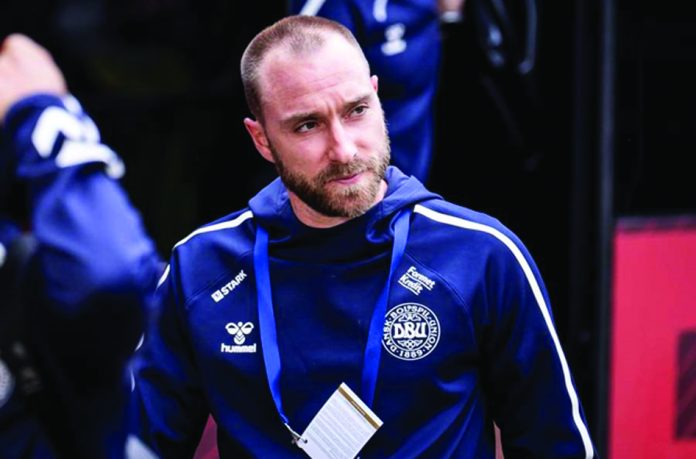
Christian Eriksen

Danish media source Tipsbladet writes that Christian Eriksen will sign for VfL Wolfsburg. The Danish international playmaker is allegedly currently in Germany and is set to be announced shortly as a new addition to the Bundesliga club who already have five Danes in the squad.

Christian Eriksen will allegedly continue his career in the German Bundesliga.

The Danish superstar has been convinced by Danish sports director Peter Christiansen to sign for VfL Wolfsburg, who already have Andreas Skov OlsenJonas WindAdam DaghimJesper Lindstrom, and Joachim Maehle in the squad.

Tipsbladet reveals that the Bundesliga club has agreed a contract with the greatest Danish footballer of recent times, and it is only formalities that need to be sorted out before the deal can be confirmed.

In his final season at Old Trafford, Eriksen only started in just 11 Premier League games but scored five goals and provided six assists in 35 games.

The charismatic playmaker provided 81 assists and scored 55 goals in the English Premier League and found the net on 46 occasions in 144 games for Denmark’s national side.

Former Ajax, Tottenham Hotspur, Inter, and Brentford man Eriksen who is in the aftermatch of his career can today already look back on 650 career appearances, 310 of those in the Premier League.

Christian Eriksen was not part of the Danish squad in the World Cup qualification matches against Scotland and Greece.

Credit: flashscore

The Complexities Of Mental Health Challenges And Bullying; A Nuanced Exploration

0
Opinion

As humans, mental health stability is a crucial factor that is necessary to maintain sanity in this very challenging world.

The World we live in is full of vagaries; challenges privy only to the eyes of the future.

In one way or another, we experience life throwing lemons our way, leaving us with the sole responsibility to either turn them into lemonade or eat them sour. For some, an opportunity to choose isn’t an option unfair right? But that is Life; simply unpredictable.

Mental health Challenge is a worrisome canker in today’s society, affecting great prospects of enviable futures and drowning many in its dark embers. Arguably so one out of the many lemons life presents.

Statistically, 19% of Ghanaians have mental illness, while 43% experience some form of psychological distress. Despite this, there is a severe shortage of mental health professionals and resources, leading to a 98% treatment gap.

According to the World Health Organization (WHO), some contributing factors to mental health conditions in Ghana include anxiety, depression, and substance use disorders.

For a developing Country like ours, this statistic is definitely worrisome but the real challenge lies with how these few unfortunate people are treated.


NEGLIGENCE OF THE MENTALLY CHALLENGED:

Now, the growing number of the mentally challenged on our streets is a topical issue, defeating the role of social welfare structures and reiterating the 98% treatment gap, which addresses the lack of resources and health professionals to cater to the mentally challenged in the country, just as the WHO reports.

Also, financial demands, spiritual associations with this menace, the stigmas, and lack of awareness sometimes tend to be contributing factors

that drive these people onto the streets. The evidence of all of these is seen when the mentally challenged are left to roam the streets without guidance, thereby seemingly taking control and living as ‘Kingpins’ on the street.

Even though they appear stuck in their own world of oblivion and seem unconcerned about the happenings around them, their actions sometimes pose a significant threat to unsuspecting citizens in the country.

THE NUANCE OF BULLYING:

Maybe it is the feeling of insecurity and lack of trust for humanity that makes the mentally challenged behave as such, or probably the delusions of their mind relative to the freedom they have on the streets and the need to protect and control it. These are the many scenario questions that run through my mind concerning the violence exhibited by these people sometimes.

Well, as a young journalist visiting the Effutu Municipal Assembly my beat area a few months ago, I experienced a traumatic moment when I was attacked by a mentally challenged woman at the main entrance of the Assembly.

That being my first encounter, I was greatly terrified as I tried to dodge many of the stick attacks while screaming for help. Help did come, and the woman was chased away, but the trauma I went through, rather stayed with me.

My rescuer, an NSS person at the Effutu Municipal Assembly, also shared with me the physical assault she and her colleagues at the Assembly had received from the ‘mentally challenged’ woman. Thankfully my encounter subtly prompted management to ‘drive away’ the woman from the entrance of the Assembly.

This scenario resonates deeply with a similar incident about 2years ago in Accra, when a ‘mentally challenged’ person murdered an unsuspecting Okada driver in cold blood on a sunny day.

For clarity, it’s imperative to point out that this issue is multifaceted, where the ‘mentally challenged’ people also face similar abuse from the supposed ‘normal’ humans by being victims of rape, rituals, assault, and murder, among others.

But that does not necessarily excuse the fact that, in cases where humans face prosecution when caught in any unlawful act against these people, seemingly, nothing happens to the ‘mentally challenged’,  when their actions also contradict the dictates of the law or cause harm to the citizenry.

Now, as we explore the complex and often troubling intersection of mental health Challenges and bullying, it is clear that a double-edged sword approach is needed. We can create a more empathetic, understanding, and supportive environment for all by acknowledging the nuances of these societal issues.

Notably, “we’re all part of a larger whole, connected by our humanity and strengthened by our diversity,” so let’s prioritize mental health, challenge bullying behaviors, and foster a culture that values inclusivity and the well-being of every individual.

By Rita Fordjour, level 300, UEW

INEC recognises David Mark-led ADC

0
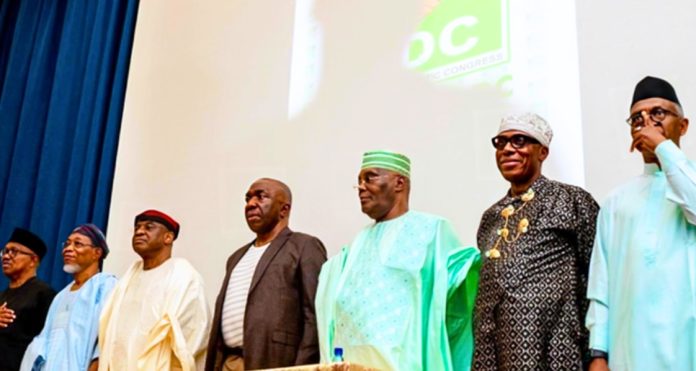
The coalition has several top politicians as members

The Independent National Electoral Commission (INEC) has officially recognised the leadership of the African Democratic Congress (ADC) led by a former senate president, David Mark.

The confirmation which was displayed on the website of INEC, was sighted by Channels Television on Wednesday

The recognition came after an internal restructuring that resulted in the emergence of national officers to reposition the party further ahead of the 2027 general elections.

Aside from Mark, who was appointed as the interim chairman, INEC listed a former Osun governor, Rauf Aregbesola, as National Secretary.

Other principal officers now officially recognised by the electoral body are a former Edo governor, Oserheimen Osunbor, as National Legal Adviser; Ibrahim Mani as National Treasurer, and Akibu Dalhatu as National Financial Secretary.

The opposition coalition officially adopted the ADC as it political platform on July 2, 2025, with the aim of contesting the presidential and other elections in 2027.

The coalition said it was set to rescue the country from collapse and rebuild its democracy.

“Let it be known to all that this coalition of national political opposition groups goes beyond gaining political power. It is a concerted effort to rebuild the crumbling pillars of Nigeria’s democracy.

“The mission is clear: Rescue Nigeria. Rebuild Nigeria. Return power to the people,” said Mark.

The former leader of the senate alleged that the Federal Government led by the All Progressives Congress (APC) had hijacked all democratic institutions, and sent the country on a “creeping descent into total civilian dictatorship” in the last two years.

Mark also said the current government was “consumed with politicking” and had abandoned governance. Also part of the movement are the 2023 presidential candidate of the Peoples Democratic Party, Atiku Abubakar; his Labour Party counterpart, Peter Obi; a former governor of Kaduna State, Malam Nasir El-Rufai; and a former Rivers State governor, Rotimi Amaechi, who were present at the unveiling.

Credit: channelstv.com

The Ghanaian Chronicle