The Eastern Regional Police Command has assured the general public, particularly visitors traveling from far and near to Akropong, that robust security measures have been put in place to ensure a peaceful and incident-free celebration of this year’s Odwira Festival.
This assurance was contained in a statement issued by the Police Command on October 23, 2025 and signed by Superintendent Ebenezer Tetteh, Public Affairs Officer (PAO) of the Eastern Regional Police Command.
According to the statement, security operations will be intensified before, during and after the festival, which officially commenced on Monday, October 20 and will climax on Friday, October 24, 2025 with a grand durbar of chiefs and a series of commemorative activities.
The Police Command outlined several directives aimed at maintaining order and safety throughout the celebrations.
It warned that weapons would not be permitted to the durbar grounds and that no live ammunition shall be fired within the municipality or at any festival venue, adding that those who have been officially authorised to fire musketry are expected to be properly tagged and easily identifiable at all times.
It further announced that motorbikes would not be allowed beyond the Old Assembly Junction in Akropong. However, designated parking areas have been provided at Shoe Fabrique, Municipal Assembly, Dachie Junior School, Christ Church Park and the Old Court Premises to ease congestion.
The statement also advised that all traditional activities leading to the main festival, including the visit by Amaprobi to bring the Odwira, should be conducted during daylight hours to ensure full police supervision and effective security coverage.
On traffic management, festival goers have been encouraged to use alternative routes such as Ofankor–Pokuase–Nsawam and Dodowa–Somanya–Adukrom highways to avoid heavy traffic to be expected on the Ayi-Mensah–Aburi–Mamfe stretch.
The Police Command emphasised that their personnel would be deployed in large numbers across major highways to the Akropong township and the durbar grounds, throughout the celebration period.
Police officers will maintain high visibility both day and night and would ensure maximum protection of lives and property.
“We wish to assure everyone that our presence will be strongly felt everywhere to ensure that all persons go about their activities in an atmosphere of peace and tranquility,” the statement noted.
The Command, however, warned that any individual or group found engaging in acts that could disturb public peace would be dealt with in accordance with the law.
The Ministry of Food and Agriculture (MoFA) has released 25,000 bags of fertiliser for immediate distribution to 413 schools participating in the Feed Ghana Programme.
According to a statement issued by the Ministry’s Public Relations Office, the intervention forms part of efforts to support ongoing Minor Season crop production and ensure sustained agricultural productivity across the country.
The fertiliser support is expected to improve crop yields and strengthen the contribution of school farms – particularly those operated by Primary, Junior High and Senior High Schools, to national food and nutrition security.
The Deputy Feed Ghana Coordinator, in charge of Institutional Farming, has been tasked to oversee the prompt distribution of fertiliser to beneficiary schools, to facilitate timely application and maximize impact.
MoFA reaffirmed its commitment to providing essential agricultural inputs and technical assistance under the Feed Ghana Programme, which remains a key component of the government’s Agriculture for Economic Transformation Agenda (AETA).
The Ashanti South Regional Police Command has apprehended the suspect in the centre of the shooting incident at Kwabenakwa in the Obuasi East Municipality in which six persons sustained various degrees of injuries.
The suspect, identified as Joseph Antwi, alias Kofi Koo, 32, was arrested at Kwabenakwa Police Barrier on October 17, 2025 by policemen on duty at the barrier, when he (Kofi Koo) was trying to escape.
The Police had earlier secured an arrest warrant from the Obuasi Magistrate Court and had declared the suspect wanted.
Since the incident, police personnel had been charged by the Regional Commander, ACP/Mr. Joseph Hammond Nyaaba, to make every effort to apprehend the suspect to face justice.
A Press statement signed by ACP Nyaaba, indicated that on October 14, 2025 the Kwabenakwa Police received information that one Kofi Koo had fired gunshots at Kwabenakwa lorry station, injuring six people in the process.
The victims, who were rushed to various hospitals in the Obuasi municipality were Karatina Boateng, 20 and her one-year-old baby boy; Ibrahim Rean; Samuel Agyaben, 37; Maxwell Nyarko, 20; Achiaa Mensah, 28 and Mallam, 24 years.
All victims who suffered various degrees of injuries were treated and discharged on the same day, except Karatina and her baby, who were referred to the Komfo Anokye Teaching Hospital (KATH) for further medical attention.
The suspect, Joseph Antwi, on Tuesday, October 21, 2025 was arraigned before court on the preliminary charge of causing harm, contrary to Section 69 Criminal and Other Offences Act 29/60 and was remanded in prison custody to re-appear on November 4, 2025 pending further investigations.
Fresh allegations of corruption have once again hit the Computerised School Selection and Placement System (CSSPS), compelling the Minister of Education to launch a full-scale investigation into the matter.
In a statement issued by the Ministry of Education and sighted by The Chronicle, the Ministry acknowledged the growing reports of bribery and extortion allegedly plaguing the placement process.
“The attention of the Ministry of Education has been drawn to media publications attributing allegations of bribery in the ongoing school placement process to the Member of Parliament for Akrofuom, Joseph Azumah,” the statement read.
Mr. Joseph Azumah had earlier claimed that a constituent approached him at Community 16, where he resides, to help secure placement for their child.
According to him, within a week, the person returned with evidence, showing that they had paid GH¢30,000 to facilitate the school placement.
Meanwhile, the Ministry noted that it views these allegations, alongside similar claims recently made by the Secretary of the Construction and Building Workers’ Union of the Ghana Trades Union Congress (TUC), Mr. Richard Asamoah Mensah, with “the utmost seriousness and concern.”
Given the gravity of the claims, the Minister of Education has convened a meeting with National Security and has formally referred the allegations for urgent and thorough investigation.
The statement assured the public of the Ministry’s unwavering commitment to uphold integrity, transparency and fairness in the CSSPS process.
“Any individual found to have engaged in acts of bribery, extortion or manipulation of the Computerised School Selection and Placement System will face the full rigours of the law,” the statement emphasised.
The Ministry further urged Joseph Azumah, Mr. Richard Asamoah Mensah and any other persons with credible evidence to fully cooperate with National Security to aid the ongoing investigations.
It concluded by reaffirming the Ministry’s resolve to safeguard the integrity of the school placement system and ensure that access to secondary education in Ghana remains free, fair and merit-based for every eligible child.
Dr. Joyce Rosalind Aryee, Executive Director, Salt and Light Ministries
“There is no one righteous, not even one; there is no one who understands; no one seeks God.But now a righteousness from God, apart from law, has been made known, to which the Law and the Prophets testify. This righteousness from God comes through faith in Jesus Christ, to all who believe. For there is no difference; – Rom. 3:10, 21-22. (NIV)
INTRODUCTION
Dictionaries define righteousness as “behavior that is morally justifiable or right.” Such behavior is characterized by accepted standards of morality, justice, virtue, or uprightness. The Bible’s standard of human righteousness is God’s own perfection in every attribute, every attitude, every behavior, and every word. Thus, God’s laws, as given in the Bible, both describe His own character and constitute the plumb line by which He measures human righteousness.
The bad news is that true and perfect righteousness is not possible for man to attain on his own; the standard is simply too high. The good news is that true righteousness is possible for mankind, but only through the cleansing of sin by Jesus Christ and the indwelling of the Holy Spirit. We have no ability to achieve righteousness in and of ourselves.
But Christians possess the righteousness of Christ, because “For He made Him who knew no sin to be sin for us, that we might become the righteousness of God in Him.” – 2 Corinthians 5:21. This is an amazing truth. On the cross, Jesus exchanged our sin for His perfect righteousness so that we can one day stand before God and He will see not our sin, but the holy righteousness of the Lord Jesus.
ESTABLISHING OUR HEARTS IN RIGHTEOUSNESS
“Keep your heart with all diligence, for out of it spring the issues of life” – Proverbs 4:23
According to the above verse in Proverbs, our heart is the source of our life. Our life flows from our heart. The Holy Spirit resides in the spirit of the born again Christian. So there is a strong influence of the Holy Spirit in the heart of the new-born Christian. But our heart is also comprised of our soul. As Christians we can choose to focus our soul on the Lord, or on evil things. If we focus on corrupt, immoral, and evil things our heart will be affected detrimentally. It will cause our heart to be crooked or wicked, instead of straight or righteous. So the Scripture says to keep, or guard, our heart. It is wise to protect our heart as what we allow to dominate our heart will inevitably become the fruit, or influence the outcome, of our lives.
One way to approach life is to continually ask the question, “How will this decision or action affect my heart?” Everything we do, every thought we entertain, everything we watch, read, or listen to, shapes our heart. Therefore, the future prosperity of our life will flow from how well we care for our heart.
Think of everything you do, every moment of time, as a seed. We have been given responsibility for choosing which seeds to plant in our heart. What will you grow in the garden of your heart? What seeds will you choose? Our heart is our garden, and our life is the fruit of our garden. So next time you are tempted to dwell on a bad thought, think, “Do I want this seed to grow and manifest in my life?” Next time you are tempted to indulge in a sinful action ask yourself, “Do I want the extension, or fruit, of this sinful action to be what I am known for?”
God gives us the freedom to plant whatever we like in our garden. God loves us regardless of the good or bad choices we may make in our lives. You may be reaping the fruit of some poor choices right now. And God is still saying, “I love you.” But He has wise advice for us; He desires we have a good life. He says, “Guard you heart with all diligence.” This Hebrew word translated ‘diligence’ conveys the meanings of: prison and guard (ibid). A superintendent of a prison is very particular as to what goes in and out of his prison.
A prison has very tight security. Just as a superintendent watches over his prison, so we should also supervise our heart (our lives). We should exercise meticulous security with regards to what enters into our heart. Actually, even what comes out of it, as the Scripture says, “Wherefore, my beloved brethren, let every man be swift to hear, slow to speak, slow to wrath” – James 1:19, as “For out of the abundance of the heart the mouth speaks.” –Matthew 12:34b.
If what goes into, and what comes out of, our heart determines the success of our lives, what is the first important principle to establish in our heart? “In righteousness you shall be established;” – Isaiah 54:14
Righteousness is the key foundational truth we need to first establish in our heart. Jesus said, “But seek first the kingdom of God and His righteousness, and all these things shall be added to you.” –Matthew 6:33. Notice Jesus said, “His righteousness”, not our own righteousness. We have to seek and understand God’s righteousness. Isaiah 54:14 says, “Their righteousness is of me, saith the Lord.” God’s righteousness comes from God, not from within us. Humans cannot make themselves God’s righteousness, as all humans have sinned and are therefore inferior to God. God’s righteousness is a gift from God: “For He made Him who knew no sin to be sin for us, that we might become the righteousness of God in Him.” – 2 Corinthians 5:21
Righteousness, or right standing with God, has been attained for us through the exchange Jesus made on our behalf. Jesus took our sin and gave us His righteousness. God’s righteousness is imparted to us when we are made a new creature in Christ – 2 Corinthians 5:17. This righteousness is a gift from God and undeserved by us: “For if by the one man’s offense death reigned through the one, much more those who receive abundance of grace and of the gift of righteousness will reign in life through the One, Jesus Christ.”- Romans 5:17
Through our faith in Jesus’ blood, shed to remit our sins – Romans 3:25, God imparts righteousness to us by His grace. We actually become a new righteous creation, fully identifying in Jesus’ death, burial, resurrection and ascension. This is the foundational miracle we need to understand and have established in our heart. All the other miraculous promises of God come the same way, by God’s grace through faith. Righteousness must be established in our heart for us to truly have faith to receive our rich inheritance in Christ. Jesus has been made unto us righteousness (1 Corinthians 1:30). We are now “For all the promises of God in HimareYes, and in Him Amen, to the glory of God through us”. – 2 Corinthians 1:20
ESTABLISHING OUR MIND IN RIGHTEOUSNESS
God expects that, when we accept Jesus Christ as our Lord and Savior, we will be radically changed. In Romans 12:2 He tells us, And do not be conformed to this world, but be transformed by the renewing of your mind,
This transformation is to be a metamorphosis, of a magnitude at least comparable to that by which a caterpillar becomes a butterfly. He expects us to become totally different.
Scripture uses many different images to express the change that should occur: We become “a new creation; old things have passed away; behold, all things have become new.“ – 2Cor 5:17. It is almost as if we become a new species. Scripture speaks of the “first Adam” who was earthly and fell into sin, and the “second Adam” (Jesus Christ) who was sinless and holy – Rom. 5:12-19; 1 Cor 15:44-49.
We are “made new in the attitude of our minds” – Eph. 4:23.
We “put off our old self” and “put on the new self” – Eph. 4:22,24; Col 3:9-10.
We “live by the Spirit” and not by the flesh – Gal. 5:16; Rom 8:13.
We become “instruments of righteousness” rather than “instruments of wickedness” – Rom. 6:13.
Each of these metaphors, in a different way, emphasizes the magnitude of the change that is expected. Each is dramatic and astonishing in itself; their cumulative effect is even more powerful. We are talking about a tremendous transformation. It should be visible to others, but its internal effect should be far greater than what others can perceive.
THE GOAL OF THIS TRANSFORMATION
What is the goal of this metamorphosis? Scripture states it in a number of different ways, which overlap and can be seen as different ways of expressing the same basic concept. Scripture often does this, because our minds are inadequate to comprehend, and our language inadequate to express, the full scope of God’s revelation to us.
To be continued.
Stay blessed!
Please note that the preaching program on Sunny 88.7 FM – Tuesdays at 5:30 am has been temporarily put on hold. However, please continue to join us on Asempa 94.7 FM – Sundays at 5:30 am and YFM 107.9 – Sundays at 6:30 am for our Radio Bible Study, as well as on Sunny 88.7 FM every Sunday at 3:30 pm for Hymns and Their Stories.
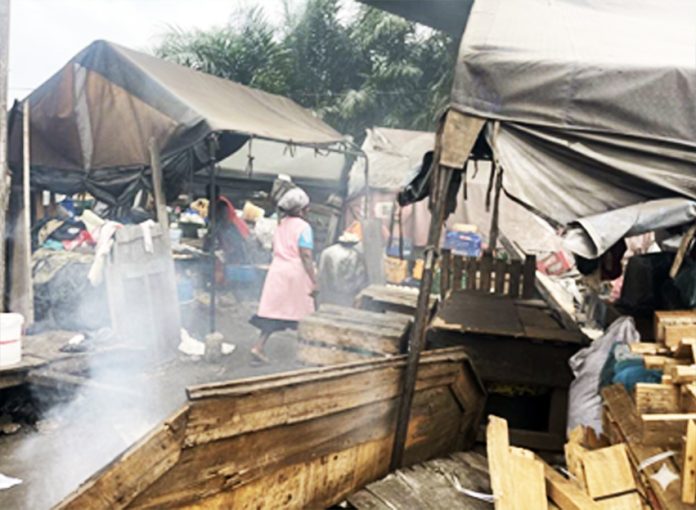
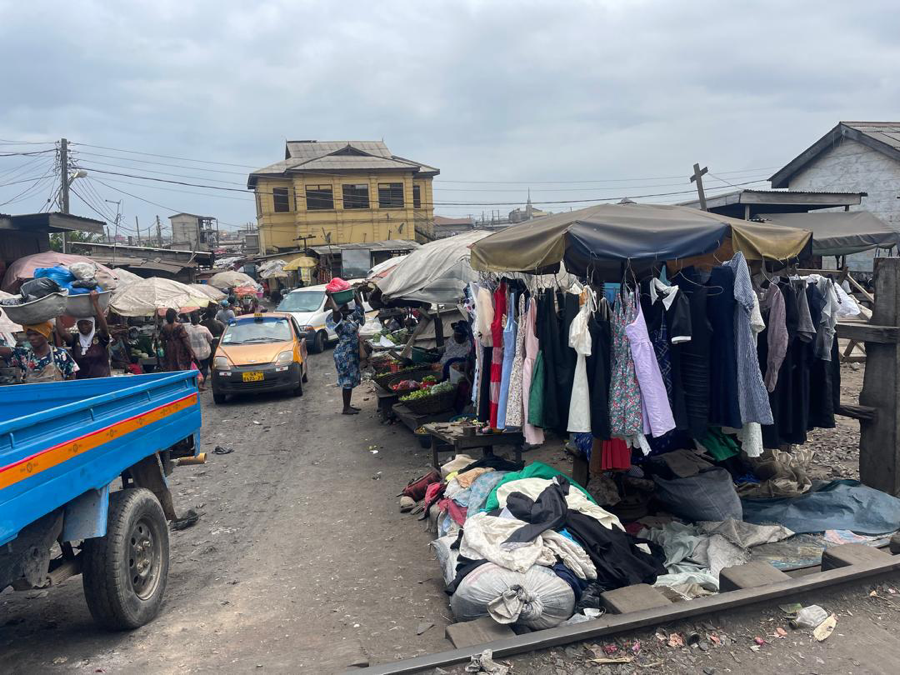
A woman walks through the smoky alleys of Agbogbloshie, where traders struggle to make a living amid pollution and poor sanitation.
AGBOGBLOSHIE, Accra –Here in the notorious informal community on the edge of the capital city, Efua Mensah along with the rest of the market sellers, wakes up to a haze.The smoke from fires – cooking and waste burning – never leaves the 46-year-old cancer survivor. It curls over the wooden stalls and settles in the folds of the bright plastic bowls she uses to carry tomatoes to market.
Efua’s hands move with the practiced rhythm of someone who has sold tomatoes for more than twenty years. She weighs, calls, and bargains. But since her diagnosis with breast cancer two years ago the smoke has become a menace. Doctors have warned: it could cost her life.
“I don’t have the strength I used to,” Efua says speaking in Twi language and adjusting a basket of tomatoes.“Sometimes I feel like my body is reminding me of everything it has been through. But I cannot stop working. This market is what feeds my family. If I don’t sit here, my children will go hungry, and that thought gives me the strength to keep going.”
Efua is part of a growing number of Ghanaian women who are developing breast cancer. In Ghana, it is estimated that one in 22 women will develop the deadly disease in her lifetime. Each year about 5,000 people are diagnosed and nearly 2,300 die, according to Global Cancer Observatory.Breast cancer is now the most commonly diagnosed cancer worldwide and one of the leading causes of cancer deaths among women.
While a range of factors are considered possible causes, in recent years researchers are focusing on a new one: air pollution. Recent research from around the world shows that women living in high-pollution areas—especially with more nitrogen dioxide (a marker of traffic emissions) -face a higher chance of developing breast cancer. A large U.S. study found an 8 percent higher incidence in women exposed to elevated levels of the fine particles, known as PM2.5, that are most dangerous to human health.
Air pollution is a growing problem in Accra – one of Africa’s fastest growing cities. A new study monitoring over 60 sites across Greater Accra from 2024 to 2025 found that Accra’s average concentration of the most dangerous air pollution is more than seven times higher than the World Health Organization guidelines.
According to the Clean Air Fund, roughly 3,000 premature deaths per year in Accra are now attributed to air pollution, adding to the health burden from asthma, cardiovascular disease, lung cancer and other illnesses that it causes or exacerbates.
But it’s informal settlements like Agogbloshie, home to Ghana’s poor, that experts say are most at risk anda glaring marker of health inequality. Agbogbloshie, a former wetland, is now one of the biggest electronic waste recycling areas in the world with a global reputation for its toxic smoke. Burning and breaking down old electronics releases harmful substances like lead, cadmium. Studies have shown that many market women there suffer from breathing problems and poor lung health.
Traders and vehicles navigate the crowded lanes of Agbogbloshie Market, where stalls line both sides of the road.
Traders and vehicles navigate the crowded lanes of Agbogbloshie Market, where stalls line both sides of the road.
Lily Ama Appiagyei, an air pollution expert, said some of the heavy metals and substances can interfere with normal hormone functions and damage human cells, increasing the risk of breast cancer.
Efua found a lump in her left breast in 2023. At Korle Bu Hospital, the diagnosis came back blunt: Stage II breast cancer.
“When the doctor told me, I felt my whole world collapse,” she recalls. “I kept thinking, what will happen to my children? At night I couldn’t sleep. I would lie awake imagining the worst, but in the morning, I had to rise and act strong, because I didn’t want my children to see my fear.”
The months that followed were a blur of hospital corridors and treatment schedules. She underwent surgery, followed by months of chemotherapy and radiotherapy that weakened her body.
“There were days when even lifting a bowl of tomatoes felt impossible,” she says. “I lost my hair, I lost weight, and I felt like I was losing myself. But I told myself that if I gave up, then the sickness had already won. So even when my body said no, I tried to keep moving, because I wanted my children to see that their mother was fighting.”
Fellow traders and her sister took turns helping to sell her wares. Gradually she recovered and this year was given the news that she is cancer free.
Today Efua watches the black haze rise above the shacks and
wonders aloud if the air she breathes might one day force her back into a hospital bed. “I have beaten cancer once, but sometimes it feels like I am still fighting every single day,” she saysquietly. “It’s frightening, but where else can I go? This market is my life, my family’s life. Every breath here feels like both survival and danger.”
Air Quality Monitoring Shows the Danger
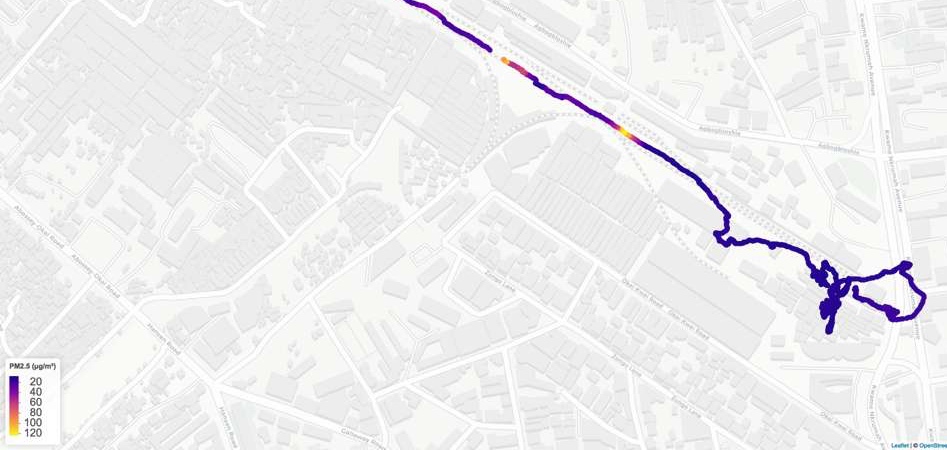
Experts say Efua is right to worry. This reporter carried a mobile monitoring device provided by OpenSeneca—under the guidance of a Ghana-based nonprofit Clean Air One Atmosphere (CAOA) –to assess the air pollution in the area. The data showed people were constantly exposed to high levels of fine particles – the most dangerous form of air pollution – including gases that are known to have a high cancer risk.
“It highlights the significant amount of carcinogens traders, hawkers, and vulnerable groups such as women/ pregnant women and children including those with existing health conditions that could be exacerbated by exposure to air pollution,” says Lily. “This finding is very disturbing because we take nearly 12-20 breaths per minute which is about 6-8 liters of air and people should not be poisoned for their right to life through exposure to dirty air due to the lack of appropriate leadership and mitigation strategies.”
Lily calls for quick action to protect people’s health. She said open-air burning of e-waste should be banned, and safer recycling methods should be used. She also urged stronger air quality checks, better control of car emissions, and the use of public transport. In addition, she suggested public education, regular health screenings, and early breast cancer detection for women at risk.
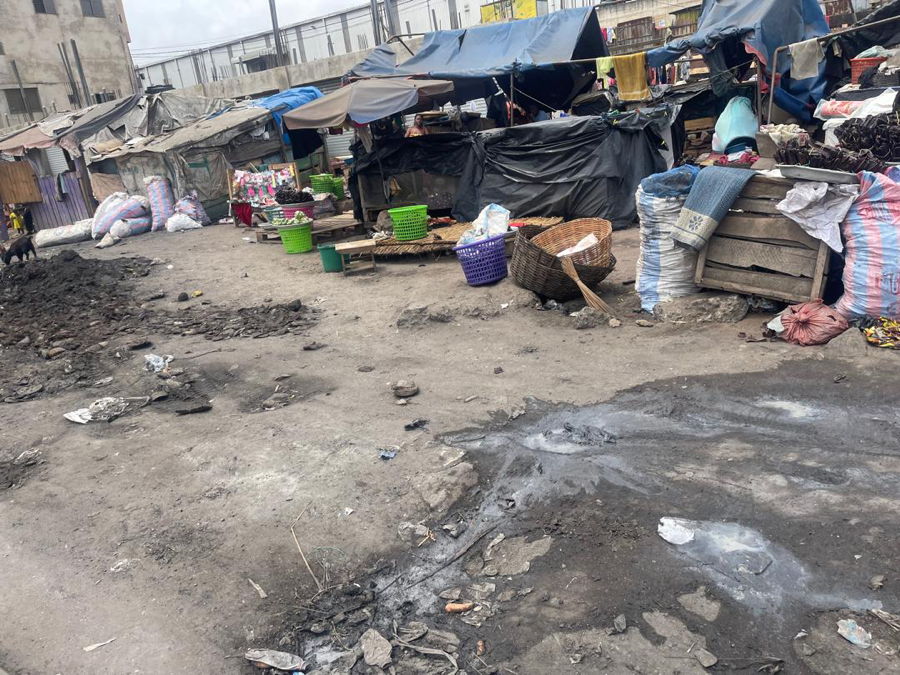
Traders at Agbogbloshie operate in challenging conditions, surrounded by heaps of waste and poor sanitation
Since 2021, Ghana’s government has mounted repeated attempts to reclaim and sanitize Agbogbloshie. The demolition of hundreds of makeshift workshops and homes was cast as a bold environmental cleanup meant to rid the area of open burning of e-waste. Authorities pledged to relocate scrap dealers to a new recycling center outside the city and to restore the Korle Lagoon, whose dark waters have carried the site’s pollutants into the Gulf of Guinea.
But years after the bulldozers moved in, the air around Agbogbloshie remains heavy with smoke and the acrid tang of burning plastic.Government clean-up campaigns and international partnerships — including projects with Germany’s GIZ and the Accra Metropolitan Assembly to introduce safer cable-stripping and waste collection — have made only modest dents in pollution levels.
Scrap workers have trickled back, reigniting the small fires that feed the trade. Critics say that without a sustained plan for soil remediation, monitoring, and enforcement, the government’s interventions risk becoming another cycle of demolition and return — a visible purge that leaves the toxic air largely unchanged.
The trail taken by this reporter with the air pollution monitor from Accra Central to Agogbloshie at between 1:00AM to 1:00 pm shows areas with what experts called “disturbing” levels of air pollution
Gilbert Nii Ankrah, public relations officer for the Accra Metropolitan Assembly which is in charge of the area, did not respond to a request for comment by deadline.
Early Detection Essential To Beating Cancer But Opportunities Are Missed
Efua was lucky. She caught the cancer early. Most Ghanaian women do not.
“About 60–80 percent of breast cancer patients present in Stage III and IV,” according to Dr Josephine Nsaful, president of the Breast Society of Ghana. At early stages survival rates can be 90 percent in Ghana as they are elsewhere in the world.
Myths and stigma compound the problem. “There are a lot of misconceptions.People think breast cancer is a spiritual disease or that there is some cure elsewhere,” Dr Nsaful says. “Because the lump is not painful at first, women delay. The stigmatization doesn’t help. People would rather pretend they don’t have it, and by the time they come, it’s no longer curable.”
For her, the solution is clear: “The way forward is early detection and decentralization of breast cancer care. Every woman should examine her breasts monthly. Even without enough mammograms, clinical breast examination by a nurse or doctor once a year is a good start.”
Sadly, she notes that as the number of cases goes up so are the number of cases in younger women. “It is very alarming that we see women in their 30s and even in their 20s with breast cancer. And unfortunately, in young women we often see the aggressive subtype of breast cancer.”
Appiagyei wants to see an urgent and serious clean up at Agbogbloshie. She said open-air burning of e-waste should be banned, and safer recycling methods should be used. She also urged stronger air quality checks, better control of car emissions, and the use of public transport. In addition, she suggested public education, regular health screenings, and early breast cancer detection for women at risk.
In the meantime she strongly urges that locals protect themselves immediately.
“Folks at and around Agbogbloshie and those in traffic dominated areas where nose masks to protect themselves as a short-term precautionary measure,” Lilly recommends.
For women like Efua, the market continues to be both a livelihood and a trap: it feeds their families while exposing them to risks that may one day take their lives.
Mr Alban Bagbin, the Speaker of Parliament, has officially referred the nomination of Supreme Court Justice Paul Baffoe-Bonnie as Chief Justice of Ghana, to Parliament’s Appointments Committee for vetting.
This follows the nomination of Justice Baffoe-Bonnie by President John Dramani Mahama, who announced the decision on Tuesday, September 23, 2025.
The nomination was made in accordance with Article 144(1) of Ghana’s 1992 Constitution, following the removal of the former Chief Justice Gertrude Torkornoo.
In an official communication from the President to Parliament, read by Speaker Bagbin on Tuesday October 21, 2025, to the House in Accra, the Speaker said the House had received formal correspondence from the Presidency regarding the nomination and had, in line with parliamentary procedure, forwarded the matter to the Appointments Committee for further action.
Justice Baffoe-Bonnie, currently serving at the Supreme Court, is known for his long and distinguished judicial career.
He had previously served at the High Court and the Court of Appeal.
The Presidency, in its earlier statement, described him as a jurist of “unwavering commitment to justice” whose “invaluable contributions to the development of Ghanaian jurisprudence” make him well suited for the nation’s highest judicial office.
The Appointments Committee is expected to schedule a public vetting session in the coming days, after which a recommendation will be made to the full House for approval or otherwise.
If confirmed by Parliament, Justice Baffoe-Bonnie will become Ghana’s next Chief Justice, succeeding Justice Gertrude Torkornoo.
Viral hitmaker MOLIY returns with her electrifying new single ‘Body Go’ featuring Grammy-winning superstar TYLA. The collaboration between two of Africa’s brightest stars delivers an effortless fusion of R&B, Pop, Amapiano, and Afrobeats, creating a global dance anthem that celebrates rhythm, confidence, and movement.
‘Body Go’ follows the massive success of MOLIY’s record-breaking global smash ‘Shake It to the Max (FLY) [Remix]’, which surpassed 1 billion streams and was named one of the Songs of the Summer 2025 by both Spotify and TikTok.
Fans of each other’s artistry, Ghanaian-American MOLIY and South African TYLA came together with a shared vision – to celebrate feminine power, unity, and joy. Their chemistry radiates through every beat, creating an empowering anthem for the ultimate girls’ night out, while continuing to push African sounds further into the global mainstream. The collaboration came together organically. After MOLIY recorded the song, she immediately felt it needed “another baddie” – and sent it to Tyla, who instantly connected with it and recorded her verse before they even met in person. Their first meeting in New York City sealed their bond.
MOLIY says: “When I was done recording the song, I just knew it needed another baddie, so I sent Tyla the record hoping she’d feel it. When she sent back her verse, it was perfect. The first time we met, it didn’t even feel like the first time.”
TYLA adds: “I remember hearing ‘Body Go’ for the first time and thinking, ‘Yeah, I need to be on this.’ Meeting MOLIY in New York felt like meeting an old friend. This one is special because it’s so playful and light.”
Produced by French producer FRNCH and Grammy-winning producer DEE/MA, ‘Body Go’ blends pulsating amapiano basslines with smooth Afrobeats melodies and irresistible hooks, embodying the freedom, joy, and movement of a night out across Africa’s vibrant cities – from Accra to Johannesburg, Lagos to Nairobi.
MOLIY is one of Africa’s most dynamic voices, blending Afropop, R&B, and dancehall with fearless flair. Her viral hit ‘Shake It to the Max’ became a worldwide sensation, and its remix featuring Skillibeng and Shenseea cemented her as a global breakout star – surpassing 1 billion streams and topping charts worldwide.
TYLA is a Grammy Award-winning South African superstar redefining global Pop with her Amapiano-infused sound. Her breakout hit ‘Water’ became a worldwide cultural phenomenon.
Mr. Samuel Okudzeto Ablakwa, Ghana’s Minister for Foreign Affairs, has called for urgent reforms of key global institutions, including the United Nations Security Council, the International Monetary Fund (IMF) and the World Bank, to make them more representative, equitable and responsive to the realities of the 21st century.
The calls come amidst growing concerns among developing nations that the current global governance and financial systems no longer reflect today’s geo-political and economic realities.
The Foreign Minister emphasised that meaningful reform of the United Nations Security Council, IMF and the World Bank was essential to restore fairness and credibility in international decision-making.
That, he said, would ensure equitable access to resources and give Africa and the wider Global South a stronger voice in shaping solutions to shared global challenges.
Mr Ablakwa made the call on Wednesday when he addressed a High-Level Dialogue jointly organised by the Ministry of Foreign Affairs and the United Nations (UN) in Accra, to mark the 80th anniversary of the UN.
The dialogue formed part of Ghana’s weeklong activities commemorating the UN’s 80th anniversary, celebrating eight decades of partnership and shared responsibility between Ghana and the UN, toward building a fairer and more sustainable world.
The event, held on the global theme: “UN@80: Building Our Future Together” and the national theme “Ghana and the UN – Shared Responsibility for a Better Tomorrow,” brought together diplomats, academics, civil society actors and development partners to reflect on “The Future of Multilateralism in a Changing World” and “Advancing Sustainable Development and Finance in a Fragmented Global Order.”
The Minister for Foreign Affairs said as the UN marked eight decades of existence, the world must renew its faith in multilateral cooperation, which remains the most powerful mechanism for peace, development and shared prosperity.
He described the UN as humanity’s “greatest expression of hope,” emphasising that its founding ideals of dialogue, collective problem-solving and respect for sovereignty remained as vital today, as they were in the aftermath of the Second World War.
“The future of multilateralism must be one of renewal and reform, not retreat,” he said, adding that “the United Nations must evolve into a more agile, representative and responsive institution capable of addressing 21st-Century realities, while upholding its founding ideals.”
Citing President John Dramani Mahama’s address to the 80th Session of the UN General Assembly in New York, Mr. Ablakwa reiterated Africa’s demand for permanent representation on the UN Security Council, noting that the current structure did not reflect the global demographic and economic landscape.
He stated that, “a continent as large and significant as Africa must have at least one permanent seat on the Security Council,” he said, adding that reform would help restore “legitimacy, equity, and trust in global decision-making.”
The Minister further called for a “reset” of the international financial architecture, which he said was “rigged against Africa and much of the Global South.”
He stressed that many developing nations remained trapped in cycles of unsustainable debt and lacked fair access to capital and trade.
He urged the UN to champion financial justice through debt relief, sustainable investment, and climate-sensitive financing mechanisms that prioritized people and planet over politics and profit.
Mr. Ablakwa condemned the growing attacks on humanitarian aid workers, noting that 2024 recorded a sharp increase in such incidents, with preliminary data suggesting an even worse trend for 2025.
He recalled Ghana’s participation in the signing of the Declaration for the Protection of Humanitarian Personnel during the UN General Assembly, affirming the country’s commitment to ensuring that aid workers were protected and able to operate safely in conflict and disaster zones.
The Minister stressed that the UN must strengthen coordination with regional organizations such as the African Union, ASEAN, the European Union and CARICOM to ensure that peacebuilding, development, and humanitarian efforts were locally informed and regionally owned.
The UN Resident Coordinator in Ghana, Mr. Zia Choudhury, in his keynote address reflected on the founding ideals of the UN and the urgent need to safeguard them in an era of misinformation, conflict and geo-political tension.
He reminded the audience that the UN was created out of the devastation of World War II to build a system rooted in peace, human dignity and cooperation.
“The theme: ‘UN at 80: Building Our Future Together,’ reminds us that the future we seek cannot be achieved alone,” he said, adding that “It requires shared responsibility, strong partnerships and a renewed commitment to multilateral cooperation.”
Mr. Choudhury commended Ghana for being a consistent and reliable partner of the UN through peacekeeping, diplomacy, and development initiatives.
He described the UN as a “global family” acknowledging its imperfections but emphasises that dialogue and collaboration remained the most effective tools for global problem-solving.
“I’d rather talk all day than fight all day,” he said, urging the protection of spaces for open and critical dialogue in a world increasingly driven by short, emotion-laden communication.
He also called on member states to confront uncomfortable truths and embrace bold reforms to make the UN fit for purpose, especially in the face of challenges such as climate change, inequality, and erosion of international law.
The dialogue featured two thematic panels moderated by journalist Bernard Avle and Dr. Aggrey Darko, Head of Civil Service.
Panelists included – Prof. Henrietta Mensa-Bonsu, Dr. Vladimir Antwi-Danso, Sangu Delle, Alhassan Andani, Prof. Godfred Bokpin and Mr. Augustine Simons, who discussed the evolving role of multilateralism, sustainable finance, and global economic equity.
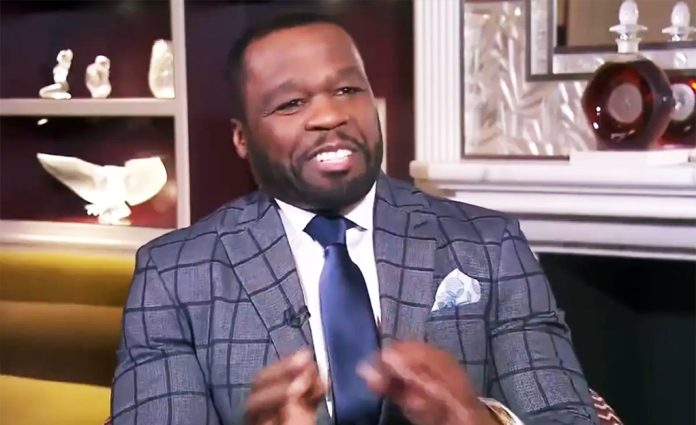
The “In da Club” rapper was asked if he likes the “Cruel Summer” songstress and Kansas City Chiefs tight end together, to which he replied, “I do, I do. I like it a lot better than the last thing [Kelce] had going on.”
In the song, the hitmaker croons, “And it was not an invitation / But as the 50 Cеnt song played / Should’ve kissed you anyway.”
“It really is cool because when she makes the reference, if you listen to the song, it’s to what was going on in culture at that time,” he explained.
“The music, you couldn’t miss it at that point and that’s why it was cool to me… What she was making reference to is the period that no one was more prominent in music at that point.”
Swift also seemingly dissed Kelce’s former girlfriend in her track “Opalite,” singing, “You couldn’t understand it, why you felt alone / You were in it for real, she was in her phone / And you were just a pose.”
Kelce and Nicole, who is a prominent sports journalist and content creator, dated from 2017 to 2022. The NFL star subsequently began dating Swift in the summer of 2023, with the pair announcing their engagement in a romantic social media post on Aug. 26.
50’s swipe at Nicole is just the latest in a string of bold public insults. The rapper, 50, brutally trolled industry rival and disgraced music mogul Sean “Diddy” Combs in a string of savage social media posts amid his sex trafficking trial and sentencing.