Home Blog Page 395

Editorial: Is Corruption Fighting Back OSP?

0
Editorial

In the last week, Ghana has witnessed a disturbing turn of events: a coordinated attempt within Parliament to abolish the Office of the Special Prosecutor (OSP), the country’s most potent institutional weapon against high-level corruption. This attack, coming from lawmakers who should be defending the public interest, has reignited a pressing national question: Is corruption now fighting back?

 The Chronicle observes with deep concern that this political offensive has unfolded at the same time reports emerged that Special Prosecutor Kissi Agyebeng has allegedly survived two assassination attempts. Whether coincidental or connected, the optics are troubling. When the very office mandated to investigate political graft becomes the target of legislative manoeuvring and personal threats, it suggests that entrenched corruption networks may be pushing back with alarming force.

The OSP was established through Act 959 in 2017 and became operational in 2018. It was born out of public frustration with the limited effectiveness of existing anti-corruption bodies such as Commission for Human Rights and Administrative Justice (CHRAJ), Economic and Organised Crime Office (EOCO) and the Attorney-General’s Department. The OSP’s mandate was clear: an independent, specialised institution empowered to investigate and prosecute corruption especially political corruption.

It is, therefore, shocking that calls for its abolition now originate from both sides of Parliament. Even more astonishing is the fact that some of the MPs leading this charge formerly sat on the Constitutional and Legal Affairs Committee—the very committee that drafted and defended the legislation that created the OSP. Their sudden reversal raises serious questions about motive and credibility.

 The Chronicle reminds Parliament that Ghana’s corruption crisis is not theoretical. It is real, systemic and costly. The Ghana Anti-Corruption Coalition estimates that the nation loses US$3 billion annually to corruption—money that could transform infrastructure, improve schools, modernise hospitals and create economic opportunity for millions. Corruption has long inflated the cost of public goods, weakened institutions and undermined trust in governance.

The creation of the OSP was a response to this reality. It was never intended to solve corruption overnight. No anti-corruption institution anywhere in the world achieves instant success. Yet the OSP has provided a deterrent effect and exposed questionable deals, including investigations such as the Minerals Income Investment Fund (MIIF) probe, which reportedly prevented potential losses to the state.

This is why the attempt by some MPs to use the Ken Ofori-Atta’s case as a basis to scrap the entire OSP is deeply flawed. As former Tamale Central MP, Alhaji Inusah Fuseini argued, it is intellectually dishonest to judge the usefulness of the OSP by a single case. Anti-corruption work is slow, complex and often met with institutional sabotage. To claim the office has failed after eight years ignores global experience and deliberately understates its preventive impact.

 The Chronicle therefore, highly commends President John Dramani Mahama for acting swiftly to restore public confidence by directing Majority Leader, Mahama Ayariga, and Majority Chief Whip, Rockson-Nelson Etse Kwami Dafeamekpor to withdraw their repeal bill. His intervention has prevented what could have been a catastrophic blow to Ghana’s anti-corruption architecture.

However, The Chronicle urges the governing National Democratic Congress (NDC) to exercise restraint and avoid any posture that suggests an attempt to weaponise its parliamentary majority. Ghanaians are increasingly discerning. Any attempt—real or perceived—to weaken accountability institutions will not go unnoticed, nor will it be forgiven easily at the political altar.

If Parliament succeeds in crippling the OSP, it will not be the office that has failed, but rather the political establishment that has capitulated to corruption’s counteroffensive.

The Chronicle believes the recent developments are not mere political theatrics. They are symptoms of a deeper battle between reform and resistance—between the national interest and entrenched corruption.
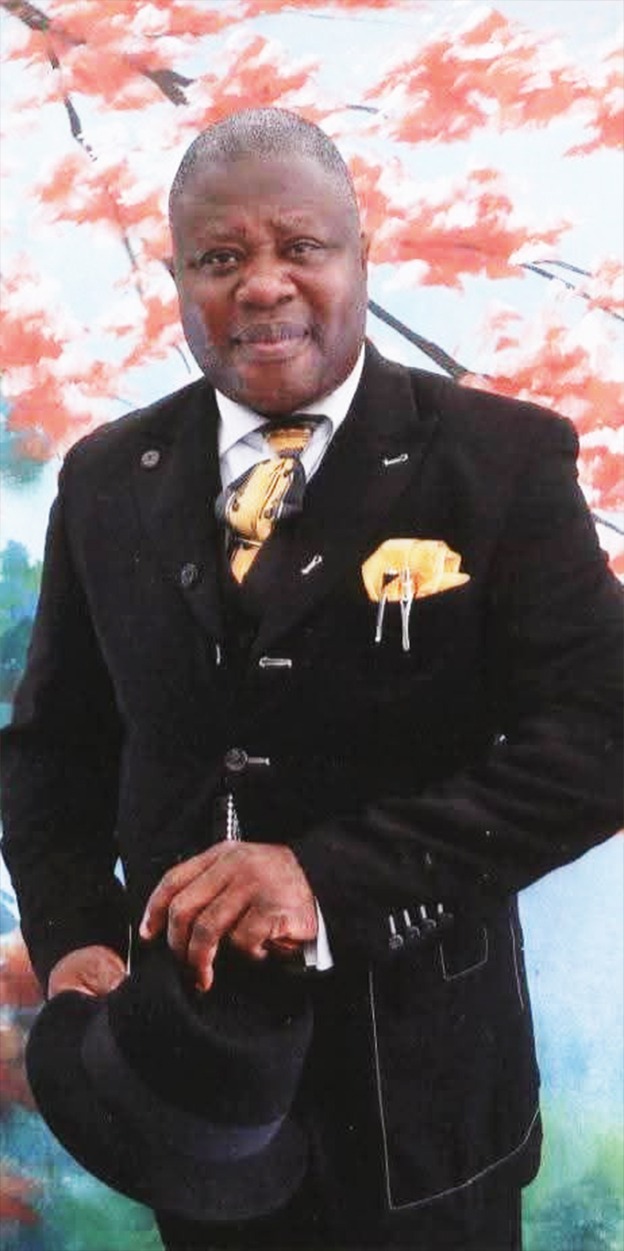

 

On the Question of a Third Term:  An Open Letter to President Mahama

0
Seth Kwame Awuku

Your Excellency,

With the deepest respect for your long and distinguished service to Ghana, I write as a citizen profoundly committed to the enduring strength of our democracy.

At a moment when your leadership is widely lauded, voices, some sincere, others opportunistic, have urged Your Excellency to consider a third presidential term. While often framed as tributes to your experience and leadership, these calls must be measured against the clear letter and enduring spirit of our 1992 Constitution.

If your authority will permit me, Article 66(2) is unequivocal: ‘A person shall hold office as President of the Republic of Ghana for not more than two terms of four years each:

The imperative “shall” admits no exception. Any alteration would require the extraordinarily rigorous process prescribed in Article 290: a two-thirds parliamentary majority, followed by a national referendum, and finally presidential assent, an intentionally high threshold, designed to shield the Republic from fleeting political ambition.

Your Excellency, History teaches us that limits are essential. Mature democracies worldwide treat presidential term limits as safeguards against the concentration of power. In the United States, even fervent supporters of former President Donald Trump acknowledge that the Twenty-Second Amendment renders a third term legally impossible without a formal constitutional amendment, a path universally regarded as politically unfeasible and institutionally perilous.

Africa’s own experience is a cautionary tale. Leaders who sought to evade or reset term limits – Guinea (Alpha Condé, 2021 coup), Niger (Mamadou Tandja, 2010 coup), Burkina Faso (Blaise Compaoré, 2014 uprising and exile) – almost invariably triggered severe instability, violence, or military intervention.

Even in neighbouring Côte d’Ivoire, President Ouattara’s constitutionally contested third term (enabled by a controversial reinterpretation of the 2016 Constitution) provoked boycotts, protests, and enduring political division. These are not abstract precedents; they are recent, regional warnings.

Our nation has distinguished itself as a beacon of democratic maturity precisely because we have respected, without exception, the principle of leadership renewal through the ballot box every eight years. To entertain any manoeuvre around Article 66(2), however artfully presented, would risk placing our hard-won stability in grave and unnecessary peril.

True statesmanship is measured not only by what one achieves in office, but also by the dignity and resolve with which one chooses to leave it. Some of history’s most revered leaders – George Washington, Nelson Mandela, Ellen Johnson Sirleaf – are remembered not only for the progress they delivered, but for the honourable example they set by voluntarily stepping down.

By firmly and publicly closing the door on any third-term ambition, you would not diminish your legacy, you would immortalise it. You would reaffirm, in the clearest possible terms, that in Ghana, no individual, however accomplished, stands above the Constitution. You would strengthen our institutions, reassure investors and partners, inspire younger leaders, and silence those who cynically wait for any perceived weakness to undermine all you have built.

Please permit me to refer to Lord Acton’s warning which remains timeless: “Power tends to corrupt, and absolute power corrupts absolutely.” The wisest leaders are those who recognise that the greatest service they can render their nation is to ensure that power remains temporary, accountable, and renewable only by the sovereign will of the people.

Your Excellency, the mantle of legacy rests in your hands. Ghana’s Fourth Republic has endured because each of our presidents, Rawlings, Kufuor, Mills, yourself, Akufo-Addo, has respected the two-term limit. Let that proud tradition continue unbroken under your watch.

With utmost respect, admiration, and unwavering faith in Ghana’s democratic future,

By Seth Kwame Awuku

Citizen of the Republic of Ghana

sethawuku.sa@gmail.com


Editor’s note: Views expressed in this article do not represent that of The Chronicle

Ledzokuku MP, MCE inspect burnt school 

0
The MP interacting with headteacher of the school during the visit

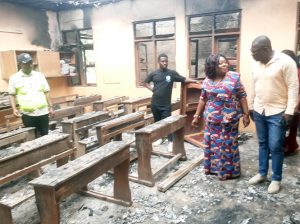
The Member of Parliament for Ledzokuku, Benjamin Ayiku Narteh, and the Municipal Chief Executive (MCE), Israel Adjetey Otchwenmah, have visited the burnt Teshie Camp 2 primary B and Junior High School.

The inferno, which took place last Wednesday evening around 6:45 pm after a downpour destroyed the class three classroom and the school’s store. It also destroyed items such as exercise books, textbooks, a set of drums, set of canopies, furniture among other items. A team from the Ghana National Fire Service with support from the community members managed to bring the fire under control.

The Municipal Director of Education (2nd) interacting with the Municipal Engineer for LEKMA during the inspection

The MP and the MCE visited the burnt facility on Thursday to have first-hand information of the burnt facility and what could be done to reconstruct it. Accompanying them were the Municipal Engineer and other technical staff, a team from the GNFS, the National Disaster Management Organization (NADMO) as well as representative of the Teshie Traditional Council.

In a brief comment, the MP urged the Assembly to do everything possible towards the reconstruction of the facility to ensure that the displaced pupils get a place to study.

He assured the school of their preparedness to collaborate to help fix the facility with the utmost speed it deserved.

The Municipal Chief Executive (MCE), Israel Adjetey Otchwenmah, pledged to put in place the right measures and resources to ensure the speedy completion of the facility. The Municipal Director of Education, Mrs Theresa Tetteh, who had earlier visited the school, also sympathised with the staff and pledged to link up with the right authorities for the needed resources to be provided to the school towards the promotion of effective teaching and learning.

She urged the staff to strive and manage the available resources in the school so they could continue with their teaching and learning until the burnt facility was reconstructed.

The Head teacher of the School, Madam Ruth Boye, was full of praise to the community for their swift response, which prevented the fire from escalating to other parts of the school.

She used the occasion to appeal to old students, Non-Governmental Organizations and other well-meaning Ghanaians to come and complement the government’s efforts towards the reconstruction and provision of needed resources to the school.

New DHRP Report Exposes Digital Risks facing young HIV patients

0
The Digital Health and Rights Project team at ICASA2025

A ground-breaking new report by the Digital Health and Rights Project (DHRP) has sounded a strong alarm over how young people living with and affected by HIV are being harmed by the rapid expansion of digital health systems across Africa and beyond.

The findings, released at a special satellite session at ICASA 2025, reveal serious risks around data privacy, online safety, digital exclusion, and the misuse of emerging technologies such as artificial intelligence.

The report, ‘Paying the Cost of Connection’, draws on research conducted from 2023 to 2025 across Ghana, Kenya, Vietnam and Colombia, involving over 300 young adults, health workers, policymakers, and community actors.

It uncovers a disturbing gap between Africa’s ambition to digitise health services and its readiness to safeguard the rights and safety of vulnerable populations.

In an interview with The Chronicle, Ms. Racheal Ewurabena Antwi, Vice Chair of the Ghana Community Advisory Team under the DHRP, said the findings reflect deeply rooted fears among young people who no longer trust the systems meant to protect them.

“From where I sit, I cannot say Africa is prepared. Young people still fear going to health facilities because they think their information will leak and they will be stigmatized. That means there is a major gap,” she said.

Madam Antwi noted that although conversations around data protection have increased since COVID-19, enforcement remains weak, and many young people—particularly those from key populations believe their personal health information could easily be exposed.

She stressed that stigma and confidentiality breaches remain some of the biggest deterrents to seeking HIV testing, treatment and support in Ghana.

The report highlights that unequal access to the internet and digital tools is worsening health inequalities. Antwi, reflecting on Ghana’s situation, condemned the harsh urban–rural digital divide.

Urban youth not only live closer to health facilities, but also have better access to devices and internet connectivity. Rural youth, on the other hand, struggle with basic access—creating a double barrier.

“Some young people must choose between eating and buying data. And some communities have zero internet access,” she noted.

This means the very young people who should benefit most from digital health such as those in remote, underserved communities are the ones left behind. While some organisations provide offline helplines for HIV information, Antwi said “it is not enough,” warning that the divide is widening and must be addressed urgently.

The report documents widespread cases of technology-facilitated abuse, including cyberbullying, doxxing, non-consensual sharing of private health information, and extortion—abuse that disproportionately affects young people living with HIV.

During the session, Mr Allan Achesa Maleche, Executive Director of KELIN, said these digital harms are now a major public health and human rights concern.

“Technology is advancing, AI is advancing, but so are the risks. If private health information is shared, it can lead to stigma, discrimination, and serious violations,” she said.

He added that abuse often begins online, but spills into real-world violence, leaving victims exposed with little recourse.

Beyond access, the report found that many young people lack the digital literacy needed to safely use online health tools. Some respondents had little knowledge of how to use apps, chatbots, or AI tools to find reliable health information.

He explained: “The divide is not just about data bundles—it is also about knowledge. Even with internet access, many young people do not know how to navigate digital platforms to get the help they need.”

Maleche stressed that Africa must now move beyond identifying the problems to defining clear responsibility. “What is the Human Rights Commission doing? Are judges being trained? Are lawyers ready for these cases? How are media houses amplifying the issues?”

He called for stronger digital rights governance, improved legal protections, and capacity-building across all sectors from the judiciary to the media to ensure young people are protected as countries expand digital health systems.

Antwi also urged policymakers, tech developers, and health institutions to involve diverse groups of young people in designing digital health tools.

“Bringing one young person into a room is not youth consultation. We have young people living with HIV, young people with disabilities, queer young people each group experiences digital barriers differently.”

She said any digital system that claims to serve young people must be co-created with them from start to finish.

I did my best for PDP but everything is falling apart now –Gov Adeleke

0
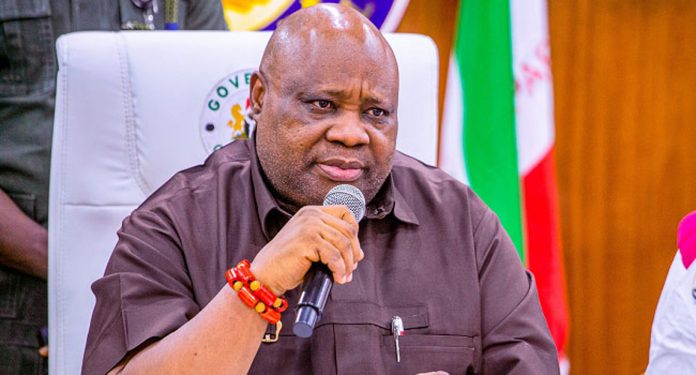
Governor Ademola Adeleke of Osun State

Governor Ademola Adeleke of Osun State says he did everything within his powers to make it work in the Peoples Democratic Party, PDP, but everything seems to be falling apart everyday.

Adeleke made this statement on Wednesday while responding to questions in an interview on ‘Politics Today’, a programme on Channels Television monitored by DAILY POST.

DAILY POST reports that the governor resigned his membership of the PDP and joined the Accord Party late Tuesday ahead of the Osun 2026 governorship poll.

Adeleke on Wednesday emerged as the party’s governorship candidate during primaries conducted on Wednesday.

“I love PDP and I appreciate the fact that the party gave me platform for me to become senator and of course now, a governor.

“And so far so good, I just celebrated my three years anniversary as a governor of Osun State under the platform of PDP. But as you can see, I personally tried my best to balance the crisis that we have in the party, but everything seems to be falling apart everyday.

“I love my state. Had it been one does not need a platform to secure any nomination, I would have remained in the PDP but one needs a platform to contest an election, hence, my defection to the Accord Party,” he said.

Credit: dailypost.ng

Insecurity: We’re not sincere with Nigerians -Sultan blasts faith leaders

0
Sultan of Sokoto, Abubakar Sa’ad III

The Sultan of Sokoto, Abubakar Sa’ad III, has blasted faith leaders for not being honest with Nigerians concerning the insecurity ravaging the country.

The Sultan, who is the Co-Chair of the Nigeria Inter-Religious Council, NIREC, stated this on Wednesday at the Second Tri-Annual Meeting of NIREC in Abuja.

He warned that the Council would slip into irrelevance except faith leaders embrace sincerity, accountability and honest engagement.

The warning of the monarch is coming as the Christian Association of Nigeria, CAN, pressed for stronger action on insecurity, while the Federal Government dismissed global allegations of religious persecution.

According to him, NIREC had drifted from its founding purpose and must urgently confront internal contradictions weakening its credibility.

“Many years ago, when I walked in here, the atmosphere was very, very friendly and loving. Anyone seeing the discussions and chats going on then would immediately know we were in a happy mood. Now, unless something is wrong somewhere, we need to ask ourselves some questions,” the royal father said.

Credit: dailypost.ng

Army Eliminates Notorious Bandit Leader Kallamu In Sokoto

0
Nigeria army

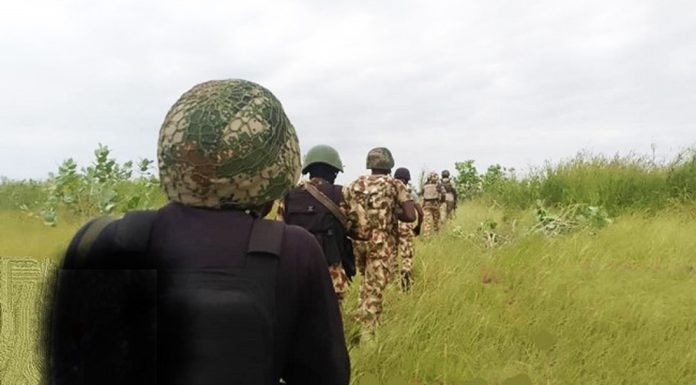
Troops of the 8 Division of the Nigerian Army in Sokoto have neutralised a notorious bandit kingpin, Kachalla Kallamu, in Sabon Birnin Local Government Area.

A reliable military source disclosed the major operational breakthrough to newsmen on Tuesday in Sokoto.

The source, who pleaded anonymity, said Kallamu, a close associate and senior lieutenant of the notorious bandit leader, Bello Turji, was killed in an operation carried out in collaboration with local vigilantes.

The source confirmed that Kallamu was neutralised alongside one of Turji’s major logistics suppliers in the early hours of Monday around Kurawa village during a major offensive launched by troops of the 8 Division.

Kallamu, who hailed from Garin-Idi in Sabon Birni LGA, was known for terrorising communities in the area and causing significant distress to residents.

It was gathered that he had recently returned to the area after fleeing a previous military onslaught in June 2025, during which he was believed to have sought refuge in Kogi State.

The source commended the intelligence support provided by locals, while citizens, including the Special Adviser to Governor Ahmad Aliyu on Security Matters, retired Colonel Ahmad Usman, continue to celebrate the operational success.

Credit: channelstv.com

‘Our lives in danger’ –Senators protest withdrawal of police orderlies from VIPs

0
Nigerian Senate

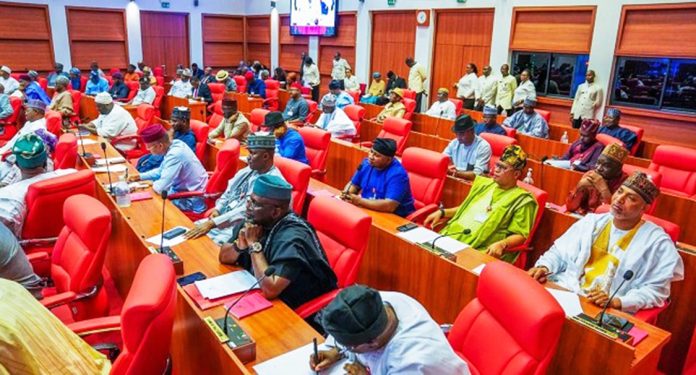
There was anger on the floor of the Senate Wednesday as Senator Abdul Ningi (PDP, Bauchi Central) led many other lawmakers in protesting against what they described as uneven implementation of President Bola Tinubu’s directive for withdrawal of police orderlies from Very Important Persons, VIPs, in the country.

This was even as they sought for exemption of lawmakers from the directive as being enjoyed by the President, Vice President, President of the Senate, Speaker of the House of Representatives, state governors and their deputies, among others, warning that lawmakers should not be used as scapegoats.

President Tinubu had recently ordered the Inspector General of Police, Kayode Egbetokun, to withdraw police personnel providing security for VIPs amid escalating security challenges in the country.

He also directed police authorities to redeploy the orderlies to concentrate on their core duties, a move that mandated the Special Protection Unit, SPU, of the Nigeria Police Force to order all officers attached to VIPs and beats nationwide to return to their bases.

Ningi, however, raised complaints and concerns about the implementation of the presidential directive in a motion brought through Point of Order, lamenting that the only police orderly he has was withdrawn in the early hours of Wednesday while some other VIPs in the country are still enjoying the privilege.

The senator demanded that withdrawal should be done across board from top to bottom in the spirit of fairness and equity.

He said: “It should be done across the board. Let’s see what happens from the Office of the President, to the Vice President, to the Senate President, to the Speaker of the House, to the ministers. Mr. President, I’m coming after they have withdrawn my only orderly.

“I saw two convoys of ministers and they were carrying lots of security personnel. Mr. President, I have also seen business concerns, Chinese and other business concerns, yesterday (Tuesday) with their compliments of orderlies.

“Mr. President, I have also seen daughters and sons of political office holders having orderlies and having security covers.

“Mr. President, I have seen singers having orderlies and complimentary protection. I cannot ever imagine that a senator of the Federal Republic of Nigeria, who has been here for a very long time, will have his only one orderly withdrawn.

“I can take care of myself, but let it be done across the board. Let me not see governors, ministers and business tycoons, being escorted by security personnel,” he said.

In his remarks, the Deputy President of the Senate, Senator Jibrin Barau, who presided over the session, said issue raised by Ningi was extensively deliberated upon by the leadership of the Senate on Tuesday.

He specifically informed the Senator and other affected Senators that efforts are being made to convince the presidency to exempt members of the National Assembly from orderly withdrawal implementation.

Credit: dailypost.ng

TOR has $517 million debt to clear – MD  

0
Mr Edmond Kombat, MD of TOR

The Tema Oil Refinery (TOR) has a US$ 517 million debt to clear, Mr Edmond Kombat, the Managing Director has disclosed. Mr Kombat explained that even though at the time the previous government of the New Patriotic Party (NPP) took over the management of TOR, the refinery had a debt of US$ 350 million; the debt has increased as it did not pay any of it.

He mentioned that the component of the debt included TOR owing the Ghana Revenue Authority (GRA), Staff’s Provident Fund, SSNIT penalties, Electricity Company of Ghana, Ghana Water, and the government of Ghana.

“There was also crude oil that was bought within the intervening period that also accumulated around 40 million, and the refinery couldn’t pay staff workers. There were times when they had to borrow money to pay the workers’ salary, and there was just a lot of distress in the plant,” he said.

Tema Oil Refinery (TOR)

Mr Kombat made the revelation at an energy sector reporting workshop for journalists at Tema, organised by Energy News Africa, in collaboration with the Tema Regional Branch of the Ghana Journalists Association (GJA).  The workshop was on the theme: “Leveraging Social Media and AI for Accurate and Effective Energy Reporting: Trends, Tools, and Best Practice.”

He explained that at the time that he was the Deputy MD under President John Dramani Mahama’s first administration, TOR had a debt profile of US$650 million, which was accumulated out of trade debts, as well as contracts that were signed with a lot of interest payments that had accrued.

He added that in 2015, President Mahama had established the Energy Sector Levy Act (ESLA), which had a TOR debt recovery levy inside, whose purpose was to make sure that the refinery’s debt was cleared.

“At the time, TOR owed about four major banks, totaling about US$300 million, and those banks at the time were on their knees, almost collapsing. So, the ESLA that was introduced was a bond issued, and about US$300 million of those $650 million were paid off,” he noted.

He said they worked and brought the refinery back to functionality, explaining that the refinery was able to refine around seven million barrels of crude before leaving; this, he said, included TEN crude, which is from Ghana.

Mr Kombat emphasised that this showed that the refinery could refine Ghanaian crude, contrary to what Ghanaians were told in the past.

He further said, by the time they left office, the plan was that TOR would be allowed to utilise a portion of the ESLA receivables that was coming to clear the debt, adding that within three years, all the debt of TOR were supposed to have been cleared hopefully by 2019.

“But unfortunately, when there was a change of government, I think there were different priorities, so an ESLA PLC was formed, and then the vision shifted.”

Mr Kombat further disclosed that there was a high staff attrition rate, as a lot of the refinery’s skilled workers decided to leave the shores of Ghana, with some going to the Middle East and some to the Dangote refinery, as they did not see their future with the TOR.

He said in addition to the debt, there was a lot of bitterness among the staff because of lack of promotion, noting that he asked affected staff to petition management, which he personally chaired a committee to review, adding that out of the 300 petitions received, 250 deserving staff were promoted.

GNA

Gold Fields’ Kuupol Kuutor is Mining Personality of the Year

0
Dr Catherine Kuupol Kuutor, Manager,Tarkwa Mine

Dr Catherine Kuupol Kuutor of Gold Fields Ghana Ltd has been crowned Mining Personality of the Year at the 11th Ghana Mining Industry Awards (GMIA), becoming the first woman to receive the industry’s top individual honour.

The ceremony, organised by the Ghana Chamber of Mines and held in Accra on Friday December 5, 2025, celebrated excellence under the theme “Celebrating Excellence in Mining: Creating Value Beyond Minerals.”

The awards highlighted achievements in safety, innovation, technology, gender inclusion, community development and responsible mining. Dr Kuupol Kuutor, Manager of the Tarkwa Mine, has been widely recognised for breaking barriers and demonstrating transformative leadership in Ghana’s mining sector.

She was earlier honoured in February 2025 by Mining Review Africa as one of the African Mining Elites, receiving their Most Outstanding Leader award — another first for a woman leading a major mine in Ghana.

Appointed Tarkwa Mine Manager in May 2024, Catherine became the first woman to lead a major mine in Ghana. Prior to this, she served as Gold Fields’ first female Metallurgical Manager, overseeing metallurgical operations at both the Tarkwa and Damang mines.

She joined the Damang Mine in 2013 as a superintendent and rose steadily through the ranks, earning promotion to Unit Manager in 2015. Her leadership drove several successful business improvement initiatives that significantly increased gold recovery.

Advocate for women in mining

Dr. Kuupol Kuutor is widely celebrated for her role in empowering young professionals, particularly women pursuing careers in mining and mineral engineering. She sponsors two annual academic prizes at the University of Mines and Technology (UMaT) for outstanding mineral engineering students — one for overall best student and another for best female student.

She is active in professional bodies, including the Ghana Institution of Engineers, Women in Mining Ghana, Ladies in Mining and Allied Professions, and the West Africa Institute of Mining.

Academic and professional excellence

Catherine holds a PhD in Minerals Engineering from UMaT. Her doctoral thesis examined the “Effect of Grinding Balls Quality on Mining Expenditure, Pulp Chemistry and Reagents Consumption.”

She also holds a Master’s degree in Mineral Engineering from UMaT and began her academic journey with a Diploma in Mineral Engineering at the KNUST School of Mines in 2002.

Her two-decade career began at Golden Star’s Wassa Mine in 2004, where she gained extensive experience in metallurgical operations, including roles as shift supervisor, senior plant shift supervisor and Cyanide Management Code coordinator.

Over the years, she has received multiple recognitions from the Ghana Chamber of Mines and Gold Fields leadership, including being named Female Mining Professional of the Year at the 2020 GMIA.

With over 20 years of experience in gold mining, Dr Kuupol Kuutor is celebrated as a symbol of resilience, excellence and the rising influence of women in Ghana’s mining industry.Her win at the 2025 GMIA marks a historic milestone and reinforces her reputation as one of the most influential figures shaping the future of mining in Ghana.

The Ghanaian Chronicle