Erling Haaland scored twice to help Manchester City dispatch Crystal Palace and maintain the pressure on Premier League leaders Arsenal.
City would have been eyeing top spot on Saturday night when Wolves grabbed a late equaliser at Arsenal but Yerson Mosquera’s injury-time own goal provided Mikel Arteta’s men with much-needed relief.
City did their job in the capital but did not have it all their own way as Palace carved out the best opportunity early on – Yeremy Pino breaking the offside trap from Adam Wharton’s dinked pass but only managing to strike the crossbar when one-on-one with Gianluigi Donnarumma.
The hosts were creating chances without being able to apply the finishing touch and that lack of cutting edge proved costly as Matheus Nunes swung in a cross to the back post for Haaland to thump home a header four minutes before half-time.
England international Wharton has not scored for Palace since joining from Blackburn in February 2024 but came close to breaking his duck at the start of the second period when a rasping strike rattled the foot of the post.
Tijjani Reijnders’ low drive was kept out by Dean Henderson before Phil Foden drove home a delightful finish and Haaland added a third late on from the penalty spot after Savinho was brought down by the Palace goalkeeper.
A 67-year-old Sudanese trader, Hassan Gaga Youssouf, has been arraigned before Circuit Court ‘6’ in Accra for allegedly conspiring with three others to defraud two foreign businessmen of US$400,000 under the guise of a gold deal.
Youssouf appeared before the court, presided over by His Honour Kwabena Kodua Obiri Yeboah, and pleaded not guilty to two counts of conspiracy to commit crime, namely defrauding by false pretence, and defrauding by false pretence.
The three other accused persons—Prince Eric William, Adam Hamoda Mohammed Awad Alla, and Sami Suliman Kahtir—are currently at large.
Youssouf was admitted to bail, while the court ordered the prosecution to continue efforts to arrest the remaining suspects.
Prosecution’s case
The court was told the accused persons allegedly conspired in August 2025 in Accra to defraud the complainants, Nizar Naji Mohammed Alassaf and Samy Mohammed Metwaly Khalifaa, both businessmen and nationals of the United Arab Emirates.
The court heard that the accused, posing as operators of a gold dealership company, allegedly convinced the complainants to part with US$400,000 on the false representation that the money would be used to purchase and ship four containers of gold to Dubai.
Prosecutors said the accused persons failed to deliver the promised gold after receiving the money and allegedly went on to demand additional funds from the complainants.
Arrest and investigations
On December 2, 2025, following intelligence gathering and surveillance, the PID arrested Youssouf at the Labone Bosphorus Restaurant in Accra. He was subsequently charged and brought before the court.
The prosecution told the court that investigations are ongoing, with efforts underway to apprehend the remaining accomplices.
The case has been adjourned to a later date for continuation.
The World Health Organization (WHO) has reaffirmed that childhood vaccines do not cause Autism Spectrum Disorders (ASD), following a comprehensive review by its Global Advisory Committee on Vaccine Safety (GACVS).
The GACVS, a panel of international experts established in 1999 to provide independent scientific advice on vaccine safety, examined evidence from 31 primary research studies published between January 2010 and August 2025. The analysis included data from multiple countries and focused on both thiomersal-containing vaccines and vaccines in general.
This was contained in a statement it shared on its X page, in which the committee said the evidence strongly supports the safety of vaccines administered during childhood and pregnancy, confirming there is no causal link between vaccines and Autism Spectrum Disorder (ASD).
The review also looked at vaccines containing aluminum adjuvants, analyzing studies conducted from 1999 through March 2023, including a large cohort study of children born in Denmark between 1997 and 2018. Findings indicate that the trace amounts of aluminum used in vaccines are not associated with autism.
“The available high-quality evidence continues to show that vaccines, including those with thiomersal and aluminum, do not cause autism,” GACVS stated, reaffirming conclusions from similar reviews conducted in 2002, 2004, and 2012.
WHO emphasized that national authorities should base vaccine policies on the latest scientific evidence to maintain confidence in immunization programs. The organization highlighted that global childhood immunization efforts over the past 50 years have saved at least 154 million lives, significantly improving health, livelihoods, and societal prosperity.
WHO’s statement comes amid ongoing public concern about vaccine safety and aims to strengthen public trust in immunization as a critical tool for preventing disease.
The Accra Regional Police Command has arrested Suleiman Danjumah, also known as Solomon Addai and Innocent, for unlawful possession of a firearm, narcotic substances and stolen items. His arrest on 10th December 2025 comes just two weeks after the Adabraka District Court granted him bail for a separate offence involving a Smith & Wesson pistol and 30 rounds of 9mm ammunition.
Police say they acted on intelligence, leading a team from the Accra Regional Command and the Police Intelligence Directorate (PID) to re-arrest Danjumah. He was found with yet another unregistered pistol. During a search, officers also retrieved a 9mm Parabellum Arcus 94 pistol, a set of military uniforms and caps, a Police Huawei handset, four assorted mobile phones, a shocker, a jack knife, 34 blisters of Tramadol 225mg, and an unregistered jungle motorbike.
Further investigations established that Danjumah admitted to dealing in narcotics at Las Vegas, Achimota. He also confessed to firing warning shots during a confrontation with another drug dealer identified as Mutala Mohammed. Mutala was subsequently arrested, and a search at his residence uncovered two parcels of dried leaves suspected to be Indian hemp and nineteen blisters of Tramadol 120 (“Red”).
Danjumah additionally mentioned one Usman Ali as the supplier of the firearm. Checks by police have confirmed that the Police Huawei handset retrieved from him had been stolen from a police officer.
The two suspects — Danjumah and Mutala — are currently in police custody assisting with investigations, while efforts continue to apprehend Usman Ali. All the narcotics seized have been retained as exhibits and will be forwarded to the Police Forensic Science Laboratory for analysis. The suspects are expected to be processed for court in the coming days.
The Accra Regional Police Command is urging the public to continue providing credible information to support crime-prevention efforts and has reaffirmed its commitment to clamping down on illegal firearms and narcotic drugs within the region.
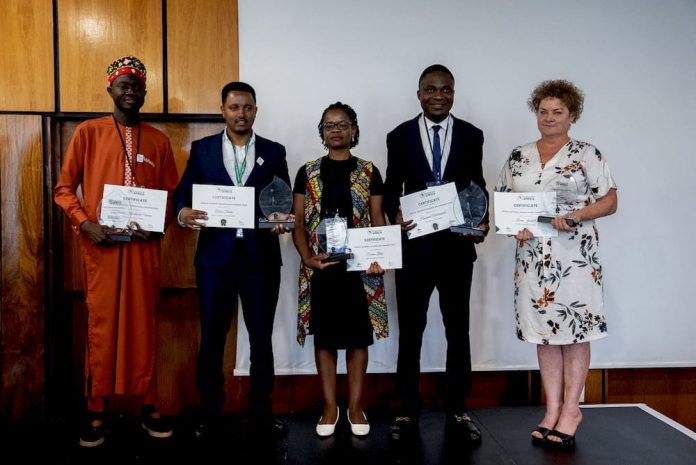
Ghanaian Investigative Science journalist, Ibrahim Khalilulahi Usman has won the Best News Story / Feature Category at the Africa Science Journalism for his investigative piece on coastal erosion in Ghana.
Now in its second phase, the awards organised by the Science For Africa Foundation seek to honour journalists whose reporting strengthens public understanding of science and combats misinformation across the continent.
The announcement was made during the just-concluded 13th World Conference of Science Journalists in Pretoria, South Africa, marking the event’s first-ever African host.
“These awards recognize more than excellence. We celebrate the vital forces behind it,” stated Dr. Evelyn Gitau, Chief Scientific Officer, SFA Foundation. “The courage to investigate, the persistence to verify, and the creativity to translate —these are the qualities our finalists exemplified. Each winner has used their talent not just to report, but to ignite public curiosity, safeguard factual discourse, and demonstrate that science is not locked away in institutions. It is a living, breathing part of Africa’s daily life and future.”
In his acceptance speech, the award-winning science journalist reframed journalism’s fundamental challenge in the AI era. Referencing Tom Kovach and Rosenstiel’s 2001 book “The Elements of Journalism,” he highlighted the first principle: journalism’s obligation is to the truth.
Twenty-five years ago, that statement addressed traditional verification challenges.
He stated that, today, with AI generating and assisting in content creation, science journalists face dual verification requirements
“As science journalists, our responsibility is to prioritize truth, leveraging AI responsibly to enhance our work. This means we’ve two task:” he noted
“verifying information created with AI by humans and verifying information created by humans using AI. It’s a challenging task, but it presents an opportunity to use AI responsibly and enhance our reporting.”
Khalilulahi’s award-winning investigation, supported by Dialogue Earth and Wits University, required four months of research and fact-checking.
That timeline, he explained, reflects the depth necessary for responsible science journalism in an era where AI can generate plausible-sounding but potentially inaccurate content at scale.
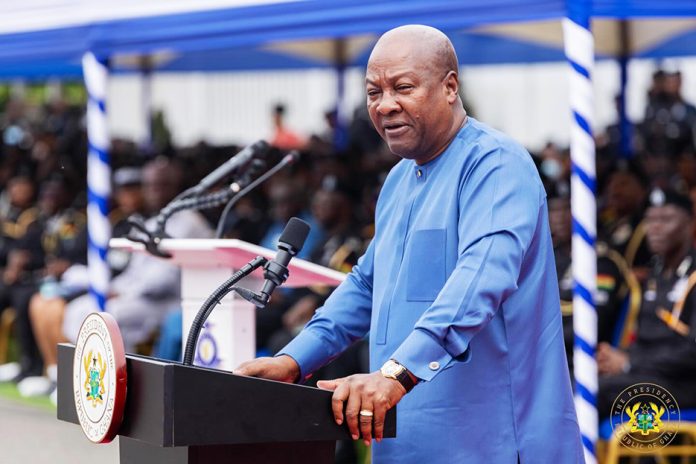
President John Dramani Mahama who is not prepared to compromise on his resolve to fight against all forms of bribery and corruption has directed Majority Leader in Parliament, Mahama Ayariga and the Majority Chief Whip, Rockson-Nelson Etse Kwami Dafeamekpor, to immediately withdraw the Private Member’s Bill seeking to repeal the Act that established the Office of the Special Prosecutor (OSP).
The directive, issued through a statement from the Jubilee House, comes amid widespread public uproar following the tabling of the motion by Majority Leader Mahama Ayariga and Majority Chief Whip Rockson-Nelson Etse Kwami Dafeamekpor.
Before the President’s intervention, several prominent Ghanaians—including seasoned lawyer Inusah Fuseini and IMANI Vice President Kofi Bentil—had strongly criticised the attempt to abolish the OSP. They warned that scrapping the office would deal a dangerous blow to the country’s already-fragile anti-corruption fight.
However, civil society actors and a growing list of public critics maintain that the OSP despite its challenges remains one of Ghana’s few institutions with a mandate strong enough to hold politically exposed persons accountable.
Despite these concerns, on Wednesday, December 11, 2025, reports emerged that the Majority leadership had gone ahead to file a motion to dissolve the anti-graft body. The move sparked renewed debate about Parliament’s posture toward the OSP and whether legislators were acting in good faith.
Last week, during the Parliamentary exchanges, Majority Chief Whip, Dafeamekpor cautioned that Parliament may have no option but to “dissolve” the OSP if it continued “abusing its powers.”
But MP for Ofoase Ayeribi, Kojo Oppong Nkrumah, pushed back, insisting that complaints about the OSP often surface only when investigations affect political allies. He pointed to repeated warnings from the Minority Leader about state investigative bodies being accused of weaponising their authority.
Speaker of Parliament Alban S.K. Bagbin also weighed in, questioning the justification for continuously allocating public funds to an institution that, in his view, had not delivered expected outcomes. He suggested that the OSP was among agencies Parliament must critically re-evaluate.
Bawku Central MP Mahama Ayariga further dismissed the office’s achievements over its nearly eight years of existence, arguing that multiplying anti-corruption institutions does not translate into progress without genuine political will.
But the Jubilee House says President Mahama’s directive to withdraw the repeal bill aligns with his earlier public remarks at a meeting with the National Peace Council, where he emphasised his commitment to strengthening not dismantling the OSP as a key pillar in the fight against corruption.
The President reiterated that the OSP must work harder to build public confidence and tackle corruption decisively, in line with the purpose for which the office was established.
Alban Sumana Kingsford Bagbin, Speaker of Parliament
Honouring a towering statesman and mentor from the Northern Regions
Standfirst: Ghana has produced remarkable leaders from the Northern Regions, yet few have embodied dedication, resilience, and service like Rt. Hon. Alban Sumana Kingsford Bagbin. From humble beginnings to the apex of parliamentary leadership, his life story is a testament to perseverance, mentorship, and national impact.
Opanin Yaw Baah
A Legacy of Northern Leadership
Ghana must acknowledge the towering statesmen it has produced from the North, especially under the First and Second Republics. Among the eminent trailblazers and breeders of leadership qualities in our five Northern Regions were S.D. Dombo, Yakubu Tali (Tolon Naa), J.S. Braimah, Mumuni Bawumia, B.K. Adama, Jato Kaleo, Emmanuel Mahama, Mumuni Dumbe, C.K. Tedam, Abavana, and Abeifaa Karbo.
The Third Republic, though lasting less than three years, also saw Ghana producing the first ever president from the Northern Regions in the person of Dr. Hilla Limann, alongside Professor J.S. Nabila, Colonel Zuanrugu, and other distinguished leaders.
Under the current dispensation of the Fourth Republic, our five Northern Regions can boast of two-term President John Dramani Mahama, Vice Presidents Aliu Mahama and Mahamudu Bawumia, Rt. Hon. Alban Bagbin, Alhassan Malik, Ndebuguri, Martin Amidu, Cletus Avoka, Dr. Kubour Ambros Derry, Kofi Adda, Fuseini, Mahama Ayariga and the brilliant and energetic Haruna Iddrisu.
The common feature among these remarkable leaders is that they either hail from privileged backgrounds, had strong sentimental ties to influential ‘skins’, or emerged from humble beginnings through sheer hard work. Classical examples of these royals include Dr. Limann, who died as Tumu Paramount Chief; Tolon Naa Yakubu Tali, chief of Mion; S.D. Dombo, the Diori Chief; Abeifaa Karbo, the Nandom Naa; Wulugu Naa Prof. J.S. Nabila; Mumuni Bawumia of the Mamprusi State; and J.S. Braimah of the Gonja dynasty.
Privileged educators such as S.D. Dombo, Jato Kaleo, B.K. Adama, Mumuni Dumbe, and Abavana were early entrants into active Northern politics. Children of political giants, like President Mahama and Vice President Bawumia, were born into positions of advantage. Yet, a third group emerged from obscurity through relentless dedication, including Amidu, Kumbour, Haruna Iddrisu, Ndebugri, Avoka, and Rt. Hon. Alban Bagbin, who has risen as one of the greatest Northern politicians of all time.
Early Life and Entry into Politics
Rt. Hon. Alban Bagbin’s story is one of perseverance against the odds. Born to illiterate peasant farmers as the 13th child of over 30, he was initially destined for a life of hoe and cutlass or cattle rearing. By what he describes as divine intervention, he began schooling at the age of six at Sumbo, completing ten years of barefoot elementary education before gaining admission to Wa and Tamale Secondary Schools for his O- and A-level certificates.
In 1977, he entered the University of Ghana and, by 1982, qualified as a barrister-at-law and solicitor of the Supreme Court of Ghana. Remarkably, throughout his education, he supported himself through various odd jobs, including selling and repairing aluminium utensils.
Ten years later, through the trust and goodwill of the people of Nadowli North, Bagbin made a dramatic entry into politics. In 2008, President J.A. Kufuor, the greatest leader of our 4th Republic recognised his exceptional wisdom and versatility and sought to honour him with the state award of the Order of the Volta. Due to political pressures, Bagbin respectfully declined at that time.
As Professor John Akopari, a Ghanaian political scholar in South Africa, aptly observed, “No literature on Alban Bagbin can ever be complete; he has achieved the nearly unachievable. Wherever Bagbin sets foot, he leaves an indelible imprint.”
Bagbin as Legislator
While J.H. Mensah, of blessed memory, is revered as a master of parliamentary debate, Bagbin remains Ghana’s greatest legislator. His contributions surpass those of any politician since the First Republic.
He is the only parliamentarian to have served as Minority Leader for eight years, Majority Leader and Leader of Government Business for five years, Deputy Speaker for four years, and Substantive Speaker for four years, now beginning another four-year term. Following Justice D.F. Annan, Bagbin holds the distinction of being among the longest-serving Speakers in Ghanaian history. He has chaired or ranked more parliamentary committees than any other MP.
Bagbin is known for his boldness, fearlessness, and fairness. As Chair of the Constitutional and Legal Affairs Committee, he led the charge against the Constitutional Amendment Bill on the status of the Vice President in the early 1990s, despite it being sponsored by his own party.
He also championed reforms reserving the chairmanship of the Public Accounts Committee (PAC) for professional accountants, while Legal Committees remain chaired exclusively by Lawyers. Following this reform in 2005, he ceded PAC leadership to Hon. Sallas Mensah, an accomplished accountant. Many supporters credit Bagbin’s leadership in Parliament for helping the NDC secure victory in the 2008 national elections.
Bagbin and the Executive
After the NDC’s 2008 national victory, Bagbin was invited by President Mills to bring his expertise to the executive. Between 2013 and 2016, he served as Minister for Health and Minister for Works and Housing, delivering notable performance in both capacities.
He has chaired numerous Boards since 1993, demonstrating leadership and service across a wide spectrum of national interests.
Bagbin – The Colossus of Speakers
The dictum that people “throw in the towel” when applause is high does not apply to Bagbin. After 28 years of national service, he chose to continue.
In January 2021, Bagbin contested and won the Speakership by a single vote against incumbent Prof. Mike Oquaye, making history as the first opposition candidate to win Speakership in a Hung Parliament (137 seats each, with one independent). Previous Speakers, including J.F. Annan, Ala Adjetey, Bagyina Sekyi Hughes, Justice Bamfo-Addo, Doe Ajaho, and Professor Oquaye, all served single terms, except Annan who served two.
As Chair of the Parliamentary Service Board (PSB), the engine of Ghana’s Parliament, Bagbin is the only Ghanaian to have chaired the PSB for eight years. He had previously served on the Board during the 3rd, 4th, 5th, 6th, and 7th sessions of Parliament. Political commentators have described him as “Primus inter pares” or the “Alpha and Omega” of Fourth Republic Parliament affairs.
Under his leadership, Parliamentary Services have been overhauled to align with the Civil Service of Ghana, introducing reforms, promotions, and expanded opportunities. The Parliamentary Service now stands tall in comparison to Commonwealth and African democratic jurisdictions, thanks in part to contributions from clerks Cyril Oteng Nsiah and Ebenezer Ahumah Djietror.
Bagbin as Mentor
Bagbin has inspired politicians across Ghana, North and South, including the writer. No politician from the Northern Regions has received more citations, awards, and recognitions, including multiple honorary doctorates. He has been a source of hope and solutions, providing scholarships for the less privileged through the Northern Scholars Network.
He has addressed every paramountcy in the North and, in a recent meeting with Ya-Na, emphasised the fight against extreme poverty, disease, and underdevelopment. Today, many youths recognise him as Ghana’s foremost mentor, a testament to his humble beginnings and extraordinary achievements.
Global Recognition
Ghana has long played a pivotal role in global politics. Distinguished citizens such as Kofi Annan (UN Secretary-General, 1997–2006), Dr. Quaison-Sackey (Ghana’s first Permanent Representative at the UN), Dr. Ibn Chambas (ECOWAS Secretary-General), Dr. A.Y. Amoako (Economic Commission for Africa), and Hon. Ayorkor Botchwey (Commonwealth Secretary-General) have all earned global acclaim.
In 2022, Rt. Hon. Alban Bagbin was elected President of the Commonwealth Parliamentary Association (CPA) in Canada and was re-elected for another term in Accra in 2023. In early 2025, he was elected President of the Conference of Speakers and Presidents of African Legislatures and Chairperson of the African Geopolitical Group of the Inter-Parliamentary Union (IPU), solidifying his status as a leading voice in global parliamentary affairs.
Conclusion
It is unfortunate that, despite these extraordinary achievements, the State of Ghana has yet to formally acknowledge and honour him. As Shakespeare wrote in Julius Caesar, “If you don’t say ‘I am,’ people will never say you are.”
It is against this backdrop that all former and current MPs, the Board of Parliamentary Service, and Parliament staff—from cleaners and security personnel to the Clerk—should unite in naming the Speaker’s Block Rt. Hon. Alban Sumana Kingsford Bagbin Block, honouring this fearless, patriotic, and visionary son of the land.
By Opanin Yaw Baah
Former MP, Kumawu Constituency
Acting Secretary, Forum for Former MPs of Ghana
The Social Security and National Insurance Trust (SSNIT) has announced a major revision to its pension administration process, introducing a mandatory annual Pensioner Certificate renewal for all retirees, effective April 2026.
The new policy requires every pensioner—whether they retired compulsorily at age 60 or voluntarily from age 55—to renew their Pensioner Certificate each year during their birth month. According to SSNIT, the move is designed to safeguard the integrity of the national pension system by ensuring that monthly benefits are paid only to living and eligible pensioners.
In a media release dated December 10, 2025, the Trust explained that the renewed process forms part of efforts to strengthen accountability and eliminate irregular payments within the scheme. The institution emphasized that continuous pension payments will depend on successful annual renewal.
To make the process accessible, SSNIT has outlined multiple channels through which pensioners can complete the renewal, including: SSNIT Mobile App using facial verification for both resident and non-resident pensioners, SSNIT Virtual Branch, Partner bank co-locations,
All SSNIT branches nationwide.
In a bid to support elderly pensioners with mobility limitations, SSNIT has also introduced home verification services. Such pensioners can request a home visit by calling the SSNIT Contact Centre on 0302 611 622 to book an appointment.
As part of the rollout plan, pensioners will receive reminders at least one month before their birth month through SMS, email, and other approved communication channels to ensure smooth compliance. SSNIT is urging all pensioners to adhere to the revised policy to avoid any disruptions in payment.
Mr. Tong Defa, the Chinese Ambassador to Ghana, has urged Ghanaian journalists to adopt a more balanced and comprehensive approach in reporting on the mining sector, particularly stories involving Chinese companies. He said responsible journalism was critical to strengthening China–Ghana relations and promoting sustainable mining.
Speaking at the opening of a three‑day training workshop on Sustainable Mining for Journalists at Aburi, Mr. Tong said that while China supported Ghana’s fight against illegal mining (galamsey), it was also important for the public to be informed about the positive contributions of Chinese mining firms to national development.
The workshop was organised by the Ghana News Agency (GNA) in partnership with the Association of China–Ghana Mining (ACGM). It aims to equip journalists with knowledge on sustainable mining, ethical reporting, and regulatory compliance. The workshop brought together journalists and resource persons from regulatory, academic, and industry backgrounds.
Mr. Tong said Chinese companies operating legally in Ghana had become key partners in job creation, community development, technology transfer and responsible mining, but their contributions were often overshadowed by the actions of a few individuals involved in illegal activities.
“As the Chinese Ambassador, I feel a little bit unfair. Chinese people involved in galamsey represent a very small minority. There are thousands of Chinese companies doing well in the country and making huge contributions to the community. These big companies focus on long-term and sustainable mining in this country,” he said.
He appealed to journalists to “report comprehensively and objectively about China,” adding that accurate narratives would help strengthen relations between the two countries.
The Ambassador cited Shandong Gold, Zijin Mining, Chifeng Gold, Xiaocheng Technology and Tianyuan Manganese as examples of firms adhering to Ghana’s mining regulations, prioritising local employment and investing in social development.
At Shandong Gold’s Cardinal Namdini Mine, he said 94 per cent of the company’s 1,600 contractor staff were Ghanaians, and more than US$2 million had been invested in education, health, sanitation and community infrastructure, including a 25‑kilometre access road linking over 10 communities.
Chifeng Gold, operator of the Wassa Mine, has also invested about US$4.5 million in a Community Development Fund to support schools, clinics, water systems and roads, and is developing a medium‑scale palm oil processing plant to boost local agriculture.
“These are only the tip of the iceberg,” he said, urging journalists to undertake more field visits to understand the impact of these companies.
Mr. Tong said China remained committed to supporting Ghana’s mining reforms, environmental protection efforts and industrial transformation, noting that recent engagements between President Xi Jinping and President John Dramani Mahama reaffirmed China’s readiness to deepen cooperation in mining, energy, agriculture and infrastructure.
“China is willing to fully leverage its advantages to conduct full-chain cooperation with Ghana, from geological surveys and exploration to resource development and environmental protection.
We always urge enterprises to operate in accordance with laws and regulations and to severely crack down on illegal mining,” he stressed.
Mr. Tong said the workshop aligned with China’s vision of promoting environmentally responsible mining and supporting Ghana’s efforts to transform natural resource wealth into long‑term development gains.
He expressed confidence that the training would strengthen understanding, promote cooperation, and encourage fair reporting that supports sustainable development.
“The Chinese Embassy will continue to serve as a bridge for cooperation and encourage more responsible investment to support Ghana’s development,” he said.
Mr. Albert Kofi Owusu, General Manager of the Ghana News Agency, said the workshop was designed to strengthen journalists’ capacity to report responsibly on mining and natural resource governance.
He said the media played a key role in shaping public understanding and ensuring accountability in the extractive sector, adding that the training would help participants appreciate the balance between economic benefits and environmental sustainability.
Mr. Owusu noted that mining remained central to Ghana’s economy, but faced major threats from illegal and unregulated activities that undermined environmental integrity and community wellbeing.
He said collaboration among regulators; industry players, and the media was essential, and expressed appreciation to the ACGM for its support, describing the partnership as a step toward promoting responsible mining and accurate reporting.
Mr. Tang Zhenjiang, Chairman of the Association of China–Ghana Mining, highlighted the growing investment of Chinese companies in local communities, including scholarships, infrastructure, solar power projects and support for vulnerable groups.
He said responsible mining must be matched with responsible reporting to ensure that narratives reflect realities on the ground.
China Ambassador to Ghana , H.E Mr. Tong Defa, speaking at the event.
Ghana’s trade with China reached an unprecedented US$11.8 billion in 2024, marking a 7.1% year-on-year growth, according to statements delivered at a press soiree hosted by the Ghana–China Friendship Association (GHACHIFA) in Accra.
Ambassador Anani Demuyakor ,National Chairman of CHACHIFA, delivering his welcome address at the press soiree.
The Chinese Ambassador to Ghana, H.E. Mr. Tong Defa, has highlighted that Ghana remains China’s largest trading partner in Sub-Saharan Africa and a key strategic ally. Ambassador Tong’s message underscored the significant contributions of Chinese enterprises operating in Ghana, which have not only created substantial employment opportunities, but have also supported the country’s industrialization efforts.
He highlighted the successful establishment of Confucius Institutes, which now offer language and cultural training to over 10,000 Ghanaian students, while more than 3,000 Ghanaian students are currently studying in China, reflecting the robust educational exchanges between the two nations.
The ambassador also pointed to the ongoing work of Chinese medical teams in Ghana, noting that the 14th team is providing healthcare services and introducing Chinese medical expertise across the country.
These initiatives, he said, have enhanced healthcare access and earned widespread appreciation among Ghanaians. Ambassador Tong also recognized President John Dramani Mahama’s October 2025 visit to China, during which he met with President Xi Jinping and Premier Li Qiang to outline a blueprint for further development of bilateral relations.
The event, which also celebrated 25 years of GHACHIFA’s work and 65 years of diplomatic relations between Ghana and China, brought together diplomats, business leaders, journalists, and civil society representatives to reflect on the growing economic, cultural, and social partnership between the two nations.
Under President Mahama’s personal guidance, the two sides reached an agreement in principle on the Early Harvest Arrangements of the Agreement on Economic Partnership for Shared Development, positioning Ghana as one of the first African countries to benefit from China’s zero-tariff policy for 100 percent of tariff lines.
The ambassador emphasized that the momentum built in 2025 would continue into 2026, designated the China–Africa Year of People-to-People Exchanges, which will deepen cooperation in trade, education, health, and technology while fostering new opportunities for both countries.
Looking ahead, the event emphasized that initiatives in vocational training, women’s empowerment, ICT, artificial intelligence, and youth innovation programs will continue to expand opportunities for both countries. Ambassador Tong concluded with a reflection on the enduring nature of Ghana–China friendship: “The Ghana–China friendship has scaled many peaks, yet we continue to set sail. Together, we advance, build, and innovate, ensuring a shared future of prosperity and development for both nations.”
The press soiree reinforced the message that the relationship between Ghana and China is robust, multi-faceted, and future-oriented, underpinned by trade growth, investment, cultural exchange, and people-to-people connections that are poised to strengthen even further in 2026.
The Chairman of the Association of Chinese Societies in Ghana and National Vice Chair of GHACHIFA, Mr Tang Hong, emphasised the Chinese community’s active engagement in social and humanitarian initiatives across the country. He described how the community responded to the tragic conflict in Bainari, Savannah Region, raising over GH¢1 million to provide food, water, medicine, and other essentials to affected families.
Tang also stressed on initiatives such as funding over 500 cataract surgeries at the Ghana Child Friendship Hospital and contributing GH¢2.4 million to support the government’s national gun amnesty program, illustrating the community’s commitment to social development and national well-being.
Mr. Tang further emphasized GHACHIFA’s cultural and educational initiatives, which include youth forums, innovation and entrepreneurship competitions, women’s empowerment programs, and vocational training initiatives. He noted that these programs are critical for strengthening people-to-people exchanges, building mutual understanding, and fostering collaboration between Ghanaian and Chinese communities.
National Chairman, H.E. Anany Demuyakor and General Secretary Dr Benjamin Anyagre, reflected on the association’s 25-year journey of promoting friendship, collaboration, and mutual understanding.
Chairman Demuyakor welcomed the media, stressing the importance of positive narratives around Ghana–China relations and encouraging journalists to focus on the economic, educational, and social contributions of Chinese investment in Ghana, including major projects such as TAM Palace Hotel, Central Oil Refinery, Sundan Tiles, China Malls, Zunda Vehicles, and Samoa Circuit Power.
Dr. Benjamin Anyagre, GHACHIFA’s General Secretary, reinforced the message by highlighting the historical roots of Ghana–China relations, stretching back to the 1950s and solidified during the Bandung Conference of 1955 and the Treaty of Friendship signed by Osagyefo Dr. Kwame Nkrumah and Premier Zhou Enlai in 1961.
He observed that these long-standing ties have evolved into a comprehensive strategic and cooperative partnership, spanning infrastructure, trade, education, healthcare, governance, and social welfare.
The speakers collectively painted a picture of a multi-dimensional partnership. Beyond trade, Ghana–China relations have facilitated the development of modern transport networks, industrial parks, ports, airports, and information technology infrastructure, strengthening Ghana’s national and regional connectivity. Collaborative programs in education, culture, sports, science, technology, and green development have enhanced mutual understanding and created tangible benefits for both societies.