Home Blog Page 375

Israel targets senior Hamas official in deadly Gaza strike

0
Israel in deadly car strike

Israel said it killed a senior Hamas commander on Saturday in a strike on a vehicle inside Gaza.

In a joint statement, the Israeli military and security agency Shin Bet announced it had “eliminated” Raed Saad, the head of weapons production for Hamas’s military wing, the Qassam Brigades, in Gaza city.

Saad had been regarded as one of the most prominent Qassam commanders and led several brigades during Hamas’s 7 October attacks on Israeli communities east of Gaza City.

The Hamas-run Civil Defence spokesman, Mahmoud Basal, told the BBC that four people were killed in the strike. He said multiple passers-by were also injured by the blast.

A local Hamas official in Gaza told the BBC that the strike also killed Saad’s aide and another lower-ranking official identified as Abu Imad al-Laban.

The BBC is prevented by Israel from reporting independently from inside Gaza and is unable to verify details of the incident.

The IDF and ISA joint statement added that Saad had been “responsible for the deaths of many soldiers” killed in the Gaza Strip as the result of explosive devices.

Saad is believed to be a member of the newly formed five-member leadership military council established since a ceasefire took hold in October.

Israel has attempted to kill him on multiple occasions.

One of the most notable attempts was during a surprise Israeli operation in Gaza City in March 2024, when Israeli forces reportedly sought to arrest or kill him. Sources at the time said Saad had been inside the targeted complex but managed to escape moments before the raid.

He has long been considered one of Israel’s most wanted Hamas figures, with Israeli attempts to kill him spanning more than two decades.

Credit: bbc.com

Three Americans killed by IS gunman in Syria, US military says

0
US troops have maintained a presence in Syria since 2015

Two US soldiers and a US civilian interpreter have been killed in Syria in an ambush by an Islamic State (IS) gunman, the US Central Command (Centcom) has said.

Officials said three other service members were injured in the attack, during which the gunman was “engaged and killed”. Syria’s state news said two Syrian service personnel were also injured.

US President Donald Trump wrote on social media that it was “an ISIS attack” against the US and Syria and said there would be “a very serious retaliation”. The Syrian government has issued a statement condemning the attack.

The identities of those killed are being withheld for 24 hours until their next of kin have been informed, Centcom said.

In a post on X, Centcom, which directs American military operations in Europe, Africa and the Indo-Pacific, said the attack was “the result of an ambush by a lone ISIS gunman”, while a Pentagon official said initial assessments showed the attack was “likely” to be carried out by the Islamic State group.

The UK-based Syrian Observatory for Human Rights said the attacker was a member of the Syrian security force.

No group has claimed responsibility for the attack, and the identity of the gunman has not been released.

The ambush occurred in Palmyra, located in the centre of the country, while the soldiers were “conducting a key leader engagement”, according to Pentagon spokesperson Sean Parnell.

He added the attack is under investigation.

Credit: bbc.com

Five arrested over plot to attack German Christmas market

0
German police

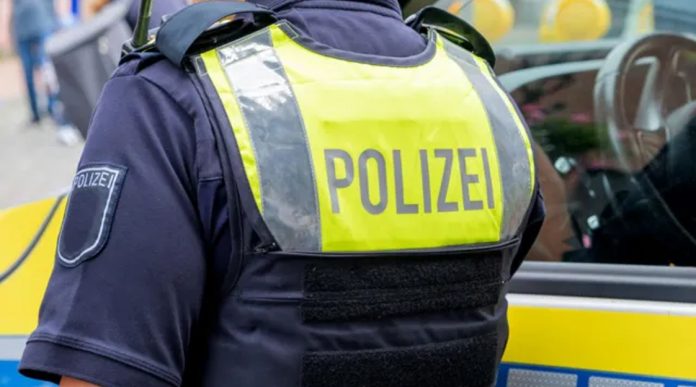
Five men have been arrested in Germany suspected of being involved in a plot to drive a vehicle into people at a Christmas market.

Three Moroccans, an Egyptian and a Syrian were detained on Friday over the plan to target a market in the southern Bavarian state. Authorities said they suspected an “Islamist motive”.

Prosecutors said the Egyptian – a 56-year-old – was alleged to have “called for a vehicle attack… with the aim of killing or injuring as many people as possible”. The Moroccans allegedly agreed to carry out the attack.

Officials in Germany have been on high alert after previous attacks at Christmas markets, including in Magdeburg last December that killed six people.

Authorities did not say when the planned attack was supposed to take place or which market was the target, though said they believed it to be one in the Dingolfing-Landau area, north east of Munich.

German newspaper Bild reported the Egyptian man was an imam at a mosque in the area.

Police said the Moroccan men – aged 30, 28 and 22 – were arrested accused of having agreed to commit murder, while the Syrian man, a 37-year-old, was accused of encouraging the suspects “in their decision to commit the crime”.

The five suspects appeared before a magistrate on Saturday and remain in custody.

Joachim Herrmann, Bavaria’s state interior minister, told Bild the “excellent cooperation between our security services” had helped to prevent “a potentially Islamist-motivated attack”.

Christmas markets are popular festive attractions throughout Germany, frequently attracting large crowds and significant tourism.

Security at events has been increased in recent years, since an attack in Berlin in 2016 when a man drove a lorry into a market crowd, killing 12 people.

Credit: bbc.com

Thailand launches new offensive as Cambodia halts all border crossings

0
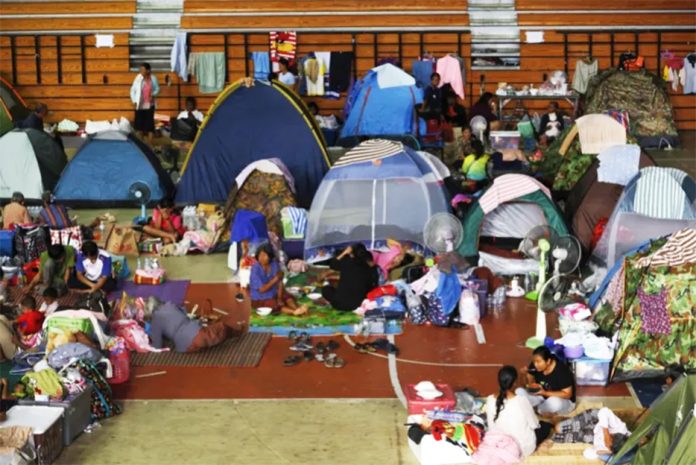
Displaced Thai villagers who fled their homes following clashes between Thai and Cambodian troops

Thailand’s military has launched a new offensive against Cambodia to “reclaim sovereign territory”, spurning mediation efforts including that of United States President Donald Trump.

Violence between the two Southeast Asian nations continued on Sunday, a day after Phnom Penh announced that it was shutting all of its crossings with Thailand, its northern neighbour.

The conflict stems from a long-running dispute over the colonial-era demarcation of their 800km (500-mile) shared border. Fighting has left at least 25 soldiers and civilians dead, and displaced over half a million people on both sides.

The newspaper Matichon Online quoted a Royal Thai Navy spokesman, Rear Admiral Parach Rattanachaiyapan, as saying that its forces “launched a military operation to reclaim Thai sovereign territory” in an area of the coastal province of Trat.

“The operation began in the early morning hours with heavy clashes, conducted under the principles of self-defence according to international law and the preservation of national sovereignty,” Rattanachaiyapan told the Thai newspaper.

The Thai military said it has “successfully controlled and reclaimed the area, expelling all opposing forces”.

The public television channel Thai PBS also reported that the country’s military “planted the Thai national flag” after “driving out all opposing forces” in the area.

There were no immediate reports on casualties from the latest incidents. The Cambodian military has yet to issue a statement regarding the latest fighting on Sunday.

Credit: aljazeera.com

How to Save Money on Prescriptions

0

When your doctor prescribes a medication that can resolve a health issue, it can be a relief — yet medication costs can also add up, even if you have prescription coverage. These tips may help minimize your prescription drug costs.

Ask Your Doctor for Money-Saving Alternatives

Hit by sticker shock at the pharmacy? Talk to your doctor about it. Doctors don’t always know the price of the drugs they prescribe. Tell yours if you have trouble affording your medication. Ask if there are less expensive drugs or generics that will work as well. The FDA has approved more than 32,000 generic drugs as of 2022. They can cost up to 85% less than brand-name versions. Your doctor may be able to give you drug samples, too.

Use Preferred Pharmacies

Check your health insurance plan for discounts tied to specific pharmacies. Some are inside supermarkets like Kroger, Albertsons, and Publix, and stores like Target and Walmart. Drug prices are lower at preferred pharmacies because insurance companies negotiate prices with them. Whenever you shop for medical insurance, looking at preferred pharmacy discounts is one way to compare plans.

Buy in Bulk

If you take daily medications, you may get a big discount when you stock up. Some Medicare Part D plans offer 90-day mail-order generics at no cost. Many chain pharmacies also sell 90-day supplies at a discount, at the store or via mail order. You might save even more by buying up to a year’s supply of some generics. Just keep in mind that you can’t return any unused drugs. Ask your doctor if they can prescribe your medicines this way.

Apps to Compare Prescription Prices

Enter a drug and dosage, and these free tools show you prices at local stores. Click on your choice to get a digital coupon. Some even let you order home delivery. The pioneer, GoodRx, has a membership plan that covers 1,000 meds for under $10 per prescription. Others include RxSaver, SingleCare, PharmacyChecker, Blink, and WebMDRx. When you use these apps, you bypass insurance.

Get Help From Drug Companies

Many drugmakers list patient assistant programs (PAPs) on their websites. They’re meant for people who can’t afford the companies’ brand-name drugs. To apply, you may need to show proof of income and other documentation. The Medicine Assistance Tool lets you search PAPs from many drug companies. Just plug in the name of your medications. Some drug companies also offer copay discount programs for people with health insurance.

Get Familiar With Your Formulary

If you take medication regularly, get to know your insurance plan’s drug formulary. It tells you and your doctor what price category, or tier, a certain drug is in and what it will cost you out-of-pocket. (Tier 1 is least expensive.) You may find it on the insurer’s website, or you can call them to ask about a certain drug. This is another way to compare benefits and costs if you’re switching health insurance plans.

Size Up Online Rx Services

Alternative prescription delivery services are everywhere these days. Costco.com, HealthWarehouse.com, and Amazon.com are full-service pharmacies. Others, like ScriptCo.com, Ro.co, HoneybeeHealth.com, and CostPlusDrugs.com, offer mostly generics. Weigh their annual membership fees against the lower prices to see if you’ll save. Some drugs cost less than insurance copays, but don’t count toward your deductible.

Check Out National Assistance Programs

NeedyMeds has resources for uninsured people, including free help to find and file paperwork for many PAPs. If you have insurance but still need help, try the Patient Advocate Foundation’s Co-Pay Relief program. The Assistance Fund also has programs that help cover drug copays and other medical expenses.

Ask for a Discount at an Independent Pharmacy

The price for a drug can vary a lot, even in the same community. Sometimes you can get a better price at your local drugstore because it’s not locked into a set cost. Just ask the pharmacist. Even if your local pharmacy is part of a chain, it could help you access savings programs. For instance, CVS can use its own search tool to look for coupons, see what your insurance covers, and more.

Tap Into Savings for Seniors

If you’re an older adult with limited income, the National Council on Aging’s BenefitsCheckUp search tool lets you hunt through 2,500 programs for help with prescription drugs and more. You may also qualify for Extra Help, a subsidy for people on Medicare Part D with low income. (You get Extra Help automatically if you’re on both Medicaid and Medicare or get Supplemental Security Income.)

Source: webmd

Abu Trica: Beyond Abu Trica: Are Ghana’s Banks Failing As Gatekeepers Of Financial Integrity

0
Michael Darko, PhD, FHEA

The recent disclosure by the Economic and Organised Crime Office (EOCO) that a Ghanaian national, popularly referred to as Abu Trica, faces up to 20 years’ imprisonment in the United States for allegedly masterminding an $8 million romance scam has once again reignited public outrage over cyber fraud.

Predictably, public discourse has focused on the individual accused. Yet this focus risks obscuring a more profound policy failure: the persistent weaknesses within Ghana’s financial system that allow cyber fraud to pass undetected until foreign authorities intervene.

Cyber fraud is often framed as an online crime. In truth, it is fundamentally a financial crime. No scam of this magnitude can succeed without banks—accounts must be opened, funds must be received, transferred, layered, withdrawn or converted. At every stage, the formal banking system is involved. The real question, therefore, is not merely who committed the crime, but how the system failed to stop the money early.

Banks as Gatekeepers of Financial Integrity

In advanced financial systems, banks are legally designated as gatekeepers. This role is not optional. It is codified in law and reinforced through regulation and sanctions. Ghana’s own banking laws reflect this principle. Section 3 of the Banks and Specialised Deposit-Taking Institutions Act, 2016 (Act 930), mandates the Bank of Ghana to ensure “the safety, soundness and stability of the banking system”.

Financial integrity is inseparable from this mandate. Further, Act 930 places a clear responsibility on banks to conduct their operations in a manner that does not expose the system to abuse. Section 56 empowers the Bank of Ghana to take supervisory action where a bank’s practices “are unsafe, unsound or pose a threat to depositors or the financial system”. Cyber-enabled fraud clearly falls within this scope.

AML/CFT Obligations: Clear in Law, Weak in Practice

The Bank of Ghana’s Anti-Money Laundering/Combating the Financing of Terrorism (AML/CFT) Guidelines are explicit about banks’ responsibilities. They require institutions to adopt a risk-based approach, under which customers and transactions must be assessed according to their risk profile. Crucially, the Guidelines state that institutions must apply “enhanced due diligence where the risk of money laundering or terrorist financing is higher”.

This includes situations involving unusual transaction patterns, large foreign inflows, or activities inconsistent with a customer’s known economic background. In plain terms, a customer with no discernible income stream suddenly receiving large or repeated foreign transfers should automatically trigger heightened scrutiny.

The law does not merely permit this—it requires it. Yet cases like the alleged $8 million romance scam suggest that such scrutiny is often delayed or ineffective. Funds move through multiple accounts, sometimes across several banks, before action is taken. By then, the damage is done.

Transaction Monitoring: Where the System Falls Short

The weakness lies not only in customer onboarding but in continuous transaction monitoring. The Bank of Ghana’s Risk Management Directive requires banks to maintain systems capable of “identifying, measuring, monitoring and controlling risks inherent in their activities”. This includes operational and financial crime risks. However, many banks still rely heavily on rule-based thresholds—flagging only single large transactions—rather than advanced behavioural analytics.

Fraud networks understand this and deliberately structure transactions to avoid detection, sending funds in smaller tranches or cycling them rapidly across accounts. Romance scams are particularly adept at exploiting this gap. The sophistication of these schemes means that only dynamic, behaviour-based monitoring systems can detect them early. Static compliance tools are no longer sufficient.

Reporting Obligations and the Role of the Financial Intelligence Centre

Under Ghana’s AML framework, banks are required to file Suspicious Transaction Reports (STRs) with the Financial Intelligence Centre (FIC) whenever they “know, suspect or have reasonable grounds to suspect” that funds are the proceeds of crime. This threshold is intentionally low. Suspicion, not proof, is enough to trigger reporting. The law is designed to err on the side of caution.

The challenge, however, is that delayed reporting undermines the entire system. If reports are filed after funds have already been withdrawn or transferred abroad, the preventive function of the AML regime collapses. At that point, enforcement becomes reactive rather than preventive.

Accountability: The Missing Deterrent

The Payment Systems and Services Act, 2019 (Act 987), further strengthens the regulatory framework by placing responsibility on payment service providers, including banks, to ensure the integrity of electronic transactions. Act 987 requires providers to operate systems that are “safe, efficient and secure” and empowers the Bank of Ghana to issue directives where payment systems are used in a manner that threatens financial stability or consumer protection.

In an era where cyber fraud is increasingly digital and cross-border, this Act gives regulators ample authority to demand stronger controls. The question is not whether the Bank of Ghana has the legal tools, but whether they are being used forcefully enough.

One of the most uncomfortable realities is the issue of enforcement intensity. In Europe and North America, banks have paid billions of dollars in fines for AML failures. Senior managers have lost jobs. Reputational damage has been severe. In Ghana, enforcement actions are less visible and penalties are often modest. Without meaningful deterrence, compliance risks being treated as a box-ticking exercise rather than a core governance issue. This creates a permissive environment—one that fraudsters quickly identify and exploit.

Why This Matters Beyond One Case

Persistent cyber fraud has broader consequences. It damages Ghana’s international reputation, threatens correspondent banking relationships, and increases scrutiny on legitimate transactions. The cost is borne not only by the state, but by ordinary businesses and citizens who face delays, higher compliance costs and reduced trust in the financial system. Ironically, the gains from cyber fraud accrue to a few individuals, while the losses are socialised across the economy.

If Ghana is serious about tackling cyber fraud, reform must move beyond rhetoric. The Bank of Ghana must visibly enforce its AML/CFT directives using the full powers granted under Acts 930 and 987. Banks must invest in modern, behaviour-based transaction monitoring systems, not merely compliance software. KYC must evolve into continuous customer risk assessment, as envisaged under the Bank of Ghana’s risk-based supervision framework. Intelligence sharing across banks, coordinated through the FIC, must become the norm rather than the exception.”

Conclusion: Prevention Is the Real Test

High-profile arrests make headlines, but they do not fix systems. Prevention is quieter, harder and far more effective. As long as illicit funds can move faster than oversight, cyber fraud will persist—regardless of how many individuals are prosecuted. Ghana’s laws are clear. The Bank of Ghana’s mandates are explicit. Banks’ responsibilities are well defined.

The challenge lies in implementation, enforcement and accountability. Cybercrime thrives where money moves faster than control. In Ghana’s fight against cyber fraud, banks are not peripheral actors—they are the front line. The only remaining question is whether policy action will finally reflect that reality.


SOURCE: MYJOYONLINE

All Blacks secure convincing win over Vision FC

0
Rudolf Junior Nana Mensah, Swedru All Blacks

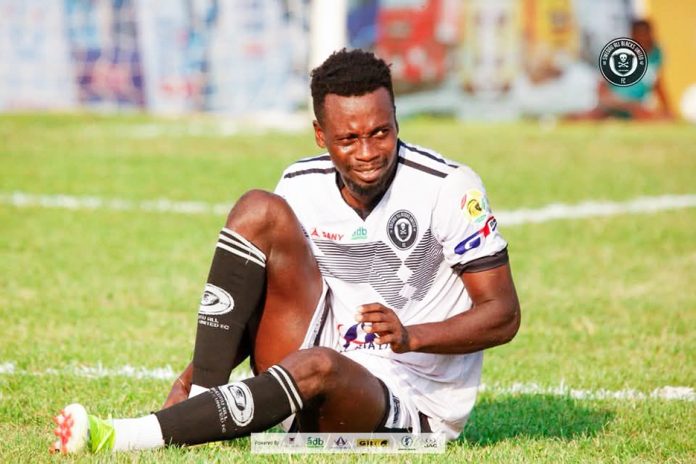
Swedru All Blacks racked up a convincing 2-0 win over Vision FC on Sunday, December 14, 2025 to make it two wins on the spin in the Ghana Premier League.

Ahmed Fathi’s team also made it three wins out of four to inch up to 10th in the league standings on 18 points.

Clement Tutu opened the scoring for the hosts on 25 minutes and a second-half own goal sealed victory for Fathi’s team.

David Ofori goal against his own team on 55 minutes not only gave All Blacks the cushion but further deepened Vision’s woes.

The visitors are now winless in six Ghana Premier League matches and drop to 15th in the league standings.

Swedru All Blacks travel to relegation-haunted Bechem United while Vision FC will be on the road again to Tamale as guests to Karela United.

Credit: ghanasoccernet.com

Hearts pip Nations to return to winning ways

0
Solomon Agbasi, Hearts

Accra Hearts of Oak returned to winning ways with a 1-0 win over Nations F.C. in the Ghana Premier League on Saturday.

A 76th minute header by Hamza Issah proved to be the decisive goal, securing a hard-fought win for the Phobians.

Hearts coach Didi Dramani made two changes to his line up, introducing Frank Duku and Gordon Cudjoe for Martin Karikari and Ali Mohammed respectively.

Nations were also without Emmanuel Annor and Razak Simpson who are on national duty with the Black Stars B.

Their absence was felt as Hearts asserted control of the game in the first 20 minutes.

However, the Phobians were ultimately blunt and did not produce much beyond Abdul Karim’s speculative effort from distance after 15 minutes.

Nations F.C grew into the game after 20 minutes but also failed to create anything significant beyond Mac-Williams Boateng’s long range effort just before half time.

Hearts improved in the second half after Didi Dramani substituted Frank Duku and Ransford Mensah for George Paaku and Mawuli Wayo.

The substitutions paid off as Hearts moved the ball with intensity and purpose but still could not find a way past the Nations defense.

But not for long.Hearts found the elusive leveller when Hamza Issah headed home a well-weighted pass from substitute George Paaku.

Five minutes later, George Paaku produced a spectacular pass to find Hussein Mohammed and Hamza Issah.

However, the two players failed to communicate, running into each other before Issah’s goal bound shot was cleared on the goal line.

Saturday’s win means Hearts have won consecutive matches since moving to the University of Ghana Stadium.

It is also only the third home win by the Phobians.

Credit: myjoyonline.com


GPL Scores @ A Glance

Hearts 1-0 Nations

Kotoko 1-0 Dreams

Bechem United 1-0 Eleven Wonders

Chelsea 1-0 Hohoe United

Holy Stars 2-0 Samartex

All Blacks 2-0 Vision FC

Young Apostles 2-1 Karela

Pulisic goal disallowed as AC Milan draw with Sassuolo

0
AC Milan draw with Sassuolo

Teenage defender Davide Bartesaghi scored his first senior goals but couldn’t prevent AC Milan from being held to a 2-2 draw at home to Sassuolo in Serie A on Sunday.

The result left Milan just a point ahead of Napoli, which was playing at Udinese later. Inter Milan can also move above its city rival if it wins at Genoa later.

Sassuolo had only won one of its past three matches but it took the lead at San Siro in the 13th minute. The visitors won the ball back from a Milan defensive throw-in and Andrea Pinamonti laid it off for the onrushing Ismaël Koné, who forced his way into the area before lifting it over Mike Maignan.

Milan leveled in the 34th minute as Ruben Loftus-Cheek rolled the ball across the area for Bartesaghi to power in from close range.

The 19-year-old Bartesaghi doubled his tally immediately after halftime when he ran onto Christopher Nkunku’s smart pass and fired inside the near post.

Christian Pulisic and Loftus-Cheek both had goals disallowed for Milan before Sassuolo equalized in the 77th minute through substitute Armand Laurienté following another Pinamonti assist.

Laurienté, who had changed the match when he came on, almost scored a stunning winner in the 88th minute following a solo run from his own half but his effort crashed off the left post.

Credit: espn.com


Raphinha’s brace help Barcelona overcome stubborn Osasuna

0
Barcelona have scored 49 goals in 17 La Liga games this season

Raphinha’s second-half double helped Barcelona overcome a stubborn Osasuna and open up a seven-point lead on Real Madrid at the top of La Liga.

It looked set to be a frustrating evening for the defending champions, who had 21 shots to three for Osasuna until the Brazilian forward struck the opening blow in the 70th minute.

Raphinha found the bottom corner from the edge of the penalty area before converting at the back post in the 86th minute when a cross deflected into his path.

Ferran Torres thought he had broken the deadlock in the 23rd minute when he beat the offside trap and headed in a Marcus Rashford cross.

However, the video assistant referee (VAR) ruled out the goal because Raphinha’s heel was offside during a short-corner routine in the build-up.

Torres then went close when he met Lamine Yamal’s dangerous inswinging cross, but the former Manchester City forward lifted his first-time effort over the crossbar.

As defensive as Osasuna were, they did pose a threat on the counter-attack. Minutes into the second half Victor Munoz powered past Alejandro Balde only to fire wide with just home goalkeeper Joan Garcia to beat.

Barcelona’s dominance was finally rewarded when Pedri drove forward from midfield, found Raphinha and he finished past Sergio Herrera.

Credit: bbc.com

The Ghanaian Chronicle