A former Board Member of the Ghana Infrastructure Investment Fund (GIIF), Yaw Odame-Darkwa, has confirmed before the High Court in Accra that the embattled former Chief Executive Officer of GIIF, Solomon Asamoah, made a formal presentation on the Accra Sky Train project to the Fund’s Investment and Finance Committee.
Mr. Odame-Darkwa, who is testifying as first prosecution witness (PW1) made the confirmation under intense cross-examination by Mrs. Victoria Barth, counsel for Mr. Asamoah, before the Criminal Division 4 of the High Court, presided over by Her Ladyship Justice Audrey Kocuvie-Tay.
During proceedings on Monday, the witness agreed that Item 4.3 on page four of the minutes of the Investment and Finance Committee meeting held on July 31, 2018—tendered as Exhibit 18—summarised the CEO’s presentation on the Accra Sky Train Mono Rail Project to committee members.
He further confirmed that Item 4.4 on page five of the same minutes captured members’ expressions of support for the project, noting its potential to facilitate the speedy movement of passengers across the city and stimulate business activities.
According to the minutes, members also indicated the need for further details to enable a sound decision on GIIF’s possible participation and to make an informed recommendation to the board.
Under questioning, Mr Odame-Darkwa acknowledged that although the committee expressed support for the project, further consideration was required before any recommendation could be made to the GIIF board.
The witness also admitted that when he wrote his statements at the National Intelligence Bureau (NIB) in March 2025, he did not have access to all relevant minutes of GIIF board and subcommittee meetings and largely relied on his recollection.
He later clarified that, contrary to earlier responses, he did not refresh his memory with the minutes of the July 31, 2018 Investment Committee meeting before writing his statement.
Mrs Barth confronted the witness with several email exchanges from 2018 relating to the Sky Train project, all of which he confirmed receiving.
The emails, which included presentations, agenda items, and committee documents circulated ahead of meetings scheduled for July 31 and September 28, 2018, were tendered through him without objection from the prosecution and admitted as Exhibits 11 through 19.
Mr. Odame-Darkwa also conceded that, as he sat in court, he could not definitively recall whether the Investment Committee meeting scheduled for September 28, 2018, actually took place.
As a result, he admitted he was not in a position to make a categorical statement that the committee did not recommend the Sky Train project to the GIIF board, stressing that his witness statement reflected what he could recollect at the time.
In a related line of questioning, the witness confirmed that he served as Chairman of the Audit Committee of the GIIF board in 2018 and that all board members bore collective responsibility for the Fund’s audited financial statements submitted to the Auditor-General and the Ministry of Finance.
An extract of the 2021 Auditor-General’s report on GIIF, as well as the Fund’s 2019 audited financial statements bearing the signatures of the CEO and Board Chairman, were tendered in evidence through the witness and admitted as Exhibits 20 and 21 respectively.
At the close of proceedings, defence counsel informed the court that additional email exchanges between board members and the company secretary from 2018 to 2020 would be made available to the prosecution for verification ahead of the next hearing.
The case was adjourned to December 16, 2025, for continuation of cross-examination.
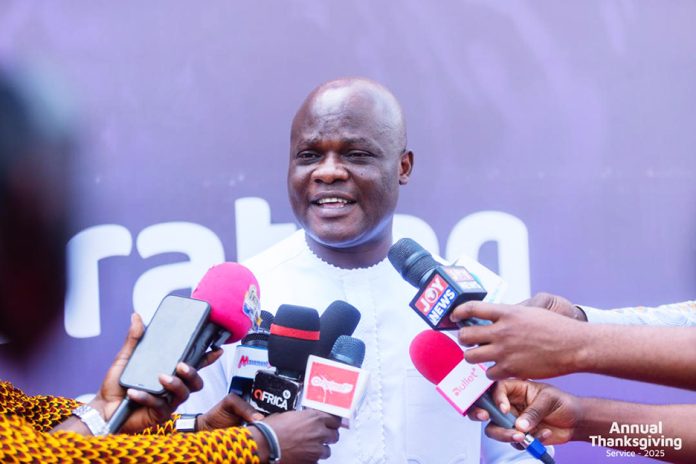
The Minister for Local Government, Chieftaincy and Religious Affairs, Mr Ahmed Ibrahim, has described Zoomlion Ghana Limited and its parent company, the Jospong Group of Companies, as a symbol of resilience and a testament to Ghanaian excellence, citing the Group’s survival and growth across multiple political administrations.
“It is not accidental that the Group has survived three different political administrations,” the Minister stated.
Mr. Ibrahim said Zoomlion has become an indispensable partner in Ghana’s development, stressing that modern governance, environmental health and public sanitation are inseparable from the company’s operations.
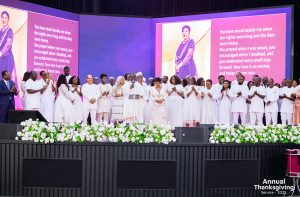
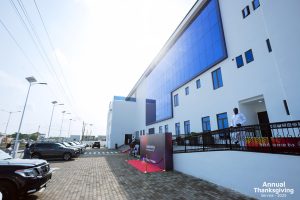
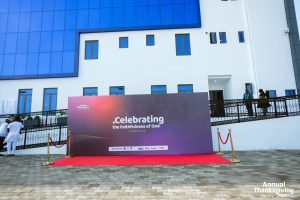
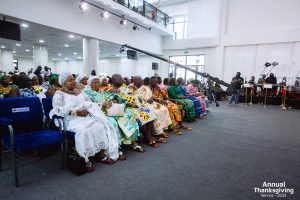
He was speaking at the Jospong Group Annual Thanksgiving Service 2025, held on Friday, December 12, 2025 at the Group’s head office at Adjirigarnor, Accra.
Providing a sweeping endorsement of the conglomerate’s role in national infrastructure, the Minister said Ghana could not meaningfully discuss environmental sanitation, waste management, public health, the green economy or modern local governance without acknowledging the contribution of the Jospong Group.
“As a nation, we cannot discuss environmental sanitation, waste management, public health, the green economy or modern local governance without acknowledging the remarkable contribution of the Jospong Group,” Mr. Ibrahim said.
He disclosed that through Zoomlion Ghana Limited and its sister companies, Jospong has become an indispensable partner to all 261 Metropolitan, Municipal and District Assemblies (MMDAs) across the country.
According to him, the collaboration spans critical services including solid and liquid waste collection, recycling, landfill management, fumigation and the deployment of green technologies.
“When greatness is before you—and when the work is impactful—you cannot ignore it,” he added.
Mr Ibrahim credited Zoomlion’s interventions for contributing to cleaner water bodies, safer environments, healthier communities and the creation of thousands of jobs for young people nationwide.
Placing the company’s growth in a broader historical context, the Minister described Zoomlion’s expansion across Africa as “Africa’s third great movement” driven by Ghana.
“The first wave was Dr. Kwame Nkrumah’s liberation struggle across Africa. The second was when the Ghana Black Stars conquered African football.
“The third wave – Zoomlion’s expansion across Africa – has become another historic symbol of Ghana’s global influence,” he said.
He further highlighted the Group’s continental footprint, noting that no other Ghanaian company operates in as many as 25 African countries.
“Tell me, which other Ghanaian company commands presence in 25 African countries? None,” he said, describing the achievement as “historical, inspirational and a testament to the fact that Ghanaian excellence, when guided by discipline, vision and ethical principles can stand tall anywhere in the world.”
Mr Ibrahim concluded by reaffirming the government’s commitment to deepening its partnership with the Jospong Group, stressing its central role in Ghana’s present and future development.
‘Thus Far Has the Lord Helped Us’
In a welcome address, the Executive Chairman of the Jospong Group, Dr. Joseph Siaw Agyepong, attributed the company’s remarkable growth—from a single printing press to a multinational industrial conglomerate to divine providence and consistent national support. “Thus far has the Lord helped us,” he said.
Dr. Joseph Siaw Agyepong disclosed that Zoomlion, the Group’s flagship environmental subsidiary, now operates 36 functional plants covering solid waste, liquid waste and medical waste treatment, positioning Ghana as “a centre of industrial excellence on the African continent.”
He said the Group’s journey began with the Jospong Printing Press at Jamestown in 1995 and has since expanded to more than 25 African countries, including Kenya, Nigeria, Uganda, Ethiopia, Tanzania, The Gambia and Gabon.
“Truly, this is the doing of the Lord and it is marvellous in our eyes,” he added.
Dr. Agyepong paid tribute to successive governments for their support, acknowledging the late President Jerry John Rawlings, late President Prof. John Evans Fiifi Atta Mills, former Presidents John Agyekum Kufuor and Nana Addo Dankwa Akufo-Addo.
He recalled his first meeting with former President Kufuor, saying, “I was frightened.” He also expressed profound gratitude to President John Dramani Mahama and First Lady, Mrs. Lordina Mahama, for their support for the Group.
Dr. Joseph Siaw Agyepong described the company’s success as not merely strategic but a “manifestation of divine covenant, revelation and mystery,” framing the Group’s journey as a national testimony of what is possible with vision and institutional support.
The event was attended by ministers of state, including Mr. Sam George, Members of Parliament, traditional rulers, members of the diplomatic corps, Christian and Muslim clergy, civil society organisations, business leaders and workers of the Jospong Group.
Dr Dominic Ayine, The Attorney General and Minister for Justice
Edith Ruby Opokua Adumuah, Head of Finance at the National Signals Bureau (NSB) has stated that based on officially published Bank of Ghana exchange rates, GH¢49.1 million could not, at any material time in 2020 or 2021, be the cedi equivalent of US$7 million as alleged by the prosecution.
Testifying as the second prosecution witness (PW2) under cross-examination on Thursday, Madam Adumuah told the General Jurisdiction 10 of the High Court, presided over by Justice Eugene Nyadu Nyante, that the prevailing exchange rates at the time ranged between GH¢5.2793 and GH¢5.7573 to the US dollar.
This, she explained, translates into the Attorney-General’s figure being overstated by GH¢8,010,000.
She also agreed to the suggestion of not knowing the purpose of the three cheques totalling GH¢49.1 million, explaining that under national security “need-to-know” protocols, only top-level officials would have such clearance to know.
Samuel Atta-Kyea, lead counsel for the former NSB Director-General, Mr. Kwabena Adu-Boahene and two others, was conducting the cross-examination.
The State was represented by Deputy Attorney-General (FAG), Dr. Justice Srem-Sai, assisted by Esi Yankah and Rabiatu Abdulai.
Law Courts Complex, Accra
Establishing the foundation to prove the defence case, Mr. Atta-Akyea tested the witness’ competency: “So in your work as an accountant, you have a clear understanding of foreign exchange rates?”
Madam Adumuah replied, “Yes, my Lord.” She also agreed that “the Bank of Ghana officially states the cedi-to-dollar exchange rates” and that “these rates are publicly accessible on the Bank of Ghana website.”
When the defence sought to tender a Bank of Ghana exchange-rate document covering January 1 to December 31, 2020, the Deputy Attorney-General objected.
However, the court ruled in favour of the defence, with the presiding judge stating: “The interbank exchange rate is relevant.
“The witness is competent to aid in tendering the document. The Bank of Ghana exchange-rate document is to be received as evidence.”
Admission of Bank of Ghana exchange-rate document
Atta Akyea: “My Lord, I seek to tender the Bank of Ghana exchange-rate document from 1st January 2020 to 31st December 2020.”
Deputy Attorney-General: “The witness is not an official of the Bank of Ghana and has no personal knowledge of the contents of the document. Its relevance has not been established.”
Atta Akyea: “My Lord, under Section 9, Clause 2 of the Evidence Act, this document reflects publicly known facts that can assist the court.”
Judge: “The interbank exchange rate is relevant. The witness is competent to aid in tendering the document. The Bank of Ghana exchange-rate document is admitted in evidence.”
SWIFT transfer and April 2020 calculations
Atta Akyea: What is Exhibit B3?
Adumuah: A SWIFT transfer from Fidelity Bank to ISC Holdings.
Atta Akyea: What is the amount transferred?
Adumuah: “US$87,500.
Atta Akyea: What is the date of the transfer?
Madam Adumuah: 6th April, 2020.
Atta Akyea: Who is the ordering customer?
Adumuah: Coordinator’s Account–NSC.
Atta Akyea: What was the cedi exchange rate for this transfer?
Adumuah: 5.87.
Atta Akyea: What is the cedi equivalent of US$87,500 at that rate?
Adumuah: GH¢513,625.
Atta Akyea: Do such payments reflect in the bank statements of Special Operations Accounts?
Adumuah: Yes, my Lord.
Atta Akyea: At an exchange rate of 5.87 as at 6th April 2020, what is the cedi equivalent of US$7 million?
Adumuah: GH¢41,090,000.
Atta Akyea: GH¢41,090,000 is not equal to GH¢49,100,000?
Adumuah: Yes, my Lord.
Atta Akyea: What is the difference?
Adumuah: GH¢8,010,000.
June 2021 transfer and calculations
Atta Akyea: Who is the sender on the SWIFT advice dated 8th June, 2021?
Adumuah: Fidelity Bank.
Atta Akyea: Who is the ordering customer?
Adumuah: Coordinator’s Account–NSB.
Atta Akyea: Who is the beneficiary?
Adumuah: ISC Holdings.
Atta Akyea: What amount was transferred?
Adumuah: US$100,000.
Atta Akyea: What is the cedi equivalent?
Adumuah: GH¢585,000.
Atta Akyea: At what exchange rate?
Adumuah: 5.85.
Atta Akyea: At this rate, what does GH¢49.1 million convert to in dollars?
Edith Ruby Opokua Adumuah: US$8,393,062.
Atta Akyea: What is the cedi equivalent of US$7 million at 5.85?
Adumuah: GH¢40,950,000.
Atta Akyea: So GH¢49.1 million cannot convert to US$7 million at that rate?
Adumuah: Yes, my Lord.
Highest and lowest exchange rates in 2020
Atta Akyea: What was the highest cedi-to-dollar exchange rate in 2020?
Adumuah: 5.7573 as at 31st December, 2020.
Atta Akyea: What is the cedi equivalent of US$7 million at that rate?
Adumuah: GH¢40,301,100.
Atta Akyea: What was the lowest exchange rate?
Adumuah: 5.2793 as at 24th June, 2020.
Atta Akyea: What does US$7 million translate to at that rate?
Adumuah: GH¢36,955,100.
Purpose of the GH¢49.1 million
On the purpose of the cheques, Mr. Atta Akyea asked, “In your position as head of finance under the National Security Coordinator, can you tell what the GH₵49.1 million, the total of three cheques, were for?” She replied, “My Lord, I do not know.”
Atta Akyea pressed, “You will not know as on account of need-to-know policy, you don’t have clearance to know?” She said, “Yes, my Lord.”
He clarified, “So you agree that National Security persons with clearance to know will know?” She confirmed, “Yes, my Lord.”
When asked, “Now for these three cheques totalling GH₵49.1 million, who will have the clearance to know the purpose of the funds?” Witness replied, “My Lord, I assume the Director General, National security Coordinator, maybe the minister of the National security or anybody at the topmost hierarchy of the National Security Council.”
Routine practice
Mr. Atta Akyea also explored the control of Special Operations Accounts by asking “Before the establishment of NSB on 29th December, 2020, all funding and financial operations of the BNC department in the office of National Security Coordinator were conducted under the authority of the National Security Coordinator?” She replied, “Yes, my Lord.”
He further asked, “Who opened the Special Operations Account in Fidelity Bank?” She said, “The National Security Coordinator, the late Joshua Kyeremeh.”
He continued, “You have also confirmed that the late Kyeremeh was a signatory to the Special Operations Account with Fidelity Bank?” She replied, “Yes, my Lord.”
Mr. Atta Akyea added, “It follows from what you told this Honourable Court that it is the National Security Coordinator who controls all financial transactions of BNC?” and she confirmed, “Yes, my Lord.”
He further asked, “Kwabena Adu-Boahene, before the establishment of NSB on 29th December, 2020, could never transact any financial business on the Fidelity Bank Account without express approval and participation of the National Security Coordinator?” She replied, “Yes, my Lord.”
Nature of Accounts
He pressed on the nature of accounts, asking “The Account described as ‘Director BNC’ is not a general administration account. Is that not so?” She replied, “Yes, my Lord.”
He added, “You will agree with me that all Special Operations Accounts, including the one referred to as ‘Director BNC,’ have not been subjected to the Auditor-General’s routine audits?” She confirmed, “Yes, my Lord.”
Mr. Atta Akyea also clarified the role of institutions in fund transfers. He asked, “From Exhibit A, which you’re holding, it is the National Security Secretariat that is requesting the transfer of funds and not the BNC?”
Ms. Adumuah confirmed, “Yes, my Lord, the account number is the Coordinator’s Account used for BNC operations.”
He asked, “It is the National Security Council Secretariat that made the request for the transfer of funds?” and she said, “Yes, my Lord.”
Following extensive questioning and testimony, the Presiding Judge, John Eugene Nyante Nyadu, adjourned the case to the 11th, 12th, and 13th of February 2026.
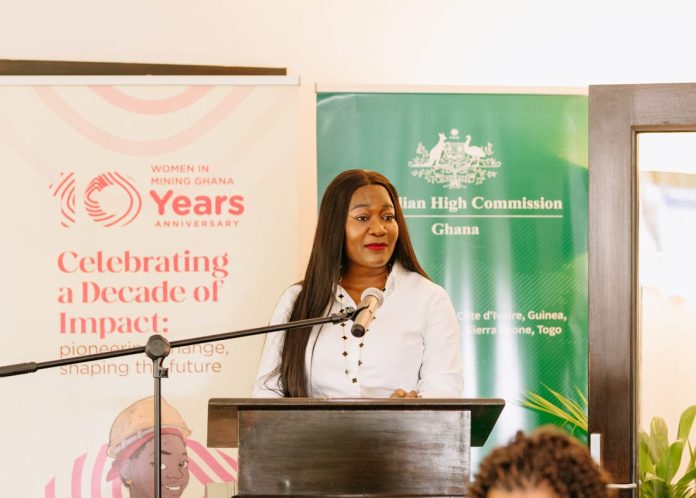
Ghana’s mining sector must undergo systemic transformation to ensure women are fully included, empowered, and able to lead, the Chief Executive Officer of the Minerals Income Investment Fund (MIIF), Mrs. Justina Nelson, has said.
Mr Nelson in a group photograph with the women
Speaking at the 10th anniversary of Women in Mining Ghana (WIM Ghana) in Accra, Mrs. Nelson emphasised that true gender inclusion requires more than token representation, it demands structural reforms that enable women to influence decision-making, advance professionally and thrive in a historically male-dominated industry.
“A more inclusive mining sector will strengthen productivity, governance, and innovation,” she said, adding “Systemic change is necessary to ensure women are not only present, but empowered to shape the future of our mineral-driven economy.”
Building on a Decade of Progress
Mrs. Nelson commended WIM Ghana for 10 years of advocacy, leadership development and creating pathways for women.
“Your work has challenged stereotypes, amplified women’s voices and opened doors that were once firmly shut,” she said.
Despite these gains, gender gaps persist. Citing Ghana Chamber of Mines 2023 data, she noted that women account for 9–10% of large-scale mining staff, 9% of contractors, 10% of junior-level roles, 14% of senior positions, and 21% of professional roles.
“These figures highlight the urgent need for systemic change,” she said, pointing to ongoing challenges including inequitable pay, gender bias, and harassment. Drawing on her own experience at MIIF, she added “I have faced false publications and malicious attacks for putting things in their right perspective.
“I stand here not as a victim, but as a woman determined to lead. Let us hold and defend one another, for we are few at the top.”
Scholarships and Structural Support
To foster systemic change, MIIF has launched initiatives such as the Women from Mining Communities (WoMCom) Scholarship Scheme, which provides financial support for female STEM students from mining communities.
Over 90 students at the University of Mines and Technology (UMaT), Tarkwa, have already benefited, and MIIF plans to expand the program to universities in Ghana’s middle belt and northern regions in 2026, in collaboration with corporate Ghana and development partners.
“Our goal is to ensure that women from mining communities are not left behind in Ghana’s mineral-driven transformation,” she said.
Empowering a Growing Sector
Mrs Nelson also highlighted that Ghana’s mining sector is experiencing significant growth, reinforcing the importance of including women in its expansion.
For the first three quarters of 2025, MIIF recorded US$291.87 million in royalties from large-scale gold operations, a 40.18% increase from 2024, while mid-tier gold operations contributed GH₵59.44 million, up 46.38%.
Manganese royalties surged 170% to US$12.75 million, quarry operations rose 13.12% to GH₵13.15 million, and sand mining increased 21.48% to GH₵433,406.
“These figures demonstrate that Ghana’s mineral sector can grow robustly while implementing systemic reforms to empower women,” she said.
Mrs. Nelson concluded with a call to action: “As MIIF continues to secure Ghana’s mineral revenues, we are ready to partner with Women in Mining Ghana to build a sector where gender does not limit potential. True transformation requires systemic change, and together, we can make it happen.”
Chairman of the Church of Pentecost, Apostle Dr. Eric Nyamekye
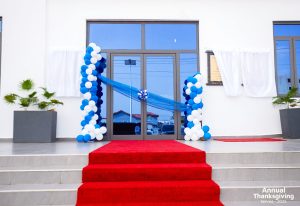
The Church of Pentecost (CoP), in partnership with the Jospong Group of Companies, on Sunday, December 14, 2025 dedicated an ultra-modern church auditorium and mission house for the Pentecost International Worship Centre (PIWC) at Trasacco, a prime suburb of Accra, marking a major milestone in the long-standing faith-based collaboration between the two institutions.
Chairman of the Church of Pentecost, Apostle Dr. Eric Nyamekye praying over the new church building
The dedication service, held at the new PIWC Trasacco premises, under the Madina Area of the Church of Pentecost, attracted senior clergy of the church, leaders of the Jospong Group, captains of industry, public officials and congregants from across Accra.
The ceremony formed part of a structured programme that included prayers, worship, a sermon, thanksgiving by the Jospong Group, the cutting of tape, unveiling of a plaque and the formal handing over of keys to the church.
The Mission house donated to the PIWC Trasacco
Chairman of the Church of Pentecost, Apostle Dr Eric Nyamekye, who dedicated the facility, described the occasion as a moment of gratitude to God and a testament to sacrificial giving.
He announced that two facilities, a chapel and a mission house, had been completed and dedicated, and expressed appreciation to the benefactors for their generosity to the church.
“We want to take this opportunity, on behalf of the Church of Pentecost, to say a big thank you and to pray that the Lord will bless them,” Apostle Dr. Nyamekye said, adding that with more than 20,000 congregations worldwide, the church warmly welcomes such acts of support to advance its mission.
A picture of the church
Touching on the Christmas season, the Chairman underscored the message of peace, love and reconciliation, urging Christians to live harmoniously and extend compassion to the less privileged.
He encouraged church members and the general public to reflect on the significance of Christ’s birth and to use the season as an opportunity for spiritual renewal.
Founder and Executive Chairman of the Jospong Group of Companies, Elder Dr. Joseph Siaw Agyepong seated with his family at the dedication Service
Founder and Executive Chairman of the Jospong Group of Companies, Elder Dr. Joseph Siaw Agyepong, described the project not as an achievement but as “a testimony of grace,” attributing the success of his business and philanthropic endeavours to prayer, obedience and faith in God.
Founder and Executive Chairman of the Jospong Group of Companies, Elder Dr. Joseph Siaw Agyepong and his family addressing the entire church
Standing with his wife and family, Dr. Joseph Siaw Agyepong recounted his personal journey from modest beginnings in technical education to building one of Ghana’s leading indigenous conglomerates, stressing that divine guidance had shaped his path.
“When I could not see my future, God saw it. When I did not know the way, God gave me the way,” he said.
He emphasised that prayer has been central to his leadership philosophy, noting that “strategy without prayer is incomplete, and success without God is empty.”
According to him, key decisions taken in prayer have sustained the Group through challenges and growth, reinforcing his conviction that business leadership is also spiritual.
The ultra-modern church complex
Dr. Joseph Siaw Agyepong explained that the donation of the PIWC Trasacco auditorium and mission house was inspired by a divine vision to strengthen chaplaincy and spiritual life within the Jospong Group, while supporting the work of the Church of Pentecost.
He acknowledged the support of successive national leaders over the years, noting that partnerships and guidance at various levels had helped expand the Group’s footprint across Ghana and beyond.
The front view of the ultra modern church
Information contained in the dedication brochure traces the roots of the Jospong Group’s spiritual culture to 1995, when daily devotions were instituted at its Jamestown printing press. This practice later evolved into annual thanksgiving services, which have become a core corporate and spiritual tradition of the Group.
The brochure further indicates that the vision to construct a modern chaplaincy auditorium was conceived in 2020, with the facility designed for shared use by PIWC Trasacco and the Church of Pentecost chaplaincy.
The wife of the Founder and Executive Chairman of the Jospong Group of Companies, Elder Dr. Joseph Siaw Agyepong seated at the service
The project was executed through the combined efforts of JAYCOM, SINO Africa and China State Construction Company, under technical supervision by a team of engineers and church leaders.
The new complex is equipped with modern amenities, including a children’s auditorium, digital library, executive lounge, conference rooms, gallery, LED screens and power control systems, all intended to support worship, administration and global digital ministry.
A separate mission house was also secured to provide accommodation for the resident minister of PIWC Trasacco, enabling uninterrupted pastoral care and leadership.
Funding for both the church building and the mission house was fully borne by Elder Dr. Joseph Siaw Agyepong, his wife Dr. Adelaide Siaw Agyepong and the Jospong Group of Companies, according to the brochure.
Some dignitaries seated at the dedication service
The dedication also highlighted the broader partnership between the Jospong Chaplaincy and the Church of Pentecost, which has seen the church provide pastoral support, doctrinal guidance and venues for the Group’s nationwide thanksgiving services.
This collaboration has facilitated evangelism, counselling and worship activities that have impacted communities across the country.
As prayers were offered and the keys formally handed over, church leaders described the PIWC Trasacco complex as both a physical landmark and a spiritual symbol of faithfulness, expressing hope that the facility would serve generations and contribute to Ghana’s spiritual development.
The service ended with benediction and expressions of appreciation, as congregants celebrated what both church and corporate leaders described as a manifestation of faith in action and a reaffirmation of commitment to God and society.
For years, Newmont’s presence in Ghana has been defined not only by responsible mining, but by a deliberate effort to invest in people. From life-saving health interventions to transformative educational opportunities, the company’s community-focused initiatives continue to draw national recognition. In recent months, several reputable institutions have highlighted Newmont’s long-term commitment to improving the lives of vulnerable groups, affirming the company’s role as a strategic partner in Ghana’s social development agenda.
Newmont’s sustained investment in uplifting individuals and communities, particularly the most vulnerable, has been acknowledged and affirmed by key partners. The latest of such recognitions came from the Noguchi Memorial Institute for Medical Research (NMIMR), which highlighted Newmont’s long-standing support for hepatitis B vaccinations.
Acknowledging the high prevalence and rapid spread of Hepatitis B in Ghana – and the urgent need for intervention to prevent a national health crisis – NMIMR has been leading extensive education and vaccination campaigns. Newmont’s financial assistance enables the Institute offer free vaccinations year-after-year.
Newmont’s partnership with NMIMR, however, extends far beyond Hepatitis B prevention. The company has provided sponsorship towards a critical national campaign aimed at eliminating Neglected Tropical Diseases (NTDs), such as Lymphatic Filariasis, Onchocerciasis, Schistosomiasis, Leprosy, Buruli Ulcer, and Yaws. These diseases disproportionately affect low-income communities and can result in disability, disfigurement, social stigma, loss of productivity, and chronic poverty.
Amid dwindling funding from development partners, Newmont’s intervention fills a crucial financing gap and helps extend essential healthcare to individuals and communities who urgently need support but may otherwise be unable to afford these life-saving interventions.
Recognition by Otumfuo Osei II Foundation
The Otumfuo Osei Tutu II Foundation has also acknowledged Newmont’s contribution to expanding access to quality education in under-resourced communities. Through a three-year partnership between Newmont and the Otumfuo Foundation, six Artificial Intelligence (AI) Smart Laboratories are being established. These facilities and curriculum are designed to expose pupils and students to robotics, 3D modelling, coding, and other emerging technologies.
This partnership is already transforming learning outcomes. Just a little over a year ago, Kona D/A Primary & JHS had no functioning AI lab. Today, it hosts one of Ghana’s most promising AI and robotics teams, made possible through the investment in a fully equipped 50-seater laboratory furnished with 25 tablets, 10 robotics kits, AI learning content and trained master coaches who provide hands-on instruction.
The impact of this support became evident at the Ghana Robotics Competition (GRC) 2025; a groundbreaking event that showcases the innovative capabilities of young Ghanaians in Science, Technology, Engineering, Arts and Mathematics (STEAM) education. Kona D/A Primary & JHS stood alongside 74 competing teams, representing 37 middle schools, 26 high schools, and 11 universities. Their team, comprising Godfred Ofori (14, JHS 3), Victoria Tabi Boakye (10, Basic 5), and Austin Osei Okrah (13, JHS 3), had only three days to prepare. Despite being first-time entrants and among the youngest competitors, they emerged winners of the national competition.
The laurels did not end there. Kona’s Austin Osei Okrah was also named the overall best in the Tech’s League, earning the distinguished title of Controller Conqueror for GRC 2025, a remarkable achievement for a first-time participant from a less-resourced school.
Prior to this remarkable achievement, Wioso St. Peter’s Junior High School (JHS), the first school to benefit from the Smart Labs initiative in 2024, participated in the 2024 edition of the GRC. After only a few months of training, and as first time participants, Wioso St. Peter’s JHS placed 5th in the national competition, out of a total of 47 participating schools.
Through partnerships, such as with the Otumfuo Osei Tutu II Foundation, inclusive growth is being nurtured through human capital development.
Appreciation by Children’s Heart Foundation Ghana
The Children’s Heart Foundation Ghana has also recognized Newmont for its contribution toward life-saving surgeries for children with heart conditions. Through Newmont’s collaboration with the Foundation, critical open-heart surgeries have been made possible for underprivileged children who otherwise would not have had access to such specialized care.
Beyond demonstrating leadership in responsible mining and environmental stewardship, Newmont remains focused on delivering positive social impact, directly and through partnerships that create enduring legacy for the less privileged.
Select committee chairman granting interview to the media
Parliament’s Select Committee on Trade and Industry has thrown its weight behind the government’s decision to restrict the export of raw rubber in the 2026 budget statement, describing the move as critical in protecting local jobs, ensuring value addition and sustaining Ghana’s industrialisation drive.
During a working visit to three local processing companies, Yaeric Rubber Processing Ltd, Golden Latex Rubber Products Ltd and the Ghana Rubber Estates Ltd (GREL) in the Western Region, both the Committee Chairman and the Ranking Member offered strong backing for the policy, which was explicitly captured in the 2026 Budget.
The Association of Natural Rubber Actors of Ghana (ANRAG) has also endorsed the decision, insisting that Ghana has the capacity to process all rubber produced in the country.
Chairman of the Parliamentary Select Committee on Trade, Industry and Tourism and Member of Parliament for Central Tongu, Alexander Gabby Hottordze said “We Cannot Allow Job Losses and Middlemen Abuse to Continue”, Committee Chairman said the unregulated exploitation and exportation of raw rubber had created room for “unscrupulous middlemen” to profit at the expense of farmers and domestic processors.
He noted that the practice had already contributed to job losses—forcing some displaced workers into illegal mining—as factories struggled to operate below capacity due to reduced raw material supply.
“The President’s vision is clear: no product should leave Ghana unprocessed. Value addition will create jobs, feed our factories, and support the 24-hour economy.
“We are lawmakers, and we will ensure the law works. Any steps toward export must be in consultation with the local industry,” he stressed.
He added that the Committee had already initiated engagements with relevant ministries to ensure swift implementation of the policy once the accompanying Legislative Instrument (L.I.) is laid before Parliament.
Ranking Member and Member of Parliament for New Juaben South, Michael Yaw Okyere Baafi said “Government Has Taken a Bold Decision, Now We Must Back It With Law”, The Ranking Member commended government’s “bold, clear and irreversible” policy stance on restricting raw rubber export in the 2026 Budget.
“The minister gives policy direction, and the ministry will bring the L.I. to Parliament. This time, no one can export raw rubber from Ghana to the detriment of local industry supply. Exportation is restricted,” he stressed.
He argued that a similar regulatory approach had strengthened Ghana’s cement industry, expressing confidence that rubber processing would experience the same transformation once the new L.I. is enforced.
ANRAG: “We Can Process All Ghana’s Rubber, No Farmer Will Lose” Secretary of the Association of Natural Rubber Aggregators (ANRAG), Perry Acheampong, also welcomed the government’s move, dismissing claims that processors are short-changing farmers.
“Prices are set by the Tree Crops Development Authority. Processors all pay above the minimum approved price. No farmer loses anything by selling locally,” he stated.
According to him, processors have an existing memorandum of understanding with traders and aggregators to buy all their rubber, meaning there is no justification for exporting raw rubber.
Perry noted that Ghana’s processors currently have an installed capacity of about 178,000 tons but the raw material production is estimated to be about 110,000 tons per annum, which clearly indicates that all the raw material can be processed locally for the country to benefit from value addition.
He said the restriction would restore factory operations, many of which have cut down shifts, with some now working only a few days a week.“Value addition is the President’s vision. When we process rubber here, nobody loses a job — not the farmer, trader, aggregator, transporter or freight forwarder. Everyone gains,” he emphasised.
He added that Ghana’s peers, including the Ivory Coast, Liberia and Guinea-Bissau, have all banned the export of raw rubber to protect local industries—a model Ghana should emulate to build a competitive sector.
SELECT COMMITTEE CHAIR During the visit, the Chairman of Parliament’s Select Committee on Trade, Industry and Tourism expressed deep concern about the impact of raw rubber exports on local processors, most especially Ghana Rubber Estates Limited (GREL), warning that the situation is creating conditions that could worsen rural unemployment and, indirectly, fuel illegal mining.
His comments followed detailed presentations by the Secretary of ANRAG that painted a dire picture of how the rising export of raw rubber was starving local processors of essential feedstock.
According to the Chairman, the Committee is now fully seized with the facts and is prepared to escalate the matter to the floor of Parliament.
“Frankly speaking, the starvation of this particular industry is causing more harm than good,” he said adding “apart from denying GREL and other local processors of raw materials and pushing the local processors to operate far below capacity, we are losing jobs.”
He revealed that GREL’s factory workforce has dropped from about 630 employees to a little over 400, a development he described as both alarming and dangerous for the stability of communities that depended on the company’s payroll.
He warned that widespread job cuts in agro-processing areas could push unemployed youth toward illegal mining activities.
“An empty hand is a tool for the devil. When people lose their monthly income, they will necessarily have to look for alternatives. This is how some end up in galamsey. We cannot claim to be fighting illegal mining with one hand while promoting it with the other,” he cautioned.
The Chairman also suggested that the Committee had picked up information indicating that a few individuals were profiting from the unregulated export trade at the expense of national interest.
He disclosed that prior to the release of the 2026 Budget Statement, the Committee had briefed the Minister of Finance on the findings from earlier engagements with GREL.
He welcomed government’s decision, announced in the budget, to restrict the export of raw rubber from 2026 as a step in the right direction.
The Committee, he added, will pursue further consultations with the Ministry of Trade, Agribusiness and Industry and Ministry of Food and Agriculture to fashion out a sustainable framework that protects local processors, secures jobs, and increases value addition in the rubber sector.
Praising GREL for its extensive Corporate Social Responsibility (CSR) programmes, including nursery support and community projects, the Chairman said companies that invest meaningfully in host communities deserve stronger policy protection.
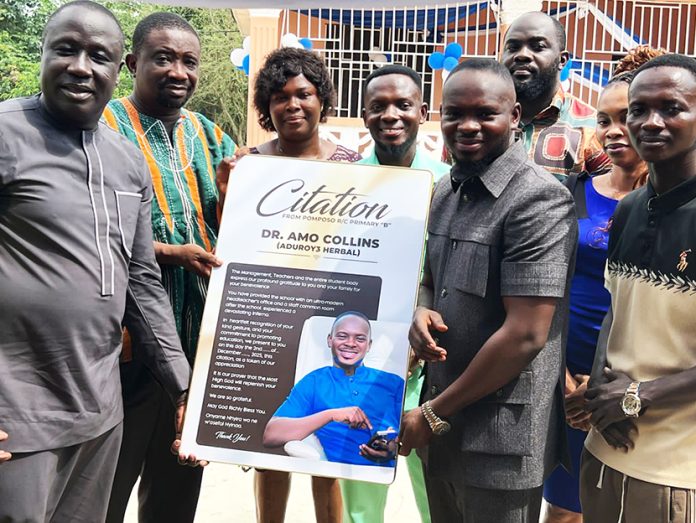
The School authorities presenting a citation to Dr. Collins Amo
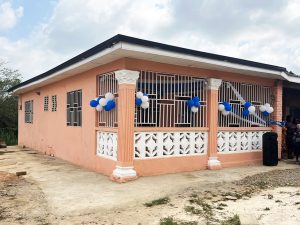
Dr. Collins Amo, the Chief Executive Officer (CEO) of Aduro Ye Herbal Center, has rebuilt the Pomposo R/C Primary B school block destroyed by a fire last year. The new structure comprises a staff office, washrooms, and headmaster’s office.
The refurbished school block
Dr. Collins Amo, an old student of the school undertook the project after the school authorities petitioned him for support.
“As an old student and good corporate citizen, l decided to help rebuild the structure since the government alone cannot handle everything.”
According to him, the gesture aligns with his company’s commitment to improving education in Obuasi.
Madam Regina Ocansey, the school’s headmistress, expressed gratitude, saying the intervention was timely and life-saving as it brought relief to teachers and pupils and thus enhanced the learning environment.
She disclosed that the fire had destroyed properties worth thousands of cedis, including textbooks, computers and TV sets.
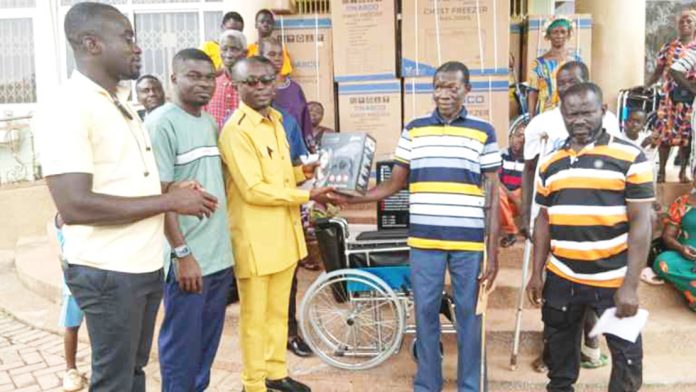
A beneficiary receiving livelihood support equipment from DCE Appiah-Kubi
The Bosome-Freho District Assembly in the Ashanti Region has provided livelihood support to 33 persons with disabilities (PWDs) in the district.
The 33 beneficiaries received tools and equipment tailored to their individual trades, with the expectation that they will become self‑reliant contributors to their households and the local economy.
The assistance, funded through the district’s share of the District Assembly Common Fund (DACF), was handed over during a brief ceremony held at Asiwa, the District capital.
Mr Charles Appiah-Kubi, the District Chief Executive speaking at the event, urged the beneficiaries not to sell the startup equipment they received.
He explained that the resources are meant to support their livelihoods and improve the standard of living,” adding that it is the aim of the government to ensure that PWDs seen begging for alms on the streets in cities and towns across the country are empowered through the DACF.
Mr. Appiah‑Kubi further assured the beneficiaries of the government’s continued support, encouraging them to refrain from street begging and to make prudent use of the equipment to better their living conditions.
Mr. Frank Konadu Asare, District Social Welfare and Community Development Director, emphasized that PWDs are equally productive, skillful and knowledgeable, and called on the public to view them as such and give them the respect and opportunities they deserve.
“Utilise the support and resources provided to improve your lives,” he told the beneficiaries, stressing the importance of making good use of the assistance to enhance their economic and social well‑being.
He disclosed that the support is part of the assembly’s broader effort to promote the economic empowerment of persons with disabilities and to reduce reliance on begging.
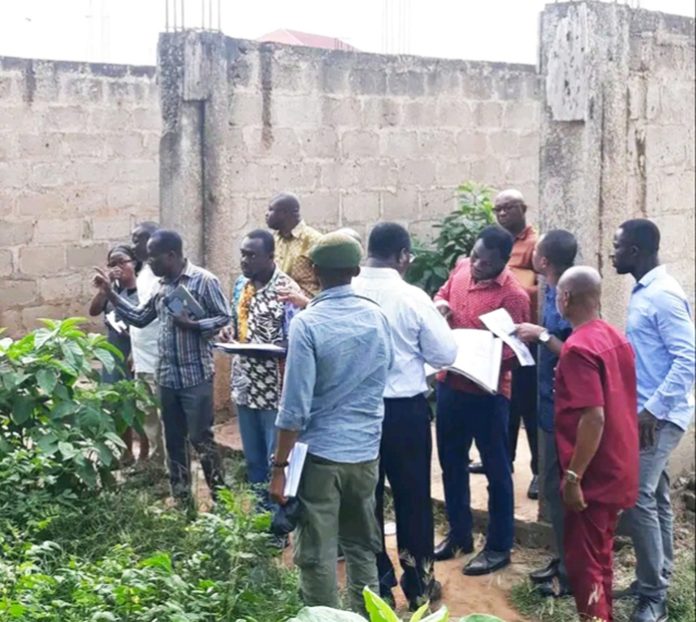
Consultants on site reviewing the Mamponteng Jubilee Market project
Consultants from the Ministry of Local Government, Chieftaincy and Religious Affairs (MLGCRA) have carried out a comprehensive site review and assessment of the Mamponteng Jubilee Market on Thursday, December 11, 2025.
The exercise, held at the market premises, aimed to verify that the existing site plan accurately reflects the current ground conditions and to identify any areas requiring immediate modification or redesign.
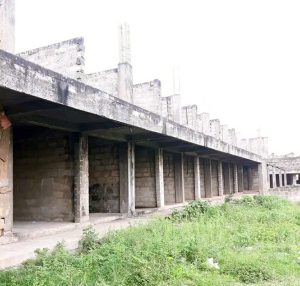
The stalled Mamponteng Jubilee Market
The Jubilee Market project, which stalled at 55% completion for more than 12 years, began in 2004. The prolonged abandonment has negatively impacted traders and the local economy.
The market serves as a central trading hub for the district’s 46 major towns and communities.
The assessment follows the visit by Vice President Professor Naana Jane Opoku-Agyemang last October, during which she promised to ensure the project’s completion.
The Vice President emphasised that the government prioritizes projects that support women’s development, recognising the importance of trading in their lives.
Mr. Joseph Amankwah, Municipal Chief Executive for Kwabre East Municipal Assembly, said the field assessment was essential to ensure that the development plan aligns with realities on the ground.
According to him, the review is crucial for confirming that their site plan mirrors the actual situation and for pinpointing sections that may need prompt adjustments.
Mr. Amankwah expressed the Assembly’s gratitude for the commitment shown by President John Dramani Mahama and Vice President Naana Jane Opoku‑Agyemang towards the successful completion of the Mamponteng Jubilee Market.
He noted that their continued support has been instrumental in moving the project forward.
He disclosed that the MLGCRA team, comprising engineers, planners and other technical experts, conducted a walk‑through of the market, evaluating infrastructure, drainage, stall layout and other critical components, noting that their findings will inform any necessary redesign work before the market becomes fully operational.