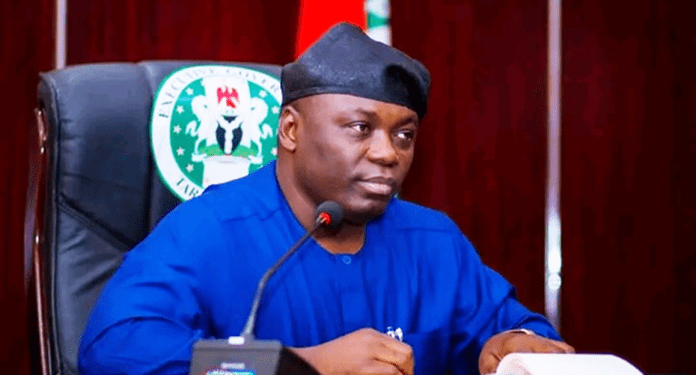
Taraba State Governor Agbu Kefas has announced that he will officially join the All Progressives Congress (APC) from the Peoples Democratic Party (PDP) on Wednesday, November 19, 2025.
Speaking during an inspection of the ongoing renovation of the Jolly Nyame Stadium—the proposed venue for the defection ceremony—Governor Kefas said his decision to switch parties is motivated by the interests and future of Taraba residents rather than personal gain.
“On the 19th of November, I will officially transition from PDP to APC. This movement is about the destiny of the people of Taraba, and we are expecting many visitors for the ceremony,” he said.
When asked whether there are any conditions set by the APC for his defection, the governor said his speech at the event would clarify the circumstances and allow residents to judge for themselves.
Members of the state executive council, represented by the State Commissioner for Science and Technology, Muslim Aruwa, expressed full support for the governor.
“The Governor is our leader. Wherever he goes, we move with him be it APC, SDP, or ADC. This alignment with the Federal Government is for the good of all citizens, not for personal gain. It is about bringing development to the state,” Aruwa said.
“This movement is not just for the governor, but for the entire people of Taraba State, and we are with him 100 percent.”
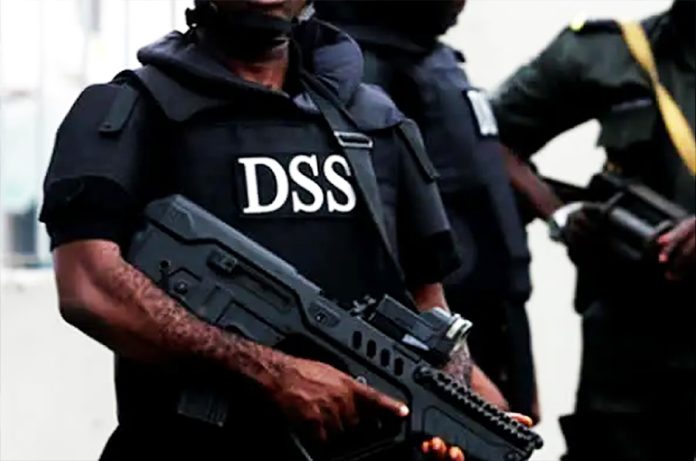
The Department of State Services says its operatives have disrupted an alleged arms supply network linked to attacks in Plateau State and neighbouring areas, arresting a suspected arms dealer.
Disclosing this in a statement on Sunday, the secret police said the suspect allegedly manufactured and distributed weapons and ammunition to armed groups operating in Plateau and other northern states.
The suspect was nabbed on November 12, 2025, following intelligence that led operatives to his workshop in the Mista Ali area of Bassa Local Government Area of Plateau State.
DSS operatives were said to have recovered components of improvised explosive devices, chemicals and equipment from the location.
“Operatives of the Department of State Services have successfully disrupted a high target arms supply network linked to terrorist activities in Plateau and neighbouring states. The operation led to the arrest of Musa Abubakar, a key arms dealer, following precise intelligence on November 12, 2025,” the statement read.
“The suspect confessed to having manufactured and distributed high-calibre weapons and ammunition to armed groups involved in violent attacks in Plateau State and other northern regions.
“His arrest followed credible intelligence on activities of the suspect, which led to a targeted raid on his arms manufacturing workshop located in the Mista Ali area of Bassa Local Government Area, Plateau State.”
Recently, the secret service recaptured Abdulazeez Obadaki, also known as Bomboy, a Kuje Prison escapee accused of involvement in the Owo and Deeper Life Church attacks.
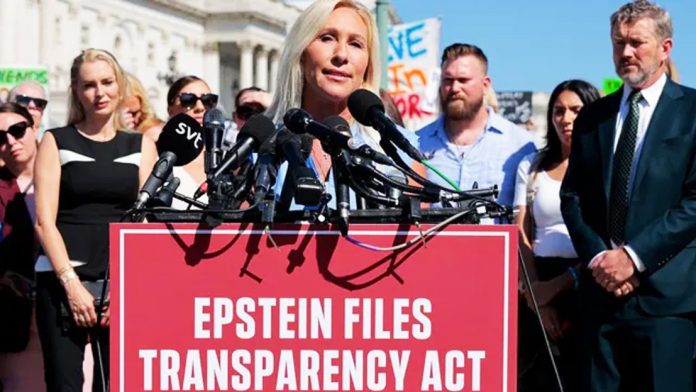
Disagreements between Donald Trump and Republican congresswoman Marjorie Taylor Greene have ballooned into a public feud, signalling a breakdown in relations between the US president and one of his fiercest defenders.
On Friday, Trump called Greene “wacky” in social media posts and said she should be unseated in next year’s elections. On Saturday, he called her a “traitor”.
Greene has in recent days questioned whether Trump was still putting “America First” and criticised his handling of the Jeffrey Epstein files.
The feud comes as the House is set to consider whether to release the files to the public, with speaker Mike Johnson saying he would put the bill to a vote this coming week.
Known as the Epstein Files Transparency Act, the aim of the bill is to make the justice department release all unclassified records, documents, communications, and investigative materials linked to Jeffrey Epstein.
US outlet Politico reported a vote could come as soon as Tuesday.
“All I see “Wacky” Marjorie do is COMPLAIN, COMPLAIN, COMPLAIN!” Trump posted on Friday night, claiming that she turned on him after he suggested that she shouldn’t run for governor or senator in her home state of Georgia.
He pledged to back any Republican opponent that takes her on in next year’s midterm elections, when she is up for reelection, before intensifying his attacks in social media posts on Saturday from his home in Florida.
“Marjorie ‘Traitor’ Green [sic] is a disgrace to our GREAT REPUBLICAN PARTY!” he wrote.
The comments follow days of criticism from Greene, who has said that Trump is not doing enough to bring down costs for voters. She also denounced his recent decisions in foreign conflicts and on tariff policies.
But she has been most critical of his approach to handling the Epstein files.
Some protesters paid tribute to Uruapan mayor Carlos Manzo
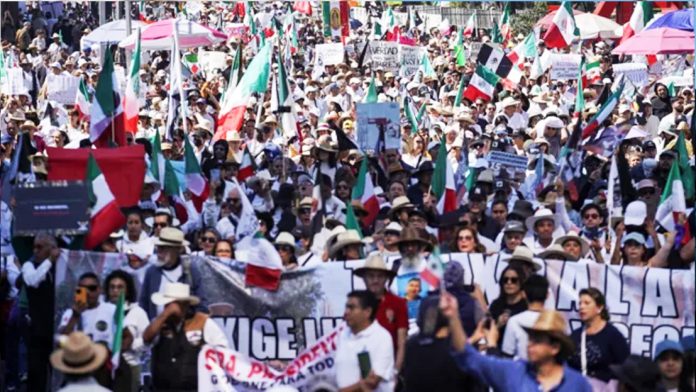
At least 120 people – 100 of them police officers – have been injured in clashes during anti-government protests in Mexico City, police said.
Thousands of demonstrators marched in the Mexican capital on Saturdayto protest against violent crime and President Claudia Sheinbaum’s government.
Sheinbaum said the marches, which also took place in other cities, had been funded by right-wing politicians who oppose her government.
The rally was organised by Gen Z youth groups, drawing support from citizens protesting against high-profile killings, including the assassination just weeks ago of Uruapan Mayor Carlos Manzo – who had called for tough action against cartels.
Demonstrators dismantled parts of a barrier protecting the National Palace, where Sheinbaum lives. Police protecting the compound used tear gas on the crowds.
Authorities have arrested 20 people for crimes including robbery and assault, Mexico City security chief Pablo Vazquez told reporters.
Protesters waved banners displaying messages including “We are all Carlos Manzo”, while others wore cowboy hats in tribute to him.
Manzo was shot on 1 November while he attended a Day of the Dead festival.
He was known for speaking openly about drug-trafficking gangs in his town and cartel violence.
He had been demanding tough action against armed cartel members who terrorise the country.
Sheinbaum has been acting against cartels but resisting calls for another all-out war on drugs. Previous attempts by her predecessors have ended with bloody results.
Days before the march took place, the president said the demonstration was being promoted by bots online.
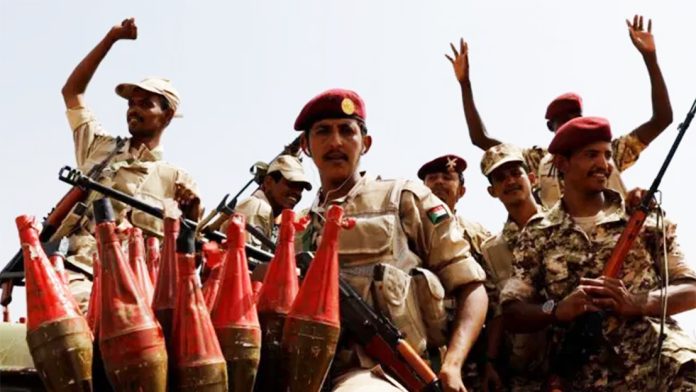
The UAE is accused of supplying the RSF with weapons, which both parties deny
US Secretary of State Marco Rubio has called for international action to cut off the supply of weapons to Sudan’s paramilitary Rapid Support Forces (RSF), who are accused of mass killings in el-Fasher.
At the end of a G7 foreign ministers meeting in Canada, Rubio said the RSF had committed systematic atrocities, including murder, rape and sexual violence against civilians.
Sudan’s army accuses the United Arab Emirates of propping up the RSF with weapons and mercenaries sent via African nations. The UAE and the RSF have repeatedly denied these allegations.
The RSF has been fighting the Sudanese army since April 2023, when a power struggle between their leaders erupted into all-out civil war.
Rubio’s comments are some of the most outspoken so far by the Trump administration about the war in Sudan and the actions of the RSF, but it is not clear how much impact they will have.
A previous US-backed proposal for a humanitarian ceasefire in Sudan has already been violated by the RSF, even though they agreed to it last week.
El-Fasher was captured last month by the RSF after an 18-month siege, meaning they now control all of the cities in the vast western Darfur region.
Only a small fraction of the population has managed to flee the city, where massacres are said to have take taken place. Piles of bodies on the ground and blood-stained earth are visible from space in satellite imagery.
Non-Arab groups in the wider Darfur region are being systematically targeted by the RSF in what amounts to genocide, according to the US and humanitarian groups.
At the talks near Niagara Falls on Wednesday, America’s top diplomat said women and children had been targeted in acts of the most horrific kind by the RSF in el-Fasher.
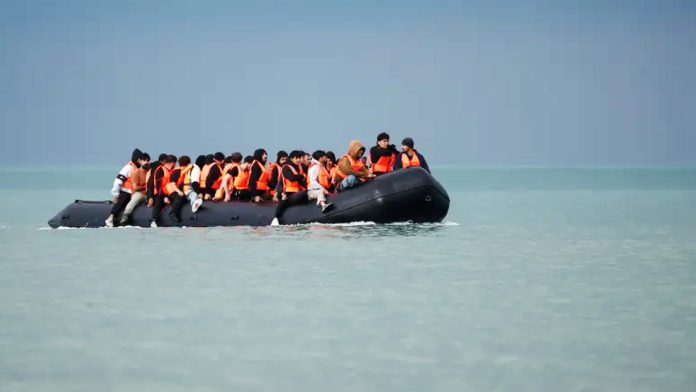
Migrants and refugees on an inflatable dinghy attempt to cross the English Channel
The United Kingdom has announced a drastic reduction in the protections for asylum seekers and refugees under a new plan aimed at slashing irregular immigration and countering the far right.
The measures, modelled on Denmark’s strict asylum system, were announced late on Saturday as Prime Minister Keir Starmer comes under pressure from surging popularity for the anti-immigrant Reform UK party.
“I’ll end UK’s golden ticket for asylum seekers,” Interior Minister Shabana Mahmood declared in a statement, with the Home Office, as her ministry is known, calling the new proposals the “largest overhaul of asylum policy in modern times”.
Mahmood is due to lay out the policy in parliament on Monday.
Meanwhile, the head of the UK’s Refugee Council warned the government that the measures would not deter people from trying to reach the country and urged a rethink.
“They should ensure that refugees who work hard and contribute to Britain can build secure, settled lives and give back to their communities,” Enver Solomon said.
Currently, people get refugee status for five years, after which they can apply for indefinite leave to remain and eventually, citizenship.
Plastics are made from oil or natural gas, which are made of molecules called hydrocarbons. When you heat hydrocarbons to very high temperatures, they break down into smaller molecules called monomers. There are many types of hydrocarbon monomers, such as methane, ethane, propane, and butane.
To make plastic, monomers are joined together to make a larger molecule called a polymer. The different types of plastic polymers are made of different combinations of monomers. These polymers are formed into pellets, powders, flakes, or liquids, which are the raw plastic material.
At the bottling factory, the raw plastic is put into a machine that heats it to a high temperature so that it becomes a liquid. The liquid is then injected into a bottle-shaped mold where it hardens.
Plastic Bottles and Bacteria Growth
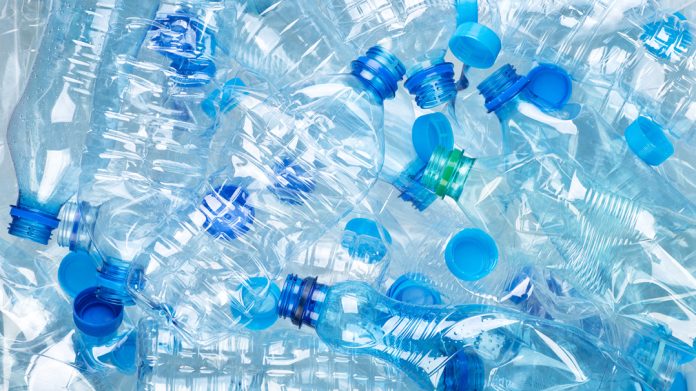
Plastic bottles can harbor harmful bacteria, which is why most manufacturers recommend you use them only once. In truth, bacterial growth in water bottles is a much bigger concern than chemical leaching. If you need to reuse a plastic water bottle, make sure to wash it properly first. Most plastic water bottles don’t make for easy cleaning, so it can be tricky. But if you must reuse one, it’s best not to skip this step.
Bacterial growth can happen quickly just from the ordinary use of drinking out of the bottle. Even unfinished beverages left at room temperature can have a lot of bacteria growth throughout the day. It’s best to reuse plastic water bottles sparingly and wash them thoroughly because germs spread so quickly.
Additionally, wear and tear on the bottle from reuse can create cracks and scratches in the surface where more bacteria can grow. With that in mind, you might even want to skip plastic bottles and buy a reusable glass or stainless-steel bottle instead.
How to Recycle Water Bottles
If you want to recycle your plastic bottles, first make sure they are clean. Then, put them in your designated blue recycling bin, which holds all your plastic materials, including water bottles. Place the bin curbside before the scheduled pick-up time in your area.
You can also drop off water bottles at specific locations. Check with your municipal office about designated drop-off locations in your area.
Plastic Bottles Recycling Ideas
If you have plastic bottles that you can’t recycle, you don’t have to just toss them in the trash. You can also reuse them.
Here are a few creative ideas for reusing plastic bottles:
Cut the top off plastic water bottles to make cups for pens, pencils, and craft supplies.
Use coffee creamer bottles to store snacks, sugar, and salt.
Cut the top off 2-liter bottles and paint them to make planters for houseplants or herbs.
Punch holes in the top of laundry detergent bottles to make a watering can.
Cut the handle and side off a milk jug to make a pet pooper scooper or garden trowel.
Make a piggy bank out of old plastic bottles.
Water Bottle Recycling Challenges
According to the EPA, only about 9% of all plastic waste is recycled. Consumer plastics — such as soda bottles, water bottles, and milk jugs — have a slightly better rate of recycling at 30%, but there’s still far more we can do.
Some of the challenges of recycling plastic include:
Non-recyclable materials that end up in recycling bins, which contaminates the batch and could mess up recycling machines. This may happen when people don’t know what can be recycled so they throw all their plastic in the recycle bin.
The price of “virgin” plastic may be lower than the price of recycled plastic, so manufacturers choose virgin plastic to save costs.
Some cities or towns don’t have the resources or government support to provide municipal recycling services.
Many workers don’t want to work in the recycling industry because it can expose you to chemicals and powerful machines.
To help improve the rate of recycling, buy products that are made of recycled materials, choose alternates to plastic whenever possible, make sure you know what can go in your recycling bin, and try to reuse plastic as much as possible to keep it from going into landfills.
Ensuring safety in schools is vital for effective teaching and learning. In our schools, the responsibility for maintaining discipline and safeguarding students falls to teachers and head teachers. However, the practice of searching students or their belongings to ensure safety raises important questions related to legality, ethics, and human dignity. According to Garner (2019), a search in legal and educational parlance, refers to the intentional examination of individuals, their belongings, or property to discover prohibited or dangerous items.
Searches usually take place when there is suspicion that a student may have contraband, which might include weapons, drugs, stolen items, or prohibited goods such as mobile phones. Nevertheless, these searches must not infringe upon students’ constitutional rights or subject them to embarrassment.
While Ghana seems not to have specific court rulings that delineate the standards for school searches, existing constitutional provisions and credible scholarly research offer a robust framework for determining what constitutes a lawful and ethical search. The article explores the legal, procedural, and human rights aspects of searches in Ghanaian schools and proposes guidelines to conduct searches in schools.
Legal and Policy Framework
The 1992 Constitution of Ghana serves as the paramount authority governing disciplinary actions in schools. Article 15(1) states that “the dignity of all persons shall be inviolable,” while Article 28(1)(d) prohibits any “cruel, inhuman, or degrading treatment” of children. These clauses underscore that any search must honour the personal dignity and privacy of students. Although the Constitution does not provide explicit procedural guidelines for school searches, its focus on fairness and human rights offers essential guidance.
At the policy level, the Ghana Education Service (GES) Code of Conduct for Teachers and Educational Workers (2020) mandates that educators enforce discipline “fairly, reasonably, and professionally.” While the Code does not specify search procedures, its principles require that all student-related actions including inspections must be conducted with professionalism and reasonableness.
Additionally, Korankye-Sakyi, Faakye, and Atupare (2022) assert that the right to education in Ghana is legally enforceable, necessitating that school practices, including searches, align with principles of fairness and respect for rights. Abonyi and Salifu (2023) further illustrate the GES’s ongoing shift towards positive discipline aimed at reducing punitive practices. Collectively, these credible sources provide the constitutional and ethical foundation needed to conduct searches in a lawful and respectful manner.
When to Conduct a Search
Searches in our schools should never be arbitrary; they should only be conducted when there is reasonable suspicion that a student has infringed a school rule or possesses an item that endangers safety. Reasonable suspicion is substantiated by credible observations or reliable information indicating wrongdoing, rather than mere conjecture or bias. For instance, if a teacher sees a student hiding an object that resembles a prohibited item, it establishes reasonable grounds for a search.
In these situations, the aim of the search is preventive rather than punitive, focused on protecting the well-being of the student population instead of humiliating or criminalizing any individual. As noted by Abonyi and Salifu (2023), Ghanaian educational institutions are increasingly adopting disciplinary procedures that prioritize students’ rights. Consequently, searches should be viewed as part of the school’s broader duty of care rather than punitive measures.
Principles Guiding Searches
In the absence of specific case law in Ghana, four key principles derived from constitutional rights, and educational ethics should inform all searches in schools: reasonableness, proportionality, privacy, and documentation.
Reasonableness: A search should begin with credible justification. As teachers or administrators we must have reasonable suspicion based on factual observation or reliable information that a student has violated school regulations or possesses restricted items. There is the need to avoid arbitrary or biased searches as they contradict principles of fairness and human dignity.
Proportionality: The extent and invasiveness of a search should correspond to the severity of the suspected violation. For instance, while examining a bag or locker may be appropriate when contraband is suspected, a physical search would likely be excessive and potentially degrading. This principle is supported by the Constitution’s protection of human dignity (Article 15).
Privacy and Dignity: As school authorities it is important to conduct our searches discreetly, preferably in private, and in the presence of at least two adults one of whom should share the same gender as the student. This approach minimizes embarrassment, safeguards the student, and protects staff from accusations of misconduct. Both the Constitution and the GES Code emphasize respect and care for students.
Documentation and Accountability: Every search should be recorded in a logbook. The record must include the justification for the search, the individuals involved, discoveries made, witnesses, and whether parental notification occurred. Documentation promotes transparency, prevents abuse, and serves as evidence of procedural fairness. As pointed out by Abonyi and Salifu (2023), poor recordkeeping can undermine school accountability, making thorough documentation vital.
Procedure for Conducting a Search
A structured approach ensures that searches adhere to ethical and legal standards:
Observation and Reporting: A teacher or staff member observes suspicious behaviour or receives credible information and reports it to the head teacher.
Assessment: The head teacher assesses the reasonableness of the suspicion.
Notification: The student is informed courteously about the search’s rationale and encouraged to cooperate.
Conducting the Search: The search is performed discreetly, witnessed by two staff members, and constrained to the suspected item or area.
Documentation: The details-justification, participants, and outcomes are recorded immediately.
Parental Notification: Parents or guardians are notified as soon as possible regarding the rationale and results of the search.
Referral: If illegal items (such as weapons or drugs) are discovered, the matter is reported to the appropriate authorities in accordance with GES and the law.
This procedure would ensure transparency, protect students’ rights, and conform to Ghana’s constitutional and professional educational standards.
Legal Gaps and Need for Reform
Despite clear ethical and constitutional standards, Ghana presently lacks specific court decisions or statutory provisions governing school searches. As a result, the benchmarks for searches depend on the interpretation of constitutional rights, GES codes, and human rights frameworks.
Korankye-Sakyi et al. (2022) emphasize that the lack of legal clarity highlights the necessity for courts and policymakers to explicitly define the parameters of school-based searches. Moreover, there is a need for empirical research into search practices and their impact on student trust and school climate. Future policy and academic efforts should concentrate on establishing comprehensive search guidelines rooted in legal, ethical, and educational psychology principles.
Conclusion
Searches in Ghanaian educational institutions are crucial for ensuring safety and maintaining discipline; however, they must consistently respect students’ constitutional rights. The 1992 Constitution, the GES Code of Conduct, and scholarly research (Abonyi & Salifu, 2023; Korankye-Sakyi et al., 2022) together affirm that lawful searches must be based on reasonable suspicion, proportional in nature, conducted discreetly, and thoroughly documented.
While the absence of judicial precedent presents challenges, these frameworks provide adequate guidance for ethical conduct. By prioritizing fairness, dignity, and accountability in school searches, educators would reinforce the rule of law and create safer, more humane learning environments. The path forward involves codifying these practices into explicit policies and conducting research to address existing legal gaps. Only then can the principles of school safety coexist harmoniously with students’ rights and human dignity.
Germany, Slovakiain a straight shootout for top spot
Germany and Slovakia are involved in a straight shootout for top spot in Group A, with the two teams set to lock horns today, for a crucial 2026 World Cup qualifier.
A win or a draw for Die Mannschaft would see them finish first and advance to next summer’s tournament, but their visitors would snatch top spot if they manage to record a huge victory in Leipzig.
Germany will enter today’s clash off the back of a 2-0 victory over Luxembourg, who are top of Group A on 12 points.
Julian Nagelsmann‘s side are far from comfortable, though, as they are only ahead of second-placed Slovakia on goal difference, with both teams winning four and losing one of their five games in the section.
Germany were beaten 2-0 by Slovakia in their section opener but have since posted four straight wins, twice beating Northern Ireland and Luxembourg, but this will be a tough test.
DFB-Team have won the World Cup on four previous occasions, but they have been knocked out in the group stage in their last two participations in the tournament.
Germany are confirmed in the top two and would qualify for next summer’s World Cup in first if they avoid defeat in this match, but a win for Slovakia would mean that Nagelsmann’s side must enter the playoffs.
Slovakia are also confirmed in the top two, and they will qualify as group winners with a victory over Germany, otherwise the national side will face the playoffs.
Credit: sportsmole.co.uk
Netherlands host Lithuania in their final Group G game
Barring the disaster of all disasters, the Netherlands will earn a direct ticket to the World Cup 2026 tournament when they host Lithuania in their final Group G game today.
Ronald Koeman‘s men are three points clear at the top of the section following Friday’s 1-1 draw with Poland, while their visitors are fighting for the consolation of a fourth-placed finish.
Dutch hopes of automatic qualification for the 2026 World Cup were delayed rather than destroyed on Friday evening, where victory over Poland would have seen Oranje confirm a first-placed finish with a game to spare.
Virgil van Dijk, Netherlands
However, Koeman’s men had to do it the hard way just to secure a share of the spoils in Warsaw, where Jakub Kaminski broke the deadlock with two minutes to go until half time, before Memphis Depay coincidentally levelled matters two minutes into the second half.
Poland’s resolve means that the Netherlands can mathematically still be bumped down to second place on the final day, but for that scenario to occur, a fanciful set of circumstances must unfold given that Koeman’s men are three points clear of the Eagles.
Not only would the Netherlands have to lose to Lithuania at home, Poland would have to make up a 13-strong goal difference in their match with Malta, so Netherlands supporters can surely rest easy ahead of today.
Excluding their penalty-shootout loss to Spain in the UEFA Nations League, Koeman’s men have gone over a year without suffering defeat in any competition.
Credit: sportsmole.co.uk
Malta need a miracle against Poland
Needing a miracle in Malta to qualify automatically for World Cup 2026, Poland head to the National Stadium in Ta’ Qali for their final Group G fixture today.
The Eagles remain three points behind the Netherlands following Friday’s 1-1 draw, while their hosts have already been eliminated from contention.
Robert Lewandowski, Poland
Winning in Warsaw would have blown Group G wide open for Poland on Friday night, when the Eagles found themselves three points adrift of the Netherlands both before and after kickoff, having had to settle for a 1-1 draw against Ronald Koeman’s men.
Poland’s stalemate with Oranje has almost certainly just delayed the Netherlands’ advancement to North America, as not only are Jan Urban‘s men three points behind in second place, they also boast a significantly inferior goal difference of +6 compared to the leaders’ +19.
As a result, Poland will only overtake the Netherlands and finish first if they beat Malta, if Koeman’s side suffer a shock home loss to Lithuania, and if there is a 13-goal swing in their favour on Monday – a surely impossible set of circumstances.
However, as Urban’s men are also four points better off than Finland, they will advance to the playoffs at the very worst, and a five-game unbeaten run in all tournaments at least gives the visitors a solid foundation to build on in 2026.
While Poland’s World Cup journey will continue regardless of what happens on tonight, minnows Malta have already been condemned to their fate and are still yearning for a first-ever appearance at a major international tournament.
Credit: sportsmole.co.uk
Montenegro welcome Croatia in Group L
Montenegro will welcome Croatia to the Podgorica City Stadium today for their final Group L fixture in the UEFA World Cup 2026 qualifiers.
The hosts are hoping to end a difficult campaign on a positive note, while the already-qualified visitors look to round off their dominant run in style.
Montenegro’s World Cup qualifying campaign has been defined by inconsistency and defensive fragility, with the hosts currently sitting fourth in the standings.
Luka Modrić, Croatia
They have amassed nine points from three victories and four defeats, but their concerning goal difference of minus eight, with six scored and 14 conceded highlighting the defensive issues that have repeatedly cost them points.
Home form at Podgorica has offered some encouragement, with Montenegro winning two of their three qualifiers on home soil.
Montenegro enter this fixture after a morale-boosting 2-1 comeback win away to Gibraltar, a result that brought some relief after a largely disappointing qualifying campaign.
Croatia, meanwhile, have been the dominant force in the group, remaining unbeaten with six wins and one draw from seven matches.
With 19 points, they became the 30th nation to secure their ticket to the 2026 finals – their seventh World Cup appearance.
Croatia have been dominant throughout this qualifying cycle and possess far greater quality in every area of the pitch.
While Montenegro’s home advantage may help them stay competitive early on, Dalic’s side should ultimately have too much firepower and control, making a comfortable away victory the most likely outcome.