Home Blog Page 314

Ghana boosts confidence in local production of vaccines

0
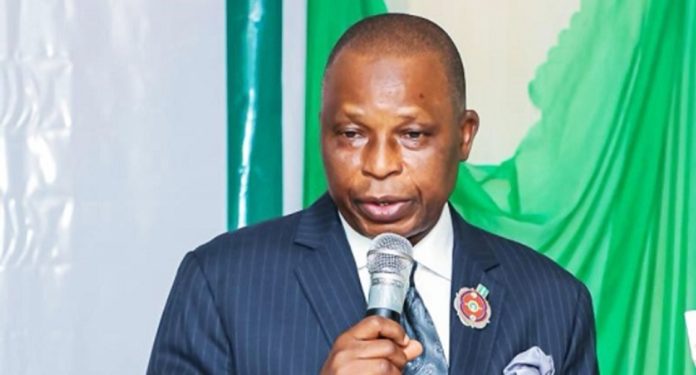
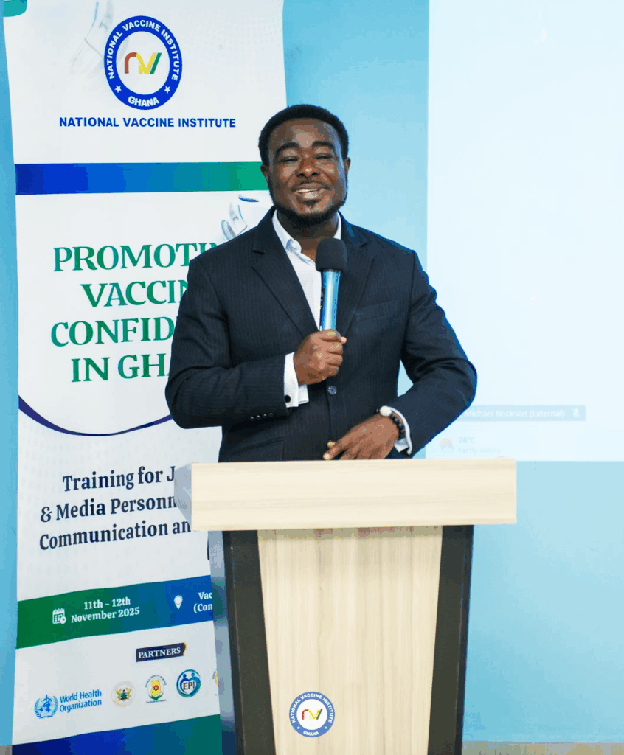
Dr Sodzi Sodzi-Tettey speaking at the workshop

Ghana is taking deliberate steps toward becoming a vaccine-manufacturing country, a move experts believe will strengthen national health security, accelerate economic development and reduce Africa’s long-standing dependency on external suppliers during pandemics.

This development formed the core of discussions at a two-day training on vaccine communication and advocacy held at the National Vaccine Institute (NVI) in Accra.

The event, organised in partnership with the African Media and Malaria Research Network (AMMREN), Ghana Health Service, Noguchi Memorial Institute for Medical Research and the Food and Drugs Authority (FDA) brought together journalists from across the country to deepen their understanding of vaccine science, counter misinformation and support Ghana’s vaccine self-sufficiency agenda.

Building Local Manufacturing Capacity for National Resilience

The CEO of the National Vaccine Institute, Dr. Sodzi Sodzi-Tettey, said Ghana’s decision to venture into vaccine manufacturing is not only a public health milestone, but also a strategic development investment.

He explained that Africa’s inability to secure vaccines during COVID-19 and Mpox outbreaks exposed structural vulnerabilities on the continent and reinforced the urgent need for domestic production capacity.

Ghana is receiving advanced technical support through a technology-transfer partnership between Atlantic Life Sciences and Indonesia’s BT Biofarma.

This collaboration will allow the country to establish its own production systems while adopting globally recognised standards for quality, safety and regulatory oversight.

The first vaccine to be produced locally will target tetanus bacteria, with rollout expected in late 2026 or early 2027.

Dr. Sodzi-Tettey emphasised that the initiative aligns with President John Mahama’s long-term vision for Ghana to lead West Africa in vaccine development and pandemic preparedness.

“This is a development investment. We are building an ecosystem manufacturing capacity, regulatory systems, scientific research, community engagement, and skilled human resources,” he said.

He described vaccine manufacturing as a catalyst for job creation, biotechnology innovation, and industrial transformation, noting that the sector could spur growth in pharmaceutical engineering, cold-chain logistics, laboratory technology, and advanced research.

Dr. Sodzi-Tettey stressed that misinformation poses one of the greatest risks to Ghana’s vaccine agenda and, by extension, national development.

He recalled how rumours once undermined a vaccine trial in the Volta Region and how COVID-19 conspiracy theories spread even among educated groups.

He said trust is a “development resource” and warned that without it even the best infrastructure and technology could fail.

“If journalists are not well informed, misinformation can collapse the entire effort. Vaccine confidence is foundational to Ghana’s manufacturing ambitions,” he stated.

To address this, the NVI and its partners plan nationwide community engagements to understand public concerns, promote transparency, and prepare communities ahead of the release of Ghana’s first domestically produced vaccines.

Strengthening Human Capital Through Science Communication

Executive Secretary of AMMREN, Dr. Charity Binka, said that strengthening journalists’ capacity was equally a national development strategy.
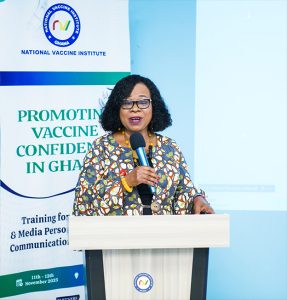
Executive Secretary of AMMREN, Dr. Charity Binka speaking at the media training programme

She explained that a scientifically literate media contributes to a healthier population, better policy uptake, and stronger community cooperation during health interventions.

She described journalists as “critical development actors” who translate complex research into accessible information that informs decision-making at household, community, and national levels. Since 2006, AMMREN has trained hundreds of journalists across Africa to report accurately on malaria, epidemics, and vaccines.

Their partnership with the NVI, she noted, extends this mandate into Ghana’s vaccine-manufacturing era.

Dr. Binka added that vaccines have played a transformative role in reducing disease burden, improving productivity, and enabling children to attend school, which is  a direct contribution to Ghana’s social and economic development indicators.

She said the training programme was designed to help journalists understand vaccine science, navigate the ethics of health communication, counter misinformation, and tell development-oriented stories that build national resilience.

“A well-informed journalist supports a well-informed population. And a well-informed population is the backbone of national development,” she said.

Dr. Tanko Schools Media on Vaccine Science

Dr. (Med) Naziru Tanko Mohammed, Deputy Programme Manager for the Expanded Programme on Immunization (EPI) at the Ghana Health Service, reaffirmed the life-saving power of vaccines, describing them as “one of the greatest health breakthroughs in human history.”
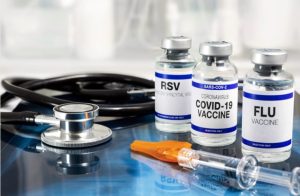
Vaccines – Ghana want to produce them locally

He explained that vaccines stimulate the body’s immune system to develop long-lasting protection against specific pathogens.

“Vaccines contain the same antigens found in disease-causing germs, but exposure through vaccination is controlled,” he noted, adding that this controlled exposure teaches the immune system to recognise and respond to real infections without the person falling ill.

Dr.Tanko stated that vaccines used in Ghana’s national immunisation programme generally fall into two categories: Live Attenuated and Inactivated vaccines. Inactivated vaccines include killed, sub-unit, toxoid, viral vector and mRNA types.

While live attenuated vaccines contain weakened germs that cannot ordinarily cause disease. Inactivated vaccines are made from killed germs, specific components, or toxins.

Two or more vaccines can be combined to form multivalent formulations such as Pentavalent, Measles-Rubella (MR), and Tetanus-Diphtheria (Td).

He also highlighted modern vaccine technologies, including mRNA-based vaccines such as Moderna and Pfizer’s COVID-19 vaccines.

Touching on immunity, Dr.Tanko explained that it could be acquired through natural infection or vaccination. Vaccination “primes” the immune system so that when a vaccinated individual is later exposed to live pathogens, their immune system can quickly destroy them before disease develops. He emphasised that vaccines used in Ghana’s national programme are safe and effective.

Although no vaccine is completely free of minor side reactions, the very low risk of adverse events is far outweighed by the dangers posed by natural infections such as measles.

FDA Outlines Ghana’s Vaccine Regulatory Standards

Representing the CEO of the Food and Drugs Authority (FDA), Pharm. Patrick Owusu-Danso, Acting Director at GLSR-FDA, explained the rigorous process that vaccines undergo before approval and distribution in Ghana.

He said the FDA evaluates vaccines across several key areas: safety, identity, efficacy, purity, and quality.

Safety is ensured through detailed animal studies and clinical trials, while identity is confirmed by verifying that labelling accurately reflects active ingredients and excipients.

Efficacy is demonstrated through challenge studies and human clinical trials, purity is maintained by controlling impurities within acceptable limits and quality is guaranteed through adherence to Good Manufacturing Practices (GMP) and robust Quality Management Systems.

Pharm. Owusu-Danso added that the FDA oversees the entire vaccine supply chain, including shipping validation studies, cold-chain monitoring and enforcement of Good Distribution Practices.

He emphasised that Ghana operates under a robust and stringent regulatory environment designed to protect public health.

“FDA Ghana is a strong regulatory authority in Africa with the legal mandate and technical capacity to assure the safety, efficacy, and quality of vaccines,” he said.

Towards a Stronger, Safer and More Self-Reliant Ghana

The Accra training underscored the shared belief among NVI, AMMREN, FDA, GHS, and Noguchi that vaccine manufacturing is not simply a health-sector achievement – it is a national development strategy capable of reshaping Ghana’s scientific, economic and industrial future.

As Ghana moves closer to its first vaccine manufacturing milestone in 2026, stakeholders say public trust, media accuracy and community engagement will be just as crucial as technology and infrastructure.

Through this collaborative approach, Ghana aims to build a future where the country is not the last to receive vaccines during global crises, but becomes a regional leader in biotechnology, innovation, and health sovereignty.


For more news, join The Chronicle Newspaper channel on WhatsApp: https://whatsapp.com/channel/0029VbBSs55E50UqNPvSOm2z
All is set for Sefwi Anhwiaso Eluo (Yam) festival 2025

0
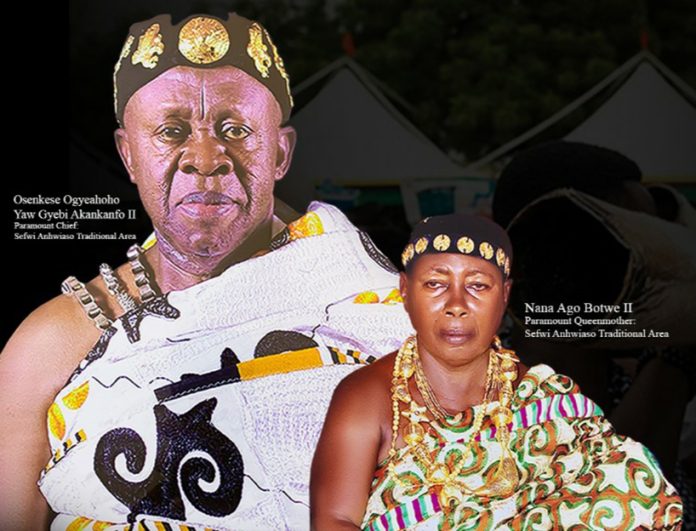
Ogyeahoho Yaw Gyebi II and Nana Ago Botwe II, Paramount Queenmother

This year’s edition of the Eluo festival for the chiefs and people of Sefwi Anhwiaso Traditional Area commenced yesterday with a football Gala competition.

Today, the people will partake in a general health screening in various communities in the area.

There will be Inter SHS Quiz competition on Tuesday followed by a Cultural Day and a Traditional Food Fair on Wednesday and Thursday respectively while Clean up and Spiritual cleansing at Bibiani and Anhwiaso are scheduled for Friday.

As part of the programmes and activities drawn for the week long festivities, the Paramount chief of the Sefwi Anhwiaso Traditional Area, Ogyeahoho Yaw Gyebi II, who also serves as the President of the National House of Chiefs and Nana Ago Botwe II, Paramount Queenmother of the Traditional Area and the Council of Elders will host the President John DramaniMahama (Special Guest), Dr. Daniel McKorley, founder of the McDan Group of Companies (Guest of Honour) and Awulae Agyeifi Kwame II, Paramount chief of Nsein Traditional area (chairman) at a grand durbar at Bibiani on Saturday November 22, 2025 to climax the festival.

The theme for Eluo festival 2025 is: “Our Heritage, our people, our development”.

It coincides with Ogyeahoho Yaw Gyebi II’s 75th birthday and 35th anniversary on the throne.

The festival is a cultural event, which traditionally heralds the harvesting of yams, a staple crop, symbolizing a period of abundance and renewal and used to reinforce community ties and plan for future development.

It brings people from far and near to deepen their understanding of Sefwi culture, foster social cohesion, and promote unity among the various communities.

The durbars held during the festival serve as platforms for traditional authorities and community members to discuss plans for local development, education, and investment opportunities.

During the festival, visitors are welcome to share food, drinks amid drumming and dancing during which people put on their brightest and best traditional clothes to the durbar and showcase splendid cultural performances including poetry, drumming, traditional dance, drama, and arts exhibitions.

The paramount chief has prioritised the promotion of education and peace as key to development over the years.

Ogyeahoho Yaw Gyebi has been influential in the establishment of the Queen’s SHS and encouraged the youth to get involved in TVET programmes to secure their future.

The Omanhene has so far resolved chieftaincy issues hence the prevailing peace in the area.

He has called on Corporate entities operating in the Traditional Area to support students as part of the corporate social responsibility to champion the developmental agenda of the area.


For more news, join The Chronicle Newspaper channel on WhatsApp: https://whatsapp.com/channel/0029VbBSs55E50UqNPvSOm2z
Battor holds durbar to herald Hogbeza

0
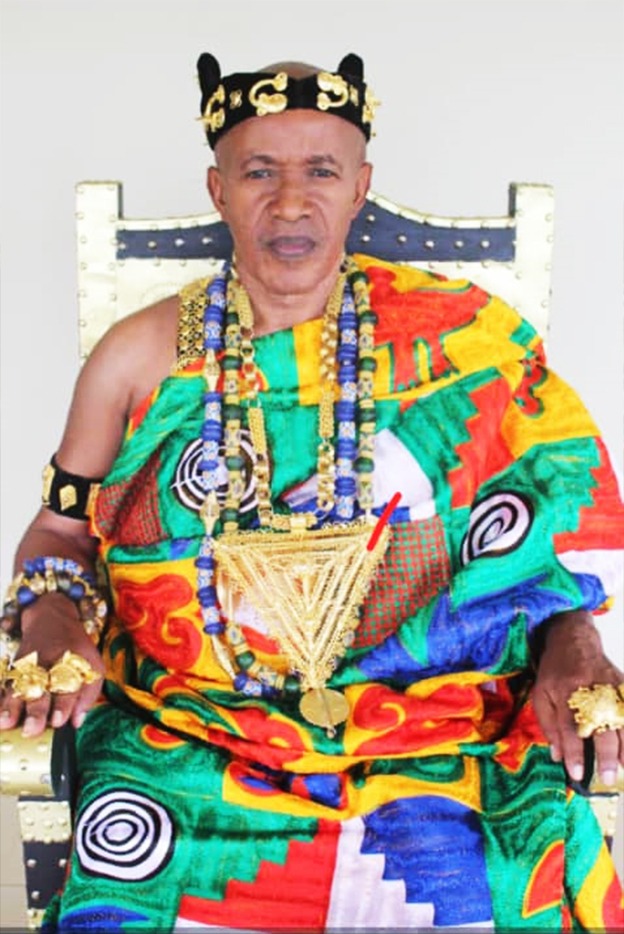
Paramount chief of Battor Traditional Area, Togbega Patamia Dzekley VII

The chiefs and people of Battor Traditional Area in the North Tongu district of the Volta region have, over the weekend, held a colourful mini durbar to herald this year’s Hogbeza.

Slated for 13 December, 2025 the festival will take place at Dugame-Battor and is expected to attract the president, Mr John Dramani Mahama, the regional minister and some other government officials.

The locals enjoying themselves during the mini festival at Battor

These were disclosed by the paramount chief of Battor Traditional Area, Togbega Patamia Dzekley VII, who is the Vice President of the Volta Regional House of chiefs and a member of the National House of chiefs in a speech he delivered at the mini Hogbeza.

Also president of the Battor traditional council, he praised the chiefs and people of Manya and Kodokorpe for coming together to host the mini durbar.

He appealed to the natives to do away with petty squabbles, forgive one another and live in peace. ‘Let’s forgive one another and live in peace,’ he said.

Togbega Patamia Dzekley expressed worries at the hostile environment that prevailed against the festival celebration over the years.

This, he noted, made it impossible for the traditional council to function to, among other things, seek development projects for the area.

He expressed joy that the wind of the reset agenda is blowing over the Battor traditional area too, which will bring some useful transformations to the people.

He entreated the people to participate in the upcoming Hogbeza in their numbers and contribute their quota to the development plans the traditional council has for it.

The chairman of the mini Hogbeza, Mr Harrison Vortuame, observed that festivals are one of the vessels of developments. Thus any traditional area that doesn’t celebrate a festival will be losing so much by way development and the promotion of its culture.

He bemoaned conditions that obstructed Hogbeza over the years, but was pleased that the festival was resurrected to raise money to continue some projects initiated by the festival planning committee which have stalled.

The acting vice chairman of the planning committee, Togbe Akliku II said despite the short notice due to uncertainties surrounding the festival, the event was heavily attended with many cultural troupes as if it were the main festival.

He commended the people for the demonstration of willingness to support the development of Battor.

‘Dollar Ladies,” a welfare Association of some ladies of Battor, uniquely dressed in white T-shirts with a cap to match, also graced the occasion and made a handsome financial donation and promised to not just promote the upcoming Hogbeza, but also make more donations during the festival in December.

Patrons of the mini Hogbeza expressed joy at the programme and described it as entertaining as and more than successful.


For more news, join The Chronicle Newspaper channel on WhatsApp: https://whatsapp.com/channel/0029VbBSs55E50UqNPvSOm2z
The Last Post for Our El Wak Fallen Heroes

0
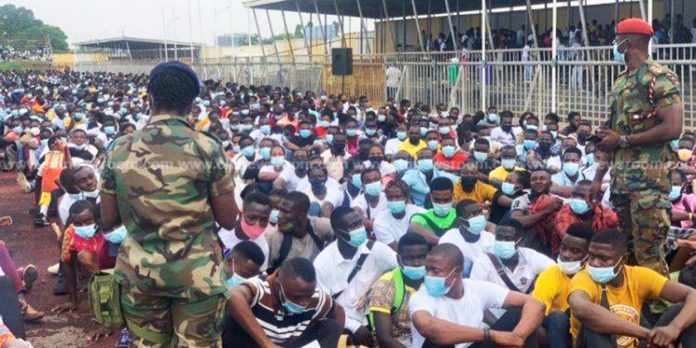
Recruitment at El-Wak Stadium

They chose a profession where they would be ready to lay down their lives for the country of their birth. Very determined to join that profession that will make them protect Ghana with their lives, damningany consequences, they charged into the stadium as if confronting an enemy. Ahead of them was a battle for employment.

In what looked like a disorganised and chaotic scene, at the El Wak stadium last week, should the Ghana Armed Forces be blamed? Is it possible that the number of applicants there exceeded the number that should have been there?

The military put out online application and hundreds of thousands of young Ghanaians applied. During this many were disqualified and here, what if some of those disqualified were well-connected and their god-parents told them to go to the El Wak all the same, because they have forwarded their names to the top? What should have been a few thousands, became tens of thousands.

And when the gates of the stadium were opened, instead of getting in gently and orderly, there was a rush to go and get a good place to sit. Then it happened. Just like any battlefield, the bold and the brave fell, and Ghana lost six beautiful young ladies.

Today, most people are blaming the military. But this has never happened before, so why now? Certainly, if the military had anticipated that huge number of applicants, it would have made better arrangements. Perhaps we need the Armed Forces to come out and tell us, how many applicants they were actually expecting.

Sadly, six beautiful young ladies fell on the day they were full of hope to sail through to the next stage and get closer to achieving their dreams of donning the Ghana military uniforms. Their death has revealed lapses in our society and we must make all efforts to prevent such a thing ever happening again.

No matter how we look at things, these young ladies were true heroes, who gave up their lives to help us identify what to fix in this country. They need to be honoured. I will suggest they are buried with full military honours.

In the Catholic Church, catechumens who are preparing to receive the sacrament of baptism, but die before that are buried with full requiem mass. It is so, because there is that intent to be Catholic.

So, I ask again, that with the strong intent to become military personnel, which these young ladies were fighting to be, and be able to defend this country with their lives, should they not be given military burial with full honours? Can they not be posthumously given the ranks they would have be gotten, if they were successful in their applications to join the Armed Forces?

I pray for their souls and all the souls of the faithful departed. May their souls be among the Elect in Heaven and may God console their parents, siblings and relatives.

As Christians we mourn the dead and pray for their souls. When Jesus Christ was killed on the Cross, His followers were traumatised and sorrow-stricken. Jesus’ death was ordained by God and He watched as His Only Begotten Son was tortured and killed by humans. During His passion, all the angels in Heaven were horrified and deeply angry at what was happening to their Lord and Master, and very ready to charge down to earth and discipline mankind.

They waited for the okay from God, but He knew why Christ must suffer and die, even as it was very painful to His love ones.

The NDC MP for Pusiga, Hon. Ayaamba Ayii Laadi, said her tribute to our fallen heroes and she was emphatic in saying that Allah had ordained that day for the young ladies to die and so nothing could be done about it. The way she put it, she was indirectly condemning those who were in mourning due to that loss and making them understand that they cannot change what Allah had ordained.

This is very bad and cruel. How can you mock and insult a family in mourning? Yes, I do agree that God allows things to happen, including death. There are still-births which depress the mothers. Their dreams of cuddling and nursing their babies never materialised and they deeply mourn. Then there are deaths of children, who just completed SHS or their first degree with flying colours. Yes, God allowed it, but the families will be in deep sorrow and they must be consoled and certainly not with these words Hon. Laadi said.

Spouses wave good-bye to each other as they set off for work, only for one not returning. He or she is dead after having said what was the final goodbye. Families mourn and Hon. Laadi is suggesting that they should be condemned for that?

When the eight gentlemen; two ministers of state, three government officials and three air force personnel died in the helicopter crash, why did Hon. Ayaamba Ayii Laadi not make the statement she made last week and condemn even President Mahama for mourning?

Yes, God allowed the death of the six fallen heroes to happen and it is our responsibility to mourn them and console their family. A true and genuine last post should be sounded when they are being buried, to honour their memories.

Hon. Daniel Dugan

The views expressed in this article are the author’s own and do not necessarily reflect The Chronicle’s stance.


For more news, join The Chronicle Newspaper channel on WhatsApp: https://whatsapp.com/channel/0029VbBSs55E50UqNPvSOm2z
KKD appointed Ghana’s Special Envoy to the Caribbean Region

0
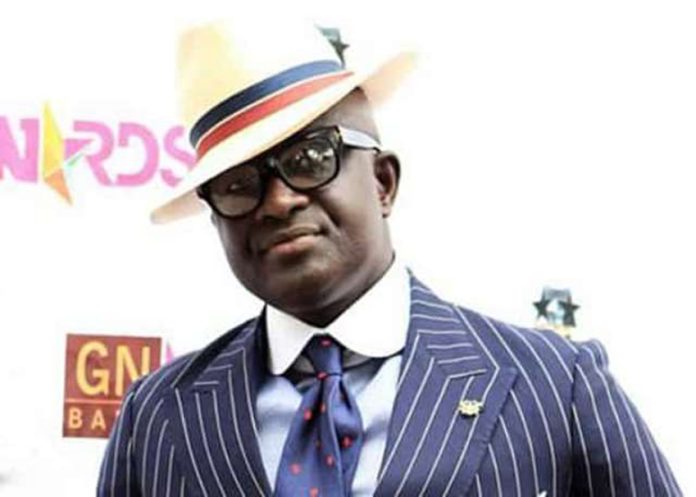
KKD

Kwasi Kyei Darkwah, a celebrated media personality popularly known as KKD, has been appointed Ghana’s Special Envoy to the Caribbean Region by President John Dramani Mahama.

His appointment comes at a time when Ghana is seeking to consolidate its international relations and deepen bilateral ties with countries across the Caribbean.

As Special Envoy, KKD is expected to play a key role in strengthening diplomatic, cultural, and economic cooperation between Ghana and Caribbean nations—regions linked by deep historical, cultural and ancestral connections.

His mandate covers Caribbean countries such as Cuba, Haiti, the Dominican Republic, Trinidad and Tobago, and Barbados, among others.

The role is central to Ghana’s broader foreign policy drive, which includes expanding trade and investment opportunities, promoting Ghanaian culture globally, and engaging Caribbean partners on shared development challenges.

Credit: citinewsroom.com


Renovation of National Theatre a “very good call” – Arnold Asamoah-Baidoo

0
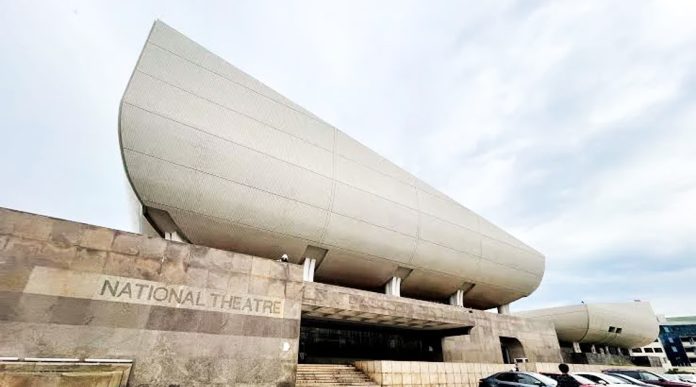
National Theatre

Entertainment analyst, Arnold Asamoah-Baidoo, has described the government’s plan to renovate the National Theatre in Accra as “a very good call,” highlighting the venue’s long-standing infrastructure challenges and its significance to Ghana’s arts and entertainment sector.

Speaking on Starr Showbiz with Feeling Daddy on Starr 103.5 FM, on Saturday, November 15, 2025, Arnold detailed the theatre’s current issues, noting that “most of the chairs are broken, air condition is not working,” and recalling past backstage difficulties that have disrupted performances.

“I remember one time we were calling one of the guys to lower the curtain. It took 30 minutes for the person to lower the curtain, all because it was not functioning,” he said, emphasising the urgent need for comprehensive renovations.

He welcomed the $2 million funding secured from China for the renovation, pointing out that “incidentally, it’s the same Chinese government that built the National Theatre in the 1990s. And since that building, there has been no renovation.”

Arnold also highlighted the theatre’s vital role in hosting national arts groups, saying, “The National Theatre really houses a lot of activities. Apart from the National Dance Group, the National Orchestra… most of our events are held in the National Theatre.” He stressed that improving stage operations and technical management is essential for both performers and audiences.

He further noted the contributions of private entities in supporting the theatre, such as donating air conditioning, underscoring the importance of a full-scale government-led renovation. “We need to fix the National Theatre because it houses a lot of activities,” Arnold stated.

Source: Starrfm.com.gh

“Some laws are too old…” – Tourism Minister targets reform of 1991 National Theatre Act

0
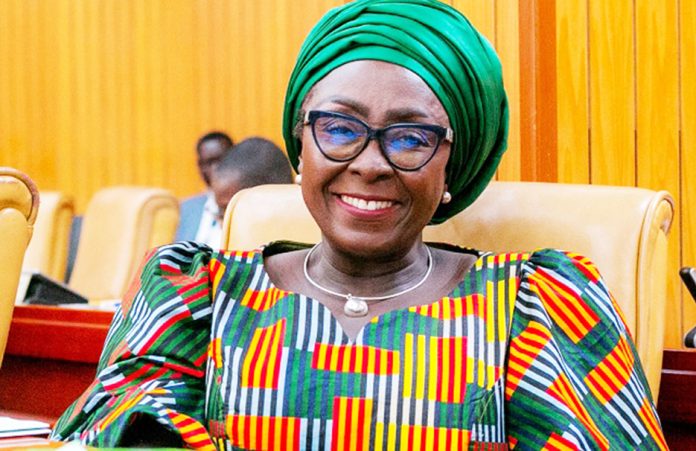
Abla Dzifa Gomashie, Minister for Tourism

Abla Dzifa Gomashie, Minister for Tourism, Culture and Creative Arts, has disclosed plans to review and reform Ghana’s outdated cultural and creative sector laws, including the 1991 National Theatre Act.

Speaking on Starr Showbiz with Feeling Daddy on Starr 103.5 FM on Saturday, November 15, 2025, the minister, who is also the Member of Parliament for Ketu South, explained that some legislation governing the sector no longer aligns with current realities.

Her comments indicate a focused effort to strengthen the legal framework of Ghana’s cultural and creative industries, ensuring laws are relevant, practical, and able to support sector growth in line with contemporary needs.

“So far, so good. Some of our laws… if you take the National Theatre, the law that set it up is somewhere in 1991. That’s too old. We’re in 2025,” she said, highlighting the need for modernisation.

The minster revealed that the ministry has already assigned a lawyer to work on updating the laws, with the ultimate aim of submitting them back to Parliament for approval.

“The ministry has been assigned a lawyer, and we are sitting with her to look at how to send those things back to Parliament and have them corrected for us,” she explained.

She further stated that the reforms will also cover the Creative Arts sector, particularly in relation to the newly established creative arts fund.

“The Creative Arts also has an ally that is almost ready for its work, especially to do with the fund. Now that we’ve seen it in the budget, we’re going to work very hard to ensure that the Attorney General helps us to clean it up quickly,” Abla Dzifa Gomashie added.

Credit: starrfm.com.gh

Government commits GH¢20 Million to Creative Arts Fund to power cultural economy

0
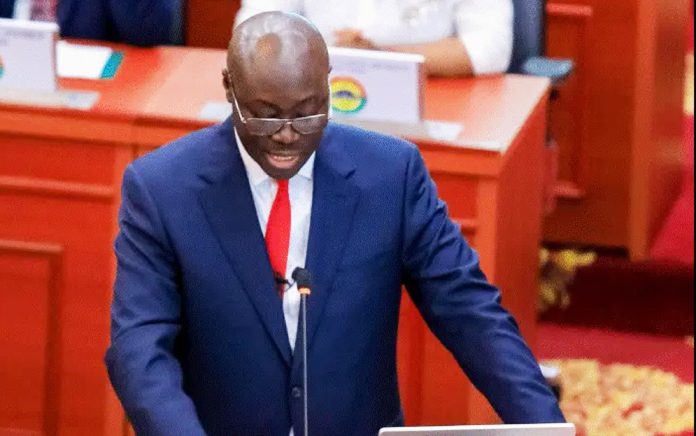
Dr Cassiel Ato Forson

Government has quietly put money where talk often goes by creating a Creative Arts Fund and seeding it in the 2026 budget.

The Finance Minister, Dr Cassiel Ato Forson, told Parliament that the fund will receive GH¢20 million as startup capital to support music, fashion, visual art, culinary creative industries and the wider value chains that sustain them.

“We will also establish the Creative Arts Fund for the arts, music, fashion, food and other creative sectors,” he said.


The idea is practical and immediate. A dedicated pool of public capital can be used to underwrite small production grants, finance artist training and technical upgrades, support market access initiatives and help creative small businesses professionalise their operations.


Dr Ato Forson framed the move as part of a strategy to turn culture into growth and jobs rather than a fringe activity.

For creatives this matters, as years of irregular funding and weak market infrastructure have left many talented musicians, designers, chefs and visual artists without predictable revenue streams.


Seed funding can cover the kind of early risk that private investors avoid. If directed toward production, distribution, export promotion and incubation hubs, the fund could open doors to new commercial partnerships and tourism opportunities.

The success of the Fund will depend on clear rules and strong governance.


Past commitments to the creative economy have sometimes stalled because of unclear oversight, short-lived programmes or weak measurement frameworks.

Stakeholders are likely to demand transparent disbursement criteria, an independent board with creative sector expertise and a monitoring system that tracks job creation and revenue from supported projects.


Credit: myjoyonline.com

Tinubu sends emissary to engage Christian, Fulani leaders in Plateau

0
President Bola Ahmed Tinubu

President Bola Tinubu has deployed an emissary, Dr Abiodun Essiet, to Plateau State with the view to restoring peace and improving inter communal harmony in the state.
This was contained in a statement by his Special Adviser on Information and Strategy, Bayo Onanuga, on Sunday in Abuja.

The statement said Essiet, a Senior Special Assistant on Community Engagement in the North Central Zone, has spent two days in the state meeting with Christian clerics and Fulani Miyetti Allah community leaders with the efforts culminating in a town hall meeting in Jos, the state capital.

According to the statement, delegates from various local government areas, traditional rulers, women, and youth leaders gathered to discuss ways to strengthen community-based peace structures and promote coexistence among diverse communities.

Essiet visited Rev Ezekiel Dachomo, Chairman of the Regional Church Council, RCC, in Barkin Ladi, where discussions centred on faith-based leadership and its role in promoting peace, unity, and social development.

Along with Dachomo, she addressed some widows and conveyed President Tinubu’s message of fostering ethnic reconciliation in the state.

DAILY POST reports that Dachomo has been the loudest voice of Christian communities in the state.

Credit: dailypost.ng

No Christian Genocide In Nigeria, AGF Insists

0
Attorney General of the Federation and Minister of Justice, Lateef Fagbemi

The Attorney General of the Federation and Minister of Justice, Lateef Fagbemi (SAN), has dismissed claims suggesting that Christians are being systematically targeted or killed in Nigeria.

Fagbemi, who stated this on Saturday at an event held in Erin-Ile, Oyun Local Government Area of Kwara State, insisted that no religious group was under persecution in the country.

“There is no Christian genocide in Nigeria. There is no persecution of any religion, sect or ethnic nationality,” he said.

According to him, violent attacks were not limited to any particular group or faith, stressing that states such as Zamfara and Sokoto, predominantly Muslim areas, have suffered repeated incidents of killings and banditry.

“Killings are happening in Zamfara, Sokoto and other Muslim-dominated areas. That is not to say the situation is okay, but it shows clearly that violence is not targeted at any religion,” he said.

While acknowledging the insecurity challenges, Fagbemi insisted that the Federal Government was “winning the war against terrorism” and intensifying efforts to curb killings, banditry, and other forms of criminality nationwide.

“We should reject any insinuation that there is a Christian genocide in the country. The government is taking all necessary steps to ensure that killings and banditry are nipped in the bud,” he added.

The AGF also urged Nigerians to be patient with President Bola Tinubu’s administration, saying current reforms were geared toward building a stronger foundation for national development.

“We all know the present situation is not rosy, but there is light at the end of the tunnel,” he stated.

He statement came in the wake of claims by a United States lawmaker, Senator Ted Cruz, accusing Nigerian authorities of orchestrating genocide against Christians and allowing the destruction of thousands of churches.

Credit: channelstv.com

The Ghanaian Chronicle