Home Blog Page 308

Ronaldo attends White House State dinner, wins praise from US President Trump

0

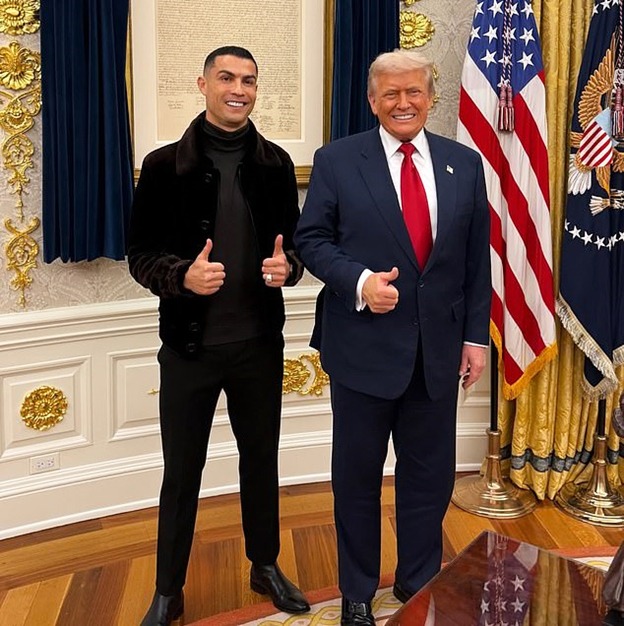
US President Donald Trump has praised Cristiano Ronaldo, revealing that his son Barron is a huge admirer of the football star after Ronaldo attended a White House state dinner on Tuesday night. 

Ronaldo, 40, was among a select group of high-profile guests at the event, held after Trump met Saudi Arabian Crown Prince Mohammed bin Salman. The forward, dressed in formal evening wear, joined figures including Tesla CEO Elon Musk and Vice President JD Vance.

During the dinner, the US President highlighted the presence of global personalities, saying: “This room is loaded up with the biggest leaders in the world – business, sports.” He added that Barron was delighted to meet Ronaldo, joking that the moment earned him extra “respect” from his son. “I introduced you, and I think he respects his father a little bit more now,” he said.

Ronaldo, who plays in the Saudi Pro League, appeared linked to the crown prince’s delegation but arrived in Washington separately earlier in the day. Prince Mohammed, widely known as MBS, played a key role in bringing him to Al-Nassr in 2023.

In a past interview with Piers Morgan, Ronaldo said he hoped to meet the US President, describing him as “one of the guys who can help to change the world.” Earlier this year, Trump received a Portugal jersey signed by Ronaldo with the message: “To US President Donald J. Trump, Playing for Peace.”

Credit: ghanasoccernet

I would have done better if I was given enough time as Black Stars -Chris Hughton

0
Chris Hughton

Former Black Stars coach Chris Hughton says he would have preferred to be given more time on the job after his sacking. 

Having served as the technical advisor to Otto Addo ahead of the 2022 World Cup, the former Brighton & Hove Albion manager was confirmed as the substantive head coach after Addo left the job after the Mundial in Qatar.

However, after the Black Stars exited at the group phase of the 2023 Africa Cup of Nations (AFCON) in Ivory Coast, the Ghana Football Association (GFA) confirmed the sacking of the former Nottingham Forest boss.

Speaking to 3Sports, Hughton admitted that the national team job requires more time compared to club football.

“It’s about the structure – I was told that when you’re used to club level, it does take some time to adjust to national football, because the stakes today are very different in national football, and of course, working in Africa,” the former Newcastle United boss said.

“So I would have wanted more time, and I generally feel that, having been given more time, I would have adjusted better to the role. But this is football; it’s very much about results and emotions,” Hughton added.

Following Chris Hughton’s departure, the GFA reappointed Otto Addo on a long-term deal.

Credit: ghanasoccernet

Antoine Semenyo: Experts discuss where the Premier League’s most wanted man should go next

0

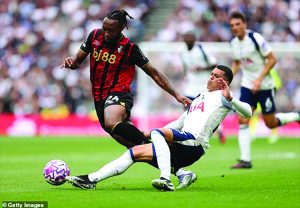
The emergence of Antoine Semenyo’s reported £65million release clause sent shockwaves through the footballing market on Monday night.

Bournemouth’s main man is in the best form of his life having scored six goals and assisted three in just 12 games this season.

It follows a strong 2024-25 campaign for the Ghanaian, during which he racked up 20 goal involvements to help Andoni Iraola’s men to a ninth-placed Premier League finish.

His exploits last season saw suitors such as Manchester United swirling for a £70million move in the summer, but Semenyo quashed any such hopes by signing an extension with the Cherries until 2030.

However, details of that new contract surfaced last night, and it has been claimed that the 25-year-old has a written release clause of £65million which can be triggered in the first two weeks of January.

With the news certain to have pricked up the ears of England’s biggest clubs, Daily Mail Sport’s experts have taken a look at where Semenyo could be best suited and why…

Tottenham – Matt Barlow

He would fit Spurs perfectly. I imagine most teams in the Premier League could find a role for him in current form. He is strong and quick, very much in the mould of player Thomas Frank likes.

He is versatile and most coaches like a player who can operate in different positions across the front line. I can see Semenyo on the Spurs left, his pace and power a counterweight to his Ghana teammate Mohammed Kudus on the right.

Neither Mathys Tel nor Wilson Odobert have nailed that position down since Son Heung-min left for LA. Xavi Simons looks more natural in the centre and Brennan Johnson is so much more of a goal threat from the right. Richarlison can play there but is not a wide man.

The issue at Spurs though would be that having invested a combined £70million in Odobert and Tel, and spent £52m on Simons, would they spend more again on Semenyo who would compete for the same roles in the team and block their progress?

I doubt it unless they think they have buyers for some of the wide players. I also suspect if they are in a genuine transfer contest with the likes of Liverpool and Manchester United then Spurs will not win.

They are not fighting for the biggest prizes like Liverpool. And they do not have top earners in the same wage bracket as either Liverpool or United.

Unless we are about the witness a radical change in strategy in what will be the first transfer window without Daniel Levy at the controls.

Liverpool – Lewis Steele

Liverpool have just spent £446million in the summer so another shiny forward would invite criticism from rivals.

Fixing their problems with more money is not the model of this club. But that is where any cons of this deal end. Semenyo is a sensational footballer, a bit of a throwback with his one-versus-one ability and someone who can add goals and assists.

He is best off the left wing and it is fair to say Cody Gakpo is inconsistent, so the Bournemouth star would be an upgrade or at the very least a solid bit of competition.

Liverpool did turn down potential moves for left wingers in the summer, such as Bradley Barcola and Rodrygo, due to the emergence of youngster Rio Ngumoha.

So that is something to keep in mind but overall this would be a top-class signing, especially noting how Mohamed Salah is a) not getting any younger and b) in a patchy run of form.

Manchester United – Nathan Salt

News of Antoine Semenyo’s availability at £65million certainly caused intrigue among Manchester United fans.

There’s a couple of factors at play here. One, is he a good player? Obviously, yes. Second, would he actually fit in? This one is more complicated.

United spent big on Matheus Cunha and Bryan Mbeumo to be their No 10s for years to come, while Mason Mount is a firm favourite of Ruben Amorim’s.

That raises the prospect that you could deploy Semenyo at left wing-back in Amorim’s 3-4-2-1 system, something I imagine would be far less appealing to the player amid an expected bidding war.

United desperately need to pool their funds into central midfield having already fixed the goalkeeper, centre back, No 10 and striker positions. Semenyo, while a great player, is a piece of the puzzle United could do without.

Credit: dailymail.co.uk

Ghana Urges Strict Precautionary Measures as Marburg Outbreak Hits Ethiopia

0

Ghanaian health authorities are urging the public to strictly observe precautionary measures following a confirmed outbreak of Marburg Virus Disease (MVD) in Ethiopia.

The advisory comes from the Ghana Health Service (GHS), which issued a statement announcing intensified preventive actions in response to the outbreak and Ghana’s frequent travel connections with Ethiopia.

In the statement, the GHS explained that surveillance has been significantly heightened at all points of entry to ensure the swift detection of any suspected cases.

It added that alerts have been circulated to all regions and health facilities across the country, directing them to strengthen monitoring and preparedness. Public health emergency response structures have also been reactivated, while the Service collaborates with One Health partners such as the Veterinary Services Directorate and the Wildlife Division of the Forestry Commission to enhance early detection and coordinated response efforts.

The GHS emphasised that, although the government is boosting national preparedness, strict adherence to personal preventive measures by the public remains essential, particularly as there is currently no vaccine for Marburg Virus Disease.

The Service encouraged the public to regularly wash their hands with soap under running water or use alcohol-based sanitizers to maintain good hand hygiene. Individuals are advised to avoid direct contact with anyone who appears unwell or shows symptoms such as bleeding, fever, or bloody diarrhea.

It can also The GHS also cautioned against touching animals, especially bats and monkeys, that exhibit signs of unexplained bleeding.

It urged anyone experiencing symptoms including fever, bloody diarrhoea, bleeding from the gums, bleeding beneath the skin, bleeding into the eyes, or passing blood in urine—to promptly report to the nearest health facility.

Marburg Virus Disease has an incubation period of two to twenty-one days and spreads from animals to humans, as well as through direct human-to-human contact. Ethiopia has so far recorded nine confirmed cases and three deaths.

The Ghana Health Service assured the public that robust surveillance and response measures are in place and that it will continue to monitor the situation closely as it evolves.

Mahama Calls on AU States to Support Caribbean Nations Hit by Hurricane Melissa

0
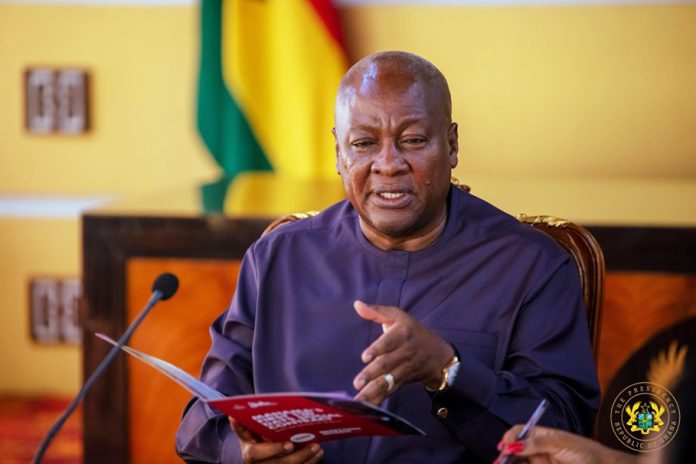
President John Dramani Mahama

John Dramani Mahama has appealed to African Union (AU) member states to urgently mobilise relief items to support Caribbean nations, including Jamaica and Cuba, devastated by Hurricane Melissa.

Speaking in Accra at an international conference marking the 5th Pan-African Congress and the 80th anniversary of the historic 1945 Manchester meeting, Mr Mahama said Africa’s solidarity must extend beyond the continent to all people of African descent and humanity at large.

He announced that Ghana will lead by example by dispatching troops from the military’s 48 Engineers Regiment—comprising carpenters, masons, plumbers, electricians, and other specialists—to help construct temporary shelters for displaced victims who are currently sleeping in the open.

“One of the aspects of Pan-Africanism is solidarity,” he said. “When Hurricane Melissa struck, we did not yet know the full extent of the destruction. But out of our Pan-African spirit, we put together food and other supplies and shipped them to our comrades in Cuba and Jamaica.”

According to Mr Mahama, Ghana has already sent bags of rice, medication, plastic containers, mattresses, blankets, and other relief materials to the two countries.

However, recent assessments have revealed that the devastation—especially in Jamaica—is far more severe than initially understood.

“Their greatest need now is shelter. People have been displaced and are sleeping under the rain and in the sun,” he noted. “The extent of destruction in Jamaica is beyond Ghana’s capacity alone to repair.”

The president said he has written to the African Union, urging all member states to donate essential materials such as blankets and tarpaulins to support makeshift shelter construction.

“If Pan-African solidarity means anything, it is in moments like this,” he stressed. “I don’t believe that what we are giving alone will solve the problem, but symbolically, if we all come together, it will make a significant difference.”

Mr Mahama said Ghana will also procure and ship heavy-duty tarpaulins—commonly used to cover cargo trucks—to support emergency accommodation efforts in Jamaica.

Reflecting on 80 years since the Manchester Congress, Mr Mahama said the principles of unity, self-determination, and shared destiny remain relevant, even as Africa confronts new forms of inequality.

He paid tribute to historic Pan-Africanists such as Kwame Nkrumah, George Padmore, and W.E.B. DuBois, emphasising that today’s struggles demand economic transformation, technological sovereignty, climate justice, and political stability.

“Africa is rich in natural resources but poor in global influence,” he said. “Too many of our youth are unemployed and losing faith in a continent that once promised dignity and pride.”

He added that while political liberation has long been achieved, Africa must now focus on building stronger economies and resilient institutions.

Mr Mahama concluded with an appeal to all African nations and global Pan-Africanists to respond to the Caribbean’s distress.

“Jamaica, Cuba, and other Caribbean countries are appealing for assistance. Whoever is listening—across Africa and beyond—this is the time to show solidarity,” he said.

The conference brought together dignitaries including former President John Agyekum Kufuor, international delegates, academics, and Pan-African activists committed to advancing the continent’s unity and global relevance.

The New Face Of National Security … No More ‘Intimidating Gota-Boys’

0
COP Abdul-Osman Razak, National Security Coordinator

The Chronicle’s independent investigations into activities of the National Security Council (NSC) have revealed tremendous transformation and departure from the intimidating ‘gota-boys’ to a strategic intelligence led power house capable of competing globally.

It was also deduced from the inquisition that presently, every citizen, without recourse to political persuasion can walk freely to the institution to report cases for investigation.

According to a highly placed source at the security body, the negative attributes, a state of fear and panic, which were previously associated with the NSC have all been removed.

For the first time since its inception in 1992, a serving police officer in the person of Commissioner of Police (COP), Alhaji Abdul-Osman Razak, a seasoned detective, lawyer and lecturer has taken over the reins as the National Security Coordinator.

His experience in law enforcement and security management equips him with the expertise to navigate complex security challenges, says a security analyst who preferred anonymity.

COP Razak, apart from being a course director at the prestigious Kofi Annan International Peacekeeping Training Centre, also lectures in The Gambia, Sierra Leone and Italy.

His leadership aims to enhance inter-agency collaboration, foster coordination among security agencies to address emerging threats effectively. The COP’s administration has also strengthened intelligence gathering by developing robust capabilities to identify and investigate potential security risks.

Since assumption of office, COP Osman Razak has, together with his lieutenants, created the Critical Incidence of National Interest Investigation Team (CINIIT), a body responsible for twenty-four-hour operations with membership drawn from Police, NIB and other bodies.

The security outfit also has the Special Weapons and Tactics (SWAT) unit whose memberships are drawn from both the police the military. All operations carried out by SWAT team are officially sanctioned by both police and the military leaderships.

The administration further promotes proactive strategies to counterterrorism, cyber threat and other security concerns, engages with the public to provide timely information and updates on matters of interest.

The NSC, it was revealed, has shifted from being an outlet for foot soldiers who, without recourse to any form of training, acquire walkie-talkie and gota communication gadgets just to harass the public.

The training and disciplinary measures put in place, the source went on, are the reasons people cannot easily wake up and go to perform illegal duties in the name of members of the respected establishment.

He went on that, the new administration, since its inception has declared war against impersonators with stricter sanctions awaiting such miscreants. On the reduction of violent crime, it came out that, a collaboration between the police and NSC is at its peak hence the outcome that the country is witnessing.


For more news, join The Chronicle Newspaper channel on WhatsApp: https://whatsapp.com/channel/0029VbBSs55E50UqNPvSOm2z


Asona Adonten Family Announces 40-Day Observance For The Late Kofi Sarfo Asiamah

0
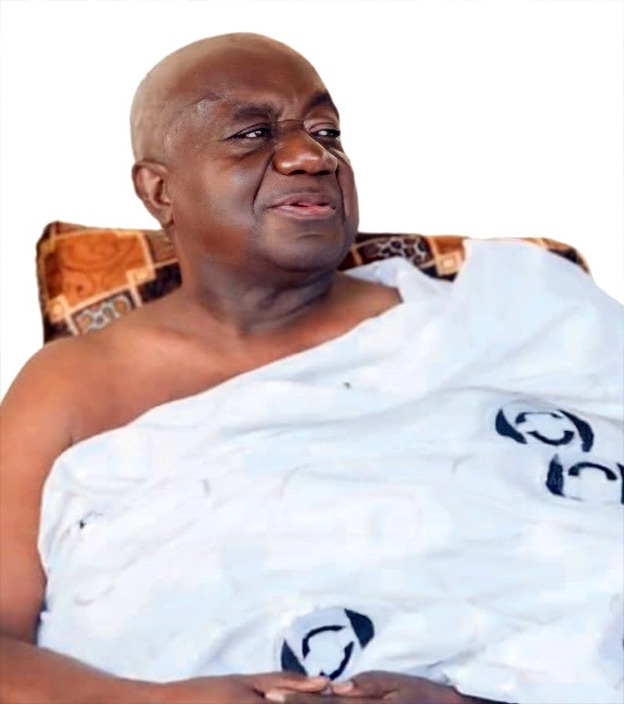
The late Mr. Kofi Assiamah

The Asona Adonten Family of Denkyira Tumantu Dominase, Breman, has officially announced arrangements for the 40-Day Observance of the late Mr. Kofi Assiamah, also known as Sarfo Assiamah, father of former Minister of Transport, Kwaku Ofori Asiamah.

Mr. Sarfo Assiamah, whose distinguished professional journey spanned several national institutions subsequently joined the erstwhile Social Security Bank (now Société Générale), where he rose to become Consumer Credit Manager.

He passed away peacefully at the Accra Medical Centre on Monday October 27, 2025.

He was widely admired for his integrity, commitment to duty, entrepreneurial spirit, and unwavering dedication to his family and community.

The 40-Day Observance is scheduled for Friday December 12, 2025, at the Zulka Park near Dansoman Keep Fit Club. The time is 11 am prompt

The Asona Adontenhene of Denkyira Tumantu Dominase, Breman, Nana Kokorko II, who spoke to this paper on behalf of the family, said preparations are complete to ensure a dignified and solemn commemoration befitting the legacy of the distinguished gentleman.

The late Mr. Sarfo Assiamah is survived by his widow, Mrs. Dora Assiamah and blessed with thirteen children namely: Peter A. Ashman (Kwaku Addai, deceased), Kwaku Ofori Asiamah, Patricia Assiamah Aidoo, Gifty Afua Assiamah, Papa Yaw Acheampong, Kofi Assiamah Jnr (Ashie), Sylvia Adjoa Assiamah Akumiah (deceased), Kofi Sarfo Assiamah, Pearl Rosalyn Nana Akua Asiedua Asiamah, Kwame Arko Assiamah, Nana Akosua Asantewaa AssiamahOwusu, Kate Maame Ama Ayemeduah Assiamah and Kwaku Kyere Assiamah.

Further details regarding the final funeral rites will be communicated by the family in due course.

NPP Diaspora Execs Insist On Proxy Voting

0
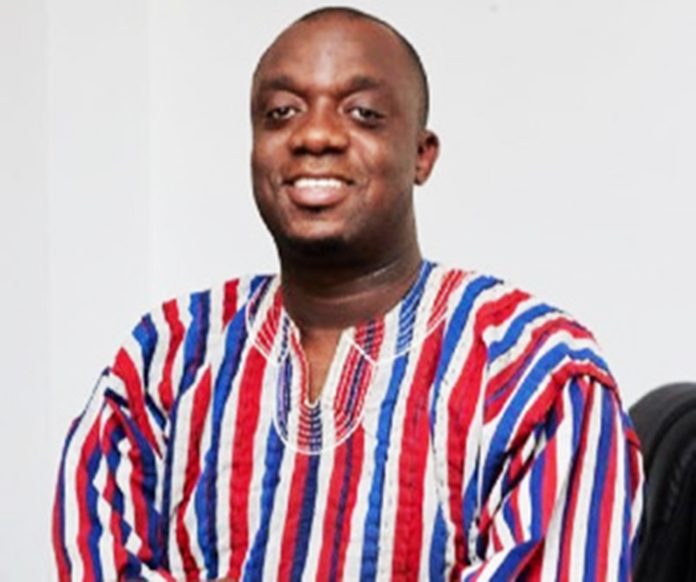
Justin Kodua, NPP General Secretary

A group of New Patriotic Party (NPP) Constituency Executives who are currently studying or temporarily domiciled outside Ghana have formally petitioned the Party’s national leadership, requesting approval to exercise their voting rights in the upcoming presidential primaries through the constitutionally sanctioned proxy voting system.

The petition, addressed to the General Secretary and copied to former Presidents Nana Addo Dankwa Akufo-Addo and John Agyekum Kufuor, as well as the Party’s Council of Elders, the National Executive Committee (NEC), the National Council, and all presidential aspirants, argues that denying proxy voting to executives abroad would contradict explicit provisions in the NPP Constitution and unjustly disenfranchise duly elected officers.

In their submission, the executives emphasised that Article 25 of the NPP Constitution provides clear and comprehensive guidelines for proxy voting, positioning it not as a privilege, but an established electoral right available to any registered voter including Party delegates who cannot be physically present in their constituency on polling day.

Quoting directly from Article 25(1), the group highlighted the Constitution’s unequivocal stance on absentee voting: a registered voter who “due to ill-health” or who “is absent from the constituency and will be unable to vote on polling day” may apply for proxy status.

According to them, this clause is neither ambiguous nor discretionary, as it specifically recognises absence from one’s constituency as a legitimate justification for proxy voting.

They further detailed the structured procedures laid out in the Constitution, including completion of proxy forms, endorsement protocols, verification steps, limitations on how many proxies one person may hold, and rules governing cancellations.

These procedural safeguards, they argued, demonstrate that proxy voting is a fully codified mechanism intended to ensure inclusivity and electoral fairness within the Party.

The executives maintained that their temporary residence abroad whether for academic programmes, work, or family obligations fits neatly within Article 25(1)(b), which acknowledges absence from the constituency as sufficient grounds to activate proxy voting rights.

They noted that their mandates as constituency executives remain valid and active, and physical absence from Ghana does not invalidate their positions or responsibilities within the Party.

The petitioners warned that refusing them the option of proxy voting would amount to unconstitutional disenfranchisement.

They argued that such a move would violate the spirit and letter of the Party’s own Constitution, deny equal voting rights to elected executives, and create an unfair distinction among officers purely on the basis of geographic location.

This, they noted, would undermine inclusiveness and marginalise committed Party members many of whom contribute significantly to promoting the NPP’s vision and interests abroad.

Beyond constitutional concerns, the executives presented a strong financial and strategic case to support their request. They stressed that with the NPP in opposition, fiscal prudence should guide every major decision.

Compelling executives overseas to return home solely to cast one vote, they said, would impose substantial financial burdens, often involving airfare costs running into hundreds or thousands of dollars per individual.

Such expenditures, the petition noted, would drain resources that could instead be channelled into critical activities needed to strengthen the Party’s readiness for the next general elections.

They listed polling station mobilisation, grassroots operations, media outreach, youth engagement, and regional campaign support as areas in need of sustained investment—priorities they believe should not be undermined by avoidable travel costs.

The group therefore framed proxy voting not only as a constitutional entitlement, but also as a cost-effective and strategically sound approach that allows the Party to preserve scarce resources for the broader objective of returning to power.

In their appeal, the executives requested three specific actions from the national leadership: first that all constituency executives currently abroad be allowed to vote through the established proxy voting framework; second that the Party issue clear and timely procedural guidelines to facilitate seamless implementation and third that constituency and regional secretariats receive formal direction to assist affected executives in completing and submitting their proxy documentation.

The petition concluded with a call for unity, fairness, and a reaffirmation of the Party’s democratic values. The executives stated that permitting proxy voting would demonstrate respect for every mandate, uphold internal democracy, and ensure that no executive is “silenced by circumstance or distance.”

They urged the NEC and the National Council to grant their request “in the supreme interest of the New Patriotic Party” as it works toward reclaiming governance.

The petition was signed by the NPP Constituency Executives studying or temporarily domiciled abroad and formally submitted to the Party’s national headquarters in Accra.


For more news, join The Chronicle Newspaper channel on WhatsApp: https://whatsapp.com/channel/0029VbBSs55E50UqNPvSOm2z

Gold Bod Refutes Reports of GH¢3bn Losses

0
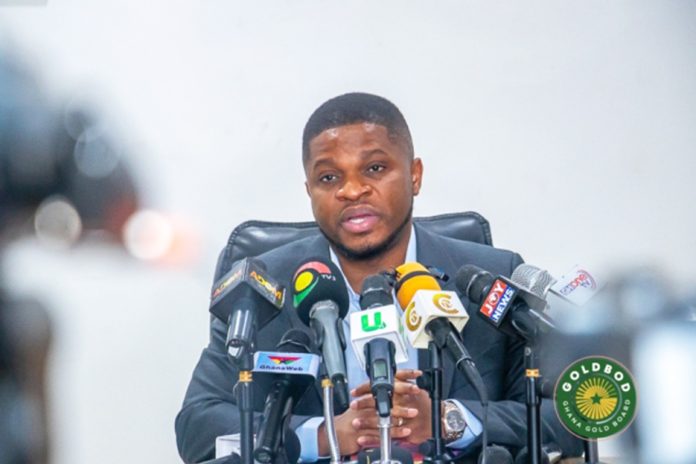
Mr Sammy Gyamfi, CEO of Goldbod

The Ghana Gold Board (GoldBod) has forcefully dismissed media reports alleging that the state-backed gold aggregator has incurred losses exceeding GHS 3 billion in its first year of operations.

The Board describes the claims published by a local radio station as “entirely false, mischievous and deliberately contrived” to undermine its work and the gains made in Ghana’s mineral sector.

In a statement issued on Tuesday, November 18, 2025 GoldBod said it has never recorded losses since its establishment, insisting instead that it has consistently made significant surpluses.

According to the Board, audited quarterly financial statements soon to be published on its official website will provide clear evidence of its profitability.

“The publication under reference is entirely false and deliberately contrived to undermine the successes and significant contribution of the GoldBod to the revitalisation of Ghana’s economy,” the statement read.

GoldBod urged the public to disregard the report, which it described as “unethical” and called the Radio station involved to retract the allegation and offer an unqualified public apology.

Background to the Report

The rebuttal follows a detailed report by the radio station claiming that internal checks show GoldBod has accumulated approximately GHS 3 billion in losses, during its first year under the new gold aggregation and export regime.

According to the report, industry insiders estimated that GoldBod was losing about GHS 8,000 per ounce of gold roughly $25,900 per kilogram due to a combination of logistics costs, assay discrepancies, and foreign exchange volatility.

The report argued that rapid fluctuations in global gold prices during the three-day repayment cycle for funded purchases were eroding margins.

Cedi Has Become A Symbol of Ghana’s Economic Resilience –Mahama

0
President Mahama and Dr Asimah (L) at the programme

President John Dramani Mahama has described the Ghanaian cedi as a powerful emblem of the nation’s strength and endurance, stating that the currency has “absorbed shocks… and symbolised the resilience of the Ghanaian economy and the Ghanaian people” throughout its six-decade journey.

He said this when he delivered the keynote address at the Cedi@60 Anniversary Currency Conference yesterday, hosted by the Bank of Ghana, in partnership with Currency Research at the Accra International Conference Centre.

The President noted that the 60th anniversary of the cedi is not merely a ceremonial milestone but a defining moment to reflect on the currency’s evolution and its role in Ghana’s future.

He stressed that the cedi’s introduction 60 years ago was a bold assertion of Ghana’s identity and sovereignty, marking a young nation’s determination to manage its own monetary destiny.

“The Cedi at 60 is, therefore, more than just a celebration. It is a chance to consider what our currency stands for, how it has developed and how it must be fortified for the years ahead,” he said.

According to the President, the cedi has played a central role in shaping expectations of households and businesses, supporting policymaking and reflecting the country’s broader economic journey.

Over the decades, he said, the currency has weathered domestic, regional and global disturbances while remaining a core anchor of Ghana’s financial system.

President Mahama also highlighted Ghana’s recent economic progress, pointing to improvements in macroeconomic stability achieved over the past ten months.

These gains, he explained, were driven by disciplined fiscal consolidation, enhanced domestic revenue mobilisation, expenditure rationalisation and stronger coordination between fiscal and monetary authorities. As a result, inflation has continued to decline and market expectations have stabilised.

He further referenced the cedi’s recent exchange rate stability, attributing it to improved forex liquidity management, stronger reserve buffers and regulatory reforms undertaken by the Bank of Ghana.

These developments, he said, have boosted business confidence and strengthened the nation’s credibility.

The President noted that this confidence had been affirmed internationally after Ghana’s sovereign credit rating was upgraded by S&P Global from CCC+/C to B–/B with a stable outlook.

He reaffirmed the government’s commitment to preserving the independence of the Bank of Ghana, stating that an autonomous central bank remains vital for controlling inflation, maintaining exchange rate stability, enhancing investor trust and ensuring long-term policy credibility.

“This is not a matter of personal preference. It is an economic necessity,” he stressed.

The President urged the central bank to intensify public education on responsible currency use, handling practices and financial literacy, emphasising that using the cedi in domestic transactions helps strengthen economic stability and reduces exposure to exchange rate volatility.

He also encouraged broader engagement across schools, markets, transport unions, digital platforms and rural communities.

In his welcome address, Governor of the Bank of Ghana, Dr. Johnson Pandit Asiama, said the Cedi@60 conference deepens national reflection on a currency that continues to shape Ghanaian life across generations.

He noted that the cedi carries history, meaning and a collective identity, tracing its origins to a young republic seeking to chart its own economic course.

“Over the decades, it has mirrored Ghana’s triumphs and struggles – periods of progress, bold reforms, and moments of hardship that tested the resilience of our institutions and our people,” he said.

Dr. Johnson Asiama explained that the cedi remains ever-present in the daily lives of Ghanaians, circulating through markets, farms, shops and transport hubs and supporting families, communities and businesses.

Looking ahead, he said younger generations will interact with the cedi in increasingly digital environments, where expectations of convenience, transparency and accountability continue to grow.

He emphasised the need to ensure the cedi retains its relevance and value in a world where technology, artificial intelligence, and digital payments are reshaping monetary systems.

He reaffirmed the Bank’s commitment to strengthening the cedi as the unquestioned medium of exchange and tackling pressures from currency substitution and dollarisation.

He added that ongoing efforts in payments modernisation, including work on the eCedi, reflect the country’s intention to build secure, interoperable and future-ready currency systems.

The Bank of Ghana Governor described the conference as a vital platform that brings together central bankers, payment specialists, currency designers, security experts, academics and industry leaders to examine the future of money.

The collaboration, he said, is essential because the issues shaping modern currencies extend across borders and disciplines.

He expressed appreciation to Currency Research and all international and domestic partners for supporting Ghana’s financial sector reforms, adding that protecting the cedi must be seen as “a shared endeavour rooted in our belief in Ghana’s future.”

 

The Ghanaian Chronicle