Home Blog Page 307

Insecurity: Tinubu postpones G20, AU-EU trips, awaits briefing on Kebbi, Kwara attacks

0
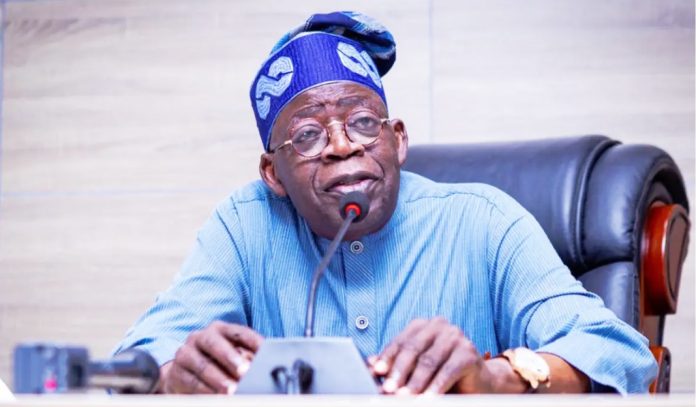
President Bola Ahmed Tinubu

President Bola Tinubu has postponed his scheduled trips to Johannesburg in South Africa and Luanda, Angola.

This is just as he awaits further security briefings on the kidnapped Kebbi schoolgirls and the attack on Christ Apostolic Church worshippers in Eruku, Kwara State.

A statement by the Special Adviser to the President on Information and Strategy, Bayo Onanuga, on Wednesday afternoon revealed that in response to the request by the Government of Kwara State, President Tinubu has ordered the deployment of more security men to Eruku and the entire Ekiti Local Government Area of the state.

He also directed the police to go after the bandits who attacked worshippers.

The President was scheduled to leave Abuja today to attend the 20th G20 Summit of leaders in South Africa and thereafter proceed to Luanda to attend the seventh AU-EU Summit.

However, according to Onanuga, the President will now await reports from Vice President Kashim Shettima, who has been directed by the President to visit Kebbi on his behalf.

Tinubu will also await reports from the police and the Department of State Services (DSS) regarding the attack in Kwara.

“President Tinubu was scheduled to leave Abuja today to attend the 20th G20 Summit of leaders in South Africa and thereafter proceed to Luanda to attend the 7th AU-EU Summit.

“Disturbed by the security breaches in Kebbi State and Monday’s attack by bandits against worshippers at Christ Apostolic Church, Eruku, President Tinubu decided to suspend his departure.

“He now awaits reports from Vice President Kashim Shettima, who paid a sympathy visit to Kebbi on his behalf, as well as reports from the police and the Department of State Services regarding the attack in Kwara,” the statement partly read.

It also disclosed that the President reiterated his directive to the security agencies to do everything possible to rescue the schoolgirls abducted by the bandits in Kebbi State and bring them back home, safe.

Credit: channelstv.com

Poland to close last Russian consulate over ‘unprecedented act of sabotage’

0
Poland Prime Minister Donald Tusk, second right, visits site of the rail line

Poland has announced it will close its last remaining Russian consulate in the northern Polish city of Gdansk following the targeting of a railway line to Ukraine from Warsaw, blaming Moscow for the incident.

“I have decided to withdraw consent for the operation of the Russian consulate in Gdansk,” Polish Foreign Minister Radoslaw Sikorski told journalists on Wednesday.

Sikorski said he had repeatedly warned Russia that its diplomatic and consular presence would be reduced further if it did not cease hostile actions against Poland, Polish news agency PAP reported.

The move means the only Russian diplomatic mission that will remain open in Poland will be the embassy in Warsaw.

The Kremlin responded to the allegation by accusing Poland of “Russophobia”.

“Relations with Poland have completely deteriorated. This is probably a manifestation of this deterioration – the Polish authorities’ desire to reduce any possibility of consular or diplomatic relations to zero,” Kremlin spokesman Dmitry Peskov said when asked about the consulate closure.

“One can only express regret here … This has nothing to do with common sense.”

Later on Wednesday, Russia’s state news agency TASS quoted Ministry of Foreign Affairs spokeswoman Maria Zakharova as saying Moscow will respond by reducing Poland’s diplomatic and consular presence in the country.

Credit: aljazeera.com

China to suspend imports of Japanese seafood amid diplomatic row

0
Japanese seafood

China will again ban all imports of Japanese seafood as a diplomatic dispute between the two countries escalates, Japanese media report.

Japanese public broadcaster NHK and Kyodo News agency said on Wednesday that the seafood ban follows after China earlier this month lifted import restrictions on Japanese marine products, which were imposed by Beijing in 2023 after the release of treated radioactive water from Japan’s crippled Fukushima nuclear plant into the sea.

Kyodo News, referencing sources with knowledge of the matter, said China has told Japan that the reimposition of the ban was due to the need for further monitoring of the water from Fukushima released into the Pacific Ocean.

But the ban comes amid a deepening crisis in relations between Beijing and Tokyo over remarks by Japanese Prime Minister Sanae Takaichi. The premier told parliament on November 7 that a Chinese attack on Taiwan, which threatened Japan’s survival, was one of the few cases that could trigger a military response from Tokyo.

Takaichi’s comments were met with a wave of criticism by Chinese officials and state media, prompting Japan to warn its citizens in China to take safety precautions and avoid crowded places.

In a post on X following Takaichi’s comments, the Chinese consul general in Osaka, Xue Jian, threatened to “cut off that dirty neck”, apparently referring to the Japanese prime minister. Tokyo said it had summoned the Chinese ambassador over the now-deleted social media post.

Credit: aljazeera.com

Congress votes to send Epstein files bill to Trump

0
Epstein files

Both chambers of US Congress have agreed to order the US justice department to release its files on late sex offender Jeffrey Epstein.

The House of Representatives overwhelmingly approved the measure in a 427-1 vote. The Senate said it would pass the bill before it officially received it.

President Donald Trump must ultimately sign off the measure, which he has said he will do. He recently reversed his position and urged fellow Republicans to vote to disclose the records, following pushback from many of his supporters.

Earlier on Tuesday, survivors of Epstein spoke in support of the measure at the US Capitol. One of them said they had suffered “institutional betrayal” for years.

The “Epstein files” refer to the vast trove of documents that were amassed during criminal investigations into the financier, including transcripts of interviews with victims and witnesses, and items confiscated from raids of his various properties.

Senate Majority Leader John Thune told CNN that he expected the upper chamber to receive the bill from the lower one on Wednesday morning, after which the bill would be passed and then sent to Trump for the presidential signature.

Trump said the timing did not matter to him and has continued to cast the issue as a distraction. “I just don’t want Republicans to take their eyes off all of the Victories that we’ve had,” he wrote in a social media post late on Tuesday afternoon.

Trump’s own historical relationship with Epstein has again been the subject of recent headlines after US lawmakers released more than 20,000 pages of documents from Epstein’s estate – including some that mention Trump and other prominent figures, without indicating any wrongdoing by those individuals.

Trump’s reversal at the weekend – from attacking those on Capitol Hill who wanted the files released to saying there was “nothing to hide” – surprised some in Washington.

Credit: bbc.com

25 killed in one of Russia’s deadliest strikes on western Ukraine

0
Russia strikes Ukraine

At least 25 people have been killed including three children in a Russian drone and missile attack on the western city of Ternopil that hit two blocks of flats, Ukrainian rescue officials say.

Another 73 people were wounded, 15 of them children, officials said, in one of the deadliest Russian strikes on western Ukraine since the full-scale war began in February 2022.

Two other western regions were hit, Lviv and Ivano-Frankivsk, and a drone attack targeted three districts of the northern city of Kharkiv, wounding more than 30 people. Photos posted online showed buildings and cars ablaze.

Power cuts were affecting a number of regions across the country, Ukraine’s energy ministry said.

Ukraine’s president Volodymyr Zelensky said Russia had fired more than 470 drones and 47 missiles, leaving “significant destruction”. He warned that people could be trapped under the rubble in Ternopil.

The devastation caused by the Russian strikes on Ternopil soon became clear. A video shared by Zelensky showed that one of the two blocks of flats had completely caved in. The interior minister Ihor Klymenko said it had been destroyed between the third and the ninth floor.

Plumes of smoke poured from windows and small fires burned outside the tenement.

A giant smoke cloud rose in the distance behind the Church of Our Lady of Perpetual Help in Ternopil, as sirens blared throughout the city.

Energy facilities, transport and civil infrastructure were damaged elsewhere in western Ukraine.

The energy sector came under attack in Ivano-Frankivsk region where two of three people reported wounded were children.

The head of Lviv region said an energy facility had been struck.

The Russian strikes came a day after Ukraine’s military said it had fired US-supplied longer-range Atacms missiles at military targets inside Russia, the first time they have admitted using the Atacms on Russian soil.

Credit: bbc.com

How to Exercise After a Stroke

0
Exercise After a Stroke

Around one-third of these strokes are recurrent and a significant amount of those strokes lead to death. Returning to previous levels of activity after a stroke can be challenging. Especially important is the question of how to reintegrate exercise into your life in a healthy and productive fashion, particularly if you experience long-lasting symptoms.

What You May Feel After Having a Stroke

If you were very active and sporty before your stroke, you might feel the urge to get right back to where you were, but it’s important to take it slow. Just because you do not feel persistent effects in the immediate aftermath of a stroke doesn’t mean you have made a full recovery.

Strokes can affect your body in many ways, and you will need to wait to see how your stroke has affected you. You and your doctors will work together to come up with a rehabilitation plan appropriate for your specific situation. 

Some of the post-stroke symptoms you may experience are:

  • Paralysis. One or multiple parts of your body could be paralyzed after a stroke.
  • Weakness. You may experience significant weakness throughout your body.
  • Diminished coordination. You may have difficulty coordinating your movements, causing you to feel a little slow or clumsy.
  • Muscle irregularities. Your muscles may be tight and stiff to the point where using them is difficult. Conversely, they could be abnormally loose and soft.
  • Balance. It could be difficult for you to balance, and you could feel unsteady or dizzy often.
  • Swelling. If the mobility of your legs or feet is lost, fluid can often build up in the limbs where movement is compromised.
  • Change in feeling. Commonly, people lose feeling, have increased feeling, or start to feel pins and needles on part of their body.
  • Fatigue. You might find that you feel tired after tasks that used to be no problem for you, like walking short distances. Simple movements can become complex and involved tasks.
  • Pain. Feeling pain in your hip, leg, or on one side of your body is quite common.

Rehabilitation

If you feel long-term effects after a stroke, you will most likely work with a team of medical providers to rehabilitate your body.  Movements you may work on include:

  • Sitting to standing and back
  • Standing to squatting and back
  • Walking
  • Everyday actions like opening doors or getting in and out of cars

Your healthcare team will likely give you exercises to do throughout the day. These exercises will work best when repeated frequently. This repetition is the best way to reduce stiffness and muscle pain even if they are not the most comfortable at first. ‌‌

Studies have shown that working out and developing your fitness helps your body recover from a stroke. This is especially true if you can manage to stick to your exercise routine for six months after your stroke and onwards. Exercise can also help to relieve some of the emotional consequences of a stroke, such as depression or moodiness. Additionally, depending on what exercise you choose, it can also provide you with a community.

What Exercises Are Best to Do After a Stroke?

It is recommended that stroke survivors do 20 to 60 minutes of aerobic exercise every day. You can break up the exercise and get it done in intervals if you need to. 

Stroke survivors should also work with light weights and incorporate light resistances to regain muscle that may have been lost or weakened. This type of training should be done two to three. 

In addition to aerobic exercise and strength training, stroke survivors should stretch often to increase flexibility. You may find raising your arms and moving your legs to be difficult. Try and stretch before or after your other exercises, and your movements will become easier to execute.

You may also want to incorporate balance training as stroke survivors often lose their balance. It has been recommended that stroke survivors incorporate between two to three sessions of balance or coordination exercises into your routine.

Additionally, as a source of support to you both emotionally and physically, many healthcare providers recommend that stroke survivors engage in group fitness activities. These activities can be things like water aerobics, Zumba, spin, or Pilates. You could also investigate doing leisurely group activities like walking or biking. Having that community element in your fitness journey can give you a lot of strength, motivation, and accountability as you reintroduce fitness in your life during this difficult time.

Credit: webmd

Feature: Toilets can make Africa’s roads safer, according to this new study

0
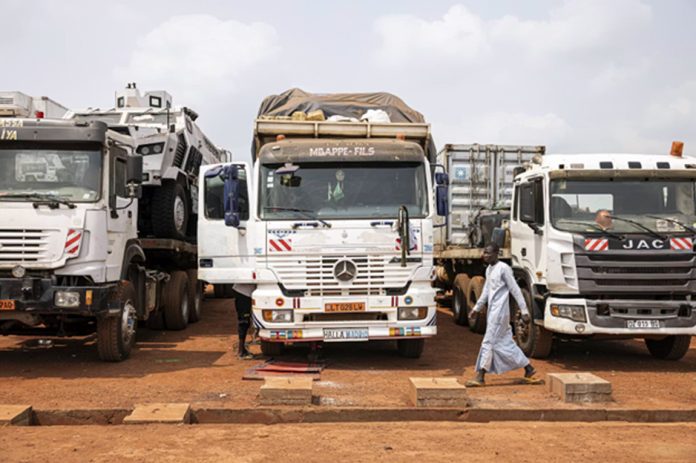
A truck driver walks past parked truck inside an inland port on the outskirts of Bangui, Central African Republic on 4 March, 2025.

Travelling on Africa’s roads comes with many challenges. The biggest is arriving at your destination safely. The continent is one of the hotspots of global road trauma. Its traffic deaths account for about one quarter of the global number of victims, despite having less than 4% of the world’s vehicle fleet.

The situation in sub-Saharan Africa is particularly dire. Road crashes affect this region more than any other in the world. Its road fatality rate of 27 per 100,000 people is three times higher than Europe’s average of 9 and well above the global average of 18.

Then there’s Africa’s road infrastructure. Despite recent rising investments in road developments, the quality of roads in many African countries is generally low. This has been captured in research reports, the World Economic Forum’s surveys and the International Monetary Fund’s cross-country road quality ranking.

“Crashes and poor roads are not the only things that can make travelling a less-than-pleasant experience. Another is a lack of toilets. You are in deep trouble if nature calls you while travelling on Africa’s roads. When planning roads and mobility, the authorities rarely include access to adequate, safe and clean toilets.”

In 2020 a public interest lawyer, Adrian Kamotho Njenga, successfully sued some authorities in Kenya, compelling them to provide toilets for travellers.

It is not a uniquely African problem. Similar challenges exist in the US and the UK.

The difference is that in those places, researchers are building knowledge about the problem to influence and demand support for change.

I am a senior researcher in mobility governance at the Transport Studies Unit of the University of Oxford. My research interests include toilet access within mobility systems. In a recent paper, I drew attention to the road safety benefits of toilets.

I argue that enhancing drivers’ reasonable and reliable access to toilets can yield road safety benefits in ways that are comparable to enforcing laws against drunk or fatigued driving.

I searched academic databases such as Scopus and reviewed several papers. I found that improving toilet access for drivers was rarely researched as a road safety strategy in Africa. But it can enhance safer driving by reducing driver distraction and other unsafe driving practices that lead to road traffic crashes.

Road traffic crash losses in Africa are immense. Not long ago, the African Union was lamenting that they drain an estimated 2% of its member states’ GDP annually. Bringing the problem under control will require investing in a wide range of interventions, including unconventional ones – such as making it easy for drivers to “go” while on the road.

Road safety benefits of toilets

Driving while pressed for the bathroom can be a torturous experience and a significant distraction. It could make drivers a danger to themselves and other road users by diverting their attention away from the road and traffic conditions. The physical urgency can affect their judgment and reaction to dangerous situations.

The distraction and the urgency can make the driver impatient, and inclined to start speeding, tailgating, or trying reckless manoeuvres to get to the nearest place where they can ease themselves.

Research has shown that people who cannot urinate when their bladder is full experience cognitive or attention impairment that is equivalent to staying awake for 24 hours.

The cognitive deterioration associated with the extreme urge to void is also equivalent to having a blood alcohol concentration level of 0.05%. This is equivalent to or exceeds the blood alcohol concentration limits that Tunisia (0.05%); Sudan and Mauritania (0%); Morocco (0.02%); Mali (0.03%), Madagascar (0.04%), and other African countries impose on drivers.

All this suggests that driving while pressed for the bathroom is as dangerous as drunk or fatigued driving. It also implies that enhancing access to toilets can yield road safety benefits comparable to enforcing laws against drunk or fatigued driving.

Toilets should be integrated within road developments and mobility systems.

Time to invest in toilet access within mobility systems

For starters, governments on the continent can build more public toilets. Africa is one of the key locations of global toilet poverty. The World Health Organization says that some 779 million people on the continent do not have reasonable and reliable access to adequate, safe and clean toilets. Building more public toilets can help address general toilet poverty on the continent as well as in the context of mobility.

Refreshingly, in Ghana for example, private developers are investing in rest stops along highways. These social road transport infrastructures serve as places for commuters to relax, access goods and services, and socialise during their journey break. They often have toilets that travellers pay to access. Governments can explore ways to support these private provisions to expand and become more affordable.

Rest stops are often located on the outskirts, however. Most drivers and other road users operate in cities. When in need of a toilet while out and about, some drivers and other urban commuters are likely to use the toilet facilities available in fuel stations, hotels, restaurants, banks, coffee shops, hair salons, and other establishments in cities.

Not much is known about their cost, safety, cleanliness and location, or the embarrassment associated with using them. Researchers will have to investigate these issues and share the findings with the public.

When more people are aware of the issues, there could be a shift in thinking to demand and support better access to toilets as part of mobility policy.

By Festival Godwin Boateng

Senior Research Associate, University of Oxford

Source : The Conversation UK

Curacao become smallest nation to qualify for World Cup

0
Curacao have qualified for their first World Cup after drawing with Jamaica

The tiny Caribbean island of Curacao has become the smallest nation to ever qualify for the World Cup after drawing with Steve McClaren’s Jamaica.

The record was held by Iceland, who reached the 2018 finals, but their country is far bigger than Curacao, which has a population of just over 150,000 (similar to Cambridge or Huddersfield) and a land area of 171 square miles, smaller than the Isle of Man.

Former England boss McClaren resigned as Jamaica boss after his side, who needed a win in Kingston to qualify for their first World Cup since 1998, were held to a goalless draw, including having an injury-time penalty overruled by VAR.

Curacao boss Dick Advocaat, who was not at the game for personal reasons, will become the oldest coach at a World Cup, aged 78, beating Otto Rehhagel’s record when he was in charge of Greece aged 71 in 2010.

Curacao, 37 miles off the Venezuela coast, only became a country within the Kingdom of the Netherlands in 2010, following the dissolution of the Netherlands Antilles.

Ten years ago they were 150th in Fifa’s world rankings. Now they are 82nd.

The expanded 2026 World Cup format, which features 48 nations instead of 32, along with the fact hosts Canada, Mexico and the United States all qualify automatically, has given Curacao a much-improved chance as they become the fourth debutant at next summer’s tournament – joining Cape Verde, Uzbekistan and Jordan.

“It’s crazy and would be one of the biggest things that will happen to Curacao,” said midfielder Juninho Bacuna, a former Huddersfield, Rangers and Birmingham player before the match.

Speaking to BBC Radio 5 Live, he added: “It’s incredible and amazing. Even a few years ago you would not even think about it.

“To be personally part of it and to make that dream come true would be incredible.”

In 10 qualifying matches, they have won seven and finished their campaign unbeaten.

They will be joined at the World Cup by Haiti and Panama from the Conacaf qualifying, with Jamaica having to go into the Intercontinental play-offs.

The Caribbean Island of Haiti sealed their place at a first World Cup since 1974 after defeating Nicaragua 2-0.

Credit: .bbc

Wales will ‘take anybody’ in World Cup play-off draw

0
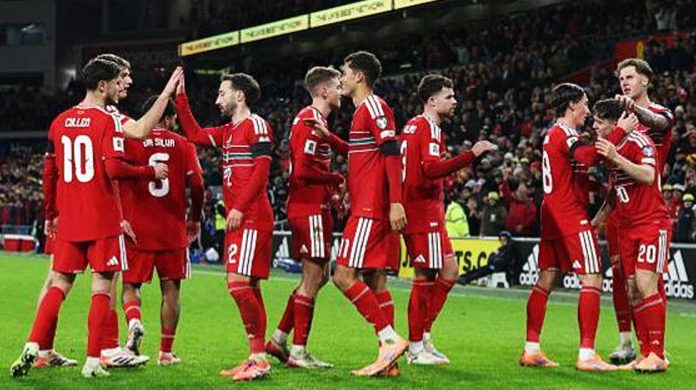
Players celebrating a goal

Wales’ focus lies on Thursday’s World Cup play-off draw as they wait to discover their semi-final and potential final opponents.

Having finished second in their qualifying group courtesy of an emphatic 7-1 triumph over North Macedonia – their biggest win since 1978 – Craig Bellamy’s side will play the last-four encounter on home soil.

They will face either Albania, Bosnia-Herzegovina, Kosovo or Republic of Ireland in that fixture on 26 March.

Former Wales striker Rob Earnshaw believes the Dragons will relish a tie against any opponent on the back of their most recent result at Cardiff City Stadium.

“I know Craig Bellamy, I played with him and his mentality is ‘give us whoever, it doesn’t matter’,” Earnshaw told BBC Radio 5.

“A lot of people were saying last night, ‘do we really want Republic of Ireland as it’s that derby feel?’. I think a lot of people didn’t. But for me, that would be incredible.

“So it’s one of those, yes, we’ll take Kosovo or Bosnia and Albania are not bad and the Republic of Ireland, of course, they’re a very good team so they’ll be difficult.

“But you just feel that we’ll take anybody right now and it doesn’t matter, and a lot of that is down to Craig Bellamy.”

Credit: bbc

Suspended sentence for Norway player over video

0
Andreas Schjelderup

Norway international Andreas Schjelderup has been given a two-week suspended prison sentence after a Danish court found him guilty of sharing sexual material of two boys under the age of 18.

Benfica winger Schjelderup, 21, told the court he received a 27-second video on Snapchat and forwarded it to a group chat of four friends before deleting it once he realised its content.

Schjelderup, who was 19 and playing for Danish Superliga side Nordsjaelland at the time of the incident, pleaded guilty after co-operating with a police investigation.

Schjelderup will only have to serve time in jail if found guilty of another crime during the next 12 months.

The prosecution had asked the court to sentence Schjelderup to at least 20 days in prison.

His lawyer Anders Nemeth told the court that the defence would take time to deliberate before deciding whether to appeal.

Rui Costa, president of Portuguese side Benfica, has previously been reported as saying the club will support Schjelderup.

In a statement posted on Instagram on 8 November, Schjelderup apologised and said he wanted to “be open to all of you about a stupid mistake I did”.

He said he was “ready to face the consequences” and urged people not to “watch or spread videos with harmful or offensive content”.

Schjelderup, who has eight caps for Norway, was an unused substitute on Sunday as they beat Italy 4-1 in Milan to qualify for the 2026 Fifa World Cup.

Credit: bbc

The Ghanaian Chronicle