Home Blog Page 300

Springfield’s $280m Investment Deserves State Protection –Kojo Poku

0
Mr Kevin Okyere, Springfield CEO

Energy expert, Kwadwo Poku, has urged the public to approach the government’s ongoing discussions with Springfield Exploration and Production Limited (SEP) with a clear understanding of the company’s journey, cautioning that much of the current commentary is rooted in misinformation rather than fact.

Springfield staff busy at work

According to him, the Government’s decision to lead negotiations that could result in the acquisition of Springfield’s interest in the West Cape Three Points Block 2 (WCTP 2) has sparked various reactions, but many critics have failed to appreciate the significance of Springfield’s work, as Ghana’s first and only indigenous upstream operator.

Most ambitious indigenous investment

Speaking in an interview with The Chronicle, Mr. Poku noted that Springfield’s role in WCTP 2 remains one of the largest and most ambitious indigenous investments in Ghana’s petroleum sector as the company and its partners have so far invested over $280 million into the project.

Among the four upstream operators Tullow, ENI, Aker/Pecan Energies and Springfield, the latter stands alone as the only wholly Ghanaian company pushing the boundaries to open the way for more local participation in the industry.

Doubts about young Ghanaian entrepreneur

He recalled that when Springfield initially bid for the relinquished block in 2012, widespread doubt greeted the idea that a young Ghanaian entrepreneur could make meaningful inroads in such a capital-intensive and technologically complex industry.

Mr Kwadwo Poku- Energy Expert

At the time, Springfield’s founder and CEO, Kevin Okyere, was only 32 years old, yet he continued to pursue the application process through 2014 and eventually secured the block at age 36, after Parliament ratified the award in 2016.

Remarkable performance

Mr. Kwadwo Poku stressed that Springfield’s performance after winning the block has been nothing short of remarkable. Though acquiring seismic data was not part of its original programme, the company took a bold step and in April 2017, contracted the world’s largest seismic vessel, the Ramform Titan owned by Petroleum Geo-Service (PGS), to conduct a full 3D seismic survey over the 673-km² block at a cost of US$9.317 million. The new data would later guide drilling operations that led to a historic discovery.

This effort paved the way for the Afina-1x discovery, which confirmed hydrocarbons in commercial quantities estimated at more than 1.5 billion barrels of oil in place and 1.2 trillion cubic feet of gas.

At peak, the fields are projected to deliver about 80,000 barrels per day of oil and 250 million standard cubic feet (mmscf) of gas—comprising 200 mmscf of non-associated gas and 50 mmscf of associated gas.

Successful execution

Kwadwo Poku described the discovery as “a feat never achieved by any indigenous upstream company in Africa,” highlighting that the work was successfully executed in Cenomanian and Turoniandeepwater reservoirs, on schedule, within budget, and with zero safety incidents a record he believes speaks volumes about Springfield’s technical discipline.

He further emphasised that the company’s estimates have been validated by reputable petroleum consulting firms in the United States and United Kingdom, including firms whose clients file reports with the U.S. Securities and Exchange Commission.

Legal dispute

However, he pointed out that Springfield’s path to development became complicated by a legal dispute with Italian oil major ENI, which triggered years of back-and-forth over unitisation of the Afina and Sankofa fields. Following an arbitration ruling, the Petroleum Commission instructed Springfield to appraise the Afina discovery to fulfil its obligations under the Petroleum Agreement.

In what he described as an “unprecedented” mobilisation, Kevin Okyere assembled his technical team and executed the appraisal campaign within three months, confirming the commerciality of the Afina discovery and proving communication between Afina and ENI’s Sankofa field strengthening the case for unitisation.

Creating jobs

Mr. Poku noted that all these seismic surveys, drilling campaigns, regulatory compliance and recurring operational expenses estimated at US$280 million have been funded by Mr.Okyere and his partners, creating thousands of jobs through direct employment and contracts with both local and international service providers.

He explained that the current discussions with the Government are aimed at helping Springfield raise additional capital for further appraisal and development. Options being explored include bringing in new partners or enabling GNPC-Explorco, which currently holds 5%, to acquire additional stakes.

Strengthen GNPC

According to him, this would strengthen GNPC’s technical capacity while fast-tracking development of the WCTP 2 resources for national benefit.

Kwadwo Poku insists that WCTP 2 contains proven hydrocarbon reserves, and therefore, the Government-led negotiations must be viewed “through the lens of strategic national interest, not misplaced sentiments.”

He concluded that Springfield’s journey represents a national asset, not a liability and stands as clear evidence that Ghanaian participation in the upstream sector is not only possible, but capable of delivering ground-breaking results.


For more news, join The Chronicle Newspaper channel on WhatsApp: https://whatsapp.com/channel/0029VbBSs55E50UqNPvSOm2z


Integrity, innovation important in shaping future of community banking -BoG 

0
Mrs Matilda Asante-Asiedu, Second Deputy Governor, BoG

Mrs Matilda Asante-Asiedu, Second Deputy Governor of the Bank of Ghana (BoG) has emphasised the importance of integrity, innovation and inclusion in shaping the future of community banking in Ghana.

She said integrity, innovation and inclusion were the three pillars on which community banking hinged as they built strong community relations, kept banking relevant and fostered economic growth and social equity, respectively.

She explained that trust, transparency, ethics, adapting to technological advancements and customer needs to financial access were sub pillars that supported the three pillars to enhance their growth.

Mrs Asante-Asiedu made the statement at the 10th Rural Banking Week Celebration and the Second Association of Rural Banks (ARB) Women’s Conference in Ho held on the theme: “Driving Sustainable Financial Inclusion and Good Governance in Rural and Community Banks (RCBs) through Environmental, Social, and Governance (ESG) Principles.”

She said while the BoG remained a committed partner of RCBs and would continue to strengthen supervision, support capacity building, promote responsible innovation to deepen the sector’s resilience, a lot depended on the RCBs’ decisions made, risks taken and products designed.

“The future of community banking will not be shaped only by technology or regulation, but by integrity so that, when you are underwriting that loan, you know the loan has already gone bad at the point of underwriting it.

Mrs Asante-Asiedu, touching on the theme of the event, highlighting the significance of financial institutions in driving sustainable financial inclusion and good governance, said ESG was not a burden but an advantage, providing a clear and practical roadmap.

She said environmental stewardship required, considering how rural banks’ lending, supported or undermined the natural systems and the communities that depended on it while governance discipline required leading with integrity, managing risks with foresight to ensure best interest of depositors, shareholders and communities were served.

“Let this event be a turning point, a moment where we commit to sustainability, fairness, gender equity, environmental responsibility, and good governance. These values are not optional. They are the currency of trust on which financial services provision hinges. They are also the currency of trust on which this fast-changing world is built.”

Mrs Asante-Asiedu appreciated rural banks for having nurtured livelihoods, built resilience and offered dignity to people whose economic activities, though vital, had been undervalued in their communities and emphasised the importance of affirmative action in finance for women and promoting women in leadership roles in the financial sector.

Mr Thomas Clarkson Adade, Volta/Oti Chapter President, ARB, said the joint celebration marking a decade of rural banking and a second gathering of ARB Women’s the Conference symbolised more than just an anniversary but represented a new energy, the synergy of a decade of rural banking excellence, combined with a growing and a powerful movement towards women leadership and empowerment.

“This combination inspired us to pursue traditional boundaries and work together to create a more inclusive and equitable financial landscape.”

The conference which brought together industry leaders, policymakers, and women trailblazers, discussed key issues including gender leadership and innovation in rural finance, empowering women for sustainable leadership, and the power of collaboration among women in the financial sector.

From Ewoenam Kpodo, Ho 

GNA

Duke of Edinburgh Spotlights Climate-Smart Development and Innovation in Ghana

0
His Royal Highness Prince Edward, The Duke of Edinburgh.

His Royal Highness Prince Edward, The Duke of Edinburgh, has arrived in Ghana for a two-day working visit aimed at strengthening the United Kingdom’s evolving partnership with Ghana and reaffirming shared Commonwealth values.

The visit will spotlight areas of growing collaboration between the two countries, including climate-smart development, education, innovation and inclusive sports particularly for young people and persons with disabilities.The Duke will begin his engagements in Aburi, where he will visit a kindergarten and a teaching student class at the Presbyterian Women’s College of Education.

There, he will observe Ghana’s play-based teaching and learning model implemented with support from Sabre Education.

The programme, backed by the UK Government, is equipping Ghanaian teachers with modern skills to enhance early childhood education nationwide.

In a statement issued by the British High Commission in Accra, it explained that The Duke will also tour the iconic Aburi Botanical Gardens, where he will visit a plant nursery dedicated to preserving indigenous flora and serving as a practical training hub for horticultural students.

As part of his focus on climate-smart development, Prince Edward will meet entrepreneurial leaders from the UK and Ghana’s cocoa industry.Their work in artisanal processing, sustainable trade, and inclusive economic models is helping transform cocoa-growing communities.

Continuing a tradition shared by his late mother, Queen Elizabeth II, and his brother King Charles III, The Duke will plant a commemorative tree at Aburi Gardens, symbolising a long-standing commitment to sustainability.

Spotlight on Commonwealth Innovation
In Accra, His Royal Highness will engage with participants of the Commonwealth Startup Fellowship Programme Bootcamp.

The initiative, delivered by the Commonwealth Scholarship Commission in the UK and Imperial College London, brings together innovators from 24 Commonwealth nations to develop solutions for global challenges.

The High Commission says this engagement reflects the UK’s commitment to supporting entrepreneurship, technology and inclusive economic growth across Commonwealth states.One of the major highlights of the visit will be The Duke’s interaction with Ghana’s Paralympic and sports associations ahead of the 2026 Commonwealth Games in Glasgow.

The event will stress the power of inclusive sports in promoting wellbeing, character development and social cohesion and will reaffirm Ghana’s leadership in the Commonwealth sports movement.
Prince Edward will also attend a UK-Ghana Theatre and Creative Arts event aimed at promoting collaboration in skills development and investment.

The programme will feature a performance of ‘The Black Star Teacher of Africa’ by playwright Kofi Adinkra, celebrating the legacy of Ghana’s first President, Dr. Kwame Nkrumah.

He will also call on President John Dramani Mahama and meet the National House of Chiefs in a durbar that highlights the enduring relationship between the British Royal Family and Ghana’s traditional leadership.

The Duke will pay his respect at the Kwame Nkrumah Memorial Park, honouring Dr. Nkrumah and his wife, Fathia Nkrumah.

A Visit Rooted in Shared Values

British High Commissioner to Ghana, H.E. Dr. Christian Rogg, described the visit as a celebration of “the strong and evolving relationship between the UK and Ghana,” adding that it underscores real results from partnerships spanning education, climate action, innovation, and inclusive development.

The Duke will wrap up his visit with high-level meetings involving government officials, development partners, Diaspora groups and business leaders, before attending the annual King’s Birthday Party at the British High Commissioner’s residence, a gathering that celebrates long-standing diplomatic and economic ties between the two nations.

Prince Edward, the youngest child of Queen Elizabeth II and Prince Philip dedicates much of his work as a senior royal to empowering young people and promoting the benefits of non-formal education across the Commonwealth.

Editorial: Policy Requiring SHSs To Establish Poultry & Livestock Farms Laudable

0
Editorial

According to a news publication on myjoyonline.com, President John Mahama has revealed a new policy that will require Senior High Schools across Ghana to establish poultry and livestock farms. The initiative is designed to help schools produce their own meat, instead of relying on market purchases.

The announcement came during the 65th anniversary celebration of Ghana Senior High School (Ghanasco), the alma mater of both President Mahama and First Lady Lordina Mahama. “We are coming up with a policy, a policy where secondary schools will have a poultry farm and a livestock farm, so Ghanasco will be one of the schools selected,” President Mahama said.

“We will establish a poultry farm and a livestock farm here, so that you don’t have to go to the market to buy your meat. You take your meat from your own farm. And again, the headmaster will have no excuse when you go to the dining hall that there’s no meat in your food.”

This announcement that all Senior High Schools will soon be required to establish poultry and livestock farms is a transformational step toward strengthening food security, revitalising agricultural education and promoting self-reliance across our secondary schools. This initiative is both bold and necessary, and it deserves full national support.

For decades, school feeding across the country has been plagued by chronic challenges such as unreliable suppliers, fluctuating market prices, erratic protein supply and food budget shortfalls that often leave students with little or no meat in their meals. Many Head teachers struggle to stretch limited resources, resulting in inconsistent nutrition for students and in some cases, declining confidence in school feeding programs.

First, the initiative promotes self-sufficiency and ensuring schools have a stable and reliable supply of fresh protein. This reduces dependency on the market, shields schools from price hikes and eliminates the longstanding excuses for protein shortages in dining halls. When a school can produce, store and manage its own meat, it gains control over quality, quantity and cost, the three pillars of sustainable feeding programs.

Second, the policy introduces practical agricultural education into the daily life of students. Agriculture has long been the backbone of Ghana’s economy, yet young people are increasingly disconnected from the sector.

Integrating livestock and poultry production into schools provides hands-on training and encourages interest in agribusiness, veterinary science, feed production, farm management and related technical fields. Over time, this will nurture a new generation of skilled agriculture-focused professionals, many of whom may end up driving innovation in Ghana’s food systems.

Third, the initiative carries enormous potential for job creation and school-based entrepreneurship. Managing a farm requires caretakers, feed suppliers, veterinary consultants, record keepers, extension officers and student volunteers.

Furthermore, the President’s assurance that schools like Ghanasco will be among the first to implement the project demonstrates a commitment to starting strong and learning from early rollouts. Schools with adequate land and history in agriculture are ideal testing grounds and their success will provide models for nationwide implementation. This phased approach is strategic and sustainable.

Critically, the policy also enhances accountability. When schools produce their own meat, Head teachers will no longer be able to attribute poor meal quality to the absence of suppliers or uncontrollable market prices. As President Mahama stated, the excuses will end. Instead, school administrators will be required to manage resources efficiently, maintain farm records, and ensure that students benefit from the investment.

However, for the policy to fully succeed, there must be clear guidelines regarding financing, technical support, land availability and veterinary oversight. Schools must be properly equipped and trained and the Ministry of Education must develop monitoring systems that ensure farms operate safely and efficiently.

With proper planning and inter-agency collaboration, including the Ministry of Agriculture and district assemblies the policy can become one of the most innovative educational interventions in recent years.

In a time when global food insecurity is rising and many countries are revisiting the importance of domestic food production, Ghana’s decision to integrate farming into secondary education is not only forward-thinking but essential. It prepares students for the future, strengthens school systems, and reinforces the nation’s agricultural foundations.

We fully support it.


For more news, join The Chronicle Newspaper channel on WhatsApp: https://whatsapp.com/channel/0029VbBSs55E50UqNPvSOm2z


A Just Transition Is A Talent Transition

0
Opinion

Africa stands at a pivotal juncture, urged to decarbonise for the planet’s sake even as it struggles to power its own growth. With 600 million people still lacking access to electricity, and coal providing cheap, reliable energy, the continent faces a significant paradox: the green transition is critical to global climate goals, but for Africa, it could come at a substantial cost.

The International Energy Agency warns that under net-zero pathways, about 13 million fossil-fuel jobs could disappear globally even as 30 million new clean-energy roles emerge by 2030. The catch is that most of those new jobs will be created in countries that already manufacture and install renewable-energy technologies. In much of Africa, where local production and technical training remain limited, job losses could easily outpace early gains.

Nowhere is this tension clearer than in South Africa, where around 100,000 coal miners and power-plant workers could face redundancy as coal is phased out. Many are semi-skilled, with years of technical and operational experience that aren’t automatically transferable to renewable-energy projects. For these workers, reskilling, not rhetoric, will determine whether the green transition is truly just.

A just transition must do both, protect those who stand to lose and prepare those who will build what comes next. This means designing policies that cushion affected workers through retraining, while simultaneously developing a pipeline of project talent to lead the rollout of renewable energy. A coal plant supervisor already manages complex schedules, safety protocols, and multidisciplinary teams, core project-management competencies that, with the right certification, translate directly to overseeing renewable projects.

Across Africa, deliberate reskilling is already underway. In Nigeria, engineers from the oil and gas sector have been redeployed to solar and energy-efficiency projects through national transition initiatives. In Kenya, the expansion of geothermal energy has created new opportunities for technicians formerly employed in thermal power.

In Rwanda and Morocco, energy workforce programmes have successfully redeployed engineers and technicians from mining and fossil sectors into hydropower and wind operations. In Ghana, the Bui Power Authority has retrained hydropower and thermal engineers to manage the country’s growing solar and hybrid projects, demonstrating how energy expertise can evolve in response to market demands.

Much of the global climate conversation to date has focused on policy and finance. But the real make-or-break factor lies elsewhere, in human capability. Without a deliberate plan for reskilling, the continent’s green shift could end up creating as many redundancies as green jobs. This perspective is rarely viewed through the lens of talent: How will this transition impact those employed in the fossil-fuel economy, and how will new talent be developed to build and manage the industries of the future?

According to the PMI Talent Gap Report (2025–2035), Sub-Saharan Africa will need between 1.6 million and 2.1 million additional project professionals by 2035, an increase of up to 75%. Yet education and training systems across the continent aren’t keeping up. The result is a skills deficit that threatens to stall progress in the very sectors most central to the energy transition: construction, energy, infrastructure, and technology.

Data from the Project Management Institute suggests that about 10% of global project investment is lost annually due to poor performance. In Africa’s infrastructure pipeline, that translates into billions in wasted investment. This is where project management becomes the unsung cornerstone of Africa’s green economy. A just transition demands talent transformation, the deliberate effort to retrain and redeploy workers from the old energy economy into the new one.

Africa’s green transition will not succeed solely on goodwill. Governments, development partners, and businesses must act now to integrate project management training into climate finance and just transition plans. Building capability must be accompanied by building capacity. If climate investments continue to outpace human investments, the gap between ambition and delivery will only widen.

PMI is already collaborating with governments, academia, and industry across Africa to strengthen project delivery capability. These partnerships are embedding project management frameworks into public infrastructure initiatives, while universities are integrating PMI-aligned curricula to prepare a new generation of professionals for project-based roles in the green economy. By prioritising skills development alongside climate ambition, Africa can ensure that its energy transition is not only visionary but viable.

About Project Management Institute (PMI): PMI is the leading authority in project management, dedicated to guiding the way to project success. Since 1969, PMI has shone a light on the power of project management and the people behind the projects. With a global community, gold-standard professional certifications, and career-long learning opportunities, PMI empowers current and aspiring project professionals, as well as organisations, with knowledge and resources to lead effectively and create an impact in the communities they serve. Join PMI in elevating our world – one project at a time.

George Asamani, MD, Project Management Institute, Sub-Saharan Africa


For more news, join The Chronicle Newspaper channel on WhatsApp: https://whatsapp.com/channel/0029VbBSs55E50UqNPvSOm2z

Reliable Data Key to Planning for Future Development -Statistician

0
 Mr. Richard Sackey, Ashanti Regional Statistician

Mr. Richard Sackey, Ashanti Regional Statistician, has emphasised the importance of reliable data with accurate information for planning towards future developmental agenda.

Speaking at the presentation of key highlights of the Governance Series Wave 2 report, Mr. Sackey noted that data was crucial for informed decision-making and planning.

He stressed that governance was not just about laws, but also about how people understand and are involved in the decision-making process.

The report highlighted the need for inclusive and responsive governance, with indicators measuring people’s perceptions of corruption, bribery, and government responsiveness.

To him, data is needed to plan for the future stressing that nobody can plan well without reliance on reliable data.

The presentation also highlighted the need for continued efforts to improve governance and reduce corruption, with data playing a critical role in informing policy decisions and ensuring accountability

The Ashanti Region Statistician noted that the Ghana Statistical Service had a critical role to play in providing reliable data for decision-making and planning.

Mr. Thompson Appam Attebila, Business Development Manager of the Association of Ghana Industries-Ashanti/BA, also emphasised the importance of fighting corruption, stating that “naming and shaming alone could reduce corruption” and that the fight against corruption was everyone’s responsibility.


For more news, join The Chronicle Newspaper channel on WhatsApp: https://whatsapp.com/channel/0029VbBSs55E50UqNPvSOm2z


Collins Amo donates 5,000 sets of Obuasi Baby Diapers to health facilities

0
Dr. Collins Amo presenting the diapers to Beneficiary Health Authorities

Dr. Collins Amo, Chief Executive Officer of Aduro Ye Herbal has donated 5,000 sets of Obuasi Baby Diapers to selected health facilities in the Obuasi East and Obuasi West Municipalities.

The donation is part of the company’s commitment to strengthening maternal and child healthcare in the Obuasi area.

Some beneficiary mothers displaying their diapers

This latest gesture adds to Dr. Amo’s growing list of philanthropic interventions, including donations to orphanages and widows, and a Gh₵200,000 contribution to the Heal KATH project last year.

The beneficiary facilities include St. Jude Hospital, Obuasi Government Hospital, SDA Hospital, Bryant Mission Hospital and the AGA Health Foundation among others.

Dr. Amo emphasised the company’s resolve to contribute meaningfully to the development of the communities in which it operates.

Speaking to the media, Dr. Amo said “As part of our corporate social responsibility, he finds it important to support key sectors such as health, especially when it involves mothers and new born babies.

He said the diapers are locally produced in Obuasi, and believe they will help ease the burden on health facilities and families.

Health officials from the beneficiary institutions expressed gratitude for the timely support, noting that the donation would significantly enhance hygiene and care within maternity and child welfare units.


For more news, join The Chronicle Newspaper channel on WhatsApp: https://whatsapp.com/channel/0029VbBSs55E50UqNPvSOm2z

AGA matriculates Community Youth Apprentices and Women in Industry Skills Empowerment

0
Stakeholders and a section of the trainees in a group photograph

AngloGold Ashanti (AGA) Obuasi Mine has matriculated 58 Community Youth Apprentices and 47 Women in Industry Skills Empowerment (WISE) programme at a ceremony at the Anyinam Lodge in Obuasi.

Mr Edmund Oduro Agyei, the Community Relations Manager of AGA noted that the Youth Apprenticeship Programme has made significant strides, having successfully trained over 500 youth since 2019 in technical skills, critical to the company’s operations.

He mentioned that some of the graduates are currently working with AGA, some with Contractors and many others working outside Ghana, while others are self-employed.

Mr. Oduro Agyei said for the first time in the history of the Mine, a deliberate attempt has been made by management to train women in Fabrication, Auto Mechanics, Industrial Mechanics, Crane Rigger and Auto Electricals under the broad name – Women in Industry Skills.

He pointed out that it is the vision of the Managing Director of AGA, Ing. Samuel Pobee that more women get the opportunity to work in the Mine to serve as motivation for other women to strive to be part of AngloGold Ashanti Obuasi Mine.

The Community Relations Manager said the fact that over 1,300 persons applied to be hooked on to the programme and 105 were selected shows how competitive the selection process was and congratulated those who made up the final list.

The Obuasi West Municipal Chief Executive (MCE), Faustilove Appiah Kannin, expressed the Assembly’s appreciation to the management of AGA for the many interventions made to improve the lives of the people in the company’s catchment area.

Barimansu Antwi Kwanin II, Benkumhene of Fomena, who represented the Adansihene at the function, said when Nana Nkansah of blessed memory gave  the then AGC the right to mine gold in Adansi in 1897, his vision was to see that the youth were employed in the Mine.

According to the Benkumhene, the vision of Nana Nkansah has now been manifested and thanked the present management of AngloGold for their foresight and love for humanity.

Barimansu Antwi Kwanin II advised the youth to desist from use of drugs.

“If some of the youth who have assembled here for the Matriculation had been certified to be drug addicts, they could not have gone through the process to learn to become engineers and fabricators,” he noted.

Master Siaw Solomon from Dompoase and Emmanuel Buabin of Korfekrom in Obuasi, on behalf of colleague Matriculants, thanked AngloGold for the opportunity.

From Frederick Danso Abeam, Obuasi


For more news, join The Chronicle Newspaper channel on WhatsApp: https://whatsapp.com/channel/0029VbBSs55E50UqNPvSOm2z


I’ve Activated Strategy To Secure Nnamdi Kanu’s Release -Gov Otti

0
Governor Alex Otti and Nnamdi Kanu

Abia State Governor Alex Otti has announced that steps are underway to secure the release of Nnamdi Kanu, the convicted leader of the Indigenous People of Biafra (IPOB).

Otti stated that the plan was first initiated during Kanu’s trial.

The Federal High Court in Abuja on Thursday sentenced Nnamdi Kanu to life imprisonment for terrorism.

Justice James Omotosho found him guilty on several counts, including inciting violence, belonging to a proscribed organisation, and threatening attacks on Nigerian and foreign targets.

Reacting in a statement issued by his Special Adviser on Media and Publicity, Ferdinand Ekeoma, the governor said, “While Mazi Nnamdi Kanu is free to appeal his conviction, I am pleased to inform you that I have activated, and will continue to implement, the agreed strategy until his freedom is secured.”

He added that he had also briefed key authorities in the country on some of the agreements reached during his visit to Kanu while he was in the custody of the Department of State Services (DSS) in Abuja.

Otti, who criticised the authorities for their initial mishandling of IPOB grievances, called for peace and emphasised that political solutions would be leveraged to resolve the matter permanently.

“The poor management of the IPOB issue in its early stages created the challenges we face today. We cannot allow it to fester and escalate into a larger, more dangerous crisis,” he noted with concern.

Credit: channelstv.com

Yobe Govt Orders Closure Of Boarding Schools Over Rising Insecurity 

0
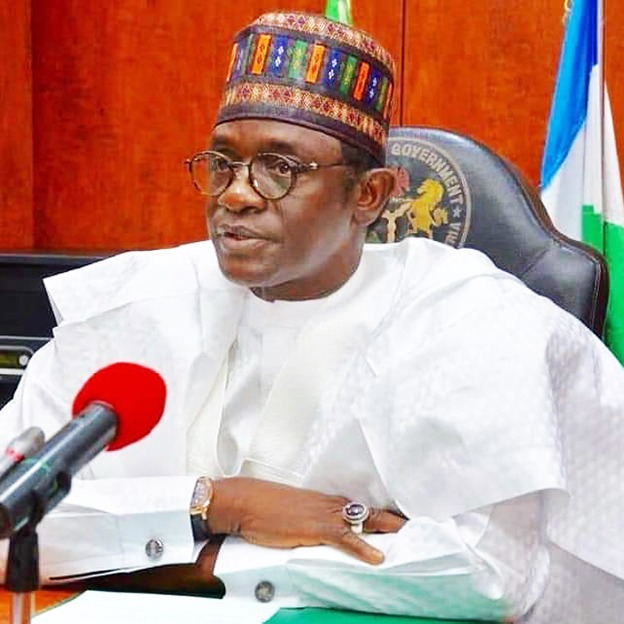
Governor of Yobe State, Mai Mala Buni

The Yobe Government has ordered the closure of boarding secondary schools in the state due to security challenges.

This was contained in a statement by Mamman Mohammed, the
Director General of Press and Media Affairs to the Governor Mai Mala Buni.

“Yobe state government has directed the closure of all boarding Secondary Schools in the state as a proactive measure to safeguard students in the schools,” the statement issued on Saturday read.

“The decision followed the outcome of a security meeting between the Governor, His Excellency Hon. (Dr) Mai Mala Buni CON, COMN and Security chiefs in the state, reviewing security incidences in schools in some parts of the country.”

Mohammed quoted the Permanent Secretary Ministry of Basic and Secondary Education, in Yobe, Bukar Bukar, as directing the immediate closure of all secondary schools pending improvement in the situation.

Governor Buni called on the people of the state to pray for the leadership, security operatives, peace and improved security in the country. Yobe joins the growing number of states to have shut schools amid rising security threats, especially the mass abduction of students in the northern parts of Nigeria.

Kebbi, Plateau and Kwara are among states to have ordered the closure of schools in the last few days.

The Federal Government also shut 14 unity schools with immediate effect pending the review of security situation in the affected places where the institutions are located.

Their decisions followed the mass abduction of students and the heightened insecurity across parts of Nigeria.

Credit: channelstv.com

The Ghanaian Chronicle