Home Blog Page 2918

Ghana Hotels Association inducts  national executives into office

0
The executive members of the Hotel association

The newly elected National Executives of the Ghana Hotels Association (GHA) have been inducted into office to steer the affairs of the association for the next four years.

The executives were elected during the association’s biennial conference in Wa in line with its constitution.Nine of the old executives retained their positions while two were newly elected.

The elected executives are Dr Edward Ernest Ackah-Nyamike Jnr. President; Mr Cosmas Alhassan, 1st Vice President; Mrs Juliet Abena Fosuhemaa Taylor, 2nd Vice President; and Madam Ellen Gandaa, Secretary and Mr Alaley Ishmael Assistant Secretary.

The rest are Mr Philip Akey, Treasurer, Mrs Martha Sapathy, Financial Secretary and Mr Nelson Ricky Adom, Trustee; Dr Von L.L Asigri, Trustee and Mr. Kwame Appiah Danquah, Trustee and Mr Benjamin Aidoo, also Trustee.

The induction was held in Ho in the Volta Region and coincided with the association’s National Executive Council meeting, which deliberated on a number of issues of the association including its programme for the year.

Mr Ackah-Nyamike Jnr, President of the association on behalf of his colleagues executives thanked members for the confidence reposed in them.He said they would continue to build on what they were doing in their first term in office and develop new measures to champion the progress of the association.

Mr Ackah-Nyamike Jnr said the vision to work with effectiveness to resource the association and properly positioned it would still be pursued.The President said they would not relent in their efforts to create an environment that allowed the association to flourish and enhance the welfare of its members.

He called on the Ghana Tourism Authority (GTA) to make membership of hotels association mandatory for all operators, disclosing that a proposal had already been sent to the GTA to that effect.Mr Ackah-Nyamike Jnr said the hotel industry was a sensitive one and would not be to the interest of the country and the tourism sector if hotels were allowed to operate without belonging to any association.

He said activities and operations of hotels could be easily monitored and well guided when they belong to an association.The President disclosed that the GHA had embraced the domestic tourism concepts and was working to promote domestic tourism and urged all members to be committed to the course.

Mr Alexander Nketia, Volta Regional Director of the GTA said they were providing capacity building to hotels in the region to improve their service delivery as part of measures to revamp the industry.He said his outfit would continue its monitoring to ensure that hotels in the region did not operate below standard, warning that any hotel that failed to meet the requirements would be closed.

GNA

Pregnant mothers warned against pills to lighten the skin of unborn babies

0
A pregnant woman

Ms Othniallina Addo, Head of Beauty Department from 2nd Image International, has revealed that the use of bleaching pills being taken by some pregnant women to lighten the skin of their unborn babies can cause irreversible skin disorders to them.

She said it could even lead to long-term consequences like damage to the liver and kidney because there were some chemicals that, when absorbed into the body, damage the kidney and liver gradually.

Ms Addo told the Ghana News Agency (GNA) in an interview in Tema, that, “sometimes, right from the womb, the child develops a kidney or liver problem because of the chemicals, although people say fair skin children are not strong.”

Ms Addo explained that the skin of newborn babies was delicate and fragile, so the application of bleaching products made the skin very light and prone to many skin disorders like acne, and rashes because of the harsh chemicals.She mentioned that people who usually did that were those who had bleached and were scared of giving birth to babies with dark skin due to low self-esteem.

The Head of the Beauty Department of 2nd Image International said ignorance was one of the key factors constituting why some people bleached the skin of the babies because they thought newborn babies, usually fair, would be fair as they age.She said skin bleaching, in general, was an act of making melanin, which was a protective colour pigment the skin produced inactive saying, the melanin shielded the skin against rays from the sun.

“Any immune system disorder, your healing slows down, especially when there is a cut and if you are not lucky and you have diabetes, it becomes more difficult or a wound to heal,” Ms Addo explained.She urged pregnant women to refrain from bleaching the skins of unborn children and stick to doctors’ advice.

GNA


Opinion: Each year, the fourth Thursday in April is commemorated as the Girls in ICT Day.

0
OPINION

This day, instituted under the auspices of the United Nations Educational, Scientific, and Cultural Organization (UNESCO) backed by International Telecommunication Union (ITU) Member States in Plenipotentiary Resolution 70, is dedicated to creating a global environment that empowers and encourages young girls and young women to consider studies and career pathways in the growing field of Information and Communication Technologies (ICT).

The day also recognises the critical role women and young girls play in ICT to serve as a reminder that women and young girls will become invaluable assets if included in ICT education and careers. This year, the theme for the commemoration is “Access and Safety.”

I write this article, as I usually do, to join the world to mark the day to promote the efforts and education of young girls in ICT fields, but more importantly, to highlight the achievements, inadequacies, and potential improvements in our efforts as a nation to creating an inclusive future for all.

A future that recognises the fundamental role of both males and females in ICT as growth is a pillar in our social-economic transformational agenda.

In the past few years, government has made significant progress towards bridging the gender gap, in respect of access to and achievement in ICT education and tools.

Flagship programmes such as the Ministry of Communication and Digitalisation’s Young Girls in ICT Programme have exposed, trained, and empowered thousands of young girls and young women in ICT tools and skills across the country.

The days of when ICT and other associated fields such as STEM (i.e., Science, Technology, Engineering and Mathematics) were understood as masculine programmes reserved for boys and men are gradually fading out.

The rise and mainstreaming of contemporary female role models in ICT such as the trailblazing Prof. Elsie Effah Kaufman, Ivy Barley, Lucy Quist, and Angela Kyerematen Jimoh is a strong indicator of our positive progression towards degendering ICT.

Despite these remarkable achievements, there remain still gender gaps in access to ICT education and tools for young girls, and access to high-level opportunities for young women in some of the fastest-growing and high-paying jobs of the future.

The consequence of such disparities, especially in a country and world undergoing rapid digitisation, is the reduction of young girls and women’s access to health information, economic advancement and professional opportunities.

We can avoid this reality by creating solutions that effectively address the educational, infrastructural, cultural, and financial barriers that impedes young girls and women from freely advancing in ICT career pathways.

A recent study conducted by World Web Foundation, a global organisation specialised in digital analytics and internet use research concluded that interest in Mathematics, ICT and Science lessons remain the leading determinant of Female Students’ Choice in STEM programmes at tertiary level.

The implication is that the pathway to increasing the interest of young girls and women in ICT should take account of critical investment into increasing ICT access at the pre-tertiary education level, as a foundation building block for future career choice in the field.

Available data at the Ministry of Education and the World Bank also suggest that, less than a quarter of pre-SHS students in Ghana have access to internet.

The few schools with access to internet are, however, inequitably distributed in urban and affluent communities within Ghana’s cities; leaving a considerable internet access gap. Significant investment is therefore urgently needed to provide equal access to ICT at the basic level to inspire the love for ICT in the girl child.

Beyond infrastructure provision, biases embedded within education delivery also discourage young girls from developing interest in ICT fields.

At the pre-tertiary level of education, young girls and boys take integrated science and core mathematics courses roughly in equal numbers. However, the transition between high school and university amplifies a pervasive dropout rate regarding ICT career paths.

A plethora of empirical evidence has suggested that young girls’ achievements and interests in mathematics and science,  the foundation of ICT, are shaped by the social beliefs and learning environment in which young girls live and grow.

This has a wide implication for the role of teachers in turning around the negative narrative of high attrition rate in ICT as females climb the academic ladder, given the significant role, teachers play in creating and maintaining the academic culture in a classroom setting. Young students require positive words of affirmation and encouragement in order to urge them to fulfil their potential.

As consequence, particular attention should be afforded the girl child in basic mathematics and science subject areas to encourage them to pursue science in senior high, and subsequently ICT courses at the tertiary level education.

Another significant barrier that prevents young girls from acquiring ICT skills include the cultural factors that have been found to limit young girls’ interest in the science and math fields. Young girls are often exposed to the bias that ICT skills are for males, whereas the humanities are for females.

This negative stereotyping affects young girls’ attitudes, ability, and ambition to explore and grow in the field. Parents, teachers, and the society at large therefore need to grow a new consciousness that inspires the girl child to believe that our society is ready for female scientists and innovators.

We must endeavour to communicate the values and essence of ICT, particularly to young girls, to excite them to get involved and hone their skills to create a more digitally inclusive society. At all costs, we must remove the negative stereotypes that lower young girls’ interest and self-efficacy in mathematics and science subject areas, leading inevitably to reduced aspirations in ICT careers over time.

While there remains a long way to go creating the truly digitally inclusive society we envision, I am very optimistic about the possibility of this future given the level of investment and effort the government and its partners are committing to this cause.

For the sake of our comprehensive economic prosperity, we must endeavour to leave no one behind – especially the girl child – as we create a modern digital world to underpin our economic transformation. And together, we can work diligently to create a safer society for the girl child where access to ICT knowledge and skills is engendered.

The writer, Dr Prince Hamid Armah, is the Kwesimintsim MP and Vice Chairman of the Parliamentary Select Committee on Education.

The views expressed in this article are the author’s own and do not necessarily reflect The Chronicle’s stance.

Ken Agyapong advises the youth to save for future

0
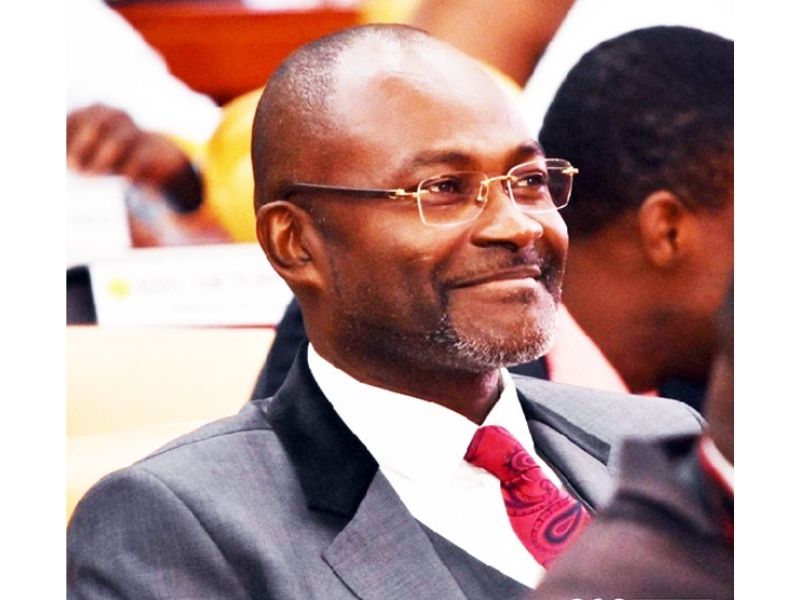
Mr Kennedy Agyapong

Mr Kennedy Ohene Agyapong, Member of Parliament (MP) for Assin Central, has advised the youth in the country to live moderate lifestyles and invest more for the future.According to him, financial investment was an asset as the money invested would grow to cushion the investor in the future.

Mr Agyapong was speaking at a youth forum, organized by him at the Kwame Nkrumah University of Science and Technology (KNUST) in Kumasi.The programme, which targeted the youth, under the theme, “The youth – Our future hope,” was aimed at inspiring them to work hard to become successful people in the society.

According to the MP, government alone could not address all national problems, hence, the need for the youth to be innovative, think outside the box and come up with new ideas to help address the challenges.The MP disclosed that, some of the youth invested in non-sustainable products such as expensive cars, and other items, which could be channelled into other lucrative ventures through investment.Mr Agyapong advised the youth to be honest, hardworking, respectful, save the little they earn and invest more to help them become successful people in the society, adding that, if they listened to his advice, one day they would be somebody.

“In order to be successful in life, there are some five things you need to follow, which include being honest, hardworking, respectful, savings and invest more.As a youth, savings and investment must be something you must pay attention to save any little money you earn, sacrifice today’s entertainment for a better tomorrow,” he advised.


Reverend Ransford Obeng, the General Overseer of Calvary Charismatic Centre (CCC) at Ayigya, encouraged the youth to keep on believing in their abilities and potentials and never give up in life.“I want to use this opportunity to advise all the youth in Ghana to save the little they earn, and keep on believing in their abilities and potentials, never give up in life,” he advised.

GNA


UN Chief Calls for Safe Return for Nigeria’s Displaced

0
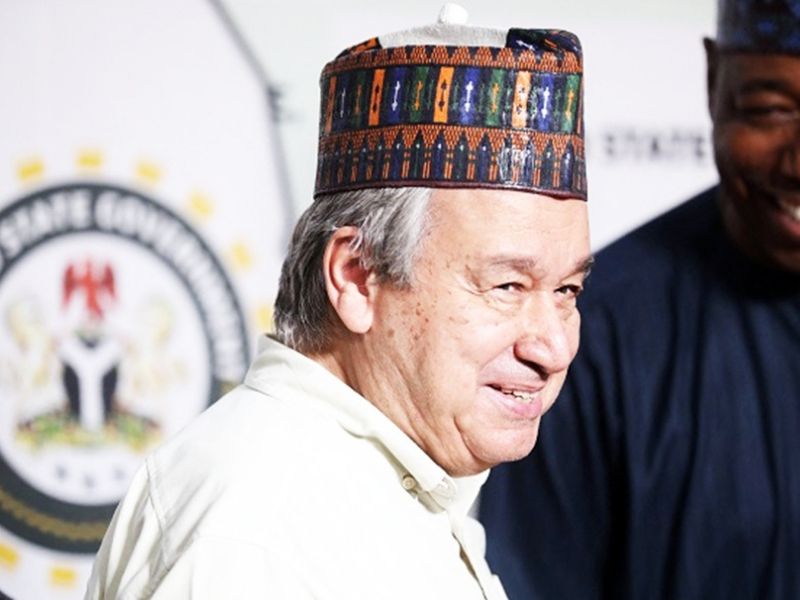
United Nations Secretary General Antonio Guterres Borno

United Nations Secretary-General Antonio Guterres on Tuesday called for the safe and “dignified” return of people displaced by conflict, as authorities close camps and urge people to go back to their communities.

More than 40,000 people have been killed and around 2.2 million people displaced by over a decade of fighting in the northeast between the military and Boko Haram and Islamic State West Africa Province (ISWAP).

During a visit to a camp for displaced people in Maiduguri, Guterres praised the Governor’s efforts for development in Borno State, the epicentre of the conflict since 2009.

Authorities are planning to close all camps for displaced people in Borno by 2026 — but aid agencies are concerned about security and conditions on the ground in some of the communities to which they will return.

“Let’s do what we have to do about humanitarian support to these camps,” Guterres said.

“But let’s try to find a solution for people, and that solution is to create the conditions, security conditions, development conditions for them to be able to go back home in safety and dignity.”

Officials say they only return people to secure areas, with the goal of encouraging the resumption of farming and weaning people off humanitarian assistance.

Guterres also visited a rehabilitation camp for former jihadist fighters and called for more support for efforts to reintegrate them into society.

Credit: channelstv.com

Fayemi joins 2023 presidential race

0
Ekiti State Governor Kayode Fayemi

Ekiti Governor Kayode Fayemi has joined the 2023 presidential race on the platform of the ruling All Progressives Congress (APC).

He promised to adopt wholistic approach in fighting insecurity, provide jobs for teeming youths, broad reforms through diversification and productivity, and expansion of revenue mobilisation.

Fayemi, Chairman of Nigerian Governors’ Forum (NGF), unveiled his manifestos at the Congress Hall,Transcorp Hilton, Abuja, before party members, top government functionaries, diplomats, and the media.

He said:”The die is now cast. I embark on this journey with a determination to play my part to the end.”

Fayemi also promised to tackle the national question by embarking on restructuring.

He said holistic approach will be embraced and institutionalized so that government and its services are brought closer to the people.In his view, decentralisation will enhance unity and stability.

Describing himself as a symbol of hope, he said Nigeria has an opportunity to make choices that will foster peace, unity and national prosperity.

Credit: thenationonlineng.net

Nigeria Remains ‘Dangerous And Difficult’ For Journalists – Report

0
Reporters without Borders Director of Operations and Campaigns, Rebecca Vincent shows the new 2022 World Press Freedom Index map during the RWBs press conference, at Royal Overseas League, in London on May

Nigeria dropped to 129 from 120 in the latest ranking of press freedom across 180 countries.

According to the ranking, which is compiled by Reporters without borders, Nigeria is “one of West Africa’s most dangerous and difficult countries for journalists, who are often watched, attacked, arbitrarily arrested and even killed.”

It noted that while the country has a rich and diverse media landscape, the level of government interferences in the news media is significant.

“It can involve pressure, harassment of journalists and media outlets, and even censorship,” the report noted.

“In 2021, the Peoples Gazette news site was blocked after it revealed that privileges were given to the son of a member of the president’s inner circle. Twitter was suspended for seven months after it deleted one of the president’s tweets. Media outlets were ordered to delete their Twitter accounts as a ‘patriotic gesture’.”

While Nigeria’s constitution protects freedom of expression and opinion, there are many laws that make it possible to obstruct the work of journalists.

“Several very dangerous laws regulating social media have been proposed in recent years, causing an outcry,” the report said.

Credit: channelstv.com

NCC Issues final letters of licence awards to 5G spectrum winners

0
The Nigerian Communications Commission

The Nigerian Communications Commission (NCC) has confirmed the issuance of the final letters of award of the Fifth Generation (5G) Spectrum Licences to MTN and Mafab Communications, winners of the 3.5GHz spectrum auction conducted by the Commission on Monday, December 13, 2021.

Management of the Commission led by its Executive Vice Chairman (EVC), Prof. Umar Garba Danbatta confirmed this to the Board of Commissioners at the Board’s Special Meeting, which took place on Wednesday, April 20 and Thursday, April 21, 2022, where the Board considered updates from Management on the status of the spectrum auction.

With the issuance of the final letters of award of the 5G spectrum and in line with the Auction’s Information Memorandum (IM), the two licensees are now expected to accelerate the deployment of the 5G network that will usher Nigeria into a more robust Fourth Industrial Revolution (4IR) and a more digitised economy.

In line with the terms and conditions of the 5G license, the licensees are expected to commence rolling out 5G services effective from August 24, 2022.

The 5G network, when deployed, will bring a lot of benefits and opportunities that will engender accelerated growth and smart living in the country. The technology is also expected to bring substantial network improvements, including higher connection speed, mobility and capacity, as well as low-latency capabilities.

The Commission is optimistic that effective implementation of the National Policy on 5G will accelerate the actualisation of the national targets in the Nigerian National Broadband Plan (NNBP) 2020-2025, the National Digital Economy Policy and Strategy (NDEPS) 2020-2030, as well as other sectoral policies designed to enhance Nigeria’s digital transformation.

Credit: dailypost.ng

Roe v Wade: US women divided on leaked abortion ruling

0
A US woman

The shockwaves from the leaked Supreme Court draft ruling are reverberating across the US – in both anti-abortion and pro-choice circles.

Since Roe v Wade legalised abortion nationwide in 1973, many women have fought tirelessly to overturn it, believing the life of an unborn child begins at conception.

Others have clung to the hope that America’s highest court might uphold the almost fifty-year-old ruling that allows a woman the right to choose.

We asked six women – three from each side of this debate – how they felt after reading the draft majority opinion that suggests the conservative-leaning court is poised to overturn the national right to an abortion (the court has launched an investigation into the leak).

My first reaction to the leaked document was shock that the Supreme Court appears to be overturning Roe v Wade. As a pro-life conservative, I am used to watching the American political spectrum continuously shift farther away from my values, so I was cautiously optimistic about this apparent progress.

However, I did immediately consider the likelihood of Congress reversing this decision by pushing legislation, or states reacting by passing extreme laws in support of things like late-term abortions.

If Roe v Wade is officially overturned I will have two reactions. First, I would be pleased and grateful at the Supreme Court making a decision that upholds the law and protects the sanctity of life.

Second, I would be relieved that the leak of this document did not successfully pressure the court to change its decision.

That is a direct attack on the Supreme Court’s credibility and impartiality. I am worried to see the Court’s process infiltrated by rogue political agendas.

Credit: bbc.com

US trade deficit hits record as goods imports surge

0
US trade facility

The gap in goods and services trade grew 22.3 percent to $109.8bn, the Commerce Department has said.

The U.S. trade deficit widened to a record in March, reflecting a surge in imports as companies relied on foreign producers to meet solid domestic demand.

The gap in goods and services trade grew 22.3% to $109.8 billion, Commerce Department data showed Wednesday. The median estimate in a Bloomberg survey of economists called for a $107.1 billion deficit. The figures aren’t adjusted for inflation.

In the first quarter, the widening of the trade deficit largely explains the economy’s worst performance since the pandemic recovery, with gross domestic product shrinking at a 1.4% annual pace. That’s because the value of products American businesses and consumers bought from overseas outpaced purchases of U.S. goods and services by other economies.

Net exports subtracted 3.2 percentage points from first-quarter GDP, government figures showed last week.

An improvement in the trade shortfall any time soon will be difficult as U.S. demand exceeds economic activity in many other nations. Severe lockdowns in China to curb the spread of Covid-19 further complicates the trade picture. Activity at some ports slowed sharply, further straining already-tenuous global supply chains.

The value of imports of goods and services rose 10.3% in March to $351.5 billion and exports increased 5.6% to $241.7 billion. Both values were records.

U.S. merchandise imports grew 12% to a record $298.8 billion, reflecting a surge in the value of industrial supplies that include petroleum. Energy prices rallied in the month after Russia’s invasion of Ukraine. Imports of consumer goods, capital equipment and automobiles also increased.

Credit: aljazeera.com

The Ghanaian Chronicle