Home Blog Page 2834

Fix roads in Ashanti or forget about breaking the 8 -Aduomi 

0
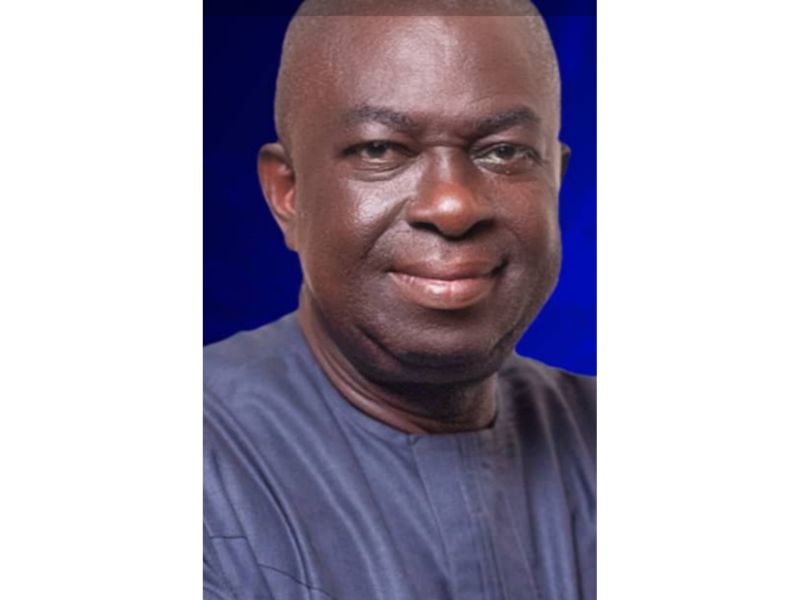
Kwabena Owusu Aduomi - Aspirant

The former Deputy Minister for Roads and  Highways, Kwabena Owusu-Aduomi, has said the New Patriotic Party (NPP) cannot count on the Ashanti Region to “break the 8” in the 2024 General Elections if the roads in the region remain unfixed.

He explained that this situation was irrespective of whoever the party elected as its flagbearer.

According to the defeated Ashanti Regional Chairman-hopeful, the electorate in the region, particularly NPP sympathisers, were not impressed with the performance of the ruling government in addressing their developmental needs.

Speaking to a local radio station in Kumasi, the former Member of Parliament (MP) for the Ejisu Constituency, said: “I toured all the 47 constituencies in the region ahead of the NPP Ashanti Delegates Conference, and the signals were clear; our people are disappointed. This means if elections were to be held today, we may not meet our expectations,” he said.

Mr. Owusu-Aduomi said if the NPP failed to improve on the road networks in the rural areas, which contribute significantly to our electoral votes, such as Manso Adubia and Kwabre, among others, “we may not even have the courage to campaign for their votes.”

The former Ejisu MP suggested that the re-elected Regional Chairman, Wontumi, and the Regional Minister, Simon Osei Mensah, must develop a strategy to address the road networks in the region, which remained a critical need of the people.

He also suggested that the party and government needed to team up with the constituency executives to identify critical roads that needed immediate attention in the constituencies, since the government could not fix every road in the region, otherwise, “we (NPP) should forget about breaking the 8,” he warned.

Meanwhile, Kwabena Owusu-Aduomi has pledged his unflinching support for the re-elected Regional Chairman, Bernard Antwi Boasiako, to win the 2024 elections.

“It was my wish to lead the party into Election 2024, but the delegates thought otherwise. All the elected members are capable of delivering the success of the party and need the support of the entire membership of the party. I’m committed to supporting them in any way I can,” he pledged.

ISSER launches Initiative to deepen digital financial inclusion

0
Professor Peter Quartey, Director, ISSER

The Institute of Statistical, Social and Economic Research (ISSER), University of Ghana has launched the Retail Finance Distribution (ReFinD) Research Initiative on deepening digital financial inclusion among the vulnerable.

Funded by the Bill and Melinda Gates Foundation, the five-year project which started in November 2021, will also focus on women’s access to financial services in Low- and Middle-Income Countries (LMICs), poor households, Small and Medium Enterprises and other retail businesses.

The initiative, which cost about US$5 million, will engage researchers from the Global North and the Global South and seek to foster future partnerships and capacity building through funded research. ISSER will coordinate the project, including recruiting, managing staff, and providing project leadership.

The initiative aims to demonstrate both how to effectively expand the reach of agent networks through public policy and commercial solutions that can plausibly be scaled up, and to advance public knowledge about the structural constraints limiting agent networks globally.

Professor Peter Quartey, Director, ISSER, said the project was a platform for sharing research findings, news and information, as well as resources for researchers, industry players, policymakers, and civil society organizations interested in collaborating on the initiative.

He said the ReFinD research initiative would see qualified research teams, including researchers based at ISSER and those in other locations in Ghana and across the globe, implement competitively selected projects on how to expand digital finance, especially retail distribution networks.

Recommendations and associated outputs, the ISSER Director further stated, would be aimed at promoting access to finance among marginalized groups like women and people experiencing poverty with focus on the research initiative, along with its potential to advance the knowledge and skills of researchers, compelling elements that strongly supported ISSER’s vision.

Professor Francis Annan, Scientific Co-Chair of the Project, speaking on the Framework Paper, said markets for digital financial services (DFS), particularly mobile money and agent banking had proven poverty alleviating benefits and were growing rapidly in LMICs and being transformed by several digitization initiatives.

However, he said, it turned out that retail agent networks were necessary building blocks to a robust digital financial ecosystem due to their ability to convert money between physical cash and digital currency and serve as onboarding channels for a broader set of digital financial tools and services.

He said the ReFinD project, as part of public and commercial solutions, would work to expand the digital finance retail agent network especially in rural areas by relaxing registration requirements for agents and creating a tiered agent registration system.

Also, he said, it would enable new rural agents’ business models, including traveling agents, agents embedded in nodal infrastructure like health clinics and subsidising the start-up capital for new agents in low transaction volume regions.

Prof. Annan expressed optimism that the research would advance research and provide rigorous evidence that would inform policy and practice about digital financing retailing in LMICs. Those, he explained, called for rigorous experimental variation in the market to generate actionable evidence and to justify commercial interventions, policies, and regulations.“But pursuing these require meaningful partnerships between academic researchers and various actors in the DF marketplace service providers, businesses, lenders, regulators, and practitioners,” he said.

Prof. Ernest Aryeetey, former Vice Chancellor, University of Ghana, Legon, and a member of Policy Committee of the Project, told the Ghana News Agency the project had been designed to ostensibly deepen digital financial inclusion among the vulnerable and allow for Ghanaian researchers to work with the world best researchers to enhance their competitiveness. He expressed optimism that policy makers would be in readiness for the outcomes to shape policy, reap the dividends therein and promote the development of the country.

Mr. Seth Garz, Senior Programmes Office, Bill and Melinda Gates Foundation, said as part of efforts to enhance inclusive digital financing, his outfit was undertaking programmes to play a catalytic role in broadening the reach of digital payment systems, particularly in poor and rural areas, and expanding the range of services available on those systems.

By James Amoh

Source: GNA

Ghana needs food and seed sovereignty

0
OPINION

The Peasant Farmers Association has warned that the food prices are likely to keep increasing unless the government intervenes. The World Bank has also raised alarm.

There is “unavailability” of agro-inputs – synthetic fertilizer, “certified” seeds, herbicides etc. As a consequence, it is imagined there will be shortage of food. The Chamber of Agribusiness recently called for the formation of a food security council. A misdiagnosis of the problem can lead you to think symptom is cause.

What has caused the multiple challenges bedeviling Ghana’s food and agricultural system? The causes are complex. A significant aspect, but often under-analyzed, is the persistent pursuit of the industrial agriculture model. Expanding monocultures, intensive use of petro-chemicals, and over-reliance on off-farm inputs are fundamental characteristics of industrial agriculture.

The currently unfolding challenge in accessing imported seeds and synthetic fertilizer is a tragic example of the over-reliance on off-farm inputs. Seeds are a pertinent example. Historically, all seed was farm saved.  Seeds were not an off-farm input to be purchased. To understand how this began to change read Kloppenburg’s First the Seed: The Political Economy of Plant Biotechnology.

An agro-inputs fair took place in Wa, Upper West Region, last week. Seeds were on sale? The seed market in Ghana, as across much of Africa, is in the crosshairs of transnational seed companies. Selling seeds is big business with big profits, and largely at the expense of small holder farmers.

To colonize Ghana’s food system requires creating dependency among its farmers on so-called high-yielding varieties and/or on genetically modified seeds (GMOs), which require ever-increasing quantities of synthetic fertilizers to enable high yields. And colonization always required a comprador class. The Plant Breeder’s Bill became law in 2020.

Seemingly copied and pasted from the International Union for the Protection of New Variety of plants (UPOV) guidelines, the law is designed to facilitate the colonization of Ghana’s food system, by enabling the privatization of biodiversity, including seeds. That farmers in Ghana are currently facing challenges accessing seeds should not surprise anyone.

The call for a “food security council” is unsurprising. Since 1996, La Via Campesina, the largest peasant movement in the world, more than 200 million strong, rejected food security and demanded food sovereignty.

La Via Campesina defines food sovereignty as the right of people to healthy and culturally appropriate food produced through ecologically sound and sustainable methods, and their right to define their own food and agriculture systems. It puts those who produce, distribute and consume food at the heart of food systems and policies rather than the demands of markets and corporations.

Food sovereignty is fundamentally different from food security. For example, the latter will allow, even encourage a country to import the food it needs. The obvious example is Ghana’s importation of rice. Food security enables dependency on externally procured seeds.

Food sovereignty advances seed sovereignty — control of seeds firmly in the hands of family farmers, who feed the majority of the people on the planet. Seed sovereignty recognizes the central role of these self-provisioning farmers in the preservation and development of seeds uniquely adapted to specific environmental context and the socio-cultural needs of peoples.

Seed sovereignty values biodiversity, so it is keen to safeguard indigenous seeds and open-pollinated varieties. Seed sovereignty rejects the privatization of seeds and plant genetic material. Food and seed sovereignty both require fundamental change to our current food system.

The current food and agricultural challenges make clear that structural transformation is necessary.  If you want to guarantee farmers will have seeds for cultivation, pursue seed sovereignty. Strengthening existing community-level seed production is the backbone of national seed sovereignty.

It has been long neglected. But do not be mistaken, seed sovereignty is not the production and control of seeds by local seed companies or transnational ones. For seed sovereignty, Ghana needs a plethora of farmer-managed seed systems and seed-saving cooperatives, which keeps control of seeds in small farmers’ hands.

Ghana also needs a progressive new policy that defends the right to food and small-holder farmer’s rights. These rights must be prioritized over the profits of agribusiness.

The current problems with the inability to access off-farm inputs –synthetic fertilizers, herbicides, and fungicides – are not best resolved by reliance on global markets.

This should be patently obvious now. Rather, guided by agroecology – the application of the science of ecology to the management of agricultural systems – farmers can rebuild soil health and fertility, increasingly utilizing and replenishing on-farm resources.

The objective is to reduce dependency of external inputs that also damage the environment. This transition to agroecology can enable more nutritious foods, more biodiversity, and more climate-resilient agriculture, more equitably organized to the benefit of farmers and people.

The anticipated food crisis requires changes. The goal-journey should be food sovereignty. This requires a transition to agroecological agriculture at scale and includes building national seed sovereignty. The pursuit of food sovereignty will take growers and eaters to work together to decolonize Ghana’s food system.

By Chaka Uzondu  

Source: myjoyonline.com

Two granted bail Zamramaline Shooting Incidence

0
Court

Two persons arrested over the Zamramaline Shooting incident have been granted bail when they appeared before an Accra Circuit Court. The two are: Godfred Amegbor, a 29-year-old mobile money vendor and Offei Darko, a 28-year-old musician.

They are jointly being held for abetment of crime and trespass.  Darko is, however, facing three counts of causing harm and use of offensive weapons. They have pleaded not guilty. The two accused persons have been granted a bail in the sum of GHS100,000.00 each with two sureties.

The Court ordered that one of the sureties should be justified and one of the sureties should be a civil servant earning not less than GHS2, 000.00. Isaac Abbey a 37-year-old Military personnel, charged with protection of land and interest in land, carrying offensive weapon and trespass, however, did not turn up in court.

Prosecution informed the Court that a check at the military command revealed that the command was yet to release Abbey. The Court has ordered prosecution to write officially to the military command to release Abbey so he could appear before it at the next adjourned date. The Court presided over by Mr Sam Bright Acquah adjourned the matter to June 21, 2022.

Prosecuting Deputy Superintendent of Police (DSP) Augustus Yirenkyi told the Court that Abbey was a military officer with the Education Unit at Teshie, Darko was a musician, Amegbor was a mobile money vendor at Lapaz, Accra and Yahaya Tamimu, aged 32, was a trader.

The Prosecution said on June 4, 2022, Amegbor who was in a military uniform captured on video posed as military officer stationed at the Education Unit in Teshie and Darko joined Abbey in his Ford SUV vehicle to a construction site at Zamramaline, near Dansoman in Accra, for an illegal demolishing exercise.

Mr Yirenkyi said they met a crowd including victims Faisal Khalid Azuma and Ali Hashimiru, who was currently on admission at the Korle-Bu Teaching Hospital suffering from gunshot wounds.

The Prosecution said the victims confronted the accused persons and demanded of a court warrant that allowed them to demolish the property on the land and that generated a heated argument between the two parties.

Mr Yirenkyi said Darko who was seen wielding a gun in a video aimed and shot at the victims which led to Azuma sustaining injuries on his left ankle, Hashimiru to his stomach, a 13-year-old Fawzan Inusah, a passerby to his buttocks and three others who were part of the crowd. The Prosecution said Hashimiru and three others were rushed to the Korle-Bu Teaching Hospital.

Mr Yirenkyi said three were treated and discharged but Hashimiru was detained due to the severity of his injuries, whilst the 13-year-old Inusah was sent to Shukura Community Clinic where he was also treated and discharged.

After the shooting, suspect Abbey arrested the injured and brought him to the Dansoman Police Station and lodged a complaint of causing damage to his vehicle where the accused was arrested and detained for investigation. The Prosecution said Darko and Amegbor were later arrested by the youth of Zamramaline and brought to the station after enduring severe beating.

Mr Yirenkyi said victim Azuma and the two accused persons were sent to the Dansoman Polyclinic where they were treated and discharged.

During investigations, the accused persons alleged that the gun was taken from them by the crowd that assaulted them. The Prosecution said the case was under investigation.

By Emelia Nkrumah

GNA

Sekondi-Takoradi residents unhappy with proposed tariff increase

0
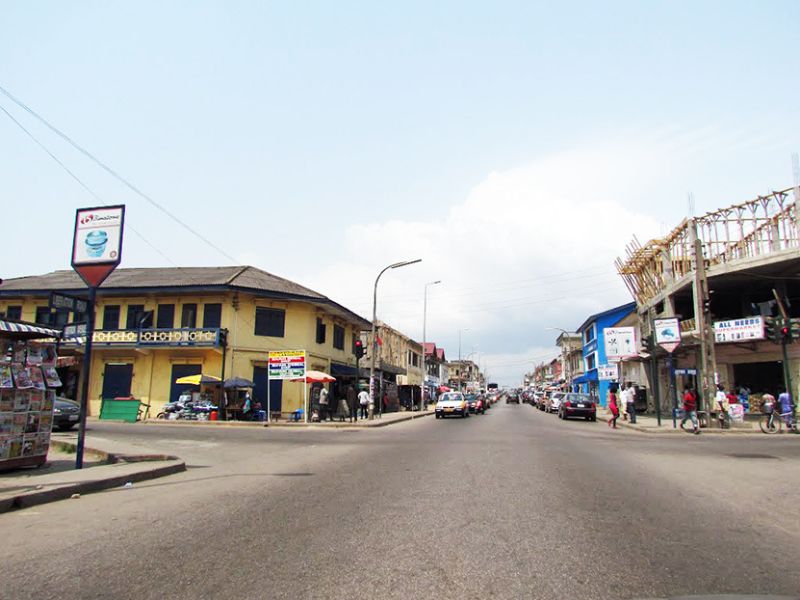
Takoradi where the residents have kicked against the increment

A cross-section of the public who participated in the Public Hearing on the 2022-2027 multi-year major utility tariff review have expressed resentment about the proposals by the companies.

The public was not enthused by the level of service delivery in terms of quality, efficiency and effectiveness, as well as prompt response to concerns or challenges encountered by customers of both the Ghana Water Company and the Electricity Company of Ghana.

The Public Hearing was organised by the Public Utilities Regulatory Commission (PURC) to educate the residents of the Sekondi-Takoradi Metropolis on technicalities in fixing tariffs and build consensus for some upward adjustments to handle operational costs.

Mr Thomas Cudjoe, a Lecturer at the Takoradi Technical University, was worried about the absence of pipe-borne water for almost six months in the Airport Ridge residential area and Windy Ridge areas and, therefore, proposed only a 10 per cent upward adjustment of tariffs.

Mr Thomas Evans Adjei, the Regional Chairman of the Ghana Electrical Contractors Association, called on the PURC to conduct regular follow-ups and engage citizens regularly to appreciate their concerns and not only wait to engage them when they want to increase tariffs.

Madam Naana Barton-Oduro, the Assembly member for the Railway Port Electoral Area, was unhappy that residents paid for services without the benefits they deserved and asked the two companies to up their game if they wanted an upward adjustment of tariffs.

Others also lambasted the entities for operational losses, attributing it to delayed responses and other operational mishaps.

Meanwhile, Dr Ishmael Ackah, the Executive Secretary of the PURC, said the overall objective of the engagement was to ensure that consumers were given the best of services.

He said the tariffs would be set on prevailing macroeconomic indicators and the financial viability of investment in line with the Commission’s templates and guidelines.

He said the engagement was also an opportunity for the citizenry to “influence the regulatory regime.”

Ms Sylvia Nushie, the Management Information System Manager of the ECG, touted the massive injection of capital into their operations and the plans of expansion and called on Ghanaians to bear with them.

She also urged the Bank of Ghana to deal with the depreciation of the cedi and government and public support to mitigate the increasing debt burden, which currently stood at GHC6.2billion.

Mr Seth Eric Atiepa, a Director of the Ghana Water Company Limited, noted some construction works and projects to boost production amid the growing cost of doing business and the need for stakeholders to share in the load.

He said the major problem of the company was the activities of illegal miners which had gone a long way to increase their production cost since the company had to use more chemicals to treat raw water, which is heavily polluted

Mr Ishmael Edjekumhene, Chairman of the Technical Committee of the PURC, acknowledged the need for improvement and prayed that by the close of June some concrete proposals would be established for use.

Nana Kobena Nketsia V, the Paramount Chief of Essikado, who chaired the engagement, said water continued to be an essential commodity that must be safeguarded by all.

He said social justice demanded that abusers of such natural heritage were dealt with, adding, “we all have a share in these resources ‘. GNA


Why I shunned APC presidential primary – Ex-minister, Nwajiuba

0
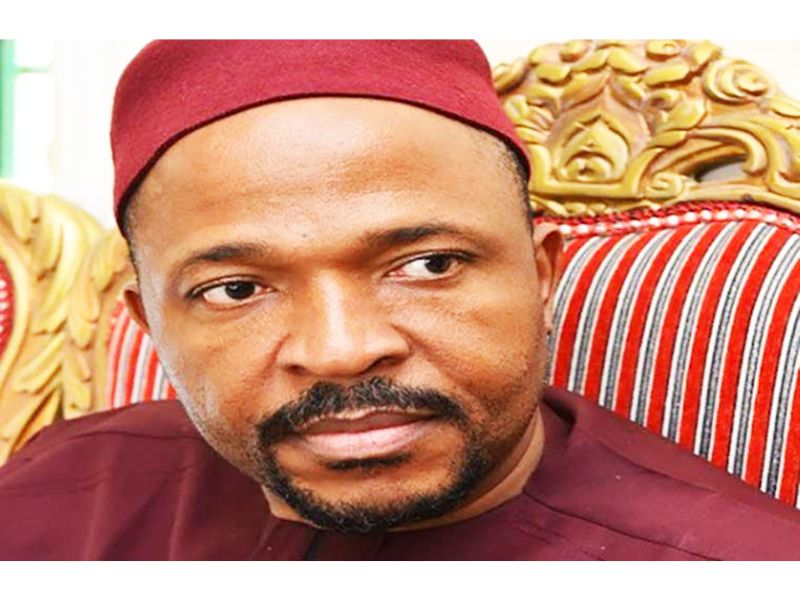
Ex-Minister, Emeka Nwajiuba

The immediate past Minister of State for Education and presidential aspirant on the platform of the All Progressives Congress, Chukwuemeka Nwajiuba, has revealed the reasons behind his absence from the party’s ongoing presidential primary.

Aside from being among 28 presidential aspirants who bought the presidential nomination form, he was also the first cabinet member to resign his position in pursuing his ambition.

Giving his reasons on Wednesday in a statement he personally signed and titled, “Statement of Appreciation and thanksgiving”, the former minister said alleged “marginalization of South-East” was responsible for his absence.

The statement read:

I am issuing this statement after a careful review of our campaign for the presidential ticket of the APC.

First, I thank our Almighty God, creator and giver of all things, for the gift of everything we are or have. I then will thank all of the many persons, those afar and those around, who through personal services, prayers, texts, advise, financial gifts, donations, and numerous other means, encouraged me.

I thank my family, who have endured my incessant derision of their preference for a less public and risky, lifestyle.

I thank all my friends, well-wishers and even those who may not wish us all that well, but have played their parts in the National discuss.

I would urge that no one should be despondent or disappointed. My approach to the Nigeria presidency is hinged on being able to present a progressive vision of an inclusive, united and focused brand of energy to transform Nigeria into a wholesome economic powerhouse, whose citizens will be better secured to live more fulfilling.

I choose to take the tedious path of following the law, meeting requirements and staying disciplined, in other to sell a paradigm of same.

Credit: punch.com

NLC condemns employers that violate labour standards

0
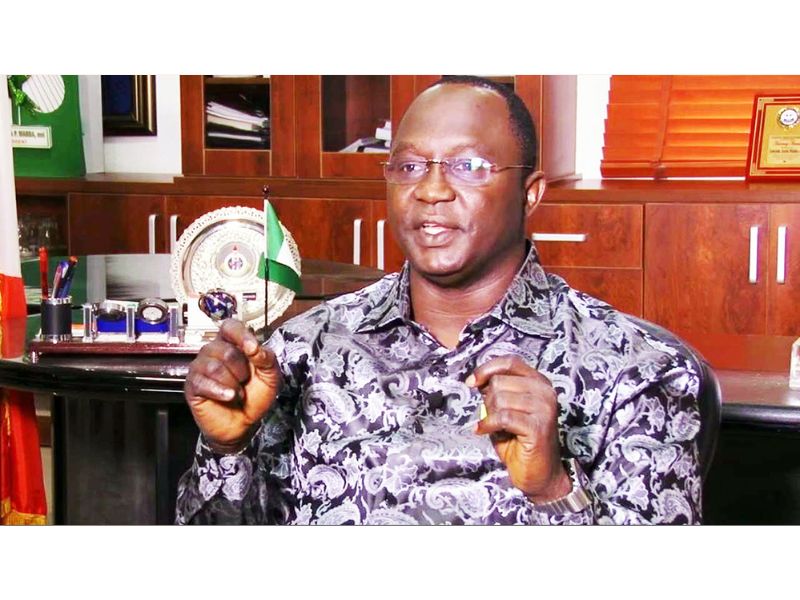
National Labor Congress, Ayuba Wabba

The Nigeria Labour Congress (NLC) has condemned those violating international labour standards in different countries and workplaces.

The NLC President, Mr Ayuba Wabba, said this while making a presentation at the ongoing 110th Session of the International Labour Conference (ILO) on Wednesday in Geneva, Switzerland.

This year’s conference had:” Social Justice, decent work” as its theme.

Wabba was reacting to the report of the Director-General of International Labour Organisation (ILO), Mr Guy Ryder.

According to him, we are appalled and opposed to the growing resistance against trade unionism through obstructions of freedom of association, freedom to organise, and freedom to collectively bargain.

“The right to strike and the irresponsible violation of collective bargaining agreements especially by multinational companies is appalling,’’ he said.

He noted that globally, workers are concerned about the rise of fascism, ultra-nationalism, unilateralism, irresponsible capitalism, and despotism.

He noted that this had threatened not only the fabrics of harmonious industrial relations but also the foundations of global peace and our collective survival.

Wabba further noted that the aggression by Russia against Ukraine had turned about seven million Ukrainians into refugees, maimed and killed thousands more.

According to him, we should be worried that the war in Ukraine almost brought the world to the doorsteps of a nuclear winter.

“Currently, the global food and energy supply chain has been severely serrated by this war leading to hyperinflation, hunger and destitution in many countries.

“ It is workers and their families that suffer most during senseless wars like this.

“The working people of the world unequivocally denounce the ongoing human tragedy in Ukraine.

“We stand in solidarity with the workers and people of Ukraine. We demand a stop to the aggression now. We implore Russia to embrace dialogue, ‘’he said.

Credit: guardian.com

Building collapse claims life of construction worker, another injured in Kano

0
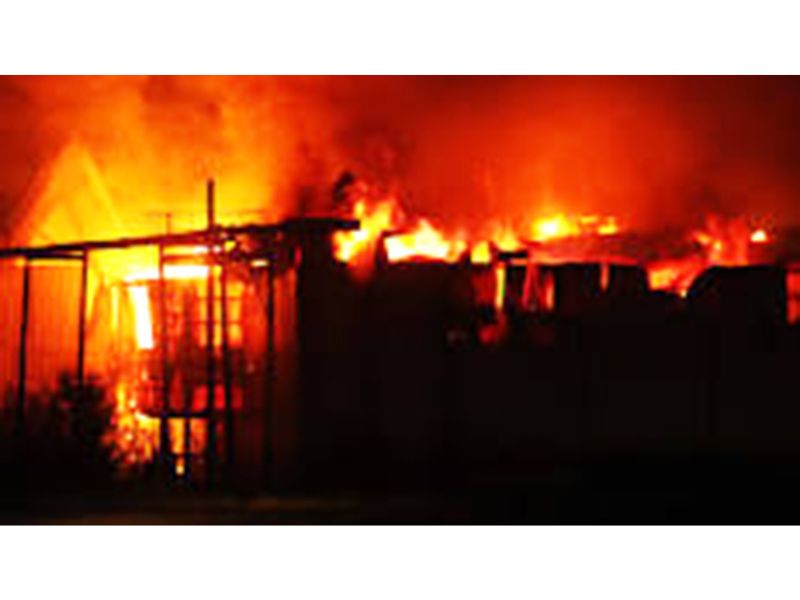
The building that caught fire

A collapsed two storey building in Kanti Kwari textile market in Kano State on Tuesday claimed the life of one construction worker, Abdulkadir Nasiru, 20-year-old.

It was gathered that Nasiru’s co-worker, Naziru Shafiu survived from the incident after he was rescued alive from the building which was under construction.

Confirming the incident to Vanguard, the spokesperson of the Kano State Fire Service, Saminu Yusif attributed the cause of the incident to the use of substandard building materials.

According to him, “we received a distress call around 12 noon on Tuesday about the incident.

“A two storey building under construction collapsed in Unity road, Kantin Kwari market.

“Two persons were trapped inside the building. One, Abdulkadir Nasir, 20-year-old was rescued alive while the other, Naziru Shafiu, 30-year-old was recovered dead. The corpse was evacuated to Nasarawa specialist hospital.

“The ground and first floor of the building have been completed but not yet plastered and not in use while work was ongoing on the last floor before the incident happened.

“The cause of the incident is use of substandard building materials,” Yusif however stated.

Source; vanguardngr.com

Peter Obi, our Presidential candidate, LP affirms

0
Presidential Candidate, Peter Obi

Labour Party, yesterday, debunked rumour making the round that it conducted parallel Presidential primaries that produced a factional Presidential candidate, in the person of one Samson Uchenna.

The party, in a statement issued by the Acting National Publicity Secretary, Abayomi Arabambi Oluwafemi and made available to newsmen in Abeokuta, the Ogun State capital, noted that the party never had parallel primaries.

Arabambi argued that though Uchenna was a Presidential aspirant on the platform of Labour Party, he withdrew his nominations to support Mr Peter Obi voluntarily.

The statement read: “the attention of Labour Party has been drawn to the criminal activities of PDP Vanguard against the Labour Party presidential candidate, Mr Peter Obi by falsely claiming that our former presidential aspirant by the name, Samson Uchenna has emerged as a factional presidential candidate on the platform of Labour Party.

“Labour Party here states categorically that this Samson Uchenna is not in any way our Party’s  presidential candidate. He is an aspirant on the platform of Labour Party who withdrew his nominations to support Mr Peter Obi voluntarily.

“The PDP Vanguard as an agent of the Peoples Democratic Party, PDP, is hereby advised to stay on the path of professionalism and avoid taking sides with faceless people who have no bearing with the legitimate political activities of the Labour Party (LP) on very weight issues as the transparently free, democratically credible, free and fair presidential primaries that brought in Peter Gregory Obi, the former Governor of Anambra State as the Presidential candidate of the Labour Party (LP) in the May 30, 2022 primaries that took place in Asaba, the Delta State capital in South Nigeria.

Source: vanguardngr.com

Kofi Sarpong attains new rank in Ghana Police

0
Kofi Sarpong

Ghanaian Gospel Musician, Kofi Sarpong who doubles as a public servant has been promoted in the Ghana Police Service where he is a full time employee.

The ‘AyeyiNdowm‘ hitmaker is now an Assistant Commissioner of Police with the Ghana Police Service.

At the time of his breakthrough in the music industry, he was a Deputy Superintendent of Police (DSP) which influenced him to add it to his stage name, making it DSP Kofi Sarpong. In an interview to announce a new stage name following promotion of his rank, the Police cum Musician mentioned that he now wants to be known as Kofi Sarpong because adding his ranks to his stage name will mean that he has to change his alias anytime he is promoted.

Announcing the news to his followers via a post on Facebook, the elated Kofi Sarpong wrote;“The God we serve never fails us, He makes all things beautiful ,thank u God for this promotion and new journey in my life I AM ACP KOFI SARPONG stay safe for Ghana.”

The Ghanaian Chronicle