Former Vice President Atiku Abubakar has accused the Senate of deliberately frustrating efforts to amend the Electoral Act 2022, warning that continued delays could undermine the credibility of the 2027 general elections.
In a statement shared on his X (formerly Twitter) on Thursday, Atiku described loopholes in the current Electoral Act as a major setback to the 2023 elections.
He argued that they enabled widespread electoral malpractice and made it difficult for petitioners to prove their cases in court.
“A major setback to the 2023 elections is the loopholes in the Electoral Act 2022 that paved the way for the brazen rigging of that election, and the near-impossibility of petitioners to advance their cases in the courts,” he said.
Atiku stressed that urgent legislative action was required if similar challenges were to be avoided in future polls, particularly the 2027 general elections.
“It is imperative that if the mistakes of the 2023 election are to be corrected, the legal instrument for the conduct of the 2027 and subsequent future elections needs to be reviewed,” he added. Credit: channelstv.com
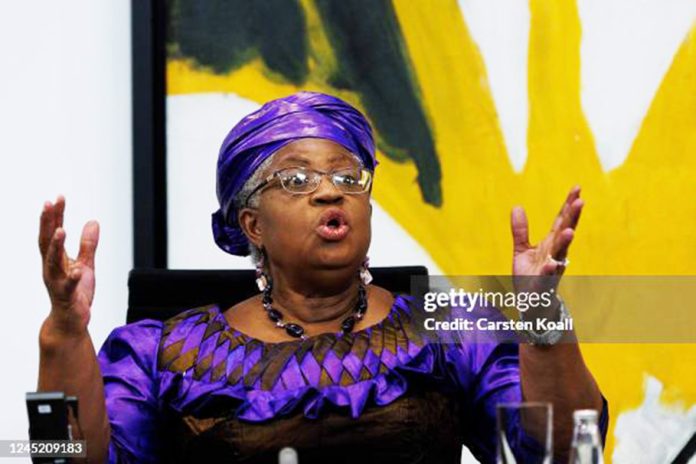
Director-General of the World Trade Organisation, Dr Ngozi Okonjo-Iweala
The Director-General of the World Trade Organisation, Dr Ngozi Okonjo-Iweala, has advised the Nigerian government to deliberately target global investors and supply chain relocations to reduce import dependence, deepen manufacturing, and drive job creation.
She made the remarks on Wednesday at Nigeria House during the ongoing World Economic Forum in Davos.
During a panel discussion titled “From Scale to Capital: Financing Nigeria’s Role as Africa’s Digital Trade and Infrastructure Anchor,” the WTO Chief stressed that rising geopolitical tensions, particularly between the United States and China, have accelerated supply chain diversification.
Also present on the panel was the Managing Director of the Bank of Industry, Dr Oludapo Olusi.
“Firms are increasingly adopting China+1 sourcing strategies to reduce single-country risk, although China remains deeply embedded in many global value chains.
“In addition, tariffs and trade restrictions have incentivised companies to reconsider reliance on dominant suppliers, prompting the relocation or diversification of production hubs”, she said.
According to her, these disruptions present an opportunity for Nigeria to capture a share of global supply chains.
She, however, noted that this would require aggressive marketing of the country to prospective investors.
She said, “As you said, some good reforms are being pursued right now. I think they need to yield to job creation. That was what I said to His Excellency—that we need to move from stabilisation to job creation, because that is where we are lacking. It is not going to be overnight, but they are moving in the right direction. What I think they need to do is map where the opportunities are.
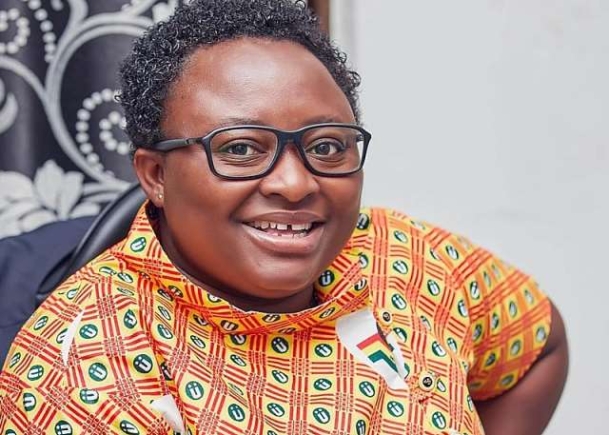
Former Deputy Executive Director,Mrs. Gifty Oware-Mensah.
The Attorney-General has called its first witness in the prosecution of former Deputy Executive Director of the National Service Authority (NSA), Gifty Oware-Mensah, over an alleged GH¢38 million financial loss to the state.
The prosecution’s first witness (PW1), Gilbert Sebe-Yeboah, was led in evidence by the Director of Public Prosecutions (DPP), Yvonne Atakora Obuobisa, before the Criminal Division of the High Court in Accra, presided over by Her Ladyship Justice Audrey Kocuvie-Tay.
PW1 told the court that he knows the accused person and confirmed that he had caused a witness statement to be prepared for him by the Republic, which he subsequently adopted as his evidence-in-chief.
Documents attached to the statement are yet to be admitted.
According to the witness, his unit received a letter dated October 24, 2022 titled “Acquisition of Household Items” from the National Service Authority, signed by Gifty Oware-Mensah, in her capacity as Executive Director.
He explained that the letter had an attachment listing purchasable household items grouped into three options, described as “bouquets” from which National Service Personnel were to select.
The letter was admitted into evidence without objection as Exhibit A, while its attachment was admitted as Exhibit A1.
PW1 further testified that following approval by the credit committee, a Master Agreement dated February 20, 2023, was executed between the Agricultural Development Bank (ADB) and the NSA. He stated that the accused person signed the agreement on behalf of the NSA, while he signed for ADB. The agreement was admitted without objection as Exhibit B.
Additionally, a copy of the statement of account of the National Service Scheme covering January 2017 to March 1, 2025 was tendered and admitted as Exhibit C.
Earlier in the proceedings, counsel for the accused, Gary Nimako Marfo, raised a constitutional objection to a previous court order, directing the accused person to file the names and addresses of witnesses she intends to call.
Counsel argued that the order, grounded in the 2015 Practice Direction on Disclosures and Case Management in Criminal Proceedings, contravenes Articles 19(2)(c) and 19(10) of the 1992 Constitution, which protect the presumption of innocence and the right against compulsion to testify.
Justice Kocuvie-Tay noted the direction of the submissions and advised defence counsel to formally put the court on notice to enable it deliver a ruling on the constitutional issue. The court subsequently ordered that the trial should proceed.
Gifty Oware-Mensah has pleaded not guilty to multiple charges, including willfully causing financial loss to the state, stealing, money laundering and using public office for profit.
The case has been adjourned to January 29, 2026 at 12 noon for continuation.
Fifty-two (52) newly appointed Circuit Court Judges have been sworn into office by the Chief Justice, His Lordship Justice Paul Baffoe-Bonnie, at a ceremony held on Thursday, January 22, 2026 at the Main Auditorium of the Law Court Complex in Accra.
The judges comprise forty (40) Magistrates promoted from the Magistracy and twelve (12) lawyers drawn from private legal practice and other areas of legal service. All 52 judges were present to take the oath of office.
Addressing the gathering, the Chief Justice cautioned the judges that their appointment was not merely a personal achievement, but a public trust reposed in them by the people of Ghana through the Constitution.
“Wear the robe with humility. Uphold the law with courage. Serve the people of Ghana with honour,” he charged.
Justice Baffoe-Bonnie underscored the critical role of the Circuit Court within Ghana’s judicial architecture, describing it as often the first significant point of contact for many citizens seeking justice.
He noted that Circuit Courts handle serious criminal matters and complex civil disputes that directly affect lives, livelihoods and social stability.
“The decisions you make will shape lives, families, businesses and communities. You must therefore approach your work with humility, diligence and an unwavering sense of responsibility,” he said.
The Chief Justice emphasised that the oath taken by the judges was a solemn covenant with the Constitution, the Judicial Service and the Ghanaian people, and urged them to dispense justice fairly, courageously and without fear or favour.
He outlined integrity, competence and independence as the three enduring pillars that must guide their judicial work.
Judges, he said, must be beyond reproach in both public conduct and private lives, continuously update their legal knowledge, and remain firm in the face of pressure from litigants, lawyers, public opinion or persons in authority.
Justice Baffoe-Bonnie also pointed out the growing importance of Information and Communication Technology (ICT) in justice delivery, urging the judges to fully embrace digital systems such as case tracking, electronic recording of proceedings and digital cause lists to enhance efficiency, transparency and access to justice.
“Justice delayed is justice denied,” he reminded them, stressing the need for judicial efficiency, punctuality and effective case management without compromising the quality of decisions.
Welcoming the judges from private legal practice, the Chief Justice urged them to adapt quickly to their new role as impartial arbiters, noting that judicial authority is exercised through restraint, fairness and fidelity to the law, not advocacy.
To the promoted Magistrates, he described their elevation as recognition of years of dedicated service, often under challenging conditions, but cautioned that higher office comes with greater responsibility and narrower margins for error.
Also speaking at the ceremony, the President of the Ghana Bar Association (GBA), Efua Ghartey, admonished the judges to perform their duties with dignity, noting that the judicial role dates back to medieval times and is also rooted in biblical principles.
She said the Bar would continue to respect and strengthen its relationship with the Judiciary to achieve the justice the people desire.
The GBA President expressed the hope that the sanctity, peace, fairness and independence of the courts would be preserved and protected from interference from all quarters.
“The Bar has long wanted you in place, sitting in your posts today, and we are glad that it has happened,” she said.
The ceremony was attended by Justices of the Supreme Court and Superior Courts of Judicature, the Judicial Secretary, the Attorney-General and Minister for Justice, leadership of the Association of Magistrates and Judges of Ghana, members of the Ghana Bar Association, judicial staff, families of the judges and members of the media.
Heavy metal contamination once considered a marginal environmental issue is emerging as a serious public health threat in Ghana, with far-reaching implications for child development, maternal health, food safety, and long-term national productivity.
Recent investigations by the Food and Drugs Authority (FDA), supported by UNICEF and reinforced by environmental health studies from Pure Earth Ghana and the Environmental Protection Authority (EPA), show that hazardous metals are entering the Ghanaian food system through cookware, crops, water, and food processing equipment.
Dr. George Oduro
At the centre of concern are metals such as lead, mercury, arsenic, cadmium, chromium, and nickel highly toxic substances known to damage the brain, kidneys, blood, immune system, and DNA even at low levels of exposure. Public health experts warn that the cumulative effect of these metals, rather than sudden poisoning events, poses the greatest danger.
The alarm was raised after UNICEF-backed studies detected elevated blood lead levels among Ghanaian children, prompting the FDA to investigate possible sources of exposure. According to the FDA’s Deputy Chief Executive for the Food Division, Mr. Roderick Daddey-Adjei, the findings revealed a disturbing link between everyday consumer products and long-term health risks.
“Lead is a chemical that in very small quantities can be detrimental to health. Chronic exposure poisons the blood and leads to long-term complications, especially in children,” Mr. Daddey-Adjei
Children are particularly vulnerable because their bodies absorb lead more efficiently than adults, and their developing brains are far more sensitive to neurotoxic damage. Even low-level exposure has been associated globally with reduced intelligence, learning difficulties, behavioural disorders, and lower lifetime earnings—outcomes that quietly erode a nation’s human capital.
Multiple Pathways into the Food Chain
In an effort to trace exposure pathways, Mr. Adaddey-Adjei told The Chronicle in an interview that the FDA and UNICEF analysed a broad range of consumer and environmental samples, including children’s cereal mixes, spices such as turmeric, fruits, vegetables, cosmetics, and bentonite clay locally known as Ayimol. Although Ayimol is not classified as food, its widespread consumption by pregnant women made it a critical focus of the investigation.
Cookware popularly known in Ghana as Dadesen
The results were troubling. Some cereal products commonly consumed by children recorded contamination levels regulators described as “not encouraging,” raising immediate concerns about food safety and early-life exposure.
The studies found that heavy metals enter the food chain through interconnected routes that span agriculture, processing, and household use. Crops grown on polluted soils—particularly in areas affected by illegal mining and industrial activity—absorb metals that persist through harvest and consumption.
Contaminated water used for irrigation further compounds the problem, while food processing introduces additional risks through worn grinding machines, locally known as nikanika, and roasting equipment that shed metal particles into food.
Dadesen Cookware: A Household-Level Exposure Risk
Yet one of the most significant and preventable exposure routes lies inside the home. Locally manufactured aluminum cookware, popularly called Dadesen, is often produced using scrap metals such as car batteries and radiator parts that contain high concentrations of lead. Under high cooking temperatures, these metals can leach directly into food.
“When these pots are exposed to heat, metals leach straight into what people eat,” Mr. Daddey-Adjei warned. “Even if your grains are clean, once the cookware is contaminated, the food becomes contaminated.”
Peer-reviewed studies from Ghanaian universities and international institutions consistently support this concern, showing that artisanal aluminum cookware can release dangerous amounts of lead, particularly under acidic cooking conditions common in local diets.
Dadesen Cookware: A Household-Level Exposure Risk
Assessing the scale of exposure nationwide remains difficult because risk is unevenly distributed. Communities located near industrial zones, artisanal mining areas, and e-waste sites face significantly higher exposure.
In Agbogbloshie, a suburb of Accra, once described as the world’s largest e-waste dump, previous EPA studies detected heavy metals in soil, water, air, and even breast milk—clear evidence that exposure begins early in life and can persist across generations.
Ghana’s Public Health Act empowers the FDA to regulate heavy metals in food and consumer products through market authorisation and surveillance. However, experts caution that regulation alone cannot resolve a problem rooted in informal manufacturing, environmental degradation, weak enforcement, and limited public awareness.
Heavy metal contamination does not announce itself through sudden outbreaks or dramatic emergencies. Instead, it quietly erodes cognitive capacity, strains healthcare systems, shortens life expectancy, and undermines economic productivity. As Mr. Rodrick Daddey-Adjei put it bluntly, contaminated food is one of many invisible risks that collectively shape national health outcomes.
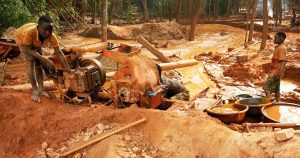
Illegal mining – it pollutes the environment
Protecting Ghana’s public health will require coordinated action—safer cookware production, stronger environmental controls, routine food monitoring, sustained public education, and effective enforcement across the entire food system. Without decisive intervention, heavy metals will remain an unseen but powerful force shaping the nation’s health for generations to come.
New Evidence from Mining Communities
These concerns are reinforced by new findings from Pure Earth Ghana, working in collaboration with the EPA. A large-scale environmental health assessment conducted in artisanal and small-scale gold mining communities across six regions between August 2024 and September 2025 , which the report has published on the website of Earth Ghana , it revealed extensive contamination of soil, water, air, crops, and fish.
In Konongo Zongo in the Ashanti Region, mercury levels in soil exceeded internationally accepted safety guidelines by more than 560 percent, while arsenic concentrations reached extreme levels incompatible with safe agriculture and long-term habitation.
Nearby water sources in Konongo Odumase contained arsenic concentrations hundreds of times above global drinking water limits, exposing households that rely on untreated water to chronic poisoning.
Elsewhere, similar risks were identified. At Asiakwa in the Eastern Region, unsafe lead levels were detected in community water sources, while air quality measurements in Wassa Kayianko in the Western Region showed dangerously high mercury vapour concentrations during gold smelting, posing acute inhalation risks to miners and nearby residents. Most troubling was evidence that contamination had already entered the food supply. Vegetables such as kontomire and pumpkin leaves, along with fish consumed from affected water bodies, were found to contain lead, arsenic, and cadmium, threatening food safety and nutrition.
The Science of Accumulation and Irreversible Harm
From a medical perspective, the danger of heavy metals lies in their persistence. Dr. George Oduro, a Senior Medical Officer at Komfo Anokye Teaching Hospital, explained that metals such as lead and mercury accumulate in the body and are extremely difficult to eliminate.
“Lead travels through the bloodstream and can cross the placenta into unborn children, where it settles in the brain.The damage can be severe and irreversible.”
Dr. Oduro described the process of bioaccumulation, where small environmental concentrations gradually build up in human tissues over time. Metals disrupt vital biological processes, damaging the brain, blood, immune system, kidneys, liver, bones, and DNA. Because symptoms often resemble common illnesses—such as abdominal pain, fatigue, or unexplained fever—exposure frequently goes undetected until serious harm has already occurred.
“There are treatments,” he noted, “but if detection comes late, the damage is often permanent.”
US YouTuber IShowSpeed visited Nigeria’s cultural and economic capital Lagos as part of his African tour on Wednesday, where he celebrated his 21st birthday by hitting 50 million subscribers.
The YouTube and Twitch star’s tour kicked off on December 29, travelling through some 15 countries across Africa and drawing crowds at every stop.
Rolling Stone magazine named him the Most Influential Creator of 2025 while Forbes estimates his net worth at $20 million.
IShowSpeed began his Lagos visit at the bustling Balogun Market in the Lagos Island district, where crowds heckled him and asked for money.
“What are they saying? It’s like they’re speaking English, but a different kind of English,” the influencer, surrounded by bodyguards, remarked as he quickly left the market.
At Freedom Park, located on the site of a former prison, he jumped at the spicy kick of his first bite of jollof rice before heading to the Nike Art Gallery — a must-see for every celebrity and high-ranking political figure who comes to Lagos.
“IShowSpeed is showcasing the culture, relationships, cultural differences and food,” Stephen Oluwafisayomi, a 24-year-old YouTuber known as Stevosky, told AFP at Freedom Park.
“He wants Americans to see Africa as a place they can also come to,” he added.
At around 6:00 pm (1700 GMT) IShowSpeed, who was celebrating his birthday, stopped his security convoy at the side of the road to watch his YouTube channel hit 50 million subscribers and proceeded to shove his face into a cake for the occasion.
Born in Cincinnati as Darren Jason Watkins Jr., the YouTube star began gaining traction 10 years ago, first by publishing video game content and later by posting about his travels around the world.
His Africa tour has featured a race against a cheetah in South Africa, a football match with 100 children in Angola, a visit to Kenya’s Maasai and the AFCON final in Morocco.
BET Award winner, Sarkodie has paid an emotional tribute to the late gospel legend Yaw Sarpong following his passing, describing the gospel icon as a source of spiritual inspiration. Yaw Sarpong, founder of the Asomafo gospel group, passed away on 20 January 2026 at the Emena Hospital, a development confirmed by his manager.
Sarkodie’s tribute joins a wave of condolences from across Ghana as the nation mourns the loss of one of its most influential gospel musicians, just weeks after the death of Asomafo stalwart Maame Tiwa.
Ghanaian rap icon Michael Owusu Addo, popularly known as Sarkodie,
Sarkodie, joins a growing list of public figures who have shared heartfelt reflections on the life and legacy of the celebrated gospel musician. In his tribute, the ‘Mary’ hitmaker spoke about how Yaw Sarpong’s ministry and music helped strengthen his faith in God. He also expressed his sympathies to the bereaved family and the nation at large.
Sarkodie noted, extending his condolences to Yaw Sarpong’s loved ones and admirers.
As tributes continue to pour in, Yaw Sarpong is being remembered not only for his musical excellence but also for his enduring influence on faith, worship and gospel ministry in Ghana.
The family of the late Yaw Sarpong has gathered at the family house to share updates on developments following his passing and to appeal for support toward a state burial.
Speaking on behalf of the family, Rev. Emmanuel Kwabena Opoku, the senior brother of the late Yaw Sarpong, explained that his brother had been battling a serious illness prior to his death. He said the family had done all it could during that difficult period.
Rev. Opoku further appealed to the government and the general public to support the family in granting Yaw Sarpong a state burial, describing him as a national figure whose contributions to gospel music in Ghana deserve national recognition.
According to him, the late Yaw Sarpong left behind four children and was the eleventh-born of his parents. He noted that both his father and mother are deceased. He also disclosed that Yaw Sarpong hailed from the Okuona Royal Family at Asuofua in the Atwima Nwabiagya North District of the Ashanti Region.
In a related development, Mr. Jerry Budu, the man credited as the first person to promote Yaw Sarpong’s musical talent, also shared memories of the late gospel musician. He recounted how Yaw Sarpong’s passion for music shaped his life and career, describing him as a humble, dedicated, and inspirational figure whose impact on gospel music in Ghana will be long remembered.
Ghanaian musician Kwesi Arthur has accused music executive Glen Boateng and members of the Ground Up Chale team of intimidation, financial demands and attempts to block his independent music releases.
He made this statement in a strongly worded social media post that has stirred widespread reaction in the entertainment industry.
In the post, the award-winning artiste alleged that he is being asked to pay $150,000 to use images of himself for a current project and warned that his safety could be at risk amid an ongoing dispute with his former management.
“If anything happens to me Glen Boateng and all team members of Ground Up Chale are responsible and should be held responsible,” Kwesi Arthur wrote.
“I am currently being asked to pay $150,000 for using images of MYSELF for this current project. Ground Up claims to own me, my image, my music and everything attached to it from 2016 to this day,” he added.
The rapper, who rose to prominence under the Ground Up Chale collective, said he has not worked with or had any affiliation with the company since the release of Son of Jacob.
Despite this, he claims he has earned nothing from music released during the years he was with the outfit.
“Although I have not worked or had any affiliation to the company since Son of Jacob, I have not made a dime from any of my music within the period I worked with them for years now and receive constant threats and manipulation from Glen who is living off of my money and hard work,” he stated.
Kwesi Arthur further alleged that deliberate efforts are being made to frustrate the release of his independent work, warning fans that any takedown of his current project should be blamed on his former manager.
Two people have died and several are feared buried after landslides in New Zealand’s North Island.
The deaths were reported at Welcome Bay, while rescue workers are still searching through rubble at a different site in a popular campground on Mount Maunganui.
There are no “signs of life”, authorities said, adding that they have a “rough idea” of how many people are missing but are waiting for an exact figure. They provided no other details except that the group includes “at least one young girl”.
The landslides were triggered by heavy rains over the last few days, which led to flooding and power outages across the North Island. One minister said the east coast resembled “a war zone”.
New Zealand is “heavy with grief” after the “profound tragedy” caused by recent weather, Prime Minister Christopher Luxon said on X.
Footage from the campsite on Mount Maunganui, an extinct volcano, shows a huge slip near the base of the volcanic dome, as rescuers and sniffer dogs comb through crushed caravans and flattened tents.