Home Blog Page 280

Hearts thump XI Wonders to keep title hopes alive

0
Martin Karikari celebrating his goal

Accra Hearts of Oak posted a comprehensive 3-0 win over Eleven Wonders in the Ghana Premier League on Saturday. A first half goal from Mawuli Wayo and a double in the second by Martin Karikari and Kelvin Osei Asibey condemned Wonders to their 15th defeat of the season after 20 matches.

Hearts opened the scoring after eight minutes when Mawuli Wayo controlled Henry Kwaku Boateng’s pass before rifling a low shot past Wonders goalkeeper Obengfo Adjei.

Two minutes later, Kwaku Boateng shocked the few Hearts fans in the stadium when he fired from three yards, despite facing an open goal. It was a big let off for Wonders who slumbered their way through the opening quarter of an hour.

From then on, the match was reduced to a contest of mistakes as Hearts of Oak’s Raphael Amponsah and Abdul Karim and Wonders’s Obed Ofori and Emmanuel Boateng both aborted a series of attacks.

Just before the break, Hearts went close again when Frank Duku chose to pass instead of shooting from 8 yards out, and his pass to Wayo was headed marginally over the bar.

In the second half, Hearts punished two mistakes in one sequence for their second goal.

First, Mawuli Wayo’s harmless cross was spilled by Obengfo Adjei before his defenders made a mess of the clearance. But the finish was not straightforward as Kwaku Boateng and Hamzah Issa fluffed their lines before Martin Karikari finally scored.

Thirteen minutes from time, Hearts were awarded a penalty when Hamza Issa was brought down by Kenneth Boakye Owusu.

Two Hearts players; striker Hamza Issa and center back Ali Mohammed picked up separate balls to take the penalty kick.

But they quickly resolved to let Kelvin Osei Asibey take the penalty and he duly obliged, sending the goalkeeper the wrong way to put the result to bed.

Hearts have now moved to second place on 35 points, and could remain there by the end of the match week depending on other results.

Saturday’s defeat leaves Wonders bottom of the league with 9 points, perilously close to the drop zone.

Credit: myjoyonline

Aspirin Myths That Still Won’t Die

0
Aspirin

Doctors stopped recommending routine daily aspirin for most people years ago, but many people continue to take it despite evidence that it doesn’t increase healthy lifespan for most older adults and may carry long-term risks like bleeding and cancer.

The issue was spotlighted recently after The Wall Street Journal reported President Donald Trump, 79, takes 325 milligrams daily — a higher dose than the recommended 81 milligrams used for cardiovascular disease prevention. The disclosure reignited concern among medical experts and clinicians, who stressed that a higher dose increases risks without extra benefits for most people.

Even with mounting evidence and updated guidance, confusion and outdated beliefs about aspirin persist.

“Part of it is that you can buy aspirin without a prescription. And historically, people thought it was good for them,” said Anne Murray, MD, a geriatrician and epidemiologist at Hennepin HealthCare Research Institute in Minneapolis. “Changing [medical] practice really takes a generation, and I think that is what we’re seeing.”

For decades, clinicians and public health authorities actively promoted aspirin for prevention, especially for heart attacks. In 2022, that recommendation narrowed to include only people who’ve already had a stroke or heart attack (and those who’ve had a stent in an artery).

But that messaging hasn’t been effectively communicated with the public, experts say. One analysis showed that more than 1 in 10 adults who shouldn’t be taking preventative aspirin were still doing so in 2023.

Amid the confusion, you may have heard one of these myths.

Myth 1: “Daily aspirin will keep me healthy for longer.”

This is false for most older adults who’ve never had a heart attack or stroke. A landmark 2018 aspirin study — co-authored by Murray — found daily low-dose aspirin did not extend healthy lifespan (defined as avoiding physical disability, dementia onset, or death) in healthy adults ages 70 and up. A follow-up study that continued to track those adults for several more years and was published in September reached the same conclusion: Aspirin does not help people live a longer or healthier life, even years after the original trial ended.

Myth 2: “Aspirin can prevent heart problems.”

This is true only for some people. Older research once suggested a daily baby aspirin was good for heart health, but later studies have shown that aspirin therapy is linked to greater bleeding and cancer risks than was first known. That’s why modern-day aspirin science points to a careful harm-benefit tradeoff analysis best done by your doctor.

If you’ve had a heart attack or stroke, your doctor will take all your health information into account when deciding whether to prescribe aspirin to ensure the benefits outweigh the risks. 

If you have no history of heart problems and want to keep it that way, both Murray and Donald M. Lloyd-Jones, MD, suggest focusing on the American Heart Association’s Life’s Essential 8, which include optimizing your weight and blood pressure and exercising regularly. Lifestyle and risk management are the proven ways to lower heart risk.

Myth 3: “If it’s over the counter and low-dose, aspirin is harmless.”

Just because it’s available doesn’t mean it’s risk-free. The original 2018 study showed a 38% increased risk of bleeding for healthy older people who took preventative aspirin for five years.

Only take daily aspirin if it’s prescribed to you by your doctor, said Lloyd-Jones, a past president of the AHA and preventive medicine section chief at Boston University Chobanian & Avedisian School of Medicine in Massachusetts.

Myth 4: “Thinner blood is always better – so higher doses are more effective.”

“More is not better,” said Lloyd-Jones. “Studies have shown that low-dose aspirin — 81 milligrams daily — is as effective as high-dose aspirin for preventing the types of blood clots that can cause most heart attacks and strokes. Taking higher doses — like 325 milligrams daily — increases the risk of bleeding with no extra benefit or protection.”

Myth 5: “I’ve been taking aspirin and have no bleeding problems, so it’s safe.”

Just because you haven’t had bleeding so far doesn’t mean it’s safe. Aspirin increases bleeding risk, and that risk falls once you stop taking it, according to an analysis published in November 2025.  

Myth 6: “Aspirin prevents cancer.”

Aspirin’s link to cancer risk isn’t fully understood and is especially concerning in older adults. While studies have found that some people who regularly take aspirin have a lower risk of certain cancers, like colorectal cancer, the findings are nuanced.

Another analysis from Murray and colleagues’ long-term trial showed that older people who took aspirin to prevent a first-time heart attack or stroke had an increased risk of developing cancer, and in particular, being diagnosed at stage 3 or later. The “findings suggest that in older persons, aspirin may accelerate the progression of cancer and, thus, suggest caution with its use in this age group,” said Murray.

Myth 7: “If someone else takes extra aspirin, I can too.”

Personal choice is not medical advice. Your primary care doctor can calculate your risk for heart attack and other cardiovascular problems, which is heavily impacted by your family history and age. A personalized risk assessment and prevention plan is the best path forward, and since age is such an important factor, annual visits to your primary care doctor are increasingly important as you age.

Credit: webmd

Dream return for Albert Amoah as his overhead kick and assist inspire Kotoko’s victory

0
Albert Amoah

Albert Amoah marked his return to Asante Kotoko in unforgettable fashion, scoring a stunning overhead kick and providing an assist in a dominant 3-0 victory over Basake Holy Stars in the Ghana Premier League yesterday.

Introduced from the bench at the Baba Yara Stadium, the 24-year-old forward instantly lifted the Porcupine Warriors, producing a moment of brilliance to put the result beyond doubt.

Amoah rifled home a spectacular overhead kick to make it 2-0, sending the home fans into raptures and underlining his enduring quality in Kotoko colours.

The striker was not done yet. He later turned provider, laying on the assist for Kwame Poku, who capped the performance with his own eye-catching overhead kick screamer to seal an emphatic win for the Kumasi giants.

The match marked Amoah’s first appearance since rejoining Kotoko on loan from Libyan side Al Ahly Benghazi for the remainder of the Ghana Premier League season.

Limited playing time in Libya prompted the forward’s swift return to familiar surroundings and his impact could hardly have been more convincing.

Amoah’s performance was a reminder of his proven pedigree at the club. After joining Kotoko from Great Olympics in 2024, he enjoyed a prolific spell, finishing the 2024-2025 season as the club’s top scorer with 15 goals in 29 appearances across all competitions.

Credit: ghanasoccernet

Samartex secure a comfortable home win over Nations

0
Samartex players celebrating a goal

FC Samartex 1996 maintained their formidable home form with a comfortable 2-0 victory over Nations FC at the Nsenkyire Sports Arena in Samreboi yesterday, in the Ghana Premier League matchweek 20.

The Timber Giants started the contest on the front foot and were rewarded in the 39th minute when Christian Agyenim Boateng calmly converted from the penalty spot after sustained pressure in the Nations area.

The opener gave Samartex a deserved lead, going into the halftime break. Samartex wasted no time after the restart to extend their advantage.

Just two minutes into the second half, Kwaku Owusu finished clinically to make it 2-0 and effectively putting the game beyond the visitors and sending the home fans into celebration.

Nations attempted to respond but struggled to break down a well-organised Samartex defence that remained resolute throughout the afternoon.

The hosts controlled large spells of the game, limiting their opponents to few clear-cut chances as they saw out the contest with relative ease.

The win extends Samartex’s unbeaten run at home this season and underlines their growing momentum in the second round of the campaign.

For Nations, the result compounds their away-day struggles, as they remain without a win on the road after nine league travels this season.

Credit: ghanasoccernet

Feature: U.S. aggression UN inaction: The law and politics of why nothing happens

0
Akua Serwaa Ampong

At the heart of the international world order is a simple yet powerful rule. No state is permitted to use force against another except in self-defence or with the explicit authorisation of the United Nations (UN) Security Council.

Yet, for decades, the United States (US) has repeatedly violated this rule, often without meaningful consequences. The problem is not the absence of law, but the structural inability of the UN to enforce it against its most powerful members.

This article interrogates the legal and political architecture that has systematically disabled the United Nations from effectively responding to aggression by the United States and, by extension, other permanent members of the Security Council.

Prohibition of Aggression Article 2(4) of the UN Charter


The UN Charter is unequivocal in prohibiting the use of force in the conduct of international relations. Article 2(4) of the Charter proscribes the threat or use of force against the territorial integrity or political independence of any state. Additionally, the Charter forbids member states from acting in any manner inconsistent with the United Nations’ overarching aim of achieving and sustaining international peace and security, irrespective of the form or justification advanced.

The reference to the phrase “threat or use of force” extends beyond the actual employment of armed force, such as military invasions, aerial bombardments, or other combat operations. It also encompasses coercive conduct, including the demonstration or deployment of military capabilities, the massing of forces at land or maritime borders, or the issuance of ultimatums supported by military power, where such conduct is intended to compel another State or to interfere with its sovereign prerogatives. Use of force may manifest in attempts to seize territory, alter internationally recognised boundaries, occupy foreign territory, fragment an existing State, impose or remove governments, dictate political outcomes, or otherwise exercise control over another State’s internal or external affairs.

Exception to Article 2(4) of the UN Charter

The Charter recognises only two exceptions to Article 2(4). The first exemption, provided in Article 51, provides that states have the inherent right of individual or collective self-defence in the event of an armed attack, until the Security Council takes the steps necessary to restore peace and security.

Second exemption, under Chapter VII, is that the Security Council may, in response to an armed attack or threats of attack, impose sanctions such as complete or partial interruption of economic relations and of rail, sea, air, postal, telegraphic, radio, and other means of communication, and the severance of diplomatic relations under Article 41 of the Charter.

In instances where the Security Council considers the aforementioned measures inadequate, the Council may undertake action by air, sea, or land forces, including demonstrations, blockades, and other operations, by Members of the United Nations.

Such sanctions or actions by the Security Council, per Article 27 of the Charter, must have the concurrence of all permanent members of the Security Council, namely the People’s Republic of China, the United Kingdom, the United States of America, France and Russia, also known as the P5. In other words, if a member of the P5 does not concur or vetoes such a decision, neither a sanction nor an armed action can be taken by the Security Council.

In instances where the veto power of a member of the P5 is evoked to avoid sanctions or armed action on it or an ally, the General Assembly, under the 1950 General Assembly Resolution 377 A (V) also known as the “Uniting for Peace” Resolution, may convene an Emergency Special Session within 24 hours and recommend collective measures, including economic and diplomatic measures or, in extreme cases, recommend the use of armed force.

This is, however, not an authorisation for the use of arms. These recommendations are politically persuasive but legally non-binding, and enforcement still depends on voluntary action by Member States.
Outside these exceptions, unilateral military action is illegal.

US Armed Attack on Venezuela

The United States (US), on January 3, 2026, without the authorization from the United Nations, entered the airspace of Venezuela, launched an unprovoked attack on the country’s state security and subsequently captured Nicolas Maduro, essentially deposing him as President of Venezuela.

Weeks before this attack, the US had closed Venezuelan airspace, enforced a blockade on sanctioned oil tankers entering or departing Venezuela, a step designed to limit the country’s oil exports.

The development is the clearest example of a breach of all provisions under Article 2(4) in recent history. The US threatened and eventually used force to affect the territorial integrity and political independence, which was inconsistent with the spirit and letter of the UN Charter.

Admittedly, the US has genuine national security concerns about the actions and inactions of Venezuela over the past few years. However, per the dictates of international law, such concerns should have been addressed through recognised legal means, without resorting to armed attack.

Condemnation Without Enforcement: Structural Limits of UN Action


The United Nations and its affiliated bodies, in response to the US attack on Venezuela, have issued a number of statements expressing concern and condemnation. Notwithstanding these pronouncements, no binding sanctions have been imposed, nor has any collective enforcement action been authorised against the United States.

This outcome is largely attributable to the requirement for the concurrence of all P5 members on the adoption of substantive measures under Chapter VII of the Charter. Obviously, the US would veto any such sanction or action tabled by the Security Council.

Moreover, while the “Uniting for Peace” framework provides a procedural avenue for the General Assembly to recommend collective measures when the Security Council is unable to act, its effectiveness remains inherently limited. The General Assembly’s recommendations, though politically significant, lack binding legal force and depend entirely on the voluntary cooperation of Member States for their implementation.

The United Nations does not possess an independent enforcement capability and must rely on contributions of troops, financial resources, and logistical support from its members. In circumstances where the States whose cooperation is required are themselves implicated in, or closely aligned with, the conduct under scrutiny, the prospects for meaningful enforcement are correspondingly diminished.

This reality underscores a persistent structural tension within the international system: the divergence between the legal obligations articulated in the UN Charter and the power, strategic interest, and political feasibility constraints on their implementation.

Implication of Structural Defects in the UN Charter

The aforementioned structural limitations inherent in the current collective security architecture raise profound concerns regarding the capacity of the international system to restrain or deter future acts of aggression by other permanent members of the Security Council.

If a permanent member is able to employ armed force against another State while effectively insulating itself from collective accountability through the exercise of veto power, the normative authority of the United Nations Charter risks being progressively eroded.

The long-term implications of this trajectory are deeply concerning. Persistent inability to respond effectively to acts of aggression by powerful States risks normalising the erosion of collective security and replacing it with a return to power-based international relations. This continued weakening of multilateral constraints increases the risk of broader confrontations with potentially global consequences.

Absent meaningful reform or renewed political commitment to the Charter’s foundational principles, the international community may find itself confronting a gradual but consequential hollowing out of the United Nations’ authority.

Until the structural asymmetry within the Security Council is addressed, whether through restraint in the use of the veto, institutional reform, or strengthened alternative mechanisms, the promise of collective security envisioned by the Charter and the assurance of lasting international peace and security will remain elusive.

Conclusion
This analysis demonstrates that the prohibition of aggression under the United Nations Charter is neither ambiguous nor aspirational; it is a clear and foundational rule of the post-war international legal order. The Charter establishes a comprehensive framework that permits the use of force only in narrowly defined circumstances, self-defence in response to an armed attack or collective action authorised by the Security Council. Outside these exceptions, unilateral military action is unlawful, irrespective of the strategic, political, or moral justifications advanced.

The US armed attack on Venezuela, without substantial sanctions for the former, exposes a critical disjunction between the normative clarity of the Charter and the institutional realities of its enforcement. While the United Nations has articulated legal condemnation and expressed institutional concern, its capacity to translate legal norms into binding consequences has been fundamentally constrained by the structure of the Security Council, particularly the veto power of its permanent members. Where a permanent member is itself implicated, the mechanisms of collective security are rendered largely inoperative, and the promise of accountability is displaced by political stalemate.

This structural limitation carries consequences that extend well beyond any single incident or State. The repeated inability to enforce the Charter’s prohibition on the use of force against the most powerful actors risks normalising selective compliance with international law.

The future credibility of the United Nations as the central guarantor of international peace and security depends on confronting this structural imbalance.

Whether through restraint in the exercise of the veto, institutional reform, strengthened accountability mechanisms, or renewed political commitment to the Charter’s core principles, meaningful steps are required to realign power with law.

Without such efforts, the gap between legal obligation and political practice will continue to widen, undermining the collective security system and leaving the international community increasingly vulnerable to unilateral action, escalation, and instability.

ABOUT THE WRITER

Akua Serwaa Ampong is a Ghanaian lawyer with over eight years of professional experience. She holds a Master’s degree in Diplomatic Studies from the University of Oxford and a Master of Arts in Peace, Security and Intelligence Management from the University of Professional Studies, Accra. Her work lies at the intersection of law, strategy, and policy, with a particular focus on security governance, intelligence accountability, and the legal dimensions of international cooperation.

Written by
Akua Serwaa Ampong

SOUCRCE:Citinews


GAF slams HIV claims as fake news

0
The emblem of the Ghana Armed Forces (GAF)
The Ghana Armed Forces (GAF) has dismissed as false reports circulating in the media that suggest about 60 per cent of applicants failed military medical screening due to HIV infection.

In a statement, Acting Director-General of Public Relations, Captain Veronica Adzo Arhin (Ghana Navy), described the story as “FAKE NEWS” and urged the public to disregard it. She stressed that the medical screening process is ongoing and that no official results have yet been declared.

“The Ghana Armed Forces is taking steps to trace the originators of this mischievous publication,” the statement said, urging media practitioners, bloggers, and content creators to verify facts before publication.

GAF reiterated that only official communications should be relied upon for information about recruitment and medical assessments.

For more news, join The Chronicle Newspaper channel on WhatsApp: https://whatsapp.com/channel/0029VbBSs55E50UqNPvSOm2z

20-Year-Old Apprentice Granted GH¢100k Bail Over Alleged Robbery of Foreign Students

0
Court

The Circuit Court in Accra has granted a GH¢100,000 bail to a 20-year-old air-condition apprentice, Arthur Habakkuk, who has been charged with unlawful entry and robbery involving two foreign students.

The bail, ordered by Her Honour Susana Eduful, is to be executed by the accused person’s parents and a civil servant earning a monthly salary of not less than GH¢2,000.

Arthur Habakkuk pleaded not guilty to two counts of unlawful entry to commit crime and robbery, contrary to Sections 152 and 149 of the Criminal Offences Act, 1960 (Act 29). The prosecution is being led by Chief Inspector Abigail Offeabea.

Charges and Allegations

According to the charge sheet, the accused allegedly committed the offences on December 16, 2025, at Alajo in the Greater Accra Region.
The prosecution alleges that Arthur Habakkuk unlawfully entered the room of the Complainants, both foreign nationals and students residing at Alajo, with the intent to commit robbery.

On the robbery charge, the court was told that the accused allegedly used a knife to threaten the complainants and forcibly took their mobile phones—a Samsung A16 valued at GH¢3,000 and an Infinix Hot 401 valued at GH¢2,800.

Brief Facts

Presenting the facts, the prosecution stated that at about 1:30 p.m. on the day in question, the accused went to the complainants’ hostel and knocked on their door. When the door was opened, he allegedly pushed the complainants back into the room, locked the door, brandished a kitchen knife, and ordered them to sit on the floor.

The accused is further alleged to have restrained the complainants by tying them with sponges and rags, sealed their mouths with black solution tape, covered their faces with towels and veils, and touched their private parts.
A neighbour who reportedly heard the complainants screaming raised an alarm and helped in arresting the accused. He was later handed over to the Kotobabi Police Station, where a formal complaint was lodged.

The prosecution told the court that during investigations, the accused admitted the offences in his caution statement. The stolen mobile phones were retrieved from his backpack, along with a kitchen knife, a pair of scissors, a key, solution tape, and a duster.
After investigations, Arthur Habakkuk was charged and arraigned before the court.The case has been adjourned to a later date for continuation of trial.


For more news, join The Chronicle Newspaper channel on WhatsApp: https://whatsapp.com/channel/0029VbBSs55E50UqNPvSOm2z

Police Reject $20,000 Cocaine Bribe … Arrest Suspect Transporting Substance Worth GH¢1.032m In Nigerian Registered Car

0
Charles Adenkule , suspect

In a major anti-drug operation on Wednesday, January 21, 2026 the Volta Regional Police Command, according to The Chronicle’s unimpeachable source, intercepted a Nigerian-bound vehicle carrying narcotics worth over one million Ghana Cedis. It is, however, not known whether the illicit drug originated from Ghana or the latter was being used as a transit route.

The car used in transporting the suspected drug

What is known is that the suspected drug carrier offered the Ghanaian police officers a cool $20,000 as bribe to free him from the grip of the law, but the offer was rejected outright.

The black Liberty Jeep, driven by 46-year-old Charles Adenkule and registered in Nigeria (FKJ692KF), was stopped at Kpotame barrier between Ada Junction (Kasseh) in Greater Accra Region and Sogakope, the South Tongu Municipal capital.

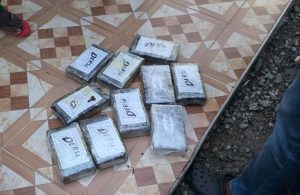
A search of the vehicle uncovered ten parcels of compressed substances suspected to be cocaine, with a street value of  GHC 1,032,650, along with about half a kilogram of compressed dried leaves suspected to be Indian hemp hidden behind the vehicle’s inner lining.

According to a senior police source at the Volta Regional Police Headquarters, the operation was the result of actionable intelligence. The Volta Regional Police Commander, Deputy Commissioner of Police (DCOP) Mr Wisdom Akorli, upon the receipt of the intelligence information, sanctioned a joint taskforce comprising officials from the Police Intelligence Directorate (PID), the Drug Law Enforcement Unit (DLEU), and four personnel from the Regional Motor Traffic and Transport Department (MTTD).

The suspected cocaine

The source revealed to The Chronicle that at exactly 6:30pm, the aforementioned vehicle pulled up at the barrier and was signalled to stop. A careful search led to the discovery of the illicit drug.

Having realised that his cover had been blown, Adenkule, the suspected carrier allegedly offered a $20,000 bribe to secure his release.

The officers reportedly rejected the offer, demonstrating “resolute commitment” to fighting drug trafficking.

The suspect remains in custody as investigations continue, while the Liberty Jeep has been impounded at the Volta Regional Police Headquarters in Ho.

The seized substances will be sent to the forensic laboratory for further analysis.

The operation highlights the Volta Police’s intensified efforts to combat drug trafficking on the transcontinental highway and reinforces their reputation for integrity in refusing substantial bribes.


For more news, join The Chronicle Newspaper channel on WhatsApp: https://whatsapp.com/channel/0029VbBSs55E50UqNPvSOm2z

Six Remanded Over GH¢7.5m Adabraka Gold Robbery

0
Court

The Accra Circuit Court ‘3’, presided over by Her Honour Susana Eduful, has remanded six persons into police custody over their alleged involvement in a GH¢7.5 million gold robbery that occurred at Adabraka in Accra.

The accused persons are Salim Mohammed Fariwata, 26, unemployed; Alhassan Iliyasu Arabman, 45, businessman; Hamza Agerego Lambert, also known as Nene Bawku, 34, a security guard; Abdul Samed Bonsiabu Larry, also called Touch, 44, businessman; Fatao Mohammed, known as Motorway; and Abubakar Sadique, popularly called Fifty Cent or 50.

They have all pleaded not guilty to two counts of conspiracy to commit robbery and robbery.

A seventh suspect, Baba Chika, also known as Oil Money, is said to be at large.

Presenting the case, Chief Inspector Ebenezer Teye-Okuffo told the court that the robbery took place on November 2, 2024 near Cabest Jewellery Shop at the Adabraka market area.

He said the complainant, Clement Amos Baffour, Chief Executive Officer of Cabest Jewellery, had concluded a gold transaction, after which an amount of GH¢7.5 million was loaded into a red Toyota Corolla saloon car with registration number GE 4840-24.

According to the prosecution, as the vehicle was being driven to a bank for the money to be deposited, it was intercepted a few metres away by occupants of a Toyota Highlander vehicle, with registration number GN 7357-19.

The occupants, who were masked and armed with AK-47 assault rifles, allegedly crossed the Corolla, fired several shots into the air and on the ground to disperse traders and shoppers, and forcibly robbed the occupants of the cash.

In the course of the robbery, the front-seat passenger of the Toyota Corolla was shot in the left leg. The armed men allegedly packed the GH¢7.5 million into their vehicle and fled, scattering some of the money while firing shots to divert attention.

Chief Inspector Teye-Okuffo said police investigations later led to the arrest of the suspects at various locations, including Ashaiman.

He disclosed that during searches, police retrieved 43 rounds of AK-47 ammunition, 249 BB cartridges, two pump-action guns, four bulletproof vests, a black police boot and other items.

The Toyota Highlander allegedly used in the robbery was also retrieved after it had been re-sprayed from its original colour to blue, with investigators discovering that it had been using multiple registration numbers.

Defence lawyers for the accused persons prayed the court to grant them bail, arguing that they are Ghanaians, presumed innocent under Article 19(3)(c) of the Constitution and that some of them were allegedly assaulted during arrest to extract confessions.

However, the prosecution opposed the bail application, citing the seriousness of the offence, the ongoing investigations, and the fact that one suspect is still on the run.

In her ruling, Her Honour Susana Eduful refused bail and remanded the six accused persons into police custody.

The case has been adjourned to February 2, 2026 at 9:00 a.m., to enable the prosecution to continue investigations.


Dangerous Fishing in Afram Plains: Hooks Endanger Humans Instead of Fish

0
A victim illustrates the dangers of a risky fishing method that is harming fisherfolk in the community.

Fisherfolk of Bruben in the Afram Plains have made an urgent appeal to government authorities to intervene in what they describe as a dangerous and illegal fishing practice introduced into the area by foreign fishermen, mainly from the Sahelian region.

Within a short period, several local fishermen reportedly became entangled in long-line hook fishing gear laid across sections of the river and sustained serious injuries. Victims were rushed to the Donkor-Krom Hospital and the Avukorpe Clinic, where surgical procedures were carried out to remove hooks lodged in their bodies. Among those affected were Toffa Awayiwe and Christian Osah. Videos of the medical procedures were made available to this paper.

Fisherfolk in Bruben demonstrate how fishing hooks are harming members of their community.

The victims claim that but for the intervention of the District Chief Executive (DCE) for Afram Plains, Mawusi (Cate) Babanawo, the law enforcement agencies would not have taken their statements after the incidents were reported. Opinion leaders in the community further alleged that despite the complaint lodged by the fishermen, the foreign fishermen were allowed to continue the hazardous practice, resulting in more victims.

When the Minister for Fisheries and Aquaculture Development, Hon. Emelia Arthur, later visited the area and was briefed on the situation, she reportedly directed that the practice be stopped immediately. However, the foreign fishermen, allegedly aided by some local collaborators, continued the activity.

This development compelled some local fishermen to remove the dangerous hook lines from the river. The action reportedly angered the foreign fishermen, who subsequently lodged a complaint with the police. This led to the arrest of some local fishermen, who were said to be facing possible prosecution, while the disputed fishing practice allegedly continued.

The fishing method in question involves fixing multiple hooks on long ropes or lines at very close intervals across the river, entangling any fish or person — that comes into contact with it. Local fishermen say the gear makes fishing extremely dangerous and effectively blocks and monopolises the river, preventing them from carrying out their livelihood.

The Fisheries Act, 2002 (Act 625), outlaws fishing methods that are destructive or harmful to humans, fish, or the aquatic environment in both marine and inland waters. Long-line hook entanglement gear is illegal in inland waters under the Act.

Speaking to The Chronicle, the DCE for Afram Plains, Madam Mawusi Babanawo, acknowledged the issue but indicated that it had been resolved.

The Afram Plains Zonal Fisheries Officer, Victor Kobladze, also confirmed that tensions had arisen between local fishermen and expatriate fishermen at Bruben, but said the situation had been brought under control.

“The situation is under control,” he said, explaining that the intervention of the Eastern Regional Director of Fisheries led to a temporary halt of the disputed fishing method.

According to Mr. Kobladze, the Regional Director visited Bruben to gather first-hand information, engaged both parties, and assessed the concerns raised. He said the Director had since contacted the Fisheries Commission headquarters in Accra to seek an amicable and lasting solution.

“For now, we want peace to prevail. They have agreed to remain calm while the gear they are using is assessed at the national level,” he noted, adding that the fishing gear in question is considered new and requires further evaluation.

On reports that local fishermen had been arrested and were being processed for court, Mr. Kobladze denied this, stating that no one is currently facing prosecution.

“They were misbehaving destroying boats, canoes, and outboard motors. Some of them were detained briefly to calm the situation, and they are being released as understanding is reached. For now, no one is under arrest,” he said. The police, when contacted, also confirmed that the situation in Bruben has been brought under control.


For more news, join The Chronicle Newspaper channel on WhatsApp: https://whatsapp.com/channel/0029VbBSs55E50UqNPvSOm2z

The Ghanaian Chronicle