Home Blog Page 2789

Manhyia Prison Director retires after 20 years service

0
The pull out ceremony
Dr. Antwi in a pose with wife and senior prison personnel

Nana Dr. Kofi Antwi II, Assistant Director of Manhyia Local Prisons in Kumasi, last Friday June 3, 2022, retired.

Nana Kofi Antwi II, who doubles as the Chief of Odumase in the Asante Akim Central Municipality and Nifahene of Asante Juaben Traditional Council, retires after a 20-year term of service. He is replaced by ADP Joseph Asabere.

A Thanksgiving Service has, therefore, been held in his honour at the De-Graft Methodist Church at Asawase in the Asokore-Mampong Municipality.

The Director of Prisons, Isaac Kofi Agyin, retired Director of Prisons Nelson Diige, DDP Samuel Owusu Amponsah, Eastern Regional Director, DDP Samuel Yaw Tannor, Ashanti Regional Director, Mad Florence Yeboah Acheampong Rtd, ADP Foster Appiah of Duayaw-Nkwanta and ADP Hannah Ewuam, OIC, Kumasi Prison, among others graced the occasion.

Also at the Thanksgiving Service was the Juasohene, Nana Agyei Tabi.

An impressive pull-out ceremony, in line with the tradition of security services protocol and a guard of honour, were mounted later at the Forecourt of the Manhyia Local Prison.

Rotary Club tackles open defecation in Amansie Central

0
Nananom assist Executives of the Club to cut the tape
Mad. Hamenoo laying a block for the commencement of the project

The people of Donkoase with a population of 1,200 and other 25 farming communities in the Amansie Central District, as well as six other districts, can now heave a sigh of relief after years of engaging in open defecation and enduring lack of access to clean water.

The beneficiary communities would now have access to household micro-flush toilets to replace the old dilapidated pit latrine, following an intervention by Rotary Club International.

The World Bank report of 2020 indicates that 17.78% of Ghana’s population had no access to decent toilets, thus resorting to open defecation.

The report further stated that as at 2015, only one rural household out of ten was using improved household toilets, while three in every ten practiced open defecation.

The report also revealed that no district in Ghana had achieved an open defecation-free status, and for that matter, there was limited private sector interest in rural basic sanitation investment, since there was a perception that investments in rural sanitation businesses were not profitable.

It suggested that improved sanitation technologies such as the household micro-flush toilets were affordable, hygienic, devoid of flies and environmentally friendly.

As a result, the Rotary Club of Obuasi, in collaboration with the Clean Water and Sanitation Ghana project, has cut the sod for the construction of a mechanised borehole and household micro-flush toilets for the people of Donkoase.

Under the project, Rotary Club seeks to replace old pit latrines with micro-flush toilets in Ghana to address these challenges, which have compelled Rotary Club of Obuasi, partnered by the Rotary Club of Cape Coast Central and Rotary E- Club Premier 7040, Montreal, Canada, to construct 30 mechanised boreholes, ten toilet facilities for schools, as well as 160 household toilets for 25 communities in six districts of the country.

The project, which is expected to be completed in one year, is estimated at a cost of $160,000, with funding from the Rotary Foundation, through Rotarians in Canada, USA, India and Ghana, to impact 25,000 livelihoods.

Sarwan Kumar, the outgoing President of the Obuasi Rotary Club, said at a sod-cutting ceremony that the club, after undertaking the necessary assessment exercises, resolved that the major challenge facing most communities in Ghana was lack of access to clean drinking water and proper toilet facilities.

Accordingly, Rotary Club of Obuasi and its partners decided to pool resources together to assist the communities, as they believed that such an initiative would go a long way to improve sanitation and prevent water related diseases within the beneficiary communities.

He emphasised that the members of Rotary Club of Obuasi were committed to helping the less privileged in society to improve their living standards.

The President-elect of Rotary Club of Obuasi, Elizabeth Hamenoo, also emphasised that as a humanitarian group, they had always supported impoverished communities to have access to the basic social amenities.

She gave an assurance of the Club’s commitment to provide clean water and sanitation in Ghana, and focus on ending open defecation in the local communities.

Madam Hamenoo appealed to users of the facilities to protect and maintain them when completed, so that they could stand the test of time.

Nana Kojo Ntosuo III, Chief of Donkoase, lauded Rotary Club of Obuasi for coming to their aid, and reiterated that accessing potable water and decent toilet facilities had been a major challenge for the community.

He further pledged to support the project throughout the construction phase, and ensure the proper maintenance of the facilities when completed.

Richard Osei, Assembly Member for the area, recounted the ordeal his people go through accessing clean water and decent toilet, and lauded Rotary Club of Obuasi and partners for the kind gesture.

He appealed to Rotary Club to consider extending the initiative to the surrounding communities.

GITFiC working on solutions to Trade and Finance issues

0
GITFiC

The Ghana International Trade and Finance Conference (GITFiC) has organised its 6th Trade and Finance Conference, which seeks to promote and ensure commitment to pragmatic, effective, and holistic solutions given to issues of Trade, Finance, Trade-Finance, and Logistics.

The conference was held under the theme,” Towards an Effective and Efficient Mobile Money Transactional Penetrations in Africa”

Addressing the 2- day conference held on 23rd and 24th of May in Accra, the Chief Executive Officer (CEO) of GITFIC, Mr. Selasi Koffi Ackom, highlighted the importance of the conference and stated that his institution would continue to create the necessary platform for policymakers, captains of industry, trade, logistics, Trade-Finance, and finance experts.

Also, to deliberate and proffer implementable solutions to the myriad of challenges facing the operationalisation of the African Continental Free Trade Area (AfCFTA) and all other global trade agreements. He further assured the African and Global Communities of his outfit’s willingness to bridge the huge sensitisation, education, and informational gap, which continues to hinder the public awareness of the AfCFTA.

GITFiC, according to Mr. Ackom, completed a three-month survey in Ghana on the awareness and acceptability level of the AfCFTA, a month before the 6th conference.

Mr. Ackom also announced the launch date for the much-anticipated book on the AfCFTA titled; “Actualising the African Economic Vision; A Practical Handbook on the AfCFTA.”

The Chairman of the Association of Ghana Industries (AGI),  Mr. Tsonam Cleanse Akpeloo, in his remarks also stressed that the creation of the African Continental Free Trade Area (AfCFTA) should not be a theoretical framework, but should be seen as a practical action to achieve the overarching objective of Africa becoming an economic powerhouse.

He requested African countries to empower the Micro, Small, and Medium Enterprises (MSMEs) to harness the full benefits of the AfCFTA.

The African Union Commissioner for Trade, Industry, and Tourism, H.E. Albert M. Muchanga in his keynote address noted the trade vulnerability of African economies in the face of global supply disruptions and instability.

He also stressed that the AfCFTA would reinforce the structural economic pillars of African economies and boost intra-African trade and economic welfare.

The speakers and panelists of the conference in their observations expressed grave concern about the low sensitisation of the business community about the framework, procedures, and scope of the PAPSS, the financial payment and settlement system for the AfCFTA, and the AfCFTA in general.

They again agreed that the inter-bank transactional structure of the PAPSS would need to be integrated with mobile money services to facilitate trade and many more. The participants agreed that the identified challenges need to be addressed and given a sustained strategic priority and as such, recommended that policymakers and implementation agencies should, “Institute and promote stronger collaboration on research and development between the industry associations of African countries, which could lead to the establishment of a ‘Manufacturers Association of Africa’.”

“Ensure harmonisation of the dispute resolution mechanisms of the regional economic communities and the AfCFTA. Leverage existing technologies to promote digital literacy, particularly, in the informal sector,” they added.

The conference brought together members of the diplomatic community in Ghana and abroad, including the Ambassadors of the European Union, Peru, Mexico, Russia, Equatorial Guinea, Hungary, Congo, Algeria, Turkey, Namibia, Kenya, Saharawi, Suriname, Togo, Italy, Australia, Burkina Faso, Angola, Mali, Cote d’Ivoire, Iran, Saudi Arabia.

Agro-based Industrialisation is high priority in govt’s job creation agenda

0
Dignitaries at the conference

The Chief Director at the Ministry of Trade and Industry (MoTI), Mr. Patrick Nimo, has disclosed that agro-based industrialisation was a high priority on the government’s job creation project. This, he said, was reflected in key policies, including, but not limited to, the National Export Development Strategy and the National Policy Framework and Action Plan for Micro Investments.

He made this known yesterday, when the United Nations Industrial Development Organisation (UNIDO), in collaboration with the European Union and Ministry of Trade and Industry, organised the first Cluster International Conference in Ghana to strengthen cluster inclusiveness for small businesses in Accra.

The Cluster International Conference was under the theme: “Contribute to Knowledge Sharing in the Sub-Region; Present Ghanaian clusters experience …to further motivate and inspire businesses in Ghana.”

According to the Chief Director, there was the need for competition, because it was a competitive world, adding that the domestic market was as good as the international market. “So it means that we need to lift standards; we need to look at our price points and make sure that we can trade and produce.

“We also need to conform to standards, because the market has become very sophisticated and there are demanding products, production, environmental and labour standards,” he added.

The Chief Director of MoTI also acknowledged that Ghana was catching up, but there was the need to move up quickly, and also connect digitally to the world and among ourselves.

In the opening address, Charles Kwame Sackey, Chief Technical Advisor of WACOMP, stated that the maiden Cluster Conference presented many benefits, such as contributing to knowledge sharing in the region, by allowing Ghanaian clusters to exchange and learn from each other, and support networking and collaboration.

Also, “to exchange with national authorities on [the] ways to further upscale the approach, and start brainstorming on possible ways to institutionalise the cluster approach at the Ghanaian level,” he added.

He further reiterated that the conference was aims at creating awareness, emphasising important areas of common interest and collaborative action that the Ministry of Trade and Industry and all partners could take advantage of, to sustain our emerging clusters and Small and Medium Enterprises (SMEs).

“Business clusters are core actors of change in the country’s industrial strategy, and strengthening their resilience and their capacity to cooperate and trust each other should be the target of policy makers.

“This first Ghanaian Cluster Conference will contribute to ensuring knowledge sharing in the region and will allow Ghanaian clusters to learn from each other and capitalise on networking and collaboration,” Mr. Sackey said.

Mr. Fakhruddin Azizi, UNIDO Representative in Ghana and Liberia, in his address, noted the strong cooperation between UNIDO and the Government of Ghana and the joint commitment to the 2030 Agenda for Sustainable Development, especially in relation with areas such as energy and environment, investment, and quality standards.

He emphasised the successful achievements of the West Africa Competitiveness Programme (WACOMP), which could become a reference in the region, in terms of enhanced value addition, low carbon, sustainable production and processing and increased access to regional and global markets.

‘Nuclear power plants do not cause cancer’

0
Science Cancer Nuclear
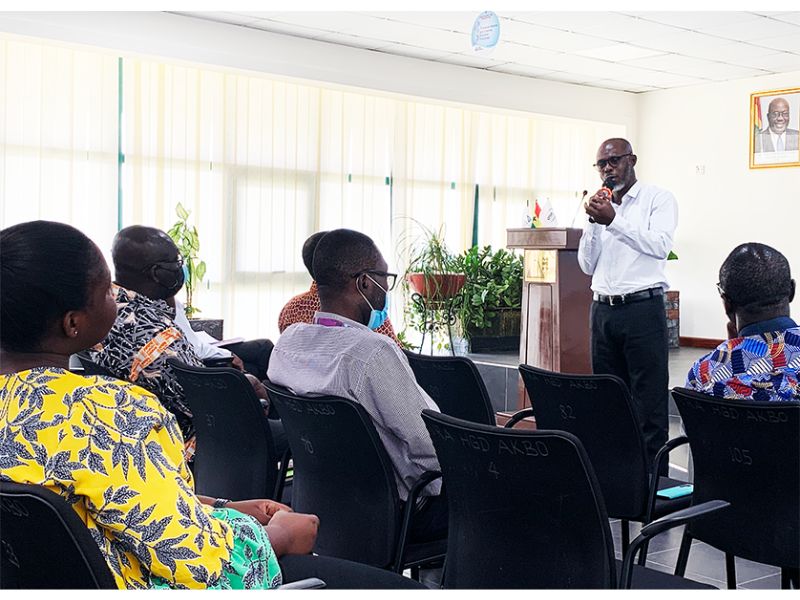
Dr Seth Debrah with the officials

The presence of a nuclear plant in the country will not cause people to contract cancer, Dr Seth Debrah, Director, Nuclear Power Institute, Ghana Atomic Energy Commission (NPI-GAEC) has said.

Currently there is no nuclear power plant in Ghana but there are many people who have been diagnosed to be living with cancer. Also note that it is the same radiation that is used to cure cancer,” he said.

He explained that the processes leading to the building, operation and decommissioning of nuclear plants followed laid down protocols by the International Atomic Energy Agency (IAEA) aimed at ensuring the safety of the people and the environment.

The development of new nuclear reactor technologies had prioritised safety, ensured a minimal interaction with reactors and instituted effective and efficient monitoring of radiation at facilities, he added.

Dr Debrah was responding to a question on radiation exposure during a one-day stakeholder engagement organised by Nuclear Power Ghana (NPG) for managers and key staff of the Hydro Generation Department of the Volta River Authority in Akosombo, in the Eastern Region.

The meeting forms part of NPG’s activities to inform and educate officials on its mandate, the status of the Nuclear Power Project, expose them to the numerous job diversities and opportunities in the Project as well as to demystify the negative perceptions about nuclear power.

As Akosombo and Kpong hydropower plants are projected to supply reduced power below 25 per cent in 2025, Ghana is preparing to build its first commercial nuclear power plant, to provide a reliable, safe, affordable and clean baseload to support sustainable development.

Dr Debrah said on a daily basis people were exposed to doses of radiation from the sun, medical x-rays, and consumption of food items like cassava and banana which contain potassium 40, a radioactive isotope.

“Do you know that the level of radiation a person is exposed to when he or she boards an aircraft from Accra to the United Kingdom and back is more than the level radiation a nuclear plant worker is exposed to in a year?” He asked.

He said there were over 400 nuclear plants worldwide and countries such as France, a leading exporter of power to European countries, generates more than 70 per cent of its power from nuclear plants.

Dr Stephen Yamoah, the Executive Director of NPG, said the Ghana Atomic Energy Commission had been operating a research reactor over the years and had not encountered any challenge – an assurance that Ghana had the expertise to safely operate a nuclear power plant.

He clarified that radiation exposure only became harmful when an individual exceeded the normal exposure limit.

Asked about key milestones, Dr Archibold Buah-Kwofie, Deputy Director of NPI-GAEC, said the NPG had the capacity to achieve its targets but the process partly depended on government’s commitment. For example, as part of the process, the Government needed to make a declaration which is yet to be done, he said.

Mr Kweku Sarpong, the Plant Manager of the Akosombo Generating Station, Hydro Generation Department of the VRA, pledged the Department’s support with its experience to make the project successful. He said in the midst of energy transition and Ghana’s international climate commitment, nuclear power was the best option for Ghana and urged the public to support the NPG.

By Albert Ansah

No passage of anti-gay bill, no passage of any other bill; Muntaka declares in Parliament 

0
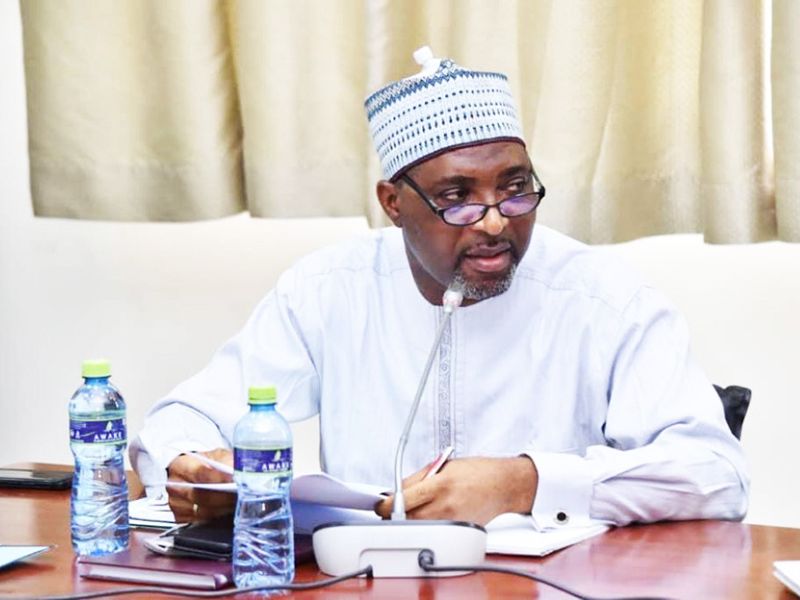
Alhaji Mubarak Muntaka, Minority Chief Whip
Rt Hon Alban Bagbin, Speaker of Parliament

The Minority in Parliament has sworn not to allow the House to work on any other bill if the committee working on the anti-gay bill does not speed up its work.

The Minority, led by its Chief Whip, Alhaji Mohammed Muntaka Mubarak accused the Chairman of the Committee of Constitutional, Legal and Parliamentary Affairs, Mr Kwame Anyimadu-Antwi, of deliberately delaying work on the bill so that it does not get passed.

Speaking on the floor of Parliament yesterday, Mr Mubarak said there is an easy way one can adopt when working on voluminous and controversial bills to speed up the work, but the Chairman has decided to adopt a method that is intended to slow the progress of the bill and for that reason no other bill will be allowed in Parliament until works on the anti-gay bill is completed.

“What you are doing at that Committee, Mr Speaker, I am repeating it to the Chairman, you are deliberately wasting time on the bill. You don’t want the bill to come to this house.

“Since this is the method that the  Chair of the Constitutional and Legal want to use to delay that bill, that bill was in this house before so many other bills, I can assure that any other bill you introduce in this house we shall resist it… We will make sure that that bill as long as it stays there no any other bill passes through this house, if you try to do that we shall oppose it because we see that it is deliberate.”

Kwame Anyimadu-Antwi, head of Constitutional, Legal Affairs Committee

The Asawase legislator made the comments when the Chairman of the Committee sought to clarify some allegations being levelled against him with regard to the bill.

Mr Anyimadu’s comment also comes after a Sponsor of the bill, Mr Emmanuel Kwesi Bedzrah, the Member for Ho Central, indicated on Monday that the bill was being delayed.

Public hearing on the Promotion of Proper Sexual Human Rights and Family Values Bill, also known as the anti-gay bill commenced in Parliament on November 11, 2021 after it was presented to Speaker of Parliament, Mr Alban Sumana Kingsford Bagbin, on June 6, 2021 by the Coalition of Members of Parliament (MPs) against LGBTQI through a private members bill and refered to the Committee.

According to Mr Mubarak, Article 106 (14) of the 1992 constitution, enjoins every committee of Parliament working on a bill not to delay works for more than three months.

“A bill introduced in Parliament by or on behalf of the President shall not be delayed for more than three months in any committee of Parliament”, the article reads.

The Minority Chief Whip said the assertion that the bill involves a lot of work could not be true because the Chairman of the Committee knows how and what to do when working on voluminous bills.

He noted that the Chairman of the committee has worked on so many other bills and had done a very good job and so the assertion that the anti-gay bill is voluminous is just an excuse.

“You are deliberately delaying the bill so don’t make excuses. If you wanted it to be fast you will know what to do. It is a fact because if you look at the method that he is using, this is not the first time a bill has been given to his committee and we know how he works.

“When you want to expedite things you know how you do it . So this one you are deliberately wasting time at the committee with the bill…”

Meanwhile, the Chairman of the Committee has indicated that it is on course with the bill and would present the report to the House soon.

He pointed out that the Committee is working on several bills, in addition to the 187 memoranda it received on the anti-gay bill alone and advised his colleagues not to succumb to pressure from the public in relation to the bill.

He expressed some level of surprise at the allegations being levelled against him, especially from sponsors of the bill, because according to him they (sponsors of the bill) have been with the committee throughout and know the status of the bill.

“Honourable Bedzrah, who raised the issue was at our last meeting so it is surprising that the same person who was aware of what the committee was doing will come and say the committee is doing nothing.”

Volta NPP appoints deputy regional executives

0
Mr Pope Yao Yevoo, Volta NPP Regional Secretary

The Volta Region branch of the New Patriotic Party (NPP) has started putting in place measures to attract more members and supporters into the party and help ‘break the 8’. In pursuit of this agenda, the regional executives have appointed deputies to the various executives that have been elected.

The elected regional officers, as directed by Article 9 (8) of the NPP Constitution, held a meeting at Keta on June 5, 2022, and appointed seven persons as regional officers, as stipulated in Article 9 (2) of the party’s Constitution.

A statement signed by the Regional Secretary of the Party, Mr. Pope Yao Yevoo, said Mr. Emmanuel Quarshie had been appointed Deputy Regional Organiser, Ms. Lebene Cate Gbeti, Deputy Regional Women Organiser, Mr. Philip Bokorgah, Deputy Regional Youth Organiser and Mr. Suala Abdulai, Deputy Regional Nasara Coordinator.

The rest are Mr. Albert Bediako, Regional Financial Secretary, Mr. Moses Shabanton Dutsrorgbe, Regional Research and Election Officer, and Mr. Perry Kwashie Nuwordu, Regional Communications Officer.

Mr. Yevoo, who congratulated the new regional executive members on their appointments, said the successful appointments marked the beginning of a new dawn for the party and the beginning of a strategic campaign in the region.

He stressed that the Volta Region NPP was ready for a vigorous campaign towards the pending General Elections, and was hopeful that the region would again work hard to increase the votes of the NPP over the previous elections.

He, therefore, urged members of the party in the region and sympathisers to embrace campaign activities when the time comes.

Fix roads in Ashanti or forget about breaking the 8 -Aduomi 

0
Kwabena Owusu Aduomi - Aspirant

The former Deputy Minister for Roads and  Highways, Kwabena Owusu-Aduomi, has said the New Patriotic Party (NPP) cannot count on the Ashanti Region to “break the 8” in the 2024 General Elections if the roads in the region remain unfixed.

He explained that this situation was irrespective of whoever the party elected as its flagbearer.

According to the defeated Ashanti Regional Chairman-hopeful, the electorate in the region, particularly NPP sympathisers, were not impressed with the performance of the ruling government in addressing their developmental needs.

Speaking to a local radio station in Kumasi, the former Member of Parliament (MP) for the Ejisu Constituency, said: “I toured all the 47 constituencies in the region ahead of the NPP Ashanti Delegates Conference, and the signals were clear; our people are disappointed. This means if elections were to be held today, we may not meet our expectations,” he said.

Mr. Owusu-Aduomi said if the NPP failed to improve on the road networks in the rural areas, which contribute significantly to our electoral votes, such as Manso Adubia and Kwabre, among others, “we may not even have the courage to campaign for their votes.”

The former Ejisu MP suggested that the re-elected Regional Chairman, Wontumi, and the Regional Minister, Simon Osei Mensah, must develop a strategy to address the road networks in the region, which remained a critical need of the people.

He also suggested that the party and government needed to team up with the constituency executives to identify critical roads that needed immediate attention in the constituencies, since the government could not fix every road in the region, otherwise, “we (NPP) should forget about breaking the 8,” he warned.

Meanwhile, Kwabena Owusu-Aduomi has pledged his unflinching support for the re-elected Regional Chairman, Bernard Antwi Boasiako, to win the 2024 elections.

“It was my wish to lead the party into Election 2024, but the delegates thought otherwise. All the elected members are capable of delivering the success of the party and need the support of the entire membership of the party. I’m committed to supporting them in any way I can,” he pledged.

ISSER launches Initiative to deepen digital financial inclusion

0
Professor Peter Quartey, Director, ISSER

The Institute of Statistical, Social and Economic Research (ISSER), University of Ghana has launched the Retail Finance Distribution (ReFinD) Research Initiative on deepening digital financial inclusion among the vulnerable.

Funded by the Bill and Melinda Gates Foundation, the five-year project which started in November 2021, will also focus on women’s access to financial services in Low- and Middle-Income Countries (LMICs), poor households, Small and Medium Enterprises and other retail businesses.

The initiative, which cost about US$5 million, will engage researchers from the Global North and the Global South and seek to foster future partnerships and capacity building through funded research. ISSER will coordinate the project, including recruiting, managing staff, and providing project leadership.

The initiative aims to demonstrate both how to effectively expand the reach of agent networks through public policy and commercial solutions that can plausibly be scaled up, and to advance public knowledge about the structural constraints limiting agent networks globally.

Professor Peter Quartey, Director, ISSER, said the project was a platform for sharing research findings, news and information, as well as resources for researchers, industry players, policymakers, and civil society organizations interested in collaborating on the initiative.

He said the ReFinD research initiative would see qualified research teams, including researchers based at ISSER and those in other locations in Ghana and across the globe, implement competitively selected projects on how to expand digital finance, especially retail distribution networks.

Recommendations and associated outputs, the ISSER Director further stated, would be aimed at promoting access to finance among marginalized groups like women and people experiencing poverty with focus on the research initiative, along with its potential to advance the knowledge and skills of researchers, compelling elements that strongly supported ISSER’s vision.

Professor Francis Annan, Scientific Co-Chair of the Project, speaking on the Framework Paper, said markets for digital financial services (DFS), particularly mobile money and agent banking had proven poverty alleviating benefits and were growing rapidly in LMICs and being transformed by several digitization initiatives.

However, he said, it turned out that retail agent networks were necessary building blocks to a robust digital financial ecosystem due to their ability to convert money between physical cash and digital currency and serve as onboarding channels for a broader set of digital financial tools and services.

He said the ReFinD project, as part of public and commercial solutions, would work to expand the digital finance retail agent network especially in rural areas by relaxing registration requirements for agents and creating a tiered agent registration system.

Also, he said, it would enable new rural agents’ business models, including traveling agents, agents embedded in nodal infrastructure like health clinics and subsidising the start-up capital for new agents in low transaction volume regions.

Prof. Annan expressed optimism that the research would advance research and provide rigorous evidence that would inform policy and practice about digital financing retailing in LMICs. Those, he explained, called for rigorous experimental variation in the market to generate actionable evidence and to justify commercial interventions, policies, and regulations.“But pursuing these require meaningful partnerships between academic researchers and various actors in the DF marketplace service providers, businesses, lenders, regulators, and practitioners,” he said.

Prof. Ernest Aryeetey, former Vice Chancellor, University of Ghana, Legon, and a member of Policy Committee of the Project, told the Ghana News Agency the project had been designed to ostensibly deepen digital financial inclusion among the vulnerable and allow for Ghanaian researchers to work with the world best researchers to enhance their competitiveness. He expressed optimism that policy makers would be in readiness for the outcomes to shape policy, reap the dividends therein and promote the development of the country.

Mr. Seth Garz, Senior Programmes Office, Bill and Melinda Gates Foundation, said as part of efforts to enhance inclusive digital financing, his outfit was undertaking programmes to play a catalytic role in broadening the reach of digital payment systems, particularly in poor and rural areas, and expanding the range of services available on those systems.

By James Amoh

Source: GNA

Ghana needs food and seed sovereignty

0
OPINION

The Peasant Farmers Association has warned that the food prices are likely to keep increasing unless the government intervenes. The World Bank has also raised alarm.

There is “unavailability” of agro-inputs – synthetic fertilizer, “certified” seeds, herbicides etc. As a consequence, it is imagined there will be shortage of food. The Chamber of Agribusiness recently called for the formation of a food security council. A misdiagnosis of the problem can lead you to think symptom is cause.

What has caused the multiple challenges bedeviling Ghana’s food and agricultural system? The causes are complex. A significant aspect, but often under-analyzed, is the persistent pursuit of the industrial agriculture model. Expanding monocultures, intensive use of petro-chemicals, and over-reliance on off-farm inputs are fundamental characteristics of industrial agriculture.

The currently unfolding challenge in accessing imported seeds and synthetic fertilizer is a tragic example of the over-reliance on off-farm inputs. Seeds are a pertinent example. Historically, all seed was farm saved.  Seeds were not an off-farm input to be purchased. To understand how this began to change read Kloppenburg’s First the Seed: The Political Economy of Plant Biotechnology.

An agro-inputs fair took place in Wa, Upper West Region, last week. Seeds were on sale? The seed market in Ghana, as across much of Africa, is in the crosshairs of transnational seed companies. Selling seeds is big business with big profits, and largely at the expense of small holder farmers.

To colonize Ghana’s food system requires creating dependency among its farmers on so-called high-yielding varieties and/or on genetically modified seeds (GMOs), which require ever-increasing quantities of synthetic fertilizers to enable high yields. And colonization always required a comprador class. The Plant Breeder’s Bill became law in 2020.

Seemingly copied and pasted from the International Union for the Protection of New Variety of plants (UPOV) guidelines, the law is designed to facilitate the colonization of Ghana’s food system, by enabling the privatization of biodiversity, including seeds. That farmers in Ghana are currently facing challenges accessing seeds should not surprise anyone.

The call for a “food security council” is unsurprising. Since 1996, La Via Campesina, the largest peasant movement in the world, more than 200 million strong, rejected food security and demanded food sovereignty.

La Via Campesina defines food sovereignty as the right of people to healthy and culturally appropriate food produced through ecologically sound and sustainable methods, and their right to define their own food and agriculture systems. It puts those who produce, distribute and consume food at the heart of food systems and policies rather than the demands of markets and corporations.

Food sovereignty is fundamentally different from food security. For example, the latter will allow, even encourage a country to import the food it needs. The obvious example is Ghana’s importation of rice. Food security enables dependency on externally procured seeds.

Food sovereignty advances seed sovereignty — control of seeds firmly in the hands of family farmers, who feed the majority of the people on the planet. Seed sovereignty recognizes the central role of these self-provisioning farmers in the preservation and development of seeds uniquely adapted to specific environmental context and the socio-cultural needs of peoples.

Seed sovereignty values biodiversity, so it is keen to safeguard indigenous seeds and open-pollinated varieties. Seed sovereignty rejects the privatization of seeds and plant genetic material. Food and seed sovereignty both require fundamental change to our current food system.

The current food and agricultural challenges make clear that structural transformation is necessary.  If you want to guarantee farmers will have seeds for cultivation, pursue seed sovereignty. Strengthening existing community-level seed production is the backbone of national seed sovereignty.

It has been long neglected. But do not be mistaken, seed sovereignty is not the production and control of seeds by local seed companies or transnational ones. For seed sovereignty, Ghana needs a plethora of farmer-managed seed systems and seed-saving cooperatives, which keeps control of seeds in small farmers’ hands.

Ghana also needs a progressive new policy that defends the right to food and small-holder farmer’s rights. These rights must be prioritized over the profits of agribusiness.

The current problems with the inability to access off-farm inputs –synthetic fertilizers, herbicides, and fungicides – are not best resolved by reliance on global markets.

This should be patently obvious now. Rather, guided by agroecology – the application of the science of ecology to the management of agricultural systems – farmers can rebuild soil health and fertility, increasingly utilizing and replenishing on-farm resources.

The objective is to reduce dependency of external inputs that also damage the environment. This transition to agroecology can enable more nutritious foods, more biodiversity, and more climate-resilient agriculture, more equitably organized to the benefit of farmers and people.

The anticipated food crisis requires changes. The goal-journey should be food sovereignty. This requires a transition to agroecological agriculture at scale and includes building national seed sovereignty. The pursuit of food sovereignty will take growers and eaters to work together to decolonize Ghana’s food system.

By Chaka Uzondu  

Source: myjoyonline.com

The Ghanaian Chronicle