Home Blog Page 274

Feature: Why the UK’s toughest immigration voices are often politicians of colour

0
Home Secretary Shabana Mahmood MP (L) is seen next to Justice Secretary and deputy Prime Minister David Lammy

When Sajid Javid remarked that he would not allow people like his own parents to enter the United Kingdom today, he was not making an offhand comment. He was articulating a view that has become increasingly central to British immigration politics.

The UK’s first ethnic minority home secretary said he opposed admitting unskilled workers and those who do not speak English. By his own criteria, neither his father, who arrived as an unskilled worker, nor his mother, who did not speak English, would have been permitted to settle in the country. Promoting his memoir, The Colour of Time, Javid was unambiguous: immigration must fall, English-language requirements should be tougher, and entry should be limited to skilled workers.

Far from being exceptional, Javid’s position points to a broader and increasingly visible pattern in British politics. Some of the most prominent anti-immigration positions of recent years have been articulated by ethnic minority politicians.

This pattern is most visible at the Home Office, the government department responsible for borders, asylum, detention and deportation. Since 2018, the role of home secretary has repeatedly been held by ethnic minority politicians, including Javid himself, Priti Patel, Suella Braverman and James Cleverly under Conservative governments, followed by Shabana Mahmood under Labour. Each, in turn, has advanced a tougher approach to immigration control.

Under Priti Patel, a points-based immigration system was introduced and the controversial plan to send asylum seekers to Rwanda was developed. Braverman went further still, declaring that seeing deportation flights take off would be her “dream” and her “obsession”. Yet despite the increasingly punitive tone, overall immigration numbers rose during this period. Rhetoric and outcomes diverged. Even so, the political signal from the Home Office was unmistakable: firmness on borders above all else.

The explanation for this phenomenon lies not simply in personal biography or individual conviction. Drawing on my research on ethnic minority representation in Britain, I argue that these appointments reflect a clear political logic. When political parties harden their stance on immigration, they often rely on minority politicians to act as reputational shields, figures who can front restrictive policies while insulating parties from accusations of racism.

Reputational shields matter because immigration control in the UK has long been racialised. From post-war restrictions on Commonwealth migration to the “hostile environment” policies associated with former Prime Minister Theresa May, border control has frequently intersected with race and belonging. When such policies are championed by ethnic minority politicians, criticism can more readily be reframed as ideological disagreement rather than racial exclusion.

Nowhere is this dynamic clearer than at the Home Office. The department effectively demands a hard line on immigration from its secretary, and appointing minority politicians to the role has repeatedly proven politically expedient. This does not mean white politicians are more liberal, as Theresa May’s record makes clear, but it does help explain why parties have been willing to place minority figures at the forefront of border enforcement. Four consecutive Conservative home secretaries were non-white.

This logic now extends beyond the Conservative Party. Labour’s appointment of Shabana Mahmood as home secretary marks a notable shift for a party that has historically sought to signal greater nuance on immigration. Since taking office, Mahmood has announced and is implementing sweeping asylum reforms, which she has described as “the most substantial reform to the UK’s asylum system in a generation”.

That Keir Starmer has placed a minority politician at the forefront of Labour’s tougher turn on immigration suggests an implicit recognition of this reputational logic. Mahmood’s identity does not determine her policy positions, but it does shape how those positions are received, particularly in a media and political environment where immigration debates are routinely filtered through accusations of racism. In this sense, Labour appears to have absorbed a lesson from Conservative governments about how ethnic minority representation can function as political cover when tightening border policy.

Immigration is now cited by about four in 10 Britons as the most important issue facing the country. For Labour, long uneasy talking about borders and enforcement, Mahmood’s stance represents a recalibration. Her measures include tightening the route from asylum to permanent settlement, reforming human rights legislation to facilitate removals, and suspending visas for countries that refuse to accept returned nationals.

She has been unapologetic, arguing that the pace and scale of immigration has destabilised communities and fuelled perceptions of unfairness. While Labour backbenchers and the Green Party have accused her of scapegoating migrants, figures on the political right have welcomed her approach.

It would, however, be a mistake to portray minority politicians as mere symbols or cynical mouthpieces. Many articulate their positions through narratives of fairness, legality and contribution. Javid has spoken of his family’s experiences of racism while emphasising that they entered the UK legally and worked hard. Mahmood has similarly argued that constituents who “did things the right way” feel aggrieved by irregular arrivals crossing the Channel in small boats.

These arguments reflect a broader shift in how immigration is discussed: less overtly in racial terms and more through the language of fairness, order and control. Yet this reframing does not escape the UK’s longer history of racialised immigration policy. Instead, ethnic minority politicians increasingly play a visible legitimising role within it.

The prominence of politicians of colour at the forefront of the UK’s immigration crackdown is therefore not a paradox. It is a window into how representation is operationalised in practice. When Sajid Javid says his parents would not be admitted today, he is not disavowing his background but signalling his political credibility.

The deeper question is what happens when such credibility is no longer enough to contain the moral and social consequences of a system built on exclusion. Race, borders and political legitimacy, and enduring questions about belonging and citizenship, remain tightly bound together in contemporary British politics.

By Parveen Akhtar

Credit: aljazeera.com

Health Benefits of Ginger

0
Benefits of Ginger

Ginger is one of the world’s most widely cultivated spice crops, valued for its distinctive flavour, medicinal properties, and versatility in food and beverages. From culinary uses to traditional medicines, ginger has global importance. While several countries grow ginger, one country produces far more than any other and leads the world in total output.

India is the largest ginger producer in the world. According to recent production statistics, India contributes the highest volume of ginger compared to all other nations. The country’s favourable climate, diverse agro-ecological zones, and longstanding tradition of spice cultivation have helped it maintain a commanding lead in ginger output.

India’s leadership in ginger production stems from several key advantages. The tropical and subtropical climate of many Indian states provides ideal conditions for ginger cultivation. Consistent rainfall, warm temperatures, and fertile soils support high yields. Ginger is also deeply integrated into Indian agriculture, cuisine and traditional medicine, encouraging widespread and continuous cultivation across rural areas.

Fights Germs

Certain chemical compounds in fresh ginger help your body ward off germs. They’re especially good at halting growth of bacteria like E.coli and shigellaand they may also keep viruses like RSV at bay.

Keeps Your Mouth Healthy

Ginger’s antibacterial power may also brighten your smile. Active compounds in ginger called gingerols keep oral bacteria from growing. These bacteria are the same ones that can cause periodontal disease, a serious gum infection.

Calms Nausea

The old wives’ tale may be true: Ginger helps if you’re trying to ease a queasy stomach, especially during pregnancy. It may work by breaking up and getting rid of built-up gas in your intestines. It might also help settle seasickness or nausea caused by chemotherapy.

Soothes Sore Muscles

Ginger won’t whisk away muscle pain on the spot, but it may tame soreness over time. In some studies, people with muscle aches from exercise who took ginger had less pain the next day than those who didn’t.

Eases Arthritis Symptoms

Ginger is an anti-inflammatory, which means it reduces swelling. That may be especially helpful for treating symptoms of both rheumatoid arthritis and osteoarthritis. You might get relief from pain and swelling either by taking ginger by mouth or by using a ginger compress or patch on your skin.

Curbs Cancer Growth

Some studies show that bioactive molecules in ginger may slow down the growth of some cancers like colorectal, gastric, ovarian, liver, skin, breast, and prostate cancer. But much more research is needed to see if this is true.

Lowers Blood Sugar

One recent small study suggested that ginger may help your body use insulin better. Larger studies are needed to see if ginger could help improve blood sugar levels.

Eases Period Pains

Got menstrual cramps? Ginger powder may help. In studies, women who took 1,500 milligrams of ginger powder once a day for 3 days during their cycle felt less pain than women who didn’t.

Lowers Cholesterol

A daily dose of ginger may help you battle your “bad” or LDL cholesterol levels. In a recent study, taking 5 grams of ginger a day for 3 months lowered people’s LDL cholesterol an average of 30 points.

Protects Against Disease

Ginger is loaded with antioxidants, compounds that prevent stress and damage to your body’s DNA. They may help your body fight off chronic diseases like high blood pressure, heart disease, and diseases of the lungs, plus promote healthy aging.

Relieves Indigestion

If you live with chronic indigestion, also called dyspepsia, ginger could bring some relief. Ginger before meals may make your system empty faster, leaving less time for food to sit and cause problems.

Credit: webmd

Macron urges Europe to start acting like world power

0
Emmanuel Macron

French President Emmanuel Macron has urged Europe to assert itself on the world stage, saying it is time to start acting like a “power”.

In the face of growing threats from China, Russia and now the US, he told a group of European newspapers that the continent faced a “wake-up call”.

“Are we ready to become a power? This is the question in the field of economy and finance, in defence and security, and in our democratic systems.

“In another era we might have said it is the moment to ‘assume our majority’,” he said ahead of an EU summit in Brussels later this week.

Macron repeated his call for EU-wide mutualised loans in order to raise hundreds of billions of euros needed for industrial investment.

“The time has come to launch a shared debt capacity to fund our future expense – eurobonds for the future. We need big European programmes to finance the best projects,” he said.

Similar calls in the past have met scepticism from Germany and other countries, who feel France wants to use Europe to bear a financial burden which it alone – because of its failure to reform – is unable to take up.

Macron admitted that France “has never had a balanced model, unlike certain economies of the north, which are built more on a sense of responsibility.

Credit: bbc.com

Somalia, Saudi Arabia sign agreement on military cooperation

0
Somali Defence Minister Ahmed Moallim Fiqi (left) signed a MOU with his Saudi counterpart, Khalid bin Salman bin Abdulaziz

Somalia has signed a “military cooperation” agreement with Saudi Arabia, weeks after inking a similar deal with Qatar, as Mogadishu seeks regional support against Israel’s recognition of the breakaway region of Somaliland.

The memorandum of understanding was signed on Monday between Somali Minister of Defence Ahmed Moallim Fiqi and his Saudi counterpart, Prince Khalid bin Salman bin Abdulaziz, in Riyadh.

The agreement “aims to strengthen the frameworks of defense and military cooperation between the two countries, and includes multiple areas of common interest, serving the strategic interests of both parties”, Somalia’s Ministry of Defence said.

Prince Khalid confirmed the agreement in a post on X.

But neither country provided further details.

Last month, Somalia signed a defence pact with Qatar, aimed at “strengthening military ties and security collaboration”, according to the Somali state news agency.

The pact with Qatar “focuses on military training, the exchange of expertise, the development of defence capabilities, and enhanced security cooperation, in support of efforts to promote regional security and stability”, it said.

Doha said the agreement was “aimed at strengthening areas of joint cooperation in a way that serves mutual interests and enhances defense partnerships”.

The diplomatic offensive by Somalia comes amid growing tensions in the Horn of Africa region following Israel’s world-first recognition of Somaliland in December. Mogadishu has warned that Israel plans to set up a military base in the breakaway region, which could be used to launch attacks on neighbouring countries.

Credit: aljazeera.com

Midweek English Premier League Fixtures & Previews

0
Haaland

Manchester City welcome Fulham to the Etihad Stadium

Fresh from their memorable triumph at Anfield, Manchester City will attempt to apply more pressure on Premier League title rivals Arsenal when they welcome Fulham to the Etihad Stadium on Wednesday night.

The two teams meet just over two months on from their nine-goal thriller at Craven Cottage which the Citizens won by a 5-4 scoreline.

Guardiola and co will welcome a return to the Etihad where they have accumulated 44 points from a possible 51 available across their last 17 Premier League home games.

Man City should be confident of success on Wednesday, as they have won each of their last 19 encounters against Fulham in all tournaments and have prevailed in all of their last 16 Premier League meetings with the Cottagers.

In addition, the Citizens love a midweek fixture at the Etihad, as they have not lost any of their last 55 Premier League home games played on a Tuesday, Wednesday or Thursday (W47 D8) since suffering a narrow 1-0 loss to Tottenham in May 2010.

If the reverse fixture is anything to go by, then we could be in for another Premier League cracker this week, with both sides expected to adopt a positive, attack-minded approach.

Taking into account Man City’s exceptional head-to-head record against Fulham, their strong home form, and the Cottagers’ recent dip, it is difficult to back against the Citizens on this occasions.

Credit: sportsmole.co.uk


Sunderland play host to reigning champions Liverpool

Two Premier League teams keen to make a swift return to winning ways butt heads at the Stadium of Light on Wednesday night, as Sunderland play host to reigning champions Liverpool.

Arne Slot, Liverpool coach

The Black Cats and the Reds meet just over two months on from playing out a 1-1 draw in the reverse fixture at Anfield where Nordi Mukiele’s own goal rescued a point late on for Arne Slot‘s side.

Dropping points late in matches has become a problem for the Reds, who have now conceded four 90th-minute winners in the top flight this season.

Defeat for Liverpool represents their eighth in the Premier League this season, twice as many as last season when they won the title, and head coach Arne Slot has a tricky task on his hands to secure Champions League qualification.

The Merseysiders can ill-afford to drop too many more points following a poor run of just one win in their last seven Premier League games.

After scoring his superb free kick against Man City, Szoboszlai was send off in the closing stages for denying a goalscoring opportunity and will now serve a one-match suspension against Sunderland.

Another closely-contested battle is in store, and with the Reds not quite firing on all cylinders at present, we are backing the Black Cats to claim at least a share of the spoils in front of a fired-up capacity crowd.

Credit: sportsmole.co.uk


Aston Villa and Brighton look to return to winning ways

Aston Villa and Brighton & Hove Albion will both be looking to return to winning ways in the Premier League when they do battle at Villa Park on Wednesday night.

Aston Villa, Rodgers

The two teams were involved in a seven-goal thriller in the reverse fixture just over two months ago, with Villa claiming a 4-3 victory at the Amex Stadium.

Since enjoying an eight-game winning streak in the Premier League towards the end of last year, Aston Villa have only won two of their last seven top-flight matches (D3 L3), dropping points in their first two fixtures of February against Brentford and Bournemouth.

Villa sit third in the Premier League table and nine points behind the Gunners at the summit, while there is an eight-point gap to sixth-placed Liverpool. However, the Midlands club cannot rest on their laurels, as they are scheduled to face the Merseysiders, Man City, Man United and Chelsea before the season comes to a close.

Emery and co have lost their last two Premier League home games to Brentford and Everton, and they are now looking to avoid becoming the first English top-flight team in history to lose three consecutive home matches having won their previous eight (or more) beforehand – Villa have not lost three on the bounce at home since November 2020 under former boss Dean Smith.

An entertaining, end-to-end contest could be in store on Wednesday, given that six of the last seven meetings between Aston Villa and Brighton have seen three or more goals scored, with both teams netting in five of those.

Credit: sportsmole.co.uk


Crystal PalaceBurnley faceoff at Selhurst Park

Fresh off ending a nine-match winless Premier League run, Crystal Palace host Burnley at Selhurst Park on Wednesday, seeking consecutive top-flight victories for the first time since December.


Ismaila Sarr, Crystal Palace

The precedent in this fixture undoubtedly favours the Eagles, who have won the last three meetings against the Clarets, and are backed to add to the Lancashire side’s misery by extending the visitors’ seven-match winless run in midweek league games.

Oliver Glasner was full of praise for the Palace supporters after Sunday’s 1-0 win over rivals Brighton & Hove Albion secured the club’s first top-flight victory in 10 games, since defeating Fulham 2-1 on December 7.

Aiming to restore some Selhurst Park confidence, the South London club head into this midweek round 26 fixture seeking their first home league victory since beating Brentford 2-0 at the start of November.

Indeed, three statistics ought to please Palace supporters heading into Wednesday: their club have won the last three meetings against Burnley without conceding; the Eagles are unbeaten in 11 of their last 12 midweek Premier League games; and the hosts are enjoying a nine-year unbeaten run against teams starting the day in the bottom three, winning 13 and drawing six.

Although Palace have found victories hard to come by at Selhurst Park lately, their historic dominance over teams in the bottom three and their winning streak against Burnley suggest they will find a way to prevail.

Credit: sportsmole.co.uk


FIXTURES

Aston Villa 19:30 Brighton

Crystal Palace 19:30 Burnley

Manchester City 19:30 Fulham

Nottingham Forest 19:30 Wolves

Sunderland 20:15 Liverpool

Trump threatens to block opening of US-Canada bridge

0
The Gordie Howe International Bridge will connect USA and Canada

President Donald Trump has threatened to block the opening of a bridge connecting the US and Canada until Washington is “fully compensated for everything” it has given to its northern neighbour.

The Gordie Howe International Bridge, connecting the Canadian province of Ontario to the US state of Michigan, would not open until Ottawa “treats the United States with the Fairness and Respect that we deserve”, Trump wrote on social media.

According to the project’s website, the bridge is being funded by the Canadian government but will be publicly owned by both Canada and Michigan.

Michigan Senator Elissa Slotkin, a Democrat, said closing the “incredibly important infrastructure project” would be “awful for our state’s economy”.

The move could have “serious repercussions” she said in a post on X: “Higher costs for Michigan businesses, less secure supply chains, and ultimately, fewer jobs.”

It is not clear how Trump could block its opening but he said negotiations would begin immediately, without elaborating.

The bridge, which spans the Detroit River, is expected to open to traffic pending formal tests and approvals in the early part of this year. Construction began in 2018, but the project has been a point of contention between the countries for more than a decade.

It is estimated to have cost $6.4bn CAD (£3.4bn), according to the Canadian Broadcasting Corporation (CBC).

In the statement on his Truth Social platform, Trump said that the US should own “at least one half of this asset”. He also suggested that Canada owned both the Canadian and US sides of the bridge.

The organisation developing the bridge, the Windsor-Detroit Bridge Authority, is wholly owned by the Canadian government, according to the project’s website.

Trump wrote: “The Canadian Government expects me, as President of the United States, to PERMIT them to just ‘take advantage of America!'”

“I will not allow this bridge to open until the United States is fully compensated for everything we have given them,” he added.

Credit: bbc.com

Kenya to confront Russia over ‘unacceptable’ use of its nationals in combat

0
Kenyan Clinton Mogesa, 29, died while fighting for Russia

Kenya says it will talk to Russia over growing reports that its citizens are being recruited to fight in the war in Ukraine.

Speaking to the BBC, Foreign Minister Musalia Mudavadi called the practice “unacceptable and clandestine”, and said Nairobi had shut down illegal recruiters and would urge Moscow to sign a deal banning the conscription of Kenyan soldiers.

The Kenyan government estimates that around 200 of its nationals have been recruited to fight for Russia.

The exact number remains unclear, as Nairobi maintains that none of them travelled through official channels.

“Kenya and Russia have had long relations since independence, literally. So this, in my view, becomes a very unfortunate episode of otherwise very positive and cordial relations between our two countries,” he added.

Mudavadi has told the BBC that Kenya’s engagement with Russia will focus on curbing illegal recruitment practices, including discussions on visa policy and bilateral labour agreements excluding military conscription.

He said the Kenyan authorities had closed more than 600 recruitment agencies suspected of duping Kenyans with promises of jobs overseas.

So far 27 Kenyans who had been fighting in Russia have been repatriated, he said, with authorities providing psychological care to address their trauma and “de-radicalise” them.

It is not clear how many Kenyans have died fighting for Russian forces, and Russia has not formally addressed such reports. Relatives who have approached the Russian embassy in Nairobi for answers report being turned away.

Pressure has been mounting on the Kenyan government to act after the recent discovery of more bodies of citizens who had been recruited to fight for Russian armed forces.

Credit: bbc.com

Guard Of Honour: Manhyia Reacts To Dormaahene’s Demand

0
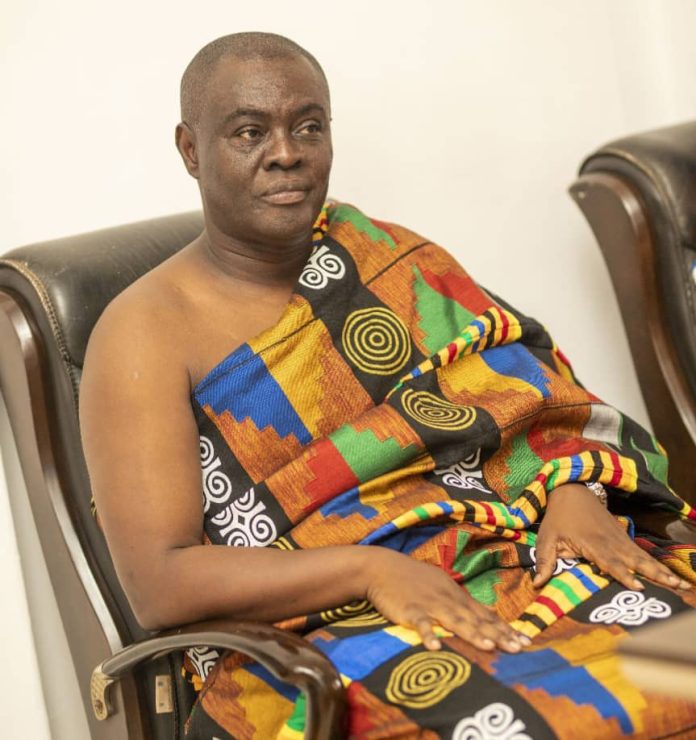
Nana Agyeman Badu - Dormaahene

The recent Akwasidae celebration at Manhyia Palace on February 1, 2026 saw the Asantehene, Nana Osei Tutu II, receiving a grand guard of honour from the Royal Police Ladies of the Ghana Police Service.

Otumfuo Osei Tutu II – Asantehene

There was an earlier one in Accra on January 6, 2026 when Asantehene Nana Osei Tutu II visited the Police Headquarters for the first time.

However, Dormaahene, Nana Agyemang Badu II’s subsequent criticism of the Inspector General of Police (IGP) Mr Christian Tetteh Yohuno has sparked debate.

Nana Agyemang Badu II is demanding similar guards of honour for all paramount chiefs across the country.

But the Manhyia Palace is not enthused about this and has, therefore, set the records straight about a longstanding tradition between Manhyia Palace and the law enforcement agency.

A Monarchical Historian at the Manhyia Palace, Mr Osei Bonsu Sarfo-Kantanka, aka Teacher Kantanka, in an exclusive interview with The Chronicle elaborated on a long-term tradition of guard of honour between Manhyia Palace and the Police, symbolising respect and law enforcement.

This bond is rooted in history. According to the revered Historian, on February 3, 1957 the Asantehene, Nana Agyemang Prempeh II, received a guard of honour by the Mounted Squadron (Troops) of the Gold Coast Police Force.

He went on that, it has been a tradition which Nana Osei Tutu II is continuing. Mr Sarfo-Kantanka further stated that, this is not a novelty but a testament to the Asante Kingdom’s significance in Ghana’s history.


For more news, join The Chronicle Newspaper channel on WhatsApp: https://whatsapp.com/channel/0029VbBSs55E50UqNPvSOm2z

Armah-Buah To Commission Nkaseim, Abompe Cooperative Mining Projects

0
Mr. Emmanuel Kofi Armah-Buah, Minister for Lands and Natural Resources

The Minister for Lands and Natural Resources, Mr. Emmanuel Kofi Armah-Buah, will later this month officially commission several cooperative mining projects as part of government efforts to promote responsible small-scale mining and clamp down on illegal mining activities.

The projects to be inaugurated include the long-awaited Nkaseim Cooperative Mining Project in the Asutifi South District; the Abompe–Kokotia Cooperative Mining Project in the Obuasi West District; a cooperative mining site in the Nzema East Municipality; and another at Atronsu in the Western North Region.

The Nkaseim project, together with the other sites, is expected to be commissioned towards the end of February at a colourful ceremony that will bring together traditional authorities, community members and key stakeholders in the mining sector.

The cooperative mining initiative forms part of government’s broader strategy to create sustainable employment opportunities for the youth, stimulate local economic activities and significantly reduce illegal mining, popularly referred to as galamsey.

Ahead of the commissioning, extensive preparations are underway to ensure a smooth and successful take-off. Officials of the Minerals Commission and the Responsible Cooperative Mining and Skills Development Programme (rCOMSDEP) completed the registration of cooperative members last year in line with directives from the sector minister.

The officials also carried out inspections of the various project sites to ensure full compliance with safety and environmental standards, while engaging relevant stakeholders as part of the registration and verification process.

Traditional authorities and residents in the beneficiary communities have welcomed the initiative, describing it as a timely intervention that will help promote orderly mining practices, protect the environment and improve livelihoods.


For more news, join The Chronicle Newspaper channel on WhatsApp: https://whatsapp.com/channel/0029VbBSs55E50UqNPvSOm2z

Parliament Must Do The People’s Business!

0
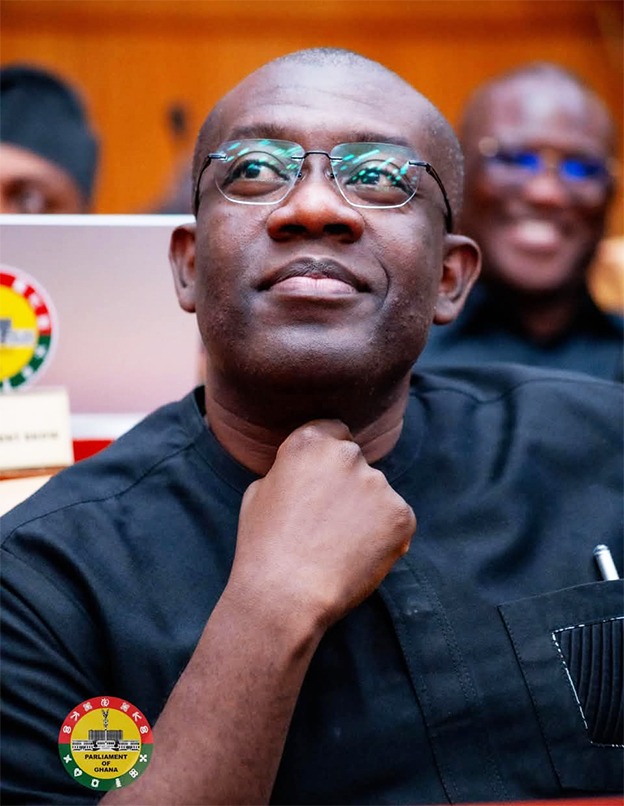
Kojo Oppong Nkrumah, MP; Ofoase Ayirebi

On Tuesday February 3, 2026, Parliament resumed sitting. This is the second session of the 9th parliament. As is required the house has advertised a long list of items on its business calendar for this first meeting. Reading through the agenda got me thinking about how much impact we will be making as legislators, in the lives of citizens by the time we are done with executing the business before us.

I’ve been asking myself, how much impact will the outlined agenda of the House, make in the lives of Our People. The average Ghanaian.  The unemployed, yet still-hopeful young men and women of our country.

Our Traders and hustlers squashed aboard trotros and long-distance Benz 207s flying on pot-holed highways.   Our business people and entrepreneurs huddling with accountants to make the January payroll, and meet their odious tax obligations. Our cocoa farmers with their cargo of precious beans, waiting expectantly for promises made to be met.

The People’s Business is what keeps our constituents and citizens awake at night.  And that ought to be our business too.

As Parliament has resumed, you can be sure there will be a lot of atmospherics. But will we do the kind of work that impacts our people’s lives?

Too often, Parliament reduces itself to a chamber of theatre. Debates are framed for clips. Interventions are judged by the loudness of the contributor’s voice than by the substance delivered. Important national questions are crowded out by partisan exchanges that may entertain, but rarely enlighten; and producing heat, but not much light.

Yet outside the chamber, young Ghanaians are dealing with realities so harsh, they have with little appetite for parliamentary drama. Jobs are scarce. Food prices are high. Manufacturing is struggling. The cedi’s prop up is benefiting some and hurting others. Cocoa farmers are waiting to be paid. Security concerns across West AFrica are a source of serious discomfort.  Our regional address impacts our country’s risk profile.

Unfortunately, the nation’s deliberative chamber spends less time on these key matters and more time on performatives.  We allow more time on routine ‘Government Business’ and very little time for the necessary policy and program analysis and assessments on the key things that will impact the lives of our people the most.

As we resume work in 2026, we must take ourselves – as The People’s Representatives –   a lot more seriously than we have done in the past, or risk becoming irrelevant to the very people whose trust we have sworn to respect and uphold.

Out of the many items that have been listed as business for this first meeting of the second session, about five (5) issues or items are of personal interest and will engage my utmost attention. If pursued, I believe they will significantly impact the lives of my constituents and millions of other Ghanaians nationwide.

First, is the motion for an inquiry into the high levels of failures in the 2025 WASSCE which has already condemned thousands of young Ghanaians to an uncertain future, buy which has been shoved to the backburner. As will be recalled over 50% of candidates failed in core mathematics and an overall poor performance across core subjects. The initial public shock was quickly and irresponsibly reduced to partisan ping-pong, while the executive branch announced that it will do an internal review.

In December 2025, the Hon Patrick Boamah and myself filed a motion requesting The Speaker to initiate a Parliamentary Inquiry, so that this house of oversight could have a dispassionate deep-dive into the causes, and make recommendations to address them. The future of our unprecedented number of young ones who failed, cannot be ignored simply because it is no longer newsworthy.  It is worthy pursuit because it is The People’s Business.

Second, is the inquiry into the gold trading losses recorded in 2025. Ghana cannot normalise large public financial losses without properly explaining them in order not to repeat them. It is obvious that the Government initially panicked and sought to cover up with claims that there were no losses, or that the losses should be classified as so-called “economic costs.”

No one was hoodwinked by the obfuscation. Now that the temperature has come down, we need to do the sensible thing.  We must understand what caused this loss, and how to prevent it from recurring. That is what any serious democracy does. That is what our citizens reasonably expect of us. Transparency is not about looking for scapegoats. It is about restoring discipline and trust in the management of public resources.  This is the People’s Business.

Third, is an inquiry into the rising cost of manufacturing in Ghana. We speak often about industrialisation, but manufacturers are battling high energy costs, logistics inefficiencies, financing constraints, and regulatory burdens. Until these are addressed candidly, manufacturing will remain a distant aspiration rather than a driver of employment.

Between January 2025 and now, electricity bills alone have gone up by 26% making nonsense of any claim that industrialisation is set to boom and create jobs. More importantly, it puts our markets at risk because we are increasingly becoming dependent on imports from countries where cost of production is better managed. Parliament ought to be interested in understanding, in a nonpartisan and dispassionate manner, why this is happening and, even more importantly, what we can agree on as solutions, not slogans.

Fourth, I am following up on my Private Member’s Amendment Bill to the Public Financial Management framework. This No Plan, No Cash Bill is aimed at making it illegal for the treasury to fund any program that is not in the National Development Plan. Simple.

If adopted, this will save some billions of public money spent on pet projects for which we have not agreed on.  Indeed, I believe if we had such a law as a guardrail for the last NPP administration, it would have been beneficial for all. Future Governments should have this benefit. Sound public finance is not an abstract ideal. It is a necessity that saves money to do the People’s Business.

Finally, we must ensure deeper scrutiny of the bills and programs of Government. It has now become the norm of the NDC government to bring all bills under a certificate of urgency. Don’t get me wrong. The rules provide for that. But they are to be used sparingly. Having become the norm now, there is little room for anyone to contribute meaningfully to legislation.

The days when Civil Society organisations, media and stakeholders could scrutinise and offer inputs into legislation have now become a thing of the past. Bills are brought by 2pm and passed by 12 midnight. We as a house need to have the opportunity to do deeper scrutiny of bills and engagement with stakeholders to ensure that their preferences are reflected in the laws passed. The recent 24-hour economy authority bill has shown that the government can easily pull wool over the people’s eyes if care is not taken.

Additionally, we must continue advocacy for Government to furnish Parliament with its program and policy documents so we can exercise better oversight. In any serious democracy, MPs are not encouraged to go fishing for government policy or program documents to effect oversight. The executive prioritises informing the house properly, so the house does its job of oversight well.

Out of the 16 program documents we have been requesting for, only one (24hour economy policy) has been laid before the house. We will need to step up our advocacy and employ other tools to compel government to make the documents available to Parliament. This is what will ensure effective oversight.

Some have tried to frame these efforts as revisiting past policy failures. That misses the point. Democracies grow stronger by learning from experience, not by burying it. Good ideas do not lose their value because they emerge from difficult chapters. In fact, the reverse is the case.

Young Ghanaians and young West Africans are watching us closely. They care about jobs, food prices, security, and opportunity in an increasingly uncertain world. The Parliament of Ghana must rise to that expectation, for I hear more jeers than cheers from our young people when we indulge in drama that’s unbefitting even of the school-yard.

If every inquiry is dismissed because of who proposed it, accountability suffers. If every idea is judged by the party of its originators, progress slows. And if Parliament loses its place as a forum for serious national discourse and problem-solving, public trust will continue to erode.

This session is an opportunity to do better.

We can disagree without being dismissive or disagreeable. We can agree on more than our personal emoluments.  And we must understand that building Ghana requires a continuous stream of good ideas, not interminable arguments over who credit is owed. It requires learning from previous policy failures and successes alike, making them stronger rungs on the ladder to climb higher and do better.

Inquiries into education outcomes, public financial discipline, food sovereignty, industrial competitiveness, and economic transparency are critical.  We must mainstream them for serious attention. Our constituents deserve it.  These are among the key reasons they chose us.  Let us focus. The People’s Business is serious business.

We were not elected to act in a series for Netflix!

We were elected to do The People’s Business!

Let’s do more of that.

By Kojo Oppong Nkrumah, MP; Ofoase / Ayirebi 


For more news, join The Chronicle Newspaper channel on WhatsApp: https://whatsapp.com/channel/0029VbBSs55E50UqNPvSOm2z

The Ghanaian Chronicle