Home Blog Page 2689

At least 25 killed as bus plunges into gorge in India

0
Bus plunges into gorge in India

At least 25 people have died after a bus plunged into a gorge in the northern Indian state of Uttarakhand. Officials said at least 40 were on board when the bus veered off the road and fell into a ravine in Pauri Garhwal district on Tuesday night.

So far, 21 passengers have been rescued following an overnight operation led by the state’s disaster response force.

Prime Minister Narendra Modi tweeted that his “thoughts are with the bereaved families”.

The bus was carrying a wedding procession from Laldhang to Bironkhal village in Uttarakhand when the accident happened. The cause of the crash was not immediately known, but state authorities said they were investigating the incident.

Senior police official Swatantra Kumar Singh told ANI news agency that a rescue operation was still under way on Wednesday.

Pictures from the scene showed the mangled remains of the bus lying near a steep hill as rescue personnel helped pull out the survivors. Buses are a popular mode of transport in India, especially in smaller towns. But operators often flout safety rules and pack them beyond their capacity

Credit: bbc.com

Hajj pilgrim arrested by Saudi Arabia returns to Iran

0
Hajj pilgrimage

An Iranian national who was arrested some three months ago by Saudi Arabian authorities during the Hajj pilgrimage has returned to Iran.

Local media confirmed on Wednesday the arrival of Khalil Dardmand on Monday via “the airway of a Persian Gulf neighbouring country”.

Iran’s Foreign Minister Hossein Amirabdollahian had previously said his counterparts from Oman and Iraq mediated in efforts to release the Iranian citizen.

Dardmand was purportedly arrested after posting on his Twitter account an image of slain Iranian General Qassem Soleimani beside the Kaaba, the building at the centre of the Masjid al-Haram mosque in Mecca.

Soleimani, the commander of the Quds Force of the Islamic Revolutionary Guard Corps and architect of Iran’s regional security apparatus, was assassinated by the United States on January 3, 2020, in a drone strike in Iraq’s capital, Baghdad.

Credit: Aljazeera

Greenpeace campaigners disrupt Liz Truss conference speech

0
Liz Truss is pictured delivering her keynote address at the Conservative Party conference

Protesters from the environmental group Greenpeace were ejected from the Conservative Party conference on Wednesday after disrupting British Prime Minister Liz Truss’s first speech as leader.

Two female activists held up a flag that read “Who voted for this?” before they were escorted out of the conference center in Birmingham by security guards as the crowd booed.

“Let’s get them removed,” said Truss, to applause. Truss quipped following their removal that the “anti-growth coalition” had arrived at the hall “a bit too early.”

Greenpeace confirmed that its activists were responsible for the protest. In a tweet, the group said activists were there to “denounce the Prime Minister ‘shredding’ her party’s 2019 manifesto promises.”

“The PM is U-turning on fracking, strong climate action, and world-leading environmental protections. Who voted for this?”

The conference was taking place amid open party dissent following a screeching U-turn on Monday over a proposal to cut the top rate of UK income tax – an announcement that sent the pound to historic lows and sparked market chaos.

Credit: cnn.com

South Korea military apologises after failed missile launch

0
South Korea missile crashes during drill

South Korea’s military has apologised after a failed missile launch during a joint drill with the United States sparked alarm among residents in the coastal city of Gangneung.

They reported hearing an explosion and seeing a fire overnight.

But the military, which has said there were no casualties, did not acknowledge the incident until seven hours later.

The launch was in response to North Korea firing a missile over Japan early on Tuesday.

This is the first time Pyongyang has flown a missile over Japan since 2017 – and it prompted a show of force from the US, Japan and South Korea which conducted military drills. Seoul and Washington also fired a volley of missiles into the East Sea – also known as the Sea of Japan – between the Korean peninsula and Japan.

The South Korean military later confirmed that one of their missiles failed soon after it was launched and crashed – this was separate to the ones launched with the US.                                                        Credit: bbc.com

Proven Health Benefits of Garlic

0
Garlic

Current research shows that garlic may have some real health benefits, such as protection against the common cold and the ability to help lower blood pressure and cholesterol levels

“Let food be thy medicine, and medicine be thy food.”

Those are famous words from the ancient Greek physician Hippocrates, often called the father of Western medicine.

He prescribed garlic to treat a variety of medical conditions — and modern science has confirmed many of these beneficial health effects.

Here are health benefits of garlic that are supported by human research

1.  Garlic contains compounds with potent medicinal properties

Garlic is a plant in the Allium (onion) family. It is closely related to onions, shallots, and leeks. Each segment of a garlic bulb is called a clove. There are about 10–20 cloves in a single bulb, give or take.

Garlic grows in many parts of the world and is a popular ingredient in cooking, due to its strong smell and delicious taste.

However, throughout ancient history, the main use of garlic was for its health and medicinal properties.

Its use was well documented by many major civilizations, including the Egyptians, Babylonians, Greeks, Romans, and Chinese.

Scientists now know that most of garlic’s health benefits are caused by sulfur compounds formed when a garlic clove is chopped, crushed, or chewed.

Perhaps the most well-known compound is allicin. However, allicin is an unstable compound that is only briefly present in fresh garlic after it’s been cut or crushed.

Other compounds that may play a role in garlic’s health benefits include diallyl disulfide and s-allyl cysteine.

The sulfur compounds from garlic enter your body from the digestive tract. They then travel all over your body, exerting strong biological effects.

Garlic is highly nutritious but has very few calories

Calorie for calorie, garlic is incredibly nutritious.

A single clove (3 grams) of raw garlic contains.

  • Manganese: 2% of the daily value (DV)
  • Vitamin B6: 2% of the DV
  • Vitamin C: 1% of the DV
  • Selenium: 1% of the DV
  • Fiber: 0.06 grams

This comes with 4.5 calories, 0.2 grams of protein, and 1 gram of carbs.

Garlic also contains trace amounts of various other nutrients.

3. Garlic can help protect against illness, including the common cold

Garlic supplements are known to boost the function of the immune system.

A large, 12-week study found that a daily garlic supplement reduced the number of colds by 63% compared with a placebo.

The average length of cold symptoms was also reduced by 70%, from 5 days in the placebo group to just 1.5 days in the garlic group.

Another study found that a high dose of aged garlic extract (2.56 grams per day) reduced the number of days sick with cold or flu by 61%.

However, one review concluded that the evidence is insufficient and more research is needed.

Despite the lack of strong evidence, adding garlic to your diet may be worth trying if you often get colds.

4. The active compounds in garlic can reduce blood pressure

Cardiovascular diseases like heart attack and stroke are responsible for more deaths than almost any other condition.

High blood pressure, or hypertension, is one of the most important factors that may lead to these diseases.

Human studies have found garlic supplements to have a significant impact on reducing blood pressure in people with high blood pressure.

In one study, 600–1,500 mg of aged garlic extract were just as effective as the drug Atenolol at reducing blood pressure over a 24-week period. Supplement doses must be fairly high to have the desired effects. The amount needed is equivalent to about four cloves of garlic per day.

5. Garlic improves cholesterol levels, which may lower the risk of heart disease

Garlic can lower total and LDL (bad) cholesterol. For those with high cholesterol, garlic supplements appear to reduce total and LDL cholesterol by about 10–15%.

Looking at LDL (bad) and HDL (good) cholesterol specifically, garlic appears to lower LDL but has no reliable effect on HDL.

High triglyceride levels are another known risk factor for heart disease, but garlic seems to have no significant effects on triglyceride levels.

6. Garlic contains antioxidants that may help prevent Alzheimer’s disease and dementia

Oxidative damage from free radicals contributes to the aging process.

Garlic contains antioxidants that support the body’s protective mechanisms against oxidative damage.

High doses of garlic supplements have been shown to increase antioxidant enzymes in humans, as well as significantly reduce oxidative stress in people with high blood pressure.

The combined effects on reducing cholesterol and blood pressure, as well as the antioxidant properties, may reduce the risk of common brain conditions like Alzheimer’s disease and dementia.

7. Garlic may help you live longer

The potential effects of garlic on longevity are basically impossible to prove in humans.

But given the beneficial effects on important risk factors like blood pressure, it makes sense that garlic could help you live longer.

The fact that it can fight infectious diseases is also an important factor, because these are common causes of death, especially in the elderly or people with dysfunctional immune systems.

Feature: Female Genital Mutilation; showing its ugly face in modern era?

0
FGM

Female genital mutilation (FGM) involves the partial or total removal of external female genitalia or other injury to the female genital organs for non-medical reasons

FGM is practiced by several ethnic groups including the Kusasis, Frafras, Kassenas, Nankanis, Busangas, Wallas, Dagarbas, Builsas and Sisalas, who live mainly in the Upper East, Upper West and Northern regions of Ghana, and the migrant population in the south.

As a result, the Upper East and Upper West have the highest prevalence of FGM, at 13.0% and 32.5% respectively (of women aged 15-49), and all other regions have a prevalence of less than 3%.

The Volta region, along the east coast, has the lowest prevalence, at 0.3%.  Women aged 15-49 who live in rural areas are more likely to undergo FGM (3.6%) than those living in urban areas (1.2%).

The prevalence of FGM is inversely correlated with level of education and wealth, and 94.4% of women aged 15-49 who have heard of FGM believe the practice should be stopped.

It is imperative to protect women and girls from all violence and harmful practices because it is not only a moral issue but an infringement of their human rights as well. Ending FGM is critical to the economic and social progress of every nation.

FGM is recognized internationally as a violation of the human rights of girls and women. It reflects deep-rooted inequality between the sexes, and constitutes an extreme form of discrimination against girls and women. It is nearly always carried out on minors and is a violation of the rights of children.

The practice also violates a person’s rights to health, security and physical integrity; the right to be free from torture and cruel, inhuman or degrading treatment; and the right to life, in instances when the procedure results in death.

FGM has no health benefits, and it harms girls and women in many ways.  Although all forms of FGM are associated with increased risk of health complications, the risk is greater with more severe forms of FGM.

FGC can have immediate and life-long health harms on the victim. The severity of health harms depends on the type of mutilation but includes immediate physical consequences such as excruciating pain, hemorrhage, localized and ascending genitourinary infection resulting from non-use of aseptic techniques during the cutting, and death.

Also, it is deeply rooted in cultural beliefs and social norms perpetuated over generations which are related to ideals of femininity and modesty including the notion that FGM/C will preserve virginity and reduce promiscuity, increasing girls’ marriage ability.

The decision-making process to perform FGM/C is therefore influenced by social norms and community beliefs and usually lies within the confines of households, involving more than one individual of the family—each one with different power over the decision.

In most countries, mother, grandmothers, and other women (e.g., aunties) are the key decision-makers with fathers and other men playing a limited role in the decision-making process.

The impacts of FGM occur at the time of the procedure and at adulthood, particularly motherhood. All forms of FGM have psychological effects, particularly related to female sexuality and sexual relationships.

According to Research, each year, not less than three million women are circumcised, and more hundred million females have already been circumcised.

In many African societies, the practice of female genital mutilation (FGM) is a serious cultural practice.

Several studies have demonstrated a significant association between FGM and various gynecological and pregnancy complications. Yet, women, who bear these consequences, continue with the FGM practice.

Many factors have shown a significant relationship with FGM practice, and among these include demographic factors such as age, educational background, religion, culture and economic status.

In sub-Saharan African nations, studies on economic status had a significant relation with FGM. Women from better economic homes were less likely to involve in FGM. And younger and well-educated women are negatively associated with FGM practice.

Additionally, a study in northern Ghana found a significant relationship between a woman’s demographic characteristics and FGM. Predictors’ factors were aged 35–49 years, no formal education or primary education, and married women.

It high time FGM is ended in the country. It is gradually damaging women in the rural areas or the less privileged who are forced to practice it.

In study report from the World Health Organization, the economic costs of treating health complications of FGM has found that the current costs for 27 countries where data were available totaled 1.4 billion USD during a one-year period (2018).

This amount is expected to rise to 2.3 billion in 30 years (2047) if FGM prevalence remains the same – corresponding to a 68% increase in the costs of inaction. However, if countries abandon FGM, these costs would decrease by 60% over the next 30 year.

Since 1997, great efforts have been made to counteract FGM, through research, work within communities, and changes in public policy. In 2007, UNFPA and UNICEF initiated the Joint Programme on Female Genital Mutilation/Cutting to accelerate the abandonment of the practice.

In 2008, WHO together with nine other United Nations partners, issued a statement on the elimination of FGM to support increased advocacy for its abandonment, called: “Eliminating female genital mutilation: an interagency statement”. This statement provided evidence collected over the previous decade about the practice of FGM.

In 2010, WHO published the “Global strategy to stop health care providers from performing female genital mutilation” in collaboration with other key UN agencies and international organizations.

WHO supports countries to implement this strategy? Also, in December 2012, the UN General Assembly adopted a resolution on the elimination of female genital mutilation.

In May 2016, WHO in collaboration with the UNFPA-UNICEF joint programme on FGM launched the first evidence-based guidelines on the management of health complications from FGM?

The guidelines were developed based on a systematic review of the best available evidence on health interventions for women living with FGM.

In 2018, WHO launched a clinical handbook on FGM to improve knowledge, attitudes, and skills of health care providers in preventing and managing the complications of FGM?

In 2021, UNICEF, with the support of WHO, UNFPA and Population Council outlined a research agenda for FGM. To complement this agenda, WHO developed ethical guidance for conducting FGM-related research?

The WHO will soon launch a training manual on person-centered communication (PCC), a counseling approach that encourages health care providers to challenge their FGM-related attitudes and build their communication skills to effectively provide FGM prevention counseling.

FGM should be abolished as soon as possible because it is gender-based violence, steals girls’ futures, extends poverty, force girls out of school, can be traumatizing and is a violation of girls’ and women’s rights.

By Florence Kissiwa

Today’s Europa League Fixtures & Preview

0
Mourinho, Roma

Romahost Real Betis in supremacy clash

The two favourites for Group C supremacy clash at Stadio Olimpico on Thursday, as Roma and Real Betis continue their Europa League campaigns.

With a perfect record so far, the visitors arrive in the Eternal City leading their hosts by three points in the standings, while both are faring well domestically. Beaten on the opening day of the Europa League group stage, Roma lost to Bulgarian champions Ludogorets at the start of September, but then bounced back with a victory over HJK Helsinki last time out.

Set to meet Real Betis twice in short order, with the return fixture in Seville scheduled a week after Thursday’s encounter at the Olimpico, the Giallorossi cannot afford to slip up – particularly as Ludogorets may well take maximum points from their double-header with HJK.

Now hosting their Spanish counterparts for the first time ever in a competitive game, Roma have gone unbeaten throughout their last 20 home matches in Europe; winning 14 times in the process.After seeing off HJK in their first Europa League fixture, Betis were pushed closer by Ludogorets last time out; ultimately winning 3-2 at Benito Villamarin. They therefore sit at the summit of Group C, and can exert a stranglehold on its leadership should they come out on top in their tussles with Roma.

Credit: sportsmole.co.uk

Arteta, Arsenal

Arsenal seek second win against Bodø/Glimt

Arsenal will seek a second win from as many matches in the 2022-23 Europa League when they welcome Norway’s Bodo/Glimt to the Emirates Stadium. The Gunners opened their continental proceedings with a 2-1 win over FC Zurich, while their visitors have taken four points from their opening two games to sit atop the rankings.

With no fewer than nine matches being played this month, Arsenal’s improving squad depth will come to the fore in domestic and continental action, and Arteta’s side welcome Bodo/Glimt. Bodo/Glimt certainly command plenty of respect having made waves in Europe over the past 12 months, and Arsenal are sure to keep their best players in reserve for the imminent showdown with Liverpool.

However, Arteta’s youthful attackers are ready to seize their opportunity with both hands, and we can only envisage the Gunners making it two for two in the Europa League.

Credit: sportsmole.co.uk


Franco Foda, FC Zurich coach

Zürichwelcome PSV Eindhoven to Letzigrund Stadion

Round three of the 2022-23 Europa League group-stage campaign sees FC Zurich welcome PSV Eindhoven to the Letzigrund Stadion.With the teams yet to pick up a victory from the opening two matchdays, they will both be keen to come away with all three points in this one.

PSV turn their attention to continental affairs where they currently sit third in Group A, albeit with a game in hand as their meeting against Arsenal originally scheduled for September 15 was postponed due to Queen Elizabeth II’s death.

Zurich have on the other hand snapped a three-game losing streak across three different competitions which they suffered prior to the international break. Off the back of three straight home defeats heading into Thursday’s clash, the hosts have it all to do in their quest to avoid another disappointing outing in front of their fans.Zurich have endured a poor start to the current campaign and PSV will be aiming to add to their woes.

Credit: sportsmole.co.uk

Erik ten Hag, Manchester United

Omonia Nicosia in high-profile clash with Manchester United

Manchester United will fly out to Cyprus to take on Omonia Nicosia in the UEFA Europa League on Thursday. The Cypriot side have lost their first two group stage games against Sheriff Tiraspol and Real Sociedad.

Since their 2-1 defeat against Real Sociedad, Omonia have picked up two wins on the trot in the league, namely against Paralimni and Doxa.Neil Lennon’s men have also managed to keep a clean sheet in both games and that’s an encouraging turn of events ahead of their high-profile clash with Manchester United. They are in desperate need of a positive result as another defeat might be too difficult to recover from in Group E.

They will be hoping that they can hurt their wounded opponents, who will be quite downcast after their 6-3 loss to Manchester City last Sunday.

Fans will be hoping to see a response from their side on Thursday and United have a great chance to bounce back against relatively weaker opposition.

Credit: sportskeeda.com


Imanol Alguacil, Real Sociedad

Underdogs Sheriff in search of 2nd win against Sociedad

Moldovan champions Sheriff Tiraspol welcome Spanish opposition to the Sheriff Stadium for just the second time in their history, as they take on an in-form Real Sociedad.Fearless as always, having racked up 24 shots across those two games, the European minnows, Sheriff Tiraspol,  are a completely different side from the one that shocked the world last season, with their unbelievable 2-1 win at the Santiago Bernabeu.

It is a remarkable underdog story, but a competitive performance against Manchester United suggests that the Moldovans cannot be completely disregarded as they go in search of a second Spanish scalp in as many years.

After their impressive, if controversial, 1-0 win over Manchester United at Old Trafford, Imanol Alguacil‘s Real Sociedad are top of Group E, after two narrow wins from two.

Sheriff seem to have a clean bill of health heading into this European encounter, and could go with the same side that faced both Omonia and Manchester United in their previous group-stage games.

Credit: sportsmole.co.uk

Ashanti NDC In Turmoil; Subin calls for Fact-Finding Committee Report…Accra-based Eagle Eyesight also issues 72-hr ultimatum

0
Patrick Winibood Ndego, convener of Eagle Eyesight addressing the media in Kumasi

Members and sympathisers of the National Democratic Congress (NDC) in the Subin constituency have called on Dr. Samuel Sarpong, chairman of the 7-member fact finding Committee, which investigated allegations against Ashanti regional executives of the party to come out andstate his position regarding the findings of the Committee.

Dr. Samuel Sarpong – Committee Chairman

The Spokesperson of concerned group of members of the party, Joseph Attivor, said Dr.Sarpong would need to publicly endorse the authenticity of the said report or state otherwise, since the said report has come to indict the integrity of the members of the Committee.

He said the Ashanti Council of Elders must prevail on the former KMA boss to make the report public for them to ascertain whether the regional executives were truly indicted in the face of the allegations leveled against them by Enoch Amoako-Nsiah or not.

The group said it should not be difficult for the chairman to state whether the report is true, genuine or valid, in order to safeguard his credibility.

“Dr.Sarpong’s silence is disturbing. His credibility as a leading member of the party, who is also aspiring to partner the flag bearer isat stake and he must disabuse the minds of party members who think he(Sarpong) is behind the Ashanti project against “aliens” (non-Asantes)vying for leadership positions in the region”, the  group argued.

Mr. Enoch Amoako-Nsiah, a former Ashanti Regional Security Co-ordinator has alleged that some NDC Regional Executives compromised their positions to the detriment of their own party’s interest and that, thesaid Regional Executives might have sold out the fortunes of the party to their political opponents.

As a result, the Committee was appointed and went on to indict the Regional chairman and the Regional Secretary, saying the Regional Secretary’s conduct went to reinforce the perception of the public that he compromised his position, which the Committee saw as a betrayal of the party.

The committee also noted that there was no proper co-ordination among the Regional Executives and that “No teamwork and factions were created and as a result of that these factions operated to their own advantage,” and that “Generally, the Regional Chairman exhibited gross

incompetence”.

The Committee, however, made recommendations without any tangible evidence to establish the truth or otherwise of the allegations.

The committee finished its findings some five months ago but the unsigned report which is also not dated has been shelved until some members of the Committee leaked it out to the media.

The Committee was chaired by Dr. Samuel Sarpong, with Mr. Jonny Osei Kofi as the Secretary.

The other members are; Mr.Kwabena Bempong Marfo, Prof.Ohene Adjei, Ms. Juliet Abena Takyiwa, Mr.Kaakyire Oppong Kyekyeku and Mr.Kwadwo Adu Gyamfi.

Eagle Eyesight

In another development, the Eagle Eyesight, a pressure group in the opposition National Democratic Congress (NDC) has given 72 hours ultimatum to Mr. Augustus Andrews Nana Kwasi, Kwame Zu and Isham Alhassan, the Ashanti regional Chairman, Secretary, Organiser respectively to resign.

Failure to do so, the group threatens to call on the party hierarchy to suspend or remove them from office over bribery allegations said to have hit the party at the 2020 elections.

The group alleged that some National Executives are allegedly trying to water down revelations made by report of a Committee, hence their intervention.

At a press conference in Kumasi on Monday, this week, Patrick Winbood Ndego, the Convener of the Eagle Eyesight, threatened that the group would not hesitate to lock up the National Headquarters if the named regional executives are not suspended in the next 72 hours.

He hinted that the group would come after anyone who is found to be destroying the party.

Mr.Winbood Ndego explained that, the Eagle Eyesight takes the purported bribery allegations made against some of the Ashanti regional Executives serious and reported by a section of the media,which publications have traumatised the group, hence their decision to travel to Kumasi to ascertain the veracity of the case.

According to the convener, upon reaching Kumasi, they met with some Ashanti Regional Council of Elders who magnanimously gave the Eagle Eyesight a copy of the report.

He stated that the said report had made shocking and damming revelations against some of the executives and party elders.

He said they were very informed by the Council of Elders that copies of the report have been submitted to the National Executives Committee, National Council of Elders, Office of the former President John Dramani Mahama and other dignitaries of the party, yet no action

have been taken against the executives, allegedly contributed  to the defeat of the party in the 2020 general elections by selling elections, to the governing New Patriotic Party (NPP) through negligence.

He stated that, the Executives failed to provide polling station agents to majority of the polling stations and could not provide almost 500 agents for the newly 540 polling stations that were created by the Electoral Commission (EC), prior to the elections, which were all left at the mercy of the NPP.

The Eagle Eyesight Convener said the report also revealed that the Executives did not send out over 1000 qualified and well-trained polling station agents whereas some polling stations had no agents at all.

From Sebastian R. Freiku & Ernest Best Anane, Kumasi

LPG Consumption Rises from 14.5% to 36.9% within 4yrs

0
Dr Mustapha Hamid speaking at the conference
Participants at the conference

The Chief Executive (CE) of the National Petroleum Authority (NPA), Dr Mustapha Abdul-Hamid, has revealed that Liquefied Petroleum Gas (LPG) as main source of cooking fuel rose from 24.5 per cent in 2017 to 36.9 per cent in 2021. 

According to him, the increase in adoption rate of gas as main source of cooking fuel is as a result of regulatory interventions focused on rural LPG promotions to distribute free cylinders, intensified public educations on safe usage of LPG, infrastructural development, improvement in supply and distribution and LPG pricing structure.

Speaking at the 3rd West Africa LPG Conference and Expo under the theme “Towards Making LPG The Clean Fuel of West Africa”, the NPA CE said the objective of government is to ensure at least 50 per cent penetration by 2050.

Dr Abdul-Hamid said even though Ghana had made gains in LPG consumption over the past five years, there were challenges, which have threatened the sustainability of the LPG market in Ghana

“… challenges such as slow uptake in particularly low-income areas, affordability, accessibility, non-adherence to safety requirements by some operators, old and unsafe cylinders, among others have threatened the sustainability of the LPG market in Ghana,

“To remedy the situation, the government of Ghana in October 2017 launched the National LPG Promotion Policy with the objective of ensuring that at least 50 per cent of Ghanaians have access to LPG for domestic, commercial, and industrial use by 2030. The Policy is to be driven by the new marketing and distribution model, the Cylinder Recirculation Model (CRM),” he emphasized

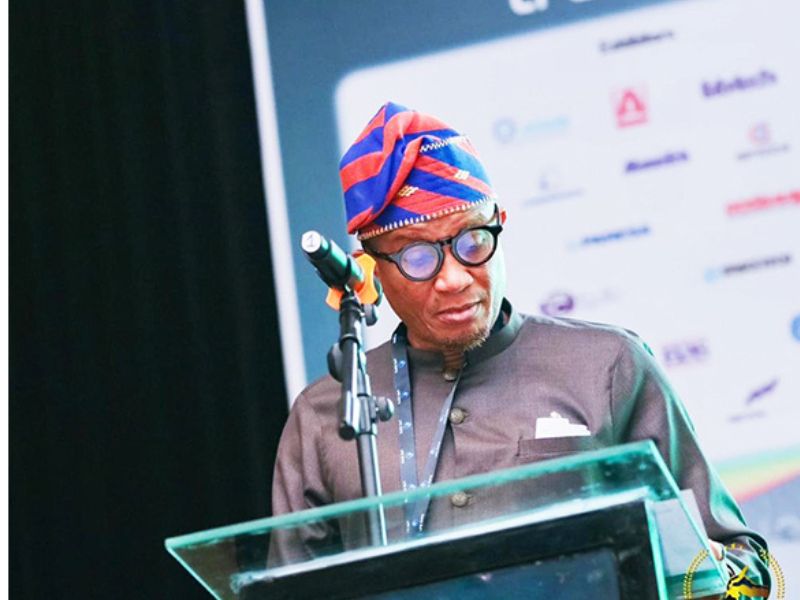
On his part, the Minister of Energy, Dr Matthew Opoku Prempeh, said the LPG industry presents an attractive solution to leverage the shift to cleaner energy sources while promoting Africa’s industrialisation agenda.

“And I believe it will take the collective efforts from academia, the industry and government to prudently push West Africa to maximise the economic gains across the entire LPG value chain,” he added

UK provides £10M grant for NCDs research in W/A

0
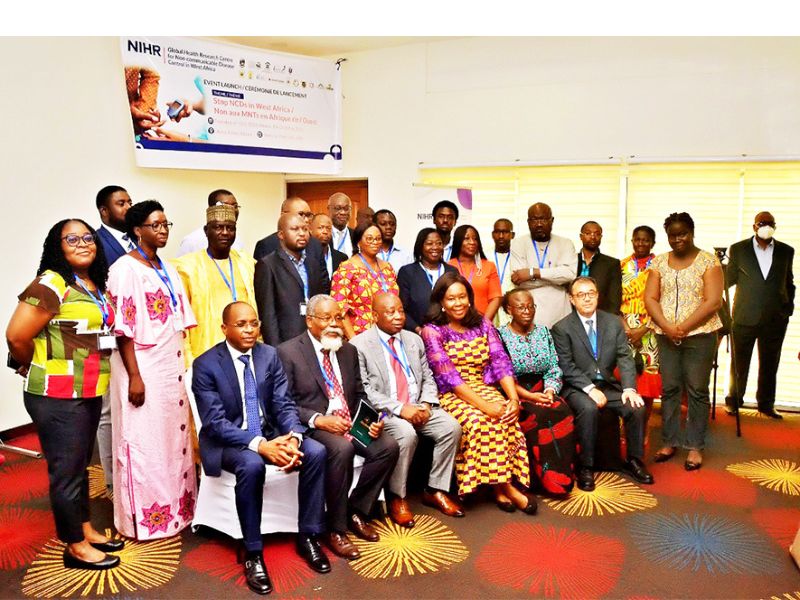
Ghana’s Minister for Health, Kwaku Agyeman-Manu (3rd from L) in a photograph with officials of NIHR and NIHR STOP NCDs implementing partners after the launch

The people of the United Kingdom (UK) are supporting the West African region to launch research into Non-Communicable Diseases (NCDs) for the next five years.

The research would be co-led by the London School of Hygiene and Tropical Medicine (LSHTM) and the Ghana College of Physicians and Surgeons (GCPS).

Other cluster institutions to join the research in the region are; the Catholic University of West Africa in Bobo-Dioulasso, Burkina Faso, LASDEL in Niamey, Niger, and Ashesi University in Brekusu, Ghana.

The project is under the Global Health Research programme, established under the National Institution for Health Research (NIHR) and Global Health Research Centre for Non-Communicable Diseases. The project was launched in Accra yesterday, under the theme: “Stop NCDs.”

Ghana’s Minister for Health, Kwaku Agyeman-Manu, giving a keynote address commended the initiative and stated that NCDs related illnesses and deaths are becoming prevalent across the globe.

He said the sub-region is having its fair share of the health challenge, due to modifiable risk factors which include tobacco use, unhealthy diet, physical inactivity, harmful use of alcohol and air pollution.

The Minister added that despite an increasing trend in NCD-related morbidity and mortality, implementation of global interventions such as WHO policy recommendations remains slow.

“For example, Africa was off track in achieving the WHO recommendations for tackling NCDs targets for the 2015 and 2016 deadlines. It appears that despite the initial achievements by African countries towards fulfilling the commitments in the 2011 UN Political Declaration and the 2014 outcome, Africa’s commitment to implementing the NCD policy responses has waned,” he lamented.

Professor Irene Agyepong (GCPS) and Professor Tolib Mirzoev (LSHTM),  Research Centre Co-Directors, stated that the goal of the project is to contribute to improved health in West Africa through improving capacity for applied research to improve prevention, diagnosis and management of three connected NCDs -hypertension, diabetes and common mental disorders (anxiety and depression).

The Ghanaian Chronicle