Home Blog Page 2672

NUGS to Prez: No Guarantor for student loan is a game changer

0
NUGS

The National Union of Ghana Students (NUGS) has described the introduction of the No Guarantor for the student loan policy as a game changer, and has further pleaded with President Akufo-Addo to help sustain it.

According to the Union, the policy would create a huge appeal and enthusiasm amongst young people who want to go to tertiary institutions, especially when there was a free Senior High School programme also running.

“Your Excellency, if we are praising you for the No Guarantor policy launch, then we believe it is also right that we request that you help us in sustaining it, because it is a game changer. The No Guarantor policy, we have said it and we will keep saying that it is a game changer,” NUGs pointed out.

The leadership of NUGs paid a courtesy call on President Akufo-Addo at Jubilee House on Wednesday, August 31, 2022, to deliberate on issues in the education sector of the country.

In his address, the President of NUGs, Dennie Appiah Larbi Ampofo, made a case for the cost of the policy, looking at how well students had welcomed the No Guarantor initiative.

“What that means is that we have free SHS churning out about 400,000 [students] every year and we have a no-guarantor policy enticing people to go to school. What that means is that the cost matter of financing no guarantor must be critically looked at.

Your Excellency, we, as a students’ front, are proposing that we should, if it possible, develop a sustainable means of financing the no guarantor such that in a year it should be able to help a list of 150,000 young people,” he stated.

OTHER MATTERS

The NUGs President also touched on the amount of money earmarked for the School Feeding Programme, informing the President that complaints indicate the allocation per student was inadequate, and pleaded with the Nana Akufo-Addo to have a critical look at the amount and have it increased.

Further, he informed the President that for about ten months nursing trainee allowances had not been paid, a situation the NUGs President opined was eroding the good reputation the government had chalked for the restoration, and called for help in that regard.

The NUGs President again informed the President that since last year, money for scholarships had not been paid. While appreciating the efforts of the Registrar of the Ghana Scholarships Secretariat, he said the majority of scholarships, both local and foreign, had not been paid.

NUGs said they had met the President because they knew this administration listens, and the days of getting “answers from the street are far gone, because we have a different regime.”

He concluded his address by assuring the President that the Union is taking an active part in keeping the peace on various campuses. He referred to the KNUST impasse and said the union had met with the entire students and leadership, but also called on the university management to also do their part.

PRESIDENT’S RESPONSE

On his part, President Akufo-Addo commended the move by the Union to meet him to deliberate on issues confronting the educational sector.

He stated that, while the union’s concerns were listed, they all fed into the discussion about how much money the country is willing to spend on education and its various ramifications.

According to the President, the government already spends considerable amounts of money on education through the national budget, higher than virtually all countries on the continent.

“But, nevertheless, as you can see from your own recital, it is still, if you like, inadequate. Because if it was adequate, it would deal with the amount that is spent on students for the feeding programme; it would deal with the issue of trainee allowances; it would deal with the issue of scholarships. All these are the direct results of the budgetary constraints there are in the system.”

On the no guarantor policy, President Akufo-Addo indicated that it was significant in the scheme of affairs as far as tertiary education in the country is concerned. According to him, Ghana, which has set a target of 40% enrolment by 2030, should rather be targeting the success story of countries like Korea, which is doing about 90%, a reason he believes the no guarantor policy is key.

President Akufo-Addo commended the union for taking it upon themselves to have harmony on the various campuses. He could not understand how student activities should end up in chaos and destroying properties, which, in the end, brings cost.

Meanwhile, President Akufo-Addo assured the Union that the government was committed to issues of education in general, and as such, all the matters raised would be considered, “and results will come out from it,” he ended.
Go and sin no more -MTTD warns arrested motorbike riders

0
DCOP Felix Fosu-Agyeman warns motor riders

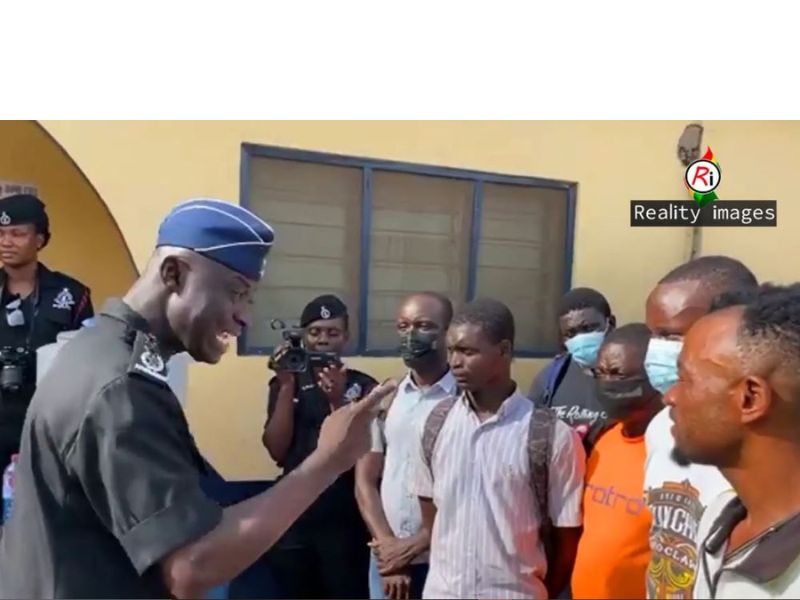
As part of ongoing operation by the Ghana Police Service to encourage self-discipline and respect for traffic regulations among the riding public through the Police Action Against Rider Indiscipline (PAARI), the Director General of the Motor Traffic and Transport Department (MTTD), DCOP/Mr. Felix Fosu-Agyeman, has warned undisciplined motorbike riders arrested yesterday to refrain from indulging in various traffic offences.

Operation PAARI was launched by the Police Service to encourage self-discipline and respect for traffic regulations among the riding public, as well as help curb incidents of rider indiscipline and their associated road accidents and fatalities.

Interacting with motorbike riders at the Legon District MTTD, he advised them to make sure their motorbikes were properly registered and with the number plates at the back, before setting off.

“If you are a rider, before you step out with your motorbike, first make sure it’s properly registered with the number plate at the back,” DCOP/Mr. Felix Fosu-Agyeman said.

He also said that they should highly observe traffic lights, saying, “When it turns red you stop and wait till you are instructed to go when it’s green.”

He entreated all other riders and the general public to support this initiative to restore sanity on the roads and ensure the safety and security of all.

DCOP Felix Fosu-Agyeman urged them to be careful when using the road, and that they should also wear protective gears.

Motorbike riders for some time now have been involved in all kinds of indiscipline on the roads, causing accidents.

As part of operation PAARI, the police listed other offences, including running red lights, failing to wear crash helmets and general indifference to traffic laws.

According to the Police, this campaign comprises several phases. A squad of police riders equipped with body cameras are being deployed as part of the initial phase of the program to keep an eye on riders’ behavior at busy intersections and other key spots.

The Ghana Police Service also indicated that, “The teams will follow offending riders and arrest them at convenient and safe locations. Such riders will be prosecuted, named and shamed,”

This action was required, according to the Ghana Police, because motorbikes are the second leading source of injuries from traffic accidents and the primary cause of fatalities.

GSA’s response to false claims regarding safety of homologated Suzuki S-Presso Vehicle Model

0
Mr. MacMillan Prentice, The Team Lead for Vehicle Homologation and Conformity Assessment at the Ghana Standards Authority

The attention of the Ghana Standards Authority has been drawn to a video circulating mainly via social media suggesting that the Suzuki S-Presso vehicle model marketed by CFAO Ghana and homologated by the Ghana Standards Authority is not safe for use in Ghana.

The Ghana Standards Authority wishes to inform the general public that the Suzuki S-Presso model in the video is neither meant for nor is marketed on the Ghanaian market.

The Team Lead for Vehicle Homologation and Conformity Assessment at the Ghana Standards Authority, Mr. MacMillan Prentice has indicated that “the Suzuki S-Presso model marketed by CFAO Ghana on the Ghanaian market is homologated (certified and approved) by the Ghana Standards Authority and meets the requirements of National Standards, including provisions concerning the approval of vehicles with regard to the protection of the driver against the steering mechanism in the event of impact”.

The model is fitted with two (2) airbags as part of its Supplementary Restraint System (SRS) for front passenger and driver, and seatbelts (Primary Restraint System) with pretensioners.

Mr. Prentice further stated that “surveillance inspections carried out by Vehicle Conformity Assessment Officers of the Authority on Wednesday 31st August 2022, confirm that the approved model of the Suzuki S-Presso is what is being marketed on the Ghanaian market by CFAO Ghana including those used by the ride-hailing service Moove”.

The Ghana Standards Authority certifies and approves new vehicles either assembled in Ghana or imported for sale in Ghana, ensuring they meet national requirements for safety.

CLIFFORD FRIMPONG

DEPUTY DIRECTOR GENERAL (CONFORMITY ASSESSMENT)

For DIRECTOR GENERAL

President Akufo-Addo hasn’t lived up to standard; Lydia Forson

0
Lydia Forson

Vocal Actress Lydia Forson, says that President Akufo-Addo and New Patriotic Party (NPP) whilst in opposition set themselves to a standard that Ghanaians are holding them to.

The Actress who has been using social media to express her views on national development reminded the NPP government that the standard they gave through their campaigns criticized John Dramani Mahama for his lack of integrity.

However, the government led by Nana Addo Dankwa Akufo-Addo has not lived up to its expectation.

She said the government has done nothing to show this integrity they sang about.

In the tweet, Miss Forson said; “The NPP lead by@NAkufoAddo set themselves up to be the standard; they didn’t hold back in the criticism of Mahama.

If they could they would have scrutinized how he chewed his food. But today, they’ve done absolutely NOTHING to show this integrity they sang about- none.”

The actress further indicated that what the country is going through now is beyond an economic mess; “How you make a people FEEL is an extremely important part of leadership, something the NPP seem to have forgotten in power.

What Ghana is going through is much bigger than the ailing economy, it is the tone deafness of this government that’s making it worse.”


Becca bags Master’s degree with 3.92 GPA as valedictorian

0
Becca

Musician Becca, born Rebecca Acheampong at the 14th congregation of the University of Professional Studies, Accra, emerged as the best student in her class.

Speaking at the 2023 University of Professional Studies, Accra’s (UPSA) graduation ceremony, the Singer who graduated with a Master’s degree in Brands and Communication with a GPA of 3.92 making her the school’s 2022 valedictorian noted that, with her many occupations, pursuing her education seemed like an impossible task.

She said just as it has been possible for her, it is possible for everyone.

“Being a mother now, a wife, a career professional and a singer furthering my education seemed quite impossible but thanks to my ever-supporting husband, Dr Saani Daniel who was always there to remind me that it was very possible, there is nothing you cannot do under the sun if you dare to try,” she said.

Becca noted that “I stand here before you as a testimony and confirmation that if you can dare to dream you can surely have it. I really hope someone out there can be inspired by me or by this and challenge for even high and better.”

She thanked the lecturers and the Vice Chancellor for their guidance throughout their studies. She also appreciated parents and guardians by saying:

“To all lecturers, we pray that your fountain of knowledge will always flourish and replenish as you continue this beautiful task of imparting knowledge daily. You are indeed the backbone of this nation and may God bless you all.”

Talking about her new milestone, she said “Wooow… This can only be God. I need to catch my breath. I am indeed grateful to God”. Giving details about her master’s programme, the mother of one said it took her a year.

On social media, Becca wrote; “To my group 1 team members, you guys are the best!!! Best Masters student in Brands and Communication Best Overall Student (1 year program) Valedictorian 2022 @upsaccra,” she wrote.

I needed a break –Hammer on why he left music production

0
Hammer

Veteran Sound Engineer, Hammer of The Last Two who has left music and entered full time bakery says he was bored with the monotonous nature of music production that is why he left.

In an interview on GTV’s Breakfast Show which was monitored by The Chronicle, Hammer explained that while producing, he was stuck in his studio day in day out, eating late, barely walking outside just to make beats for musicians.

“I was bored, I felt like a prisoner. For fifteen-plus years, I was locked up in a room with no window. The artistes come and go. These boys were out on stage jumping around, when they come back, you are still in that space,” he said.

Hammer further explained that; “I sat down for 8 hours playing, making beats, producing and it got boring at some point. So, I became like an uncaged dog when I got the chance to get out. That’s why you see me on the street.”

The renowned producer blames his weight on the endless hours he spent in the studio rarely getting any exercise just so he could work.

“My name is ‘Slim The Hammer’ I wasn’t fat, I was an athlete in Presec. So, this business of becoming big was the studio,” Hammer said.

Hammer noted that after putting a pause on production, he got into other businesses including partnering with a baker to introduce bread brands and most recently Ekumfi juice.

Hammer stated that after seven years, he is ready to start producing and making music again.

“I have a small set up at home that my children use, so after the playing around, I want to get the thing back to my fingers. I’m gonna need some help though. It’s been 7 years since I touched equipment” Hammer concluded.

HIV test kits in pharmacies soon-Ayisi Addo

0
HIV test kit

The National AIDS/STI Control Programme says Rapid Diagnostic Test (RDT) Kits will soon be made available in pharmacies as part of efforts to control national HIV infections.

Dr Stephen Ayisi Addo, the Programme Manager, said ready access to the self-testing kits would ultimately lead to early diagnosis and effective treatment to reduce the infection rate.

He said the National AIDS/STI Control Programme had started piloting the initiative and people who test positive would be advised to report to a facility to start their treatment.

Dr Ayisi Addo was speaking at the launch of the 5th National HIV and AIDS Research Conference (NHARCON) to be organised by the Ghana AIDS Commission (GAC) in 2023.

The NHARCON 2023, on the theme, “Achieving HIV Epidemic Control Amidst Emerging Health Threats,” begins on April 25-28, 2023.

The Programme Manager said this was important as Ghana, within the first six months of 2022 recorded a total of 23,495 new infections of HIV, adding that out of this figure, men have a prevalent rate of 3.6 per cent and females had 2.2 per cent prevalence.

Nine hundred and thirty-two persons died of HIV out of the current 259,408 on treatment and the remaining over 101,500 are yet to be identified, he added.

“This is in excess of the estimated 19,000 new infections annually and lower than the previous year’s positive yield of approximately 25,000,” he stated.

The Programme Manager noted that the Bono Region continues to lead in prevalence at above 4 per cent for both routine and HSS data for the period under review.

Dr Ayisi Addo explained that the 2021 HIV Sentinel Survey (HSS) prevalence for Bono East and Ahafo were 3 per cent and 2 per cent respectively and remained in the top five for routine data for the first six months of 2022 aside Western North, Ashanti, Greater Accra and Eastern Regions.

He said Ghana’s dream of achieving epidemic control would be a mirage if the country did not regularly update the target population with information generated about them. “Despite our progress towards achieving the global World Health Organization-UNAIDS aspirational 95.95.95 targets by 2030, our dream to achieve epidemic control remains a mirage.”

The 95-95-95 means that by 2025, 95 per cent of the total population of persons who are HIV positive should know their HIV status, 95 per cent of these persons should be on medication if tested positive and 95 per cent who were taking their medication should have viral suppression. However,Ghana as of December 2021, had achieved 71-99-79 of the set targets.

He said without evidence and real time data collected and disseminated to the people, to help in prevention, it would be impossible to achieve the goals no matter how laudable efforts and aspirations the country had put in place.

He called for the need to prioritize, fund dissemination and learning fora such as NHARCON as part of the prevention initiative to enable the country realise its dream of achieving epidemic control.

The Programme Manager noted that the need for data use for effective decision making had become urgent and called on stakeholders for abstracts that would contribute to addressing programmatic gaps within the national response.

He urged the Government to also use the opportunity ahead to build capacity of the teaming health workers and delegates to play a greater role in data generation, analysis and use for impactful interventions.

The conference is a platform to share ideas in support of the implementation of the current National Strategic Plan (2021-2025).

It also forms part of the GAC’s mandate to disseminate and share HIV and AIDS strategic information with its stakeholders and partners in the implementation of the National Response.

By Samira Larbie/Lawrencia Mensah

GNA

Mikhail Gorbachev leaves a blazing legacy

0
Opinion

Mikhail Gorbachev was the most significant political leader globally of the second half of the 20th century and one of the greatest reformers in Russian history.

By the time he resigned as president of the USSR during its final throes, he had played the decisive role in making Russia a freer country than it had ever been.

The new tolerance and liberties at home, together with the transformation of Soviet foreign policy, emboldened the peoples of eastern and central Europe to send their communist rulers packing and to reject Moscow’s overlordship. As Gorbachev was also the most pacific of all Soviet – perhaps of all Russian – leaders, not a shot was fired by a Soviet soldier while the Warsaw Pact countries achieved independence from 1989, when the Berlin Wall fell in November that year, or when Germany was reunited in 1990.

There is a popular fallacy in the west that the Soviet Union had reached crisis point by 1985, that the Communist party’s politburo chose Gorbachev as general secretary because he was a reformer, and that therefore he had no option but to undertake radical changes.

An authoritarian regime is in crisis when its laws and commands are no longer obeyed, when there is persistent mass protest and, in particular, when such social unrest is accompanied by open splits within the political elite.

But none of this was present in 1985 – in fact, such unrest did not occur until a few years into Gorbachev’s perestroika reforms. Far from crisis leaving no option but reform, it was radical reform that provoked crisis.

The new freedoms enabled the repressed grievances of 70 years, including ethno-national grievances, to rise to the surface of political life.

The idea that poor economic performance in the mid-1980s had forced reform through is belied not only by the country’s quiescence under Gorbachev’s predecessor, Konstantin Chernenko, but the fact that Gorbachev prioritised political over economic reform.

This did nothing to improve conditions in the command economy – for in the new political climate, commands could be circumvented or ignored, and people became free not merely to grumble in private but to complain in public about queues and shortages.

It was as late as 1990 that Gorbachev embraced a market economy in principle, stressing that it should be of a social democratic type.

However, by then he had lost much of his earlier political authority and did not take the risk of moving to market – and higher – prices for basic foodstuffs and utilities, so the Soviet economy ended in limbo, neither centrally controlled nor market-driven.

Yet Gorbachev’s political reforms were extraordinarily bold. He had an unusually open mind for any political leader, never mind a Soviet Communist party general secretary.

The glasnost (greater transparency) Gorbachev advocated from the outset of his leadership developed, with his blessing, into a freedom of speech and, increasingly, of publication.

By 1989, literary works, whose very possession in underground or foreign editions had been a criminal offence, were published in Moscow in huge print-runs – among them George Orwell’s Nineteen Eighty-Four and even Aleksandr Solzhenitsyn’s The Gulag Archipelago.

Dissidents were released from prison and exile and the rehabilitation of those unjustly repressed in the past (begun under Nikita Khrushchev and abandoned by Leonid Brezhnev) was resumed. Gorbachev encouraged a new freedom of communication across frontiers.

That included an end to the blocking of foreign broadcasts and a developing freedom of travel and of emigration.

During less than seven years in the Kremlin, Gorbachev achieved the kinds of reforms that no previous Soviet leader – or any other potential successor from Chernenko’s politburo – would have contemplated.

The changes were also beyond the wildest dreams of western leaders in 1985 (as Margaret Thatcher acknowledged) and of Soviet reformers at that time, as I know from my conversations with them.

That did not prevent some of those same reformers castigating Gorbachev by 1990 for his supposed “half- measures” and transferring their allegiance to Boris Yeltsin.
He began in 1985 as a communist reformer.

By 1988 he had turned into a systemic transformer. As he put it in 1996: “Until 1988 I had the same illusions as previous reformers.

I believed that the system could be improved. In 1988 I realised we needed systemic reform. The system had to be replaced.”

That was not merely a retrospective judgment. Addressing a closed meeting of regional party secretaries in April 1988, Gorbachev asked: “On what basis do 20 million (party members) rule 200 million?”

He answered his own question: “We conferred on ourselves the right to rule the people!”

Two months later he startled most delegates at the 19th party conference by announcing that contested elections for a new legislature with real powers would take place not later than the spring of the following year – and in March 1989 they were duly held.

They marked an end to “democratic centralism”, for party members were allowed to compete against one another on fundamentally different policy platforms. This was merely a first step in trial-and-error democratisation, but after it, the Soviet Union could never be the same again.

That the Soviet communist system ceased to exist was not an unintended consequence of Gorbachev’s actions, for he and his most like minded associates consciously dismantled that system.

What Gorbachev did not intend was the dissolution of the Soviet state. He strove to keep as many republics as possible within a “renewed union” by negotiation and voluntary agreement and turn what had previously been a pseudo-federation into a genuinely federal state.

He failed in that endeavour.

By Archie Brown

Source: theguardian.com

BoG calls for collaboration to sanitise forex bureau sector

0
Bank of Ghana

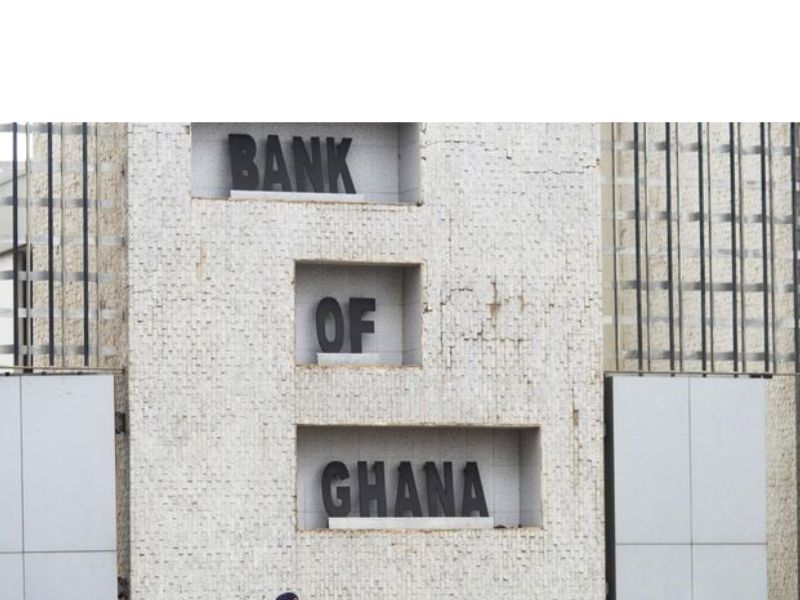
Mrs Elsie Addo Awadzi, the Second Deputy Governor of the Bank of Ghana, has called on law enforcement agencies to collaborate with the Bank in efforts to sanitise the forex bureau sector.

This, she said, they could help the Central Bank do by strictly enforcing existing rules for the fair and transparent conduct of business by licensed forex bureaux and by clamping down on illegal forex operations (the so-called black market).

Mrs. Awadzi made the call during a workshop for the Committee for Co-operation between the Law Enforcement Agencies and the Banking Community (COCLAB) in Accra.

The workshop is part of collaborative efforts by the Central Bank and Law enforcement Agencies to deal with growing financial crimes in the banking industry.

She said while Bank regulated the sector, it relied on criminal investigative and law enforcement agencies (all of which are members of COCLAB) to help with enforcement efforts.

She said combating financial crime through information sharing and strategies would help prevent financial crime and working closely together to investigate and enforce breaches of relevant rules against perpetrators of financial crime and their enablers were essential to building a healthy and resilient economy and nation.

The Second Deputy Governor said financial crime in all its forms, including money laundering, terrorist financing, fraud, whether offline or cyber-related, siphoning and diversion of funds from the financial system by insiders to related parties, and others, all erode the integrity of the financial system.

She said it destroys the confidence and trust that the Ghanaian public and our foreign counterparts repose in it.

“This has adverse ramifications for our economy, such as a reduction in the rate of savings and investments in the formal financial system, a reduction in international trade facilities and foreign investment inflows that support our economy,” Mrs. Awadzi added.

She urged members to take a critical look at fraud-related developments and identify concrete measures to help to address the underlying factors, so that we reverse the trends.

She called on them to work together to speed up investigations and prosecutions for financial crimes that led to the failure and demise of 420 of the regulated institutions in the recent past, as well as brought untold hardships to depositors, former employees, other creditors, and ultimately, taxpayers, that had to pay to provide relief for those affected.

The Central Bank recently revived the Committee to provide a platform for strong collaboration among the banking industry, national security and law enforcement agencies, the Judiciary and other key Agencies, to step up the fight against financial crime.

She assured Members of the Committee of the Bank’s continued support for your work and would remain a strong partner going forward.

The Committee members were drawn from the Bank of Ghana, Ghana Association of  Banks, the Judiciary, the Ministry of Justice and the Attorney General’s Department,  the Ministry of Interior and the National Security Coordinator’s Secretariat.

Others are Interpol Ghana, the Economic and Organized Crime Office, the Financial Intelligence Centre, the National Investigations Bureau, the Ghana Police Service, Ghana Immigration Service, the Ghana Revenue Authority, the Registrar General’s Department, and the National Communication Authority.

Source: GNA

AfCFTA Hub in Ghana platform to connect 1.3bn -Ursula

0
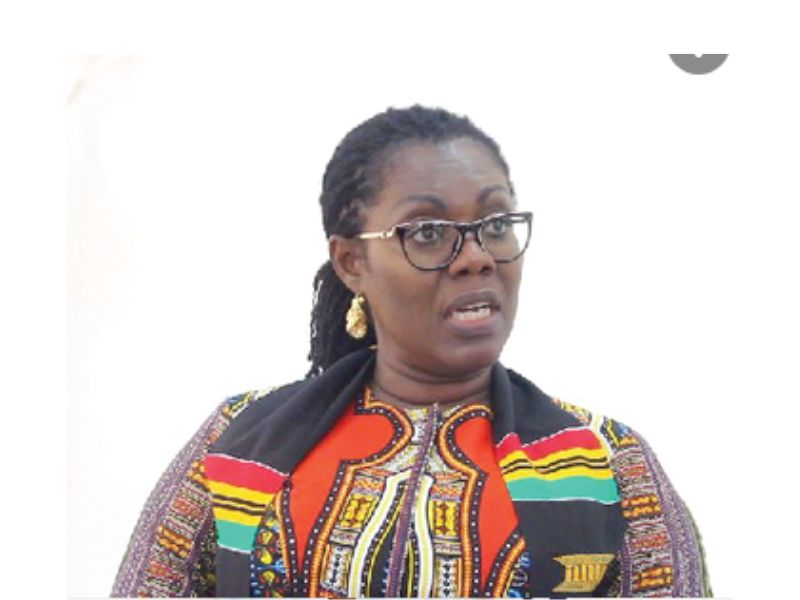
Mrs. Ursula Owusu-Ekuful, Minister of Communication and Digitalisation

The launch of AfCFTA Hub in Ghana will connect 1.3 billion people across 55 countries and address the validation and cybercrime on a unified platform, the Minister of Communication and Digitalisation, Mrs. Ursula Owusu-Ekuful, has said

Mrs. Ekuful explained that it would bring together the AfCFTA Secretariat and strategic partners like Afro Champions to create a network for accelerating the kinds of regional integration that would drive trade that could deliver economic transformation.

In her welcome address during the launch, she said the AfCFTA Hub Ghana was a deliberate effort of the government, as the country’s overall framework, was to embed its digital strategy into the massive AfCFTA opportunity.

She gave the assurance that the launch of AfCFTA Hub in Ghana was carefully thought to bring down the barriers obstructing the integration across Africa, believing that would resolve the issue of past dashed hopes and the pitfalls of globalisation.

She said that AfCFTA Hub would provide a common trade platform within the African continent to engage in transactions without having to worry or be affected by any European conflict or pandemic.

She added that Ghana being part of six others participating in the Guided Trade pilot to fast-track AfCFTA implementation could interlink their systems with the AfCFTA Hub to create a powerful nerve centre to facilitate and energise Small and Medium Enterprises and Startups into becoming the fuel for propelling AfCFTA implementation forward.

She stressed that her Ministry being a multi-stakeholder platform bringing together the AfCFTA Secretariat, relevant African Union Commission departments, national governmental agencies and private sector platforms through the power and ingenuity of digital technology, the AfCFTA Hub was the principal tool for aligning Ghana’s own wide-ranging digitalisation policy with the varied opportunities presented by AfCFTA.

AfCFTA Hub, she said, should make it easier for technology startups and other producers of ICT goods and services to find markets across Africa.

“Our business process outsourcing landscape shall be revitalised by AfCFTA as Ghana becomes a hub for call centre, data processing, data science and various outsourcing services for businesses all over the continent and beyond.

“Ghana sees the need to use digital technology to bolster the competitiveness of all sectors of the economy to enable economic actors in those sectors to expand their markets through AfCFTA”, she said.

The lawmaker for the Ablekuma South Constituency added that the AfCFTA Hub when implemented could aggregate content and tools to capacitate businesses across the country to upgrade their know-how to engage more forcefully in export markets beyond Ghana.

The Minister also said the AfCFTA Hub would commence on boarding young entrepreneurs, Small and Medium Enterprises, startups and all digital marketplace actors across the country onto the platform with a free AfCFTA Number.

“With AfCFTA Hub, it will become even harder to ignore the massive transformation on the horizon created by Nana Addo Dankwa Akufo-Addo’s unprecedented Digitalisation Agenda. An agenda that when coupled with the big dreams of Pan-Africanism, as finally achieved through AfCFTA, can only launch this beloved country of ours into the dizzying heights of true development,” she stated.

Explaining the AfCFTA Number, she said was a single continental trust-building system that would complement other AfCFTA-enabling instruments such as the PAPSS, MANSA, Digital Green Corridor and e-Tariff mechanisms developed by the AfCFTA Secretariat, African Union, the 4D Consortium and trusted partners like Afrexim Bank and Afro Champions.

She noted that the AfCFTA Number would help Ghanaian enterprises to obtain a sure and secure navigational tool as well as a trusted profile to speed up connections across the continent for business. Thus, she said the number, which would serve as a unique identification would also serve as critical anti-fraud and crime-fighting purposes domestically and regionally.

By Daniel Adu Darko

Source: GNA

The Ghanaian Chronicle