Home Blog Page 2671

Editorial: GTEC, Universities both failed on unaccredited programmes

0
Editorial

The 2021 Auditor-General’s (AG) report has revealed that a total of 673 academic programs offered by two major tertiary institutions in the country, the University of Ghana (UG) and the Kwame Nkrumah University of Science and Technology (KNUST) are not accredited.

Three hundred and seventy-four (374) out of the total number are the courses that the UG is said to be running without accreditation, whilst KNUST had 299 unaccredited programmes.

The Chronicle is appalled at this news, considering the global respect and reverence that these two institutions have. Until other tertiary institutions were established, these two tertiary institutions, including the University of Cape Coast, held high the flag of Ghana in the field of academia.

We, therefore, expected them to have done better than this. We, therefore, applaud the Auditor-General for its painstaking effort to lift the lid on this scourge and also provide recommendations as panacea to the problem.

The AG has recommended that management of the UG should expedite action for accreditation and re-accreditation of all new and expired academic programmes.

In the case of KNUST, the AG said management of the university should cease running programmes that are not accredited or having its accredited certificates expired, until they are accredited or renewed, to avoid sanctions by the National Accreditation Board.

This is where we disagree with the AG. Some students, through no fault of theirs, have paid huge sums of money to study some of these programs identified as unaccredited. Should the university cease running these programs, what then would become of these students?

We understand that the AG by these recommendations is trying to rectify a bad situation and helping to make the structures work. We, however, hold the view that in trying to put things right the innocent students should not be made to suffer any collateral damage.

We recommend that the school be allowed to run the program, while steps are taken to get accreditation for all the programs.

The schools should also be fined for their acts of negligence so that they do not repeat the same offences, going forward.

But as the schools takes steps to remedy the situation, one institution we would want the AG to pay attention to is the Ghana Tertiary Education Commission (GTEC).

GTEC is a merger of the National Council for Tertiary Education (NCTE) and the National Accreditation Board under the new Education Regulatory Bodies Act, 2020 (Act 1023).

This body is mandated to accredit public and private tertiary education institutions, as well as the programmes run by these institutions. They are also to “publish, as the Commission considers appropriate, the list of accredited public and private tertiary education institutions and programmes at the beginning of each academic year.”

The Chronicle is of the view that if the Commission has been carrying out its functions well, it would have noticed that these two schools have not sought accreditation for the programs the AG uncovered, and would have called their attention to it.

Not that the universities are not aware of their responsibilities to ensure that they renew expired programs, but staff of GTEC are paid by the tax payer to ensure that tertiary institutions get regular accreditations for their programs.

We believe that someone at GTEC is sleeping on the job and must be asked to sit up and work.

Hulede Foundation meets scholarship beneficiaries @ KNUST

0
Beneficiaries pose with Hulede family and officials of DOSA

A Director of Hulede Foundation, a US-based Ghanaian Non-Profit Organisation, has conferred with over 102 beneficiaries of its Hulede Scholarship project at the Kwame Nkrumah University of Science and Technology (KNUST) in Kumasi.

The Hulede Foundation was set up last January by the Hulede Family in honour of their father, Mr. Hulede, the first Manager of the KNUST Printing Press.

Mr. Patrick Hulede, addressing the student awardees of the project on behalf of the President of the Foundation, explained at the forum that the project was established with the aim of creating opportunities for the less privileged in society.

He said the Hulede Scholarship was the Foundation’s flagship programme under which brilliant and genuinely needy students (undergraduates) were assisted financially to pursuing various programmes of study.

He said the programme was not just interested in assisting students financially, but also to provide mentorship and career developments for those who would in turn help to sustain the culture of giving back their first fruits of labour to society, and offer opportunities in communities for the benefit of others.

Mr. Hulede encouraged the beneficiaries to give off their best wherever they found themselves.

Professor Marian Asantewaa Nkansah, Deputy Director of Student Affairs (in charge of Housing and Welfare), expressed appreciation for Hulede Foundation’s intervention, which she described as an addition and timely.

She said the Students Affairs Directorate sought to create the right and healthy environment to respond to the basic needs of students, including financial and food supplies from its Food Bank project.

Prof. Asantewaa Nkansah explained that over 85,000 students had benefited from its projects over the years.

The Deputy Director of DOSA advised the students to study hard and give back to society as the only gratitude they could show for the generosity of their benefactors.

Dr. James Osei Mensah, Chairman of the Off-campus Senior Tutors of DOSA at KNUST, advised the student awardees against abusing or misusing the opportunity afforded them in the scholarship.

He noted that the beneficiaries were chosen by divine design to break the poverty cycle in their families, and therefore an opportunity they could not miss.

Dr. Osei Mensah said they would not only be disappointing themselves, but also doing a great disservice to society if they abused the opportunity offered by the Hulede Foundation.

He urged them to touch a lot more lives outside their families by staying focused and not be distracted by things that compete for their time.

The beneficiaries confessed that the Hulede Scholarship had changed their lives.

Artisans Union marks 10th Anniversary with clean up exercise

0
Members of the Association after the clean-up exercise

The Artisans Association of Ghana (AAG), as part of activities to mark its 10th Anniversary, has cleaned the Baba Yara Stadium and its environs.

Mr. Emmanuel Adjei, Vice Chairman of the Association, explained that the exercise was aimed at intensifying the membership drive and improve the skills of members ahead of the launch of its 10th Anniversary in November this year.

He disclosed that over 200 members had acquired certified Energy Commission license, while over 200 had undergone skills enhancement and advanced training at the Kumasi Technical University.

He disclosed that the Association, which had a membership of 6,000, was making inroads towards ensuring that its members meet international standards to qualify for government contracts in tilling, welding, plumbing, auto mechanics, glass aluminum fabrication, heavy equipment operations, construction and carpentry.

Benjamin Kofi Bainfo, one of the beneficiaries, commended the leadership of the Association for their innovation and hard work in ensuring the upgrading of the skills of the members.

50 Club tackles no bed syndrome in health facilities in Ashanti

0
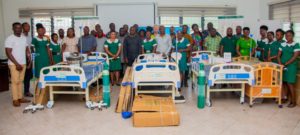
AGA's Brett Thompson, a member of the Club 50 handing over the equipments to a representative from the Adansi North health directorate

50 Club, an Obuasi-base  Non-Governmental Organisation (NGO), which includes employees of AngloGold Ashanti and its subsidiaries, and employees of other corporate organisations across the length and breadth of the country and abroad, has donated health equipment and suppliers worth GH¢36,000.00 to three District Health Directorates.

Some of the equipment donated to the three health facilities

The beneficiary facilities are the Adumanu, Kunka and Tweapease health centers in the Adansi North, Obuasi Municipality, and Amansie Central directorates in the Ashanti Region.

The Club collaborated with the Obuasi Municipal Health Directorate, with support from the Adansi North and Amansie Health Directorates, to undertake a needs assessment exercise from which the three beneficiaries were selected.

The report from the assessment showed that most health facilities needed basic equipment to enable them function optimally, and indicated that they decided on those items based on the needs assessment carried out by the Club and the Health Directorates.

The medical items donated included six Crank beds with drip stands, two Nebulizing machines, two oxygen cylinders with Flowmeters, six BP apparatus, two Fetal Dopplers, one Autoclave/Steriliser, and one delivery bed among others.

Mr. Jacob Edmund-Acquah, President and Founder of the Club, explained that, the donation formed part of activities to mark the Club’s second anniversary.

According him, since July 2020 when the club was formed, they had made a number of donations, including contributing to the cost of heart surgeries for six kids with various heart/medical conditions, supported community clinics with medical equipment and supplies, provided scholarships to brilliant but needy students, and set up 23 people in trading businesses.

These donations, he said, were made possible through the voluntary monthly contributions of its membership, which now stood at 215.

Mr. Edmund-Acquah expressed the view that for the club to have the reach an impact it craves for, it was imperative for it to also concentrate on assisting health facilities in the remote areas.

He appealed to corporate entities to consider making donations to the Club to enable it hold regular donation events to meet its health objectives.

Madam Margaret Yaa Manu, Obuasi Municipal Health Director, lauded the 50 Club for coming to the aid of the health centers, describing the gesture as timely and appropriate.

She reiterated that the items were very important to the work and schedule of the health centers, and that they would help put a stop to the situation where the centers referred minor cases to bigger facilities because of the absence of basic equipment.

PRINPAG swears in newly elected executives

0
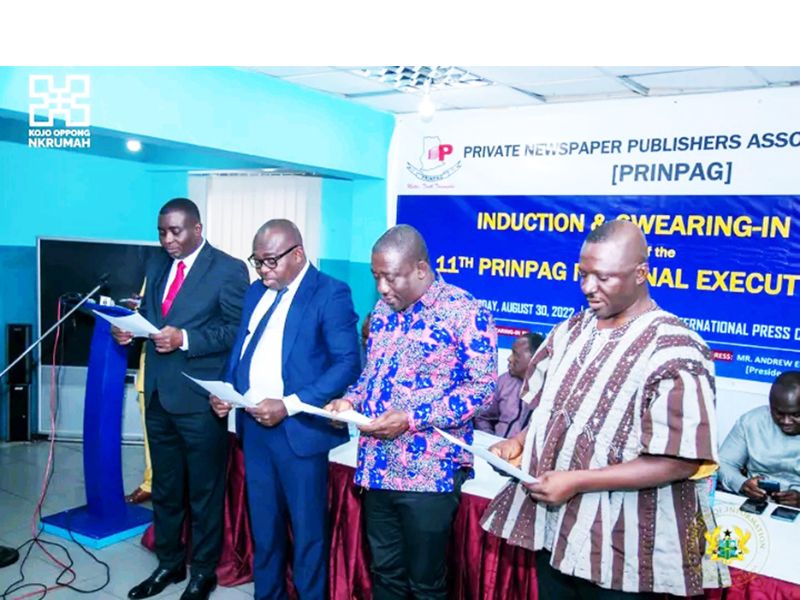
Newly elected executives of PRINPAG

The Private Newspaper Publishers Association of Ghana (PRINPAG) has sworn in its new executives from the just ended elections. They were sworn in by Chairman of the National Media Commission, Mr. Yaw Boadu Ayeboafoh, at the International press centre in Accra, on Tuesday.

Some dignitaries at the ceremony

The new executives are Mr Andrew Edwin Arthur, President; Mr Michael Antwi-Agyei, Vice-President; Mr Emmanuel Opare-Djan, National Organiser; Mr Jeorge Wilson Kingson, Public Affairs Officer.

Mr. Yaw Boadu Ayeboafoh urged the newly elected executives to live up to the standards of the work. He added that it is important for Ghanaians to understand that the framework within which the media operate is that of the social responsibility theory and not libertarian.

“Libertarian suggests that you can say whatever you want, but social responsibility demands that you must be responsible for the things that you say, which means you are free to make a comment or statement, but after you have made that statement, take responsibility of them”, he told the gathering.

He appealed to the Ghanaian media to take time and thoroughly investigate and establish all the facts, because when the facts are established the journalist can defend himself or herself anywhere, but when there is no basic fact, the journalist will be found wanting.

Delivering a speech after the swearing in ceremony, the President elect of PRINPAG, Edwin Arthur, stated that the immediate past administration achieved a lot for the Association, during its three-year period in office.

He said the immediate past executives worked in a selfless manner and as a result collectively achieved some appreciable results.

Achievements

He continued that the Association did not have an office space at the time it took over in the year 2019. It, however, solicited for funding support and managed to provide the current office premises, which accommodates the Secretariat of the Association.

Also, the Association did not have a Constitution, but that has been resolved, as they now have a Constitution that serves as its working document.

Mr. Arthur, who has been the president for the past three years, added that the past administration also championed the building of a credible data base, not only for Newspaper Publishers and Online News Portal Owners and their Editors, but also for all those who work with these media Establishments.

“With the development of this data base, we are able to ensure that no media practitioner working with any PRINPAG member is left out of our training programmes” he mentioned.

As part of improving the capacity and knowledge base of PRINPAG members, he admonished that his outfit secured some training programmes that were sponsored by the Ghana Revenue Authority (GRA), the Bank of Ghana and Eximbank, which went a long way to broaden the horizon of our members in the operational areas of the sponsoring institutions.

Speaking on distribution of adverts, the newly elected President said “Plans are far advanced to intensify our engagement with NPA, NLA, COCOBOD and the Minister for Lands and Natural Resources to consider involving the executives of PRINPAG in the placement of adverts in the various newspapers and Online News Portals.

Problems


On issues that undermine their work, he bemoaned the manner in which the media is being handled by the Government and its media handlers.

“We do appreciate their efforts but the plain truth is that, they are still handling the media using anachronistic policies and strategies, which are not workable in these contemporary times.

“We urge them to have a paradigm shift and to engage more with the media Associations to save the Ghanaian media from falling into an abyss”.

He concluded by urging the general public to play by the rules in times of media excesses as it is also important for media practitioners themselves to be disciplined in their approach to the practice of journalism in this country.

“I am happy to announce that, the current executives of PRINPAG have vowed to deal with needless excesses of its members by referring complaints to its newly formed Complaints and Disciplinary Committee and all members found culpable or guilty of such complaints will be dealt with ruthlessly by the leadership of the Association irrespective of individual members and media organizations involved,” he indicated.

Kumasi records 3 cases of Monkey Pox

0
Dr. Akosua Gyimah Omari-Sasu, Metro Health director

Three cases of Monkey Pox were recorded in Kumasi, but had zero mortality, the Metropolitan Director of Ghana Health Services, Dr. Mrs. Akosua Gyimah Omari-Sasu has announced.

She, however, explained that the said cases had no contact with signs and symptoms.

The Health Director, who was briefing the deputy Local Government minister, Mr. Collins Augustine Ntim, on the implementation of health interventions last Monday, in Kumasi, also said 83 students were diagnosed of influenza.

She disclosed that no mortality rate was recorded in those cases.

The Minister, who was on a tour of the MMDAs to assess the implementation of government programmes, commended the Metro Health Directorate for the right leadership and sense of responsibility in executing its role as an implementation unit.

BoG discusses how to fight financial crime with stakeholders

0
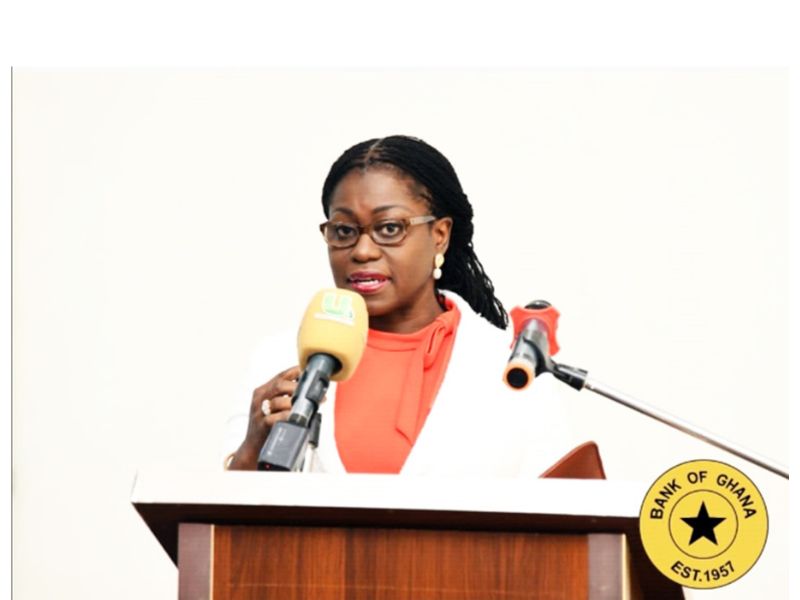
The second deputy governor of BoG Mrs Elsie Addo Awadzi

The Bank of Ghana organised a workshop for the Committee for Co-Operation between the Law Enforcement Agencies and the Banking Community (COLAB) to help in the fight against financial crimes.

Addressing the gathering in Accra on Tuesday, this week, the second deputy governor of BoG, Mrs. Elsie Addo Awadzi, stated that the formation of COCLAB in Ghana was spearheaded by the Bank of Ghana, building on INTERPOL’s 1988 Resolution, to help curb economic crime around the world.

She noted that the Bank of Ghana recently revived the Committee to provide a platform for strong collaboration among the banking industry, national security and law enforcement agencies; the Judiciary and other key Agencies to step up the fight against financial crime.

This Committee, according to the second deputy governor, noted that it draws its membership from Bank of Ghana, Ghana Association of Banks, the Judiciary, the Ministry of Justice and Attorney General’s Department, the Ministry of Interior, the National Security Coordinator’s Secretariat, Interpol Ghana, the Economic and Organised Crime Office, the Financial Intelligence Centre, the National Investigations Bureau, the Ghana Police Service, Ghana Immigration Service, the Ghana Revenue Authority, the Registrar General’s Department and the National Communication Authority.

Mrs. Awadzi indicated that the work of the of Committee is critical now, more than ever, in combating financial crime through information sharing and strategies to help prevent financial crime and working closely together to investigate and enforce breaches of relevant rules against perpetrators of financial crime and their enablers.

“Financial crime in all its forms, including money laundering, terrorist financing, fraud (whether through offline or cyber related), siphoning and diversion of funds from the financial system by insiders to related parties and others, all erode the integrity of our financial system and destroys the confidence and trust that the Ghanaian public and our foreign counterparts repose in it”, she bemoaned.

This, she disclosed, has adverse ramifications for the economy, such as a reduction in the rate of savings and investments in the formal financial system, a reduction in international trade facilities and foreign investment inflows that support our economy.

Another worrying trend from the 2021 fraud report, the deputy governor revealed, is the increasing levels of fraud, associated with electronic money channels such as ATM fraud, mobile money fraud, and cyber fraud.

She, therefore, urged the members of COLAB to take a critical look at these developments and identify concrete measures to help to address the underlying factors, so that they can reverse the trends.

“I also urge you to work together to speed up investigations and prosecutions for financial crimes, that led to the failure and demise of 420 of our regulated institutions in our recent past, as well as brought untold hardships to depositors former employees, other creditors and ultimately tax payers that had to pay to provide relief for those affected.” she urged.

Mrs. Elsie Addo Awadzi appealed to COLAB to support Bank of Ghana’s efforts to sanitize the forex bureau sector, by strictly enforcing existing rules for the fair and transparent conduct of business by licensed forex bureaus, and by clamping down on illegal forex operations (the so-called black market).

Akyem Otwereso gets new steel bridge

0
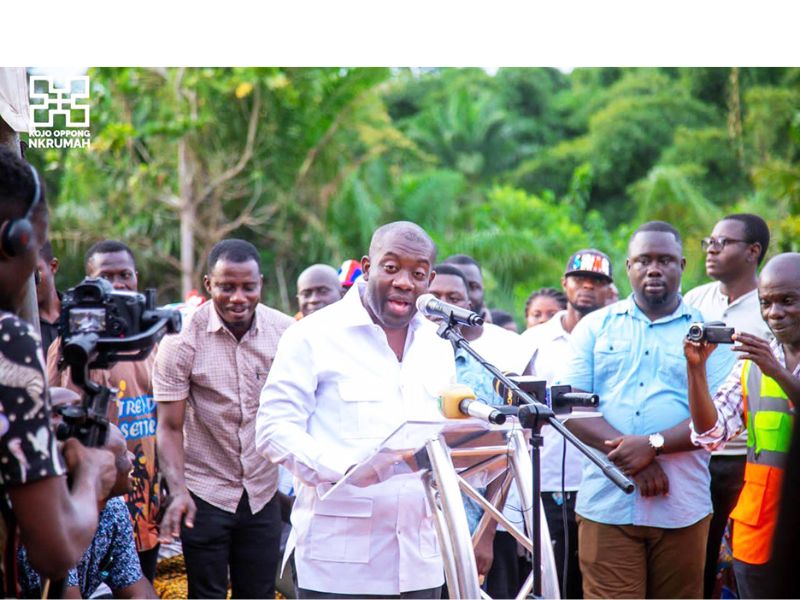
KMP Kojo Oppong Nkrumah addressing the gathering
The old bridge (R) and the new one

Residents of Akyem Otwereso, a town in the Ofoase Ayirebi constituency, are now beneficiaries of a steel bridge over the Asikusie River to facilitate the movement of persons.

Member of Parliament (MP) for the area, Kojo Oppong Nkrumah, who did the opening at a brief ceremony last Friday, said the bridge comes as a great relief to constituents who previously had to use longer and winding alternative route through Ayirebi to reach their various destinations.

MP Kojo Oppong Nkrumah and the chiefs inspecting the bridge

The Asikusie Bridge, constructed decades ago, was made of wood and was smaller with a lot of its bolts coming off.

Virtually on the brink of collapse, the wooden bridge posed threats to users. This prompted the MP to intervene to facilitate its rehabilitation as part of a comprehensive programme to improve roads and bridges in the constituency.

In his brief remarks during the opening, a delighted Mr. Oppong Nkrumah said the rehabilitated bridge will help reduce travel time and cost for his constituents.

The community enjoying the new bridge

Chiefs and residents of the area expressed appreciation for the rehabilitation of the steel bridge and thanked the MP for always putting the needs of his constituents first.

KMA’s performance astounds Deputy Local Gov’t Minister

0
Mayor, KMA officials, Metro directors pose with the Deputy Minister

The Deputy Minister of Local Government and Rural Development, Collins Augustine Ntim, has expressed satisfaction with the implementation of government policies and programmes by the Kumasi Metropolitan Assembly (KMA).

The Minister had scrutinised the operations of the KMA in the areas of agriculture, education and health during a monitoring and evaluation visit on Monday.

He was briefed by the Metro Director of Agriculture, the Metro Director of Education, and the Metro Director of the Ghana Health Services.

Mr. Ntim encouraged the KMA to make use of District Implementation Committees to ensure all government flagship programmes and policies were effectively implemented to impact on Ghanaians towards development.

The deputy Minister urged the KMA to gear its operations towards sustaining the gains in the fields it fared well, and make amends for poor performances in orders to push the development agenda of the government forward.

He cautioned Metropolitan, Municipal and District Assemblies (MMDAs) not to toy with the vision of the President to bring development to the people.

According to Mr. Paul Amo Korang, Metro Director of Agriculture, 132.4 hectares of land had been allotted for farming to improve the local economy by over 2495 farmers in 48 communities in the Metropolis.

The Metro Director of Education, Mr. David Oppong, reported that the performance in the Basic Education Certificate Examination (BECE) was stagnant, for which two sets of Mock Exams, sponsored by the KMA and the five Members of Parliament, had been adopted to address the shortcomings.

The Education Director also disclosed that the Metro Education Oversight Committee had adopted an Education Strategic Plan, including Teachers Awards, for Best Teachers and School, to remedy some challenges.

He also mentioned periodic School Performance Appraisal Meeting (SPAM) and signing of Performance Contract with heads of Basic Schools to improve on standards.

Samuel Pyne, Mayor for Kumasi noted that the KMA is committed to working to improve the lot of the people in its jurisdiction and pledged the Assembly’s resolve to work to improve on its performance Agriculture, Education and Health sectors.

The Mayor appealed to the Minister for special concession in the quantum of District Assemblies Common Fund (DACF) s and other statutory funds as well as other supplies since the KMA comprises five constituencies in the Ashanti Region.

Methodist, Presby, Catholic varsities granted Presidential Charters

0
President Akufo-Addo with recipients and other guests from the three universities.

President Nana Addo Dankwa Akufo-Addo, at Jubilee House on Tuesday, August 30, 2022, granted presidential charters to three faith-based universities in the country. They are Methodist University College, Presbyterian University College, and Catholic University College.

Through this Charter, these universities have now become autonomous with the capacity to award their own degrees and diplomas. They will also be known as Methodist University Ghana, Presbyterian University Ghana, and Catholic University Ghana.

These three institutions were under the tutelage of the Kwame Nkrumah University of Science and Technology (KNUST) and the University of Ghana, Legon.

They became the first universities to receive their charters under the new Education Regulatory Bodies Act, 2020 (Act 1023).

The granting of the charter means they have successfully gone through the accreditation and quality assurance processes under Section 5 subsection 2 of the Act and the associated regulations.

PRESIDENT AKUFO-ADDO

President Akufo-Addo addressed the solemn occasion which occurred at Jubilee House, and was graced by hosts of clergy from these three denominations, before presenting the universities with their charters.

In his address, he referenced the processes that lead to the granting of a presidential charter, while quoting from the Education Regulatory Bodies Act, 2020 (Act 1023).

“Based on the satisfactory recommendation by the Ghana Tertiary Education Commission, I am pleased to announce that Methodist University College, Presbyterian University College, and Catholic University College have each fulfilled these requirements and are all considered to be in a good position to manage their own affairs as fully fledged tertiary education institution,” President Akufo-Addo declared.

TIMELINE

The President pointed out that the tertiary education system in Ghana, like in other countries, was composed of public and private institutions. Whereas public universities are established by an act of Parliament and given presidential assent to award their own degrees and diplomas, private university colleges have to go through periods of academic mentorship by a public university.

He added that until recently, private universities had to demonstrate competence in governance, finances, academic matters, and infrastructure development for a decade before they could apply to the National Accreditation Board for a Presidential Charter.

However, following the creation of the Ghana Tertiary Education Commission under the Education Regulatory Bodies Act 2020 (Act 1023), he said it is no longer mandatory for new tertiary education institutions to go into affiliation arrangements with existing chartered institutions to be accredited.

HIGHER STANDARDS

This sort of respite, the President could only explain as meaning a higher standard of proof for approval, as the institution has to exhibit competence.

He, therefore, urged the Ghana Education Tertiary Commission “to even be more vigilant in applying the new rules in order not to compromise the internationally acknowledged reputation for integrity and quality of Ghana’s higher education system.”

As part of the new transitional arrangements for the granting of a charter, President Akufo-Addo said all existing university colleges have been given up to four years to demonstrate their capability and readiness for a charter by meeting the prescribed conditions.

He added that if an affiliated institution is unable to meet the requirements of the charter within the specified four years, but can demonstrate sufficient cause for preparing for a charter, an additional two years may be given to enable the institution to meet the requirements of the charter.

PARTNERSHIP

President Akufo-Addo used the occasion to reiterate the commitment of the Akufo-Addo government to partnering with faith-based organisations in the growth and development of the country.

He said the contributions of the faith-based organisations to education, healthcare, and others continue to merit the gratitude of the nation, adding that the collaboration has inured to the benefit of the Ghanaian people.

RESPONSE

On behalf of the three universities, the President of the Catholic University College (but now Catholic University Ghana), Prof. Daniel Kwabena Obeng-Ofori, who is now the Acting Vice-Chancellor, thanked President Akufo-Addo for granting the charter.

“We accept the greater responsibility reposed in us as chartered institutions and we make a solemn promise to do everything humanly possible to justify the trust you have in the three institutions towards the training of graduates with global skills to help solve some of the critical challenges confronting Ghana and beyond,” he said.

The Ghanaian Chronicle