Home Blog Page 2663

Sarkodie announces 8th studio album

0
Sarkodie

Ghana’s Artiste of the decade, Sarkodie has announced the release of his 8th studio album, JAMZ.

The musician took to his social media handles to announce his intentions to release his 8th studio album and advertised 11th November, 2022 as the date to watch out for the masterpiece.

The album is expected to be released on all streaming platforms. Announcing the project via a video announcement which recounted his journey since he broke through, Sarkodie mentioned that he appreciates the journey and his fans for their unflinching support.

The Artiste stated that; “As far back as I can remember, I always wanted to rap, fell in love with this art form as a youth.

Growing up in Tema gave me a lot to talk about. I always had an idea of the kind of career wanted so I had to stay true to myself.”

He added, “my second album is already 10 years [old] and I am on my 8th album, still doing it my way.

It takes a lot to stay motivated, but you can’t be in a rush to skip the process, you still have to deal with everything that comes with it.”

The album he said is inspired by how he feels, adding that “these collections of songs are like your favourite playlist. Now let’s have fun.”

This comes a year after the release of his seventh studio album ‘No pressure’.

Earthquake in China kills 21, as landslides strike

0
Earthquake in China

A magnitude 6.8 earthquake struck China’s Sichuan province, killing at least 21 people and shaking the capital Chengdu.

The epicentre was at Luding, the China Earthquake Networks Centre said, a town in the mountains about 226km (110 miles) southwest of Chengdu.

Some roads and homes near the epicentre were damaged by landslides on Monday, while communications were down in at least one area, according to state television.

No damage to dam and hydropower stations within 50km (31 miles) of the epicentre was reported.

Earthquakes are common in Sichuan, a southwestern province, especially in its western mountains, a tectonically active area along the eastern boundary of the Qinghai-Tibetan plateau.

Resident Jiang Danli said she hid under a desk for five minutes in her 31st floor apartment, while many of her neighbours rushed downstairs.

Credit: bbc.com

Kenya court upholds William Ruto’s win in presidential election

0
Supporters of William Ruto celebrate the supreme court’s ruling

Kenya’s supreme court has confirmed William Ruto as winner of the country’s disputed national vote, ending weeks of political uncertainty after the opposition – and election officials – questioned the count.

Ruto was announced winner on 15 August amid a divide within the electoral commission over the declared outcome, which showed that the vice-president had gained 50.5% of the vote, beating the longtime opposition leader Raila Odinga and narrowly avoiding a run-off.

More than half of the commissioners disowned the vote, terming the process “opaque”, and Odinga launched a challenge in the court, alleging fraud, voter suppression and impunity by the commission’s chair, who he claimed acted unilaterally. It was Odinga’s fifth and likely last attempt at the presidency.

The court held that there was no credible evidence of fraud, interference or a failure of the electoral body’s technology.

It held that there were valid reasons for the postponement of the gubernatorial elections in certain areas (some of which were perceived Odinga strongholds) and that there were no grounds to conclude that the postponement had affected voter turnout.

Credit: theguardian.com

10 killed, 15 hurt in Canada stabbings

0
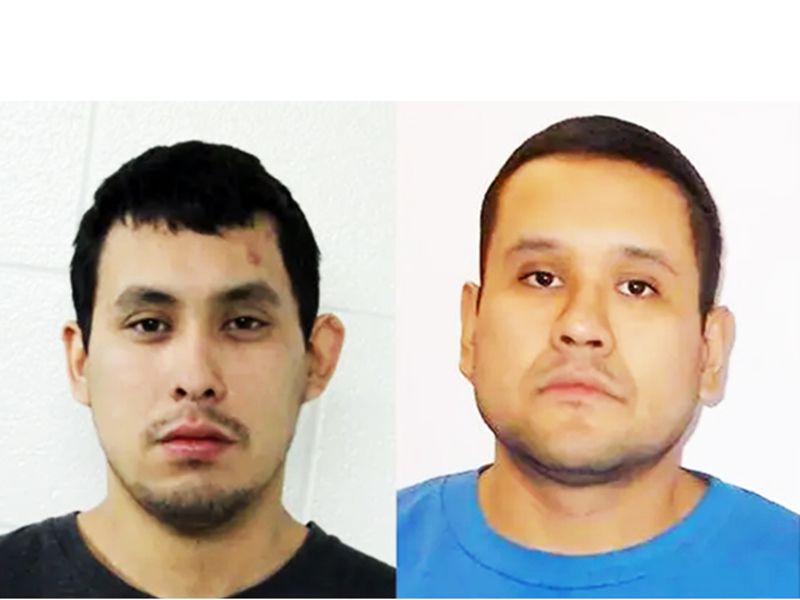
Damien Sanderson, left, and Myles Sanderson are being sought by police in connection with the stabbings

A manhunt was under way in western Canada on Sunday night as police searched frantically for two men suspected in a series of stabbings that have killed 10 people and wounded at least 15 others.

The bulk of the attacks targeted residents of James Smith Cree Nation, an Indigenous community of 3,400, with other injuries reported in the neighbouring village of Weldon, north-east of Saskatoon.

The attacks in the province of Saskatchewan have shocked the country. The prime minister, Justin Trudeau, described them as “horrific and heartbreaking. I’m thinking of those who have lost a loved one and of those who were injured.”

Trudeau said his government had been in direct communication with the James Smith Cree Nation community leadership and was ready to assist, adding: “Those responsible for today’s abhorrent attacks must be fully brought to justice.”

Credit: theguardian.com

Chileans overwhelmingly reject radical changes in constitution

0
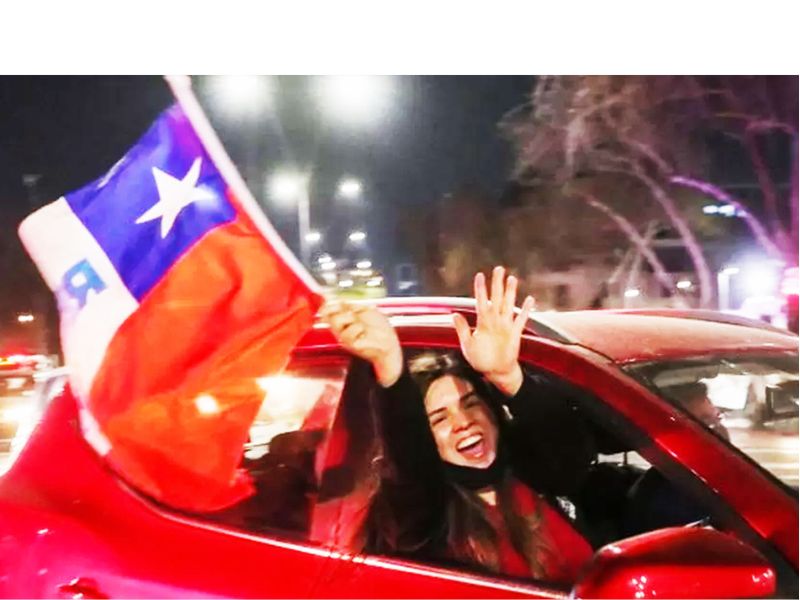
Opponents of the new constitution celebrated as the result was announced

Voters in Chile have overwhelmingly rejected a new constitution which was due to replace the one drawn up under Gen Augusto Pinochet’s military rule.

In a referendum, almost 62% voted against the progressive draft.

The margin of the defeat is much larger than opinion polls had suggested.

Chile’s President Gabriel Boric, who had backed the new constitution, said he would work with Congress and civil society to come up with a “new constitutional process”.

“We have to listen to the voice of the people” who, he said, had clearly not been satisfied with the proposal put forward by the constitutional convention.

He said he would continue working to reach a proposal that would “fill us with confidence and unite us all”.

The process to replace Chile’s military rule era constitution started three years ago after mass protests rocked the nation, which is normally seen as a haven of stability in the region.

Almost 80% of Chileans voted in favour of replacing the old constitution in a referendum in October 2020.

But the new document, drafted by a constitutional convention whose members had been chosen by voters, proved too radical for many.

Credit: bbc.com

Gas prices soar 26% after Russia closes key pipeline

0
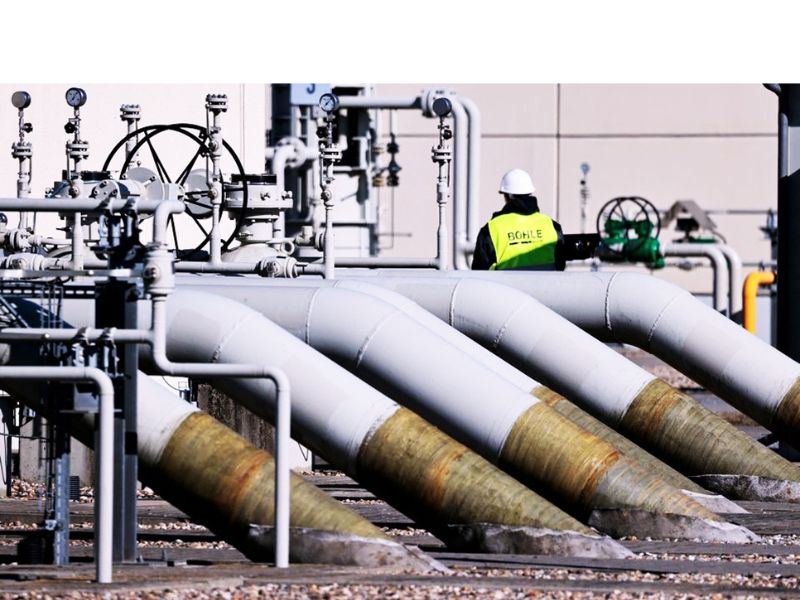
Russia closes key pipeline

Gas prices have soared on concerns over energy supplies after Russia announced it would not reopen its main gas pipeline to Europe.The Dutch month ahead wholesale gas price, a benchmark for Europe, was up as much as 30% in early trading on Monday.

The Nord Stream 1 pipeline had been due to reopen on Saturday after being shut for three days.

But Russia’s state-owned energy firm Gazprom said it had found a leak.

Europe has accused Russia of using gas supplies to blackmail European countries because of the Ukraine conflict, which Moscow denies.

A Kremlin spokesman said on Monday: “Pumping problems arose because of sanctions imposed against our country and against a number of companies by Western states, including Germany and the UK.”There are no other reasons that would lead to problems with pumping,”

Wholesale prices have been very volatile in recent weeks. They fell sharply last week when Germany announced that its gas storage facilities were filling up faster than expected.

Although the UK is not reliant on Nord Stream 1 for its gas, the Kremlin’s decision to squeeze supplies to Europe has driven up the overall cost of wholesale gas. Prices in the UK rose as much as 35% on Monday.

Credit: bbc.com

Liz Truss to become UK’s next Prime Minister

0
Liz Truss, new UK PM

Foreign Secretary Liz Truss has been named leader of the governing Conservative Party, taking power as Britain’s next prime minister at a time when the country faces a cost-of-living crisis, industrial unrest and a recession.


After weeks of an often bad-tempered and divisive party leadership contest that pitted Truss against Rishi Sunak, a former finance minister, Monday’s announcement triggered the beginning of a handover from Boris Johnson.


Johnson was forced to announce his resignation in July after months of scandal and he will travel to Scotland to meet Queen Elizabeth on Tuesday to officially tender his resignation.


His successor will follow him and be asked to form a government. In a short victory speech at the announcement in a central London convention hall, Truss said it was an “honour” to be elected after undergoing “one of the longest job interviews in history”.


She picked up 57 percent of eligible votes among Conservative Party members whilst her challenger, Rishi Sunak, former chancellor of the exchequer, got 42 percent. 


Credit: Aljazeera.com

Can I get rid of a mole by myself?

0
Moles

Moles are a skin growth that can develop anywhere on the body. Many people would like to remove a mole, but this can be costly. Instead, some people may turn to home remedies. But are they effective and safe?

Most people have between 10 and 40 moles on their body. They are usually harmless but can sometimes become cancerous.

If a person has a cancerous mole, then medical insurance will typically cover the cost of removal. However, insurance may not include the removal of benign moles, which is why some people may consider home remedies. Others may try home remedies because they do not want to see a doctor about a normal mole.

Although some people believe that home remedies can work, no formal studies have been carried out on their safety, effectiveness, or potential side effects. It is essential that anyone who is considering removing a mole using home remedies talks to a dermatologist (skin doctor) beforehand.

Some methods of removing a mole at home have not been proven effective or may be unsafe.

The following methods are among the most popular methods of removing moles, but despite claims of their effectiveness, they are unproven.

Anyone attempting these remedies should follow instructions carefully and be aware of possible damage, irritation, and scarring of the surrounding skin.

  1. Garlic

Some people believe that applying garlic to a mole for a period of time will cause it to diminish or disappear entirely. This is because garlic contains enzymes which may dissolve the cell clusters that cause the mole. Garlic can cause skin burns.

  1. Castor oil baking soda mix

Mixing castor oil and baking soda together creates an ointment that may remove moles if applied for several weeks. The theory behind this is that the baking soda dries out the mole and the castor oil helps protect the skin.

  1. Oregano oil

Oregano essential oil can be harsh on the skin and must be diluted with a carrier oil, such as castor oil. When applied a few times a day for several weeks, the combination of oils may help remove a mole.

  1. Iodine

Using a specific concentration of iodine for several weeks may cause a mole to flake off. Iodine can burn, so apply petroleum jelly around the surrounding area to protect the skin. Iodine is toxic, so take great care when using it. Never apply to skin that is broken.

  1. Lemon juice

Using lemon juice several times a day may bleach the mole, making it less obvious.

  1. Tea tree oil

Tea tree essential oil is a well-researched essential oil best known for its antimicrobial and anti-inflammatory properties Trusted Source. Some people claim that applying tea tree oil several times a day for a period will cause the mole to disappear. Take care when using tea tree oil as it is potent and toxic if swallowed.

  1. Potatoes

Potatoes are thought to have a natural bleaching effect. Though the potato may not fully remove the mole, it may help to fade it away over time.

  1. Flaxseed oil

Some studiesTrusted Source indicate flaxseed oil contains properties that help heal cuts and other lacerations. People also use it to help get rid of dark spots and blemishes, including moles.

  1. Frankincense oil

Frankincense oil is thought to dry the skin, causing moles to scab and fall off.

Frankincense essential oil reportedly has properties that help absorb oils and dry the skin. Proponents believe that when applied daily, the frankincense oil reacts with the mole, causing it to dry out, scab, and fall off.

Always dilute essential oils in a carrier oil (like sweet almond oil or coconut oil) before applying to the skin.

  1. Banana peels

Banana peels contain specific enzymes and acids that some people think can help remove a mole. One potential benefit of using banana peel on the skin is that it will act as a moisturizer.

  1. Honey

Some studies Trusted Source indicate that honey has antioxidants and anti-inflammatory properties. Some believe that applying honey to moles will cause them to fade away within a few days.

  1. Hydrogen peroxide

Hydrogen peroxide reportedly has properties that will help remove moles when applied to the skin. It should be applied three to four times a day.

Check with a pharmacist to find the type of hydrogen peroxide deemed suitable for this purpose.

  1. Aloe vera

Aloe vera contains many recognized Trusted Source skin-promoting properties. Some people believe that when used over time, aloe vera will help remove moles. Apply the plant or a manufactured product to the mole.

It is important to do an allergy test first, as it is possible to be allergic to aloe vera.

  1. Coconut oil

Coconut oil may help with other skin issues, but there are no studies that indicate it can help remove moles. However, some people believe it will reduce the size of the mole when applied daily.

Source: www.medicalnewstoday.com

Feature: Who is Liz Truss? UK’s new Prime Minister

0
Mary Elizabeth Truss

Liz Truss is to become the UK’s next prime minister after winning the contest to replace Boris Johnson as Conservative Party leader. But where did she come from and what makes her tick?

It is fair to say that Mary Elizabeth Truss has been on a political journey. She may not be a household name like her predecessor at Number 10 – and she was not the first choice of Tory MPs to replace Boris Johnson.

But her promise to return to fundamental Conservative values – cutting taxes and shrinking the state – proved to be exactly what party members, who got the final say over who took over from Mr Johnson, wanted to hear.

Born in Oxford in 1975, Ms Truss has described her father, a mathematics professor, and her mother, a nurse, as “left-wing”.

As a young girl, her mother took her on marches for the Campaign for Nuclear Disarmament, an organisation vehemently opposed to the Thatcher government’s decision to allow US nuclear warheads to be installed at RAF Greenham Common, west of London.

Though she is now proudly a Conservative from Leeds, back then she was a Scottish liberal.

The family moved to Paisley, just west of Glasgow, when Ms Truss was four-years-old.

In a BBC interview, she recalled shouting “Maggie, Maggie, Maggie – oot, oot, oot,” in a Scottish accent, as she took part in marches.

The Truss family later decamped to Leeds, where she attended Roundhay, a state secondary school. She has described seeing “children who failed and were let down by low expectations” during her time there.

Some of Ms Truss’s contemporaries at Roundhay have disputed her account of the school, including Guardian journalist Martin Pengelly, who wrote: “Perhaps she is selectively deploying her upbringing, and casually traducing the school and teachers who nurtured her, for simple political gain.”

One Roundhay school mate, who did not want to be named, told the BBC: “It was a really good school, really supportive teachers. Quite a lot of us have gone on to good universities and good careers.”

Although not part of her friendship group, he has clear memories of the young Truss.

“She was quite studious, serious,” he says, with a “heavy social conscience” and part of a group that were into environmentalism.

“I remember a school trip to Sellafield and her asking difficult questions and giving them a grilling. I remember that quite distinctly.”

At Oxford University, Ms Truss read philosophy, politics and economics. Friends recall a well-liked, if frenetic student.

“I remember her determination which was very impressive for me,” says Jamshid Derakhshan, who was studying for a postgrad degree in mathematics when Truss was an undergraduate.

“She was very quick with everything. Going around the college quickly, being everywhere.”

As to what sort of prime minister his old friend will make, Dr Derakhshan says: “My feeling is she’s not going to be stuck with one particular idea, she’s very flexible in her mind and what will be best for the time.”

Ms Truss was involved in many campaigns and causes at Oxford but devoted much of her time to politics, becoming president of the university’s Liberal Democrats.

At the party’s 1994 conference, she spoke in favour of abolishing the monarchy, telling delegates in Brighton: “We Liberal Democrats believe in opportunity for all. We do not believe people are born to rule.”

She also campaigned for the decriminalisation of cannabis.

“Liz had a very strong radical liberal streak to her,” said fellow Lib Dem student Alan Renwick in 2017.

“We were setting up the Freshers Fair stall, Liz was there with a pile of posters, saying ‘Free the Weed’ and she just wanted the whole stall to be covered with these posters.

“I was scurrying around after Liz trying to take these down and put up a variety of messages, rather than just this one message all over the stall.”

Her conversion to conservatism, towards the end of her time at Oxford is said to have shocked her left-leaning parents, but for Mark Littlewood, a fellow Oxford Lib Dem, it was a natural progression.

“She’s been a market liberal all of her adult life,” according to Mr Littlewood, who is now director general of the libertarian, free market think-tank, the Institute of Economic Affairs.

“Her political career reflects her ideology – she has always been highly sceptical of big government and privileged institutions who think they know best,” Mr Littlewood said.

She clearly changed parties, but that “was a judgement about what’s the best and most likely vehicle for her to succeed in politics and get what she wants to get done,” Mr Littlewood said.

Nevertheless, what she has described as her “dubious past” came back to haunt her as she tried to convince Tory members she was truly one of them.

At a leadership hustings in Eastbourne, some in the audience jeered, as she told them: “We all make mistakes, we all had teenage misadventures, and that was mine.

“Some people have sex, drugs and rock and roll, I was in the Liberal Democrats. I’m sorry.”

She had become a Conservative because she had met like-minded people who shared her commitment to “personal freedom, the ability to shape your own life and shape your own destiny,” she explained.

After graduating from Oxford she worked as an accountant for Shell, and Cable & Wireless, and married fellow accountant Hugh O’Leary in 2000. The couple have two children.

Ms Truss stood as the Tory candidate for Hemsworth, West Yorkshire, in the 2001 general election, but lost. Ms Truss suffered another defeat in Calder Valley, also in West Yorkshire, in 2005.

But, her political ambitions undimmed, she was elected as a councillor in Greenwich, south-east London, in 2006, and from 2008 also worked for the right-of-centre Reform think tank.

Conservative leader David Cameron put Ms Truss on his “A-list” of priority candidates for the 2010 election and she was selected to stand for the safe seat of South West Norfolk.

But she quickly faced a battle against de-selection by the constituency Tory association, after it was revealed she had had an affair with Tory MP Mark Field some years earlier.

The effort to oust her failed and Ms Truss went on to win the seat by more than 13,000 votes.

She co-authored a book, Britannia Unchained, with four other Conservative MPs elected in 2010, which recommended stripping back state regulation to boost the UK’s position in the world, marking her out as a prominent advocate of free market policies on the Tory benches.

During a BBC leadership debate, she was challenged about a comment in Britannia Unchained, describing British workers as “among the worst idlers in the world”. She insisted she had not written it.

In 2012, just over two years after becoming an MP, she entered government as an education minister and in 2014 was promoted to environment secretary.

At the 2014 Conservative conference, she made a speech in which she said, in an impassioned voice: “We import two-thirds of our cheese. That. Is. A. Disgrace.”

The speech was little noticed at the time, but it has taken on a life of its own on social media, attracting much mockery and becoming widely shared.

Two years later came arguably the biggest political event in a generation – the EU referendum.

Ms Truss campaigned for Remain, writing in the Sun newspaper that Brexit would be “a triple tragedy – more rules, more forms and more delays when selling to the EU”.

However, after her side lost, she changed her mind, arguing that Brexit provided an opportunity to “shake up the way things work”.

Under Theresa May’s premiership, she became the first female Lord Chancellor and justice secretary, but she had several high-profile clashes with the judiciary.

Her initial failure to defend judges after they were branded “enemies of the people” by the Daily Mail, when they ruled Parliament had to be given a vote on triggering Brexit, upset the legal establishment.

She later issued a statement supporting the judges, but she was criticised by Lord Chief Justice Lord Thomas of Cwmgiedd as “completely and absolutely wrong” for not speaking out sooner.

After 11 months as justice secretary, she was demoted to chief secretary to the Treasury.

When Boris Johnson became prime minister in 2019, Ms Truss was moved to international trade secretary – a job which meant meeting global political and business leaders to promote UK PLC.

In 2021, aged 46, she moved to one of the most senior jobs in government, taking over from Dominic Raab as foreign secretary.

In this role she has sought to solve the knotty problem of the Northern Ireland Protocol, by scrapping parts of a post-Brexit EU-UK deal – a move the EU fiercely criticised.

She secured the release of two British-Iranian nationals who had both been arrested and detained in Iran.

And when Russia invaded Ukraine in February she took a hard line, insisting all of Vladimir Putin’s forces should be driven from the country.

Her decision to pose for photographs in a tank while visiting British troops in Estonia, was seen as an attempt to emulate Margaret Thatcher, who had famously been pictured aboard a Challenger tank in 1986. It also fuelled speculation that she was on leadership manoeuvres.

Claims she was deliberately trying to channel Thatcher grew even louder when she posed for a photograph in a white pussy bow collar of the kind favoured by the Iron Lady.

But she has always dismissed such criticism, telling GB News: “It is quite frustrating that female politicians always get compared to Margaret Thatcher while male politicians don’t get compared to Ted Heath.”

By Brian Wheeler & Sam Francis

Source: bbc.com

Sunderland sign Man Utd forward Amad Diallo

0
Amad Diallo

Sunderland have signed Manchester United forward Amad Diallo on a season-long loan and France youth midfielders Edouard Michut and Abdoullah Ba.

Ivorian Diallo, 20, joined United from Atalanta for £19m in January 2021 but has only played nine senior games.

He spent the second half of last season on loan with Rangers.

Michut, 19, joins the Black Cats on a season’s loan from Paris St-Germain with an option to buy, while Ba, also 19, has signed a five-year deal.

He has moved permanently from Le Havre.

It is understood Diallo’s wages are being split between Sunderland and United.

“I had a fantastic experience at Paris St-Germain, but now I’m ready for a new challenge,” said Michut.

“I travelled to the Stadium of Light on Saturday to watch the game against Norwich City and the atmosphere inside the stadium was unbelievable.

“This is an opportunity for me to level up as a player and I always wanted to play in England, but I also like the project and that is why I’m here. My preparation for the season has been good and I’m ready to help the team.”

Credit: bbc.com

The Ghanaian Chronicle