Home Blog Page 2662

IMO, GMA train shippers on Container Weight Verification

0
The dignitaries together with the participants in a group photograph

A five-day workshop to help in the effective implementation Amendments to Chapter Six of the Safety of Life at Sea (SOLAS) convention which deals with the verification of packed containers is underway in Accra.

It was put together by the International Maritime Organisation (IMO), in close collaboration with the Ghana Maritime Authority (GMA).

The participants, drawn from nine countries in West and Central Africa, are by the end of the workshop expected to have gained the requisite knowledge and skills regarding the verification and documentation of the mass of a packed container for a true reflection of the actual gross weight.

Addressing delegates who converged at the Fiesta Royale Hotel in Accra for the workshop, Capt. Dallas Laryea, Regional Coordinator for West and Central Africa, Technical Cooperation Division, IMO, noted that his outfit decided to support member states to train the various stakeholders in the shipping industry, because it realised that these member states were not able to implement the SOLAS recommendation due to the lack for human and financial resources.

“When IMO comes out with these treaties, it is now left to the member states of the IMO to now implement, and over the years the IMO realised that there are countries that lack human and financial resource to implement it. …So IMO brings in its expects so that they can build the capacity of its member states.”

Explaining why it was important to implement the amendment of the SOLAS convention, Capt. Dallas noted that about 90% of world goods were transported by sea, and indicated that 60% of the goods, including medicines, frozen meat, electronic gadgets, and clothing were all packed in containers and shipped across Africa and the rest of the world.

He said shippers were supposed to give the actual weight of the containers to the shipping companies, so that proper storage plan and how to pack the ship would be done in the right way, but people do not usually do so, “they usually under-declare,” he said.

He said the act led to the loss of containers, ships, damages the marine environment and disrupts the global supply chain. He made mention of the sinking of the MSC Napoli in 2007, the capsizing of the MV Deneb in 2011, and the loss of the MOL Camfort in 2013 as a result of mis-declaration of the weight of those containers, and said there was the need to remedy the situation, hence, the amendment of Chapter Six of the SOLAS Convention.

He noted that the implementation of the amendment would have a substantial impact on operational practices between parties in the international supply chain involved in the carriage of containers by the sea and urged participants to actively participate in the workshop.

Director-Genral of Ghana Maritime Authority, Mr Alfred k Alonsi, who also addressed the participants, expressed his appreciation to IMO for making Ghana of the host the workshop.

He said the importance of the workshop cannot be overemphasized considering the contribution of shipping in the global economy in which the carriage of cargo by containers is the modern trend.

He observed that when port equipments and infrastructures prematurely wear out due to mis-declared containers, it inadvertently causes major issues for the public and for the shipping companies and hence considered the workshop very important since it will equip participants with skills needed for the verification of container weights.

The Minister for Transport, Mr Kwaku Ofori Asiamah, on his part, declared the government’s support to the IMO and GMA in achieving a safer marine environment.

Nigerian Gospel Singer Dunsin Oyekan survives ghastly motor accident

0
Dunsin Oyekan

Popular Nigerian gospel Singer, Dunsin Oyekan has survived a ghastly motor accident.

The Artiste and his crew were in a Land Cruiser when the accident occurred on Saturday September 3, 2022 while going for a musical show on his way to Ibadan from Lagos.

According to the reports, the vehicle of ‘Fragrance to fire’ crooner clashed with a trailer and was smashed by the trailer.

However, it is reported that the crew members of the team only suffered a slight injury but Dunsin Oyekan came out of the somersaulted accident unharmed and without a scratch on his body.

The news of the accident was shared by colleague gospel artist Tim Godfrey on his Instagram page.

He wrote:

“The devil has failed! What the enemy meant for evil, God has turned it around for the good of Min. Dunsin. This is a prophetic sound for this season.

The Lord knows the plans and devices of the enemy; so he gave us this declaration ahead of time. Let us thank God for the life of Minister Dunsin. Truly, what the enemy meant for evil, God has turned it around for his good.”


I’m not broke; Amy Newman

0
Amy Newman

Evangelist Mrs. Amy Newman has debunked claims that she is broke and does not even have a bank account.

Mrs. Amy Newman who was in the news last month as being broke has said that her comments were taken out of context, as what was supposed to appear as a joke was taken seriously by some media men, making headlines out of it.

In her own words, “I’m not broke. Listen to the interview again, I just said it in a jovial way to make the interview fun but I didn’t know that these days when you say anything in the media, they become headlines.”

“I had calls from my children asking what was going on because they didn’t get what was reported in the media. I am not broke,” Mrs. Amy Newman debunked.

She said that this has made her extra careful, adding that, “now I am not even sure what will be taken out of context if I make any comment again.”

Mrs. Amy Newman is currently promoting her latest single, ‘I’m redeemed,’ a song which describes what she has been through since 2019.

According to the Veteran Gospel Artiste, she went through dark days since 2019 and was not aware of it until she was redeemed.

She mentioned that, she is unable to describe what exactly she went through but it was a deeper form of depression.

Mrs. Neman says the Kaywa produced song was composed to help those going through similar situation.

42 arrested at Stonebwoy’s ‘Ashaiman to the World Concert’

0
Stonebwoy at the concert

As part of giving back to the community where he lived greater part of his life, Stonebwoy organizes a musical concert for the Ashaiman neighbourhood annually.

This year’s edition of the ‘Nominate’ hitmaker’s concert witnessed the Police, upon intelligence, arresting 42 suspects on Saturday, September 3, 2022, at the Saka Saka Park in the Greater Accra Region.

The suspects who are being held for various offenses attacked some of the fans with toy guns, cutlasses, knives, scissors, and other offensive weapons at different locations towards the end of the concert.

Items retrieved from them include 2 toy pistols, 10 mobile phones, 5 cutlasses, 5 jack knives, 3 pairs of scissors, 1 wig, and a tablet.

All the suspects will be taken through the due process of the law.

Livingstone Etse Setekla Known in the music industry as Stonebwoy lived the greater part of his life in Ashaiman.

As a way of remembering his humble beginnings, he started the Ashaiman to the world concert which is organized every year at Ashaiman.

The concert, now in its 7th edition has earned recognition as one of the most popular and largest artist-led free music festivals in Africa that celebrates arts, culture, and music in his native town Ashaiman.

Failing Police Patrols and Ineffective Fire Alarms: The Auditor-General’s Report

0
Opinion

Once again, we are back to the same place we were a year ago, just as we have been year in and year out – agonizing over the findings captured in the Auditor-General’s report.

Casting my mind back to my secondary school days, when excerpts of the audit report were regularly shared in our newspapers, I am tempted to say, nothing much has changed except the magnitude of the infractions, which keep increasing over time. So why are we caught in this vicious cycle year in and year out?

Failing Police Patrols

In 1984, authors Mathew D. McCubbins, Thomas Schwartz wrote an article in the American Journal of Political Science titled “Congressional Oversight Overlooked: Police Patrols versus Fire Alarms.” that frames legislative oversight of the executive as using either a police patrol or a fire alarm approach.

Although written in a different context, the police patrol vs. fire alarm framework is useful for analyzing issues of accountability and oversight in any governance system.

If you think of the analogy, police patrols are always on the watch – patrolling the roads, neighbourhoods, highways, watching out for any activities that infringe upon the law and keep people and communities safe.

How does this analogy work in the context of the daily operations of our governance institutions?

There are rules that govern the financial and non-financial actions of public officials.

For example, as part of the administrative process, there are individuals charged with ensuring that public funds are expended in conformity with the laid down rules in place such as receipts and other requisite supporting documents to justify payments.

Also, before a payment is finally approved, the request for payment goes through several individuals who, at each step of the way, are to ensure that all the procedures have been followed.

In our governance set-up, it is not uncommon to find units in charge of finance, monitoring and evaluation, audit etc.

This is the idea of police patrols I speak of – units and people in our public sector agencies who are charged with constantly watching to make sure that the infractions captured in the Auditor General’s Report do not happen.

In fact,the passage of the comprehensive Public Financial Management Act 2016, Act 921, is an excellent example of a police patrol system.

In reviewing the legislation, the scope it covers is really the kind of police patrol system you want in place to safeguard against financial infractions. But with the yearly revelations from the Auditor General, it is quite clear that the police patrols are failing.

Ineffective Response To Fire Alarms

In the article I referenced, the fire alarm is a de facto response to violations that occur in public administration. If you can picture a fire alarm for a minute, it normally goes off when smoke or a real fire is detected.

Once this danger is detected, the real task at hand becomes putting out the smoke or fire and ensuring that the underlying causes are not repeated. Such is the Auditor General’s report – it sounds an alarm because the police patrols (internal systems) failed in their duty to protect the public purse.

The report sounds the warning and exposes the smoke and fire (infractions) occurring within our public sector institutions.

Perusing the Auditor General’s report and noticing the regularity with which certain infractions are repeated, the only conclusion one can justifiably reach is that the response, if any, to the sounds of the fire alarms raised is woefully failing to deal with the root causes of the financial malfeasance we see captured.

So, Police Patrols or Fire Alarms?

There are enough police patrols (laws, regulations, administrative rules, procedures, etc.) designed to guide the actions of public officials and help prevent the kind of infractions the Auditor General continues to capture in its reports. It baffles my mind how all these infractions are able to evade the police patrol systems in place.

Are the police patrols weak? Are the individuals charged with ensuring that the police patrols work failing in their duties?

I prefer police patrols because when they are effective, it prevents a lot of damage to the system before it occurs.

However, if we cannot count on the police patrols to work, then we must be able to count on a much stronger response to the fire alarms that are sounded in the Auditor General’s report.

The public hearings convened by the Public Accounts Committee in response to the audit recommendations are commendable; however, the most effective response, in my opinion, will be the Auditor-General exercising its powers to disallow and surcharge expenditures which are contrary to law more forcefully.

This is because if there are no consequences for those who fail in their police patrol duties as well as those who continue to flout the rules, then, unfortunately, we will be back here again in a year’s time to lament over another Auditor General’s report full of infractions which I dare say may be worse than the previous years.

By: Dr. Johns Osae-Kwapong

Democracy & Development Fellow, CDD-Ghana

The views expressed in this article are the author’s own and do not necessarily reflect The Chronicle’s stance.

NPA warns consumers: don’t buy ‘table-top’ petroleum products

0
NPA

The National Petroleum Authority (NPA) has advised the public against the patronage of petroleum products sold in yellow gallons at the lorry and on table-top as the quality of such products cannot be assured.

The NPA said it was illegal for any person or group of persons to sell petroleum products in gallons at the lorry stations saying, “NPA has not granted license to any individual or group of persons to sell petroleum products to consumers at the lorry station, that act is illegal.”

Mr Bashiru Natogma, the Upper West Regional Manager of the NPA, gave the advice in an interview with the Ghana News Agency (GNA) in Wa on efforts by the NPA to help curb the menace of the sale of adulterated petroleum products in the region.

He said aside from the quality assurance issues of such products, it would be difficult for the regulatory body to trace the source of such petroleum products in case of any eventuality.

Dr Hafiz Bin Salih, the Upper West Regional Minister, raised the concern about the smuggling of petroleum products and invasion of adulterated petroleum products in the region during a visit of the Chief Executive Officer (CEO) of the NPA to the region and stressed the need for urgent steps to arrest the menace.

The visit was to find out the extent of fuel smuggling and adulteration in the region, especially with reports coming out that there was fuel smuggling in the region.

Mr Natogma explained that the problem of the sale of adulterated petroleum products in the region had been solved saying, “Things are really under control compared to the initial time we came here.”

He indicated that regional offices had been opened throughout the country to check the problem of fuel smuggling and the importation of adulterated fuel from neighbouring countries.

“The strategies we put in place have really worked for us because complaints about adulteration, for the past six months, we have not heard of any complaint … and we are determined to do more,” he added.

After seven months of intervention by the NPA to curb the smuggling of petroleum products in the region, the GNA spoke with some consumers of petroleum products in Wa to find out the impact of those interventions.

Mr Ahmed Hissan Jimba, the Secretary of the Upper West Regional Combuu (tricycles) Drivers Association, told the GNA that the intervention of the NPA had saved their machine engines from destroying.

He explained that they used to patronise petroleum products sold in gallons, which could have a dire impact on the engines of their machines but that with the education they received from the NPA they had become conscious of the adulteration of such products.

Also, Mr Nuhu Mahama, the Industrial Relations Officer of the Ghana Road Transport Union (GPRTU) told the GNA that with the coming of the NPA in the region fuel smuggling was no longer a problem but the hike in prices of petroleum products by the various Oil Marketing Companies in the region.

He said the high cost of petroleum products in Ghana had led to the smuggling of those products from neighbouring countries into Ghana.

Source: GNA

Abiodun signs contract for road construction in Abeokuta North

0
Dapo Abiodun

The Ogun State governor, Dapo Abiodun, says he has signed the contract for the reconstruction of major roads in Abeokuta North Local Government Area of the State.

Abiodun who made this known on Friday while speaking at the Abeokuta North local Government unified wards meeting of the All Progressives Congress, (APC) held at Oba Adeleye Park, Totoro, Abeokuta, said the contract was signed on Monday after he embarked on on-the-spot-assessment of the roads last weekend.

He also promised to continue prioritizing the infrastructural development of the state to ensure that no part is left out.

The governor explained that his visit to Ilugun, Iberekodo, Saje, Elega areas in the local government was to show how important the roads were to the commercial activities of Abeokuta and the state at large.

Appreciating the people of Abeokuta North for their support, Abiodun said that the current administration would ensure that necessary amenities are provided across the state as part of its efforts at making the environment more friendly and inhabitable.

He further added that his administration had installed two new power transformers at Lafenwa Market to power electricity in the market in accordance to the promise he made to the traders during his last visit to the market earlier in the year.

While calling on the party supporters to prepare for the forthcoming general elections, the state helmsman noted that the reason for his visit was to have first-hand information on some of the challenges being faced at the local government with a view to solving them.

He, however, urged women in the local council to key into the state women empowerment programme known as ‘Okowo Dapo’ to enable them benefit.

Speaking earlier, the State Chairman of the party, Yemi Sanusi, commended the governor for the massive infrastructural development across the state, stressing that the governor’s visit to the area would afford him the opportunity to know people’s needs and how to improve on the existing infrastructure.

Source: dailypost.ng

Yellow Fever: Nigeria reports 14 deaths in 10 states

0
Yellow fever

The Nigeria Centre for Disease Control and Prevention (NCDC) has recorded 14 deaths in 10 states from suspected cases of yellow fever from January to July 2022.
The NCDC made this known via its official website on Sunday.

It listed the affected states as Abia -one, Bayelsa -one, Benue- one, Imo- one, Kaduna- one, Katsina – two, Kebbi -two, Taraba -two, Yobe -one and Zamfara -three.

The News Agency of Nigeria (NAN) reports that the World Health Organisation (WHO) described yellow fever as an acute viral haemorrhagic disease transmitted by infected mosquitoes.

The “yellow” in the name refers to jaundice that affects some patients.

The symptoms of yellow fever include headache, jaundice, muscle pain, nausea, vomiting and fatigue.

A small proportion of patients who contract the virus, however, develop severe symptoms, and approximately half of those die within seven to 10 days.

The Nigerian public health agency said that cumulatively, a total of 1,179 suspected cases of yellow fever were reported from 416 local government areas between January 1 and July 31.

It said that one case each was confirmed in Sokoto, Osun, Ondo, Anambra and Imo states.

The NCDC said that male to female ratio for suspected cases was 1:1.7 with males recording 637 cases (54 per cent) and females, 542 cases (46 per cent).

It stated that 74 per cent of cases were aged 30 years and below.

“One hundred and twenty-six (10.7 per cent) of 1,179 suspected cases has had at least one dose of the yellow fever vaccine,” it said.

The centre said that it was coordinating response activities through the National Multi-Agency Yellow Fever Technical Working Group.

NAN reports that the impact of the COVID-19 pandemic continues to be felt across several other areas including the increase in the risk of measles and yellow fever outbreaks due to delayed planned vaccination campaigns.

Meanwhile, yellow fever is preventable with an extremely effective vaccine that is safe and affordable.

A single dose of yellow fever vaccine is sufficient to grant sustained immunity and life-long protection against yellow fever disease.

Source: premiumtimesng.com

LASTMA impounds 19 vehicles for illegal parking

0
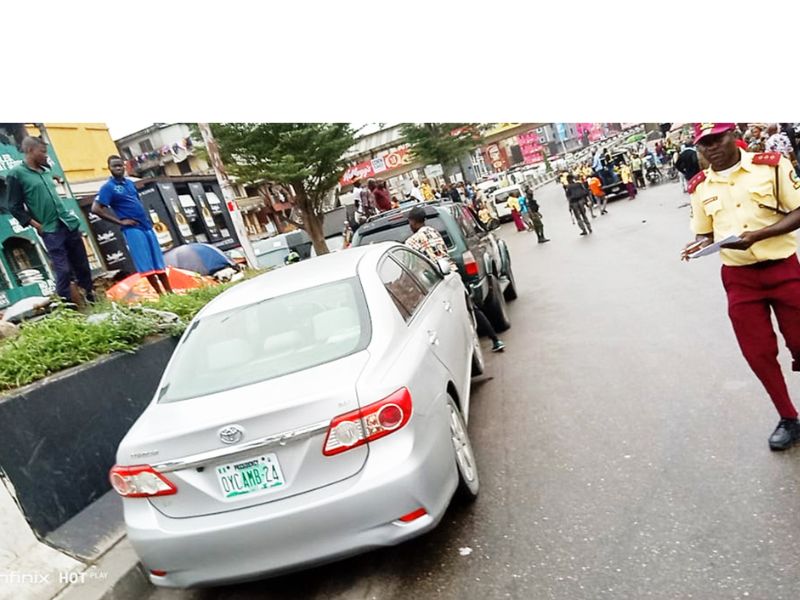
A picture of some of the vehicles apprehended by LASTMA, due to indiscriminate packing along the road at Apogbon

The Lagos State Traffic Management Authority (LASTMA) said it had impounded 19 vehicles over indiscriminate and illegal parking at garages and parks in Lagos Island.

The General Manager of LASTMA, Bolaji Oreagba, said this in a statement through the Director, Public Affairs Unit LASTMA, Adebayo Taofiq, Lagos on Sunday.

Mr Oreagba said the agency impounded the vehicle due to the continuous perennial traffic gridlock being experienced around Apongbon inwards and outwards Lagos Island, caused by indiscriminate illegal parking of vehicles.

The News Agency of Nigeria (NAN) reports that LASTMA had impounded 20 vehicles on 28 August, along Apogbon and Ikorodu roundabout, as a result of indiscriminate packing.

He disclosed that the on-going clampdown exercise embarked upon by the authority on that day was to ease off traffic flow to motorists while approaching ‘Ember Months’ across the state.

Mr Oreagba disclosed further that a study conducted revealed that perennial traffic gridlock being experienced by motorists were caused by recalcitrant drivers who had refused to comply with the State Traffic Laws and Regulations.

He said the ongoing total enforcement exercise which was expected to cover major identified spots was being coordinated by the Core Operations Commands (COC) from LASTMA Headquarters at Oshodi.

“I must implore law abiding citizens of Lagos State, especially motorists, to adhere strictly to the traffic law of the State in order not to run afoul of the law which has consequences.

“We must all have a positive attitude towards obeying the law of the State, which is made to ensure orderliness and fast-paced socio-economic improvement of individuals, corporate entities and generality of the people,” Mr Oreagba said.

Source: premiumtimesng.com

Power privatisation has failed, reverse the decision – Electricity workers urge Buhari

0
Electricity workers

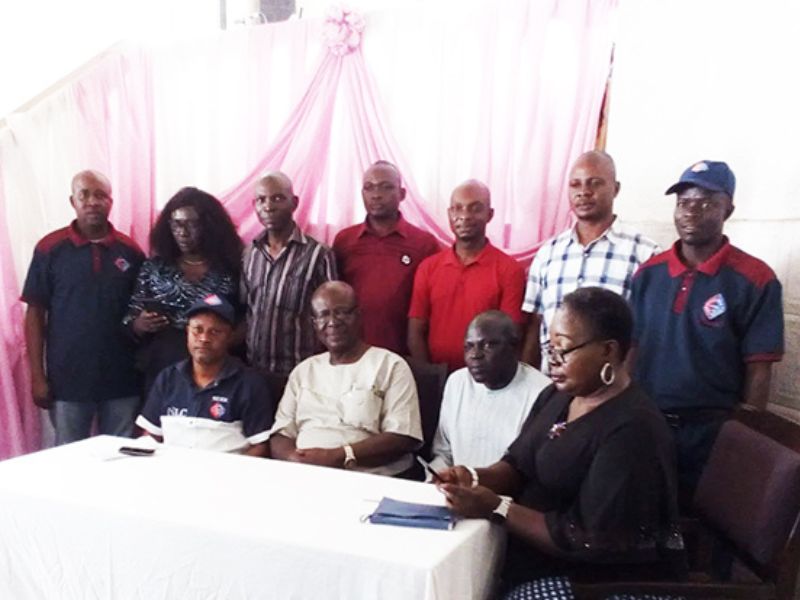
Electricity workers under the aegis of the National Union of Electricity Employees (NUEE) have disclosed that privatisation of the power sector in the country has failed.

The workers made this disclosure on Monday.

The workers, who spoke at a press conference in Ibadan on Monday, called on the present government led by President Muhammadu Buhari to reverse the privatisation of the power sector.

Assistant General Secretary, Western Zone of NUEE, Comrade Modupeoluwa Akinola, while addressing journalists on behalf of his colleagues, explained that privatisation of the power sector has negative consequences on workers and members of the public.

Akinola, while speaking, further added that the union had, before the privatisation of the power sector, kicked against the privatisation of the sector.

He alleged that privatisation will always seek to protect and defend the profit interest of the business owners against the general interest of the people.

He said, “Power privatisation has failed. We of the electricity workers under the aegis of the National Union of Electricity Employees, NUEE, Western zone decide to organise this press conference to draw the attention of the general public to the age-long position of our great union on the privatisation of the power sector, its attendant consequences and the basis for an unrelented defense and protection of members of our union.

“Our union rejects the planned privitisation of the TCN, demands a full renationalisation of the power sector under a democratic control of a board that includes the representatives of workers and consumers, and holds that no amount of intimidation, falsehood including misrepresentation of facts can deter us from continuing to express our opposition to the privatisation of the power sector in defense of the interest of our members and the people.

“Gentlemen of the press, it will interest you to know that, prior to the eventual privatisation of the power sector in 2013, our union was at the forefront of several agitations and campaigns which included street protests, town hall meetings, symposia and picketings organised by mass of Nigerian people to stop and halt the then move for the privitisation exercise.

“Our opposition to the privatisation policy was informed by our understanding and conviction that privatisation will always seek to protect and defend the profit interest of the business owners against the general interest of the people for affordable and regular electricity.

This has no doubt been confirmed by the daily agony and pain being experienced by our members and Nigerian people since privatisation of the power sector over 9 years ago”.

Source: dailypost.ng

The Ghanaian Chronicle