Home Blog Page 262

MoFA, Premix Secretariat roll out reforms to protect community funds after audit findings

0
Emelia Arthur, Miniser for Fisheries

The Ministry of Fisheries and Aquaculture (MoFA) and the National Premix Secretariat have announced a sweeping set of reforms to protect the 53 percent Community Development Fund (CDF) allocated to communities.

Mr Ebow Mensah, administrator of Premix secretariat

The decision was taken after the release of an audit report that exposed severe financial and governance lapses in management of premix funds meant for community development by some Landing Beach Committees (LBCs) between 2017 and 2024.

The audit revealed widespread failures in accounting, non-compliance with approved distribution formulas and unauthorised use of funds, exposing deep-rooted institutional weaknesses in managing community premix resources.

The Minister for Fisheries and Aquaculture, Emelia Arthur, commenting on the report said the decision to make it public demonstrated the government’s commitment to transparency, accountability and reform.

She reiterated: “We cannot build a sustainable premix system without confronting the realities of the past. This government has chosen transparency and reform over silence, because the future of fisherfolks’ livelihoods depends on it.”

The Minister stressed that the funds, which were not accounted for, could have been used for much-needed projects such as drainage systems, sanitation facilities, schools and infrastructure to support fishing communities.

These facilities, she mentioned, could directly contributed to Sustainable Development Goals (SDGs) related to poverty alleviation, education and clean water and sanitation.

According to her, the loss represents a huge setback for development, particularly in underdeveloped coastal areas, where these resources were vital for improving living conditions.

The Administrator of the National Premix Secretariat, Mr Ebow Mensah, told The Chronicle in an interview that the audit provided a clear roadmap for action, saying “Transparency strengthens enforcement” and  that by making these findings public, “we have empowered ourselves to act decisively and fairly.”

He confirmed that recovery processes were underway, with serious cases referred for further action whereas governance structures at the landing-beach level were being restructured to tighten financial controls and improve oversight.

He stressed that as response to the audit findings, MoFA was introducing a Community Accountability Framework to ensure the proper management of CDF funds at the local level.

This framework, he noted, would include mandatory reporting, clearer signatory rules, improved financial training for LBC executives and stricter compliance monitoring.

Mr Mensah also announced that starting in February 2026, government would roll out a nationwide CDF protection system linked to the Premix Fuel Automation Programme to enhance transparency, monitoring and accountability.

“These reforms mark a new chapter for the premix system. Our focus is on protecting fisherfolk, recovering public funds and ensuring that the mistakes of the past are not repeated,” he said.

The Secretariat emphasised that the combination of transparency, recovery and reform would position the premix programme to be stronger and more sustainable to reinforce its critical role in supporting the livelihoods of fisherfolk to drive community development in coastal areas across the country.

The main purpose of the aforementioned initiative meant to prevent future losses and ensure that the funds designated for community development would be used effectively to bring long-term benefits to fishing communities to reduce poverty and foster economic growth in line with the government’s commitment to the SDGs.

Bus Driver, Four Others Nabbed Over Drug Haul on Obuasi–Dunkwa Road

0
Perpetual, a suspect arrested by the police.

The Ghana Police Service has announced the interception of a large consignment of suspected prohibited drugs by officers of the Ashanti South Regional Command.

According to a statement posted on the Service’s official X (formerly Twitter) handle, personnel at the Tweapease Police barrier on the Obuasi–Dunkwa highway seized the drugs on February 13, 2026, during a routine operation.

The consignment, transported on a red OA Kia Grandbird bus en route to Ayamfuri near Dunkwa-On-Offin in the Central Region, comprised 257 packs of 50mg tramadol, 58 packs of 250mg tramadol—popularly known as “Red”—and 58 packs of 225mg tapentadol, also referred to as “Royal.”

Police said a search of the vehicle at the barrier led to the discovery of two sealed brown boxes containing the substances. The driver of the bus, identified as Joseph Nkrumah, 37, was arrested at the scene.

Drug exhibits that were en route to Ayanfuri but were seized by the police.

Drug exhibits that were en route to Ayanfuri but were seized by the police.

During preliminary interrogation, Nkrumah reportedly identified one Perpetual, a native of Ayamfuri, as the owner of the consignment.

The statement further indicated that on February 14, 2026, while investigations were ongoing, the said Perpetual, accompanied by three others—Diana Mensah, 40; Abena Neyea, 43; and Nana Akua, 35—arrived at the Tweapease barrier with GH¢50,000 in cash, allegedly in an attempt to bribe the officers.

The police said the suspects were immediately arrested, and the cash has been retained as evidence to support further investigations.

All five suspects are expected to be arraigned today, Monday, February 16, 2026, under provisions of the Public Health Act, 2012 (Act 851), which prohibits the sale and distribution of certain drugs and related substances without lawful authority.

Drug exhibits seized by the police after they were found on board an OA bus en route to the mining town of Ayanfuri.

The Ashanti South Regional Police Command reiterated its commitment to clamping down on drug trafficking and related offences within its jurisdiction.

In the statement signed by Deputy Commissioner of Police Joseph Hammond Nyaaba, Regional Commander, the Command warned that it would continue to make the area “hostile” for individuals engaged in criminal activities.


For more news, join The Chronicle Newspaper channel on WhatsApp: https://whatsapp.com/channel/0029VbBSs55E50UqNPvSOm2z

Seven Ghanaian Traders Killed in Burkina Faso Terror Attack Buried

0
Alhaji Mubarak Muntaka, Interior Minister

The bodies of seven Ghanaian traders who were killed in a terrorist attack in Titao, northern Burkina Faso, have been laid to rest as the Government of Ghana steps up efforts to evacuate surviving victims.

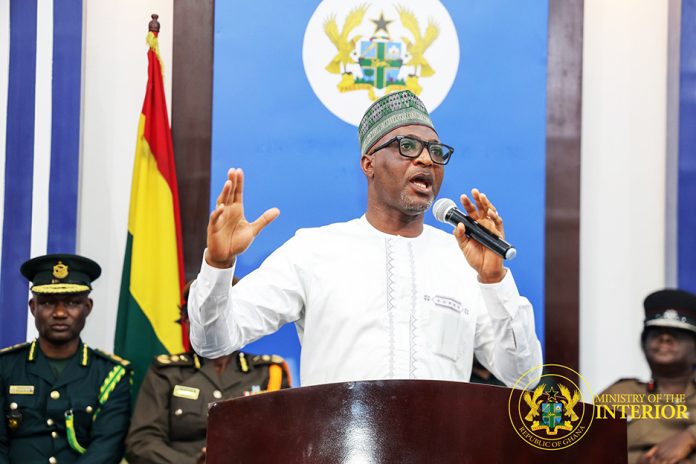
Minister for the Interior, Muntaka Mohammed-Mubarak, disclosed this in an interview on JOY FM’s Super Morning Show on Monday, February 16.

He said the remains of the deceased were burnt beyond recognition and had begun decomposing, compelling authorities to proceed with burial arrangements in Burkina Faso.

“The seven bodies had been burnt beyond recognition. As of yesterday, we agreed they had begun decomposing and had to be buried,” the Minister stated.

According to him, the government had hoped Ghana’s diplomatic mission would be present to witness the burial. However, the deteriorating security situation in the area made it unsafe for officials to travel there.

He explained that the Burkina Faso authorities informed Ghanaian officials that the burial would take place at 10 a.m., adding that some of the Ghanaian women who were not seriously injured were allowed to attend and document the process.

Mr. Mubarak further revealed that Burkina Faso’s military is working to establish a secure corridor to enable the safe transport of both injured and uninjured survivors to Ghana’s diplomatic mission in Ouagadougou. From there, arrangements will be made to repatriate them to Ghana.

The victims were among a group of 18 Ghanaian tomato traders and truck drivers caught in the deadly attack in Titao last Saturday. The incident claimed seven lives and left several others injured.

Providing an update on the survivors, the Interior Minister said three men sustained injuries, while one woman remains in critical condition. Others, he noted, suffered minor injuries.


For more news, join The Chronicle Newspaper channel on WhatsApp: https://whatsapp.com/channel/0029VbBSs55E50UqNPvSOm2z

Land Guards On Rampage In Ada …Attack Construction Workers, Rob Them Of Their Phones

0
Christian Tetteh Yohuno - IGP

Tension is mounting at Akplabanya in the Ada East District of the Greater Accra Region, following the visitation of terror on construction workers by a group of hooded men suspected to be land guards.

The attackers severely assaulted the workers, robbed them of their money and mobile phones, damaged a vehicle and a polytank at the site.

Information available to The Chronicle from the coastal community of Akplabanya suggests that the incident might be linked to a lingering nearby land litigation.

According to a source at the Kitcher Larbia family of Akplabanya who pleaded anonymity, some years ago, the maritime authorities dumped a number of laid up vessels occupying space at the Tema Port on the beaches of Akplabanya.

Then ferrous metal scrap dealers descended on the distressed vessels, which they cut and sold to the steel companies, both local and abroad.

The investors in that trade saw Akplabanya shoreline as conducive enough to land any wreckage for ferrous metal scraps and as such constructed a huge warehouse for that purpose.

The worried source went on that, with the passage of time, the ravaging sea erosion destroyed the structure.

The Kitcher Larbia family, he said, released a parcel of land adjoining a disputed area (which case is in court with an injunction restraining all sides), to the investor to advance his business, which work was commenced.

Sometime last month, the leadership of the workers reportedly received a phone call from a known individual with interest in the land, but hiding behind others, to the effect that if they do not stop the construction of the warehouse, land guards would come and terrorise them.

Not long after that threat, hooded and suspected land guards armed with offensive weapons stormed the site, assaulted the workers mercilessly and robbed them.

The source continued that already, there was growing chieftaincy litigation at Akplabanya, which had rendered the place volatile because of interests from faceless individuals.

The Kitcher Larbia family source further told The Chronicle that they did not want to take the law into their own hands, as they could have also gone the extra mile to face the aggressors.

When the Police at Sege district and Ada division were contacted, sources at these commands confirmed the incident and that investigation was ongoing to arrest the perpetrators.

A source at the divisional headquarters intimated to the paper that, its searchlight had been thrown on a certain personality suspected to be operating with land guards in the Ada general area. Stay tuned

Cocoa Farmers Unhappy Over Cocoa Price Reduction

2
Dr. Cassiel Ato Baah Forson, Finance Minister

Cocoa-growing communities across Ghana are grappling with disbelief and anxiety following the government’s decision to reduce the producer price of cocoa beans in the middle of the crop season, an action many farmers say is unprecedented.

In an announcement on February 12, 2026 the Producer Price Review Committee (PPRC) revealed that the farmgate price for the remainder of the 2025/2026 season will be adjusted downward to GH¢41,392 per metric tonne, equivalent to GH¢2,587 per 64kg bag.

The new rate marks a 28.6 percent drop from the GH¢58,000 per tonne (GH¢3,625 per bag) set, at the beginning of the season in October 2025.

While farmers who sold their beans before February 13 will receive the earlier rate, those delivering afterward must accept the reduced price.

The decision has sent shockwaves through cocoa-producing regions including Ashanti, Ahafo, Western North and Bono regions, where cocoa farming forms the backbone of local economies. Many farmers describe the move as the first time in their memory that earnings have been cut outright during an active season.

“We’ve never seen this before,” said Kwame Asante, a 58-year-old farmer from Adomfe in Asante Akyem South, speaking on the People’s Forum Platform.

“Governments always talk about increasing prices to reward our work and prevent smuggling. Now they’ve reduced it. School fees are due, fertilizers are expensive and suddenly I’m earning over GH¢1,000 less per bag. It feels like our labour has been devalued overnight.”

Explaining the rationale behind the adjustment, Finance Minister Dr. Cassiel Ato Forson cited sharp declines in global cocoa prices.

After reaching highs between $7,000 and $12,000 per tonne in 2024, international prices have reportedly fallen to between $3,600 and $4,000 per tonne in recent months.

According to the minister, Ghana’s previously high farmgate price made its cocoa less competitive on the global market, leading to unsold stocks, payment delays, and liquidity constraints at the Ghana Cocoa Board (COCOBOD).

Government officials maintain that even with the reduction, farmers will still receive 90 percent of the achieved gross Free-On-Board (FOB) export value well above the statutory minimum of 70 percent.

Authorities have also outlined complementary measures aimed at stabilizing the sector, including the introduction of a domestic cocoa bond financing model, plans to increase local processing beyond 50 percent of total output, and proposed legislation to guarantee future minimum producer prices.

However, on the ground, the policy explanations have done little to calm frustrations. Farmers’ groups say the timing and scale of the cut are particularly painful, given rising production costs driven by climate variability, high input prices, and labour shortages.

Some growers in Western North have reportedly warned that sustained price instability could push farmers to abandon cocoa for other crops.

The Ghana National Cocoa Farmers Association has acknowledged the pressures of global market fluctuations, but has urged government to expedite the clearance of outstanding arrears and engage farmers in broader consultations.

Some farmer coalitions have indicated a willingness to accept lower future prices if outstanding payments are settled promptly.

Meanwhile, the NPP Minority in Parliament has criticized the reduction as a betrayal of earlier assurances to protect farmer incomes, arguing that affected growers stand to lose approximately GH¢16,608 per tonne under the revised pricing.

As the mid-crop harvest continues, uncertainty hangs over Ghana’s cocoa belt. The challenge now facing policymakers is how to reconcile global market realities with the livelihoods of millions who depend on cocoa production.

For many farmers working beneath the shade of cocoa trees, the dominant feeling remains one of shock at a price decrease few anticipated and even fewer were prepared for.

MIIF Targets Investors From Sub Region

0
CEO of Justina Nelson speaking during a panel discussion

Ghana’s Minerals Income Investment Fund (MIIF) has signalled a strategic expansion of its mandate beyond royalty collection within the country, aiming to pursue regional co-investment initiatives and position itself more prominently within the sovereign wealth landscape in the sub-region.

A section of participants at the event

The Chief Executive Officer (CEO) of the Fund, Mrs Justina Nelson, said MIIF was recalibrating its strategy to maximise mineral income and deploy it more competitively across diversified assets.

“Our setup is to maximise the value of income due to the Republic of Ghana. But beyond mobilising royalties, we are focused on monetising these flows prudently and investing them to create long-term value for Ghana,” she said in her presentation at the Ghana Day, during the 2026 African Mining Indaba in Cape Town, South Africa on February 11, 2026.

The Ghana Day served as a high-impact investment platform, positioning Ghana as a stable and forward-looking mining destination while showcasing the country’s commitment to responsible resource development, regulatory transparency and long-term value creation.

Against the backdrop of rising global demand for minerals, the event attended by a large number of people from across the continent, provided MIIF and others an opportunity to engage international investors, industry leaders and strategic partners through focused discussions on policy reforms, investment incentives and opportunities across the mining value chain, from exploration to value addition and downstream industrialisation.

Mrs Nelson noted that Ghana recorded significant mineral royalty inflows in 2025, creating an opportunity for MIIF to diversify its portfolio across equities, fixed income and alternative investments in line with its mandate to generate sustainable, long-term returns for the Republic.

“At the core of our priorities is sustainability. It is not just about collecting royalties. It is about how we invest them responsibly, competitively and transparently to benefit current and future generations,” she added.

She further outlined plans for 2026 to pursue co-investment partnerships with other sovereign wealth and mining-focused growth funds across the sub-region.

“There is no shortage of opportunity in the mining space. What is required is collaboration, strong governance and trust. We are positioning MIIF as a world-class sovereign investor ready to partner across the region,” Mrs Nelson stated.

Investment destination

Ghana’s High Commissioner to South Africa, His Excellency Benjamin Kofi Quashie, described Ghana as a stable and predictable investment destination, urging investors to take advantage of the country’s reform-driven economic environment.

“Ghana stands as a beacon of stability and opportunity in West Africa. We are committed to creating conducive atmosphere for investors to make informed and confident decisions,” he said.

Commitment

For his part, the Minister for Lands and Natural Resources, Emmanuel Armah-Kofi Buah reaffirmed government’s commitment to strengthening the mining sector’s regulatory and institutional framework.

“We seek not just capital but ethical and innovative partners committed to long-term value creation. Ghana is open for business and we are determined to ensure a win-win partnership for investors, communities and the nation,” he noted.

Police Bust Alleged Cybercrime Syndicate At Devtraco Estate

0
The suspects

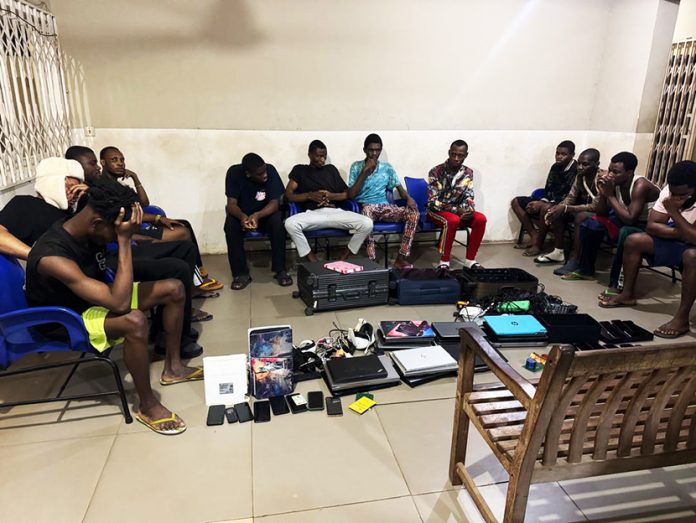
The Ghana Police Service has dismantled an alleged organised cybercrime and kidnapping ring operating from Devtraco Estate in Tema Community 25, arresting two suspects and rescuing 10 victims in a coordinated intelligence-led operation.

The suspects, identified as Robinson Endurance and Derrick Glory, were apprehended on February 2, 2026, following what police described as actionable intelligence pointing to the illegal confinement and exploitation of individuals for online fraud schemes.

According to a situation report from the Okpoi-Gono District Police Command, the operation was executed under the directive of the Inspector-General of Police, Christian Tetteh Yohuno.

A joint team drawn from the Special Operations Area (SOA) and the Okpoi-Gono District Headquarters, led by ASP Grace Owusua Gyan, carried out the raid with the primary objective of rescuing victims, arresting the perpetrators, and disrupting ongoing cyber fraud activities.

“The mission was to rescue kidnapped victims, apprehend the suspects, and dismantle the cybercrime operation while ensuring the safety of both victims and officers,” the report indicated.

Acting on credible intelligence, security personnel stormed the residence believed to be serving as the group’s operational base.

The suspects were arrested without resistance, and officers discovered multiple victims at the premises.

Police said the victims had allegedly been coerced into participating in cyber fraud activities under duress.

They were immediately secured, removed from the location, and placed under police protection for further assessment and support.

A search of the premises led to the retrieval of several electronic devices suspected to have been used in the criminal enterprise. Items seized included 19 laptop computers, 20 mobile phones, and two WiFi routers.

Investigators say the devices have been submitted for forensic examination to help uncover the full extent of the operation, identify potential accomplices, and trace any financial transactions linked to the syndicate.

The Ghana Police Service reaffirmed its resolve to clamp down on kidnapping, cyber fraud, and other forms of organised crime, particularly within the Greater Accra Region.

Officials noted that similar intelligence-driven operations would be intensified in other parts of the country as part of broader efforts to dismantle criminal networks.

“We remain resolute in our commitment to protecting citizens and uprooting criminal syndicates that threaten public safety and national security,” a police source said.

Authorities have also urged members of the public to volunteer credible information that could assist law enforcement agencies in combating cyber-related crimes.

The two suspects remain in police custody and are assisting with investigations, while the rescued victims are receiving the necessary care and support.

Fuel Siphoning Tragedy Leaves 3 Dead, 20 Injured at Nsawam

0
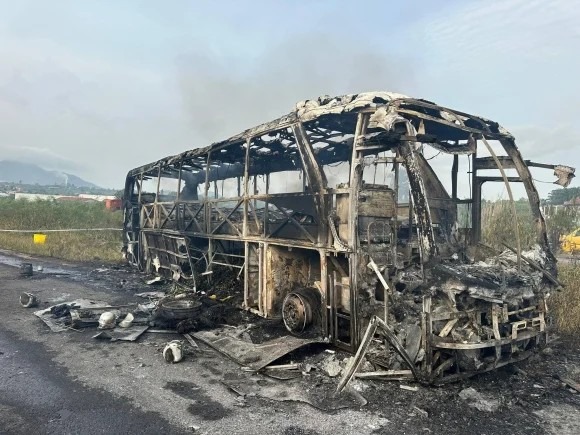
The VIP buss burnt beyond recognition

A desperate rush for petrol turned catastrophic on Saturday at Ntoaso on the Accra–Kumasi Highway near Nsawam, when a broken-down fuel tanker exploded into a raging fireball, killing three people, injuring 20 others, and destroying seven vehicles.

According to eyewitness accounts and emergency responders at the scene, the tanker developed a mechanical fault and came to a halt along the busy highway.

Instead of staying clear of the obvious danger, residents, motor riders and some motorists gathered around the vehicle to siphon fuel.

In a shocking escalation, individuals reportedly used chisels and metal tools to pierce the tanker, forcing petrol to gush onto the road. Within minutes, the area became a highly volatile death trap.

The leaked petrol ignited suddenly, triggering a violent explosion and a massive blaze that engulfed people and vehicles nearby, leading to motorcycles, a taxi and other vehicles that had drawn close to collect fuel consumed by the flames.

Among the most heartbreaking scenes was a woman carrying a baby, who suffered severe burns, while attempting to collect fuel, in the chaos, a by-stander managed to snatch the baby and run to safety, saving the child’s life.

Two men inside a taxi that had moved close to siphon fuel were burnt to death on the spot with several others sustained serious burn injuries whilst the tanker driver was also badly burnt and is currently battling for his life. Other victims were rushed to the Nsawam Government Hospital for treatment.

Although the fire spread to a VIP passenger bus, an even greater tragedy was narrowly avoided when the bus driver acted swiftly, evacuating all passengers before the flames fully consumed the vehicle while the bus was badly burnt, no passenger lost their life.

The Eastern South Regional Police Commander, DCOP Boadi Bossman, confirmed the casualty figures, after visiting victims at the Nsawam Government Hospital.

He stated that 20 injured victims were initially admitted, six with severe burns have been referred to the Koforidua Government Hospital for intensive care, four have been treated and discharged, and ten remain on admission.

Three people, made up of two men and one woman, have died from their injuries. DCOP Bossman stressed that unauthorized fuel siphoning significantly worsened the situation.

“Anytime a tanker falls or breaks down, nobody should go near it. The container is flammable and can explode,” he warned, adding that police have repeatedly educated communities along the highway about the dangers, yet risky behaviour persists.

He revealed that in some cases, officers attempting to secure such scenes have even been attacked with stones.

Security agencies including the Ghana Police Service, the Ghana National Fire Service and NADMO are managing the aftermath, clearing debris, securing the area and restoring order.


For more news, join The Chronicle Newspaper channel on WhatsApp: https://whatsapp.com/channel/0029VbBSs55E50UqNPvSOm2z

Court of Appeal quashes trial court’s judgment against KNUST Professor

0
Professor (Mrs) Rita Akosua Dickson - Vice Chancellor of KNUST

The Court of Appeal in Kumasi has, by a unanimous 3-0 decision, upheld an appeal by Professor Rexford Assasie Oppong to overturn a Kumasi High Court judgment of January 15, 2025 against him.

The Appeal Court, comprising Justices Patrick Kwamina Baiden (Presiding), Richard Mac Kogyapwah and John Bobsco Nabarese, thus set aside the judgment of the trial court, presided over by His Lordship Justice Frederick Tettey, which dismissed the application of the plaintiff.

The position of the Court of Appeal followed an application for a judicial review, in the nature of Certiorari, pursuant to Zoster 55 Rule 1 of the High Court (Civil Procedure) Rules 2004 (CI.47).

Prof. Assasie Oppong had filed a notice on motion at the trial court, challenging the report of a fact-finding Committee constituted by the Vice Chancellor of the Kwame Nkrumah University of Science and Technology (KNIST) in Kumasi.

The applicant had sought an order to be directed at the respondent Registrar to withdraw the August 13, 2024 findings and issue a circular to the effect that the applicant is not guilty of the charges and accusations levelled against him.

The action by Professor Rexford Assasie Oppong, who is the Head of the Department of Architecture at KNUST, centred around allegations of improper disciplinary procedures and breaches of university regulations, and sought a range of legal remedies including an injunction against the implementation of a directive issued by the Vice-Chancellor, based on the recommendations of the committee in question.

The applicant stated that on March 23, 2023 he received a letter from the registrar of KNUST, informing him of a petition submitted by several senior members of his department.

The petition accused him of multiple infractions, including harassment and intimidation of staff, taking unilateral decisions without consulting the department board, violating the School of Graduate Studies’ regulations on postgraduate studies and disrupting mid-semester exams held on March 1, 2023.

He maintained that the allegations were baseless and that the process used to investigate them was procedurally flawed.

According to him, the fact-finding committee set up by the Vice-Chancellor and led by Professor Samuel I.K. Ampadu was not constituted in accordance with the university’s statutes, which require a disciplinary committee for such matters rather than a fact-finding committee.

Prof. Oppong further argued that the committee’s formation and procedures violated his constitutional right to a fair hearing as he was not given the opportunity to cross-examine the petitioners during the committee’s interactions.

He said despite providing oral and documentary evidence refuting the claims against him, the fact-finding committee proceeded with its investigations and submitted a report to the Vice Chancellor upon which the VC reportedly gave directives as communicated  to him by the Registrar of the respondent university on August 14, 2024.

As a result, Prof Assasie Oppong refused to comply with the directive, asserting that the Committee’s findings were biased and lacked credibility.

He described the report as flawed and claimed that it failed to meet professional standards, alleging that the Committee’s work was characterised by procedural impropriety.

In an affidavit in support of his statement of claims, Prof. Assasie Oppong saw the findings and recommendations of Prof Samuel I.K. Ampadu Fact-Finding Committee as bias and irregular, with complete disregard for laid down rules and available evidence on record and prayed for a judicial review of same.

He believed the respondent did not follow laid down procedures and rules under its statutes thus render the Committee and the resultant directives by the VC null and void.

He, therefore, sought an order of the trial court to invalidate the actions taken by the fact-finding committee and to prohibit the implementation of the Vice Chancellor’s directive.

In a statement of case in opposition to the claims filed by Nene Ahuma Korda Esq, Solicitor for the respondent University on October 21, 2024 KNUST argued that the Ampadu Fact-Finding Committee was established as a fact finding committee (and not a disciplinary Committee) to determine whether a prima facie case existed against the applicant.

It said the Vice Chancellor has the power under Statute 12 of the KNUST Statutes to set up a fact finding Committee.

The respondent said the Committee acted within its powers and followed the proper procedures in conducting its investigations and stressed that the recommendations were appropriate and in accordance with the regulations of the University.

It further contended that the applicant was not denied a fair hearing and that there was no breach of natural justice and submitted that the applicant’s application was misconceived and should be dismissed because it lacked merit.

In overturning the decision of the trial court and thus allowing the appeal of the appellant, the Court of Appeal in its judgment of February 12, 2026 noted that as a fact-finding committee, it was expected to be fair and give the appellant proper hearing to air his views before submitting its report to the appointing authority.

The Court of Appeal faulted the Vice-Chancellor for issuing a directive to the appellant to render an apology against his interest.

It described the failure to adopt a proper procedure within the statutes of the respondent university to properly deal with the matter in observing the rules of natural justice as fatal.

The Court, however, proposed that the fact-finding committee could investigate a matter and make recommendations based on its mandate while the appointing authority acts on the recommendations following due process stressing that failure to follow due process could result in the invalidation of its decision.

The Court also noted that the Vice-Chancellor gave the directives in her capacity as the Chief Disciplinary Officer having accepted the recommendations of the committee upon which she issued the directives as an enforcement of the recommendations.

“This way of taking disciplinary action ought not to be entertained” the Court emphasised explaining that in seeking to enforce the recommendations, the Vice-Chancellor ought to have adopted a procedure akin to that of a disciplinary proceedings describing the lapse on the part of the Vice-Chancellor as a fatal omission.

The Court, however, advised the appellant to make efforts to exhaust internal grievance procedure to avert a situation by which the seemingly small matter could germinate a bigger dispute that would disturb the academic peace of the respondent University.

The respondent was represented by Counsel Nene Ahuma Korda, (Assistant Registrar) for Mr. Isaac Berko (Deputy Registrar) while Derrick Adu-Gyamfi, Esq., with Afua Sakyiwaa Assasie Oppong Esq. stood for Professor Rexford Assasie Oppong, the applicant.


For more news, join The Chronicle Newspaper channel on WhatsApp: https://whatsapp.com/channel/0029VbBSs55E50UqNPvSOm2z

Editorial: Privacy, Dignity And The Digital Line We Must Not Cross

0
Editorial

The controversy surrounding a man, identifying himself as “Yaytseslav”, a self-styled Russian content creator whose videos of encounters with Ghanaian women have gone viral, is more than a fleeting social media scandal. It is a sobering test of Ghana’s values, its laws and the collective conscience of a society negotiating life in the digital age

At the heart of the outrage are allegations that moments ranging from first contact to private bedroom settings were recorded and circulated online, with more explicit material reportedly hidden behind a paywalled Telegram group. If these claims of non-consensual recording and distribution are true, then this is not a matter of lifestyle or morality, it is a matter of rights, dignity and criminal justice.

Ghana’s laws are unambiguous. The Cybersecurity Act, 2020 (Act 1038) criminalises the non-consensual capture and sharing of intimate images. Privacy is not a cultural courtesy extended at convenience; it is a legal protection. Recording individuals without their consent and monetising such content is not “content creation.” It is exploitation.

Yet, amid legitimate anger, a disturbing trend has emerged online. Some commentators have seized the moment to brand Ghanaian women with sweeping derogatory generalisations, labelling them “cheap,” questioning their standards and framing the issue as one of national embarrassment. Such reactions are not only unjust; they are intellectually lazy and socially harmful.

Victim-blaming has never been a path to justice. Whether male or female, individuals who are deceived, manipulated or exploited deserve protection under the law, not ridicule in the court of public opinion. Ghana has witnessed similar episodes before, including past allegations of foreigners exploiting vulnerable citizens with promises of visas or opportunities abroad. The patterns are familiar: power imbalance, perceived privilege and digital amplification.

This is precisely why the conversation must rise above sensationalism. The deeper issues at play are structural and societal. Economic pressures, social aspirations and the globalised illusion of opportunity often create fertile ground for exploitation. A resilient economy and confident citizenry are not abstract policy goals; they are safeguards against predatory behaviour.

Crucially, the government’s response signals an important shift. The stance taken by Samuel Nartey George, Minister for Communication, Digital Technology and Innovation, is both measured and necessary.

By emphasising that the state’s interest lies in the alleged non-consensual recording and publication, rather than the private conduct of consenting adults, the minister has correctly framed the matter within the boundaries of law and rights.

The declaration that the Cyber Security Authority is compiling a docket for prosecution, alongside the possibility of extradition, underscores a principle Ghana must defend vigorously: the digital space is not a lawless frontier. Foreign nationality does not confer immunity. Technology does not nullify consent.

Equally significant is the larger message such action conveys. Ghana’s reputation as a welcoming destination must not be misconstrued as tolerance for abuse. Tourism, cultural exchange, and global connectivity thrive only where mutual respect exists. If individuals, citizens or visitors violate the rights and dignity of others, the state has both the authority and obligation to act.

Ordinarily, what transpires between consenting adults behind closed doors remains private. However, The Chronicle is of the opinion that once allegations of criminal conduct arise, particularly involving privacy violations and online dissemination, silence ceases to be neutrality. It becomes complicity.

This episode, uncomfortable as it may be, offers Ghana an opportunity for clarity. It is a moment to reaffirm that dignity is non-negotiable, consent is sacred and justice must be blind to nationality or online theatrics. The digital age demands new vigilance, but the underlying principles remain timeless.

If vulnerable individuals cannot defend themselves against technological or psychological exploitation, the state must. Not as an act of paternalism, but as an expression of constitutional duty.

In the end, Ghana’s response to such incidents will define far more than a news cycle. It will define the boundaries of privacy, the seriousness of digital crimes and the nation’s commitment to protecting the humanity of its people — online and offline.


For more news, join The Chronicle Newspaper channel on WhatsApp: https://whatsapp.com/channel/0029VbBSs55E50UqNPvSOm2z

The Ghanaian Chronicle