Home Blog Page 2602

Ghana to preside over UN Security Council this month

0
UN Security Council
President Akufo-Addo and UN Secretary General

Ghana will preside over the United Nations Security Council this month in New York, a historic moment in the country’s two-year tenure at the Security Council.

The significance of Ghana presiding over the Council’s affairs for the month of November, stems from the fact that the UN Security Council is the principal organ for the maintenance and furtherance of international peace and security.

The Ministry of Foreign Affairs and Regional Integration in a media outlined some programmes of activities in November towards Ghana’s Presidency of the UN Security.

It said today there would be a press briefing by Mr Harold Adlai Agyeman, Ambassador and Permanent Representative of Ghana to the United Nations in New York, to the UN Press Agencies at 4:30pm.

It said on the same day at 7pm, Mr Agyeman would also brief the wider UN Membership on the Programme of Work and Ghana’s priorities during the month.

The release said on Thursday, November 03, there would be an Open Ministerial debate to be chaired by Madam Shirley Ayorkor Botchwey, Minister of Foreign Affairs and Regional Integration, on the topic, “Integrating Effective Resilience Building in Peace Operations for Sustainable Peace” from 2pm to 5pm and 7pm to 10pm in the UN Security Council Chamber.

It said on Thursday, 10th November, from 2pm to 5pm, President Nana Addo Dankwa Akufo-Addo would chair a debate at the Heads of State level on the topic, “Counter-terrorism in Africa: An Imperative for Peace, Security, and Development”.

The release said the Permanent Mission of Ghana to the United Nations, New York, has informed that UNTV sends out feeds of meetings and briefings via fiber outbound lines through two companies, “Encompass” and “IDB-The Switch”.

It said UNTV also covers all briefings at the Press Briefing Room, and it is always assigned to the outbound Line “Encompass 4025” as well as the Switch UNN TV.

It noted that, however, UNTV does not cover United Nations Security Council (UNSC) wrap-in briefings to member states, but WebTV does.

It said media houses who were not included on the UNTV daily schedule client list could send an email to redi@un.org to enable them to receive daily coverage schedule to find out which outbound lines the press conferences, briefings, UNSC stakeouts, and UNSC meetings will be aired on for the day.

The release said in its capacity as President of the UN Security Council, Ghana hopes to build consensus in the Council and across the UN on the need to ensure that Peace Operations, including kinetic and non-kinetic interventions, take into consideration the changing security landscape by fully addressing underlying causes and drivers of conflict, linked to the growing youth bulge, poverty, climate change and absence of resilient institutions.

Address To The Nation By The President Of The Republic, Nana Addo Dankwa Akufo-Addo, On The Economy, On Sunday, 30th October 2022.

0
President Akufo-Addo

Fellow Ghanaians, good evening.

Back in 2020, at the outbreak of the Corona virus pandemic, I started a regular conversation with you that came to be popularly known as Fellow Ghanaians.

It was a time of great fear of the unknown, and the entire world felt at risk. I came into your homes regularly to tell you what the experts were discovering about the virus, and what we should do.

Now that we have seen the worst of the COVID-19, I can tell you that there were moments during those times when I was distraught, there were moments when I was in despair about the apparent inadequacy of our health facilities, and there were moments when I wondered if the dire predictions made about dead bodies on our streets would truly happen.

But I knew that I owed it to all of us that, as your president, I had to hold my nerve, show leadership and take us out of the crisis. With your help and support, and the great mercies of the Almighty, we can say that we emerged from the ravages of the pandemic with one of the lowest mortality rates globally. In fact, Ghana’s handling of the pandemic won universal acclaim.

We could all see in real time the devastation that was being wreaked on economies during the pandemic, but I doubt that anyone imagined the extent of the damage. Our economy, here in Ghana, like many, many others around the globe, was thrown into turmoil.

When I said, at the height of the COVID pandemic, that we knew what to do to bring the economy back to life, but not how to bring people back to life, it was not said in jest. We had done it before, and we were on course to doing it again.

Ghana’s economy grew by a remarkable 5.4% in 2021, signifying a strong recovery from the 0.5% growth recorded the previous year due to the COVID-19 pandemic. In fact, in the last quarter of 2021, our economy grew at seven percent (7%), only for the Russian invasion of Ukraine in the first quarter of this year to aggravate the effects of COVID-19, and plunge the global economy into even greater turmoil from which it has not yet recovered.

The whole world has been taken aback by the speed with which inflation has eaten away people’s incomes. Economies, big and small, have experienced, over this year alone, the highest rise in cost of living over a generation; the highest rise in government borrowing in over fifty (50) years; the highest rise in inflation for forty (40) years; the steepest depreciation in their currencies to the US dollar over the last thirty (30) years; the fastest peak in interest rates for over twenty (20) years; and the greatest threat of unemployment in peace time; with over a hundred million people being pushed into extreme poverty.

Between the end of 2019 and now, inflation in Ghana has increased by five-fold, in Togo by sixteen-fold, by eleven-fold in Senegal, and by seven-fold in Cote d’Ivoire. In truth, however, the fact that there are petrol queues in France does not make it more tolerable that the trotro price from Kasoa to Circle has doubled in the past one year, nor does it make it any more tolerable that the price of cooking oil goes up every other week.

It is important to state that mentioning the increases in prices worldwide is not meant to belittle the scope of suffering here, but simply to help us put things into some perspective, and, hopefully, learn some useful lessons about how other people are coping.

Fellow Ghanaians, this is why I am back in your homes this evening to ask for your support, as we work together to get our economy back into good shape.

In April, after the Cabinet retreat of the first quarter, and recognising the deteriorating macroeconomy, my government announced a thirty percent (30%) cut in budgetted discretionary expenditures, and a thirty percent (30%) cut in salaries of the President, Vice President, Ministers, Deputy Ministers, MMDCEs and political office holders, amongst other measures.

And, since July, when the Government took the difficult decision to go to the IMF to seek support, I have been speaking publicly at different fora on the subject of the economic difficulties we face, especially during my recent tours, so far, of nine (9) regions, and interacting directly with you, the Ghanaian people.

It is also true that many of you have felt the need for me to come back to the Fellow Ghanaians format, that brings us all together.

For us, in Ghana, our reality is that our economy is in great difficulty. The budget drawn for the 2022 fiscal year has been thrown out of gear, disrupting our balance of payments and debt sustainability, and further exposing the structural weaknesses of our economy.

We are in a crisis, I do not exaggerate when I say so. I cannot find an example in history when so many malevolent forces have come together at the same time. But, as we have shown in other circumstances, we shall turn this crisis into an opportunity to resolve not just the short-term, urgent problems, but the long-term structural problems that have bedeviled our economy.

I urge us all to see the decision to go to the International Monetary Fund in this light.  We have gone to the Fund to repair, in the short term, our public finances, and restore our balance of payments, whilst we continue to work on the medium to long-term structural changes that are at the heart of our goal of constructing a resilient, robust Ghanaian economy, and building a Ghana Beyond Aid.

I am able to report to you, my fellow Ghanaians, that the negotiations to secure a strong IMF Programme, which will support the implementation of our Post COVID-19 Programme for Economic Growth and additional funding to support the 2023 Budget and development programme, are at advanced stages, and are going well.

We are determined to secure these arrangements quickly to bring back confidence and relief to Ghanaians. We are working towards reaching a deal with the IMF by the end of the year. This will give further credence to the measures Government is taking to stabilize and grow the economy, as well as shore up our currency.

I know that the increasing cost of living is the number one concern for all of us. It is driven by fast escalating fuel prices at the pumps, which is caused by high crude oil prices on the world market and our depreciated currency. I know that this is putting intolerable pressure on families and businesses.

I know that people are being driven to make choices they should not have to make, and I know that it has led to the devaluation of capital of traders and painfully accumulated savings. Furthermore, Government is working to secure reliable and regular sources of affordable petroleum products for the Ghanaian market.

It is expected that this arrangement, when successful, coupled with a stable currency will halt the escalation of fuel prices and bring relief to us all.

I hear from the market queens also that another factor fueling the high prices is the high margins that some traders are slapping on goods, for fear of future higher costs. I say to our traders, we are all in this together. Please let us be measured in the margins we seek.

I have great respect and admiration for the ingenuity and hard work of our traders, especially those that take on the distribution of foodstuffs around the country, and I would hesitate to join in calling them names.

I do make a heartfelt appeal that we all keep an eye out for the greater good, and not try to make the utmost profits out of the current difficulties.

In language that every market woman and, indeed, every trader in our country understands, let me say that the basic problem we face is that we are not making as much money as we need to spend, and what little money we do make is going to pay for the debts we have contracted to fund the development projects we must have.

Not enough of us are paying our taxes, not enough of us are producing to generate the revenues that we need.

Nevertheless, my ambitions for Ghana remain high. All our children should be educated and trained with skills that will enable us be competitive in the world. We need to close rapidly the infrastructure gap, we need to build a world-class healthcare system, and we need to build confidence in ourselves to make ours the happy and prosperous place it deserves to be.

I believe we can and we will find the means to achieve these goals, even if the immediate measures we have to take are painful.

At the just ended Cabinet Retreat at Peduase Lodge, my government agreed on the framework for the Post COVID-19 Programme for Economic Growth and the IMF support for its implementation, as well as the work being done by the Ministry of Finance in preparation for the 2023 budget. At the Cabinet Retreat, we took some firm decisions that should put us on the path that will take our nation out of the current economic difficulties.

Let me try and give you an outline of the main decisions without getting into the technical language that baffles many of us.

To restore and sustain debt sustainability, we plan to reduce our total public debt to GDP ratio to some fifty-five percent (55%) in present value terms by 2028, with the servicing of our external debt pegged at not more than eighteen percent (18%) of our annual revenue also by 2028.

We are committed to improving the revenue collection effort, from the current tax-revenue to GDP ratio of thirteen (13%) to between eighteen and twenty percent (18-20%), to be competitive with our peers in the West Africa Region.

The GRA is rolling out an extensive set of measures to support this enhanced revenue mobilisation. All of us must do our patriotic duty, and support the GRA in this exercise.

We are aiming to restore and sustain macroeconomic stability within the next three (3) to six (6) years, with a focus on ensuring debt sustainability to promote durable and inclusive growth while protecting the poor.

We have decided to review the reforms in the energy sector, capping of statutory funds, implementation of the exemptions Act and a new property rate regime.

We have decided also to continue with the policy of thirty percent (30%) cut in the salaries of political office holders including the President, Vice President, Ministers, Deputy Ministers, MMDCEs, and SOE appointees in 2023, just as we will continue with the thirty percent (30%) cut in discretionary expenditures of Ministries, Departments and Agencies.

My fellow Ghanaians, the success of our efforts at diversifying the structure of the Ghanaian economy from an import-based one to a value-added exporting one is what will, in the long term, help strengthen our economy.

We are making some progress with the 1D1F but our current situation requires that we take some more stringent measures to discourage the importation of goods that we can and do produce here.

To this end, we will review the standards required for imports into the country, prioritise the imports, as well as review the management of our foreign exchange reserves, in relation to imports of products such as rice, poultry, vegetable oil, tooth picks, pasta, fruit juice, bottled water and ceramic tiles, and others which, with intensified government support and that of the banking sector, can be manufactured and produced in sufficient quantities in Ghana.

Government will, in May 2023, that is six (6) months from now, review the situation. We must, as a matter of urgent national security, reduce our dependence on imported goods, and enhance our self-reliance, as demanded by our overarching goal of creating a Ghana Beyond Aid.

Much as we believe in free trade, we must work to ensure that the majority of goods in our shops and market places are those we produce and grow here in Ghana.

That is why we have to support our farmers and domestic industries, including those created under the 1-District-1-Factory initiative, to help reduce our dependence on imports, and allow us the opportunity to export more and more of our products, and guarantee a stable currency that will present a high level of predictability for citizens and the business community.

Exports, not imports, must be our mantra! Accra, after all, hosts the headquarters of the Secretariat of the African Continental Free Trade Area.

Fellow Ghanaians, as the French would say, l’argentn’aime pas le bruit, to wit, money does not like noise, sika mpɛdede.

Where there is chaos, where there is noise, where there is unrest, you will not find money. If you talk down your money, it will go down. If you allow some unidentifiable person to talk down your money, it will go down.

The recent turbulence on the financial markets was caused by low inflows of foreign exchange, and was made worse in the last two to three weeks, in particular, by the activities of speculators and the Black Market.

An anonymous two-minute audio message on a WhatsApp platform predicting a so-called haircut on Government bonds sent all of us into banks and forex bureaus to dump our cedis, and, before we knew it, the cedi had depreciated further.

All of us can play a part in helping to strengthen the cedi by having confidence in the currency, and avoiding speculation.

Let us keep our cedi as the good store of value it is. To those who make it a habit of publishing falsehoods, which result in panic in the system, I say to them that the relevant state agencies will act against such persons.

Indeed, some steps have been taken to restore order in the forex markets and we are already beginning to see some calm returning. We will not relent until order is completely restored. The following actions have been taken thus far:

1)  enhanced supervisory action by the Bank of Ghana in the forex bureau markets and the black market to flush out illegal operators, as well as ensuring that those permitted to operate legally abide by the market rules. Already some forex bureaus have had their licenses revoked, and this exercise will continue until complete order is restored in the sector;

2)  Fresh inflows of dollars are providing liquidity to the foreign exchange market, and addressing the pipeline demand;

3)  the Bank of Ghana has given its full commitment to the commercial banks to provide liquidity to ensure the wheels of the economy continue to run in a stabilized manner, till the IMF Programme kicks in and the financing assurances expected from other partners also come in;

4)  Government is working with the Bank of Ghana and the oil producing and mining companies to introduce a new legal and regulatory framework to ensure that all foreign exchange earned from operations in Ghana are, initially, paid to banks domiciled in Ghana to help boost the domestic foreign exchange market; and

5)  the Bank of Ghana will enhance its gold purchase programme.

I am confident that these immediate measures designed to change the structure of our balance of payment flows, sanitise the foreign exchange market to ensure that the banks and forex bureaus operate along international best practices, together with strengthened supervision, will go a long way to sanitize our foreign exchange market, and make it more resilient against external vulnerabilities going forward.

Over the course of this week, I have held several fruitful engagements with the Trades Union Congress and Organised Labour, the Ghana Employers’ Association, the Association of Ghana Industries, the Ghana Association of Banks, the Private Enterprise Federation, the Association of Forex Bureau Operators, the Association of Market Queens and Women, all of whom represent important stakeholders of the Ghanaian economy.

They expressed their concerns and proposed solutions on how best to solve our problems. I have been encouraged by the enthusiasm of these interest groups to help Government address these challenges, and I intend to continue these engagements with other groups.

I also want to assure all Ghanaians that no individual or institutional investor, including pension funds, in Government treasury bills or instruments will lose their money, as a result of our ongoing IMF negotiations.

There will be no “haircuts”, so I urge all of you to ignore the false rumours, just as, in the banking sector clean-up, Government ensured that the 4.6 million depositors affected by the exercise did not lose their deposits.

My government has always been cognisant of the importance of implementing policies and social interventions to relieve Ghanaians of hardships. It is for this reason that over the first five (5) years in office government reduced electricity tariffs cumulatively by 10.9%, we provided free water and electricity as well as reduced tariffs for the entire population during a whole year of the COVID-19 pandemic; we  increased the share of the District Assemblies Common Fund to persons with disabilities by 50%; we exempted Kayayei from market tolls; we expanded the LEAP by one hundred and fifty thousand (150,000) beneficiaries; we expanded School Feeding from 1.6 million children to 2.1 million children; we restored teacher and nursing training allowances; we absorbed the cost of BECE and WASSCE exam registrations for parents; no guarantor is now required to obtain student loans.

The Ghanacard is sufficient; and we have implemented free TVET as well as free senior high school education.

It is obvious, fellow Ghanaians, that you have a government that cares. We are determined to restore stability to the economy, and provide relief. We are all in this together, and I am asking for your support to rescue Ghana from the throes of this economic crisis.

I have total confidence in our ability to work our way out of our current difficulties. We are not afraid of hard work.  We will triumph, as we have triumphed many times before. Let us unite, and rally around our Republic, its institutions and its democratic values, and insist that, under God, we will emerge victorious from our current difficulties. For this too shall pass, as the Battle is the Lord’s.

I will be coming regularly to keep you updated about the measures your government is making to move our country forward, and tackle our economic challenges.

God bless us all and our homeland Ghana, and make her great and strong.

I thank you for your attention, and have a good evening.

CIMG announces 2nd PMQ Exams Results

0
CIMG

The Council of the Chartered Institute of Marketing, Ghana (CIMG) has released the results of the second CIMG Professional Marketing Qualifications (PMQ) examinations which was organised in June this year.

Addressing the media at a news conference, the National President of CIMG, Kasser Tee, stated that for the second CIMG PMQ exams, two centres presented candidates which were the Ghana School of Marketing and the University of Professional Studies, Accra.

Altogether, the two centres enrolled over 300 students, from which 289 candidates registered for the June 2022 examinations. These 289 candidates were examined in fifteen subjects, across Pathways 1, 2, 3, 5 and 6,” he reiterated.

Mr. Tee expressed excitement in the general performance as he congratulated all candidates who sat for the June 2022 exams, saying that out of the 15 courses, a high pass rate was achieved in thirteen of the subjects, and a low pass rate in the other two.

He underscored the fact that the poor performances were at the foundation stage, where students largely had no work experiences.

This result, according to him, was an improvement from the December 2021 exams, where the average pass rate for these same two subjects was 16%.

According to Mr. Kasser Tee, 91 students sat for the maiden exams in December 2021 but today that number has increased to 289. This, he said, is testament to the fact that the domestication of professional marketing qualifications is working.

“It is a bold statement that the Ghanaian market believes in the brand and we shall continue to work at ensuring that the CIMG PMQ remains the topmost and most admired professional marketing qualification.”

He noted that to produce highly proficient marketers, their standards and expectations from the ASCs must be under serious and constant scrutiny as part of their periodic audit and assessment of the centres.

He again assured that his outfit is continuously engaging all centres to collectively agree on ways to fine-tune the mode of delivery and the calibre of Tutors selected for these programmes.

The Chief Examiner, Dr. Francis Mensah Sasraku, stated that professional programmes are meant to equip learners with hands-on practical skills to enable them effectively function in any situation, from the tactical levels to the strategic levels, depending on the level of study attained by one.

Background

These subjects include:

Pathway 1; Fundamentals of Marketing, Buyer Behavior, Business Law & Ethics

Pathway 2; Digital Marketing Techniques, Decision Making Techniques, Management In Practice

Pathway 3; Marketing Research and Insights, Brands Management, Sales and Sales Management, Digital Optimization and Strategy

Pathway 5; Strategic Marketing Management, Integrated Marketing Communications, Strategic Marketing in Practice, Advanced Digital Marketing

Pathway 6; Public Sector Marketing

3.8 million Ghanaians lack safe drinking water -Minister

0
Mr. Issahaku Chinnia Amidu, Deputy Minister for Water Resources and Sanitation

Mr. Issahaku Chinnia Amidu, Deputy Minister for Water Resources and Sanitation, has announced that approximately 3.8 million people still lack access to safe drinking water and entreated Ghanaians to take water quality issues seriously.

He disclosed that 5 in 10-point sources and 8 out of 10 household water is contaminated with E-coll and called for vigorous public education and sensitisation on how to keep water safe from point of fetching to point of usage.

The minister made the call at the Mole XXXIII Conference organized by the Ghana Coalition of NGOs in the Water and Sanitation Sector.

The theme for the Conference was: “Ghana’s Commitment to Water and Hygiene (WASH), Connecting Systems to Bridge Service Delivery Gaps”.

He noted that the greatest enemy for safe water delivery in Ghana is the galamsey menace, hence WASH stakeholders need to make their voices heard on the on-going discussion towards stopping galamsey.

The Deputy Minister said it costs urban water utility companies so much to treat water for human consumption.

According to him, following the industrial revolution, many economies have adopted a linear pattern of use of natural resources, consisting of ‘Take, Make-Use and Discard’ approach. This, he said, was based on the false premise that natural resources are infinite.

He disclosed that such a pattern cannot simply be sustained due to huge economic and environmental consequences for present and future generations, hence there is no option than to plan and implement their activities, with circular economy in mind.

Minister Amidu underscored that, despite several sensitization activities on how to minimise waste generation in public places,people still leave waste on the shoulders of the road, while others still dump waste beside empty public litter bins, instead of dropping the waste into these bins, with others deliberately throwing the waste from moving vehicles onto the ground.

He said it is sad to note that notwithstanding the efforts made by the various Assemblies towards public sensitisation, the habit of street littering has not stopped, though the National and Local Bye-Laws frown on this practice, thus compelling city authorities to spend a fortune to collect and transport these wastes from our cities, instead of channeling these scarce funds to other development sectors of the local authority.

The minister stressed that, uncontrolled littering takes away the aesthetic beauty of our cities, which would have otherwise attracted tourists and thereby boost the local economy.

He lamented that, the indiscriminate dumping of waste at unauthorized places in our cities is a dangerous practice and should not be taken lightly, as it impacts negatively on the local economy and the general environment in various ways.

He said it does not cost anyone anything at all to do the right thing and said doing the right thing is not a preserve for the rich or a certain group of people.

Mr. Chinnia Amidu also cautioned that living in a clean environment should not be a luxury because keeping the cities clean is everybody’s responsibility and needed to strive to play their part at all times.

The Minister lamented about the toilet facilities of the Maximum Security Prisons at Ankaful, which have become sources of disease transmission among detainees, who use inadequate and poorly managed open bucket as toilets.

On top of this challenge is inadequate funding and lack of technical knowledge for construction, maintenance and operating safe improved WASH facilities in Prisons.

He stressed that the time has come for the WASH sector in Ghana to commit some financial resources and technical support for Prisons and Police detaining cells.

Editorial: Appointment of new GES Director General and matters arising

0
Editorial

On October 17, the Director General of the Ghana Education Service (GES), Professor Kwasi Opoku-Amankwa, was relieved of his post. This was contained in a letter written to him by the Secretary to the President, Nana Asante Bediatuo, on behalf of Nana Addo Dankwa Akufo-Addo.

The Office of the President subsequently named Dr. Eric Nkansah as the new Director General of the Ghana Education Service. His appointment which is an acting one takes immediate effect pending the advice of the Governing Council of the GES and the Public Services Commission.

However, this announcement has been received with mixed reaction. The Ghana National Association of Teachers (GNAT) has given an ultimatum to President Akufo-Addo to revoke the appointment. According to GNAT, they find “the replacement of Prof. Opoku Amankwa with Dr. Eric Nkansah, a banker, not only as unfortunate but untenable” and, therefore, call for the revocation and subsequent appointment of an educationist to occupy that position.

The Coalition of Concerned Teachers, Ghana has also threatened strike action by November 4, 2022 if the President fails to revoke Dr. Eric Nkansah’s appointment. They argue that the newly appointed Director General is not an educationist and has no teaching experience, thus, they are not ready to work with him.

In contrast to the above opinion held by the Teacher Unions, another Teachers group, called Teachers Forum, disagrees with the call for the revocation of Dr. Eric Nkansah’s appointment.

According to them, the teaching fraternity should rather come together and rally behind the new GES Director General because he is capable of delivering to the expectation of all.

The group refuted the claims that the acting Director General has no teaching experience, because the man has been a lecturer for over twelve years.

The Chronicle is not happy with the division being publicly shown over the suitability of Dr. Eric Nkansah as acting Director-General (D-G) of the Ghana Education Service. We may all be missing the point if the division on the new appointment is about whether the new D-G is an Educationist or a Banker.

Rather, we should be interested in what consultative processes took place among stakeholders before the appointment was made? The Chronicle holds the view that whether Dr. Eric Nkansah is an Educationist or a Banker, if the stakeholders had been properly consulted and briefed, we would not see this open display of denunciation by the various Teachers’ unions.

The Teachers groups should channel their grievances through the established internal structures to settle the issues amicably. The appointing authorities should also bed backwards to listen to the plea of the Teacher groups since they form the new D-G’s administrative constituency.

The threat of embarking on a strike action is not the right way to go since the academic calendar that was disrupted by the Covid-19 pandemic is gradually taking shape and the last thing the Education sector needs is another interruption.

The Chronicle hopes all the relevant stakeholders will come together to resolve the issue before it escalates.


Bono Health Directorate to establish Breast Care Unit

0
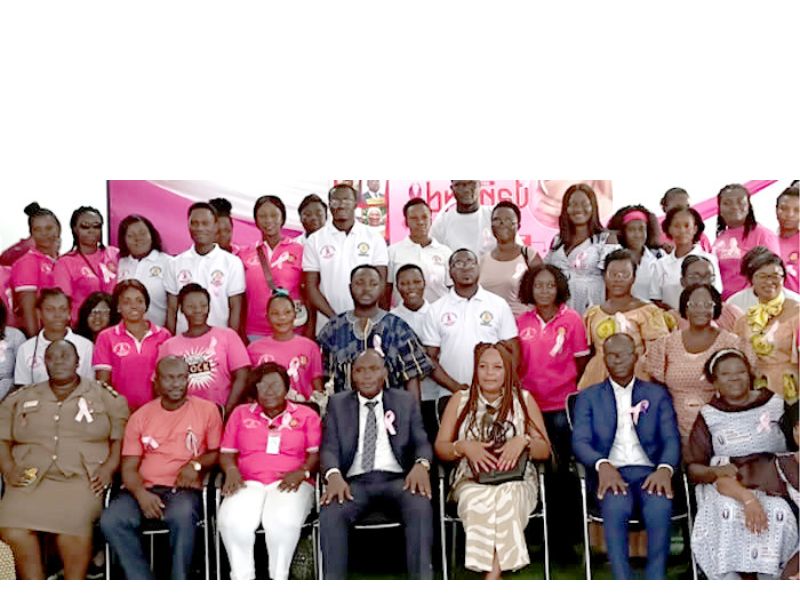
Participants after the durbar

The Bono Regional Health Directorate has announced that it is laying a foundation with the necessary logistics and human resources leading to the establishment of a standard Breast Cancer Care Unit in the region.

Dr. Kwabena Kumi, Deputy Director in-charge of Clinical Care at the Directorate who made the announcement, said the unit would enable easy screening of people for breast cancer and give the necessary intervention at the initial stage of the disease.

He said breast cancer remained the leading cause of cancer deaths worldwide, adding that Ghana recorded 4,482 breast cancer cases in 2020 with more than 2,000 deaths, because those people reported the cases when they were at an advanced stage.

Dr. Kumi was speaking at a multi-stakeholders breast cancer awareness durbar, on the theme ”Creating Breast Cancer Awareness and Early Detection: Stakeholders Roles and Responsibilities” at the University of Energy and Natural Resources (UENR) in Sunyani.

It was organised by the UENR Ladies Association, in collaboration with the Bono Regional Hospital, and drew participants from ladies association groups such as Police, Prison and Fire Services, UENR, nurses and other stakeholders.

He said, according to the Global Cancer Observatory report, female breast cancer was the most commonly diagnosed cancer in the world, with an estimated 2.3 million new cases in 2020.

According to him, the Bono Region recorded 180 cases in 2020,103 in 2021, and 93 as at August this year, adding that these were cases reported to health facilities, but it could be possible others also developed the disease and died undetected.

Dr. Kumi, therefore, stressed the need for early detection of breast cancer to save lives, because it is curable when detected early. ”There is hope when most non-communicable diseases are presented early, but when reported late it is usually associated with complications and the outcomes are usually not good’,’ he said.

Dr. Kumi said breast cancer was not only a health issue, but a concern that mattered to everyone, and called for collaborative efforts to respond appropriately to prevent its rising occurrence.

On his part, Professor John Kuwornu, Acting Pro-Vice Chancellor of the UENR, bemoaned the fact that not all health facilities were equipped with breast cancer equipment for screening to achieve the early detection campaign.

He, therefore, tasked stakeholders to deliberate on where breast cancer facilities were located and how people could take advantage of the services to facilitate early detection and prevention.

Madam Justina Owusu-Banahene, Bono Regional Minister, suggested the need for the Ghana Health Service (GHS) to formulate a policy to facilitate easy access to health facilities for breast screening by the public.

“This can help for timely diagnosis of breast cancer to ensure its prevention, comprehensive treatment and supportive care”, she said.

She said it had become essential as a region to raise awareness through intensive education about breast cancer to prevent the rate of affecting family members, since the disease was becoming a great public health challenge among women in the country.

“With about 2,900 cases occurring annually and one-eighth of victims dying from it, the disease has become the most common cancer-related death among Ghanaian women”, Madam Owusu-Banahene said.

She therefore encouraged stakeholders to make a difference by rising above the challenge of buying a mammogram machine for the SRH because “it is a private health facility that has the machine in the entire Bono Region”.

Madam Owusu-Banahene said the initiative to raise funds in support of buying a mammogram machine was timely because it would support many women within the age bracket of 45-55 years to get an early detection, diagnosis and early treatment.

Giving data on breast cancer cases at SRH, Dr. Frank Owusu, Senior Specialist Head of Accident and Emergency Department at the hospital said from 2017 till date539 breast lump cases had been reported, but 115 of those cases were confirmed breast cancer, representing 21 per cent.

He said 89 cases of breast lumps were reported in 2017 and 13 representing 14 per cent were confirmed breast cancer whereas 64 cases were reported in 2018 and seven signifying 10 per cent were breast cancer.

In 2019, he continued 122 lump cases with 53 confirmed breast cancer, representing 43 per cent were reported, while 69 lump cases with nine indicating 13 per cent were reported in 2020.

Dr. Owusu said 86 cases were recorded in 2021 with 11 confirmed breast cancers that represented 13 per cent, adding that 109 cases had been reported now this year with 22 cases of breast cancers forming 20 per cent of those cases.

The occasion was used to raise funds as seed money for the purchase of a mammogram machine for the Sunyani Regional Hospital.

Kintampo Municipality celebrates International Girl Child Day

0
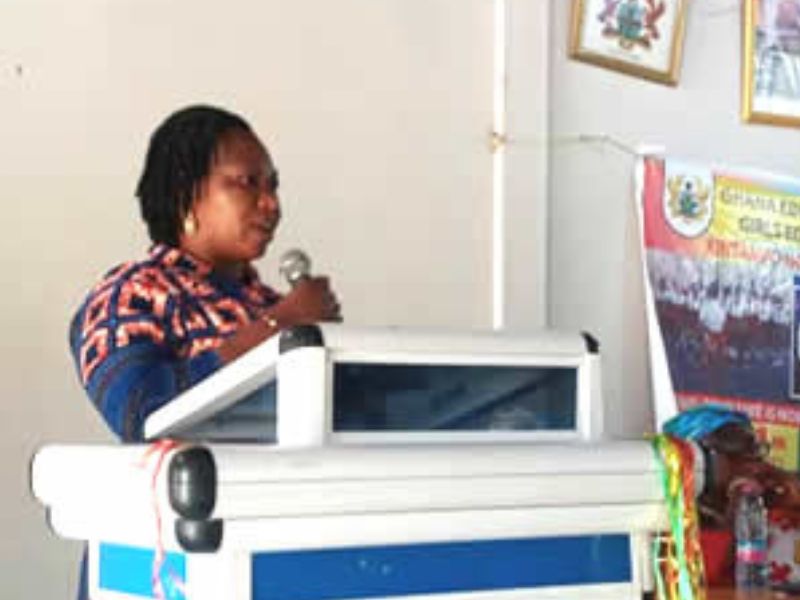
Mrs.  Beatrice Ayariga

The Kintampo Municipal Assembly has marked this year’s International Girl Child Day with a programme on the theme ‘Our Time is Now, Our Right Our Future”.

The day which is marked annually all over the world was celebrated in the municipality with a float on some principal street of the municipality with drumming and dancing.

Participants carried placards with inscriptions like; ‘Empowering Girls For a Brighter tomorrow’, ‘If You Educate a Girl, You Educate a Nation’, ‘Empower Girls For Nation Building’, ‘Girl Child Education Prevent Early Marriage’, ‘Girls Education Reduce Poverty’, among others.

The climax of the programme saw many school girls representing their schools with performances such as drama competition, poetry recitals and cultural dance.

The Municipal Education Director Mr. Sylvester Opoku in his address outlined some of the importance of education to the girl child in our societies, communities and nation at large “notwithstanding the saying that the place of the girl is in the kitchen” he said.

Mr. Opoku added that, the Kintampo Municipal education sector has seen the need for girl child education that is why a girl model school was put up to support education of the girls in the municipality.

His advised the girls to take their studies serious to attain good grates after school and become like some of the prominent women in the world holding very important positions.

He added that, girls in the municipality have been awarded in different skills of their school including sciences, mathematics among others.  He said “what a man can do a women can equally do better” and for that matter they should aspire to attain those higher positions.

The Municipal Chief Executive’s representative, Mrs.  Beatrice Ayariga in her address gave a brief historical background of International Girl Child Day and asked all to study hard for them to be recognized internationally.

She said the society should own the girl child education and give more care, love and moral support for them to study.

She again asked teachers and parents to all put hands on deck to support the girl child to make it in the future. “Girl should also be serious in their studies and take care of themselves by abstaining from pre-marital sex, and other social activities which can cause harm in their education.

Participants including Nananom, GNAT, DOVVSU, Department of Social Welfare, the representative of the Member of Parliament, the Youth Authority all took their turns to advice girls on good behavior and who to call in case of problem and also outlined activities some of them are working on to take care of the youth in the municipality, most especially the girl child.

The Municipal Girl Child Coordinator Madam Janet Addu-Baah in her address stressed on the importance of girl child education. “This is why this annual event is meant to create awareness for the education of a girl child to become empowered women all over the world” she added.

Madam Adu-Baah stated that, barriers and practice such as, female genital mutilation (FGM), early or forced child marriages, sexual abuse of the girl child and many more have come to hinder girl child education

She added that it is for such reasons that  non- governmental organisation (NGOs) such as UNICEF, National Gender Policy among others have come to support this important programme to help girls for development and for liberation.

She asked the public to support a girl child for a better future and that, “as today being a crucial day worldwide, a day to internationally celebrate the girl child, this year’s theme is more action oriented as it calls for girls to enjoy their rights now for better future” she said.

Tema MCE initiates monthly health walk

0
Frank Asante, the Tema Metro PRO, checking his health status at the ISMIS health screening exercise

The Tema Metropolitan Chief Executive (MCE) says preparations were far advanced to roll out a monthly keep fit walk to keep the residents healthy.

The initiation of the monthly Tema Metro Health Walk comes at the back of the increasing number of hypertension and diabetic cases among most residents of the Harbour City.

Before the monthly workout would commence, Yohane Nii Amarh Ashitey, the Tema MCE, with two different non-governmental organisations (NGOs), had organised separate free health screening exercises for the residents to check their health status.

The first was held at the Metro Forecourt and the second at the Saint Alban’s School, where the Assembly, with ISMIS, a Tema-based NGO with expertise in health, screened over 500 residents – children, youth and the elderly.

To reduce the high rate of hypertension and diabetic cases among the elderly and the youthful population, Mr. Ashitey advised his people to be mindful of their lifestyles, check their family history, and exercise regularly.

A healthy workforce, he said, was needed to help him realise his ‘Let Tema Shine Again’ agenda, which includes raising more revenues to develop the Metropolis and providing better living conditions for all.

Tei Appiakai Beniana Family gets new head

0
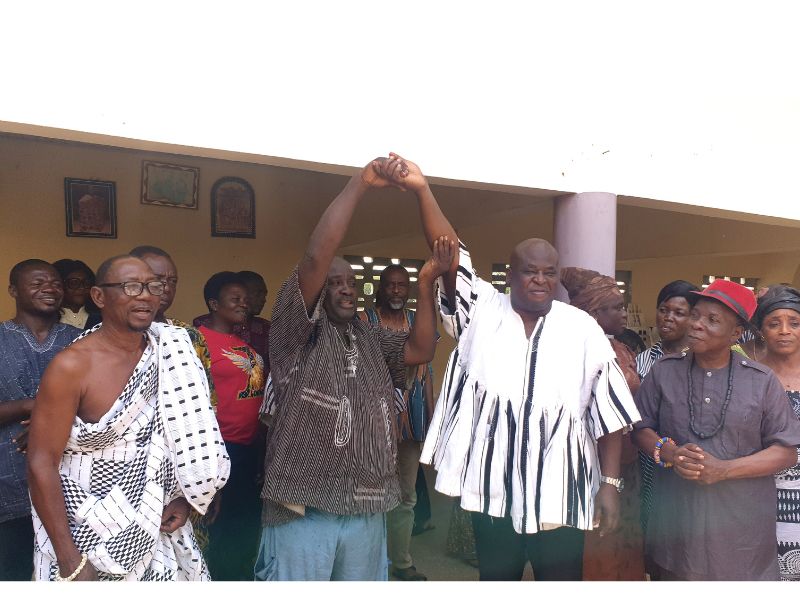
Numo Kojo Lakpleku, the stool father of the Beniana Clan, introduces Moses Beniana Mensah, the new family head, to the public at the Blebo Clan

The Stool Father of the Beniana Clan has officially installed Moses Beniana Mensah, a businessman, as the head of the Tei Appiakia Beniana Family.

The Tei Appiakia Beninana Family has roots at Osabunya, Old Ningo Blebo Royal Wem and Dodowa Amanfro Fiakonya.

At a brief ceremony at the Blebo Royal Palace in Old Ningo to officially install Moses Beniana Mensah, Numo John Tetteh Kojo Lakpleku, Stool Father of the Clan, expressed his immense gratitude to the entire family members for unanimously settling on the new family head who, he said, had the wherewithal to steer the affairs and protect the family’s heritage.

Several acres of the Tei Appiakia Beniana Family lands have illegally been sold to individuals and institutions like the Ghana Police Service by faceless persons, “but with you (Moses Beniana Mensah) as the family head, you have our fullest support to go all the length to reclaim what rightfully belongs to the family. You are fearless, and we have confidence in your abilities and resilience,” Numo Lakplaku said.

In his brief remarks, Moses Beniana Mensah said: “I cannot fail you and your confidence in me, and I promise you that I will deliver. At this juncture, I am calling on all the members of the Tei Appiakia Beniana Family to join hands with me to rebuild our family.

“I would want to use this opportunity to inform the family that the court has restrained all the parties in the case of our family land on which the Ghana Police Service has encroached.”

Oko Beniana, an elder of the Tei Appiakia Beniana Family, led Moses Beniana Mensah to the Blebo Royal Wem for the installation.

Group calls for revival of Black Star Shipping Line

0
Jacob Agyemang, President of TTF Ghana, granting an interview with the media after the presser

The Transport Forum (TTF) Ghana, a think tank with expertise in transport and logistics, says the government has to do all it can to restore the Black Star Shipping Line and national airline to boost the country’s economy.

Reviving the two defunct transport lines, Jacob Agyemang, President of TTF Ghana, explained that it would first create employment for Ghanaians, and, lastly, rake in dollars to save the constant fragility of the cedi.

“We need the Black Star Shipping Line and a national airline now, and TTF would mobilise Ghanaians to push for this agenda to save our economy. Ghana can’t continue enriching foreign shipping and airlines when we have what it takes to bring ours on stream.

“We have well-trained pilots and captains with the requisite technical know-how to manage these lines. The Government of Ghana must do all it can to revive our proud Black Star Shipping Line and Ghana Airways,” Jacob Agyemang said at a presser at the Press Centre to suggest a couple of pointers the government must consider to relieve the Ghanaian and businesses from the dire economy.

Ghana spends about US$300 million annually to foreign vessels to transport cocoa to the international market, “and in addition to other dollar freight charges the country and indigenous freighters pay to foreign shipping lines, our country will save these dollars in Ghana should we have our shipping line revived.

“So, we need these two lines back and be entrusted to proper managers to allow for international competition. TTF Ghana is going to engage policy makers to see the need to adopt and initiate some recommendations for this to happen,” Mr. Agyemang said.

He urged the government to stop collecting the Energy Recovery Levy (ESLA) among others which had subset clauses to alleviate the suffering of the Ghanaian.

Lastly, he urged freighters who were constantly losing their capital as a result of demurrage and other illegal penalties to seek the services of TTF Ghana and other experts in the transport and logistics chain.

The Ghanaian Chronicle