Home Blog Page 257

Kim Jong Un chooses teen daughter as heir, says Seoul

0
Kim Jong Un with Kim Ju Ae, his only known child


North Korean leader Kim Jong Un has selected his daughter as his heir, South Korea’s spy agency told lawmakers on Thursday.

Kim Ju Ae – who is believed to be 13 – has in recent months been pictured beside her father in high-profile events like a visit to Beijing in September, her first known trip abroad.

The National Intelligence Service (NIS) said it took a “range of circumstances” into account including her increasingly prominent public presence at official events” in making this assessment.

The NIS also said it would keep close tabs on whether she will attend the North’s party congress later this month – its largest political event that is held once every five years.

The party Congress is where Pyongyang is expected to give more details about priorities like foreign policy, war planning and nuclear ambitions for the next five years.

On Thursday lawmaker Lee Seong-kwen told reporters that Ju Ae, who was previously described by the NIS as being “trained” to be a successor, was now at the stage of “successor designation”.

“As Kim Ju Ae has shown her presence at various events, including the founding anniversary of the Korean People’s Army and her visit to the Kumsusan Palace of the Sun, and signs have been detected of her voicing her opinion on certain state policies, the NIS believes she has now entered the stage of being designated as successor,” Lee said.

Ju Ae is the only known child of Kim Jong Un and his wife, Ri Sol Ju. The NIS believes Kim Jong Un has an older son, but this son has never been acknowledged nor shown on North Korean media.

News of Ju Ae’s existence first emerged through an unlikely source: the American basketball player Dennis Rodman, who revealed to The Guardian newspaper back in 2013 that he “held baby Ju Ae” during a trip to the secretive state.

Credit: bbc.com

Two US Navy ships collide near South America

0
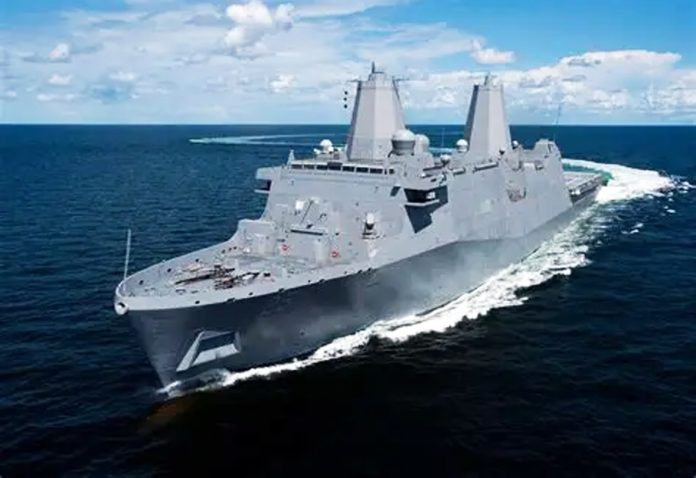
US Navy warship

A US Navy warship collided into a Navy supply vessel during a refuel operation, the US military’s Southern Command confirmed to the BBC.

Two people reported minor injuries during Wednesday’s replenishment-at-sea operation, Southern Command said, and are in stable condition.

The vessels – a guided missile destroyer and fast combat support ship – have both continued sailing safely from the site of the incident near South America.

Southern Command did not say what caused the collision and said the incident was currently under investigation.

The exact location of the crash between the Arleigh Burke-class destroyer USS Truxtun and the Supply-class fast combat support ship USNS Supply was not immediately clear.

The USNS Supply ship has been operating in the Caribbean, according to the Wall Street Journal, which is part of Southern Command’s area of responsibility. Southern Command is also responsible for parts of the South Atlantic and the South Pacific.

US President Donald Trump has ordered a military buildup in the Caribbean the last few months as part of the administration’s stated aim to target drug trafficking.

Two people died on Thursday after the US military struck an alleged drug boat in the eastern Pacific, adding to a tally of least 38 lethal alleged drug boat strikes in the region since Trump has re-entered office.

The US has also used its military presence in the region to enforce sanctions against Venezuelan oil, after arresting the country’s president Nicolas Maduro in a middle-of-the-night raid in January.

Credit: bbc.com

Kosovo parliament backs Albin Kurti-led government ending deadlock

0
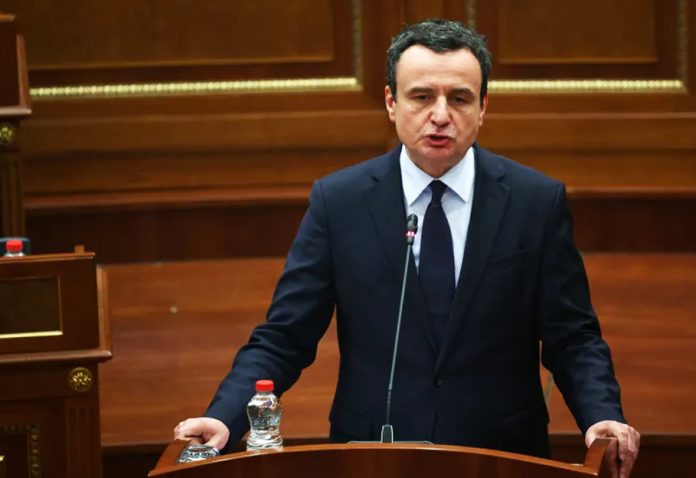
Kosovo's newly elected Albin Kurti delivers a speech

Kosovo’s parliament has approved a new government led by Prime Minister Albin Kurti after more than a year of political deadlock amid ongoing tensions with Serbia.

Lawmakers in the 120-member assembly backed Kurti’s cabinet in a 66-49 vote on Wednesday, hours after parliament convened for the first time since his Vetevendosje party won a snap election in December.

Before the vote, Kurti set out his legislative agenda, citing the economy and increased investment in defence as key areas, with plans to invest one billion euros ($1.18bn) for military purposes, including the production of combat drones.

“During these years, as we have all witnessed, we have faced constant attacks and threats from Serbia,” said Kurti of tense relations with Kosovo’s northern neighbour, which has never recognised its independence since it was declared in 2008 after a war in the late 1990s.

However, the prime minister, a former political prisoner, promised to pursue “normalisation of relations” with Belgrade aimed at “a bilateral external relationship and not interference or meddling in internal affairs”.

Tensions remain high in Kosovo’s north, where most of the ethnic Serb minority live, but normalisation of relations is a key requirement for both countries’ stated ambitions to join the European Union.

Credit: aljazeera.com

Things That Can Impact Your Cholesterol Levels

0

When it comes to cholesterol, numbers matter. Too much of this fatty, waxy substance in your blood can lead to artery clogs that put you at risk for heart disease, a heart attack, or a stroke.

You have two main kinds of cholesterol. Low-density lipoprotein, or LDL cholesterol, is the sticky type that can attach to artery walls and clogs them up. High-density lipoprotein, or HDL, is the good kind of cholesterol that helps clean out your arteries.

Avoiding things that raise your LDL or lower your HDL cholesterol can help keep your levels in a healthy range. What you eat, how much weight you gain, your stress level, and lack of exercise are just a few of the things that can throw your numbers out of whack.

Menopause is the main influence on cholesterol levels for women. LDL rises as estrogen levels fall. That is why women tend to start having heart attacks about 10 years after men.

Diet

Food is the source of cholesterol that people have the most control over. Your liver makes most of your body’s cholesterol. But much of the cholesterol that you do get from your diet comes from foods that are high in saturated fats, such as:

  • Red meat
  • Whole milk and other full-fat dairy products
  • Butter
  • Shellfish
  • Eggs
  • Trans fatis even worse for your heart. It both raises LDL cholesterol and lowers HDL cholesterol. This type of fat is so unhealthy that the FDA has banned it in the United States. But a few foods might still contain small amounts of trans fat, including cookies, cakes, crackers, and margarine.

·         Weight Gain

  • People of any size can have high cholesterol, but it’s more common when you’re overweight.
  • Fat changes the way your body makes and removes cholesterol. Excess weight(especially weight carried around your midsection) also slows its removal from your body.

·         Lack of Exercise

  • A high-intensity daily walk or bike ride is good for both your overall fitnessand your cholesterol levels. Too little exercise can lead to weight gain, which affects cholesterol levels.
  • Aerobic exercisehelps to boost HDL cholesterol, even if you don’t change your diet. Exercise isn’t as helpful for lowering LDL levels unless you also make dietary changes and lose weight.

Smoking

The chemicals in tobacco smoke damage blood vessel walls and make it easier for LDL cholesterol to stick to them. Smoking also lowers HDL cholesterol levels. It narrows blood vessels and thickens the blood, forcing your heart to work harder to pump enough blood out to your body.

Chronic Diseases

A few chronic diseases cause too much inflammation in your body. At healthy levels, inflammation is your immune system’s natural response to injury or disease. In the short term, it helps your body heal. But when it continues long term, inflammation can lower your HDL cholesterol and raise your LDL.

All of these inflammatory conditions can affect cholesterol levels:

Pregnancy

During pregnancy, your liver makes extra cholesterol to nourish your growing baby. By the third trimester, your cholesterol levels might be two to four times higher than they were before you got pregnant.

Cholesterol levels stay high for about a month after childbirth. Then they drop back down to prepregnancy levels.

If you started your pregnancy with low HDL and high LDL cholesterol, you could be at higher risk for pregnancy problems or heart disease later in life. It’s important to work with your doctor to get your cholesterol levels into a healthy range before you try to get pregnant.

Stress

When you’re under stress, your body releases cortisol, a hormone that can increase your cholesterol levels. Stress affects your cholesterol levels in other ways, too. Some people deal with stress by eating comfort foods, not exercising, or smoking, which all can affect cholesterol levels.

Your Age and Gender

As you get older, your body can’t remove cholesterol from your blood as well as it once could. That’s one reason your risk for heart disease rises as you age.

Women tend to have lower LDL cholesterol and higher HDL cholesterol than men when they’re younger. After menopause, their LDL levels rise.

Credit: webmd

The Power That Makes Us Holy

0
Dr. Joyce Rosalind Aryee, Executive Director, Salt and Light Ministries

“I pray that the eyes of your heart may be enlightened in order that you may know the hope to which he has called you… and his incomparably great power for us who believe…”- Ephesians 1:18–23

Introduction

Holiness is not produced by human effort. It is not manufactured through willpower, personality strength, or religious discipline alone. True holiness flows from divine power. Many believers desire to live holy lives, yet struggle because they attempt to overcome spiritual battles using natural strength.

Paul’s prayer in Ephesians reveals a profound truth: the same power that raised Jesus Christ from the dead is the very power available to believers today. Holiness is not merely a command; it is a provision. God does not call us to live sanctified lives and then leave us unequipped. He supplies the very power required to fulfill His calling.

The Power at Work in Us

In Ephesians 1:18–23, Paul unfolds three magnificent demonstrations of God’s power:

  1. Great power was exercised in raising Christ from the grave.
  2. Great power was exercised in seating Him at the right hand of the Father in the heavenly realms.
  3. Great power was exercised in placing all rule, authority, power, and dominion under His feet and appointing Him head over all things.

Pause and consider this. None of us can calculate how much power it required to raise Christ from the dead. Yet Scripture boldly declares that His resurrection required no more power than it takes to raise us from spiritual death.

When we were dead in trespasses and sins, the Spirit that raised Jesus from the grave raised us from spiritual death. Salvation itself is a resurrection miracle. We did not reform ourselves. We were raised.

But the work does not stop there.The power that lifted Christ from earth and seated Him at God’s right hand is available to us even now. Spiritually speaking, we are seated with Christ in heavenly places. This means we are no longer governed by earthly limitations alone. Our minds, affections, and loyalties are being lifted heavenward.

And the same power that placed all rule and authority under Christ’s feet is capable of placing every hostile force under ours. Temptation, fear, addiction, bitterness, pride, discouragement—none of these outrank resurrection power.

Holiness, therefore, is not fragile. It stands on omnipotence.

Equipped for Holiness

When God elected us for holiness, He did not merely say, “I have chosen you; now try your best.” Instead, He declared:

  • Through the cross of Christ, your sanctification has been purchased.
  • Through the Holy Spirit, you have been equipped.
  • Through divine power, you have been enabled.

Every single day, we must consciously appropriate this truth. Just as the Spirit raised Jesus from the grave, He is raising us daily from the grave of sin. Just as Christ was transported to heavenly authority, we are being lifted above earthly dominion. Just as Christ reigns victoriously, we too can walk in victory.

There are moments when temptation feels overwhelming and our personal strength seems nonexistent. In those moments we can pray:

“Let the power that raised Jesus from the dead raise me from this grave of sin right now. Let the power that seated Christ in heavenly places lift my mind above this struggle. Let the power that makes Christ victorious make me victorious now.”

Holiness is not self-effort. It is resurrection power applied.

Examining the Inner Person and Outer Life

How do we know this power is working in us? We must look both inward and outward.

The Inner Life

  • First, are we living in communion with Christ? To “pray continually” means to maintain an ongoing awareness of His presence. Holiness begins with consistent fellowship.
  • Second, do we live in continual confession? Scripture promises, “If we confess our sins, he is faithful and just to forgive us” (1 John 1:9). A humble and contrite heart keeps our fellowship with God clear and unhindered.
  • Third, are our thoughts under Christ’s control? We are called to take every thought captive (2 Corinthians 10:5). A holy life requires a surrendered mind.

The Outer Life

The inner life must overflow outward.

  • Do we relate to others with gratitude? A thankful spirit reflects Christ.
  • Do we identify with others and care about their burdens? Compassion and prayer reveal His heart.
  • Do we love our neighbors actively, not merely in attitude but in action? A servant spirit marks true submission to Christ.
  • Do we spend time alone with God? Do we remain faithful in public worship? Do we care about the salvation of others and the suffering in our world?

Holiness is not isolation. It is transformation that touches both heart and behaviour.

Conclusion

God has chosen us to be holy. He has supplied the power. He has purchased our sanctification through the cross. He has placed His Spirit within us.

The question is not whether power is available. The question is whether we will appropriate it.

Today can be a day of victory. Today can be a day when resurrection power lifts us from discouragement, frees us from sin, renews our minds, deepens our communion, and expands our compassion.

The power that raised Christ is at work in us. If God fills our inner life, His love will pour into our outer life. And gradually, steadily, unmistakably, our actions will become more and more like His. That is the power for holiness.

Stay Blessed!


Please note that the preaching program on Sunny 88.7 FM – Tuesdays at 5:30 am has been temporarily put on hold. However, please continue to join us on Asempa 94.7 FM – Sundays at 5:30 am and YFM 107.9 – Sundays at 6:30 am for our Radio Bible Study, as well as on Sunny 88.7 FM every Sunday at 3:30 pm for Hymns and Their Stories.

Feature: Why English Language? Captain Smart

0
Africanus Owusu Ansah (Hot Issues)

“I cannot teach anybody anything; I can only make them think” – Socrates

In the Introduction to Russian “ABV” J. L. L. Fennel states, inter alia: “… The student is advised first of all to learn by heart the vocabulary of the lesson, then carefully to work through the rules. He should then read the Russian passages several times until he can translate them into English without difficulty …”

Why would Asanteni skip Twi (Asante–Twi), learn English which is the language of our colonial masters, get Grade One and go to the University to study Russian? What about French, Spanish, Swahili – or Greek and Latin (the Classics)?

The government policy on higher education dictated that, as well as several other options in the 1970s. So students had the option to study Religions, History, Geography, Home Science, Music, Political Science, Library Studies…… Medicine, Administration.

Reforms in Education have been preached for many times over the years and the Daily Graphic captures the present thinking in the editorial of 19th January, 2026 headed “Education, youth and the urgency for reform”. The editorial noted: “The future of any nation is written in its classrooms … The youth represent the country’s greatest asset and its future workforce. When their education falters, their capacity to drive national development is diminished … For us at the Daily Graphic this moment calls for unity rather than blame …’’

Listening to Captain Smart on Onua FM (Onua Maakye) last Christmas one could not be sure of his position as far as “reform” goes. Why did he select the late I. K. Gyasi and Michael Kofi Nsowah, former GES Director-General for blame? Such impudence and such unpardonable attack on public implementers of government policy! Simply nauseating to hear Captain Smart say: “You go to the University to learn English Literature…” Are you m…!

We were colonised by the British and we attended schools established by the colonialists. We were “forced” to learn English or better still, the 3 Rs – reading, (W) riting, and (A) rithmetic. Time was when the local languages (Twi, Fante, Nzema, Ewe, Dagomba …) were banned in schools.

Whoever spoke the local language was given varied forms of punishment: physical punishment like caning, standing up in class, fines, public shaming/ridicule (e.g. wearing tokens like tied snail shells or holding placards with the inscription: “I will not speak vernacular again”.

As recent as March, 2021, Professor Charles Owu–Ewie, the Dean of the Faculty of Ghanaian Languages of the University of Education, Winneba was lamenting the punishment for speaking the local languages in schools.

When Ghana attained independence in 1957 (almost 70 years ago) Nkrumah’s government could have adopted one of the 80 or so local languages as a policy. He chose the white man’s language, English, and the glib-tongued would rattle English for prestige – to the extent that some parents would not teach their children any local language, but stress English.

Kofi Sey would say:…. (English) a historical accident;…  there was a need for one local language Time was (2003) when Kari Dako said in “Ghanaianism – A Glossary” … The author’s attitude towards the material presented is simply English in Ghana is undergoing a process of indigenisation as a result of its contact situation.

English, as the official language in Ghana, as the language of the executive, the judiciary and the legislature, as the main medium of education, business and the media, must of necessity accommodate the various demands put on it by its new socio-cultural environment. Either the floodgates are opened to allow English to find its own mode in Ghana, distinct from any outside influences, or the reins are tightened to attempt to maintain some connection with standard native varieties.

So, ‘pidgin’ where you will hear words like “foodian” “sure banker”, “akplanke” (apprentice), “obolobo” (fat) “Agegeian” (Nigerian), “filla” (news), “youngies” (youth) “awam” (trick; Association of West African Merchants) “galamsey” (gather them and sell; gold; small-scale gold mining).

Seth Kwame Awuku laments in The Chronicle of 22nd January; “Ghana is losing its libraries – and the consequences are national.

In Sekondi–Takoradi, the Western Regional Library in Sekondi and the Takoradi Public Library once nurtured generations of disciplined readers, writers, and professionals.

Today, both struggle with outdated collections, ageing infrastructure, and declining patronage …

You may take the need for educational reforms serious or funny. Just like Akrobeto: “When you go to buy a paint … go straight … and buy alogli paint …” And Azuma Nelson will say correctly “acrylic paint”. Or you will recall the recent press conference of the Legal Wives of Lumba and the Englishy scholar; …. “investigate the lawyer … the circumstances solounding the marital property to the famiry of Lumba … we request for atopsy … Subsekentry … as she craims … the body was allegly moved without police … mal-fiance …”

Does anyone take the issue of reforms as a QED (Quod erat Demonstradum)? What is the aim of education? What language is suitable? Captain Smart recently did a Master’s degree in Digital Marketing (University of Professional Studies); English language was used in teaching him and why was he so elated as to put the graduation cap (mortarboard; trencher) on his father’s head later his mother head? Ino be so? Ibe so!

You may read Chaucer’s Canterbury Tales and learn titbits of Middle English (14th century) words like “lyf” (life) pronounced more like “leaf”, “soot” (sweet), “twaye” (two). In “General Prologue” you may read: “Whan that Aprille with his shoures soote / The droghte of March hath perced to the roote …” rendered in Modern English as: “When April with its showers / The drought of March has pierced to the root …”

When James Ngugi wrote English Novels like “Weep Not Child” (1964); “The River Between” (1965); “A Grain of Wheat” (1967); “Petals of Blood” (1977) we enjoyed reading them with the Mau Mau rebellion in Kenya; now Ngugi wa Thiong’o writes in local Gikuyu; we are yet to appreciate “Caitaani Mutharabaini” (1980); “Matigari” (1986); “Murogi wa Kagogo” …

Prof. Florence Abena Dolphyne of the Linguistics Department, University of Ghana once called for a national language for Ghana. Coming from an Nzema father and an Achinakrom mother, she chose her PhD dissertation on: “The Phonetics and Phonology of the Verbal Piece In The Asante Dialect of Twi”.

What does Captain Smart say about this? Should the language be Asante, Akan, Ewe, Hausa, Dagbani; or what? We can imagine or rather, anticipate a political imbroglio! OR a political catastrophe.

For now, the policy is, a pass in English, Core Mathematics and Integrated Science or Social Studies. While Integrated Science is compulsory for science and technical programs, Social Studies is vital for non-science programmes.

We share the problem facing Robert Baiden, Chemistry instructor at Komenda Teacher Training College; using the indigenous language for instructions, specifically Fante, would be problematic because many of the terms I teach, e.g atom, don’t have Fante equivalents.

Do you enjoy reading Shakespeare, Spurgeon, Max Weber, Socrates (469–399 BC); Plato (427– 347 BC); Aristotle (384–322 BC) Pythagoras (570–490 BC); Heraclitus (535–475 BC); Democritus (460–370 BC); Diogenes of Sinope (412–323 BC); Epicurus (341–270 BC); Zeno of Citium (334–262 BC).

Whatever one says or thinks, English has become an open Sesame, for a journey into the heart of philosophy, among other subjects including law and even the science subjects. Reforms, yes. But let us progress steadily otherwise we stand the risk of falling from the precipice.

Ghana Premier League, Kotoko & Hearts lockhorns in Super Clash

0
Hubert Gyau, Asante Kotoko

Round 22 of the Ghana Premier League gets underway this weekend, with pundits and fans eagerly anticipating what promises to be an exciting set of fixtures. All eyes will be on the Baba Yara Sports Stadium, where Asante Kotoko lock horns with Hearts of Oak in the league’s biggest fixture; the Super Clash.

While other matches also offer plenty of intrigue, this encounter stands out as the headline game.

Can Kotoko make it back to back win over Hearts?

Few fixtures in Ghanaian football carry the weight, tension and history of the Super Clash between Asante Kotoko and Hearts of Oak. But this latest chapter arrives under extraordinary circumstances for the Porcupine Warriors.

Ali Mohammed, Hearts of Oak centre-back

Just days before kickoff, Kotoko were rocked by the resignation of head coach Karim Zito. In a fixture where preparation can determine the finest of margins, losing the technical head inevitably raises questions about readiness.

Kotoko enter this encounter with 35 points from 21 matches, just one point behind Hearts of Oak with 36 points. The title conversation remains tightly contested, and this meeting could significantly reshape the standings.

Statistically, Kotoko carry clear attacking superiority. The Porcupine Warriors have scored 28 goals, nearly double Hearts’ tally of 15 and boast the stronger goal difference. Their cutting edge in front of goal has been one of their biggest assets this season. However, they now face the sternest defensive unit in the league. Hearts have conceded just 7 goals all campaign, underlining a defensive discipline that has become their identity.

It sets up a fascinating contrast: Kotoko’s attacking intent against Hearts’ defensive solidity. In matches of this magnitude, even the smallest mental or tactical advantage can prove decisive. Hearts may look to capitalize on any perceived instability within the Kotoko camp.

But football has always thrived on unpredictability. History shows that adversity can sometimes galvanize rather than weaken a team. The absence of a head coach can spark unity, sharpen focus and ignite a collective determination to prove a point. Kotoko’s players now have an opportunity to rally together, respond to the setback and channel it into performance.

Past meetings suggest another tight contest. In the last ten encounters, Kotoko have the edge with five wins to Hearts’ two, alongside three draws. Notably, Kotoko claimed a 1–0 away victory in the most recent league meeting in November 2025.

So while the spotlight naturally falls on the resignation of Karim Zito, the reality remains unchanged: once the whistle blows, history, statistics and circumstances fade into the background.

In a Super Clash, nothing is assured. And for Kotoko, this could either be a moment of vulnerability or a moment of powerful response.

Medeama, Aduana faceoff today

A heavyweight clash waits at the top end of the Ghana Premier League as league leaders Medeama welcome close contenders Aduana in a fixture that could significantly shape the title race.

Medeama sit top of the table with 43 points after 21 matches, enjoying a strong cushion over the chasing pack. Their campaign has been built on consistency, balance, and efficiency at both ends of the pitch. With 31 goals scored and just 14 conceded, Medeama boast one of the league’s most complete records, reinforced by a recent run of four wins in their last five matches.

Emmanuel Annor, Nations FC

Aduana, meanwhile, occupy 3rd place with 36 points, level with Hearts of Oak and Bibiani Gold Stars but trailing Medeama by seven points. They remain firmly in contention, but this fixture represents a crucial opportunity to close the gap. Aduana have been defensively solid, conceding only 12 goals, fewer than any team except Hearts, though their goal output suggests a more measured, pragmatic approach.

Recent history between these two sides has been finely balanced, especially in matches played at Aduana. Of the last five league meetings, Medeama have won two, Aduana have won one, and two have ended in draws.

Medeama have had the upper hand at home, winning both recent fixtures on their own turf by 2–0 scorelines, while Aduana tend to be more resilient at Nana Agyemang Badu Park, including a 2–2 draw in October 2024 and a goalless stalemate earlier this season. This trend highlights the importance of venue, with Medeama generally more assertive and clinical when hosting.

Bibiani Gold Stars welcome Holy Stars

Bibiani Gold Stars will look to steady their title push when they host Holy Stars in a Ghana Premier League Match day 22 fixture, with both sides seeking points for very different reasons.

Micheal Ephson, Heart of Lions

Gold Stars begin the weekend second on the league table with 36 points from 21 matches, level with Aduana and Hearts of Oak but firmly within touching distance of leaders Medeama.

Despite an inconsistent run of results, the Bibiani-based side has remained competitive, relying on organization and resilience rather than free-scoring football. Their record of 11 wins, 3 draws, and 7 defeats underlines a season of narrow margins.

Holy Stars arrive in 12th position on 26 points, part of a congested mid-table where results can quickly alter league standing. While their campaign has been marked by defensive vulnerability having conceded 26 goals they have shown the ability to trouble stronger opponents, particularly when allowed to play on the break.

Recent head-to-head meetings suggest a closely fought contest. In the last three league encounters, Bibiani Gold Stars have recorded two victories, while Holy Stars claimed a 2–0 home win in their most recent meeting in November 2025. The two earlier fixtures were settled by single goals in favour of Gold Stars, highlighting how evenly matched the sides have been.

Abdul Razak Salifu, Dreams FC

For Bibiani Gold Stars, this fixture presents an opportunity to consolidate their position near the summit and maintain pressure on the league leaders. Holy Stars, meanwhile, will be aiming to build momentum and create separation from the lower half of the table.

With both teams aware of the importance of the occasion, a disciplined and tactical contest is expected, where efficiency in both penalty areas could prove decisive.

By Jesse Otoo


FIXTURES

Friday 13th February

Medeama 15:00 Aduana

Sunday 15th February

Bechem Utd 15:00 Young Apostles

Chelsea 15:00 Heart of Lions

Bibiani Gold Stars 15:00 Holy Stars

Dreams 15:00 Karela

Eleven Wonders 15:00 Vision

Hohoe United 15:00 Nations FC

All Blacks 15:00 Samartex

Asante Kotoko 17:00 Hearts

Cabinet Moves to Strip COCOBOD of GH¢4.35bn Road Liabilities, Orders Forensic Audit

0
Dr Ransford Abbey, CE of COCOBOD

Government has moved to remove GH¢4.35 billion in road-related liabilities from COCOBOD’s books as part of a sweeping restructuring aimed at stabilising the cash-strapped cocoa regulator and restoring fiscal discipline to the sector.

Finance Minister Dr. Cassiel Ato Baah Forson announced the measures at a news conference following a marathon Cabinet meeting convened to address mounting challenges in the cocoa industry.

Under the directive, the remaining road liabilities — rationalised down from an initial exposure of GH¢21.7 billion — will be transferred to the Ministry of Roads and Highways and the Ministry of Finance for payment.

Massive Contract Exposure Rationalised

Dr. Forson disclosed that between 2014 and 2024, COCOBOD awarded road contracts amounting to GH¢26.5 billion, with GH¢21.5 billion of those commitments signed between 2018 and 2021.

Despite a 2023 agreement under Ghana’s IMF programme to reduce COCOBOD’s road commitments from GH¢21.7 billion to GH¢6.9 billion, the previous board and management failed to execute the rationalisation.

The exercise has now been completed under the joint supervision of the Ministry of Finance and the Ministry of Roads, reducing total exposure from GH¢21.7 billion to GH¢4.35 billion.

Cabinet subsequently directed that the remaining GH¢4.35 billion liability be transferred off COCOBOD’s balance sheet.

“Rural road construction accounted for a significant portion of COCOBOD’s financial difficulties,” the Finance Minister stressed, noting that quasi-fiscal spending outside the regulator’s core mandate had weakened its financial position.

End of Quasi-Fiscal Spending

Dr. Forson announced that a new COCOBOD Bill to be laid before Parliament will prohibit the regulator from undertaking quasi-fiscal expenditures and other non-core spending going forward. The proposed legislation will include sanctions for breaches.

In addition, government has secured a US$500 million World Bank facility to fund agricultural roads, effectively removing that responsibility from COCOBOD and transferring it to central government oversight.

The shift is expected to prevent a recurrence of the off-balance-sheet liabilities that have strained the cocoa regulator’s finances in recent years.

Forensic Audit Ordered

In a further move to enhance accountability, Cabinet has directed the Attorney-General to commission a concurrent forensic audit and criminal investigation into COCOBOD’s activities over the past eight years.

The directive signals a governance reset in the cocoa sector amid concerns over contract awards, expenditure controls and debt accumulation.

Global Price Shock Forces Producer Price Cut

The restructuring comes as global cocoa prices have fallen sharply from an average of US$7,200 per tonne to about US$4,100 per tonne, undermining COCOBOD’s revenue base and worsening liquidity pressures.

To reflect market realities and inject liquidity into the system, the Producer Price Review Committee (PPRC), chaired by Dr. Forson, has revised the producer price downward for the remainder of the 2025/2026 crop season.

Effective February 12, 2026, farmers will now receive GH¢41,392 per tonne, equivalent to GH¢2,587 per bag, based on 90 percent of an achieved gross FOB price of US$4,200 per tonne.

The Minister said the adjustment was necessary to align domestic pricing with global market conditions, expedite farmer payments and safeguard the sustainability of the cocoa sector.

Balance-Sheet Reset

The combined measures — liability transfer, expenditure controls, audit action and producer price adjustment — represent one of the most comprehensive financial resets of COCOBOD in decades.

By stripping out road liabilities, banning quasi-fiscal spending and restoring pricing realism, government is seeking to reposition COCOBOD as a commercially disciplined commodity regulator rather than a vehicle for infrastructure financing.

Whether the reforms succeed will depend on strict enforcement of the new fiscal guardrails and the pace of global market recovery.

But for now, the message from Cabinet is clear: COCOBOD’s era of unchecked commitments is over.


For more news, join The Chronicle Newspaper channel on WhatsApp: https://whatsapp.com/channel/0029VbBSs55E50UqNPvSOm2z

Government to Revamp Produce Buying Company as COCOBOD Shifts to Value Addition

1
Dr. Cassiel Ato Forson, Finance Minister

Government is moving to revive the Produce Buying Company (PBC)the state-owned cocoa processing company that has struggled in recent years as part of a broader overhaul of COCOBOD aimed at shifting Ghana’s cocoa sector from raw bean exports to domestic value addition.

Finance Minister Dr. Cassiel Ato Baah Forson said Cabinet has approved a new financing and allocation model that will prioritise local processing, strengthen COCOBOD’s balance sheet and reposition PBC as a central pillar of Ghana’s cocoa industrialisation drive.

Under the new framework, COCOBOD will allocate cocoa beans directly to domestic processors to lock in capacity, support value addition and create jobs. With immediate effect, the remainder of cocoa beans for the 2025/2026 season will be reserved exclusively for domestic processing.

From the 2026/2027 cocoa season, at least 50 percent of all COCOBOD cocoa beans will be processed locally, a requirement that will be written into law through a COCOBOD Bill to be laid before Parliament.

PBC at the Centre of the Reset

Dr. Forson said the revival of PBC, which has faced operational and financial difficulties, will be treated as a matter of priority under the reforms.

The company, he explained, is expected to emerge as a leading state-backed processor, anchoring domestic value addition while complementing private-sector processing capacity.

“Revamping PBC is central to our value-addition agenda,” the Finance Minister said, adding that the new policy direction is designed to ensure consistent access to cocoa beans and predictable financing for processors.

Earlier on the same day, Dr. Forson, together with the Minister for Trade, Agribusiness and Industry, met with domestic cocoa processors from the private sector, who indicated they have both the capacity and willingness to process more than 50 percent of Ghana’s cocoa output.

An agreement, he said, has been reached for the immediate implementation of the local processing policy.

Balance-Sheet Cleanup to Support PBC Revival

To support the turnaround of PBC and the broader reform agenda, government is also restructuring COCOBOD’s inherited debt burden, which has constrained operations and undermined confidence in the cocoa sector.

Cabinet has directed the Minister for Finance to seek parliamentary approval to convert legacy debts of about GH¢5.8 billion onto the balance sheets of the Ministry of Finance and the Bank of Ghana.

Of this amount, GH¢3.7 billion is owed by COCOBOD to the Ministry of Finance. Dr. Forson said the conversion will restore positive equity at COCOBOD and strengthen its credibility in both domestic and international markets.

“This balance-sheet reset is critical to enabling COCOBOD to implement its new financing model and support the revival of PBC,” he said.

In addition, Cabinet has approved the transfer of road-related liabilities worth GH¢4.5 billion from COCOBOD to the Ministry of Roads and Highways and the Ministry of Finance, further easing pressure on the cocoa regulator’s finances.

Legacy Liabilities Exposed

Dr. Forson disclosed that between 2014 and 2024, COCOBOD awarded cocoa road contracts amounting to GH¢26.5 billion, with GH¢21.5 billion of those contracts awarded between 2018 and 2021.

Despite a 2023 agreement under Ghana’s IMF programme to rationalise COCOBOD’s road commitments from GH¢21.7 billion to GH¢6.9 billion, the previous board and management failed to carry out the exercise, leaving a heavy liability overhang.

Strategic Shift

The reforms mark a decisive break from Ghana’s long-standing reliance on raw cocoa exports. By mandating local processing, restructuring debt and reviving the struggling Produce Buying Company, government is seeking to retain more value within the domestic economy while stabilising the cocoa sector’s finances.

If successfully executed, the PBC turnaround—backed by private-sector capacity could redefine COCOBOD’s role from a commodity exporter to a catalyst for agro-industrial growth and employment.


For more news, join The Chronicle Newspaper channel on WhatsApp: https://whatsapp.com/channel/0029VbBSs55E50UqNPvSOm2z

Inherited Pricing Missteps, Liquidity Gaps Push Cocoa Sector into Crisis — Ato Forson

0
Dr Cassiel Ato Forson, Finance Minister

Ghana’s cocoa sector is facing a cash squeeze driven by inherited pricing distortions, weak liquidity buffers and uncompetitive market positioning, Finance and Economic Planning Minister Dr. Cassiel Ato Baah Forson has revealed.

Speaking at a news conference after an emergency Cabinet meeting convened to stabilise the cocoa industry, Dr. Forson said government’s assessment traced the sector’s current stress to pricing decisions taken at the start of the 2025/2026 cocoa season, compounded by adverse exchange rate movements and weak price risk management.

The Minister explained that the season opened in August 2025 with a producer price of GH¢51,660 per tonne, pegged at 70 percent of gross FOB, based on an assumed world price of US$7,200 per tonne and an exchange rate of GH¢10.25 to the dollar.

That pricing benchmark quickly became untenable.

On October 1, 2025, Côte d’Ivoire raised its producer price by 20 percent, triggering a sharp price differential between the two largest cocoa producers. Coupled with a weakening cedi, the gap exposed Ghana to heightened risks of cross-border cocoa smuggling, threatening volumes and foreign exchange inflows.

In response, Ghana’s Producer Price Review Committee (PPRC) revised the producer price upward to GH¢58,000 per tonne, reflecting a new exchange rate of GH¢11.5 to the US dollar. The adjustment narrowed the price gap and helped stem smuggling, but significantly raised Ghana’s cost base.

Shortly after the upward review, global cocoa prices began to decline.

Despite the downturn, COCOBOD continued selling cocoa at prices below US$6,400 per metric tonne, which the Minister said represents the full cost of moving cocoa from farm gate to port. The result was sustained trading losses at a time when international buyers were increasingly unwilling to absorb Ghana’s higher-priced beans.

“Ghana’s cocoa became uncompetitive relative to supplies from other origins selling at significantly lower prices,” Dr. Forson noted.

The financial strain was exacerbated by acute liquidity constraints at COCOBOD. According to the Minister, the cocoa regulator lacked the funding capacity to purchase beans from farmers, hold inventory, or deploy hedging strategies to manage price volatility.

He attributed the liquidity shortfall to financing and inventory challenges carried over from 2024, leaving COCOBOD without the flexibility needed to respond to shifting global market conditions.

Cabinet, Dr. Forson said, has identified the underlying structural weaknesses and is working on a recovery framework aimed at restoring liquidity, strengthening price risk management, and re-establishing Ghana’s competitiveness in the global cocoa market.

Cocoa remains a cornerstone of Ghana’s export earnings and rural livelihoods. But the Minister’s assessment underscores a central reality: pricing decisions unsupported by liquidity buffers and risk management tools have left the sector exposed to global price swings, pushing an already fragile system into crisis.


For more news, join The Chronicle Newspaper channel on WhatsApp: https://whatsapp.com/channel/0029VbBSs55E50UqNPvSOm2z


The Ghanaian Chronicle