Prof. Peter Haynes, Deputy President and Provost of Imperial College London, addressing attendees at the closing ceremony of the International Year of Quantum (IYQ) at the Labadi Beach Hotel in Accra, Ghana
As governments and corporations pour billions into quantum technologies, Africa’s most competitive advantage may not be found in ultra-cold laboratories or specialised hardware, but in people: a young, fast-growing population with strong mathematical potential.
That was the argument advanced by Prof. Peter Haynes, Deputy President and Provost of Imperial College London, at the closing ceremony of the International Year of Quantum (IYQ), held at the Labadi Beach Hotel in Accra.
Led by UNESCO, the IYQ convened a broad international constituency—quantum scientists and engineers, universities, policymakers, industry leaders, educators, students, youth innovators, science communicators and the wider public. Events spanned both developed and developing countries, with a deliberate emphasis on Global South participation, skills development and the responsible deployment of quantum technologies.
A section of participants and stakeholders pose for a group photograph at the event.
Speaking under the theme “Preparing the World for a Quantum Future: Education, Skills and Youth-Led Innovation,” Prof. Haynes, a distinguished British computational physicist made a clear distinction between potential and preparedness. Africa’s capacity to contribute to quantum science, he said, is no longer the question. The real issue is whether global systems are structured to enable that contribution.
“Africa’s ability to contribute to quantum science and technology is not in doubt. The question is whether the global quantum ecosystem is ready to enable that contribution.”
A Skills Crunch Meets a Youth Boom
Quantum technologies ranging from computing and sensing to navigation and secure communications are expected to underpin the next wave of scientific and industrial transformation. Projections cited by Prof. Haynes suggest that global quantum-related employment could reach about 250,000 jobs by 2030, climbing to more than 800,000 by 2035.
For now, however, those opportunities are concentrated in a small group of established “quantum nations,” including the United States, United Kingdom, China, Germany, France and Japan. This concentration often described as the quantum divide raises the risk that much of the Global South will remain users of quantum technologies rather than shapers of them.
Timing, however, may work in Africa’s favour. By 2030, young Africans are expected to make up more than 40 percent of the world’s youth population, just as the global quantum sector confronts a widening skills shortage.
What is often experienced locally as anxiety about employment and career pathways, Prof. Haynes argued, should be recognised internationally as a strategic opportunity.
“What feels like pressure locally should be recognised globally as an opportunity of historic proportion,” he said.
Beyond Physics: The Hidden Workforce of Quantum
Although quantum science is rooted in advanced physics and mathematics, Prof. Haynes emphasised that its real-world impact depends on a far wider skills base. Translating laboratory breakthroughs into deployable technologies requires engineers, materials scientists, software developers, data scientists, technicians and manufacturing specialists.
A section of participants at the International Year of Quantum (IYQ) closing ceremony at Labadi Beach Hotel, Accra, Ghana.
Drawing on lessons from the UK’s decade-long national quantum programme, he noted that early investments focused heavily on physicists, only later revealing bottlenecks in engineering and materials science. At Imperial College London, this gap led to the creation of the Materials for Quantum Network, linking materials researchers with quantum scientists to accelerate innovation.
He illustrated the challenge with an example from Imperial’s labs: a cold-atom interferometry-based quantum positioning system capable of operating underground, where GPS cannot. Scientifically impressive, the prototype is still roughly the size of an air-conditioning unit—an engineering problem, not a physics one.
For Africa, the implication is straightforward. Quantum strategies should be designed around existing strengths and industrial realities, rather than imported wholesale.
“Quantum strategies are strongest when they build on the full range of capabilities already present within a country or region,” Prof. Haynes said.
Learning to Leapfrog—Again
Africa’s experience with mobile money offers a useful parallel. By bypassing landline infrastructure, the continent leapfrogged directly into mobile finance. Prof. Haynes believes quantum presents a similar opening.
With an estimated 150 countries worldwide still lacking a national quantum strategy, African governments have room to design more integrated approaches ones that place skills, applications and entrepreneurship alongside fundamental research.
Importantly, quantum-related skills are highly portable. Problem-solving, coding, modelling, systems thinking and interdisciplinary collaboration are valuable not only in quantum labs, but across telecommunications, energy systems, space science and advanced manufacturing.
“Learning quantum-related skills is not a narrow bet,” he told students adding, “Even if you never work directly on a quantum device, those skills remain valuable across sectors and across careers.”
Startups, Not Superlabs
Job growth in the quantum economy, Prof. Haynes argued, is unlikely to be driven primarily by large national laboratories or multinational firms. Instead, much of it will come from startups and small-to-medium enterprises, particularly in quantum-adjacent software, modelling and sector-specific applications.
In Africa, the most immediate opportunities are likely to emerge downstream in healthcare, energy, logistics, finance and telecommunications rather than in the capital-intensive business of building quantum hardware from scratch.
Developments in Ghana point in this direction. A recently established optics and photonics laboratory, supported by the Society of Photo-Optical Instrumentation Engineers (SPIE), illustrates how interdisciplinary capacity can strengthen quantum-relevant fields while also serving telecommunications and advanced manufacturing.
Such pathways, Prof. Haynes stressed, give young people agency. “You don’t just wait for opportunities, you help create them,” he said.
Education Alone Is Not Enough
Skills training, however, is only part of the equation. Prof. Haynes warned that education without supportive policy environments will not translate into jobs. Quantum ecosystems require long-term investment, informed regulation, public procurement strategies and investor confidence.
That, in turn, demands quantum literacy beyond the laboratory. At Imperial, this gap is addressed through a Quantum Fundamentals Programme aimed not at scientists, but at policymakers, regulators and investors whose decisions shape markets and institutions.
The objective, he explained, is not to turn officials into physicists, but to equip them to make informed choices that allow quantum industries and employment to grow.
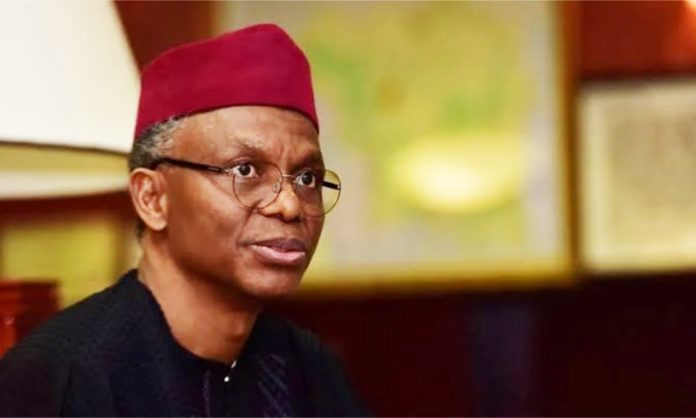
Supporters of former Kaduna State Governor, Malam Nasir El-Rufai reportedly intervened on Thursday to prevent security personnel from arresting him at the Abuja airport.
According to multiple reports, operatives from the Economic and Financial Crimes Commission (EFCC) attempted to take El-Rufai into custody upon his arrival.
The former governor is said to have resisted the move, prompting his supporters to intervene and ensure that he left the airport safely.
In video footage shared online, El-Rufai’s backers can be seen escorting him out of the airport terminal as they chanted his support.
In a separate clip, supporters are heard praising the former governor while ensuring he is safely removed from the scene.
“He is our leader, nothing will happen,” some of the supporters chanted, underscoring the level of public engagement during the incident.
DAILY POST reports that El-Rufai had recently said he believed he could be arrested soon.
In an interview, he alleged that some of his former associates in Kaduna have already been picked up by security agencies, leading him to think he could be next in line.
Members of the National Union of Food, Beverage and Tobacco Employees protesting
Members of the National Union of Food, Beverage and Tobacco Employees (NUFBTE) are currently occupying the NAFDAC office complex in Isolo, Lagos, to protest the agency’s refusal to comply with alleged Federal Government’s directive to suspend enforcement of the ban on the production and sale of alcoholic beverages in sachets.
The union is calling on NAFDAC to unseal production lines that were shut down, citing a directive allegedly issued by the Office of the Secretary to the Government of the Federation and the Office of the National Security Adviser.
Meanwhile, NAFDAC on Wednesday dismissed claims that the Federal Government ordered it to suspend enforcement of the ban on sachet and PET-bottled alcohol.
Earlier this month, NAFDAC began implementing the nationwide prohibition on the production and sale of alcohol packaged in sachets and polyethylene terephthalate (PET) bottles.
However, reports circulating on social media on Wednesday suggested that the agency had been instructed to halt the ban’s enforcement.
But in a statement signed by its Director-General, Mojisola Adeyeye, NAFDAC described the reports as “false” and “misleading,” stressing that it had received no directive from the federal government to suspend its regulatory activities.
“NAFDAC operates strictly within the ambit of its statutory mandate and in alignment with duly communicated Federal Government policies and directives,” the statement read.
“At no time has the Agency received any formal directive ordering the suspension of its regulatory or enforcement activities in respect of sachet alcohol products.”
The agency reaffirmed its commitment to public health protection and regulatory compliance, noting that any major decisions affecting national regulatory actions would be formally communicated through official channels.
“NAFDAC urges members of the public, industry stakeholders, and the media to disregard the false report and rely only on verified information issued through the Agency’s official platforms and authorised government communication channels,” the statement added.
The agency also warned against the spread of unverified information, saying it could cause “unnecessary public anxiety, economic uncertainty, or misinterpretation of government policy.”
“NAFDAC remains steadfast in its commitment to public health, economic stability, and national interest,” the statement concluded.
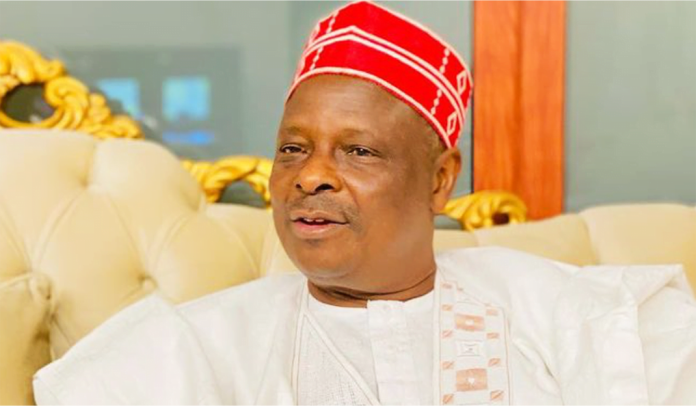
The Kwankwasiyya Movement has formally rejected a move by five United States lawmakers to blacklist its leader, Senator Rabiu Musa Kwankwaso, over alleged “severe religious freedom violations” in Nigeria.
The move follows the introduction of the Nigeria Religious Freedom and Accountability Act 2026 (HR 7457) to the US Congress on Tuesday.
If passed, the bill would compel the US Departments of State and Treasury to impose visa bans and asset freezes on Kwankwaso, alongside groups like the Miyetti Allah Cattle Breeders Association (MACBAN), for their alleged roles in the systemic persecution of Christians.
In a swift reaction on Thursday, the movement described the inclusion of the former Kano State Governor’s name as “unfounded” and “politically motivated,” demanding its immediate removal from the proposed legislation.
“We state unequivocally that these allegations are consistent with nothing in the verifiable public record of Senator Kwankwaso’s life and service,” said spokesperson Habibu Sale Mohammed.
The movement specifically addressed claims made by US Rep. Riley Moore, one of the bill’s sponsors, who reportedly linked Kwankwaso to religious extremism due to the implementation of Sharia law during his tenure as governor. Defending the record, the group argued that Sharia-based legal systems in Northern Nigeria were constitutional developments not unique to Kano.
“The constitutional development of Sharia-based legal systems… was neither unique to Kano State nor the initiative of one individual,” the statement read. “To single out Senator Kwankwaso while similar constitutional arrangements exist in several states raises serious questions about the evidentiary standard behind such a recommendation.”
Kwankwaso, a former Deputy Speaker of the House of Representatives, two-term Governor of Kano State, Minister of Defence, and Senator, has “never been indicted, prosecuted, or credibly accused of religious persecution, extremism, or human rights violations,” the group said.
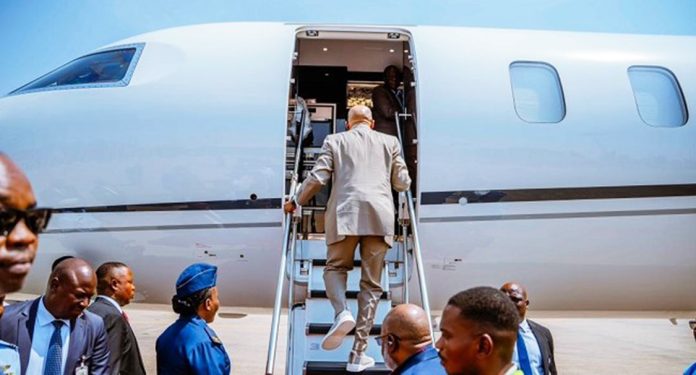
Vice President Kashim Shettima has departed Abuja for Addis Ababa, Ethiopia, to represent President Bola Tinubu at the 2026 African Union (AU) Summit.
The Summit, themed “Assuring Sustainable Water Availability and Safe Sanitation Systems to Achieve the Goals of Agenda 2063,” will focus on advancing continental commitments toward sustainable water management, improved sanitation systems, and the broader development aspirations encapsulated in the AU’s Agenda 2063 framework.
A statement by the Senior Special Assistant to the President on Media and Communications, Stanley Nkwocha, says while in Addis Ababa, the Vice President will join other African leaders at the 39th Ordinary Session of the Assembly of AU Heads of State and Government, as well as the 30th General Assembly, scheduled to hold on February 14 and 15, 2026, respectively.
On the sidelines of the Summit, Shettima will participate in high-level side events and hold bilateral engagements with political and business leaders aimed at strengthening Nigeria’s diplomatic, economic, and strategic partnerships across the continent.
The Vice President is accompanied by cabinet ministers and other senior government officials.
He is expected to return to Nigeria at the conclusion of his official engagements in Addis Ababa.
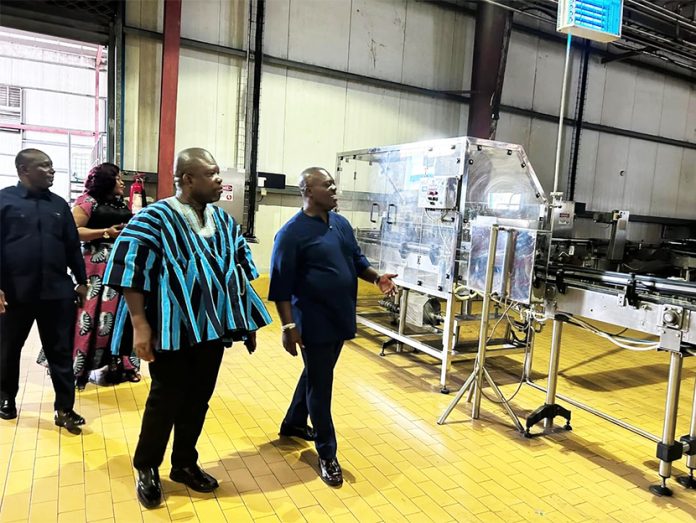
The Volta Regional Co-ordinating Council (VRCC) is collaborating with GIHOC Distilleries Company Limited to establish a modern Eastern Factory in the Volta Region, the Volta Regional Minister, Mr James Gunu, has announced.
Mr Gunu made this known after paying a courtesy call on the Chief Executive Officer of GIHOC Distilleries, Mr Jones Borteye Applerh.
During the visit, Mr Applerh and the Deputy Chief Executive Officer, Ms Magdalene Ndamley, received the Minister and conducted him round the company’s production facility, where he observed at first hand the level of innovation and operational standards guiding the company’s activities.
The Volta Regional minister described the engagement as fruitful and disclosed that the proposed factory, when established, would serve not only the Ghanaian market but also neighbouring countries such as Togo, Benin, Nigeria and other parts of the sub-region.
He revealed that a five-acre parcel of land had been earmarked in the Akatsi North District to facilitate the project. According to him, the partnership marks a significant step towards accelerating industrialisation in the Volta Region, creating employment opportunities for the youth, and positioning the Region as a strategic hub for manufacturing and cross-border trade within West Africa.
The Regional Minister reiterated the VRCC’s commitment to attracting viable investments that would stimulate economic growth and enhance the socio-economic development of the Region.
Ghana’s High Commissioner to South Africa, H.E. Benjamin Quashie, has called for urgent and deliberate efforts to address persistent challenges within Africa’s mining sector, warning that failure to act could leave future generations burdened with an unsustainable legacy.
Speaking at the African Mining Indaba Conference in Cape Town, Ambassador Quashie acknowledged the mining sector’s pivotal role as a key driver of economic growth across the continent, while stressing that its benefits have often been accompanied by significant obstacles.
The 4-day conference, on the theme: “Stronger Together: Progress Through Partnerships”, brought together governments, mining companies, investors and financiers from across the global mining value chain to explore investment partnerships, policy reforms and the future of mining across the continent.
According to Mr. Quashie, it is the responsibility of the present generation to confront these mining sector challenges head-on.
“It is incumbent on this generation to address those challenges for the sake of those unborn, ensuring that they are not left behind or inherit an unattainable legacy,” he emphasised.
Ambassador Quashie noted that Ghana is not immune to the structural and governance challenges confronting the mining industry and underscored the need for meaningful dialogue guided by African values.
“Ghana is not exempt from these challenges. Thus, we must engage in discussions today that reflect the spirit of Obontu – the idea of mutual recognition and shared humanity, to explore the abundant possibilities our country presents and to foster meaningful partnerships,” he said.
He described Ghana as a “beacon of stability and opportunities” within West Africa, citing positive economic projections.“
According to the World Bank, Ghana is projected to achieve a growth rate of 5.4 per cent in 2026, positioning her among the top performers in the region,” Ambassador Quashie noted.
He attributed this positive outlook to Ghana’s commitment to fiscal discipline, economic reforms and an open investment climate.
The Ambassador further highlighted Ghana’s strategic advantage as host of the Secretariat of the African Continental Free Trade Area (AfCFTA), which he said significantly enhances the country’s attractiveness to investors.
“This strategic role provides market access to over 1.3 billion people, making Ghana a natural hub for trade and investment,” he stated.
Ambassador Quashie also referenced Ghana’s investment framework, particularly the Ghana Investment Promotion Centre Act, which he described as a critical policy instrument designed to create a conducive environment for both local and foreign investors.
Touching on recent policy interventions, he pointed to the government’s economic reset agenda spearheaded by President John Dramani Mahama, which he said is already revitalising key sectors, including mining.
“The reset agenda initiated by the President of Ghana has begun to revitalise the economy and enhance the mining sector, particularly through the establishment of the Ghana Gold Board,” he explained.
He said the Ghana Gold Board (GoldBod) is focused on promoting transparency, curbing gold smuggling and securing maximum economic benefits from the country’s gold resources.
Expressing optimism about the outcomes of the Mining Indaba, Ambassador Quashie encouraged stakeholders and investors to leverage the forum for strategic partnerships.
“I am confident that this forum will serve as a key resource – empowering participants to make informed decisions and uncover pathways for fruitful collaboration and investment,” he said.
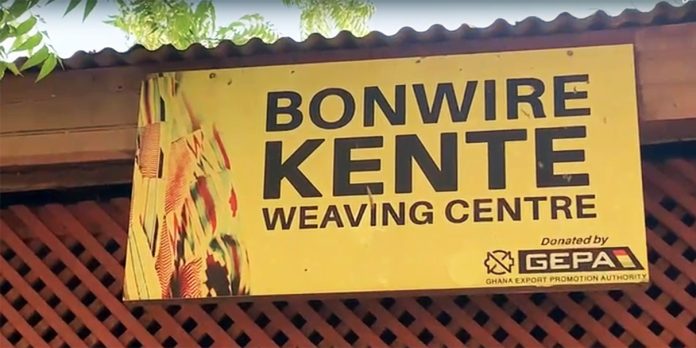
Signage at the Bonwire Kente Weaving Centre in the Ashanti Region.
As Ghana celebrates National Fugu Day, weavers in Bonwire, the Ashanti region town famed for its kente heritage, are urging the government to give kente its own national spotlight.
For the artisans, this is more than symbolism, it’s about protecting livelihoods, preserving centuries-old traditions and reinforcing Ghanaian identity.
The call comes after the Ghana Tourism Authority designated Wednesdays as National Fugu Day to celebrate the northern woven textiles and correct misconceptions that reduced fugu to a mere blouse. While Bonwire weavers commend this move, they argue that kente is synonymous with royalty, culture and global recognition, which deserves equal honour.
“The declaration of a National Kente Day would boost local patronage, create jobs and sustain a craft passed down through generations,” the artisans explained to the media.
Their plea also highlights growing concerns over fake and printed kente, mostly imported, which they warn is undermining authentic weaving traditions. The weavers are urging stricter regulations on imitation designs to ensure the survival of the industry.
This push underscores the ongoing effort by Ghanaian artisans to safeguard cultural heritage while shaping policies that protect local craftsmanship, ensuring that kente remains a living, thriving symbol of Ghanaian artistry.
The Criminal Division 4 of the High Court in Accra, presided over by Her Ladyship Audrey Kocuvie-Tay, has heard the testimony of a former Board Member of the Ghana Infrastructure Investment Fund (GIIF), Kofi Boakye, who insisted that the Board never approved the Accra Sky Train Project.
Mr. Boakye, appearing as the second prosecution witness (PW2), told the court that during his tenure on the GIIF Board from 2017 to 2021, the project did not receive board approval despite being discussed at meetings.
Captured in his witness statement, Mr. Boakye stated, “During my tenure as a member of the Board, we approved several projects; however, the Board did not approve the Sky Train Project.”
Sky Train
He further rejected claims that the Board sanctioned a payment of US$2 million for the acquisition of shares related to the project. “Additionally, the Board did not approve the $2,000,000.00 payment for the acquisition of shares in relation to the Sky Project,” he told the court.
Mr. Boakye explained that the project was introduced to the Board by the then Chief Executive Officer of GIIF, Solomon Asamoah, who informed members that he had travelled to South Africa as part of a government delegation to a summit where presentations were made on the Sky Train concept.
According to the witness, Mr. Asamoah indicated that the government delegation had decided that GIIF should participate in the project, after which the Board also expressed interest. A presentation was subsequently made to GIIF’s Investment and Financing Committee.
However, Mr. Boakye maintained that although the project came up for discussion, it was never formally approved by the Board. He added that all relevant discussions and decisions concerning the project were captured in the Board’s minutes.
The case involves two accused persons: former GIIF Chief Executive Officer, Solomon Asamoah (A1), and former GIIF Board Chairman, Professor Christopher Ameyaw-Akumfi (A2).
Dr Justice Srem-Sai , Deputy Attorney-General
At the hearing, Sefakor Batse appeared for the prosecution, while Victoria Barth represented the first accused. Godfred Gyimah Okyere held the brief of Yaw Acheampong Boafo for the second accused.
Cross examination
Q; Mention your full name to the court?
A: Kofi Boakye
Q: You filed a witness statement in respect of this case?
A: That is so my lady
Q: Kindly take a look, identify and confirm whether this is the witness statement?
A: Yes my lady
Q; What would you like to do with it?
A; I want it used as my evidence-in-chief.
Court: Adopted as evidence- in-chief without objection
Cross-examination by Victoria Barth counsel for A1
Q. You are a lawyer of about 25 years standing, right?
A. That is so.
Q. You run a law firm by name Regal Manna Chambers?
A. That is so.
Q. Harriet Abban who is the current secretary of GIIF isolated as one of the lawyers in your chambers, is that correct?
A. That was some time in the past.
Q. At the time she was engaged by GIIF. She was a member of your firm, is that not so?
A. I would have to confirm that.
Q. In your practice as a lawyer you handle matters involving company law, is that correct?
A. Yes
Q. From 2017 when you became a member of the GIIF board to sometime in 2019, you also doubled as the board secretary. Is that not so?
A. That is correct, my Lady.
Q. What was your role as board secretary?
A. I was limited to recording of board minutes and minutes of sub committees of the board.
Q. You were also a member of the investment and finance committee of the GIIF board?
A. That is correct.
Q. You also sometimes acted as counsel for GIIF in litigation of court case brought against it. Is that correct?
A. There was only one case that was referred to me and the matter was settled…
Q. This was the case of Jowak Enterprise Limited v. The Attorney General and GIIF. Is that not so?
A. That is correct. If I just add I was not paid for services rendered in that matter.
Q. Between March and May 2025 you were invited by the NIB for questioning on the Sky Train project. Is that correct?
A. My lady that is correct.
Q. Were you a suspect in an investigation regarding stealing and causing financial loss. As a result of GIIF’s participation in the sky trial project?
A. Together with my colleagues, when we were invited by the NIB, we were told them that we had engaged in an activity that required cabinet approval, parliamentary approval and other approvals arising out of we approving GIIF’s participation in the sky train project. We informed the investigators that GIIF or the board for that matter never approved the sky train project. The trend of the investigations, therefore, changed from there.
Q. Just for clarity, were you accused of being involved in stealing and causing financial loss to the state regarding the sky train project?
A. Yes, All of us.
Q. You have two written statements to the NIB, one on 11/3/25 and the second on 23/5/25. Do you recall?
A. I’m not certain as to the dates but yes I have two statements to the investigators.
Q. Take a look at the two statements you wrote dated 11/3/25 and 23/5/25 with your signature and your personal data and confirm those are copies of the statements you gave to the NIB?
A. These are my signatures.
Barth: We wish to tender the statements in evidence as exhibits 33 and 34.
Q: During your tenure as the director of the board of GIIF you were also a member of the investment committee. Is that correct?
A. I was a member of two committees of the board. Investment and finance, and HR and legal.
Q. You served as the secretary to those committees. Is that correct?
A. Yes, my Lady
A. In your role as board secretary and secretly of Investment Committee and Human Resource and Legal, you had to be present at all meeting and record minutes of their meetings. Is that not so?
A. That was supposed to be the case. But in some instances where I could not attend meetings Mr. Steve Nartey performed that function of recording all that transpired at the meeting. Mr. Steve Nattey was the Deputy CEO
Q. Where Mr. Steve Nartey recorded minutes that were subsequently adopted by the board sub committees who would sign off those minutes.
A: I was present at those meetings and those minutes were signed off by me. In respect of the committee meetings we abandoned the practice of approving minutes so though draft minutes of committee meetings were sometimes circulated, they were never I believe confirmed or singed off by my side and the chairs of the committees.
What normally transpired was that after a committee meeting, the chair of that committee at the subsequent board meeting would report to the board all that the committee had done. And these reports you would find captured in the board minutes.
Q. When you circulated draft minutes of either board or committee minutes the members of the board or committees had the opportunity to comment on the accuracy of those minutes if they so wished. Is that not so?
A. As I stated earlier in respect of committee meetings, we do not have the records of members considering and approving minutes of the committee meetings. However, in the case of board meetings minutes were circulated by me and reviewed by the board. I must say some times the consideration of these board minutes did not take place at the next board meeting for various reasons, including the minutes not being ready.
Q. You will agree with me that you were responsible for making the minutes ready?
A. That is very much the case and blunt board chair and CEO chastised me for the delay in submitting the minutes in the instances where at a sitting we consider and approve a number of minutes at a go.
Q. So you will agree with me that not all minutes of board meetings that took place during your tenure as board secretary were presented to the board for consideration and approval.
A. If I understand the question, it means there are some minutes which were never approved by the board because they were never supported for consideration and approval. My answer to your earlier question was that minutes of meetings were not necessarily approved at the next meeting of the board. But sometimes we lump them together and considered all and approved them.
Q. Is it your evidence that you submitted minutes for every board meeting of GIIF held during your tenure as the board secretary
A. That is so.
Q. You were shown some minutes of the GIIF board covering the year 2018 to 2020 when you were interrogated a the NIB. Is that not so?
A. That is correct.
Q. Take a look at exhibits 3 to 10 and confirm if they whether or not these exhibits were shown to you at the NIB
A. To the best of recollection exhibit 3 that is the meeting of September 5,2018 and exhibit 4 the meeting of October 24, 2018 were either shown to us or I gave it to them, but they were matters before the NIB and exhibit 6, dated November 19, 2019. The rest I’ve not seen them.
Q. The rest of the minutes that you are not sure of they were shown to you, can you confirm whether they were minutes prepared by you and signed off by you and the GIIf board chair?
A. Exhibits 3 and 4 were signed off by the board chair and myself. Exhibit 5, the meeting of June 25, 2019, exhibit 6, November 19, 2019, exhibit 7, February 8, 2019 and exhibits 8, December 9, 2019 were all signed off by Ms Harriet Alban and the board chair.
Q. By the processes of the GIIF board minutes signed by the board secretary and the board chairman or the company secretary and the board chairman were the final record of what transpired at the meetings in respect of which those signed minutes were prepared. Is that not so?
A. Generally, the answer is yes. But that does not mean an error will still remain in the record though approved. For example, you may have a name spelled wrongly…
Q. You will agree with me that for a third party reviewing signed minutes of the GIIf board, those signed minutes would represent conclusive evidence of what transpired at the meetings in respect of which they were prepared?
A. I believe generally, a third party is not entitled to those minutes.
Q. You have been off the GIIf board for about four years before you were questioned by the NIB?
A. That is correct.
Q. Prior to presenting yourself for questioning on 11/3/25 did you review your personal copies of the board’s minutes covering the years 2018 to 2020?
A. I tried to refresh my memory with the copies that I have.
Q. And so when you gave your statements on 11/3/25 and 23/5/25 you had refreshed your memory with the content of the minutes in exhibits 3,4,5,6,7,8,9,10, is that not so?
A. Even before we were invited to the NIB, I’m not sure about the exact date, but the public accounts committee had raised an issue that related to the Sky train project so the company secretary together with the chief accountant called me and I told them that the Sky train project was never approved by the board. It was around that time that Ms. Abban drew my attention to the minute of 24 October 2018 that’s exhibit 4 that there was a sentence in there that states that the board had approved the project. I reiterated to her that the board never approved the project.
When we appear before the NIB, I restated this position that the sentence contained in exhibit 4 does not and did not constitute an approval of the sky train project by the board.
The CEO resisted that exhibit 4 was the record that showed that the sky train project had been approved. At this meeting all the board members of GIIF were present. The board chair, the CEO, myself, Yvonne Sowah, Tweneboah Fokuo, Yaw Darkwa and Afua Ababio were present.
The board chair then asked the investigators whether they had any document showing him a recourse for payment was made, the answer was yes. Since it was quite late in the day we were all asked to come back on the next day or so. But at our next meeting with the NIB the investigators asked the CEO…. The meeting of 24 October 2018 consisted the record that the sky train project was approved and his answer was yes.
The investigators then showed us the transfer instructions which was dated May 2018. When the CEO was asked whether he still stood by his statement that the approval was in October he refused to answer any further question. And if I may add, all the board members were represented by counsel.
Q. When you made your statements on 11/3/25 and 23/5/25 had you refreshed your memory with the content of the minutes in exhibits 3,4,5,6,7,8,9,10?
Q. My answer was that in respect of exhibits 3 and 4, yes.
Q. So you will agree with me that in making your statement to the NIB you did not refresh your memory with exhibits 5,6,7,8,9,10.
A. No my lady. If my lady would have a look at my witness statement, I stated in there that the sky train matter was a matter that was mentioned at several board meetings so it would not be out of place if one were to find that in the minutes.
Q. You have not stated anywhere in your witness statements, now your evidence in chief that the sky train project was mentioned at several board meetings. So please confirm if that is what you now wish to state?
A. At paragraph 12 of my witness statements “in addition all relevant information on the project have been captured in the board minutes. This is repeated in my statements to the NIB.
Q. It is also not correct that the NIB investigators showed the CEO transfer request in respect of the sky train project dated May, 2018 because no instruction exists?
A. What I meant to say was the memo generated by the principal investment officer okayed by the chief investment officer at the request of the CEO, not the transfer request. And it was actually the chairman who made that request.
Q. It is also not correct that any memo exists that was prepared in May, 2018 to request payment in respect of the sky train project?
A. That memo exists and we all saw it at the office of NIB. And to repeat, it was at that stage that the CEO refused to answer any further questions in respect of Sky train project because he was asked to confirm whether he still stood by his decision that the meeting of October 2018 constituted approval by the board when he superintended the preparation of a memo for the payment of $2 million based on approval by the board.
It is for this reason that you will find the minute of September 2018 in the record because we had to show to the investigators that there was no approval by the board in September 2018.
The opening line to the memo says “following the approval by the board in 2018,”… those words are in the memo.
Q. I’m going to show you a copy of a memo with the opening line “we refer to the GIIf board approval in September 2018 for the $2 million GIIF investment in the sky train project development company.” This is a memo from the prosecution’s disclosures. Please confirm if that is the memo you are referring to?
A. Yes it is.
Q. What is the date of that memo?
A. 25/2/2019
Barth. We wish to tender the memo sent by Seth Osei through the chief finance officer and the principal investment officer in evidence.
Court: No objection. Evidence tendered
Q. You will agree with me that there was no memo requesting payment for the sky train project dated May, 2018 as you had stated?
A. Like I was earlier on corrected by counsel, when I said transfer instruction when I was actually referring to a memo the correct date is found on the memo saying that there was an approval in September 2018 when the meeting of September 2018 never approved the sky train project.
Q. You will agree with me that just as you got the date of the memo wrong it is possible that the date of the board approval captured as September 2018 in exhibit 35 was an error. Is it not possible?
A. I can speak to my own errors. This memo had about 4 senior officers involved and the CEO himself. They can speak to this content of exhibit 35, which is signed by the CEO because at all material times during the investigation the CEO was insistent that the approval was in October of 2018.
Q. You will agree with me that exhibit 35 came into existence months after the board meeting of 24 October 2018?
A. Per the date on exhibit 35, the answer to that question is yes.
Q. According to your own testimony this morning, but for your independent explanation or clarification to Ms. Abban and the chief accountant about four years after exhibit 4 (minute of 24 October 2018,) were signed, Ms. Abban and the Chief accountant had understood that there was a sentence in exhibit 4 that indicated the board approval of the sky train project.
A. My evidence this morning was that Ms Aban called me that at all time I made her understand that the sky train project was not approved. Then she drew my attention to exhibit 4 and my response was that sentence did not constitute an approval of the board…. This happened when the management team of GIIF appeared before the public account committee.
Q. You see your answer just now contains embellishment that were not in your earlier testimony regarding what Miss Abbas told you when she drew your attention to the fact that there was something in exhibit 4 that shows that the board approved the Sky train project?
A. Apart from testifying to matters that never happened, the question that was posed by counsel was that Ms Abban “understood the words echoed in exhibit 4 to constitute an approval.” That was a question I was asked so it is important to state the fact as they are.
Q. Is it not correct that Ms Aban told you that the CEO had referred to the minutes of 24 October 2018 as the record for the board approval. No such conversation ever occurred?
A. What exactly transpired in my conversation with Ms Abban and repeated in my presence and other members of the board the CEO insisted that the minutes of 24 October, 2018 that is exhibit 4 constituted the record that showed that the board had approved off the sky train project. He even went further to say that there was a comma in that paragraph and I was misreading it. This was a matter that transpired in my presence.
Q. You will agree with me that Ms Abban was not present at the NIB when in your presence and that of other board members that the CEO insisted that the minute of 24 October, 2018 captured the board approval of the sky train project?
A. No she was not. As earlier on stated, present at this meeting were all the board members of the board. Those were the only persons in attendance with their lawyers.
Q. You also agree with me that the CEO has the right to remain silent especially after having given information about the source of the approval for the sky train project.
A. My lady he did.
A dog who spent 10 years living in the São Paulo cemetery where his owner was buried has inspired a new law permitting the burial of pets with their families in the Brazilian state.
Nicknamed Bob Coveiro – meaning “gravedigger” in Portuguese – the loyal dog brought comfort to mourners and became a fixture at the graveyard until his death in 2021, when he was buried alongside his guardian.
The law named after the canine came into effect on Tuesday and recognises the “emotional bond” between pets and their human families, the state government said.
One of its authors, representative Eduardo Nóbrega, wrote on social media: “What began as a story of love and loyalty has turned into public policy.”
Bob attended his owner’s funeral at the cemetery in Taboão da Serra and refused to leave thereafter, Brazilian media reported – even returning when family members tried to take him home.
He was given a green dog house to live in and was known to accompany funeral processions at the site, where he was eventually buried with his owner after being hit by a vehicle in 2021.
Local animal protection charity Patre, which led a fundraiser for a statue in his memory, said Bob “won the hearts of everyone who met him”.
It said in a statement: “People who were saddened by burying their loved ones would manage a smile when the little dog, who was crazy about balls, tried to play.”
Nóbrega said of the Bob Coveiro Law on Wednesday: “Anyone who has lost a pet knows: it’s not just an animal. It’s a family. And this law recognizes this bond, bringing more respect at the moment of farewell.”
“Love does not end at goodbye,” he wrote on social media.