Home Blog Page 2548

Stakeholders join forces to improve educational infrastructure challenge @ Akrofuom

0
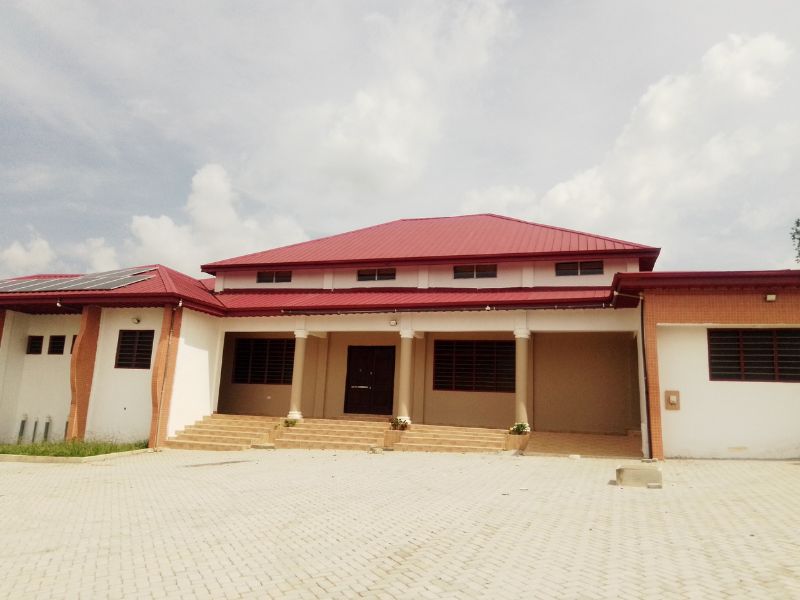
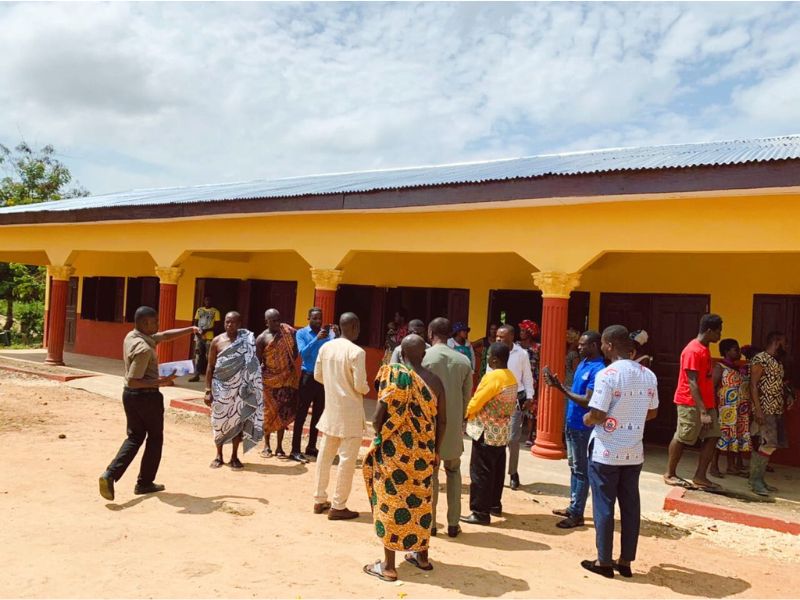
Stakeholders gathered in front of the classroom block commissioned at Betenase in the Akrofrom District

A three-unit classroom block has been commissioned at Betenase in the Akrofuom District of the Ashanti Region in an effort to bridge the educational infrastructure gap in the district, which was begun in 2018.

This adds up to the plethora of infrastructural projects and interventions in the educational sector rolled out by the Assembly to address challenge in the area.

The huge educational infrastructure deficit in Akrofuom District was gradually being confronted to the relief of students and teachers in the District.

The ancillary facility aims to enhance access to Junior High School education at Betenase.

At a short handing over ceremony, Maurice Jonas Woode, District Chief Executive (DCE) for the area, assured the people of Akrofuom that the Assembly would continue to provide the needed social amenities to better their lives.

On the communal initiative to construct teachers’ bungalow to facilitate academic activities, the Member of Parliament (MP) for Akrofuom Constituency, Mr. Alex Blankson, commended the idea and promised to provide the ceiling and painting to facilitate the completion of the project.

In an attempt to safeguard the area, Blankson disclosed of plans to provide a police station and clinic for the community.

On his part, Mr. George Sarfo Kantanka, District Director of Education (DDE), expressed appreciation to the Assembly and charged the chiefs and elders of Betenase to continue to initiate projects for the area, and not necessarily rely on the government for support.

He implored the elders and the school leadership to take good care of the facility.

Amansie Central District Court 95% complete

0
Front elevation of the unde-construction Amansie Central District court. .

An ultra-modern Magistrate Court under construction at Amansie District in the Ashanti Region, is about 95% completed, the District Chief Executive (DCE) of Amansie Central, Mr. Michael Donkor, has said.

Mr. Donkor has noted that the facility was not only made up of court room and offices, but also comes with residential accommodation for the judge.

In an interview with The Chronicle, the Odotobiri DCE stated that the new court was almost completed and that it was left with a few touches to complete the project.

According to Donkor, the court, which is located in the district capital of Jacobu, was ultra-modern and would go a long way in enhancing legal developments in the area.

On illegal mining, Mr. Michael Donkor disclosed to this paper that the fight against galamsey was raging on unabated, stressing that the assembly was doing its best to support the call of Jubilee House against the menace.

Michael Donkor noted that people needed to change and adhere to the directives of the President on illegal mining to safeguard the environment.

The DCE for Odotobiri cautioned parents and guardians to advice their wards not to engage in the illegality, since it could truncate their educational and end up at the wrong side of social in future.

Community Protection Assistants get pay rise

1
Chief Superintendent Samuel Asiedu Okanta delivering his address
A cross section of Community Protection Assistants

The Youth Employment Agency (YEA) announces 40% increase in allowance for Community Protection Assistants (CPA).This will significantly raise the CPAs’ allowance from GH¢400.00 to GH¢560.00.

The announcement was made by the Deputy Chief Officer of YEA, in-Charge of Operations, Alhaji Bashiru Abraham, during a graduation ceremony of the CPAs at the Nation Police Training School at Tesano in Accra, on Monday, this week.

He said the Agency is also committed to ensuring that the recruitment of 35,700 youths by the year 2023 was achieved.

Mr. Bashiru explained that about 200 of the youth to be hired will serve as Community Nurse Assistants – 2,000 as Prison Officer Assistants – with 3,000 others being engaged in Youth in Fire Service.

An additional 700 youth with artisanal skills would also be recruited, as part of an arrangement signed by the YEA and a German company.

He disclosed that the CEO of the Agency was working towards entering a similar agreement with the Ekumfi Fruits and Juice Limited, as well as the Sugar factory, all in the Central region.

The graduation saw the passing out of 1,525 CPAs, drawn from the Central, Greater Accra and Western regions.

A total of 5,000 CPAs which formed part of the targeted 15,000 CPAs graduated yesterday from five police schools across the country.

The CPAs underwent a-week training and were taking through subjects including community policing, traffic management, client care, criminal law, criminal procedure, criminal investigation and preservation of evidence.

The others are human rights, basic officer skills, public order management, crime prevention methods, basic education on terrorism, domestic violence, ethics and code of conduct for law enforcement officials, child trafficking and report writing.

The deputy CEO urged the CPAs warned them not to act as a mainstream police officers or allot official titles to themselves.

He cautioned that the Agency would not hesitate to remove anybody who acts outwardly against the ethics of their training.

Address by NPTS Commanding Officer

The Commanding Officer of the National Police Training School, Chief Superintendent (CS) Samuel Asiedu Okanta described the one-week training as intensive programme to equip the CPAs with the requisite knowledge and skills required to enable them function effectively.

He said skills acquisition is very important for human capital capacity building since “human resources can only perform effectively to the expectation of clients through tailored training and development in line with international standards and best practices.”

Okanta advised that the CPAs to be disciplined and civil in their dealings with the public.”You are to assist police to maintain law and order and win the hearts and minds of people whom we are mandated to serve with honour and integrity.

“You should respect and protect human dignity and maintaining and upholding human rights of persons you will come across in the course of performing your duties as CPA personnel,” he said.

BoG upgrades GH¢1 coins

0
Bank of Ghana

The Bank of Ghana (BoG) says it has upgraded the GH¢1 coin with enhanced security features.

A statement from the Central Bank yesterday said the new coin will be put into circulation on Monday, December 12, 2022.

The coin is similar to the existing GH¢1 coin in shape, form and images, that is, the Coat of Arms in front and the Scale of Justice at the back.

According to BoG, the upgraded GH¢1 coin is bi-metallic with an outer gold and inner silver and has a pronounced rough edge and incorporates a latent image, which appears in a rectangular form below the Scale of Justice at the back.

Also, the latent image changes from a radiating star to a One Ghana Cedi symbol sandwiched between two stars when tilted.

“The existing and the upgraded GH¢1 coins will co-circulate until the existing coin is gradually withdrawn,” the statement said.

The Bank has encouraged the public to accept the coins and use them.

Otumfuo urges chiefs to venture into farming

0
Otumfuo congratulates the 2022 National Best farmer
Nana Otuo Serebour introduces his son, Nana Yaw Sarpong Serebour to nananom at the Manhyia Palace

Otumfuo Osei Tutu II, the Asantehene, has tasked chiefs to emulate the shining example of Nana Otuo Serebour, the Juabenhene by leaving the comfort of their palaces and going into farming, towards achieving food security.

This, he said, would inspire their subjects and the youth to engage in agriculture as a business and source of livelihood because farming has the potential to develop the country, noting that the solution to the current economic situation in the country is through farming and agriculture.

According to the Asantehene, every stool has land for farming, yet Nananom have abandoned farming and chosen to live in Kumasi and other cities and see themselves as chiefs at their palaces. Otumfuo made the recommendations when Nana Otuo Serebour, the Asante

Juabenhene, a renowned industrialist and farmer led his son, Nana Yaw Sarpong Serebour, who emerged the National Best Farmer at the 2022 celebration of Farmers Day, to present his award to the Asantehene.

The King commended the Juabenhene for inspiring his son, an engineer by profession, to venture into agriculture for over twenty years. He urged the chiefs to emulate the example of the Juabenhene, who is also the chairman of the Council of State and his son, and help rescue

the nation from the current economic challenges.

The Asantehene bemoaned the situation where as a country we only rely on cocoa as the only commodity for export to earn US Dollar, and use the same Dollar to import rice and every commodity into the country.

He noted that if Ghanaians venture into agriculture and engage in rice production, there would be relief, in terms of the exchange rate.

He wondered why the youth of today, especially young graduates, always search for white colour jobs which are non-existence, because they want to work in the office.

Nana Yaw Sarpong Serebour, 43, was adjudged the 2022 National Best Farmer at a ceremony in Koforidua, in the Eastern Regional Capital last Friday.

He took home a cash prize of GHC1,000,000 and two nights’ full board complimentary stay at the Peduase Valley Resort.

Nana Yaw, a native of Asante Juaben, with 22 years of experience in farming and has farms across the Ashanti Region which provide employment opportunities to several families in their areas of operation.

He has over 900 acres of Oil palm plantation, 65 acres of cocoa plantation, 36 acres of cowpea, 37 acres of cassava plantation, cattle, sheep and goats.

Three mechanised boreholes for Nabdam towns

0
Mr Apanga about to cut sod for the drilling work to start

An avowed member of the National Democratic Congress (NDC) in the Nabdam District of the Upper East Region, Mr Lamtii Apanga has cut sod for the drilling of three mechanised boreholes in the district.

The communities set to benefit from this humanitarian gesture are; Pelungu, Zanlerigu and Asonge.

The Nabdam District is partitioned into three zones, namely the Zoliba zone, Sakoti zone and the Nangodi zone; with the aforementioned communities benefiting from Phase One of the philanthropic gesture.

Addressing the media on the sidelines of the sod-cutting ceremony at Pelungu, Lawyer Apanga, who is an indigene of the  Zanlerigu community, disclosed that a total of ten (10)  boreholes would be drilled across all the three zones in the districts, adding that the project would take place in three phases.

He said the drilling of the boreholes were occasioned by the fact that members of the Zanlerigu community brought the challenge of lack of access to potable water to his attention, when he visited the community in the run up to the 2020 elections.

He noted that the drilling of the boreholes would help improve upon the sanitation situation in the area and fight against diseases, as well as lessen the challenges the people go through.

“Sometime last two years, when we were going round for the political campaign to have our MP elected, we came to this community and the people of the community said that one of their major concerns is that they don’t have a good source of potable water, and that whenever the dry season is up, they struggle to have water, particularly for the women and the children, they have to travel long distances to be able to have potable water for their household items, for cooking and for taking good care of themselves.

So I felt that it was something that we needed to do. After all, water is life. Water provides a source of livelihood for people and, therefore, if we able to provide potable water, we can fight diseases, we can ease the burden and the challenges the people go through.

The school children will be able to wake up early in the morning, have access to water and prepare well to go to school, instead of traveling long distances to search for water,” he explained.

Welcoming Lawyer Apanga to his palace, the chief of the Pelungu traditional area, Naab Serik  Soore Sobil IV, expressed gratitude to the philanthropist cum politician for the gesture, adding that the project would bring relief to his people. The traditional leader seized the opportunity to earnestly request for more of such developmental projects in his area.

“I think this is my dream come true. I have been looking for this opportunity for a very long time. Actually, that area of the market has no water source and I think this is a great gesture for me this afternoon. You were there yourself, you can even see that there’s no source of drinking water there.

They were even trying to pull me; others said bring it here, bring it there. That shows that they are too desperate to get this. So I think this is something that will serve the community. Thank you very much but we need more of such,” he said.

Having cut sod for the first phase, Lawyer Apanga said phases two and three of the project would take place in the Sakoti and Nangodi zones shortly.

From Elijah Beyeni, Nabdam

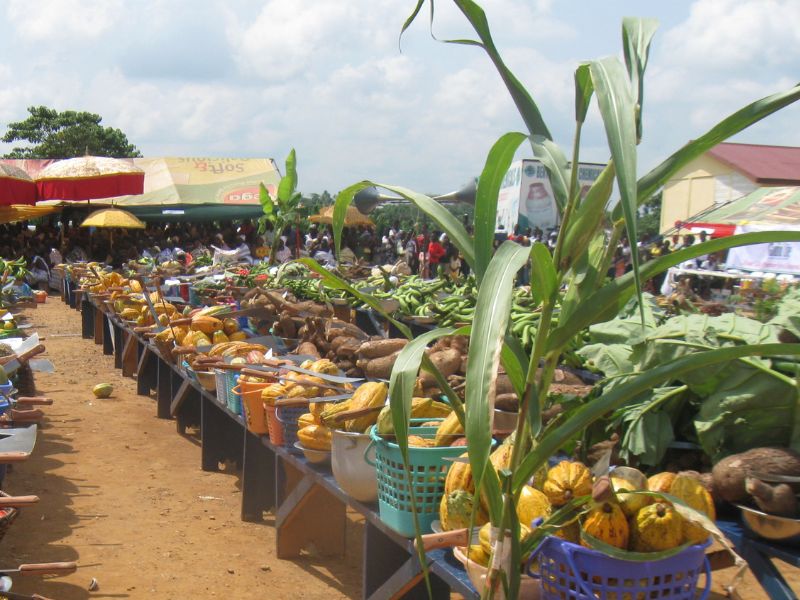
C/R Farmers’ Day celebration: Farmers, stakeholders laud CAMFED

0
Farmers’ Day celebration

Farmers and other major stakeholders who participated in the Central Region’s celebration of this year’s farmers’ day have lauded CAMFED Ghana for its immeasurable role during the commemoration of the 38th anniversary.

CAMFED Ghana, in collaboration with the Regional Coordinating Council, ‘RCC’, organised the regional event which was held at Jukwa, in the Twifo Hemang Lower Denkyira District.

The general theme for the national event, which was meant to celebrate and also acknowledge the immense contribution of farmers and fishers across the country to national development was; “Accelerating Agricultural Development Through Value Addition”

As parts of its role, CAMFED Ghana provided enough shield (canopies) for the programme and additionally mounted branded canopies for the farmers to exhibit their produce. The branded canopies afforded the farmers, who were basically beneficiaries of the Planting for Food and Jobs programme, the opportunity to showcase what they grow to the general public.

Through the kind courtesy of CAMFED, an initiative dubbed the “Farmers” Market” offered some of the farmers the needed opportunity to sell some fresh vegetables to the public, such as cabbage, carrots, potatoes and tomatoes among others.

Additionally the “Farmers’ Market” served as an avenue where a good rapport was created between prospective customers and the farmers, where customers could place a call to farmers to supply them with needed vegetables.

CAMFED basically sought to empower the farmers, especially rural farmers to expand their farms, improve their yields in order to earn more income to improve their livelihoods.

It was also concerned about bridging the existing gap between farmers and producers on one side and marketers, consumers and middlemen on the other side to create symbiotic relations that would be beneficial to both of them.

In the light of this initiative among others, the Central Regional Minister, Mrs Marigold Assan, in her speech acknowledged the significant contribution of CAMFED to the successful organisation of the event.

The Regional Director of Agriculture, Dr Peter Omega, also praised CAMFED and other partners for their valuable roles which immensely ensured that the celebration was colourful. Some of the farmers who spoke to The Chronicle showered praises on CAMFED for their indispensable role which in a way created a form of direct linkage between the farmers and prospective buyers of their produce.

The overall regional best farmer award was won by a Management Consultant, Mr Maxwell Kwame Essibu, from the Twifo Atti Morkwa Distict, who has 25 years’ experience as a farmer. The 49 year old award winner took home a tricycle “Aboboyaa”, a television set, a suitcase, gas cooker, a radio set, weedicide, wellington boots, a piece of cloth, as well as other farming implements and a certificate.

The Regional best fisherman category was won by a native of the Komenda-Edina-Eguafo-Abrem Municipality, Mr Christopher Ackon, while some other 30 farmers were all awarded in various areas and categories.

Solving the water crisis is key to climate action and sustainable development

0
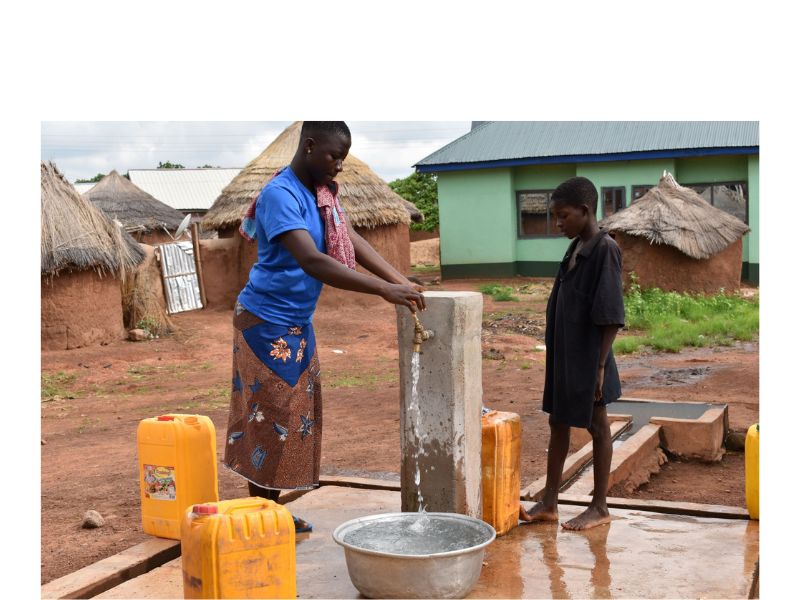
Young people fetching water in a local community_Credit_ UNIC Accra

Water flows through all major global issues; from health to hunger, gender equity to jobs, education to industry, disasters to peace.

For that reason, it has to be made an integral part of all global meetings to do with making the world a better, safer and fairer place. Right now, this is not the case.

In the 2030 Agenda for Sustainable Development – the primary framework of the international effort to eradicate extreme poverty – the success of every one of the 17 Sustainable Development Goals (SDGs) depends on a well-functioning global water cycle.

At COP 27, the fact that water and climate change are inextricably linked was reflected in the format of the event, but even so, water is still not a stand-alone topic for regular review and reporting in the COP process.

As we fight climate change and strive to build a better world, water must be embedded in landmark global frameworks, including the Paris Agreement, 2030 Agenda, Sendai Framework for Disaster Risk Reduction, Committee on World Food Security and others.

Without that integration, we will fail to get a grip on the major crises that threaten life on Earth and the hope of a better tomorrow.

In the case of climate change, water must be is at the heart of our plans to mitigate and adapt to the impacts of more extreme and erratic weather.

For instance, the protection, restoration and expansion of water-related ecosystems is essential for safeguarding biodiversity and capturing carbon from the atmosphere.

At the same time, water and sanitation systems – existing and new – must be designed to withstand an increasingly hostile context.

The writing is on the wall. In only 20 years, flood-related disasters have increased by 134 per cent, and the number and duration of droughts by 29 per cent.[1]Against this backdrop, around 2 billion people have no access to safe drinking water and 3.6 billion live without a safe toilet. Clearly, progress towards achieving SDG 6 – water and sanitation for all by 2030 – is seriously off-track.

We have no choice but to act faster and smarter, across sectors, to solve the water crisis for the sake of every aspect of sustainable development.

Water-related climate mitigation and adaptation should be seen as a new “social contract” between ourselves and future generations.

In our own lives, we can all be more aware of our water footprint and be less wasteful of water.

At the individual level, this will be a small price to pay to protect our great-grandchildren. However, the cost to the global system will be considerable yet essential.

Financial resources must be better targeted, and new funding mobilized, towards the infrastructure and systems needed to build and maintain water-related services across society and the economy.

There are encouraging signs. Atthe national level, more attention is already being paid to water as countries make national plans to adapt to the impacts of climate change and reduce emissions. I welcome this and encourage all countries to follow suit.

But this is too large an issue for nation states to tackle individually. The multilateral system exists precisely for the purpose of orchestrating a response to complex global challenges just like this.

The Government of Egypt, which hosted COP27, launched the “Action for Water Adaptation and Resilience” designed to make integrated water and climate action standard practice in SDG-related actions.This is a welcome signal that decision-makers are starting to recognize water for what it is: a medium of resilience, a problem-solver and a primary connector between all the major challenges we face.

The momentum from COP27 will carry us to next year’s UN 2023 Water Conference, the first of its kind since 1977. Co-hosts Tajikistan and the Netherlands are urging the world to unite around water to follow an approach that is “action-oriented,”“inclusive” and “cross-sectoral”.

We need to take the momentum built up at COP27 and convert it into a new Water Action Agenda. It’s down to everyone to solve the water crisis. And that can only be done when water is on everyone’s agenda.

By Gilbert F. Houngbo, Chair of UN-Water and Director-General of the International Labour Organization

The views expressed in this article are the author’s own and do not necessarily reflect The Chronicle’s stance.

Terrorists abduct 13 worshippers after attacking Katsina mosque

0
Terrorists abduct 13 worshippers

Thirteen worshippers are still being held in terrorists’ camps after they were abducted from a local mosque on Saturday night in Maigamji village of Funtua town in Katsina State.

PREMIUM TIMES gathered that the terrorists invaded the mosque around to 8 p.m. and asked the worshippers who were observing their night prayers “to follow them”.

Bashir Murtala, one of the worshippers who escaped, told this newspaper on the phone that the worshippers started running in different directions instead of following the terrorists.

He said the terrorists responded by shooting straight at the fleeing worshippers.

“I was in the third row inside the mosque. There was no light, so we were using a lamp and some people had put on their phone’s light. When the bandits started shouting that we should follow them, those in the last row and outside the mosque started running. The bandit standing in the front of the mosque started shooting. Our Chief Imam, Malam Yusha’u and some other worshippers were injured,” Mr Murtala said.

The Imam and the other worshippers are receiving medical attention in an undisclosed health facility in Funtua town. Mr Murtala said, “two of them are in critical state.”

Mr Murtala said the terrorists succeeded in taking 19 worshippers.

He, however, said immediately after the terorrists took off with the captives, a group of vigilantes pursued them and managed to rescue six captives.

Credit: premiumtimesng.com

Buhari govt most corrupt in Nigeria history      -Archbishop Chukwuma

0
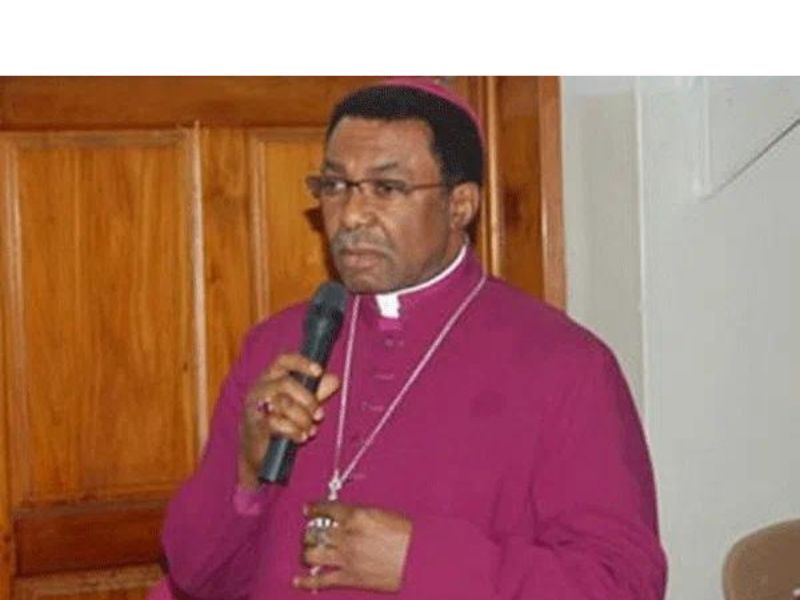
Archbishop Emmanuel Chukwuma

The Archbishop of Enugu Ecclesiastical Province and Bishop, Enugu Diocese, Anglican Communion, Most. Rev. Emmanuel Chukwuma has again come hard on President Muhammadu Buhari’s administration, alleging that it is the most corrupt in the country’s history.

Chukwuma spoke to journalists in Enugu on Monday evening, rating the Buhari administration as a failure in the anti-corruption fight.

The cleric said it was saddening that a government that was voted into power owing to its promise of coming to fight corruption and improve the economy, had worsened the state of affairs in the country.

He said, “When Buhari was coming in, he promised change, we embraced him, but rather than what was promised to Nigerians, what we are seeing is worse.

“Corruption has gone to a high level. There is too much embezzlement and money laundering under this government.

“Corrupt officials who are indicted and arrested are not being imprisoned, even those that were imprisoned by the last administration have been granted pardon.

“We were told about billions of recovered loot, where is it? That’s why I said the government is too corrupt. They are re-looting recovered money.”

DAILY POST recalls that the Buhari government had earlier in the year granted pardon to two former State governors who were jailed for stealing public funds.

The former governors, Joshua Dariye of Plateau State and Jolly Nyame of Taraba State governed their respective States between 1999 and 2007.

They were among the 159 convicted persons whose pardon was approved by the Council of State in April this year.

Archbishop Chukwuma described the development as a clear indication that the government was not committed to the anti-corruption fight.

Credit: dailypost.ng

The Ghanaian Chronicle