Home Blog Page 2515

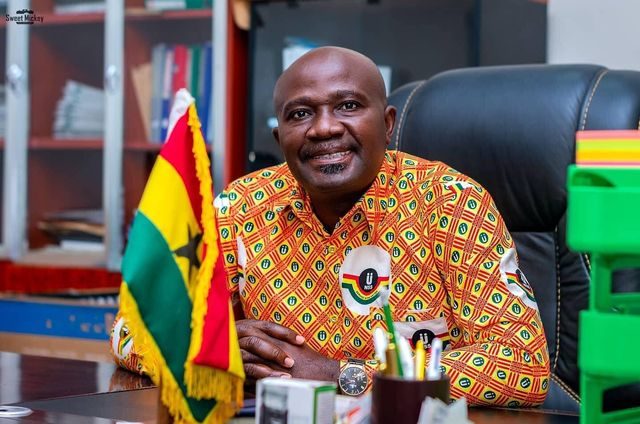
Alan Kyerematen leading ambitious trade policy, six years on

0
Alan Kyerematen

Six years after the successful implementation of the government’s flagship program, One District One Factory, under the leadership of the Trade Minister, John Alan Kwadwo Kyerematen, about 175 factories are currently operating in the country.

Mr. Kyerematen spearheaded the ambitious industrialization policy with a mindset of creating jobs, increasing incomes while reducing unemployment among the youth of the country.

President Akufo-Addo in 2018 launched the initiative and put in charge one of Ghana’s finest trade expert, Mr. Kyerematen, to ensure the implementation of the program.

There is no doubt that the initiative is one of the polices that secured a landslide victory for President Akuffo-Addo in the 2016 general elections with a record 53.8 percent.

As ambitious as the program may sound, some analysts have argued that this is one of the most impressive trade policies in Ghana’s history since independence as it seeks to establish a factory in each of the country’s 275 districts.

The program has since generated more than 200,000 direct and indirect jobs and is expected to lift the country from an import economy to an export-driven economy by adding value to the country’s raw materials.

Having led the ministry expertly in the last six years, Mr. Kyerematen in 2020 when covid hit the country’s health system ensured that some pharmaceutical companies secured a grant to boost production.

Ghana’s health system was put to a serious test after the emergence of the global pandemic, for this reason the government through the trade ministry secured a grant of GH¢15 million for local pharmaceutical manufacturers under the 1D1F initiative.

Eleven pharmaceutical companies benefited from the grant that was secured from local partners in partnership with the ministry.

Local textile manufacturing industries were also resourced to produce COVID Protective Gear which made them abundantly available and saved government from using hard-earned foreign exchange to import them.

Also, the new strategic economic growth poles such as the establishment of vehicles plants, pharmaceutical manufacturing and garment production which have received dedicated attention by the ministry are also creating highly skilled job opportunities for Ghanaians.

Mr. Kyerematen’s drive at the ministry has made the country witnessed the production of local vehicles by auto giants such as Suzuki, VW, Nissan, Sino Trucks among others under the Automotive Development Policy which was being implemented by the trade minister.

These global auto makers produce the vehicles locally and export to other African market and this will  boost Ghana’s competitiveness under the Africa Continental Free Trade Area (AfCFTA), a development which was headed by Mr. Kyerematen’s ministry.

As someone who is passionate about job creation, he said his ministry is focusing on strategic poles such as the Strategic Anchor Industries Initiatives which is developing new strategic growth poles to diversify the economy and the industrial parks which are providing support to private business promoters to establish industrial parks in each of the 16 regions to improve access to land, utilities and business support services for industrial development.

The AfCFTA vision

Ghana was selected as the secretariat for the largest single market and the secretariat building was commissioned by the African Union on August 17, 2020, with the vision to end the paradox of Africa being the richest in terms of resources yet the poorest in material wealth.

With AfCFTA, it is estimated that intra Africa trade will increase by US$35billion annually.

Under the AfCFTA, the 1D1F policy which has been designed as a comprehensive industrial transformation agenda to drive the manufacturing sector will play a key role for Ghana to harness the opportunities that the agreement presents.

Mr. Kyerematen who led Ghana’s team that secured the nod for the secretariat to come to Accra believes that Ghana is uniquely positioned to become the new commercial capital for Africa.

It’s estimated that the total cost of about 20 categorised items imported into the country amounted to US$10 billion annually.

According to data from the Ghana Trade Advocacy Network, values for various products imported include tin tomatoes-$1 billion, rice-$800 million, Sugar and confectionery-$300 million, flour-$600 million, poultry and meat-$400 million, fish-$245 million, fresh tomatoes from Burkina Faso – $100 million and toilet rolls and tissue-$100 million.

The rest are cooking oil-$300 million, pharmaceutical and chemicals-$750 million, soaps and cosmetics, plastics-$500 million, paper-$600 million, tiles and ceramics-$200 million, iron and steel products-$600 million, cars and spare parts-$2 billion, furniture-$250 million, textiles and apparel-$250 million, home appliances-$900 million and beverages-$200 million.

However, trade experts believe that with government’s determination to ensuring that the country produces its own products locally the cost of import to the country is expected to be reduced drastically in the long term as the factories begin to operate at their peak.

Recently, President Akufo-Addo together with his trade minister, Alan Kyerematen, began a tour on various regions to commission some factories in fulfillment of the government’s promise towards the 1D1F initiative.

This goes a long way to buttress the point that the minister has stayed true to his words of creating jobs for the youth through the government’s industrialization agenda.

Among these remarkable progress made towards the initiative, there are plans to also revamp the Kade Match factory, which was set up to produce a critical household item to Ghanaians, by second quarter next year.

The Aveyime rice project, another critical project which is needed in this critical moment is expected to receive support to start production as well in early next year to reduce the country’s huge reliance on the importation of rice.

It’s therefore undeniable fact that, the successful implementation of the 1D1F policy will jumpstart the country’s economy and put it on the path of recovery, as dynamic trade minister Alan Kwadwo Kyerematen continue to steer affairs of the ministry with his vision of creating jobs through value addiction of the country’s raw materials.

By Lawyer Benson Afful

Germany to Akufo-Addo: Convince Putin to end Ukraine war

0
Group photograph of participants at POS Foundation stakeholders engagement
The German Ambassador (l) and others on the high table

The German Ambassador to Ghana, Daniel Krull, has called on President Akufo-Addo to use Ghana’s nomination to the United Nations Security Council as a tool to mount pressure on Russia to stop the war in Ukraine, as well as the promotion of human rights.

He firmly believes that Ghana would make a lot of difference by stepping forward to speak against President Vladimir Putin and his army.

H.E. Krull made the appeal at the POS Foundation preparation for the review of Ghana’s human rights record under the United Nations (UN) Universal Periodic Review (UN UPR) mechanism for 2023 in Accra last week.

The Ambassador argued that the illegal invasion of Ukraine by Mr. Putin undermined international law and pushing global economies into recession, and Ghana was not an exception, saying “the best programme for economic recovery for Ghana is to convince Mr. Putin to stop his terrible war and send Russian troops home. This will not only be a big push for Ghana, but for the global economy.”

He also advised the country to intensify the promotion of its internal rule of law and protection of human rights, as essential components of democracy. H.E. Krull said the promotion of the rule of law would attract international investors to the country to support its economic development.

In his estimation, human rights were fundamental, as “they must not be negotiable, not even in time of economic crisis. And I would like to stress this point, especially because I believe, maybe I’m coming too much from the business side, that you should not underestimate the importance of respect for human rights and rule of law for the business community and the capacity of the government to attract international investment for a long time.”

The Principal State Attorney, Nana Abena Breya Okyere, on behalf of the Minister for Justice and Attorney General (A-G), said Ghana had made some gains, particularly with the passage of the Right to Information Law, and Narcotic Control Act to address drug use, as a public health concern and not from the angle of criminality. In addition to this, she said work was ongoing to finalise the bill on Non-Custodial Sentencing.

On the UN UPR, she said the country had submitted its report to the UN Human Rights Council and was ready for a review in 2023.

In furtherance to the country’s obligation to the UN, Madam Abena Okyere said the Office of the Attorney General had a dedicated office for the management of the UPR and other UN reporting mechanisms in Ghana.

“The office was set up with the desired aim of enhancing continuous reporting, monitoring of recommendations, and progress made by the state with regard to the implementation of the said recommendation,” she stated.

Jonathan Osei Owusu, Executive Director of POS Foundation, indicated that Ghana needed to do more to improve its human rights records, and by this it must move away from just being a signatory to international treaties to implementing the tenets of the agreements.

He said it was clear that Ghana’s performance on human rights had not been encouraging, as most of the recommendations it received in the UN UPR 2008 were repeated in 2012 and 2017.

“We are not progressing that much. Ghana is living on past glories of democracy and rule of law, but currently, the human rights records, if not retrogressing is becoming stagnant,” he added.

He further added that Civil Society Organisations (CSOs) would keep the government on its toes from shelving recommendations it voluntarily accepted to implement.

The UN UPR

The UN UPR was introduced in 2006 by the UN General Assembly as part of reforms to promote human rights in the world following the establishment of the UN Human Rights Council. Under the UPR mechanisms, UN member-states are required to peer-reviewed and examine each other’s human rights records over a five year period.

Countries must respond not only to all recommendations made by their peers, but also to provide data on the implementation of recommendations it has previously accepted, including voluntary commitments.

The 2023 review, marks the fourth time Ghana had submitted a report for an assessment. The POS also submitted a cluster of various human rights-based organizations’ joint reports to the UN UPR, which is independent of the government’s submission.

Duffour wants Mahama changed

0
Dr Duffour addressing the media, with some NDC gurus present

The Minister for Finance and Economic Planning under the erstwhile government of the late President John Evans Atta-Mills, Dr. Kwabena Duffour, has called for a change in the political space weeks before the presidential primary of the opposition National Democratic Congress (NDC).

Dr Duffour leaving the conference room

The advocacy follows his declaration to run for the flag-bearer position of the NDC, a position that has been held by former President John Mahama since late 2012.

Mr. Mahama, who took over when his former boss, Prof. J.E.A. Mills, lost his life, has managed to win only one out of the three national elections. Dr. Duffour, at a news conference last Thursday, openly declared, after months of speculations that he would be contesting for the NDC flag-bearer position “anytime the party opens nomination.”

He is the first to publicly announce his intention, though wide speculations undeniably suggest Mr. Mahama would also be on the ballot.

The NDC goes to the polls this December to elect a presidential candidate for the 2024 elections.

Dr. Duffour is not new to the political sphere of the nation, and he comes as one who led a great public and private life, one of success and accomplishment.

“I will offer myself once again to serve the land of my birth with great humility and sacrifice when I’m given the chance to do so,” he said last Thursday.

Dr Duffour speaking to the media

THE GHANAIAN DREAM

He has been championing what he calls “the Ghanaian dream,” and explains that to mean there was a dawn of a new era being witnessed, in which the country trumps person and progress trumps power; “an era for all; the era of the Ghanaian dream.”

Dr. Duffour stated that during his tenure as the Minister for Finance and Economic Planning (2009–2012), the economy chalked up a lot of successes.

He chronicled a few, including the exchange rate, which, he said, stood at GH¢1.20 to the US$1 at the end of 2008 and rose marginally to GH¢1.80 to the US$1 at the end of 2012.

He said the economy registered a GDP growth rate of 14.5% in 2011, which was “the highest growth rate in Ghana’s entire economic history.”

Apart from the economy registering the longest sustained single-digit inflation over 31 months, he also said the unemployment rate dropped from 5.3% in 2010 to about 2.2% by the end of 2012-2013.

In the coming weeks, Dr. Duffour says he will tour the country to meet with citizens to discuss their issues. During such meetings, “I look forward to having those conversations and to explaining what I meant by the Ghanaian dream.”

AHOTOR PROJECT

Months before openly declaring his intention, Dr. Duffour shook the NDC with the launch of his Ahotor Project, an initiative meant for the grassroots of the NDC.

It was a project to donate items, including public address (PA) systems, plastic chairs, and canopies, which can be rented out to generate revenue for members.

The Ahotor Project, according to the Economist, is a real deal for progress, jobs, and to generate sustainable revenue for use as welfare, such as hospital bills, funeral donations, school fees, etc.

“We want to create a situation whereby there will be money in the party coffers of every constituency. The project is going to make you fishermen and not get money from people all the time,” Dr. Duffour said at the Ashaiman launch in April this year.

British High C’ssion, Lands Ministry join hands to fight climate change

0
Minister for Lands and Natural Resources, Samuel A. Jinapor
British High Commissioner to Ghana, H.E. Harriet Thompson

The Ministry of Lands and Natural Resources and the British High Commission in Ghana have committed to promote forests and other nature-based solutions to climate change at the upcoming twenty-seventh Conference of Parties (COP27) of the United Nations Framework Convention on Climate Change (UNFCCC) to be held in Sharm El Sheikh, Egypt, from 6th November to 18th November, 2022.

This came to light at a Cocktail event organised by the Ministry and the High Commission in Accra on Thursday, 3rd November, 2022.

The event was to bring together stakeholders in nature-based climate actions, to work together towards a common goal at the upcoming COP27.

It was also meant to provide highlights on activities to be undertaken by the Ministry of Lands and Natural Resources and other Government agencies at COP27, as well as create a platform for stakeholders to share ideas and contribute to discussions, ahead of the Conference.

Speaking at the event, the British High Commissioner to Ghana, H.E. Harriet Thompson, said the Government of the United Kingdom is committed to climate action, particular safeguarding the world’s forests.

She acknowledged Ghana’s signing of the Glasgow Leaders’ Declaration on Forests and Land Use, and said as this year’s COP is hosted in Africa, it must focus on mitigation, adaption, climate finance and forests.

She recognised the importance of forests to the Ghanaian economy, and called for a sustainable contribution from the forest sector to the economy.

She pledged the United Kingdom’s support for nature-based solutions to climate change, through initiatives such as the Cocoa and Forests Initiative (CFI). She said the United Kingdom has put in place measures to ensure that all timber harvested for domestic and international market are coming from verified legal sources.

The High Commissioner added that Ghana will play a leading role in the new Forests and Leaders’ Climate Partnership, a new initiative by the UK Government, as well as galvanising leadership on sustainable supply chains. She said Ghana is at the forefront to bring together people, forests and climate, and COP27 is necessary to maintain the momentum garnered at COP26.

On his part, the Minister for Lands and Natural Resources, Samuel A. Jinapor, MP, said over fifty percent (50%) of Ghana’s climate emissions come from Agriculture, Forests and Land Use (AFOLU) activities.

He added that expert reports say forests and other nature-based solutions can deliver up to a third of climate solutions. He, therefore, admonished all stakeholders to commit to forests and nature-based solutions to climate change.

The Minister said Ghana will play a lead role at the Forests and Climate Leaders’ Partnership, to give steam to the Glasgow Leaders’ Declaration on Forests and Land Use.

He said the partnership will create a platform for member states to scale up forest conservation and restoration actions to implement climate solutions and promote sustainable development, as well as provide a unique space for intergovernmental collaboration and coordinated action with partners and stakeholders.

Mr. Jinapor pledged the commitment of Ghana to use her leadership on the on the FCLP to showcase the country’s climate actions to synergise work on addressing forest loss. He said Ghana has, already, achieved emissions reductions for the first reporting period of the Ghana Cocoa Forest REDD+ Program, to the tune of Nine Hundred and Seventy-Two Thousand, Four Hundred and Fifty-Six tonnes of carbon dioxide equivalent ((972,456tCO2e) emission reductions, which have been verified and validated by third parties.

He called on all stakeholders, to scale up forest and other nature-based climate solutions and rally behind Government to promote forests solutions to climate change.

Editorial: Traditional bonding at its peak in Anglo

0
Editorial

Ghana has before independence till now, been noted for her rich diversity in tradition and culture.

The nation had a renowned traditional administrative system managed by the revered traditional rulers, until the British colonial rule was introduced and the people inherited a similar colonial mindset, with the end result clear for everyone to see.

Though there were pockets of conflicts, mainly due to territorial integrity amongst tribes, what united the people of Kwame Nkrumah’s Gold Coast was their way of life, including the food and festivals.

History appears to paint a rather bleak picture amongst tribes and cultures in Ghana, due to the conflicts that led to some ethnic groups not meeting for centuries. However, there are positive stories about the traditional cohesion that has existed among some ethnic groups, which cannot be over-emphasised.

Against the background of the bleak picture of traditional co-existence, it becomes a rather colourful spectacle when two separate traditional rulers meet, as that signifies unity, especially when tribal and political bigotry have tainted our minds.

Over the weekend, we observed such a scene once again, which had the nation talking. For us, we are not enthused with the attendance of the Asantehene, Otumfuo Osei Tutu II in Anglo for this year’s Hogbetsotso festival, after 120 years. The last Asantehene to attend such a festival was Kofi Karikari in the 19th Century.

This is because we know the longstanding relationship between the two ethnic groups, even in the days of Torgbui Adeladza II, the former King of Anlo and the Asantehene, Otumfuo Opoku Ware II.

We dare say that the Anlo-Awoamefia is traditionally revered by the Asantehene.

In the Ashanti Region, there is a place called Angloga, so one can understand the unity between these two.

But, for the ‘latter-day saints’ who may not know the history of Ghana’s chieftaincy, traditions or perhaps culture, we are happy they witnessed last weekend’s event and are making commendable remarks of unity.

In 2018, Togbui Sri III was in Kumasi with a delegation of about 170 from his traditional area to attend the last Akwasidae festival for the year.

Sometime in 2018, the Otumfuo made a historic visit to Akyem Abuakwa, Kyebi, where he joined the Okyenhene, Osagyefuo Amoatia Ofori-Panin II, to celebrate Ohum. We know the history between these two as well.

Last Saturday, the people of Anglo were honoured not only by the presence of the Asantehene but also by the Ga King, Nii Tackie Teiko Tsuru II and the Kwahumanhene.

The Chronicle is delighted that the current generation is not witnessing ethnic conflicts at the rate that it used to be, but rather the conglomeration of different ethnic groups to celebrate one another, as was seen in the Volta Region over the weekend. It depicts tolerance and respect for every ethnic group’s culture.

We can only hope that a great lesson is learned from this history to shape our way of thinking and accepting each other as one people with a common goal of making Ghana, our homeland, a conducive place to live.

Above all, expect that the political class would take a cue from the ways of these traditional rulers to advise themselves and their supporters to guard jealously the unity and cohesion we enjoy as a nation.

We will also like to urge other ethnic groups that are at loggerheads to find an amicable way to let peace prevail.

It is not right that we fight among ourselves. We only may open ourselves up for strangers to bypass us and take over our hard-earned properties, when we are busy at the battle field killing ourselves.

We can do more in terms of progress and development when we are together.

Two Horesd Management Groups inaugurated in Kumasi

0
HORESD International Co-ordinator, Kumasi Mayor and Members of the Territorial Management, Technical Working groups in a pose

The Territorial Management Group and the Technical Working Group, as the critical component for the implementation of the €2.5 million European Union (EU) Holistic Reinforcement for Sustainable Development (HORESD) have been inaugurated in Kumasi.

The two groups would kick-start the project to be implemented over 30 months to strengthen efforts of the Kumasi Metropolitan Assembly (KMA) to cause a paradigm shift to keep the city clean and green.

The composition of the 25-member Technical Working Group comprises persons from all spectrum of departments, including Planning, Waste Management, Environmental Health,  Physical Planning, Urban Roads, Finance, Administration, Procurement, Education, Urban Transport,  Social Welfare, Community Development and the media, as well as non-governmental (NGOs) and Civil Society  organisations.

The Territorial Management Group comprises 21 members and entities, including representatives from Manhyia Palace, the Kwame Nkrumah University of Science and Technology (KNUST), Kumasi Technical University (KsTU), Ghana Police Service, Ghana Armed Forces, Environmental Protection  Agency, Christian Council of Churches, Shop Owners Association, Adum Hawkers Association, Ghana Private Road Transport Union, Judicial Services and the business community who have the political influence and financial capacity to carry out measures towards the effective implementation of the project.

The project is aimed at improving public services delivery through the capacitation of local authorities and the participatory capacities of the citizens in the planning and execution of strategies towards achieving efficient services delivery.

The project is also expected to strengthen Kumasi’s capacity to provide public services with priority for an integrated management system of urban solid waste, as well as raise awareness in the populace and strengthen the local authority in the implementation of the National Plan for Integrated Management of municipal solid waste in Ghana, as well as help develop business initiatives in the area of circular economy.

Giving an overview of the project, Mr. Joshua Nii Noye Tetteh-Nortey, the Local Project Coordinator, who is also the Project Officer of the KMA, said the European Union had provided various interventions for the effective implementation of the project.

He mentioned some of these as the donation of seven compact trucks to manage waste under the project, as well as 800 containers for house-to-house waste collection, and 1,000 litter bins for collection of dry and wet waste, which takes off on a pilot basis at the Adum Central Business District.

The Asafohene, Ayamfuo Asafo Boafo Agyeman, recommended that the Green Information Point of the project should provide a database on waste management for the city of Kumasi.

He also urged the KMA to adequately educate the public to reduce waste generation.

Inaugurating the groups last Wednesday, the Mayor of Kumasi, Sam Pyne, urged the members to join forces and persist to ensure the success of the project, since the KMA alone could not build a clean and green city free from traffic congestion, and with quality healthcare and educational systems.

The International Co-ordinator of the project, Dr. Helder B.C.J. Moreira, was impressed with the level of participation in the implementation of the project.

The Links of New Orleans supports Atasemanso R/C Primary

0
Headmistress Rev. Sis. Nuamah presenting a token to Voris Vigee in appreciation of The Links
Members of The Links display the goodies for the school

The Pontchatrain (LA) Chapter of The Links Incorporated from New Orleans in Louisiana in the United States has undertaken a trip dubbed “The Kumasi Mission” and inspected the renovation of classrooms for the Kindergarten department of the Atasemanso Roman Catholic Primary School.

The Links had contributed US$5,000 towards the renovation of the KG project, which was launched in August this year and facilitated on the group’s behalf by the Bridge-To-Africa Connection (BTAC), a USA non-profit making organisation dedicated to investing in education and health in Ghana, through development partners of African Americans in the Diaspora to make a difference.

The group had also donated desks to the school prior to the visit.

Led by Voris R. Vigee, Chief Executive Officer of Volunteers of America (Southeast Louisiana), the 14 members of The Links Incorporated donated learning materials, including school bags, pencils, exercise books and crayons, as well as candies, to the pupils last Friday on their first visit to the school.

Madam Dawn Sutherland, Executive Director of BTAC, thanked the group and hoped they would continue to work to enrich and change the lives of children in Ghana.

Voris R. Vigee expressed the group’s commitment to continue taking care of their own people by uniting and breaking the cycle of slavery to rule the world.

The Links mingle with the kids

She noted that education was important, hence, the mission which they saw as an involving process which had afforded the group the hope of teaching the children, and also learning from them.

She promised that the group would visit Ghana again next year, and invest in another project and support with other resources.

Voris Vigee thanked the teachers of the school for their dedication to moulding the future of the children.

The Headmistress of the Atasemanso Roman Catholic Primary School, Rev. Sister Grace Nuamah, expressed profound appreciation to the group for the support, and hoped the assistance would go a long way to improve the standard and performance of the pupils.

A.B. Crentsil laid to rest

0
MUSIGHA delegation pay their last respect to their fallen comrade

It was an all-emotional and difficult moment as the mortal remains of highlife legend, Alfred Benjamin (A.B) Crentsil was laid to rest. Family and friends could not control their tears as they filed past his body.

The final funeral rites took place at Community 8 Park in Tema, following a wake-keeping on Friday, November 4. Mr Crenstil will subsequently be buried in his hometown, at Ewoyaa, near Saltpond in the Central Region.

Bessa Simons, Acting President of Musicians Union of Ghana (MUSIGA)

Scores of sympathisers and mourners from the Creative Arts industry, dignitaries and political figures joined the bereaved family to pay their last respects.

He was a founding member of the Sweet Talks Band which was based at the Talk Of The Town Hotel in Community 2, Tema, alongside seasoned musicians such as Smart Nkansah, the late Jewel Ackah and Pope Flynn. He formed his own band the Ahenfo Band in 1982.

Pat Thomas exchanges greetings with former President John Mahama

AB Crentsil had 25 albums to his credit. Some of his songs which caught both local and international attention were Papa Samo, Landlord Abodwese, Devil, Osokoo among others.

AB Crentsil was baptised into the Methodist Church from infancy and remained in the faith until his demise.

AB Crentsil left behind his beloved wife Elizabeth and eight children.

Credite.com: myjoyonlin

Minister for Trade and Industry Alan Kyeremanten being welcomed to the funeral
Mourners pay their final respect to the mortal remains of AB Crentsil


Tears shed as AB Crentsil is laid to rest
Abeiku Santana (L) exchange greetings with friends
This mourner cannot believe that AB Crentsil has really departed this world
The mortal remains of AB Crentsil lying in state

The President Has Spoken (2)

0
Opinion

Ghana’s economy was setting off, to become the best in the developing world, starting off in 1957, with a credit balance of £ 240 million, about £ 6 billion today.

Against the advice of his finance minister, K.A. Gbedemah, Nkrumah started a communist project, nationalising almost everything, except perhaps the cocoa industry and few others. The State Farms for example were a big failure as the much-expected revenues were not realized.

K.A. Gbedemah was removed from the Ministry of Finance to Health in 1961 and he still would not keep quiet. Marked down for imprisonment, the finance guru who was successfully leading Ghana to become a second world nation, and wonderfully negotiated with the USA for the construction of the Akosombo Dam, after Russia failed to assist and sent us snow ploughs when we bought and paid for tractors, had to flee into exile.

By the time he was overthrown in 1966, Nkrumah left Ghana with an external debt of over £350 million. What was to show? Ghana got loans to construct the Akosombo Dam, the Tema Harbour, the Tema Motorway and the Tema township. So where did the £ 240 million go? Most of it went into sponsoring pro-nationalists in colonized African nations and supporting socialists to overthrow pro-capitalist governments of some independent Africa nations. Some also went to support corruptions in high places.

In 1971, during the K.A. Busia administration of the Progress Party government, the prime minister placed a ban on the importation of some items that could be produced here. Ghanaian businesses boomed with indigenous owned industries manufacturing products that were exported.

United Mattress and Foam Company Ltd, owned by Edward Osei Boakye (Boakye Mattress); Tata Brewery Ltd, owned by Joshua Kwabena Siaw; Darko Farms, owned by Kwabena Darko; Ashanti Oil Mills and Appiah Menka Complex Ltd owned by Appiah Menka; Industrial Chemical Industry, owned by Dr. Safo-Adu and the state-owned Ghana Industrial Holding Corporation, were among Ghanaian industries which were listed among the best in Africa and which were the source of revenue for Ghana from the exportation of their produce.

In 1979, Rawlings came with his revolutionary government of the AFRC and started collapsing the indigenous Ghanaian businesses. He returned in 1981 to complete what he started. He confiscated privately owned businesses without any sound reasons and nationalised them, then sold them off to foreign entities.

Rawlings then went ahead to sign Ghana onto binding international trade agreements, which discouraged the state from sponsoring the local production sector and at the same time, making it mandatory to import items we could easily produce here.

While foreign companies repatriated dollars which they converted from our cedis, the same cedis went chasing the dollar to be able to import among others, things we could produce here.

Foreign companies had very flexible tax regimes, enjoying tax exemptions and tax holidays, but not indigenous ones. Soon Ghana became an import driven economy and with that our currency started falling and with gross mismanagement, Ghana went highly broke and poor by the year 2000.

The Kufuor administration performed economic miracles and lifted Ghana up. Even at the time that Ghana’s economy was badly affected by the global economic crunch of 2008, this country sailed through, coolly.

Today, with another international economic crunch collapsing many economies, Ghana is in a situation where with the falling cedi and price hikes of foods and petroleum products, all seems to be lost.

Then on Sunday October 30, 2022 the president spoke in his latest series of “Fellow Ghanaians.”

Some Ghanaians believed that he spoke nothing that could bring solutions to our problems. But in my opinion, H.E. Nana Addo Dankwa Akufo-Addo, came with two important recommendations that can resolve the problems we are having and project Ghana into a second world economy.

The president spoke about banning or placing import restrictions on items that can be produced here in Ghana. Great news for our rice and poultry farmers. This means that Ghana is going to pull out of the binding trade agreements, Rawlings and his NDC forced on us. Because the only way we can shore up our currency is to produce what we consume.

Then came the president’s full endorsement of the One District One Factory (1D1F) policy, which is the brain child of the Trade and Industry minister, Hon Alan Kwadwo Kyeremanten. Without 1D1F, Ghana cannot never get back to becoming an industrial giant in Africa. Without 1D1F, Ghana’s currency will always be chasing hard currencies.

Unfortunately, most members of the NDC are doing all they can to bastardise the 1D1F policy and rubbish it, as waste of finances.

The PNDC and NDC governments have never grown any indigenous industry and when the NPP is going out fully to turn things round for a better Ghana agenda, the opposition thinks nothing good can come out of this 1D1F.

Speaking on the Kumasi based OTEC 102.9 FM’s breakfast show, “Nyansapo” on Monday October 31,2022, Hon Oppong Nkrumah said government will use the next six months to boost the capacity of local companies to create more jobs and indigenous products at the same time.

Adding that excessive importation of certain products particularly foods that can be produced in Ghana will be ban after local producers begin to feed the economy with the needed capacity.

The president has spoken well, 1D1F is our salvation.

The views expressed in this article are the author’s own and do not necessarily reflect The Chronicle’s stance.

21 Children Abducted In Katsina Regain Freedom

0
Katsina state governor, Aminu Bello Masari

Twenty-one children who were abducted by terrorists in Katsina State have regained their freedom.


The children were kidnapped on Sunday while working on a farm in Mairuwa community, Faskari Local Government Area of Katsina State.

The United Nations Children’s Fund (UNICEF) on Friday had urged authorities to swing into action and rescue the children.


In a statement signed by UNICEF Representative in Nigeria, Ms Cristian Munduate, the UN agency described the abductions as “reprehensible.”

Police spokesperson, SP Gambo Isah confirmed their release in a statement on Saturday.


He said the the victims comprising 17 girls and four boys have since been reunited with their respective families as investigations continue.

“Good evening Gentlemen of the Press.


It is with great joy that I announce the release of all the 21 abducted workers that were kidnapped while working in a farmland at Kamfanin Mai Lafiya village, Faskari LGA of Katsina state. They have been reunited with their families. Investigation is ongoing please”, the statement said.


Isah had on Wednesday confirmed the abduction to Channels Television;s correspondent, noting that the incident occured on Sunday afternoon at about 12:30 pm.


The abducted children according to Isah, are aged between 15 and 18 years.

“Yes, we got the report and we are working to rescue them,” he said at the time. “The children among them are 21, between 15 and 18 years.” The owner of the farm was not around when the incident happened.”


Elsewhere, a source from the victims’ community told Channels Television that the terrorists were demanding the sum of N30 million ransom or direct discussion with the owner of the farm where the victims were working.

“The terrorists reached out to parents of some of the victims to bargain on the ransom.


According to them, they will not collect any amount less than N30 million or a direct access to the owner of the farm. They further stated that they had already made their investigations and found out that the owner of the farm is highly rich,” the source said.


Credit: Channelstv.com

The Ghanaian Chronicle