Home Blog Page 247

Sky Dream Skills Academy Holds 3rd Graduation Ceremony

0
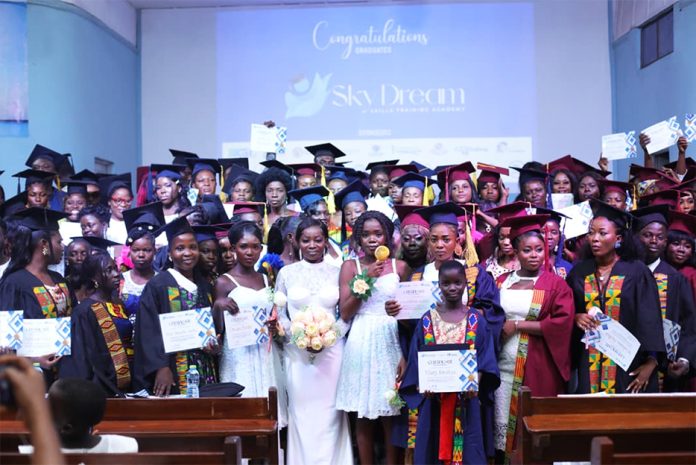
New graduated students at the graduation ceremony

Sky Dream Skills Academy, a branch of the International Youth Fellowship (IYF), has held its third graduation ceremony at Asofa, a suburb of Accra, graduating about 150 students under its Technical and Vocational Education and Training (TVET)-affiliated programme.

The academy focuses on equipping young people with practical, employable skills to promote entrepreneurship and reduce unemployment.

Although most beneficiaries come from the Trobu and surrounding communities, the programme remains open to youth across the country.

Speaking at the ceremony, the Administrator of the Academy, Nana Kobina Idan, said the initiative was designed to ensure that young people are empowered with hands-on skills that can help them become self-reliant.

“We are into practical hand skills training for the youth. We believe no young person should be denied the opportunity to discover and develop his or her potential,” he stated.

According to him, the third edition initially enrolled about 380 students. However, after the Christmas break, many university students who had taken advantage of the training during vacation returned to school, leaving about 150 students to complete the programme and graduate.

The third edition marked a significant expansion in course offerings.

While earlier editions featured training in floral decoration, fashion design, household chemicals production, graphic design and foreign languages such as French, Korean and Chinese, the latest edition introduced additional programmes.

New courses included makeup artistry, manicure and pedicure, barbering, and hairdressing. The academy also expanded its ICT training to incorporate STEM and robotic engineering, in line with Ghana’s growing emphasis on science and technology education.

In addition, a business development module was introduced to equip trainees with practical knowledge in entrepreneurship, record-keeping, cost management and basic accounting.

“As much as they are learning the skills, they must also know how to run a business. Government alone cannot solve unemployment challenges. That is why we are offering this free weekend skills training to support the youth,” Mr. Idan said.

He noted that the programme was largely free, with students only contributing a small fee for certification during graduation. The academy also provides about 70 percent of materials required for practical training.

Looking ahead, the fourth edition is scheduled to begin with an orientation on March 21, followed by training on March 22.

Organisers plan to introduce bead making and reintroduce foreign language classes in Korean, French and Chinese. They anticipate graduating between 250 and 300 students in the next cycle.

Some graduates shared testimonies of transformation.

A Cakes and Pastries trainee said the programme boosted her confidence and skills, adding that she plans to turn her training into a side business.

Another who studied household chemicals production, said she can now manufacture and sell products such as liquid soap and detergents.
 

‘Akuapem Odwira must be recognised as a national cultural and tourism asset’

0
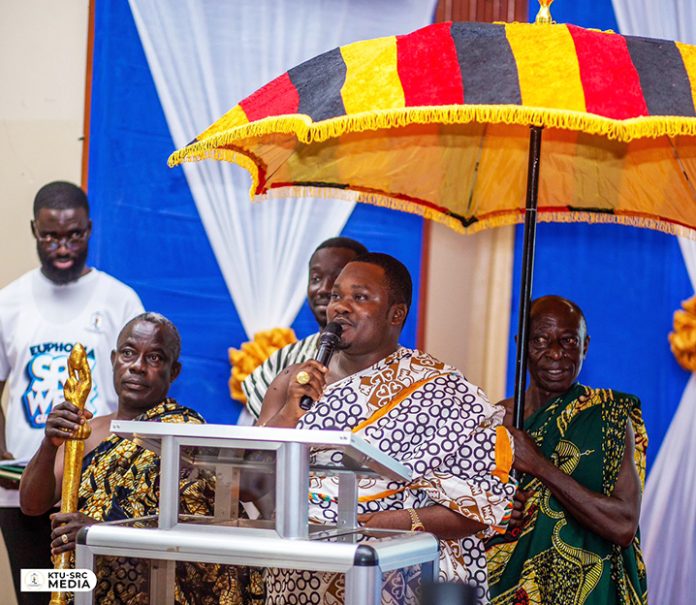
Nana Bekoe Dankwa, Tufuhene of Adweso–Akuapem

Akuapem Odwira Festival should be officially recognised and promoted as a major national event, according to Nana Bekoe Dankwa, Tufuhene of Adweso–Akuapem in the Eastern Region.

Speaking at the Okuapehene’s Palace during the launch of activities to mark the festival’s 200th Anniversary, Nana Bekoe Dankwa urged the Government of Ghana to elevate the Odwira Festival to national status.

He noted that for two centuries, the celebration has preserved Ghana’s cultural heritage while attracting visitors from across the country and beyond.

A passionate advocate for culture, tourism, environmental conservation, and youth and women empowerment, Nana Bekoe Dankwa, emphasised that the festival has consistently showcased the rich traditions and identity of the Akuapem people.

He added that Odwira has contributed not only to cultural preservation, but also to economic growth and the promotion of Ghanaian and African heritage on the global stage.

The Tufuhene of Adweso–Akuapem stressed that the 2026 bicentennial celebration presents a unique opportunity to promote key tourist attractions across Akuapem and to honour distinguished sons and daughters whose efforts have shaped both Akuapem and national development.

Nana Bekoe Dankwa also appealed to the Okuapehene, Oseadeeyo Kwasi Akuffo III, together with the Divisional Chiefs (Mpankanfo) and the Akuapem Traditional Council, to intensify efforts to safeguard Akuapem lands and assets.

He called for proper recognition of towns and villages whose historical and developmental contributions have been central to Akuapem’s growth.

Highlighting development in Adweso–Akuapem, he described the town as one of the most developed areas in Akuapem as he pointed to major institutions located on Adweso land, including Koforidua Technical University, Koforidua Midwifery and Nursing College and the Koforidua Youth and Resource Centre, as well as several public and private establishments.

He maintained that these institutions deserve greater recognition from traditional authorities, adding that Adweso and Akuapem should be clearly reflected in the naming of institutions to help safeguard and project the identity, lands and boundaries of the area.

On the occasion, Nana Bekoe Dankwa commended his chief, Ogyeahoho Nana Tete Pimpong II, Chief of Adweso and Mponoahene of Akuapem, for his significant contributions to the town’s development.

Providing historical context, Nana Bekoe Dankwa recalled that Nana Addo Dankwa I,  first celebrated the Akuapem Odwira Festival in October 1826 after the Katamanso War and that 2026 marks exactly 200 years since its inception — a milestone yet to be formally celebrated under the reign of Oseadeeyo Kwasi Akuffo III.

He further explained that historical records show that Nana Addo Dankwa I, Nana Addo Dankwa II, Nana Kwasi Akuffo I and II – who marked the festival’s centenary—and the current Okuapehene all come from the Sakyiabea Royal Family of Akropong–Akuapem.

This, he said, gives the 2026 bicentennial celebration added spiritual and historical significance, underscoring the direct royal lineage connecting the present Okuapehene to his predecessors.


For more news, join The Chronicle Newspaper channel on WhatsApp: https://whatsapp.com/channel/0029VbBSs55E50UqNPvSOm2z


Public backs Mahama’s performance but …

0
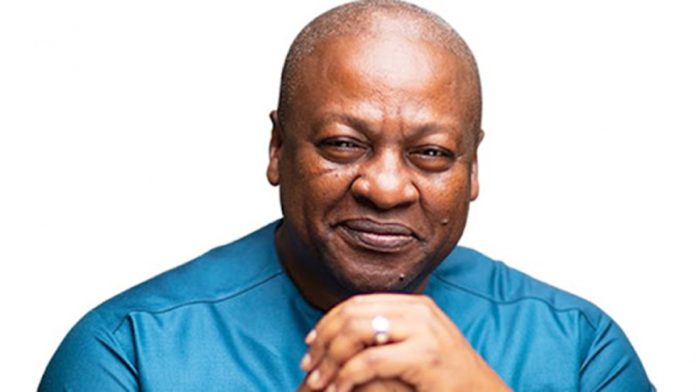
President John Dramani Mahama

Public support for President John Dramani Mahama remains strong, one year after he assumed office, according to a new nationwide survey by the Institute of Economic Affairs (IEA).

Despite this support, Ghanaians have called for urgent action on unemployment and illegal mining.

The poll, conducted in December 2025, across all regions and sampling more than 1,000 respondents, found that 68 per cent of Ghanaians approve of President Mahama’s job performance, while about 22 per cent disapprove, with 10 per cent expressing no opinion.

Despite the solid approval rating, economic hardship remains a dominant concern for most Ghanaians.

Seven in 10 respondents (71 per cent) said they were “very concerned” about the rising cost of food and other consumer goods, while an additional 20 per cent said they were “somewhat concerned.”

In total, 91 per cent of those surveyed expressed at least some level of anxiety about the cost of living.

Nearly half of respondents (46 per cent) identified unemployment as the most pressing issue facing the country today, making it the top concern, while illegal mining, popularly known as galamsey, was cited by 30 per cent as the second most important challenge.

Corruption (9 per cent) and the general state of the economy (8 per cent) were mentioned less frequently.

The findings also highlighted a complex public mood: confidence in the President’s leadership alongside deep frustration over persistent socioeconomic challenges.

“While the President enjoys a strong approval rating, the data clearly showed that concerns about unemployment and rising prices remained widespread. Ghanaians are supportive, but they expect tangible improvements in their daily lives,” the IEA survey said.

President Mahama, who took office on January 7, 2025, inherited an economy grappling with high public debt, inflation, a depreciating currency and elevated unemployment, the survey said.

Although key macroeconomic indicators had shown signs of improvement over the past year, many households continued to grapple with high food prices and limited job opportunities.

The prominence of illegal mining among public concerns also underscores growing anxiety over environmental degradation, water pollution and the sustainability of natural resources.

“The fight against galamsey must be intensified to protect communities and secure the country’s future,” it added.

The survey suggested that while President Mahama maintained a solid base of public support, future approval will likely hinge on the government’s ability to deliver visible results in job creation, cost-of-living relief and the regulation of illegal mining activities.

As one respondent summarised, “We believe in the President’s direction, but we need to see more jobs and lower prices. That is what will make the difference.”

GNA

Afenyo Markin charges TESCON: Drive NPP to 2028 victory

0
Osahen Afenyo-Markin speaking to the students

The Minority Leader, Osahen Alexander Afenyo Markin, has charged the leadership of the Tertiary Students Confederacy (TESCON) from various tertiary institutions across the country to lift themselves up and rally behind the flagbearer of the New Patriotic Party (NPP), Dr. Mahamudu Bawumia.

He told TESCON members that their hard work would ensure NPP’s victory and alleviate Ghana’s current hardships.

The minority leader urged them to put the past behind them, stay focused on the ideals of the party and rally behind Dr. Mahamudu Bawumia.

“Friends, it’s time to put the past behind us”, he said in a confident and persuasive voice. “The election is over and Dr. Mahamudu Bawumia is our new flagbearer. It’s time to rally behind him and work towards a common goal – winning power for the NPP in 2028”.

The students listening to Osahen

The Minority Leader, who is also the NPP MP for Effutu, made this call when he led his group to interact with the student wing of the elephant family in Parliament, on Monday, February 16, 2026.

As he spoke, the conference room buzzed with nods and murmurs of agreement, a sign that his message was in sync with the student body.

“I know there were differences during the campaign”, he continued, “but that’s behind us now. Dr. Bawumia’s leadership brings a new era of cohesion and purpose. Let’s focus on the bigger picture – taking Ghana forward”.

Flanked by MPs from Yagaba/Kabori, Tolon, Takoradi, Fanteakwa South, Wale, Nalerigu/Gambaga and Oforikrom, Afenyo Markin told the student body they are the future leaders of NPP, further urging them to stay focused, committed to the ideals and never deviate from the agenda of the UP Tradition.“The NPP counts on you”, he said.

He further urged the students to hit their various campuses with a clear message of purpose – the NPP as the only political party the people can trust, noting that it was about time they adopt polling stations, research more into the ideals of the party, and recruit new members.

Adding his voice to the call, the NPP MP for Yagaba/Kubori, Hon. Mustapha Ussif noted that the 2028 victory for the NPP would largely rely on the youth, urging the leadership of TESCON to work hard and increase their enrolment.

“You need to work hard to make sure that you enrol a lot of members from the various institutions”, he noted, stressing that young people around the world always make the difference by winning power for political parties.

The NPP MP for Takoradi, Kwabena Otchere Darko, urged the student body to brighten the corner where they find themselves, noting that “don’t ever run away from the NPP. Young people are built to add new ideas and enthusiasm to bring the party to power”.

The student body after listening to the NPP MPs appealed to them to articulate their concerns on the floor of Parliament, especially, with regard to the recent reduction in cocoa prices, for the government to reverse its decision since they are the ones bearing the brunt of such a decision.

“Most of our parents are cocoa farmers. Our survival largely depends on cocoa. The sudden reduction in prices of the commodity is going to affect us. Sales from the cocoa are what our parents use to pay our school fees, pay utility bills, and feed us. With this reduction in cocoa prices, it is going to hugely affect us”, one of the student leaders appealed.

Other students who joined the discussions also appealed to the leadership of the Minority to help resource them and also build on their capacities to enable them to propagate the agenda of the party very well.

By Stephen Larbi


For more news, join The Chronicle Newspaper channel on WhatsApp: https://whatsapp.com/channel/0029VbBSs55E50UqNPvSOm2z

Editorial: The Death Of Seven Ghanaian Traders In Burkina Faso Could Have Been Avoided

0
Editorial

The killing of seven Ghanaian traders in Titao, northern Burkina Faso, is not only a tragedy but it is a stark warning. What occurred last weekend is part of a wider and worsening security crisis in the Sahel region.

When the Ministry of the Interior announced that Ghanaian tomato traders had come under attack in Titao, few anticipated the grim outcome. Within 24 hours, it emerged that seven of our compatriots had been killed.

Their bodies, according to Interior Minister Muntaka Mohammed-Mubarak were burnt beyond recognition and had to be buried in Burkina Faso, due to decomposition and the volatile security situation.

The Chronicle finds the circumstances surrounding their burial distressing enough, but the larger question is – could this tragedy have been prevented?

Northern Burkina Faso has, for years, been one of the epicentres of jihadist violence in the Sahel. Armed groups linked to al-Qaeda and the Islamic State have entrenched themselves across vast swathes of territory, exploiting weak state presence, porous borders and local grievances. Entire communities have been displaced. Towns such as Titao have repeatedly come under siege. This is not new intelligence.

At a recent high-level forum organised by the Centre for Policy Scrutiny on “Fighting Terrorism in the Middle East and Africa,” security analyst, Dr. Vladimir Antwi-Danso, cited United Nations data, indicating that the Sahel now accounts for more than half of global terrorist incidents.

He traced the region’s instability to the 2011 collapse of Muammar Gaddafi’s regime, which unleashed heavily armed fighters across North and West Africa.

Subsequent disruptions of extremist networks in the Middle East further redirected militant flows into fragile Sahelian states.

The result is an ‘arc of instability’ stretching across West Africa, a belt where extremist groups move with alarming ease. Burkina Faso, in particular, has struggled to contain this wave. Large portions of its northern territory remain insecure. Attacks on civilians, traders and security forces have become disturbingly frequent. Ghana cannot claim ignorance of these realities.

It is, therefore, reasonable to ask why no strong travel advisory was issued to Ghanaian traders who routinely travel into these high-risk zones. Cross-border trade in agricultural produce, particularly tomatoes, is common. But commerce must never outrun security intelligence. When threats escalate, governments must act decisively to warn and, where necessary, restrict movement.

The Chronicle believes our intelligence and diplomatic apparatus should have anticipated the dangers. Clear Preventive communication, forceful travel advisories might have saved lives. The failure to publicly elevate the threat level raises serious concerns about inter-agency coordination between national security structures and the Ministry of Foreign Affairs.

This tragedy also exposes structural vulnerabilities at home. For decades, Ghanaian traders many of them women, have braved insecure corridors to import vegetables that could be competitively produced domestically. A nation blessed with fertile land should not have its citizens risking their lives in conflict zones for basic food supplies. Strengthening local agricultural production is not merely an economic imperative; it is a national security necessity.

We are of the view that Sahel crisis is no longer distant. It is pressing against our borders. The southward creep of violent extremism is real, and complacency would be costly.

This is not the time for blame games. It is a time for sober reflection and decisive action. Ghana must intensify intelligence-sharing within regional frameworks, strengthen border surveillance, and, above all, communicate risks transparently to its citizens.

Seven lives have been lost but their deaths cannot be in vain. A credible, regularly updated travel advisory regime for high-risk Sahelian territories is no longer optional – it is essential.

The Chronicle acknowledges recent efforts to bolster Ghana’s security posture, including plans for enhanced surveillance and cyber capabilities in the north. These are welcome steps. But hardware alone does not secure a nation. Timely intelligence assessment, regional coordination, and proactive public advisories are equally critical.

Terrorism in the Sahel is a clear danger. Ghana must, therefore, respond with clarity, urgency and foresight.


For more news, join The Chronicle Newspaper channel on WhatsApp: https://whatsapp.com/channel/0029VbBSs55E50UqNPvSOm2z

Open Letter from a Medical Doctor to the Health Minister on the Charles Amissah investigation

0
Kwabena Mintah Akandoh, Minister for Health

Honourable Minister Kwabena Mintah Akandoh, I write publicly with respect for your office and appreciation for your decision to personally chair the committee investigating the circumstances surrounding the death of Charles Amissah.

Your intervention signals that this matter is being treated with the seriousness it deserves, and it has already reassured many citizens that the issues raised will receive careful attention.

Ultimately, however, public confidence will depend not only on the announcement of an investigation, but on the clarity, fairness, and durability of its conclusions.

This is a medical doctor’s open letter to Ghana’s Health Minister, give it a clear headline or title for online publication of the full letter without any changes.

This letter is not written in anger, nor to assign blame in advance of your committee’s work. It is written out of urgency and a shared national interest in strengthening emergency care.

The facts emerging from the incident, as reflected in official reports and public documentation, have revived long-standing concerns about how emergency cases are managed when hospitals are under strain.

Whether the failures in this instance were individual, institutional, or systemic is precisely what your committee must determine. It is essential that conclusions be grounded in evidence, not assumption.

At the same time, the incident has highlighted a broader question that extends beyond one facility or one night: how Ghana’s emergency care system performs under pressure, and how it can be made more resilient.

This investigation should therefore look beyond identifying isolated decisions and examine the conditions that make such decisions possible.

A system designed to respond to emergencies must ensure that, even under constraint, minimum standards of assessment and stabilisation are consistently protected.

This is not a criticism of any individual professional group; it is a recognition that complex systems sometimes evolve in ways that require deliberate correction.

The public conversation surrounding this case reflects a deeper issue of trust.

Citizens must feel confident that when an emergency occurs, the health system will respond predictably, fairly, and with urgency. That trust is a foundational element of public health. When it weakens, fear and uncertainty replace cooperation, and the effects extend far beyond a single incident.

Your committee’s work can help restore and strengthen that trust if it pursues several key outcomes. First, factual clarity. The public deserves a transparent and careful reconstruction of events, including what actions were taken, what protocols applied, and where decision points occurred. Second, institutional learning.

If weaknesses are identified, they should be treated as opportunities for structural improvement rather than solely as grounds for punishment. Sustainable reform requires understanding how systems behave in real-world conditions.

Third, enforceable reform. Recommendations should translate into practical, measurable standards that guide emergency response across facilities, supported by training, oversight, and continuous evaluation. Fourth, protection of good-faith action.

A strong emergency system depends on professionals who are confident that acting decisively in the interest of patients will be supported by policy and leadership. Reform should strengthen accountability while also reinforcing a culture of responsible action.

This investigation will ultimately be judged not by its speed, but by whether it leaves Ghana with a safer and more reliable emergency care framework than existed before February 6th.

Honourable Minister, moments like this present an opportunity to reaffirm national expectations about how emergencies are handled and how institutions respond when those expectations are tested.

If approached with transparency and balance, this process can become a turning point that strengthens confidence in Ghana’s health system and clarifies a shared commitment to protecting life under all circumstances.

The country is watching with hope that this work will produce lasting solutions that benefit every citizen who may one day depend on emergency care.

Respectfully, Dr Papa Kojo Mbroh

Concerned Citizen

Source: myjoyonline.com


The views expressed in this article are the author’s own and do not necessarily reflect The Chronicle’s stance.

Empowering Women and Girls in Science -Gold Fields shows the way

0
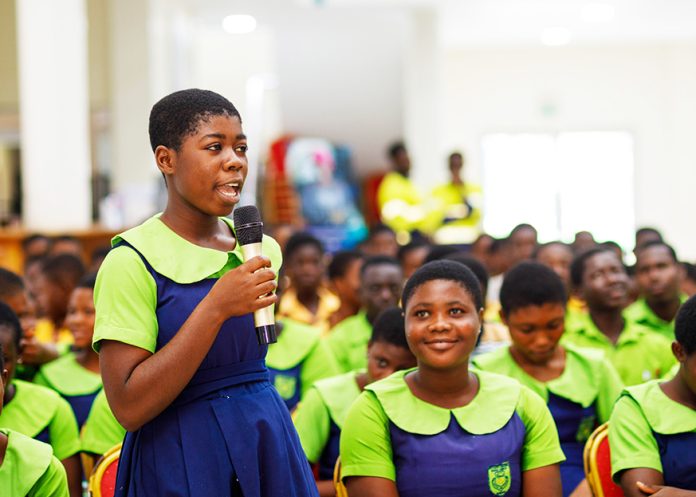
A female student answering question at a STEM programme

As the world commemorates International Day of Women and Girls in Science, attention has once again shifted to the vital contributions of women in science, technology, engineering and mathematics (STEM). The global observance celebrates progress made while calling for renewed action to remove barriers that continue to limit female participation in innovation and scientific advancement.

In Ghana, the Gold Fields Ghana Foundation (GFGF) is advancing this agenda through a scholarship programme that is transforming lives within the host communities of the Tarkwa and Damang mines.

Students listening to lectures

With a strong emphasis on science and technical disciplines, the initiative is equipping young people with the skills required to drive industrial growth and technological advancement.
By 2025, the programme had supported 608 students to graduate in STEM-related fields. Of that number, 168 representing 27 per cent were women.

These graduates are making inroads into industries traditionally dominated by men, including mining engineering and advanced technology, contributing significantly to Ghana’s socio-economic development.

Their achievements demonstrate the impact of targeted investment in girls’ education and equal opportunity.
Although female participation at 27 per cent reflects progress, it also highlights the need for sustained interventions to narrow the gender gap in STEM.

The Foundation has, therefore, expanded its support systems to include mentorship programmes, career guidance and confidence-building platforms designed to encourage more girls to pursue science-related careers.
One such intervention is a three-day STEM workshop organised to coincide with Ada Lovelace Day, marked globally each October.

Held under the theme: “Empowering Tomorrows Through STEM” the workshop engaged final-year Junior High School students in interactive learning sessions, motivational talks and career orientation activities aimed at igniting interest in science and technology fields.

The Foundation’s efforts align with Ghana’s national development priorities and the United Nations Sustainable Development Goals, particularly Sustainable Development Goal 4 (Quality Education), Sustainable Development Goal 5 (Gender Equality), Sustainable Development Goal 8 (Decent Work and Economic Growth) and Sustainable Development Goal 10 (Reduced Inequalities).

By investing in women and girls in science, the Foundation is promoting inclusive growth while strengthening the country’s innovation ecosystem.
As the world observes International Day of Women and Girls in Science, the Gold Fields Ghana Foundation has reiterated its commitment to expanding access to STEM education and creating pathways for more girls to excel in science and technology, reinforcing the role of education as a catalyst for sustainable development.


For more news, join The Chronicle Newspaper channel on WhatsApp: https://whatsapp.com/channel/0029VbBSs55E50UqNPvSOm2z

GREL Donates GH¢190K Chemistry Analyser to Agona Nkwanta Polyclinic

0
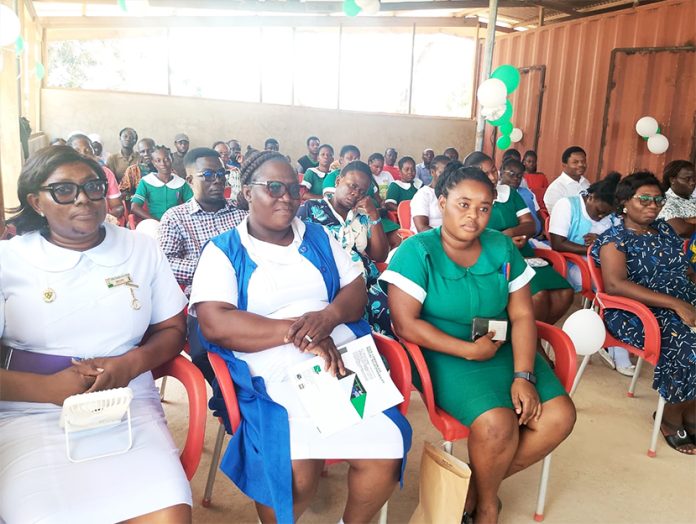
Nurses and staff of the Policlinic at the donation programme

For years, patients at the Agona Nkwanta Polyclinic had to endure the long journey to Takoradi for basic but critical laboratory tests.

Many arrived late, some in worse conditions, simply because the facility lacked the equipment to diagnose liver and kidney diseases on time. However, by Thursday last week, that story began to change.

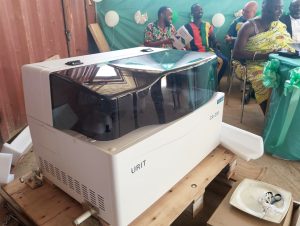
The GHC190K Chemistry Analyzer machine purchase by GREL for the Agona-Nkwanta Polyclinic

The Ghana Rubber Estates Limited (GREL) presented a state-of-the-art Chemistry Analyser, valued at GHS 190,000 to the Polyclinic, a move expected to significantly strengthen diagnostic services for more than 25,000 people in and around Agona Nkwanta.
Speaking at the commissioning ceremony, Corporate Affairs Manager of Ghana Rubber Estates Limited (GREL), Perry Acheampong, described the gesture as more than a donation.

“Today’s event is not merely about handing over equipment valued at GHS 190,000. It is about reaffirming a partnership built on trust, shared responsibility and mutual growth,” he said.
According to him, GREL’s corporate social responsibility is deeply tied to the well-being of its host communities.

“We operate within communities, we depend on communities and we grow with communities. Our survival as a company is directly linked to the farmers who supply us with rubber. When farmers thrive, GREL thrives. When they struggle, we feel it too,” Mr. Acheampong noted.

The Corporate Affairs Manager of GREL stressed that healthcare remains fundamental to development, explaining that a healthy farmer is productive, a healthy worker is efficient and a healthy community is prosperous.

“This Chemistry Analyser will significantly enhance the diagnostic capacity of the Agona Nkwanta Polyclinic, particularly in detecting and managing metabolic, liver and kidney conditions. Early and accurate diagnosis saves lives, reduces suffering and strengthens families,” he added.
For the Medical Superintendent of the facility, Dr. Emmanuel Ofosu Larbi, the equipment is a long-awaited relief.

“We have needed this for a while now. Looking at the number of cases we receive, we often have to refer patients to Takoradi for liver function and kidney function tests. Most of them come in when their conditions are already bad,” he said.
The new machine, he explained, will allow the facility to conduct essential tests on-site, cutting delays and reducing the financial burden on patients.

Despite the breakthrough, Dr. Ofosu Larbi painted a sobering picture of the challenges confronting the Polyclinic. The facility currently operates with only one medical doctor, serving a rapidly growing population.

“The staff is our main problem. We have a shortage of nurses and doctors. As we speak, I am the only medical doctor here,” he revealed.
Infrastructure remains another pressing concern. The Pediatric ward, Emergency unit, Maternity ward and Theatre are all crammed into one building, with a recovery room that holds just three beds.

“It is a headache,” he admitted, expressing hope that support would come for the construction of a dedicated Pediatric block to ease congestion.
Municipal Health Director, Emmanuel Bediana described the donation as a major step towards achieving universal health coverage.
“This falls in line with the nation’s aim to ensure that people can access the services they need without having to travel long distances or incur additional costs,” he said.

He commended GREL for its consistent support to health infrastructure and personnel accommodation across communities in the Western Region.
Present at the donation ceremony were Nana Kwesi Agyemang IV, Omanhene of Lower Dixcove and Vice president of the Western Regional House of Chiefs, Nana Eziaku V, chief of Agona Fie, and Nana Damtse, chief of Agona


For more news, join The Chronicle Newspaper channel on WhatsApp: https://whatsapp.com/channel/0029VbBSs55E50UqNPvSOm2z

Nigeria’s Inflation Rate Drops To 15.10%

0
Inflation Rate Drops

Nigeria’s inflation dropped to 15.10 percent in January 2026 from N15.15 percent in December 2025.

This is according to the National Bureau of Statistics, NBS, Consumer Price Index released on Monday.

According to NBS, the country’s inflation declined by 127.4 percent in January 2026, reflecting a 3.8 percentage point decrease from the preceding month.

Similarly, NBS said food inflation eased to 8.89 percent in January from 10.84 percent the previous month.

“The Consumer Price Index (CPI) declined to 127.4 in January 2026, reflecting a 3.8-point decrease from the preceding month (131.2).

“In January 2026, the headline inflation rate eased to 15.10%, down from 15.15% in December 2025.

“On a month-on-month basis, the headline inflation rate in January 2026 was -2.88%, which was 3.42% lower than the rate recorded in December 2025 (0.54%). This means that in January 2026, the rate of increase in the average price level was lower than the rate of increase in the average price level in December 2025,” NBS stated on X on Monday.

Recall that the inflation rate rose to 15.15 percent in December 2025, according to NBS.

Despite the disinflation in January 2026, Nigerians have continued to lament the rising cost of living nationwide.

Credit: dailypost.ng

I Will Contest 2027 Presidential Election, Peter Obi Assures Supporters

0
Peter Obi

The presidential candidate of the Labour Party in the 2023 general elections, Peter Obi, has assured his supporters of his readiness to contest in the 2027 elections.

He spoke in Uyo, Akwa Ibom State, at the OBIDIENT Conference and official declaration for the African Democratic Congress (ADC) with the theme, “Activating the PO Effect in ADC”.

Obi urged Nigerians to join hands with him to rescue Nigeria for the future generations, who, according to him, will suffer the consequences of bad governance going on in the country for decades.

He alleged that he had in good authority that the Federal Government does not want him to contest, insisting that he will come out even if the elections were held figuratively in their “bedroom.”

The former Anambra governor stated that the current administration had collected more loans than every other administration, adding that most of the loans would be repaid from 2045 to 2050, when most of the people who plunged the country into indebtedness must have gone.

Exist From LP

On why he left the Labour Party, Obi said on Saturday, “Democracy must work, I left Labour Party when I got informed that as long as I remain in the party, INEC will not recognise its leadership, that the Federal Government doesn’t want me on ballot paper, but I want to assure you that I will contest the coming election even if it holds in their bedroom and if they don’t want to transmit the results, we will transmit it for them.”

According to him, Nigeria must get it right in 2027, adding that election results must be transmitted online in real time.

Obi, who assured that his administration would invest heavily in education and health if elected, averred that most of the great countries across the world achieved greatness through intentional investment in education, adding that he would do everything possible to pull people out of poverty to reduce criminality.

The presidential aspirant further said he would tour the entire country and also all higher institutions to see the real challenges on the ground, stressing that he wants to help fix Nigeria now that he has the strength to undertake any difficult task, adding that those joining him to realise his ambition must understand that the priority is the future and well-being of the people.

He promised to rid Nigeria of corruption, saying that the menace will be reduced by 60 percent once a leader and his family has nothing to do with corruption.

“When I became governor of Anambra State, I advised my wife to forget about the office of first lady because we were not elected together. I approved over 100 C of Os of government lands, but have none for myself or my family. If you find any, petition me to the appropriate authority,” he added.

Also addressing the participants, the coordinator of the Obidient movement worldwide, Tanko Yunusa, urged Nigerians to mobilise from every nook and cranny of the country for the 2027 general election.

He urged them to channel their collective energy into the African Democratic Congress as the vehicle for transformation and victory in 2027.

The Akwa Ibom State Coordinator of the movement, Ben Smith, urged members to be united in pursuit of their goal, as divisions or factions will derail the dream of a new Nigeria.

Credit: channelstv.com

The Ghanaian Chronicle