Home Blog Page 235

Minority leader presents laptop computers to Winneba Police

0
Osahen Afenyo-Markin prersneting the computers to the the police command

The minority leader, Osahen Alexander Afenyo-Markin, has donated 10 laptop computers to the Winneba Divisional Police Command. The Computers would help the police command in the areas of crime data analysis to identify patterns, predict hotspots and aid in investigations into digital evidence like emails and videos.

Additionally, the computers, donated by Osahen Afenyo-Markin, who is the Member of Parliament for Effutu, would also help the police command to effectively undertake digital communication, build proper database to store and safeguard information and easily transmit and receive information.

The donation formed part of the MP’s commitments to resourcing the Ghana Police Service in the Effutu constituency, so that the police would be able to provide adequate security for the constituents.

Presenting the items, Osahen Afenyo-Markin stated that the computers were donated following an official request the command made to his office.

He said “By the grace of God we managed to get you ten laptops even though you requested for five. Let me take this opportunity to also finally assure that the ongoing project here, which is an expansion, will be completed. The contractor will come back to site soon,” he added.

On behalf of the Inspector General of Police, the Divisional Police Commander, Assistant Commissioner of Police ‘ACP ‘ Ibrahim Opoku, who received the laptop computers, thanked the minority leader for the gesture.

ACP Opoku gave an assurance that the laptop computers would be properly taken care of and also promised that the computers would be used for their intended purposes.


For more news, join The Chronicle Newspaper channel on WhatsApp: https://whatsapp.com/channel/0029VbBSs55E50UqNPvSOm2z

Let’s work for Bawumia -Osahen rallies support for NPP flagbearer 

0
Hon Afenyo-Markin addressing the party supporters

Minority leader, Osahen Alexander Afenyo-Markin, has plainly stated that the failure of Dr Mahamudu Bawumia in any general elections would mean a catastrophic failure of the entire New Patriotic Party.

According to him, the party has collectively and decisively elected Dr Bawumia as its flagbearer and must put their shoulders to the wheel and drive forward in unity.

He has, therefore, called on the rank and file of the party to quickly bury their differences and rally behind Dr Bawumia, who has been elected as the party’s flagbearer for the next general elections in 2028.

Osahen Afenyo-Markin, who is the Member of Parliament for Effutu Constituency, passionately made the call during a stakeholders’ engagement held by the Effutu Constituency branch of the NPP.

The engagement, which took place just a day after the New Patriotic Party’s presidential primary, also served as a reconciliatory grounds for the members of the NPP to forge ahead in unity and to chart a new path that would see them in early campaign to support their elected presidential candidate.

Addressing a large crowd, Osahen Afenyo-Markin reiterated that “If Dr Bawumia fails it is we who have failed him. Let us not fail him, let’s work for him, work for the party and work for our country.”

He further stressed that a collective decision of all party members to forgive one another, especially now that a flag bearer has been elected and engage in vigorous campaign with a united front, would be one of the surest means of securing electoral victory at the next general polls.

“It is time to remember who we all are as members of one big political family – the New Patriotic Party. Our flagbearer himself was unequivocal telling us the need to let go the past and forge ahead in unity.

“We have to learn from our history when we talk about unity perhaps that will be a great reminder. As I have said repeatedly over the last two weeks, history has taught us clear but harsh lessons about disunity,” he emphasised.

According to the minority leader, history has it that disunity once caused the NPP tradition a great misfortune, during an election in the 3rd republic.

“In 1979, during the 3rd Republic, our tradition became divided – UNC and PFP – and the result was that the Limann led PNP took power from us. The combined votes of UNC and PFP could have given us a one touch victory.

“Again, in 1992, 1996, 2008 and 2012 when we were not too clear with ourselves about our own unity, we know the result, we lost. When our ranks were divided, when factions spoke louder than our unity, we lost painfully to the NDC.” Osahen Afenyo-Markin explained.

Each defeat the party suffered, he stated, “carried a reminder that a divided NPP cannot win, no matter how noble our message is.”

The minority leader indicated that the election of Dr Bawumia to lead the NPP was a collective vote of the members who reaffirmed their trust in their elected flagbearer to lead the party into the 2028 general elections.

He said “His victory is not just his, it is a victory for the NPP tradition – a tradition built on liberty, progress, competence and character. Throughout the long month of this

campaign he stood tall, calm under pressure, gracious in adversity and humble in victory.”

According Osahen Afenyo-Markin, Dr Bawumia exemplified what modern leadership should look like, extolling him as being intelligent, innovative and anchor in integrity.

He saluted Kennedy Ohene Agyapong, who placed second in the election for his passion, firm belief in accountability and his unshakable commitment to the ordinary Ghanaian.

Dr Mahamudu Bawumia emerged victorious to lead the NPP as a flagbearer in the 2028 general elections, following a landslide victory on Saturday, January 31, 2025.

He secured 110,643 of the total valid votes cast, representing 56.48%.

He defeated his contender, Kennedy Ohene Agyapong and three others.


For more news, join The Chronicle Newspaper channel on WhatsApp: https://whatsapp.com/channel/0029VbBSs55E50UqNPvSOm2z

Gyina Yie Neequaye Kortey, Na Voxy Reba

0
Kwabena Osei Esq - The writer

Anytime l am about recoiling into my shell to enjoy and observe some modicum of peace, someone wakes me up either through his/her actions, inaction or unwarranted and unsolicited effusions.

This time round, it is no mean a personality than Vandal Julius Neequaye Kortey, Chief Executive Officer of DVLA. Since his assumption of the aforementioned august office, l have followed his ‘dos and donts’ closely with keen interest.

Axiomatically, he seems to be doing well, the only snag being his total and absolute lack of appreciation for these two vocabularies – Regulatory and income generation. Oh yes, he is yet to draw a clear line between his regulatory and income generating roles of DVLA. It seems to me that the latter has taken a wider part of his brains, which for all intents and purposes, is very fatal.

Yah, I listened to him with rapt attention, his interview on TV3 Hot Issues hosted by Khaminni Amanor on Sunday, 25/01/2026 – think that was his second appearance on the program.


TOYOTA VOXY ON THE BLOC

Khaminni relevantly introduced a subject that chipped in the new chap on the bloc – TOYOTA VOXY.

She wanted to know from Nii Julius why, despite public uproar against the commercialization of Voxys vehicles for stated reasons, his outfit has continually been registering same to wreak havoc on innocent citizenry.

Without any hesitation, calibration and think through, Nii Julius went ”amok”, yah, he was blunt and gave an “unvandal” response, to wit – the law is clear, only ONE DOOR vehicles cannot be registered for commercial purposes – Really? Oh yes, not even an intervention by National Road Safety Authority, NRSA, will let him ‘buckle up’.

Invariably, he was telling the host and indeed all right thinking Ghanaians that he cared not, whether or not, his actions and inactions amounted to sorrows, grieves, bereavement, mention them, in some homes. If he cares to know, and is hereby put on active notice that, in law, provisions are made for COMMON SENSE, aka, common sense theory in Interpretation of statutes and deeds, among others.

Wow, this quickly sent me firstly to Odorkor of the 70/80s. There was a defunct transport entity with yellow buses of various and varied makes and brands, scattered all over the capital, Accra. We presently complaining of stranded commuters whilst this “yellow, yellow” bus blueprints is firmly etched in the history of our intra city road transport mix.

I cannot tell whether or not, it was planned, orchestrated, accidental, incidental or coincidental, but all the aforesaid buses had very catchy and funny inscriptions thereon. One of such inscriptions read: PEOPLE LIKE THESE. Need l add to?

From Odorkor l dashed through my nursey school days only to chance upon the issue of a classmate in the late 60s. l do not know his whereabouts as of now, yet his behaviour then is of relevance here.

You know what, this classmate of mine for reasons, which set all the class thinking and wondering, was the fact that he always sought solace beneath tables.

In his escapade, he, instead of bending when he got to the table, will instead, be knocking his head against the table to and fro, hurting himself till he was assisted to bend in order to access the beneath.

Such shall be equated with the pronouncement of Nii Julius on Voxys during his encounter with Khaminni – yah any motorized object, save one door, will find space at the DVLA Registry notwithstanding the ramifications thereof – woow!!!

I cannot conclude this piece without mentioning this Policeman stationed at Asante Effiduasi whose pronouncement really brings to fore the effusion of Nii Julius with Kaminni.

Yah, I was at Asante Effiduasi, my beloved hometown for a brief visit somewhere in 2024. Whilst there, l took ‘judicial notice’ of a ragged man who was always brandishing “bratan” (Addai cutlass), meandering briskly, wearing a serious looking face, through human traffic at the lorry station/market enclave.

Innocently thinking the Effiduasi Police were unaware, l armed myself with pictures thereof and headed to the Police Station to prompt them but l was wrong. After listening to my concerns, the Policeman on duty inquired if l was a native of the town which l answered in the affirmative pointing to my family house in the neighbourhood.

Then he exploded, yah, let loose his foul mouth, to wit, “have you ever heard and or witnessed the ragged man attacking anyone? Wow !!!

That was a uniformed Policeman, trained and salaried from our taxes speaking on behalf of the Inspector General of Police, IGP.

The three scenarios l have painstakingly narrated above clearly fits into Nii Julius equation and depicts his psyche. l am afraid that until and unless he is kept in his track, bet me, wahala will be an inappropriate word for the industry.


DVLA WOES

No wonder DVLA top hierarchy are unable to stare the Government in the face and tell them that Okada will soon be substituted for disaster in the Oxford Learners Dictionary. Yah, words evolve and the Oxford dictionary is wide awake to absorb new words.

l need hardly state here that, notwithstanding, l am fully in support of his move to let DVLA assert itself via sanitizing the issuance of vehicle registration number plates among others.

Hmmm, how come that all the hens that once laid DVLA golden eggs (number plates, road use certification etc) are now in private hands under various and varied guises triggering Nii Julius to go overboard in order to rake in revenue into the DVLA kitty? Yah, stress free cash gone down the drain for whatever reason(s), kind courtesy, political expediency.

Nii Julius, as Vandals aptly put it, there is more room for improvement, aka, there are vacant rooms but none is occupying same.

Fractured Peace.

Written by Osei Kwabena Esq, Etia Street, Asante Effiduasi


For more news, join The Chronicle Newspaper channel on WhatsApp: https://whatsapp.com/channel/0029VbBSs55E50UqNPvSOm2z

Editorial: GHS Mandatory Typhoid Vaccination For Food Vendors Is Very Laudable

0
Editorial

The Ghana Health Service (GHS) has announced plans to introduce a mandatory typhoid vaccination programme for food handlers across the country. The initiative will target workers in the food and beverage sector, including street food vendors, market traders, restaurant and hotel staff, as well as employees of food and beverage companies. The typhoid vaccine is expected to offer protection for up to three years.

The programme, which is expected to be launched shortly by the Ministry of Health and the GHS, will be implemented in phases, beginning with hotels, restaurants and food manufacturing companies, before extending to market vendors and other informal food handlers.

It is intended to complement existing medical screening requirements and close persistent gaps in typhoid prevention.

Announcing the policy at a stakeholder engagement in Accra, the Director-General of the GHS, Dr Samuel Kaba Akoriyea, noted that food handlers constitute a high-risk group for transmitting typhoid fever due to frequent exposure to contamination. He indicated that food handlers who do not receive the vaccination would not be issued the mandatory health certificate required to operate.

Ghana’s struggle with typhoid fever is not a mystery, nor is it unavoidable. It is the predictable consequence of years of poor sanitation, weak enforcement of food safety regulations and the normalisation of unhygienic food environments. Against this backdrop, the decision by the Ghana Health Service to mandate typhoid vaccination for food handlers is both timely and justified.

Across the country, markets that serve as the primary source of food for millions operate under deplorable conditions. Open drains run through trading areas, refuse is left uncollected for days and food is displayed in the open, exposed to flies, dust and human traffic.

Handwashing facilities, where they exist at all, are often inadequate. These same conditions extend to many chop bars and even some restaurants that outwardly project cleanliness but fall short of basic hygiene standards behind closed doors.

In such settings, food handlers become the frontline of disease transmission, not necessarily through negligence, but through constant exposure to contaminated water and waste. Medical screening alone, which often becomes a one-off ritual rather than a continuous safeguard, has proven insufficient. The Chronicle therefore sees the proposed vaccination programme as a necessary layer of protection for the public.

Vaccinating food handlers offers a practical buffer in a system where environmental health reforms have been slow and uneven. It acknowledges the reality that while Ghana works towards cleaner markets and safer food spaces, lives must still be protected in the meantime. International public health practice supports targeted vaccination of high-risk occupational groups, and Ghana’s move aligns with this evidence-based approach.

However, the success of this policy will depend entirely on how it is implemented. Vaccination must not be treated as a box-ticking exercise or an avenue for bureaucratic exploitation. Most food handlers operate in the informal sector, surviving on daily earnings with little financial margin. Any attempt to impose high costs or cumbersome procedures will undermine compliance and defeat the public health objective.

Equally critical is the need to ensure that vaccination does not become a convenient substitute for addressing the deeper sanitation crisis. Dirty markets and unhygienic food preparation environments remain the root cause of typhoid transmission. Municipal assemblies must be held accountable for waste management, provision of clean water and routine inspection of food premises. Without this, vaccination risks becoming a temporary shield over a persistent structural failure.

The Chronicle is of the view that this initiative represents an opportunity to reset Ghana’s approach to food safety. If paired with stronger enforcement, public education, and sustained investment in sanitation infrastructure, mandatory vaccination could significantly reduce typhoid cases and restore public confidence in the food system.

But if poorly executed, selectively enforced, or used to harass vulnerable workers, it will join the long list of sound policies weakened by indiscipline and neglect. This moment demands seriousness of purpose. Public health is not served by announcements alone, but by consistent, fair and accountable action.


For more news, join The Chronicle Newspaper channel on WhatsApp: https://whatsapp.com/channel/0029VbBSs55E50UqNPvSOm2z
Traditional Leader questions colonial land laws, calls for decentralisation and community inclusion

0
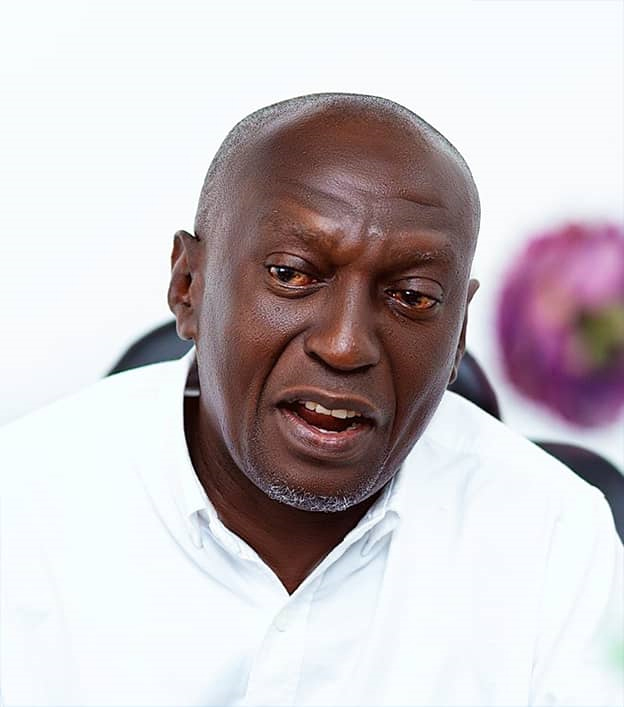
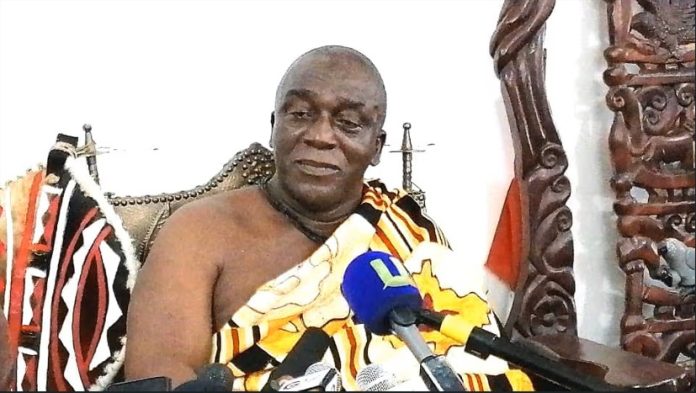
Nana Kobina Nketiah V, Omanhene of Essikado Traditional Area

At the opening of a retreat organized by the Ministry of Lands and Natural Resources, calls were made for a fundamental rethink of Ghana’s land governance framework, decentralization of land administration, and stronger community involvement in the exploitation of natural resources.

Addressing participants at the retreat, President of the Western Regional House of Chiefs (WRHC) and Omanhene of Essikado Traditional Area, Nana Kobina Nketiah V, delivered a wide-ranging critique of the country’s land laws, arguing that many of them were rooted in feudal systems that are alien to African culture and continued to fuel chieftaincy and land disputes.

According to Nana Kobina Nketiah V, land ownership in Africa is historically communal, yet modern legal systems have failed to adequately reflect this reality. He observed that a significant number of cases before Ghana’s courts relate either to chieftaincy or land matters, a situation he attributed to the adoption of foreign legal frameworks that conflict with indigenous customs.

“Every piece of land in Africa is communal. Land belongs to the community,” he noted, stressing that the transportation of colonial-era laws into Ghana’s constitutional and legal systems has come at a heavy cost. He cautioned that traditional authorities are often subjected to legal processes that do not align with their cultural foundations.
Touching on land tenure systems introduced during colonial rule, Nana Kobina Nketiah V contrasted long-term leases in other African countries with Ghana’s experience, noting that while Ghana limited leases to 99 years, the legacy of such arrangements still poses challenges for land administration and ownership.

He further raised concerns about the slow pace of decentralization in land administration, questioning why basic processes such as land registration remained highly centralized in Accra. He argued that with the current level of technology and ongoing digitalization efforts, many land-related services could and should be handled at the district level.

“Why must people travel to Accra to register their lands?” he asked, calling for a system where land registration is done locally and seamlessly communicated to central authorities.

Nana Kobina Nketiah V also urged policymakers to rethink prevailing narratives around natural resource extraction, particularly in mining and other extractive industries. He argued that African countries are often made to feel poor despite being richly endowed with natural resources, while those who depend on these resources are the real beneficiaries.

He expressed concern about the long-term impact of extraction on future generations, warning that once resources are taken out of the ground, they are gone forever. This, he said, makes it imperative to ensure that current decisions protect the interests of both present and future communities.

Highlighting the limited benefits host communities derive from decades of mining activities, he questioned what tangible gains communities in gold-producing areas such as Obuasi have received.

He also criticised governance structures in some extractive ventures, citing instances where boards lack representation from local communities despite operating on their lands.
“How can resources be taken from a community without that community being represented?” he asked.

The traditional leader emphasized that genuine investment must be driven by a clear vision for the development of host communities, rather than focusing solely on infrastructure or financial returns.

He called for greater transparency in the use of royalties and stronger community participation in decisions affecting their lands and resources.

He concluded by urging participants at the retreat to place communities at the center of land and natural resource governance, noting that the future of the country depends on the choices made today.


For more news, join The Chronicle Newspaper channel on WhatsApp: https://whatsapp.com/channel/0029VbBSs55E50UqNPvSOm2z

Ahanta West Commissions Renovated Busua–Dixcove Steel Bridge, Restoring Safety and Boosting Tourism

0
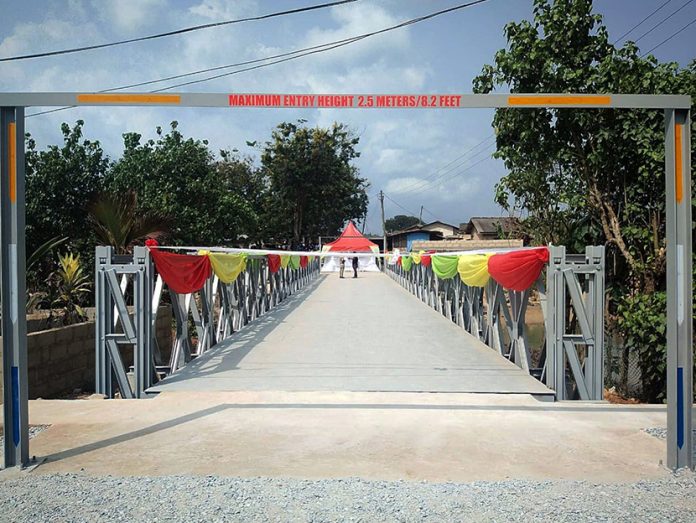
The newly built Busua Dixcove steel bridge

The Municipal Chief Executive (MCE) for the Ahanta West Municipal Assembly, Ing. Ebenezer Aidoo, in collaboration with the Member of Parliament for the Ahanta West Constituency, Mavis Kuukua Bissue, has commissioned a newly renovated steel bridge linking the coastal communities of Busua and Dixcove in the Western Region.

The bridge, which serves as a critical access route for residents, traders and tourists, had for years fallen into a deplorable state, raising serious safety concerns.
Its deteriorated steel structure posed significant risks to pedestrians and motorists alike, with vulnerable groups such as pregnant women, the sick, the elderly and tourists being particularly exposed to danger.

Busua Township

Addressing residents and stakeholders at the commissioning ceremony, Ebenezer Aidoo described the completion of the project as a major relief to the communities.
He said the renovated bridge symbolises renewed hope and a commitment by the Assembly and central government to prioritise the safety and well-being of citizens.
“This bridge is more than steel and bolts. It is a symbol of hope that has removed fear and restored confidence and safety for all who use it,” the MCE stated.

He explained that the project was funded under the District Assemblies Common Fund (DACF), stressing that infrastructure development remained a central focus of President John Dramani Mahama’s administration.

According to him, the poor condition of the bridge had long been identified as a development challenge, prompting the Assembly, together with the Member of Parliament, to make its rehabilitation a top priority.
He commended residents for their patience during the reconstruction period, noting that the renewed structure would enhance economic activity and open the area up for further development.

“Your patience has given birth to excellent work. This bridge will improve movement, support trade, and contribute significantly to the overall development of the municipality,” he said, while urging residents to take collective ownership of the facility and protect it to ensure its long-term sustainability.
The Member of Parliament for Ahanta West, Mavis Kuukua Bissue, also expressed satisfaction with the successful completion of the project.

She praised the contractor for delivering quality work within the agreed timeline, adding that the improved bridge would play a vital role in strengthening tourism in the area.
“This road and bridge are key to tourism development in Ahanta West. With Busua being one of Ghana’s prime tourist destinations, improving access is essential for economic growth,” she noted.

She reaffirmed her commitment to pushing for more developmental projects in the constituency, appealing to residents for continuous prayers and support.
Beyond infrastructure, the MP used the occasion to call on miners in the area to cooperate with government efforts to combat illegal mining, popularly known as galamsey.

She encouraged small-scale miners to embrace the Cooperative Mining Scheme, which she described as a safer, more sustainable and regulated approach to mining that protects the environment while creating livelihoods.
Kuukua Bissue also appealed to traditional authorities in the municipality to remain united and to support development efforts.

She urged chiefs and landowners to consider leasing lands for development projects instead of selling them outright, noting that such practices would ensure long-term benefits for communities and future generations.
Speaking on behalf of the Ahanta Traditional Council, Nana Sena Akuba, Queen Mother, expressed deep appreciation to the government, the Assembly, and the Member of Parliament for responding to the needs of the people.

She said the renovated bridge had brought immense relief to residents who hitherto feared using the crossing.
“This bridge has eased our burden and restored our peace of mind. We are grateful to the MCE and the MP for listening to our cries and acting swiftly,” she stated.
The contractor for the project, Mr. Kofi Ackah of Ackben Construction, also thanked the Municipal Assembly, the Member of Parliament and the government for the opportunity to execute the work.

He assured stakeholders that the project was completed to standard and in line with contractual specifications.
The commissioning ceremony was attended by the Municipal Coordinating Director, Head of Works, assembly staff, assembly members, and executives of the National Democratic Congress (NDC), underscoring the importance of the project to the municipality.
The renovated Busua–Dixcove steel bridge is expected to significantly improve transportation, enhance safety, and contribute to the socio-economic development of Ahanta West.


For more news, join The Chronicle Newspaper channel on WhatsApp: https://whatsapp.com/channel/0029VbBSs55E50UqNPvSOm2z
Eighty kidnapped Nigerians return home after escape

0
Kidnapped Nigerians return home

Dozens of worshippers kidnapped by gunmen in Nigeria’s northern Kaduna state have returned home weeks after their abduction, police have confirmed.

They were among 177 people seized last month from three churches in the remote village of Kurmin Wali.

The 80 people escaped on the day they were taken but hid in neighbouring villages for a fortnight “due to fear of being captured again”, state police spokesman Mansur Hassan told the BBC.

The authorities say efforts are ongoing to secure the release of the remaining 86 people still being held. The attack was part of a wave of kidnappings for ransom affecting many parts of Nigeria, but no group has said it was behind the abductions.

The raid was initially denied by police, who only confirmed the kidnappings on 21 January after local residents had reported to the BBC that 177 worshippers were abducted, with 11 escaping shortly afterwards.

The official response drew criticism from Amnesty International, which accused Nigerian authorities of “desperate denial”.

The rights group urged officials to “take immediate and concrete measures to prevent rampant abductions that are gradually becoming the norm in Nigeria.”

In November, more than 300 students and teachers were taken from a Catholic school in Niger state, which neighbours Kaduna, before being released in two groups.

Nigeria faces multiple, overlapping security challenges beyond kidnappings, including an Islamist insurgency in the north-east, separatist violence in the south-east, and frequent clashes between herders and farmers in central regions over land and water.

Security experts say efforts to tackle these crises are hampered by corruption, poor intelligence sharing, and underfunded local police forces.

The security situation has drawn international attention. In December, the US conducted airstrikes in north-western Nigeria on Christmas Day, targeting two camps run by an Islamist militant group.

Following the action, President Donald Trump warned of further strikes if attacks on Christians in the West African nation continued.

Credit: bbc.com

I’ll run as presidential candidate –Peter Obi rejects VP role

0
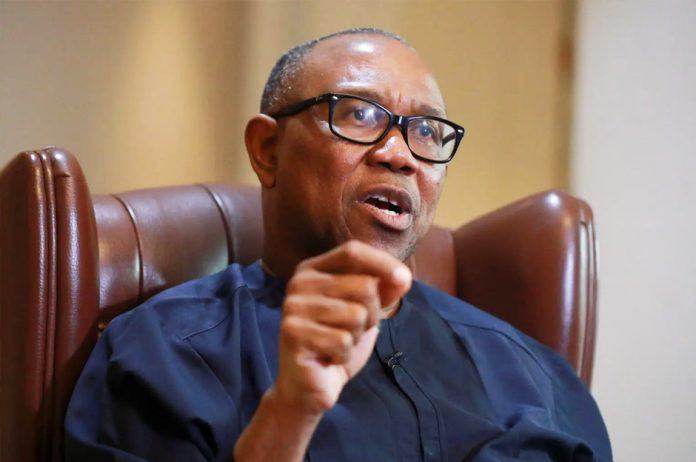
Peter Obi

Peter Obi, a prominent figure within the African Democratic Congress, ADC, has signaled his plan to seek the party’s presidential ticket ahead of the 2027 general elections.

He revealed this ambition while addressing supporters at a campaign event for the ADC candidates in the Federal Capital Territory, FCT, Area Council elections, which took place at the Abuja Municipal Area Council, AMAC.

In his remarks, Obi made it clear that he is aiming for the top position and would not settle for a subordinate role in the party’s long-term political strategy.

He stressed that the AMAC election is closely tied to his wider political aspirations and called on party faithful and local residents to throw their weight behind the ADC candidate.

According to Obi, success in the AMAC poll would play a crucial role in advancing his political mission, adding that his involvement in the coming elections is as a leading contender and not in a supporting capacity.

“This coming election, support us in AMAC; it will help me. Your support in AMAC is critical to our journey. I am involved and contesting the coming election as number one. When I come back, you will see. I assure you,” Obi said.

Obi’s supporters, particularly members of the Obidient Movement, have intensified pressure on the ADC leadership to adopt him as the party’s standard-bearer for 2027, with many insisting that the ticket should go to Obi alone.

However, the ADC is hosting several other high-profile politicians with presidential ambitions, including former Vice President Atiku Abubakar and former Minister of Transportation, Rotimi Amaechi.

Credit: dailypost.ng

Corruption Trial Of Ex-Petroleum Minister Alison-Madueke Resumes In London

0
Former Minister of Petroleum Resources, Alison-Madueke, at the Southwark Crown Court

Proceedings resume on Monday in London in the corruption and bribery trial of former Nigerian petroleum minister Diezani Alison-Madueke.

Alison-Madueke denies multiple charges relating to alleged misconduct while overseeing Nigeria’s oil and gas sector.

But prosecutors claim she received cash and luxury benefits in exchange for influence over energy contracts.

The case has major implications for accountability in the global energy industry.

Our correspondent, Juliana Olayinka, is outside Southwark Crown Court in London.

Lawyers for Diezani Alison-Madueke, the first woman president of OPEC, denied in a London court Thursday that the former Nigerian minister took bribes in their first formal response at her corruption trial.

The 65-year-old, who sat in the dock at Southwark Crown Court taking notes on the third day of the trial, is accused of multiple bribery counts stemming from a years-long investigation.

The alleged offences occurred between 2011 and 2015, when she was Nigeria’s oil minister but maintained a UK address.

The UK National Crime Agency (NCA), which targets international and serious and organised crime, had accused her of receiving the bribes in Britain.

Credit: channelstv.com

Lagos State Governor Meets World Bank Delegation

0
Lagos State Governor, Babajide Sanwo-Olu (m) meets with World Bank delegates

Lagos State Governor, Babajide Sanwo-Olu, has met with delegates from the World Bank Group at Lagos House, Marina, to discuss measures to boost living standards in Lagos.

The team was led by the Managing Director for Operations, Anna Bjerde, and the International Finance Corporation Regional Vice President for Africa, Mr. Ethiopia Tafara.

Sanwo-Olu disclosed this on his official X handle on Monday, where he stated they would be working on areas that matters most to the people.

The governor said that they “had an open and practical conversation” about how Lagos can work more closely with the World Bank in areas that matter most to residents, including energy, agriculture, tourism, and human capital development.

“We are actively seeking partnerships and investments that raise living standards, and we are prepared to take the necessary steps to earn greater support, especially for infrastructure that directly affects daily life across the state.

“I also shared a brief reflection on our journey over the past six years under the THEMES+ agenda. The focus has always been on delivering results that people can feel. Millions of Lagosians have seen real improvements, and while there is still a lot to do, the progress is measurable,” Sanwo-Olu said.

The governor further highlighted the ranking of the state under the Ease of Doing Business ranking.

“Four years ago, Lagos was ranked 29th nationally. Last year, we moved to first place. That did not happen by chance.

“It came from being more deliberate, more consistent, and more accountable in how the government works. I also shared a brief reflection on our journey over the past six years under the THEMES+ agenda.

“The focus has always been on delivering results that people can feel. Millions of Lagosians have seen real improvements, and while there is still a lot to do, the progress is measurable,” he added.

Credit: channelstv.com

The Ghanaian Chronicle