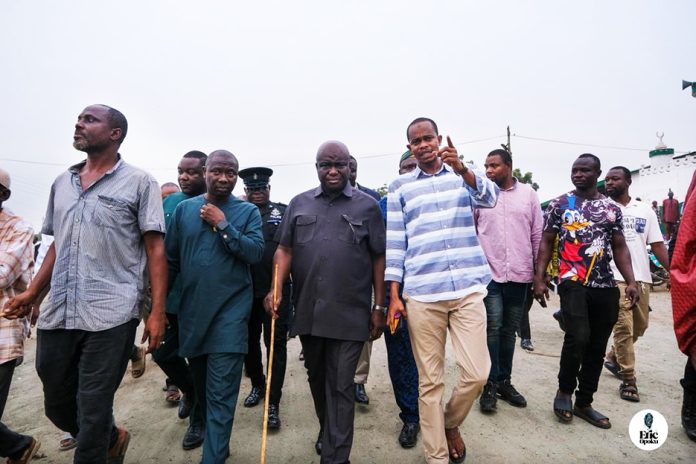
DCE Sedik presenting contract documents to Kunsuhene, Nana Agyemang Badu and Contractors
The Ahafo Ano South West District Assembly has officially handed over nine project sites to Contractors to commence construction works across various communities in the district.
The projects include construction of classroom blocks with ancillary facilities, CHPS compounds and staff quarters, a Community Centre, a KG block and a high 50,000-litre tank and mechanised borehole.
The contract duration spans six to eight months, depending on the project.
Beneficiary communities include; Manhyia, Mpasaso I and II, Oseikrom, Wioso, Afreseni, Kunsu, Mankranso, Mankranso Senior High School and Asuobena.
The handing-over exercise, led by Mr. Abubakar Sedik, the District Chief Executive took place on January 29 and 30, 2026 with the participation of traditional authorities, community members, Assembly Members, NDC Constituency Executives and the Contractors.
DCE Abubakar Sedik emphasised the Assembly’s commitment to improving education, healthcare and sanitation infrastructure in the district.
He urged the contractors to work according to specifications, adhere to timelines and deliver quality projects.
Representatives of the Contractors expressed gratitude and pledged to execute the projects professionally, employ local labour and complete works within the stipulated contract periods.
Chiefs and Elders of the beneficiary communities thanked the government and Assembly for responding to their developmental needs.
The Independent National Electoral Commission, INEC, has reaffirmed its preparedness for the 2027 general election.
The electoral body noted this was done despite the delays surrounding the passage of the amended Electoral Act currently before the National Assembly.
The Commission disclosed that it has already concluded work on the election timetable and schedule of activities, confirming it now awaiting legislative action on the proposed amendments.
INEC Chairman, Prof. Joash Amupitan, made this known on Wednesday in Abuja during an engagement with Civil Society Organisations (CSOs).
He explained that although INEC has forwarded its recommendations to lawmakers, the timing of the Electoral Act’s amendment could still affect certain aspects of the election schedule.
According to Amupitan, some activities outlined in the timetable may require adjustments depending on when the National Assembly concludes work on the amended law.
He, however, stressed that the Commission remains committed to delivering a credible election.
He added that, until the amended Electoral Act is passed and signed into law, INEC will continue to carry out its responsibilities in line with the existing legal framework.
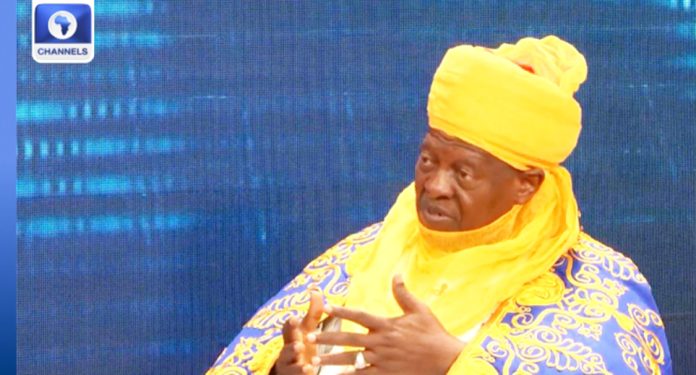
The Emir of Shonga, Kwara State, Haliru Ndanusa, has decried the impacts of early girl-child marriage, suggesting education as an alternative to address the menace.
Ndanusa said this during an interview on Channels Television’s The Morning Brief on Wednesday.
The Emir, who said early marriage is contentious, believes education can help address the issue.
“When you force them to school, you do many things. So, we can use that instrumentality to get them to fall into marrying late because it’s very devastating when they marry early.”
He likened girls who marry and get pregnant at thirteen and twelve years old to a ‘baby carrying a baby.’
“Sometimes they fall together and stand up again, but importantly, she gets damaged,” he explained
Recalling an experience, he said, “I remember my first practice, the first time when I was in an ONG posting.
“A thirteen-year-old came in bleeding, and a tall gentleman who said he was my friend said, ‘That’s my wife.’ I didn’t understand. I said ‘Your daughter?’ He said, ‘My wife’.”
According to the traditional ruler, enlightenment is a critical factor in taming the monster, and he wants community leaders to drive that.
“When you get information that you think you can now use, break it down for them to see. This girl is leaking urine, too young,” he said.
“Mention all those ills, and sometimes have pictures [sent to those involved] and tell them, ‘We are advising you. This is not right, push them to school.’
“We can create smart bylaws ourselves, which they listen to once the council decides. If they start doing this, they know they are running foul on the system itself,” the traditional ruler said.
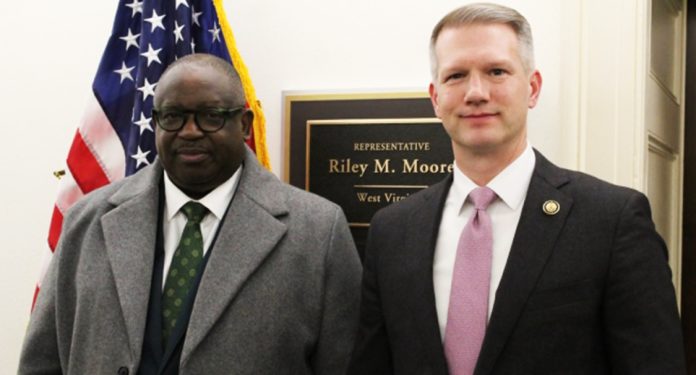
The United States Congressman Riley Moore met with Plateau State Governor in Washington
United States Congressman Riley Moore has met with the Governor of Plateau State, Caleb Mutfwang.
The duo met during Mutfwang’s trade and security mission to the United States, where the US lawmaker pledged America’s continued support in addressing security and economic challenges in Nigeria, particularly the protection of Christians and other vulnerable groups.
Moore said the engagement with the Plateau governor was productive and forward-looking.
“It was an honor to meet with the governor of Plateau state in Nigeria, Caleb Mutfwang, yesterday,” Moore wrote on his X handle on Tuesday, sharing a photo of himself and the Plateau governor.
The US lawmaker said Washington remains committed to working closely with Nigeria to confront shared challenges.
The meeting comes nearly two months after Moore announced that the Federal Government and the United States were close to reaching an agreement on a “strategic security framework” aimed at tackling terrorism in Nigeria.
On January 25, Moore said the establishment of the US-Nigeria working group is a necessary step toward combating the security challenges facing Nigeria.
Country Of Particular Concern
In November 2025, the United States redesignated Nigeria as a Country of Particular Concern over alleged violations of religious freedom, a move that was accompanied by threats of possible US military intervention.
U.S. President Donald Trump, thereafter, threatened to attack the country, alleging the West African nation is not doing enough to protect its Christian citizens.
Following the allegations, the West African country was designated as a Country of Particular Concern, a congressional designation in the U.S. for countries responsible for religious oppression.
The Nigerian government firmly rejected the claim of Christian genocide, saying the armed groups target people regardless of their faith.
The Independent National Electoral Commission, INEC, has identified the inclusion of deceased individuals on the current voters’ register, prompting plans for a nationwide verification exercise.
INEC Chairman, Prof. Joash Amupitan, made this known on Wednesday during the Commission’s first quarterly consultative meeting with Civil Society Organisations, CSOs.
According to Amupitan, the review became necessary after analysing figures from the Anambra State off-cycle governorship election held in November, which revealed a sharp contrast between the number of registered voters and those who actually cast ballots.
“When we look at the voters register for Anambra State during the off cycle elections in November, we discovered that the number of registered voters stood at over 2.9 million, but only about 600 came out to vote.
“This is just about 20 percent of the registered voters. So, we decided to take another look at the register and we discovered names of prominent Nigerian politicians who have died still on the register.”
“That impacts on the integrity of the register and we have to do a clean up because we don’t expect the dead to come from the grave to vote”.
According to the commission, the verification process is required for sanitising the database and rebuilding public confidence in the electoral process.
The INEC chairman said the findings have raised serious questions about the reliability of the register currently being deployed for elections across the country.
He stressed that credible elections cannot be achieved without an accurate and up-to-date voters’ register, noting that the presence of ineligible names undermines confidence in the democratic process.
Amupitan disclosed that the planned verification exercise would focus on removing the names of deceased persons, correcting data errors, and working with relevant government agencies to authenticate records.
He added that the clean-up exercise is part of broader efforts by the Commission to improve electoral credibility and ensure that only eligible Nigerians are captured on the voters’ register. Credit: dailypost.ng
The annual July fishing closed season, while intended to rebuild Ghana’s dwindling fish stocks, has intensified economic hardship for fishing households, particularly women and children, a new Sankofa research study has revealed.
The Creating Synergies between Indigenous Practices and Scientific Knowledge (ISIPSK), popularly known as the Sankofa research project, was led by the University of St Andrews in Scotland in collaboration with Ghana’s Fisheries Commission and other stakeholders.
The study, conducted across eight major fishing communities in Ghana’s four coastal regions, found that although the closed season provides fisherfolk time to rest and repair gear, the suspension of fishing-related activities leads to a complete halt in income for many households.
About 70 per cent of fisherfolk surveyed indicated that fishing was their sole source of livelihood, leaving families vulnerable during the one-month closure, the report said.
The economic strain, the study noted, translated into reduced household food security, increased school absenteeism among children, and rising social vices in coastal communities.
Women were found to bear a disproportionate burden during the period, as they assumed responsibility for household upkeep when male fishers were unable to provide income or fish for food.
“During the closed season, women carry the weight of feeding the family and managing household expenses,” the report stated, describing the impact as “distinctly gendered.”
The research further revealed that some youth migrated to illegal small-scale mining areas during the closure in search of income, a shift that worsened environmental degradation and exposed them to health risks.
The report called for livelihood diversification programmes and social protection measures to cushion vulnerable fishing households during the closed season.
The study showed that 82 per cent of fisherfolk agreed urgent action was needed to halt the decline in fish stocks, yet only 26 per cent believed a July closure was effective in rebuilding depleted resources.
Small pelagic species such as sardinella and anchovies – popularly referred to as “the people’s fish” – were reported to be on the brink of collapse, threatening food security for millions of Ghanaians.
Fishermen interviewed argued that July did not align with their indigenous ecological knowledge, which recognises May and June as a natural fishing lull due to rough sea conditions.
“The closed season is not a bad idea, but it would be better in June instead of July to align with the natural period the sea closes itself,” a fisher in the Greater Accra Region was quoted as saying.
The report noted that implementing the closure in July compelled some fishers to intensify fishing efforts before and after the period, sometimes resorting to illegal methods to recover lost income.
Researchers recommended that future fisheries management policies integrate indigenous knowledge with scientific data to improve compliance and sustainability.
The Western Regional Minister, Joseph Nelson, has called for sweeping reforms in land administration and intensified action against illegal mining, popularly known as galamsey, as he addressed participants at the Ministry of Lands and Natural Resources (MLNR) retreat held in Ellembelle in the Western Region.
Delivering remarks at the retreat, Mr. Nelson commended agencies under the Ministry for their unwavering support, noting that their collective efforts had significantly contributed to the successes chalked by the sector Minister, his deputy, and the entire ministry.
He also expressed appreciation to the Minister for selecting the Western Region as host of the retreat, describing the region as the hub of Ghana’s natural resources and, therefore, a fitting venue for deliberations on the country’s resource management challenges.
“The Western Region is the home of Ghana’s natural resources, and we do not shy away from saying that any day, any time,” he stated, stressing the importance of sustained dialogue on improving resource governance.
Touching on land administration, the Minister raised concerns over the lack of transparency in land registration fees at the Lands Commission, describing the process as unpredictable for the average Ghanaian. He proposed that fees associated with land registration be publicly displayed to enhance transparency and help prospective landowners plan adequately before initiating registration processes.
Mr Nelson acknowledged ongoing reforms in land administration but emphasised that the publication of clearly defined fee structures would further strengthen public confidence in the system.
On the fight against illegal mining, the Regional Minister described galamsey as a persistent and complex challenge, reiterating his commitment to tackling the menace despite resource constraints.
He noted that although progress had been made through collaborative efforts with the sector Minister and other agencies, more focused interventions were needed to curb the practice.
He advocated for the establishment of Minerals Commission offices across all mining districts in the Western Region, arguing that the Commission’s current role, which largely centres on reporting illegal mining activities, must be expanded to include direct enforcement support.
According to him, strengthening collaboration between the Minerals Commission, the National Anti-Illegal Mining Operations Secretariat (NAIMOS), Blue Water Guards, and Metropolitan, Municipal and District Chief Executives (MMDCEs) would significantly improve enforcement outcomes.
Mr. Nelson further highlighted the urgent need to adequately resource Regional Coordinating Councils (RCCs) to respond swiftly to illegal mining incidents, including the destruction of farmlands and water bodies.
He lamented that inadequate logistics and funding often hamper prompt responses to reported cases, leaving local authorities exposed to public criticism despite limited operational capacity.
“Once we have all accepted that galamsey is a menace, we must equally commit the resources required to empower local authorities to respond effectively,” he stressed.
The Regional Minister also underscored the importance of land reclamation in areas devastated by illegal mining, particularly in communities such as Mpohor and surrounding districts.
He proposed strict policies to prevent reclaimed lands from being reallocated by traditional authorities or individuals who previously facilitated illegal mining activities, noting that such measures would deter further environmental destruction.
Mr. Nelson concluded by welcoming participants to the Western Region and expressing optimism that the retreat would yield practical strategies to address challenges confronting Ghana’s natural resource sector.
The MLNR retreat brought together key stakeholders to assess progress, address policy gaps, and strengthen collaboration in the sustainable management of Ghana’s land and mineral resources.
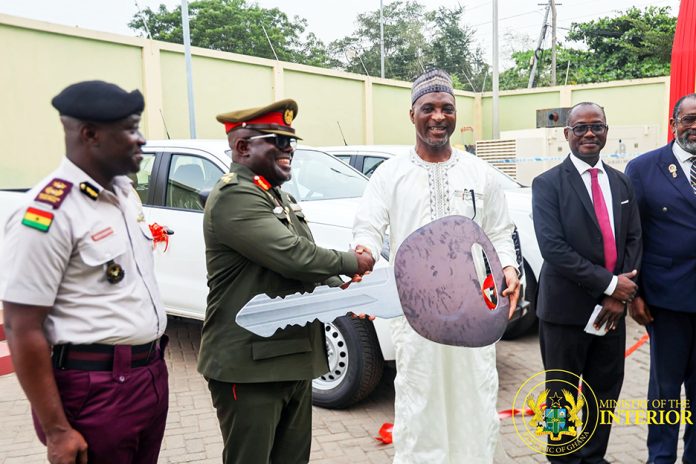
The Minister for the Interior, Muntaka Mubarak (2nd right) handing over a dummy car key to the DG, NACOC, Maxwell Obuba Mantey (2nd left)
The Narcotics Control Commission (NACOC) has taken delivery of ten Nissan Navara pickup vehicles from the Ministry of the Interior to improve mobility and response time on the ground.
The Minister for the Interior, Alhaji Muntaka Mohammed Mubarak, visited the Commission on Monday, February 2, 2026, where he presented the vehicles to the Director-General of NACOC on behalf of the Commission.
At a very brief but colourful handing-over ceremony the Minister for the Interior remarked that the event reflected the shared national responsibility to confront the drug menace and strengthen Ghana’s response.
Some of the vehicles on display
According to him, the government, under President John Dramani Mahama, since assuming office has intensified its support for NACOC, as part of a broader effort to bolster national security, protect public health and disrupt organised criminal works.
“It is, therefore, with a deep sense of responsibility that I stand before you today to formally commission 10 new Navara pickup vehicles for the Narcotics Control Commission.
“This commissioning is intended to further strengthen the Commission’s operational capability by improving mobility, response time and effectiveness on the ground,” he said.
MAINTENANCE
The minister called for proper maintenance for the vehicles, stressing that they are public assets handed over to NACOC as a strategic resource aimed at enhancing rapid response, surveillance, interdiction and nationwide outreach.
“These vehicles are public assets. I, therefore, urge management and officers to ensure they are responsibly used, properly maintained and strictly deployed for official duties, guided at all times by professionalism and accountability.
OUTCOMES
The Minister for the Interior used the opportunity to announce the successes chalked by NACOC since 2025.
He mentioned that recent enforcement outcomes depict that government support for the NACOC was yielding positive results and credited the Director-General, General Maxwell Obuba Mantey and his management team for what he described as his “steady leadership”.
Giving some figures, the minister indicated that between 2024 and 2025 arrest cases increased from 56 to 158, representing a 182% rise.
During the same period, he stated that officers seized 840 kilogrammes of cannabis and 341 kilogrammes of cocaine.
At the same time, the drug market, the minister added, was evolving, with Tramadol accounting for 23% of the seized NPS piles, while the remaining 77% reflect a growing range of other psychotropic substances.
MEASURES
In a move to nip the canker in the bud, the minister stated that NACOC intensified target narcotic enforcement patrols during the festive season, from December 2025 through to January 2026 – focusing on identified hotspots across the capital and other strategic locations.
He explained that these special operations disrupted distribution networks during a critical period, enforced deterrence, and contributed directly to the positive enforcement outcomes recorded at the start of 2026.
Meanwhile, the Minister for the Interior announced that the government supports the effort to strengthen NACOC’s prosecutorial mandate.
He also indicated the support to deepen collaboration with the Attorney General’s Department and advance discussions towards the establishment of a special specialised narcotics court to fast-track drug-related cases and enhance deterrence.
GRATITUDE
In a welcome address that preceded the remarks of the Minister, the Director-General, General Maxwell Obuba Mantey, expressed the gratitude of the Commission to the minister for taking time to visit them at the Headquarters and not coming empty-handed.
“We are deeply grateful to you, Honourable Minister, for securing 10 Navarra pickup vehicles for narcotics operational use and making time to personally commission these vehicles today,” he said.
He said that the support was a clear demonstration of the government’s commitment to narcotic operations and the security of the nation.
The D-G added that the vehicles will greatly enhance “our operational capacity, improve response times and enable officers to reach high-risk communities when required.”
He noted that the vehicles will strengthen NACOC’s surveillance, interdiction and intelligence-led operations.
The DG assured the minister that these vehicles will be responsibly deployed, properly maintained and used strictly in furtherance of their mandates to combat illicit drug trafficking, reduce drug abuse and protect the safety and well-being of the fellow citizens.
Minister Eric Opoku bing conducted round the market
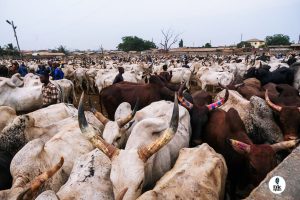
The Minister for Food and Agriculture, Eric Opoku, has paid a working visit to the Ashaiman Livestock Market, the largest livestock market in West Africa, as part of government’s commitment to the implementation of the Livestock Development Project (LAP).
The LAP Project intends to boost meat and dairy production, especially of cattle, piggery and small ruminants arming, introducing better breeds and establishing capacity-building centers to enhance meat and dairy production.
He announced that feasibility studies have been completed and design works are currently underway, marking significant progress towards the realisation of the project.
The leader of the cattle market addressing the Agric Minister
The Minister reaffirmed government’s resolve to support and develop the Ashaiman Livestock Market, emphasising its strategic role in the livestock value chain and providing employment opportunities to over 80,000 people.
He assured traders that the Ministry would actively engage the leadership of the Livestock Traders Association in all decisions affecting the market to ensure that interventions deliver maximum impact in fulfillment of the campaign pledge by President John Dramani Mahama to develop the Ashaiman Livestock Market
The Minister underscored the importance of security and announced the provision of fifty (50) streetlights to enhance night-time safety and commended the Inspector-General of Police for the establishment of security posts within the market to protect lives, goods, and services.
On sanitation, Mr Eric Opoku announced the provision of a Tricycle to support routine cleaning activities. He further disclosed ongoing engagements with fertilizer manufacturers to explore the use of cow dung from the market, as a raw material for fertilizer production, thereby creating value from waste.
Additionally, he revealed discussions with the Municipal Chief Executive (MCE), Samuel Tetteh Kwashie Morton, on the procurement of a payloader for the market.
As an interim measure, he announced a GHS 30,000.00 support package to enable the Assembly to hire equipment for immediate cleaning of the market yard pending the acquisition of the machine.
The visit reaffirmed government’s commitment to improving infrastructure, sanitation, security, and stakeholder collaboration to enhance the operations and long-term sustainability of the Ashaiman Livestock Market.
In his welcoming remarks, the General Secretary of the Ghana National Livestock Breeders and Traders Association (GLIBTA), Sheikh Issah Amartey, expressed appreciation to the minister for the visit, noting that it was the first time in over sixty (60) years of the market’s existence that a sitting state official or a Minister for Food and Agriculture had visited the facility.
Some of the animals at the market
He highlighted key challenges affecting the smooth operation of the market, particularly issues related to animal and public health arising from poor environmental conditions at the mini slaughter slab, animal watering points, and within the main cattle market.
Sheikh Issah also raised concerns about inadequate security for traders and animals. In this regard, he appealed for the provision of a payloader to support sanitation activities, inclusion of the association in the supply of livestock and livestock products for government programs, improvement in market infrastructure and management through the deployment of a Market Information System (MIS) and strengthened animal health service delivery within the market.
Ghanaian hitmakers Lasmid and King Promise are preparing to release the official visuals for their collaboration, ‘No Issues’.
Newly released images from a recent video shoot show the pair in a relaxed and self-assured setting that mirrors the tone of the record; smooth, intentional and unapologetically grown.
The collaboration marks a meeting point between two artists who understand timing, brand and musical chemistry. Rather than chasing spectacle, the visuals lean into mood, presence and real-life energy, reinforcing the song’s message of peace, clarity and staying above distractions.
With “No Issues”, Lasmid continues to cement his evolution from digital success to on-ground cultural relevance. From relaxed conversations to stylish, carefree moments, the visuals reflect the core message of the record: living freely, staying focused and keeping negativity at arm’s length. As fans await the official video release, these behind-the-scenes shots serve as a reminder that “No Issues” is more than a collaboration, IT IS A MINDSET.
The visuals will officially drop on Lasmid’s YouTube channel.