Home Blog Page 228

Weekend European Leagues; Fixtures & Previews

0
Bruno Fernandes, Man Utd

Highflying Manchester United host Tottenham at Old Trafford

Manchester United will be looking to make it four wins out of four under interim boss Michael Carrick when they welcome Tottenham Hotspur to Old Trafford for an intriguing Premier League clash on Saturday lunchtime.

The two teams butt heads for the first time since August when Matthijs de Ligt scored a 96th-minute equaliser for the Red Devils in a 2-2 draw in North London.

It is fair to say that Man United have turned a corner since the departure of Ruben Amorim and arrival of Carrick, with the Red Devils picking up nine points from a possible nine available and extending their unbeaten Premier League run to seven matches (W4 D3).

Spirits are understandably high on the red side of Manchester at present, with Carrick’s rejuvenated crop sitting fourth in the Premier League table,. Victory on Saturday would see Man United surpass their 42-point tally from last season with 13 games still to play.

Tottenham, though, are now winless in their last six Premier League games (D4 L2) – their longest run since their final seven matches of last season – and they are languishing in 14th place in the table, slightly closer to the relegation zone (nine points above) than the top five (11 points behind).

Tottenham are also unbeaten in their last eight encounters with Man United across all competitions (W5 D3).

Man United duo Patrick Dorgu and De Ligt remain sidelined with respective thigh and back injuries, while Mason Mount recently picked up a knock in training and will be assessed ahead of kickoff.

However, taking into account Tottenham’s injury woes and the recent form of both teams, Man United will enter this contest as favourites and Carrick’s side should do enough to outscore their opponents.

Credit: sportsmole.co.uk


Chelsea travel away to face Wolverhampton Wanderers

Chelsea will endeavour to strengthen their top-five hopes when they travel to Molineux to face basement club Wolverhampton Wanderers in the Premier League on Saturday afternoon.

Cole Palmer, Chelsea

The two teams meet for the first time since November when the Blues claimed a 3-0 top-flight victory at Stamford Bridge.

Three weeks after losing 3-2 at Stamford Bridge in the first leg of their EFL Cup semi-final tie, Chelsea came up short against London rivals Arsenal once again as they fell to a slender 1-0 second-leg defeat at the Emirates Stadium on Wednesday night.

Head coach Liam Rosenior offered the first real glimpse of his tactical credentials since his appointment as Chelsea boss a month ago, but his side ultimately lacked that “quality moment” against the Gunners.

Nevertheless, Rosenior has won six of his first eight matches in charge of Chelsea across all competitions, including his opening three Premier League games that has helped the Champions League-chasing Blues rise to fifth in the table and just one point behind Manchester United in fourth spot.

Bearing in mind that Wolves have failed to score a second-half goal in any of their last 10 Premier League games at Molineux, a strong first-half performance could be crucial if Edwards’s side wish to claim three valuable points and pull off an upset against Chelsea.

Credit: sportsmole.co.uk


Barcelona welcome Mallorca to Camp Nou

Barcelona will be bidding to open up a four-point lead at the top of the La Liga table when they welcome Mallorca to Camp Nou on Saturday afternoon.

The Catalan giants are currently one point ahead of second-placed Real Madrid at the summit, while Mallorca are 14th, just two points clear of the relegation zone.

Fermín López, Barcelona

Barcelona have already won the Spanish Super Cup this season and are chasing three more trophies in the final months of the campaign, with their spot in the semi-finals of the Copa del Rey secured courtesy of a 2-1 success over Albacete on Tuesday night.

Hansi Flick‘s side are also in the last-16 stage of the Champions League, while they sit at the top of the La Liga table, one point clear of second-placed Real Madrid, who are not in action until Sunday against Valencia.

Barcelona have won their last two in La Liga against Real Oviedo and Elche, and another victory on Saturday would move them four points clear at the summit, piling the pressure back on Real Madrid, with the two rivals currently involved in a fierce battle.

Mallorca have a lot of quality in the final third of the field, while Barcelona’s defence is far from secure, so we fancy the visitors to score on Saturday, but the hosts are exceptional going forward, and we are expecting all three points to go to the champions.

Credit: sportsmole.co.uk


Arsenal, Sunderland in Premier League showdown

Before donning pure red Liverpool scarfs, Arsenal fans will sport their traditional red and white to cheer on their team against Sunderland in Saturday’s Premier League showdown.

The Gunners return to a bouncing Emirates buoyed by thoughts of their imminent EFL Cup final, while the Black Cats are still dreaming the European dream.

Winless in three Premier League games, failing to score in two of them and only edging out Kairat 3-2 in their top-vs-bottom Champions League battle, some believed that the stage was set for Arsenal to slip-up once again in their showdown with a revitalised Leeds United side last weekend.

Jesus Gabriel, Arsenal

However, Mikel Arteta‘s men defied the doubters with a refreshingly merciless performance, demolishing the Whites 4-0 at Elland Road.

The Gunners now go in search of a fourth straight win across all competitions, as well as a new Premier League record; they are unbeaten in 43 successive top-flight home games against newly-promoted clubs, the joint-longest streak in the competition since 1992 alongside Chelsea, from 2001 to 2015.

Arsenal did not need to over-exert themselves on the attacking front in midweek, and having torn apart a five-man Leeds wall with ease, Arteta’s men should have no real issues dishing out the same treatment to Sunderland.

Credit: sportsmole.co.uk


FIXTURES

Premier League

Friday

Leeds United 20:00 Nottingham Forest

Saturday

Manchester United 12:30 Tottenham

Bournemouth 15:00 Aston Villa

Arsenal 15:00 Sunderland

Burnley 15:00 West Ham United

Fulham 15:00 Everton

Wolves 15:00 Chelsea

Newcastle United 17:30 Brentford 

 Sunday

Brighton 14:00 Crystal Palace 

Liverpool 16:30 Manchester City 


Spanish La Liga

Friday

Celta Vigo 20:00 Osasuna

Saturday

Rayo Vallecano 13:00 Real Oviedo

Barcelona 15:15 Mallorca

Sevilla 17:30 Girona

Real Sociedad 20:00 Elche

Sunday

Alavés 13:00 Getafe

Athletic Club 15:15 Levante

Atletico Madrid 17:30 Real Betis

Valencia 20:00 Real Madrid


Italian Serie A

Friday

Hellas Verona 19:45 Pisa 

Saturday

Genoa 17:00 Napoli

Fiorentina 19:45 Torino

Sunday

Bologna 11:30 Parma

Lecce 14:00 Udinese

Sassuolo 17:00 Inter Milan

Juventus 19:45 Lazio

2 Chinese Nationals Remanded Over Alleged Human Trafficking and Forced Prostitution

0
Court
The Circuit Court ‘3’ in Accra, presided over by Her Honour Susana Eduful, has remanded two Chinese nationals into police custody for their alleged involvement in human trafficking and forced prostitution.

The accused persons are Chen Xia, 37, a manager, and He Xiao Rei, also known as Nana, 46, a bar attendant.

They have pleaded not guilty to charges of conspiracy to commit human trafficking, human trafficking, and abetment of crime.

A third accused person, Le Thi Ngoc, a Vietnamese national who allegedly played a key role in luring the victim into Ghana, is currently at large.

The court remanded the accused persons into police custody pending the final determination of the case and cautioned the prosecution to ensure an expeditious trial.

The prosecution has been directed to file its witness statements. The case has been adjourned to February 18, 2026.

Brief Facts

Presenting the facts, the prosecuting officer, ASP Patrick Issah Achiburi told the court that on January 20, 2026, the Anti-Human Trafficking Unit of the CID Headquarters received a complaint from a Vietnamese trader (name withheld for security reasons).

The complainant alleged that she was recruited by Chen Xia and transported by Le Thi Ngoc from Vietnam to Ghana under the promise of a singing job at a KTV located at Tema Community 12.

However, upon arrival, she was allegedly confined and compelled to engage in prostitution.

Police investigations led to the arrest of Chen Xia and He Xiao Rei at Tema Community 12, where nine victims were rescued.

Items retrieved from the apartment for evidential purposes included a Toyota Corolla saloon car with registration number GT 6402-23, two blue notebooks, and nine pieces of Durex condoms.

The complainant was not initially found at the apartment. During interrogation, He Xiao Rei allegedly informed police that the victim had been transferred to Wei Ja Na KTV at Labone in Accra.

Police subsequently proceeded to the location, where the complainant was rescued from a locked room.
Preliminary investigations revealed that He Xiao Rei allegedly acted as a pimp and facilitated the movement of the complainant to various locations in Tema and Accra for prostitution.

The prosecution further stated that proceeds amounting to about GH¢50,000 were allegedly paid to Chen Xia.

Investigations into the case are ongoing as police continue efforts to arrest the other accused person, who remains on the run.

For more news, join The Chronicle Newspaper channel on WhatsApp: https://whatsapp.com/channel/0029VbBSs55E50UqNPvSOm2z


Mopping Up The ‘Jungles’ … Criminals Open Fire, Police Respond

0
IGP Christian Tetteh Yohuno

The Ghana Police Service has intensified its fight against crime, cracking down on robbers in Bolgatanga, Accra, while also rescuing trafficked persons in Tema.

The rescue of the trafficked victims from Nigeria confirms the police’s vow to tame cross-border crime.

Bullets recovered by the police

The ongoing operations suggest a strategic shift, with police taking the proactive measures to disrupt and dismantle criminal networks.

Sources indicate that, these crackdowns are part of a broader effort to restore law and order, with police carrying the fight to the doorsteps of these elements.

As the Inspector General of Police (IGP), Mr Christian Tetteh Yohuno, in an interview recently put it – “we are taking back our streets and no one is above the law”.

On Tuesday January 2, 2026 at about 10:00hours, personnel of the operations unit at the Criminal Investigation Department (CID) Headquarters, while trailing a suspect in Bolgatanga, in the Upper East Region, came under attack from robbers.

Police immediately engaged the armed elements in a shootout and when the dust settled, one person sustained serious gunshot injuries. He died whilst being conveyed to the hospital.

The deceased suspect was identified as BanabasAkolgo, aka Akoli, aged 36, who was initially arrested from a hideout at Kotokoli, a suburb of Bolgatanga.

He promised to take the police to a hideout to pick other criminals who are on the radar of the law enforcement officers.

Upon reaching a place close to the object, armed gangsters attacked police amid sporadic gunfire, in order to set Akolgo free.

During the ensued exchanges, the suspect was maimed, but died, as he was being conveyed to the hospital.

Police retrieved from the scene five spent shells of AK47 assault rifle, four live AK47 assault rifle ammunitions and a black scooter bike with registration number M-24-NR-8767, suspected to belong to the gangsters.

Further investigation by police reveals that, Akolgo was the leader of an armed robbery group who committed a series of atrocities on the Bolgatanga-Tamale highway, as well as residential areas in Kumasi, Ashanti Region.

Police identified his accomplices as Abuto, Maxwell, aka Cashout, Shatta, Weezy, aka Wee Bag and convicted prisoner, Bashit, in Kumasi prison.

Akolgo, somewhere last year, led his gang, including Bashit, to attack and rob a woman at Roman Hill, around Zongo, in Kumasi.

The robbers succeeded in taking money amounting to GHC95,000.00 (Ninety-five thousand Ghana Cedis) in her shop.

Police arrested both Akolgo and Bashit with the latter being sentenced whilst Akolgo was acquitted and discharged.

On January 13, 2026 he again led other remnants of the group to rob Alhaji Seidu Busanga of unspecified amount of money, in his Bolgatanga based fertilizer shop and bolted to Kumasi.

Police investigation also disclosed that the deceased and his accomplices used to terrorise commuters in Bolgatanga Central Market, snatching motorbikes and mobile phones.

The gang, according to the police became notorious, would intimidate and cause harm to any potential victim at any time.

Again, in Bolgatanga, the Regional Police Intelligence Directorate (PID) on February 2, 2026 carried out intelligence-led operation and arrested Anaba Morgan from his hideout.

That, on January 23, 2026 the suspect and a gang numbering five, on three motorbikes, armed with AK47 assault rifles, pump action gun and a pistol attacked a victim, Stephen Ayessah, and subjected him to severe beatings at Sokabisi JHS Park.

They robbed Stephen of his iPhone 12 Pro max, Apple Smat Watch, cash of GHC2,200 (Two thousand and two hundred Ghana Cedis) and a Yamaha Scooter.

Two empty shells of AK47 assault rifle ammunition were found at the scene.

Eyewitnesses were able to identify the suspects as perpetrators of the crime.

In Accra, police on January 14, 2026, arrested two identified as Stephen Gletsu and Mohammed Sheriff riding unregistered Royal morbike.

While Gletsu was the rider, Sheriff was the pillion rider, was carrying a cutlass.

Upon noticing the police patrol team, the suspects attempted to flee but lost control and fell.

They subsequently tried to escape on foot, but were pursued and arrested by the patrol team.

A search conducted on them led to the retrieval of several items suspected to be proceeds of crime.

They include multiple mobile phones of different brands, cash amounting to GHC2,690 (Two thousand six hundred and ninety Ghana Cedis), two dollars and a necklace.

During interrogation, the suspects confessed to carrying out fifty robbery activities in Accra alone. Some victims have gone to identify their items.

Meanwhile, the police personnel who performed the operation have been promoted to their next ranks.

On February 2, 2026 a team from the Special Operations Assistance to the IGP, joined by personnel at OkpoiGono district arrested two persons, Robinson Endurance and Derrick Glory, for kidnapping at Devtraco, Tema Community 25.

They were said to have kidnapped ten victims who were being used for cybercrime operations.


For more news, join The Chronicle Newspaper channel on WhatsApp: https://whatsapp.com/channel/0029VbBSs55E50UqNPvSOm2z

Fight Against Galamsey: Gov’t Reclaims 800 Acres Of Mined Areas At Manso Nyankumase

0
Minister Armah Kofi Buah inspecting the Nyankumase Project site

About 800 acres of land degraded by illegal mining activities at Nyankumase in the Manso Adubia enclave in the Ashanti Region has been reclaimed as part of efforts by the Mahama government to restore degraded lands.

The reclamation works, which started four months ago, are being carried out by RM Ecorestore Ghana Limited, a company supporting the Government of Ghana in reclaiming and revegetating degraded and mined-out areas across the country.

The Lands Minister being briefed on the progress of work at the reclamation site

The exercise forms part of the President’s commitment to restore lands destroyed by years of unregulated mining for productive use for agriculture and other economic activities.

The initiative focuses on transforming abandoned and mined-out sites into viable farmland, forest plantations, and other development-friendly zones that can support local livelihoods.

The Nyankumase project is a demonstration and an example of how degraded lands can be restored and put back to productive use.

The Minister of Lands and Natural Resources, Emmanuel Armah-Kofi Buah during an inspection of the  project yesterday outlined the measures government had put in place to safeguard water bodies and protect lands from further degradation.

He said the Manso Adubia site, which spans 800 acres, has been planted with cassia and teak trees as part of a long-term plan to retire the land and restore its ecological balance.

According to the Minister, the choice of tree species is intended not only to restore vegetation but also to provide future economic value through sustainable forestry.

Armah-Kofi Buah noted that beyond environmental recovery, the project was expected to create jobs and stimulate economic activity in surrounding communities.

He added that several other degraded sites across the country have been earmarked for similar interventions under the Galamsey Rehabilitation Initiative.

The Minister stressed that government remains resolute in its fight against illegal mining and will not relent in protecting the country’s natural resources.

He mentioned that complementary programmes such as Tree for Life and Blue Water are designed to reinforce government’s broader agenda of ecological sustainability.

A portion of the reclaimed land

These initiatives, he said, aim to restore forest cover, protect river bodies, and ensure a healthier environment for present and future generations.

The Chief of Manso Adubia, Nana Doku Appiah Dankwa, expressed appreciation for the intervention by the government to address the menace of galamsey.

For more news, join The Chronicle Newspaper channel on WhatsApp: https://whatsapp.com/channel/0029VbBSs55E50UqNPvSOm2z

Ghana Is Heading into Danger –Prof. Bokpin

0
Prof. Godfred Alufar Bokpin

Renowned Economist and Professor of Finance at the University of Ghana Business School, Prof. Godfred Alufar Bokpin, has issued a stark warning that Ghana is heading down a dangerous and unsustainable path, particularly in its handling of irresponsible mining activities.

According to him, the government appears increasingly focused on highlighting the perceived financial benefits of mining, often framed in terms of billions of dollars, while downplaying or ignoring the full environmental and human cost.

Speaking on Accra-based Joy FM, Prof. Bokpin criticised what he described as the state’s growing tolerance for destructive mining practices, despite clear evidence that their long-term costs far outweigh any short-term economic gains.

“We keep hearing about the benefits, the revenues and the supposed gains, but when you weigh these against the destruction of our water bodies, forests and livelihoods, the cost is clearly far higher than whatever benefit is being advertised,” he said.

Prof. Bokpin questioned how the country has become comfortable watching its natural resources degrade while continuing business as usual.

“How do we move across this country, see the state of our rivers and forests, and still feel comfortable going to bed and waking up to continue digging?.This is not just bad economics; it is dangerous.”

He stressed that no economy can thrive without ecological integrity and environmental sustainability, warning that celebrating short-term gains today could come at a devastating cost tomorrow.

“You may celebrate these short-term gains now,” he cautioned, “but you may not have a tomorrow to celebrate.”

While making it clear that he is not opposed to mining, Prof. Bokpin emphasised the need for responsible and regulated mining practices.

He noted that there are mining companies that comply with environmental standards and demonstrate that mining can be done responsibly.

However, he argued that many operators involved in destructive mining adopt cheap, low-cost methods that disregard safety, environmental protection, and human life.

“These operators are simply not capable of responsible mining. They cut corners, adopt low-cost approaches and leave destruction in their wake.”

Prof. Bokpin also questioned the role of the state, suggesting that continued tolerance of such practices sends a troubling signal.

“If the state is comfortable with this, or looks away, then it is effectively endorsing the destruction,” he warned.

He concluded by calling for urgent reflection and action, warning that Ghana cannot afford to trade environmental collapse and human lives for temporary economic relief.


For more news, join The Chronicle Newspaper channel on WhatsApp: https://whatsapp.com/channel/0029VbBSs55E50UqNPvSOm2z


Africa’s Prosperity Must Be Driven by Its People –Dlamini-Zuma

0
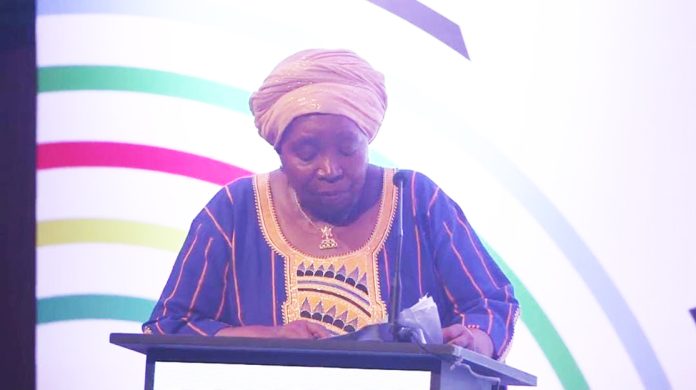
Chairperson of the Africa Prosperity Network (APN) Advisory Council, H.E. Dr. Nkosazana Dlamini-Zuma

Chairperson of the Africa Prosperity Network (APN) Advisory Council, H.E. Dr. Nkosazana Dlamini-Zuma, has stressed that Africa’s development and long-term prosperity must be led by Africans themselves, with women and young people playing a central role.

She made the call in her welcome address at the Africa Prosperity Network Dialogue (APD) 2026, which opened in Accra on Wednesday, February 4.

The three-day dialogue, running from February 4 to 6, 2026 is being held under the theme: “Empowering SMEs, Women and Youth in Africa’s Single Market: Innovate, Collaborate, Trade.”

It has brought together heads of state, policymakers, business leaders, innovators and civil society actors to chart practical pathways for expanding intra-African trade, strengthening entrepreneurship and unlocking youth potential across the continent.

Dr. Dlamini-Zuma described the APN as “the boardroom of Africa,” noting that it provides a space where African ideas are converted into action and the continent’s prosperity agenda is shaped by Africans, for Africans.

She said empowering small and medium-sized enterprises (SMEs), women and youth is fundamental to the success of Africa’s continental free trade and single-market ambitions.

“The Africa we want—integrated, prosperous and peaceful cannot be built without fully unlocking the potential of women and young people. If they are not empowered, Africa will go nowhere,” she said.

Highlighting structural challenges, she noted that although young people constitute about 60 per cent of Africa’s population, youth unemployment remains persistently high.

Women, she added, contribute nearly half of the continent’s Gross Domestic Product yet continue to face systemic barriers in accessing finance, markets and trade networks.

Dr. Dlamini-Zuma said targeted support for youth-led enterprises could generate up to 50 million jobs by 2030, while closing gender gaps in trade could raise intra-African trade by as much as 15 per cent annually.

She called for deliberate policies to integrate women- and youth-owned businesses into regional value chains, increased investment in skills development, and expanded access to digital technologies. She also urged African governments to simplify trade regimes, eliminate tariffs and non-tariff barriers, and develop cross-border payment, logistics and digital trade systems that work for small businesses, not only large corporations.

On technology, she said Africa must move beyond being a passive consumer of innovation, particularly artificial intelligence, and instead become an active contributor, ensuring that African data, values and knowledge shape the continent’s digital future.

Dr. Dlamini-Zuma further underscored the importance of continental unity and freer movement of people and goods, pointing to Botswana, Namibia and Zambia as examples of countries facilitating borderless trade without compromising security.

“The true measure of this dialogue will not be the eloquence of our speeches, but the boldness of our actions.

“By empowering SMEs, women and youth, innovating with purpose and collaborating across borders, we can restore hope and convince Africa’s young people that their future lies on this continent—not in dangerous journeys elsewhere,” she said.


For more news, join The Chronicle Newspaper channel on WhatsApp: https://whatsapp.com/channel/0029VbBSs55E50UqNPvSOm2z

Renaming of Kotoka Airport is a misplaced priority –Elikplim

0
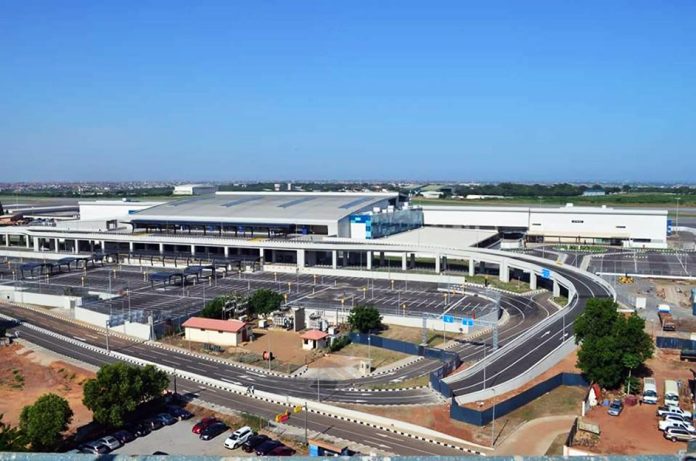
kotoka International Airport

Dr Elikplim Kwabla Apetorgbor, Volta Regional Commissioner to the National Development Planning Commission (NDPC) has described the proposal to rename the Kotoka International Airport as a misplaced policy priority.

Mr Mahama Ayariga, Majority Leader and Leader of Government Business in Parliament through the Ministry of Transport is set to introduce a bill in Parliament, seeking to rename Kotoka International Airport as Accra International Airport.

Dr Apetorgbor, in a release copied to the Ghana News Agency (GNA), disclosed that “as Volta Regional Commissioner to the National Development Planning Commission, I must state, clearly and firmly that this proposal represents a misplaced policy priority and must be resisted in the national interest”.

He said his travels across different regions of the world and passing through many international airports showed a consistent global practice which is evident in airports often named after individuals, statesmen, reformers and heroic citizens not as casual symbolism but to reflect history, identity and national purpose.

The Volta Regional Commissioner of NDPC said the names had not hindered efficiency, competitiveness or global recognition adding that “on the contrary, they coexist seamlessly with world-class performance”.

He said international airports were not mere symbols but strategic economic assets with a value determined by efficiency, safety, connectivity, cost competitiveness, cargo capacity and the ability to attract airlines, trade, tourism and investment.

“A change in name does not improve operational performance, reduce costs, expand routes or increase passenger or cargo volumes. It delivers no measurable economic benefit”.

Dr Apetorgbor said the unavoidable policy question therefore remained what national problem does the renaming solve?

He added that at a time of fiscal strain, rising public debt and intense pressure on public investment, the absence of any clearly defined economic, operational or financial justification made the proposal deeply concerning.

The Volta Regional Commissioner of NDPC said renaming a major international airport was not cost-free but required parliamentary time, administrative capacity and rebranding and system update expenses across global aviation, logistics and digital platforms.

He said every cedi and every unit of institutional focus devoted to symbolic change was capacity diverted from urgent priorities, improving safety systems, passenger experience, cargo handling and positioning Accra as a competitive regional aviation hub.

Dr Apetorgbor said the Kotoka International Airport was already firmly embedded in international aviation systems and added that “stability and predictability are assets in global air transport”.

He said many countries deliberately retained long-established airport names while directing reform energy toward efficiency, service quality and commercial competitiveness which Ghana should do same.

The Volta Regional Commissioner of NDPC noted that the proposal also raised a wider governance concern because public confidence was strengthened when government action was clearly aligned with national development priorities and sequenced according to urgency and impact.

“When initiatives of limited apparent economic value are advanced amid far more pressing national challenges, citizens are right to question the seriousness of our policy focus”.

He said Ghana’s aviation sector required reforms that mattered lower operating costs, improved efficiency, expanded cargo and logistics capacity, and a coherent strategy to position Accra as a true West African hub.

The Volta Regional Commissioner of NDPC noted that they were the interventions that generated growth, jobs, and foreign exchange not “cosmetic renaming exercises”.

He called on the Volta Caucus in Parliament, Volta Region House of Chiefs, Volta-based Diaspora organisations, and all Voltarians at home and abroad to “fiercely reject this needless proposal”.

Dr Apetorgbor also urged the wider Ghanaian public to insist on policy discipline and economic seriousness adding that national development was driven by performance, competitiveness and results not by changes in designation.

“Ghana cannot afford distractions. This proposal must be firmly rejected, so that national attention remains focused on economic recovery and sustainable growth”.

GNA


Editorial: GRA’s Enforcement Of The VAT Regime Compliance Commendable

0
GRA

According to a story published on myjoyonline, the Ghana Revenue Authority (GRA) has intensified efforts to enforce the reformed Value Added Tax (VAT) regime that took effect on January 1, 2026 after disclosing that nearly 60 percent of businesses have not complied. This non-compliance, the Authority warns, is undermining the policy’s promise of price relief for consumers and causing significant revenue losses to the state.

In response, the GRA has inaugurated a 26-member Compliance and Enforcement Unit within its Domestic Tax Revenue Division to close gaps in VAT collection before the end of the year. Commissioner-General Anthony Kwasi Sarpong has stressed that effective enforcement is critical to meeting revenue targets and strengthening domestic revenue mobilisation.

VAT remains one of Ghana’s most important tax instruments due to its broad base and relative efficiency. However, its success depends on fair, consistent, and nationwide application. The current compliance deficit highlights longstanding structural challenges in tax administration, particularly among small and medium-sized enterprises and the informal sector.

While enforcement is necessary, the broader issue goes beyond policing. It raises questions about taxpayer education, administrative simplicity, trust in public institutions and whether the reform has been communicated and implemented in a manner that encourages voluntary compliance rather than resistance.

The revelation that six out of every ten businesses are yet to comply with Ghana’s reformed VAT regime should set off alarm bells not only at the Ghana Revenue Authority, but also at the Ministry of Finance and within the wider policy community.

VAT is not a marginal tax. It is a central pillar of domestic revenue mobilisation and persistent gaps in its implementation weakens the state’s capacity to fund public services, stabilise the economy and reduce dependence on borrowing.

The GRA’s decision to inaugurate a dedicated Compliance and Enforcement Unit is, therefore, understandable and, to an extent, overdue. For years, uneven enforcement, selective compliance and weak monitoring have eroded the integrity of the VAT system.

Honest businesses that charge and remit VAT correctly often find themselves at a competitive disadvantage, compared to non-compliant operators who undercut prices by simply ignoring the law. In that sense, enforcement is not punitive, it is a matter of fairness.

That said, enforcement alone will not fix a problem of this magnitude. A 60 percent non-compliance rate suggests systemic issues. Ghana’s economy is still heavily informal, with many businesses operating without proper records, digital systems, or a clear understanding of tax obligations.

If VAT reforms are complex, poorly communicated, or perceived as unstable, compliance will naturally suffer. Businesses cannot be expected to comply with rules they do not fully understand or trust.

There is also the credibility challenge. Tax compliance improves when taxpayers see a clear link between what they pay and the public services they receive.

In an environment where citizens routinely complain about poor roads, unreliable utilities, and wasteful public spending, aggressive tax enforcement risks being viewed as coercive rather than civic. The GRA must therefore pair enforcement with transparency, education, and visible accountability in the use of tax revenues.

Moreover, the promise that the reformed VAT would bring price relief to consumers must be carefully monitored. If enforcement leads to higher consumer prices due to pass-through effects, public confidence in the reform will erode further. Policymakers must be honest about trade-offs and ensure that any relief mechanisms are real, not rhetorical.

In the end, VAT has the potential to significantly boost Ghana’s revenue base, but only if it is applied consistently, fairly, and intelligently. The new enforcement unit is a step in the right direction, but it should mark the beginning of a more balanced approach one that combines firm enforcement with simplification, taxpayer education, and a renewed social contract between the state and citizens. Without that balance, the VAT gap may narrow temporarily, but the trust gap will only widen.


For more news, join The Chronicle Newspaper channel on WhatsApp: https://whatsapp.com/channel/0029VbBSs55E50UqNPvSOm2z

Kotoka or Accra International Airport? 

0
Kotoka International Airport

Memory, Morality, and the Politics of Ghana’s Democratic Identity 

Few public policy decisions in recent times have stirred Ghana’s political nerve centre as deeply as the decision by the John Dramani Mahama administration to revert the name Kotoka International Airport to Accra International Airport. What appears, on the surface, to be a matter of nomenclature is, in truth, a profound national conversation about history, legitimacy, and the moral foundations of Ghana’s democracy.

For decades, many Ghanaians have questioned why the country’s principal gateway to the world bears the name of a man whose most defining historical act was the violent overthrow of Ghana’s first republican government. To them, the continued use of the name Kotoka represents not neutrality, but a quiet endorsement of unconstitutional rule.


The Historical Burden of the Name “Kotoka”

Lieutenant General Emmanuel Kwasi Kotoka was not a passive figure in Ghana’s political history. As Aide-de-Camp to Osagyefo Dr. Kwame Nkrumah, Ghana’s first President, he was among the senior military officers who led the coup d’état of February 24, 1966, toppling the First Republic and installing the National Liberation Council (NLC)—a military junta that ruled without electoral mandate.

This act did more than remove a government; it interrupted Ghana’s constitutional development and inaugurated a cycle of military interventions whose scars remain visible in Ghana’s political memory. Kotoka himself did not die as a constitutional hero. He was assassinated on April 17, 1967, during an abortive counter-coup led by Lieutenant Samuel Benjamin Arthur.

The coup, popularly christened Operation Guitar Boys, also involved other junior officers of the Ghana Armed Forces—Lieutenant Moses Yeboah, believed to have masterminded the killing of Kotoka, and Second Lieutenant Ebenezer Osei-Poku.

It was after this episode that the NLC named Ghana’s international airport in Kotoka’s memory—a decision taken not by a democratic government, but by a military regime seeking to legitimize its own historical narrative. This context matters.


Selective Immortalisation and the Moral Question

The agitation against the name Kotoka International Airport is not rooted in selective amnesia. Ghana’s political history includes other military rulers—Generals Acheampong and Akuffo, and Flight Lieutenant Jerry John Rawlings—each of whom occupies a distinct place in the nation’s historical narrative.

Acheampong is still remembered for his extensive housing initiatives and the popular social intervention programme, Operation Feed Yourself, while Rawlings is credited with steering the country back to constitutional rule and overseeing major road infrastructure projects that linked some of the most remote parts of Ghana to the national grid.

Yet none of these figures has been immortalized through the naming of national symbols of global significance. The closest approximation in recent times is the erection of a Rawlings effigy in Dzelukope (Keta Dzelukope), his maternal hometown—an act of local commemoration rather than state-sanctioned canonisation.

The reason is straightforward: performance cannot cleanse illegality. To immortalize a coup maker—regardless of personal qualities or subsequent achievements—is to blur the moral line between constitutional governance and the violent seizure of power. It sends an ambiguous message to future generations about what Ghana chooses to honour.

Airports, especially international ones, are not neutral spaces. They are symbolic thresholds. They announce to the world who a nation is and what it values.


Democracy, Memory, and the Politics of Reversion

The decision by the Mahama administration to revert the name to Accra International Airport is therefore not an act of historical erasure, but of democratic clarification. It restores neutrality where partisanship of power once prevailed.

Yet, as expected, the move has generated political contestation. Minority Leader Alexander Afenyo-Markin has framed the decision as an affront to the Volta Region, arguing that the removal of Kotoka’s name symbolically diminishes the region’s contribution to Ghana’s history.

This argument, however, collapses under scrutiny. Ghana’s national symbols are not instruments of regional compensation. They are expressions of collective values. To suggest that retaining the name of a coup maker is necessary to honour a region is to reduce national memory to ethnic bargaining—a dangerous precedent in a constitutional democracy.

More strikingly, the internal contradictions within the opposition itself expose the weakness of the politicisation. New Patriotic Party Member of Parliament for Ofoase-Ayirebi, Kojo Oppong Nkrumah, has publicly supported the name change, implicitly acknowledging that the question transcends party lines.

What Is Ghana Choosing to Honour?

At its core, the debate is not about Kotoka the man, but about Ghana the republic. Does Ghana wish to continue projecting a conflicted democratic identity—one that condemns coups in principle but venerates coup leaders in practice? Or does it seek coherence between its constitutional values and its national symbols?

Reverting to Accra International Airport does not deny history. Kotoka’s role remains recorded in textbooks, archives, and scholarly discourse. But history remembered, is different from history celebrated.Democracies do not honour every figure who shaped them—only those whose actions align with their enduring values.

Beyond Politics, Toward Principle

The renaming of Ghana’s international airport is not an act of vengeance, regional bias, or partisan triumphalism. It is a long-overdue act of democratic hygiene. Nations grow not only by building infrastructure, but by clarifying memory. In choosing Accra International Airport, Ghana is not rewriting history; it is correcting the lens through which that history is publicly framed.

In doing so, it sends a clear message—both to its citizens and to the world—that Ghana’s democracy does not merely reject coups rhetorically but refuses to canonise them symbolically. That is progress.

By Richmond Keelson, Ontario, Canada 


The views expressed in this article are the author’s own and do not necessarily reflect The Chronicle’s stance.

Fire guts School Feeding facility at Ninting Primary School 

0
Nicholas Osei Taylor (in spectacle) -SISO

The Pre School department of the Ninting R/C Primary School in the Mampong Municipality of Ashanti region has been temporarily closed down, following a fire outbreak that razed down the School Feeding structure.

The gutted facility

The Canteen and Store, which served as the kitchen for the preparation of meals to feed pupils of the Ninting R/C Primary under the School Feeding Programme, were badly affected by the raging fire.

The closure is part of precautionary measures taken by the authorities of the school to protect the children against accidents at the scene.

The Schools Improvement and Support Officer (SISO) of the Mampong Municipal Education Directorate, Nicholas Osei Taylor, justified the temporary closure of the Pre School.

Mad. Yaa Adisa Pokuaa – Caterer

According to Johnson Nyamekye, a Member of the Unit Committee of the Ninting Electoral Area, the fire started around 1am on Tuesday February 3, 2026.

It took the intervention and strenuous efforts of the youth to bring the fire under control as the Mampong Municipal Station of the Ghana National Fire Service could not be reached after many distress phone calls.

Officials from the Mampong Municipal Directorate of the National Disaster Management Organisation (NADMO) visited the scene later, upon a formal report by the Assembly Member.

Mark Yeboah, Mampong Municipal Director of NADMO

The Municipal Director of the Organisation, Mark Hammer Yeboah, noted the disaster was serious, as the burnt building had lost its structural integrity and recommended it had to be pulled down.

Madam Yaa Adisa Pokuaa, the Caterer, while counting her loss said the store had been re-stocked with food items worth about GHC10,000 two days before the fire incident.

Meanwhile, the Municipal NADMO has pledged to provide a quantity of maize and rice as an interim move to sustain the school feeding programme to feed the pupils, while it makes formal report to the Municipal Assembly for extensive support.

From Oswald P. Freiku, Ninting


For more news, join The Chronicle Newspaper channel on WhatsApp: https://whatsapp.com/channel/0029VbBSs55E50UqNPvSOm2z

The Ghanaian Chronicle