Home Blog Page 219

Kofi Adams calls for continental reset at AIPS Africa Congress in Gambia

0
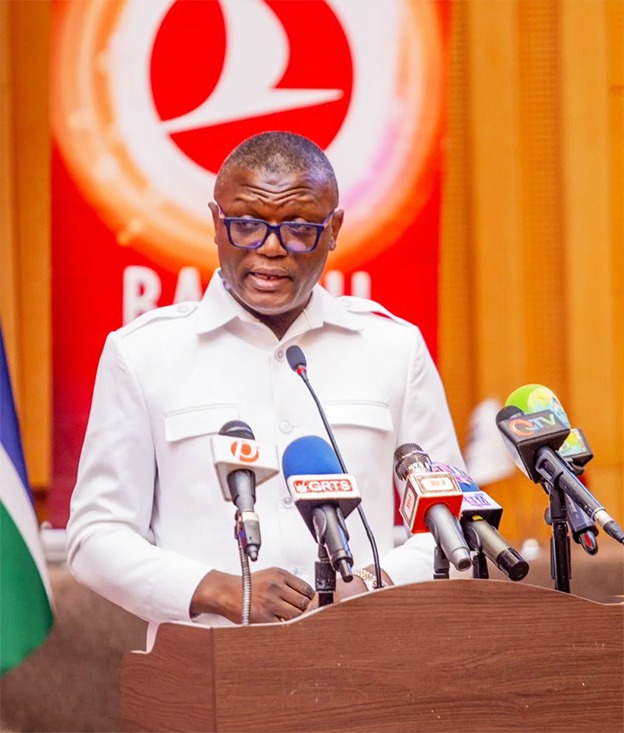
Minister for Sports and Recreation, Kofi Iddie Adams

Ghana’s Minister for Sports and Recreation, Hon. Kofi Iddie Adams, has called for a bold continental reset in Africa’s approach to sports development, urging governments, institutions, and the media to stop treating sport as a side issue and instead recognise it as a strategic driver of economic growth.

Delivering a statement at the Opening Ceremony of the 8th AIPS Africa Congress in Banjul, Hon. Adams said Africa’s biggest challenge in sport is not a lack of talent or passion, but rather weak systems, limited commercialisation, and poor policy coordination across the continent.

According to the Minister, while the global sports industry is valued at over USD 500 billion and contributes close to 2 percent of GDP in advanced economies, Africa’s entire sports economy is estimated at just USD 12–15 billion, despite producing many of the world’s top athletes.

“We export talent cheaply, consume foreign sport expensively, and struggle to retain value at home,” Hon. Adams stated.

He identified mobility barriers, weak continental frameworks, and limited broadcast access as key constraints holding back Africa’s sports sector, noting that beyond football, most sports on the continent survive largely on government support.

Hon. Adams commended countries such as Morocco, Senegal, Rwanda, and Tanzania for making deliberate investments that link sport to infrastructure development, tourism, and national branding, and encouraged other African nations to adopt similar long-term strategies.

Turning to Ghana, the Minister highlighted a series of reforms aimed at stabilising and growing the domestic sports economy.

These include the return of the Ghana Premier League to free-to-air television, an increase in league prize money to GHS 2 million for champions, and the establishment of the Ghana Sports Fund under Act 1159.

He also announced that Ghana will host two major continental events the 24th African Senior Athletics Championships and the 15th African Armwrestling Championships and invited African countries and the media to help reshape the narrative around African sport.

A significant portion of the address was directed at the media, where Hon. Adams acknowledged the intense pressures created by the digital age, but stressed the need for responsible journalism. “When reporting lacks balance and depth, it discourages fans, scares sponsors, and weakens entire ecosystems. Journalism must remain a tool for development, not destruction,” he cautioned.

He urged African sports journalists to broaden coverage beyond football, spotlight emerging athletes and lesser-known disciplines, and embrace new media platforms responsibly as partners in building sustainable sports economies.

Credit: starrfm.com.gh

Parliamentary Sports Committee Member calls on security service to halt student clashes at sports events

0
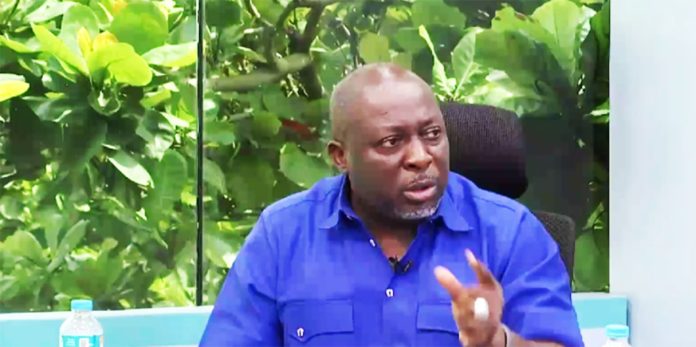
Deputy Ranking Member of the Parliamentary Select Committee on Sports Michael Aidoo

Deputy Ranking Member of Ghana’s Parliamentary Sports Committee, Michael Aidoo, has called for the security service to do more in the face of a rise in student clashes that have often turned violent during sports events.

In recent weeks, multiple clashes involving senior high school students have turned violent during inter school sports activities including a student of the Koforidua Senior High Technical School getting stabbed at the Eastern Regional Inter Schools Sports Festival.

“I think it’s quite unfortunate what happened in the Kumasi Sports Stadium (Baba Yara Stadium).

“I think the security services have to put their feet on the ground, understand the schools, where their rivalries lie, the history behind the rivalry and so on.

“When there is a sports program, the security services are to beef security, the National Sports Authority, the Education Service in charge of the sports directorate, the headmasters, they have to meet the security services, brief them so that they understand, then they can manage the students as and when they come to the stadium.”

Credit: classfmonline.com

Princesses will be ‘mentally’ ready for second leg against South Africa –Charles Sampson

0
Black Princesses

Head coach of Ghana’s U20 Women’s National Team, Charles Sampson, believes his players will be ‘mentally’ ready for their reverse fixture against South Africa.

The Black Princesses twice relinquished their lead at the Accra Sports Stadium in the first leg of their U20 Women’s World Cup qualifiers on Sunday.

Agnes Yeboah scored Ghana’s first goal of the game before Linda Owusu Ansah netted in the second half, but the game ended 2-2 in Accra.

The result left the team broken as they now have to win in South African to progress to the last round of the qualifiers.

“We have a crop of players that are mentally strong and psychologically, we will also do those parts and get them tuned and ready for the next to make sure we get what we are looking for,” Sampson said.

“We know that there are two games; a home and away, that is why we are here. We are going to prepare and make sure we go to South Africa at their home and go forward.”

The Black Princesses will need to win against South Africa to advance to the final round of the qualifying series, where they could face either Zambia or Uganda.

Credit: myjoyonline.com

Kotoko part ways with Coach Karim Zito after MTN FA Cup exit

0
Coach Abdul Karim Zito

Asante Kotoko Sporting Club have sacked head coach Abdul Karim Zito and his technical team following the club’s disappointing exit from the 2025/26 MTN FA Cup.

The Porcupine Warriors were eliminated by Aduana FC on penalties (4–2) in a round of 16 tie at the Baba Yara Sports Stadium in Kumasi on Sunday, February 8, after a goalless draw in regulation time.

Kotoko dominated portions of the match but failed to break down Aduana’s defence and missed key opportunities.

The loss means the defending FA Cup champions will not progress to the quarterfinals, compounding frustrations among supporters and officials alike.

The decision to relieve Zito of his duties comes amid a tough run of form in domestic competitions and heightened pressure on the coaching staff following inconsistent results in the Ghana Premier League.

Kotoko’s Interim Management Committee is expected to announce a replacement ahead of the club’s next league fixture, as the Porcupine Warriors look to arrest their slide and salvage their season.

Credit: classfmonline.com

Today’s English Premier League Fixtures & Previews

0
Nick Woltemade, Newcastle

Tottenham, Newcastle lock horns in a bottom-half battle

Both at risk of suffering their 11th loss of the Premier League season, Tottenham Hotspur and Newcastle United lock horns in a bottom-half battle on Tuesday night.

Tottenham ‘s four-match unbeaten run ended in Saturday’s 2-0 defeat to Manchester United, shortly before Newcastle’s grim 3-2 home reverse to Brentford.

Disaster, devastation and depleted squads have been the three themes of Tottenham’s 2025-26 domestic season under Thomas Frank.

The Champions League has provided safe haven for Spurs fans this season, but with the round of 16 still several weeks away, Frank’s men have only one goal in mind – avoid being dragged further into a relegation battle.

The reigning Europa League champions are now only six points clear of 18th-placed West Ham United after failing to win any of their most recent seven Premier League matches, as well as just one of their last 11 top-flight games at the Tottenham Hotspur Stadium.

In fairness to Tottenham, they did not completely crumble after going down to 10 against a rejuvenated Man Utd side, but their crises in both fitness and confidence surely rule out the prospect of a rare win.

That said, Newcastle have been pitiful defensively of late and are missing an X-factor in Gordon, so Frank’s men can restore a slice of parity in an end-to-end draw.

Credit: sportsmole.co.uk


Manchester United travel away to face West Ham

The London Stadium hosts a fascinating Premier League scrap between two rejuvenated outfits on Tuesday night, when West Ham United welcome Manchester United to the capital.

Matheus Cunha, Manchester United

The Irons seek a fifth win from six games in midweek after Saturday’s 2-0 triumph over Burnley, shortly after the Red Devils bested 10-man Tottenham Hotspur by the same scoreline.

Not only are Tuesday’s visitors still ahead of Chelsea and Liverpool in the race for fourth, they have cut the gap to third-placed Aston Villa to just three points and are firmly in control of the race for Champions League football.

Carrick continues to make his case for a permanent managerial contract at Man United, who have scored at least twice in every game under his wing – a continuation of their long-running attacking hot streak.

Indeed, the Red Devils have now found the back of the net in each of their last 14 matches in all tournaments – last drawing a blank in November’s home loss to Everton – and only one of their last nine on the road has ended in defeat.

Carrick’s men are currently playing with no fear, evidenced by their intricate, one-touch combinations in the forward areas.

The Red Devils will not have it all their own way against their revived hosts, but their stellar offensive record and Fernandes factor should carry them to a fabulous fifth consecutive win.

Credit: sportsmole.co.uk


Chelsea host Leeds United at Stamford Bridge

Chelsea look to continue their perfect Premier League run under Liam Rosenior as they welcome Leeds United to Stamford Bridge on Tuesday evening.

The West London club have won each of their four top-flight matches since Rosenior’s arrival, while Leeds United also arrive in good form, having recorded victories in three of their last five outings.

Cole Palmer, Chelsea

The days of turbulence appear to be some distance behind Chelsea, who have experienced a resurgence since Rosenior’s appointment, having failed to win any of their previous five Premier League matches beforehand (D3, L2).

The new manager successfully navigated a tricky run of consecutive London derbies, beating Brentford (2–0), Crystal Palace (3–1) and West Ham United (3–2) before Cole Palmer’s historic first-half hat-trick proved decisive in Saturday’s 3–1 victory over Wolverhampton Wanderers at Molineux.

Currently fifth in the Premier League standings, the Blues are just one point adrift of the top four and four ahead of sixth-placed Liverpool, and victory on Tuesday would not only strengthen their Champions League push but also see Rosenior become the first Chelsea manager since Maurizio Sarri in September 2018 to win his first three home league games in charge.

Like Chelsea, Leeds have also struggled in midweek outings, failing to win any of their last seven such games in the Premier League matches (D3, L4), and that unwanted run could continue here.

The Blues should take maximum points, buoyed by their dominance at the Bridge in this fixture and the knowledge that there is little margin for error in the race for Champions League qualification, especially with rivals also gathering momentum.

Credit: sportsmole.co.uk


Everton, Bournemouth faceoff at Hill Dickinson Stadium

Everton welcome Bournemouth to the Hill Dickinson Stadium on Tuesday evening for their latest instalment of Premier League action.

Everton beat Fulham 2-1 at Craven Cottage on Saturday afternoon, while the Bournemouth held title challengers Aston Villa to a 1-1 draw at the Vitality Stadium.

Evanilson, Bournemouth

Coming from behind to claim all three points on their visit to west-London, Everton stretched their unbeaten run in the Premier League to five matches.

Their improved run of form sees them sat eighth in the Premier League table with 37 points, only two fewer than Brentford who currently occupy the provisional UEFA Conference League qualification spot.

While David Moyes’s side have struggled in front of goal, their defence has undoubtedly made up for it and built the foundations for their recent success, with only three sides in the division conceding fewer than the Toffees’ 28 Premier League goals so far.

However, if they are to keep climbing the table, Everton’s home form will have to improve, as they have won just four league matches and 16 points at the Hill Dickinson Stadium this season.

With home matches against some of the league’s elite on the horizon, Tuesday’s match is the perfect opportunity for the Toffees to revert their woes on Merseyside and do the double over Bournemouth, who they beat 1-0 on the south coast back in December.

Although both their recent form and record away at Everton are good reading for Cherries fans, the Toffees look a much tougher nut to crack this season.

It may have been over two months since their previous win at the Hill Dickinson, but we think Everton’s defensive solidity will deliver them three points on Tuesday evening in a tight and cagey match under the lights.

Credit: sportsmole.co.uk


FIXTURES

Chelsea 19:30 Leeds United

Everton 19:30 AFC Bournemouth

Tottenham 19:30 Newcastle United 

West Ham 20:15 Manchester United 

Feature: The Burden of Office and the Discipline of Ethics …The Test case of Baba Jamal 

0
Mohammed Baba Jamal Ahmed

In public life, power is never neutral. It is weighted with expectations, obligations, and moral consequences. The trappings of high office—convoys, titles, residences, diplomatic privileges—are often visible to the public.

What is less visible, yet far more consequential, is the moral weight of ethical responsibility that accompanies those privileges. By laying out a clear code of ethics for his appointees, President Mahama has underscored his commitment to setting a new standard in governance—one devoid of cover-ups.

This renewed emphasis on accountability has recently found expression in his decision to recall Ghana’s Ambassador to Nigeria, Mohammed Baba Jamal Ahmed, following allegations of open inducement during the NDC’s internal selection process for the Ayawaso East by-election.

Reports indicate that television sets, boiled eggs, motorbikes, and other material inducements were distributed to delegates. The President himself acknowledged that such practices were not isolated, and that multiple candidates engaged in similar conduct.

Yet only one individual has borne the immediate consequences: the ambassador. To some, this may appear selective. To others, it is a lesson in the hierarchy of responsibility; and that is exactly how it is in reference to the latter.

The Moral Burden of Public Office

In every functioning democracy, there exists a distinction between ordinary political actors and those entrusted with state authority. A public officer does not merely participate in politics; he represents the President and the state. His conduct, therefore, is not judged by the loose standards of partisan competition, but by the stricter code of national service.

An ambassador, in particular, is the face of a nation abroad. He carries not only the flag but also the moral credibility of the government he serves. His words, gestures, and decisions reflect directly on the presidency and, by extension, on the republic itself.

When such a figure descends into practices widely perceived as unethical—even if common within political contests—the damage is not confined to a constituency or a party. It reverberates across the entire architecture of governance.

The President’s code of conduct is therefore not a ceremonial document. It is a moral contract between the state and its servants. It demands that those who occupy the upper rungs of public authority rise above the ordinary temptations of political life.

Equality of Guilt, Inequality of Responsibility

The President’s admission that all candidates engaged in inducement introduces an uncomfortable but important truth: political culture is often broader than individual misconduct. Yet ethics is not merely about equal guilt; it is about unequal responsibility.

In moral philosophy, there is a long-standing principle: the higher one climbs, the narrower the margin for error. A public officer is expected to exhibit restraint precisely because he enjoys privileges denied to ordinary participants.

An ambassador has access to the resources, prestige, and authority of the state. With such advantages comes an obligation to behave with greater discipline. When he fails, the breach is not just personal—it is institutional.

The recall of Ambassador Baba Jamal, therefore, is not simply a punitive measure. It is a symbolic act—one that reasserts the principle that public office is a moral trust, not a partisan entitlement. It also serves as a clear lesson to his colleagues to abide strictly by the rules of engagement

 The Pain That Comes with Principle

Ethical decisions are rarely painless. They often come with political costs, internal dissent, and accusations of selectivity or harshness. In party structures where certain practices have become normalized, enforcing discipline can appear disruptive or even unjust. But leadership is measured not by comfort, but by conviction.

President Mahama returned to office with a promise to challenge entrenched practices and restore a measure of ethical clarity to public administration. Such promises are easy to articulate in opposition; they are far more difficult to implement in power.

By recalling an ambassador from his own political family, the President has signaled that ethical codes are not ornamental. They are enforceable. And enforcement, by its nature, carries consequences.

The pain is personal for the individual involved. It is also political for the administration. But it is precisely this willingness to bear the cost of principle that gives ethical governance its credibility.

The Symbolism of Restraint

There is a deeper lesson embedded in this episode. In many political cultures, the prestige of office is measured by its privileges. In more mature democracies, however, prestige is measured by restraint.

The true mark of high office is not what one can take, but what one refuses to take. Not the favors one distributes, but the temptations one resists. Public servants are not merely administrators of policy. They are custodians, for example. Their conduct shapes the moral expectations of the entire political system.

When a public officer violates that expectation, the correction must be visible and decisive. Otherwise, codes of conduct become decorative texts—quoted in speeches, ignored in practice.

Walking the Talk

For decades, Ghanaian politics has wrestled with the normalization of inducements, patronage, and transactional loyalty. Many administrations have promised reform; few have demonstrated it through painful decisions.

President Mahama’s recall of his ambassador suggests an attempt to break that pattern. It may not cure the broader culture overnight, but it establishes a principle: that public office is not a shield against accountability, but a reason for it.

In doing so, the President is not merely enforcing a code. He is shaping precedent. And precedents, once established, have a way of outliving administrations.

The Lesson

The story of Ambassador Baba Jamal is not simply about one man’s fall from diplomatic grace. It is a reminder that the higher the office, the heavier the moral burden. Public authority is not just about power. It is about discipline. Not just about loyalty, but about examples. Not just about winning contests, but about preserving the integrity of the state.

If the President continues to match his promises with actions—however painful—the country may yet rediscover a simple but powerful truth: That the real privilege of public office is not its comfort, but its responsibility. And that the truest mark of leadership is the courage to enforce ethics, even when it hurts.

By Richmond Keelson


For more news, join The Chronicle Newspaper channel on WhatsApp: https://whatsapp.com/channel/0029VbBSs55E50UqNPvSOm2z

Bedwetting (nocturnal enuresis): Overview, Causes and Treatments

0

Bedwetting

Your child may wet the bed every now and then. While it’s usually not a big deal, it can be frustrating for both you and your kid. Here’s some more information about the types of bedwetting, why it happens, and when to see a doctor.

What Is Bedwetting?

Bedwetting, or nocturnal enuresis, happens when someone accidentally pees while sleeping. It’s common in kids, even if they’ve been toilet trained. Your child will likely stop wetting the bed around 4 to 6 years old.

While bedwetting can be a symptom of an underlying disease, most children who wet the bed have no underlying disease that explains their bedwetting. An underlying condition is found in only about 1% of children who routinely wet the bed.

That does not mean that a child who wets the bed can control it or is doing it on purpose. They are not lazy, willful, or behaving badly. Bedwetting is most often a developmental issue. Most kids simply outgrow it and never need treatment.

It’s not a serious condition, but it can cause your child to feel embarrassed or upset. In some cases, they may even avoid activities, like sleepovers, out of fear that they’ll wet the bed.

Causes of Bedwetting

The cause is likely due to one or a combination of the following:

  • The child cannot yet hold urine for the entire night.
  • The child does not wake up when their bladder is full.
  • The child makes a large amount of urine during the evening and night hours.
  • The child has poor daytime toilet habits. Many children habitually ignore the urge to pee and put off peeing as long as they possibly can. Parents usually are familiar with the leg crossing, face straining, squirming, squatting, and groin holding that children use to hold back pee.

Bedwetting Treatments

Managing bedwetting at home

There are steps you can take at home to help your child stop wetting the bed. Some ways include to:

Avoid blaming them. If you feel angry or frustrated because you have a wet bed to clean up yet again, don’t direct your feelings toward your child. They likely feel bad about it, and they didn’t do it on purpose. So don’t blame.

Make sure your child knows that bedwetting isn’t their fault and they aren’t alone. Let them know that millions of children, and teenagers too, regularly wet their beds. Tell your child if you did it too when you were growing up. You can help them see that it’s a problem that they will outgrow.

Keep your other children from teasing them. If you have other children, let them know not to tease about bedwetting. You can make this a rule in your house.

Help them try to use the bathroom before bedtime and during the night. Have your child use the bathroom when they start to get ready for bed, then once again the minute before they get into bed. This helps to empty their bladder.

If you’re still awake an hour or two after your child’s bedtime, think about waking them for a quick bathroom visit (or if your child is older, they might be able to set this habit for themselves). It won’t stop bedwetting, but it can reduce the amount of pee that might end up in the bed.

If your child is afraid of the dark, put night lights in the hallway and the bathroom so they won’t hesitate to get up and go when the urge wakes them.

Use an alarm. Some kids wet the bed because their bodies don’t yet tell them to wake up when their bladders are full. Bedwetting alarms wake children at the first sign that they’re letting go of pee and train the body to notice what it feels like when the bladder is full. The child wears special underwear with sensors that beep loudly when a small amount of urine leaks out. The beeping wakes them, and then they can go to the bathroom.

Drink less water before bedtime. Some kids who worry that they’ll wet the bed don’t drink enough during the day. By evening, they’re so thirsty, they drink a lot.

Help your child to drink more during the day, and let them have only one drink with dinner.

Stay away from drinks with caffeine, including cola and iced tea. Caffeine makes the body speed up the pee-making process. Fizzy drinks can also cause problems, so be sure to have your child avoid soda.

Use covers that protect their bed. Use a zip-up waterproof mattress cover so pee won’t reach the mattress. There are also waterproof pads to go between the sheets and blanket. After a wet night, you’ll only have to wash the pad, not the bed sheets.

Credit: webmd

A Friendship Across Continents: Reflections on Ghana–Australia Relations

0

Today, as Australians around the world mark our national day, we reflect on what makes our country unique.

Australia is, in many ways, an improbable nation. We are an island continent. We are ancient in geology yet young in our modern story. We are home to the world’s oldest continuous living culture, with Aboriginal and Torres Strait Islander peoples having cared for our land for at least 65,000 years. Yet we are also a nation constantly being remade by waves of migration from every corner of the globe.

We have the sixth largest land mass in the world. But we have a relatively small population in a region with countries with very large populations.

Our landscape defies easy categorization—vast red deserts meet tropical rainforests, snow-capped mountains overlook golden beaches, and the Great Barrier Reef stretches along our coast as a wonder of the natural world. Yet about 95% of Australians live within 100 kilometres of the coast, clustering in vibrant cities that are bustling with activity without being suffocating or overcrowded.

This duality is at the heart of what makes Australia unique. We are simultaneously ancient and new, isolated and globally connected, naturally unique yet culturally diverse, spacious yet coastal. Our major cities have become true cultural melting pots where you can experience restaurants, festivals, and traditions from every corner of the world.

The Strength of Our Diversity

Today, Australia is the most successful multicultural democracy, home to people from more than 200 countries, all contributing to the fabric of Australian life.

This diversity is not merely demographic—it is foundational to our national character and our strength.

Last December, Australia experienced one of the darkest days in our recent history. On Bondi Beach in Sydney, as Jewish families gathered to celebrate the first night of Hanukkah, they were targeted in a terrorist attack, murdered for who they were and what they were celebrating.

In the days that followed, we saw the anger and the grief that such evil unleashes. But we also saw Australians of every faith and background stand with our Jewish community,

because they understand that diversity remains our strength, not our weakness.

The International World Order and Our Shared Values

We start the new year so at a moment of significant global uncertainty. The international rules-based order faces challenges. We see rising geopolitical tensions, democratic backsliding in some regions, and the complex challenge of climate change that respects no borders.

This requires more diplomacy. And you can expect that a middle powers, like Australia, – a G20 country, with the world’s 12th largest GDP and a regional power in the Asia Pacific, with global interests – will work harder in existing and in new coalitions, and in the multilateral system, as diplomatic force multipliers.

Ghana and Australia share these fundamental values, as well as Commonwealth ties.  In this environment, Australia and Ghana have both an opportunity and a responsibility. We must be voices for stability, for international law, for multilateral cooperation, and for the dignity and rights of all nations—large and small.  It means continuing to support each other in regional and international forums.

Ghana-Australia

The relationship between Ghana and Australia has deepened significantly during my tenure here.

I am always happy to advocate the story of Australian companies’ contribution to the African extractives sector over the last fifty years or so. With over 170 Australian mining companies active in 30 African countries, and investments exceeding 60 billion Australian dollars, we are proud of their contribution to economic growth and community development.

It is a story of responsible investment, commitment to local communities, as well as the highest standards of occupational health, safety and environment standards.

It is a story of Australian companies working in partnership with the Ghanaian government and local communities.

Whether it is the Edikan Perseus mine that employs more than 1,100 Ghanaians or the potential of Atlantic Lithium, Ghana’s first Lithium project which is expected to create several thousand direct and indirect jobs and generate substantial tax and royalty income.

Beyond minerals and resources, it is the people-to-people connections that truly define our partnership with Ghana.

Through education, training, and professional exchanges, our people-to-people links continue to grow. Over 500 Ghanaians have undertaken study, research, and professional development at premier Australian tertiary institutions through the Australia Awards program, tapping into Australia’s leading-edge expertise in fields such as public policy, health, agricultural technologies, renewable energy and mining.

And we continue to contribute to local communities through our Direct Aid Program focusing on the economic empowerment of women, health and sanitation, education and skills training and income-generation.

I am pleased to announce that next month we will be launching the office of The Australian Centre for International Agricultural Research (ACIAR) at The Australin High Commission. ACIAR is the leading Australian government agency for the delivery of agricultural research and capacity development projects in Africa and is investing $76 million focusing on agricultural research to address the impacts of climate change on small holder farmers and food security.

But beyond programs and projects, what strikes me most about the Ghana-Australia relationship is its spirit. I’m reminded, on days like this, that the distance between our countries—vast as it may be—is bridged by shared values, mutual respect, and genuine friendship.

Happy Australia Day. May the bonds between Australia and Ghana continue to strengthen.

Editor’s note: Views expressed in this article do not represent that of The Chronicle

Japanese stocks surge as Takaichi secures historic election victory

0
Japan Prime Minister Sanae Takaichi

Japanese stocks surged to a record high on Monday, as Prime Minister Sanae Takaichi’s Liberal Democratic Party (LDP) basked in a historic election victory.

The LDP secured 316 out of 465 seats in Sunday’s election, the first time a single party has won a two-thirds lower house majority since Japan’s parliament was established in its current form in 1947.

The Japan Innovation Party, the LDP’s coalition partner, won in 36 more constituencies, taking their combined total to 352 seats.

The resounding mandate is a gamble that paid off for Takaichi, who now faces the challenge of reviving Japan’s moribund economy and tackling cost-of-living woes.

The Nikkei 225 index rallied by more than 5% in early trade on Monday, briefly crossing the 57,000 mark for the first time. It then gave up some gains, but still closed up 3.9% at a record high of 56,363.94.

The LDP’s decisive win will help Takaichi advance her pro-business policies without having to negotiate extensively with opposition parties.

Takaichi told reporters on Sunday that she would pursue a “responsible yet aggressive” fiscal policy and would not reshuffle the Cabinet, which was formed less than four months ago.

Japan’s first female prime minister called the snap election last month, just a few months after taking office in October. Her success is in marked contrast to her two predecessors, under whom the party lost its parliamentary majority, battled corruption scandals and struggled to curb rising costs.

Markets commentators say Takaichi’s policies could boost the Japanese economy.

The election outcome and upcoming moves like “stimulus, tax tweaks, and deregulation” will be “additional fuel for an existing bull trend”, investment analyst Yuka Marosek told the BBC.

Credit: bbc.com


Migrant boat capsizes off Libya leaving 53 dead

0
The migrants were travelling in a rubber dinghy

A rubber boat carrying 55 passengers, including two babies, has overturned off the coast of Libya, the UN migration agency says.

The only survivors, two Nigerian women, were rescued by the Libyan authorities on Friday, the International Organisation for Migration (IOM) announced on Monday. The boat was carrying migrants and refugees from various African countries, it said.

The boat sank after taking on water approximately six hours after departing from the coastal city of al-Zawiya in north-western Libya.

The IOM says that almost 500 migrants have been reported dead or missing trying the cross the Mediterranean Sea from Libya so far in 2026.

Libya has become a staging point for migrants from sub-Saharan Africa seeking to reach Europe since long-time leader Muammar Gaddafi was killed in 2011.

Survivors told IOM that the rubber dinghy had departed at around 23:00 local time from al-Zawiya, west of Tripoli. It overturned several hours later in the early hours of Friday north of Zuwara.

It is not immediately clear why it has taken so long for the news to emerge.

One of the two survivors said she had lost her husband, while the other reported that her two babies had died, the agency said. IOM teams provided both women with emergency medical care.

IOM says at least 375 migrants were reported dead or missing in January alone after a series of “invisible” shipwrecks in the central Mediterranean during periods of extreme winter weather. The true toll is feared to be higher.

Despite the repeated tragedies, migrants continue to attempt the crossing.

Credit: bbc.com

The Ghanaian Chronicle