Home Blog Page 216

NAFDAC seizes ₦3bn worth of fake malaria drugs, cosmetics in Lagos raid

0
NAFDAC’ Director-General, Mojisola Adeyeye

The National Agency for Food and Drug Administration and Control (NAFDAC) has seized more than 10 million doses of counterfeit malaria medications and cosmetic products valued at approximately ₦3 billion from the Trade Fair Market in Lagos.

NAFDAC’s Director of Investigation and Enforcement, Dr. Martins Iluyomade, revealed the operation during a briefing at the agency’s Apapa office on Monday, noting that the raid followed credible intelligence received on February 3.

According to Iluyomade, the counterfeit items included anti-malarial drugs, cerebral malaria injections, antibiotics, postinor, and anagin products—some of which have been banned in Nigeria for nearly 15 years. The items were stored in a three-story building disguised as a spare parts warehouse.

Eight truckloads of the fake drugs and cosmetics were removed during the operation, which also resulted in the arrest of four individuals. Investigations are ongoing, but the director described the raid as one of NAFDAC’s most significant recent achievements.

He warned that had these products reached the market, they could have endangered the lives of up to three million Nigerians.

Iluyomade stressed that under the leadership of Prof. Mojisola Adeyeye, NAFDAC remains committed to eliminating counterfeit and substandard products nationwide.

The director also advised drug distributors to source products exclusively from NAFDAC-accredited manufacturers and urged the public to report suspicious activities to the nearest NAFDAC office.

Credit: channelstv.com

Senate in rowdy session over move to reverse decision on E-Transmission

0
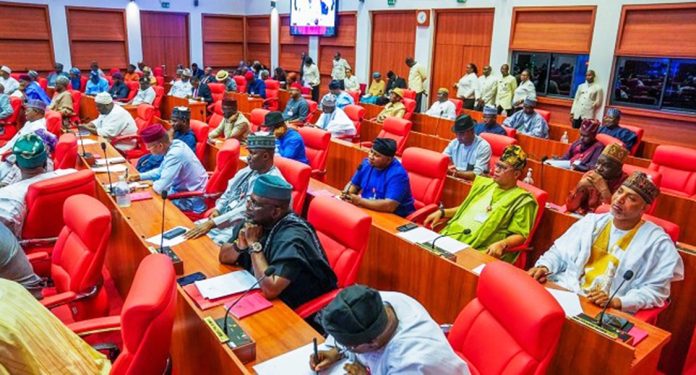
Nigerian Senate

Proceedings in the Senate became rowdy on Tuesday following disagreements over a motion to reverse the decision on the electronic transmission of results in the Electoral Act Amendment Bill.

Tensions rose after a motion sponsored by Senator Tahir Monguno of Borno North was put up for consideration.

Monguno had suggested that the Senate reverse its approval of clause 60(3) of the Electoral Act (Repeal and Enactment) Bill, 2026.

The clause concerns the modalities for the electronic transmission of election results.

He based his request on Orders 1(b) and 52(6) of the Senate Standing Orders, 2023 (as amended).

Senator Munguno asked the lawmakers to revisit the clause and recommit it to the committee of the whole for reconsideration.

According to him, the move would strengthen Nigeria’s electoral process and not weaken it as claimed in some quarters.

While the motion was seconded, the situation turned rowdy when Senator Enyinnaya Abaribe of Abia South raised a point of order.

Abaribe argued that the senators could not revisit the clause in the way it was suggested. He said that the lawmakers should be allowed to vote individually on the issue.

The Abia senator’s move led to exchanges on the floor as many lawmakers spoke at the same time, while challenging the procedure being adopted.

Some argued over the admissibility of the motion and whether it would set a bad precedent, allowing for the overturning of previously-made decisions.

The Senate leadership, however, restored order after some minutes, with Akpabio asking the lawmakers to return to their seats for the continuation of the plenary.

Akpabio later asked Abaribe if he wanted to formally continue with the point of order he had raised. But the Abia senator decided otherwise, leading to the resumption of the session.

Credit: channelstv.com

BII targets SME growth, capital mobilisation in Ghana 

0
(From Right to Left) British High Commissioner to Ghana, Dr Christian Rogg; Minister for Trade, Agribusiness and Industry, Elizabeth Ofosu-Adjare; Governor of the Bank of Ghana, Dr Johnson Asiama; and Chief Executive Officer of British International Investment (BII), Leslie Maasdorp, pose for a photograph.

British International Investment (BII), the UK’s development finance institution, has reaffirmed its long-standing commitment to Ghana’s private sector and economic transformation following a high-level leadership visit to the country.

In a statement issued after a two-day visit from January 29–30, 2026, the British High Commission and British International Investment (BII) said members of the BII Board, led by Chief Executive Officer, Leslie Maasdorp, visited Accra to deepen engagement with government authorities, investors and private-sector partners and to assess the impact of BII-supported investments across key sectors of the economy.

During the visit, the delegation held meetings with senior government officials and financial sector stakeholders, and toured several Growth Investment Partners (GIP) Ghana-supported small and medium-sized enterprises (SMEs).

The engagements focused on strengthening partnerships, mobilising local capital and aligning future investment priorities with Ghana’s development agenda.


Board members visited five investee companies, including Maa Grace Garments International, where they were briefed on how GIP financing has helped the firm scale into one of Ghana’s largest garment manufacturers.

The company is expanding operations to employ an additional 400 workers, increasing production of garments destined entirely for export markets.

The delegation also met pension funds, private equity firms and development finance institutions to discuss strategies for deepening domestic capital mobilisation and expanding long-term financing for Ghanaian businesses.

A high-level networking reception hosted at the British High Commissioner’s Residence brought together senior policymakers, investors and development partners.

Attendees included the Minister of Trade, Agribusiness and Industry, Elizabeth Ofosu-Adjare and the Governor of the Bank of Ghana, Dr Johnson Asiama.

British High Commissioner to Ghana, Dr Christian Rogg, said the visit underscored the UK’s commitment to inclusive and sustainable growth in Ghana.

“This visit strengthens our shared commitment to boosting investment, improving the business environment, and supporting Ghana’s economic transformation as we advance a modern, forward-looking UK–Ghana partnership,” he noted.

Mr Maasdorp described Ghana as a strategic partner for BII, stressing the institution’s focus on long-term economic resilience.

“We remain committed to supporting Ghanaian businesses to grow, create jobs and compete globally,” he said.

BII has invested in Ghana since 1954 and currently manages an active portfolio of more than US$140 million across 36 businesses.

Its investments support over 15,000 jobs in sectors including manufacturing, food security, energy, digital connectivity and SME finance. In 2024 alone, BII-backed companies contributed more than US$3 million in taxes to the Ghanaian economy.

A cornerstone of BII’s Ghana strategy is Growth Investment Partners (GIP) Ghana, a flagship platform designed to address the country’s SME financing gap.

By the end of 2025, GIP had invested in 15 SMEs, supporting over 3,400 jobs nationwide.


For more news, join The Chronicle Newspaper channel on WhatsApp: https://whatsapp.com/channel/0029VbBSs55E50UqNPvSOm2z

Ghana courts Australian Capital as it tightens mining reforms

0
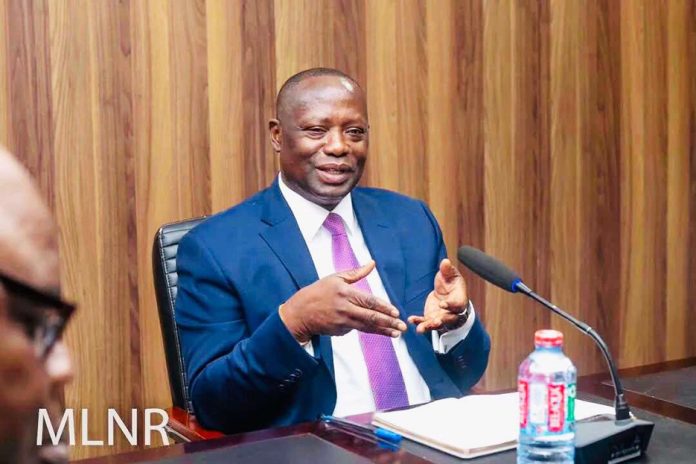
Lands and Natural Resources Minister, Emmanuel Armah-Kofi Buah

Ghana has stepped up its pitch to global investors, positioning itself as a stable and reform-driven mining jurisdiction, while outlining new opportunities in critical minerals and value-added processing, as the country seeks deeper partnerships with Australian firms.

Speaking at the Australian Mining in Africa reception during the 2026 Investing in African Mining Indaba in Cape Town, Ghana’s Minister for Lands and Natural Resources, Emmanuel Armah-Kofi Buah, underscored his government’s commitment to regulatory stability, environmental reform and industrial transformation in a sector that remains the backbone of the West African economy.

Addressing an audience of mining executives, financiers and policymakers, the Lands Minister framed Ghana as both a mature gold producer and an emerging hub for minerals critical to the global energy transition.

He stressed that the country’s legal regime, anchored in the 1992 Constitution and operationalised through the Minerals and Mining Act of 2006 (Act 703) and its accompanying regulations, provides a predictable and investment-friendly framework.

“All mineral resources are held in trust for the people of Ghana,” Emmanuel Armah-Kofi Buah said, emphasising that this principle ensures both investor protection and public accountability.

Ghana, Africa’s largest gold producer, derives more than one-third of its export revenues from mining, which also constitutes the country’s largest source of tax income.

Over the past two decades, the sector has attracted nearly $20 billion in investment, according to the minister.

To reinforce investor confidence, Emmanuel Armah-Kofi Buah highlighted incentives, including tax exemptions on imported mining equipment, guarantees of capital repatriation and expatriate remittance allowances and what he described as an “unwavering respect for contract sanctity and accrued rights.”

Oversight is provided by a network of regulatory bodies, including the Minerals Commission, Environmental Protection Authority, Water Resources Commission and Ghana Revenue Authority.

However, the minister acknowledged that illegal mining, known locally as galamsey, continues to pose a significant threat to environmental sustainability and formal operations.

In response, the government has launched a series of enforcement and reform measures aimed at restoring ecological integrity and improving governance.

Among them is the Blue Water Initiative, which has trained and deployed more than 1,600 personnel to monitor and protect polluted water bodies in mining hotspots.

The government has also introduced the Responsible Cooperative Mining and Skills Development Programme (rCOMSDEP), designed to formalise artisanal and small-scale mining through community ownership models and improved environmental practices. More than 70 communities are currently being enrolled.

In addition, the National Anti-Illegal Mining Operations Secretariat (NAIMOS) has been established as a centralised security command centre dedicated to combating illicit mining activities.

The reforms come at a time when Ghana is seeking to reposition itself within the evolving global minerals landscape.

While gold remains dominant, exploration activity is expanding into lithium, iron ore and bauxite, as well as nickel, zinc, chromium and columbite-tantalite, minerals increasingly essential to battery technologies and renewable energy systems.

The Lands Minister signalled that Ghana’s ambitions extend beyond extraction. He invited Australian partners, long regarded as leaders in mining technology, environmental management and processing to collaborate in developing downstream industries, particularly in lithium and bauxite value chains.

“Moving from extraction to industrialisation through beneficiation and value addition is critical,” he said, noting that Ghana aims to deepen domestic processing capacity to capture greater economic value.

Australia, a global mining powerhouse with extensive investment footprints across Africa, is seen as a strategic partner in this transition.

Emmanuel Armah-Kofi Buah identified potential areas of cooperation including the deployment of cleaner processing technologies, capacity-building for small-scale miners, and technical support to enhance Ghana’s minerals management systems.

The outreach reflects a broader recalibration under President John DramaniMahama’s administration, which is seeking to balance foreign direct investment with stronger environmental safeguards and community participation.

Analysts say Ghana’s challenge will be to maintain regulatory certainty while delivering on its environmental and governance commitments.

With commodity markets increasingly shaped by the energy transition and investor scrutiny intensifying around sustainability standards, jurisdictions that can combine resource potential with policy stability are likely to attract premium capital.

For Ghana, the message in Cape Town was clear: the country is open for business, but on terms that align mining growth with environmental stewardship and long-term economic transformation.


For more news, join The Chronicle Newspaper channel on WhatsApp: https://whatsapp.com/channel/0029VbBSs55E50UqNPvSOm2z

Kim Kardashian proudly supports North West’s music career

0
Kanye West and Kim Kardashian

Kim Kardashian isn’t just watching her daughter grow up; she’s watching her step into her own creative lane. In a recent digital feature with Complex, Kim spoke candidly about North West’s early steps into music and why she feels proud, calm, and confident about where her daughter is headed.

Rather than framing North’s debut album as a headline moment, Kim approached it like a parent witnessing genuine curiosity turn into passion. For her, the music isn’t about pressure or public reaction. It’s about freedom, experimentation, and letting a child explore what excites her, especially within rap and hip-hop culture, which North has been surrounded by since birth.

At the same time, Kim also addressed something fans often speculate about: her relationship with Kanye West. While their marriage has ended, Kim made it clear that family, respect, and co-parenting remain firmly in place.

North West is preparing to release her debut project, The Elementary School Dropout, with Kanye West serving as executive producer. For Kim, the process has been less about milestones and more about mindset. She emphasized that North’s interest in music comes from genuine curiosity, not outside influence.

North recently appeared onstage with her father in Mexico City during his first performance there since the 2008 Glow in the Dark Tour. During the show, she introduced her new song “Piercing On My Hand” and performed $ tracks “Talking” and “Bomb,” signaling her comfort onstage and growing presence as a young performer.

Kim highlighted what stands out most to her about North’s approach to music.

“She loves producing music and wanted to share it with the world and isn’t afraid if people will like it,” she told Complex’s Aria Hughes.

Credit: yahoonews

Cardi B and Stefon Diggs have broken up 

0
Cardi B and Stefon Diggs

Cardi B and Stefon Diggs have reportedly ended their relationship following the New England Patriots’ loss over the weekend.

A source confirmed to Entertainment Tonight that the couple “did break up,” noting that the split happened “recently.” The timing raised eyebrows, as Diggs said in an interview just last week that an engagement was “on the agenda” after the Super Bowl. Instead, speculation intensified after fans noticed the two had unfollowed each other on social media following the game.

There were also hints of tension before kickoff. On Saturday, Cardi was asked whether she had an inspiring message for Diggs ahead of the matchup. Her response was described as noticeably restrained, offering only a brief “good luck,” which stood in contrast to her previously vocal support of the wide receiver.

While the breakup appears real, it may not be permanent. According to the same source, “It’s possible they get back together and this could just be for right now.” At the moment, Cardi is said to be concentrating on her upcoming tour and her family while taking time to assess what comes next.

“She is focused on her upcoming tour and family while figuring out their next steps,” the source added.

Cardi and Diggs publicly confirmed their relationship in May 2025 when they were spotted together courtside at a New York Knicks game. The appearance marked their first high-profile outing as a couple and quickly put them in the sports-and-entertainment spotlight.

Later that year, the pair welcomed their first child together, a baby boy born in November. The birth came during a period of heightened attention to Diggs’ personal life, making their relationship a frequent topic in headlines and on social media.

Credit: yahoonews

My children faced death threats during EndSARS –Omotola Jalade

0
Omotola Jalade

Veteran Nollywood actress and social activist Omotola Jalade-Ekeinde has disclosed how her children faced death threats during the EndSARS.

Speaking on Channels Television’s Rubbin’ Minds Omotola said the threats marked a turning point in her long time of advocacy journey, forcing her to rethink how she engages in activism.

“I am used to death threats; I have received them many times,” Omotola said.

“But I have never seen anything like what happened during EndSARS. It was intense; my kids started getting death threats. That was when it became real, and when I realised this was no longer just about me.

“When people started coming to my home and workplace looking for me, I knew it was time to think beyond myself. I had to protect others, especially my children,” she said.

Omotola revealed that the experience ultimately pushed her to shift from street protests to more strategic, focused advocacy, citing the increasing difficulty of ensuring her children’s safety as they grow older.

“I can’t control where they go. I can’t protect them as much. I don’t care for my life, but I do care for them,” she said.

I came from the ghetto but look at me today –Stonebwoy inspires youth

0
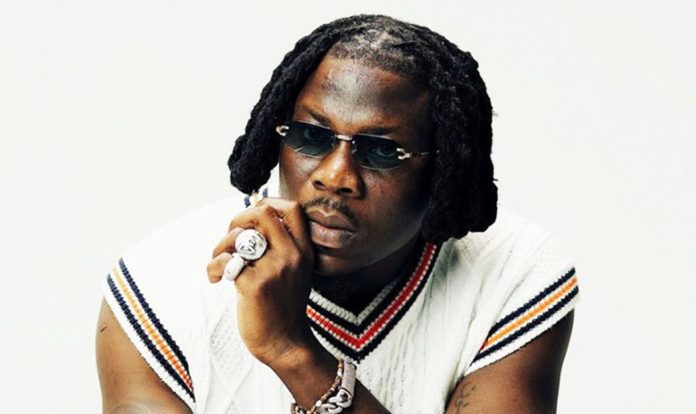
Stonebwoy

Stonebwoy used the closing of the 2026 Africa Prosperity Dialogue to inspire youth across the continent and the Caribbean to participate actively in shaping Africa’s future.

“I really want to call on all of you watching me from across the continent and into the Caribbean to make sure that you grab this opportunity, sign the petition so that our futures can be bright,” he said.

The artist highlighted the growing trend of African youth gravitating toward creative arts and entertainment and urged policymakers to recognize and integrate this shift into legislative frameworks.

“Please and please, make sure that you incorporate us in policymaking and enforce these laws that will make Africa a brighter future,” he implored.

Stonebwoy also reflected on his personal journey as an example of perseverance and education’s importance.

“I came from the ghetto, rose through the ranks, went back to school to get degrees and masters, so I can be called upon at functions like this to represent the youth of Ghana and Africa,” he said.

“Use social media as a powerful tool to scan these codes and press on the links to sign up. Together, we can present this at the AU and secure a brighter tomorrow. God bless you.”

Feature: Why the UK’s toughest immigration voices are often politicians of colour

0
Home Secretary Shabana Mahmood MP (L) is seen next to Justice Secretary and deputy Prime Minister David Lammy

When Sajid Javid remarked that he would not allow people like his own parents to enter the United Kingdom today, he was not making an offhand comment. He was articulating a view that has become increasingly central to British immigration politics.

The UK’s first ethnic minority home secretary said he opposed admitting unskilled workers and those who do not speak English. By his own criteria, neither his father, who arrived as an unskilled worker, nor his mother, who did not speak English, would have been permitted to settle in the country. Promoting his memoir, The Colour of Time, Javid was unambiguous: immigration must fall, English-language requirements should be tougher, and entry should be limited to skilled workers.

Far from being exceptional, Javid’s position points to a broader and increasingly visible pattern in British politics. Some of the most prominent anti-immigration positions of recent years have been articulated by ethnic minority politicians.

This pattern is most visible at the Home Office, the government department responsible for borders, asylum, detention and deportation. Since 2018, the role of home secretary has repeatedly been held by ethnic minority politicians, including Javid himself, Priti Patel, Suella Braverman and James Cleverly under Conservative governments, followed by Shabana Mahmood under Labour. Each, in turn, has advanced a tougher approach to immigration control.

Under Priti Patel, a points-based immigration system was introduced and the controversial plan to send asylum seekers to Rwanda was developed. Braverman went further still, declaring that seeing deportation flights take off would be her “dream” and her “obsession”. Yet despite the increasingly punitive tone, overall immigration numbers rose during this period. Rhetoric and outcomes diverged. Even so, the political signal from the Home Office was unmistakable: firmness on borders above all else.

The explanation for this phenomenon lies not simply in personal biography or individual conviction. Drawing on my research on ethnic minority representation in Britain, I argue that these appointments reflect a clear political logic. When political parties harden their stance on immigration, they often rely on minority politicians to act as reputational shields, figures who can front restrictive policies while insulating parties from accusations of racism.

Reputational shields matter because immigration control in the UK has long been racialised. From post-war restrictions on Commonwealth migration to the “hostile environment” policies associated with former Prime Minister Theresa May, border control has frequently intersected with race and belonging. When such policies are championed by ethnic minority politicians, criticism can more readily be reframed as ideological disagreement rather than racial exclusion.

Nowhere is this dynamic clearer than at the Home Office. The department effectively demands a hard line on immigration from its secretary, and appointing minority politicians to the role has repeatedly proven politically expedient. This does not mean white politicians are more liberal, as Theresa May’s record makes clear, but it does help explain why parties have been willing to place minority figures at the forefront of border enforcement. Four consecutive Conservative home secretaries were non-white.

This logic now extends beyond the Conservative Party. Labour’s appointment of Shabana Mahmood as home secretary marks a notable shift for a party that has historically sought to signal greater nuance on immigration. Since taking office, Mahmood has announced and is implementing sweeping asylum reforms, which she has described as “the most substantial reform to the UK’s asylum system in a generation”.

That Keir Starmer has placed a minority politician at the forefront of Labour’s tougher turn on immigration suggests an implicit recognition of this reputational logic. Mahmood’s identity does not determine her policy positions, but it does shape how those positions are received, particularly in a media and political environment where immigration debates are routinely filtered through accusations of racism. In this sense, Labour appears to have absorbed a lesson from Conservative governments about how ethnic minority representation can function as political cover when tightening border policy.

Immigration is now cited by about four in 10 Britons as the most important issue facing the country. For Labour, long uneasy talking about borders and enforcement, Mahmood’s stance represents a recalibration. Her measures include tightening the route from asylum to permanent settlement, reforming human rights legislation to facilitate removals, and suspending visas for countries that refuse to accept returned nationals.

She has been unapologetic, arguing that the pace and scale of immigration has destabilised communities and fuelled perceptions of unfairness. While Labour backbenchers and the Green Party have accused her of scapegoating migrants, figures on the political right have welcomed her approach.

It would, however, be a mistake to portray minority politicians as mere symbols or cynical mouthpieces. Many articulate their positions through narratives of fairness, legality and contribution. Javid has spoken of his family’s experiences of racism while emphasising that they entered the UK legally and worked hard. Mahmood has similarly argued that constituents who “did things the right way” feel aggrieved by irregular arrivals crossing the Channel in small boats.

These arguments reflect a broader shift in how immigration is discussed: less overtly in racial terms and more through the language of fairness, order and control. Yet this reframing does not escape the UK’s longer history of racialised immigration policy. Instead, ethnic minority politicians increasingly play a visible legitimising role within it.

The prominence of politicians of colour at the forefront of the UK’s immigration crackdown is therefore not a paradox. It is a window into how representation is operationalised in practice. When Sajid Javid says his parents would not be admitted today, he is not disavowing his background but signalling his political credibility.

The deeper question is what happens when such credibility is no longer enough to contain the moral and social consequences of a system built on exclusion. Race, borders and political legitimacy, and enduring questions about belonging and citizenship, remain tightly bound together in contemporary British politics.

By Parveen Akhtar

Credit: aljazeera.com

Health Benefits of Ginger

0
Benefits of Ginger

Ginger is one of the world’s most widely cultivated spice crops, valued for its distinctive flavour, medicinal properties, and versatility in food and beverages. From culinary uses to traditional medicines, ginger has global importance. While several countries grow ginger, one country produces far more than any other and leads the world in total output.

India is the largest ginger producer in the world. According to recent production statistics, India contributes the highest volume of ginger compared to all other nations. The country’s favourable climate, diverse agro-ecological zones, and longstanding tradition of spice cultivation have helped it maintain a commanding lead in ginger output.

India’s leadership in ginger production stems from several key advantages. The tropical and subtropical climate of many Indian states provides ideal conditions for ginger cultivation. Consistent rainfall, warm temperatures, and fertile soils support high yields. Ginger is also deeply integrated into Indian agriculture, cuisine and traditional medicine, encouraging widespread and continuous cultivation across rural areas.

Fights Germs

Certain chemical compounds in fresh ginger help your body ward off germs. They’re especially good at halting growth of bacteria like E.coli and shigellaand they may also keep viruses like RSV at bay.

Keeps Your Mouth Healthy

Ginger’s antibacterial power may also brighten your smile. Active compounds in ginger called gingerols keep oral bacteria from growing. These bacteria are the same ones that can cause periodontal disease, a serious gum infection.

Calms Nausea

The old wives’ tale may be true: Ginger helps if you’re trying to ease a queasy stomach, especially during pregnancy. It may work by breaking up and getting rid of built-up gas in your intestines. It might also help settle seasickness or nausea caused by chemotherapy.

Soothes Sore Muscles

Ginger won’t whisk away muscle pain on the spot, but it may tame soreness over time. In some studies, people with muscle aches from exercise who took ginger had less pain the next day than those who didn’t.

Eases Arthritis Symptoms

Ginger is an anti-inflammatory, which means it reduces swelling. That may be especially helpful for treating symptoms of both rheumatoid arthritis and osteoarthritis. You might get relief from pain and swelling either by taking ginger by mouth or by using a ginger compress or patch on your skin.

Curbs Cancer Growth

Some studies show that bioactive molecules in ginger may slow down the growth of some cancers like colorectal, gastric, ovarian, liver, skin, breast, and prostate cancer. But much more research is needed to see if this is true.

Lowers Blood Sugar

One recent small study suggested that ginger may help your body use insulin better. Larger studies are needed to see if ginger could help improve blood sugar levels.

Eases Period Pains

Got menstrual cramps? Ginger powder may help. In studies, women who took 1,500 milligrams of ginger powder once a day for 3 days during their cycle felt less pain than women who didn’t.

Lowers Cholesterol

A daily dose of ginger may help you battle your “bad” or LDL cholesterol levels. In a recent study, taking 5 grams of ginger a day for 3 months lowered people’s LDL cholesterol an average of 30 points.

Protects Against Disease

Ginger is loaded with antioxidants, compounds that prevent stress and damage to your body’s DNA. They may help your body fight off chronic diseases like high blood pressure, heart disease, and diseases of the lungs, plus promote healthy aging.

Relieves Indigestion

If you live with chronic indigestion, also called dyspepsia, ginger could bring some relief. Ginger before meals may make your system empty faster, leaving less time for food to sit and cause problems.

Credit: webmd

The Ghanaian Chronicle