Ghana has stepped up its pitch to global investors, positioning itself as a stable and reform-driven mining jurisdiction, while outlining new opportunities in critical minerals and value-added processing, as the country seeks deeper partnerships with Australian firms.
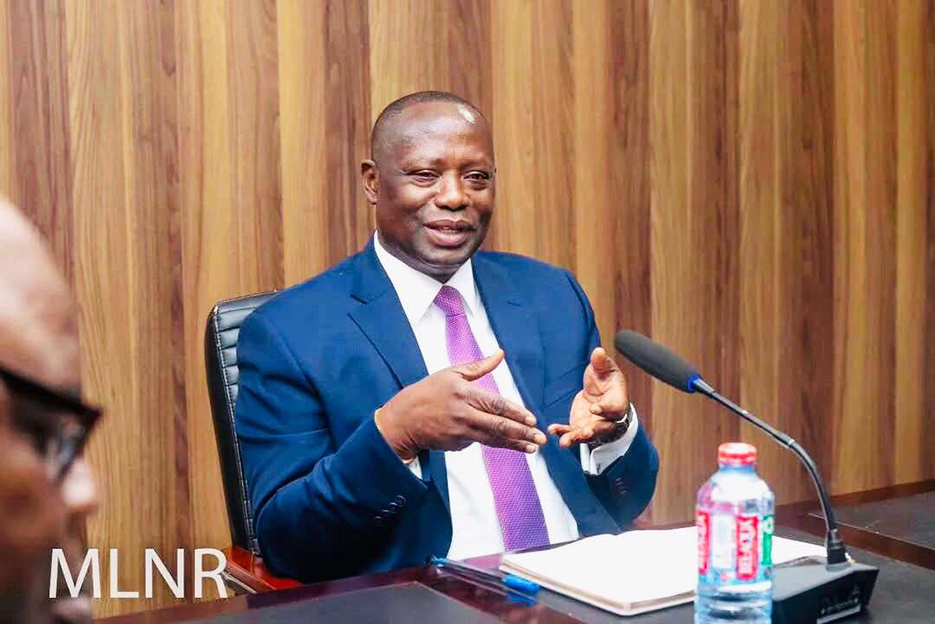
Speaking at the Australian Mining in Africa reception during the 2026 Investing in African Mining Indaba in Cape Town, Ghana’s Minister for Lands and Natural Resources, Emmanuel Armah-Kofi Buah, underscored his government’s commitment to regulatory stability, environmental reform and industrial transformation in a sector that remains the backbone of the West African economy.
Addressing an audience of mining executives, financiers and policymakers, the Lands Minister framed Ghana as both a mature gold producer and an emerging hub for minerals critical to the global energy transition.
He stressed that the country’s legal regime, anchored in the 1992 Constitution and operationalised through the Minerals and Mining Act of 2006 (Act 703) and its accompanying regulations, provides a predictable and investment-friendly framework.
“All mineral resources are held in trust for the people of Ghana,” Emmanuel Armah-Kofi Buah said, emphasising that this principle ensures both investor protection and public accountability.
Ghana, Africa’s largest gold producer, derives more than one-third of its export revenues from mining, which also constitutes the country’s largest source of tax income.
Over the past two decades, the sector has attracted nearly $20 billion in investment, according to the minister.
To reinforce investor confidence, Emmanuel Armah-Kofi Buah highlighted incentives, including tax exemptions on imported mining equipment, guarantees of capital repatriation and expatriate remittance allowances and what he described as an “unwavering respect for contract sanctity and accrued rights.”
Oversight is provided by a network of regulatory bodies, including the Minerals Commission, Environmental Protection Authority, Water Resources Commission and Ghana Revenue Authority.
However, the minister acknowledged that illegal mining, known locally as galamsey, continues to pose a significant threat to environmental sustainability and formal operations.
In response, the government has launched a series of enforcement and reform measures aimed at restoring ecological integrity and improving governance.
Among them is the Blue Water Initiative, which has trained and deployed more than 1,600 personnel to monitor and protect polluted water bodies in mining hotspots.
The government has also introduced the Responsible Cooperative Mining and Skills Development Programme (rCOMSDEP), designed to formalise artisanal and small-scale mining through community ownership models and improved environmental practices. More than 70 communities are currently being enrolled.
In addition, the National Anti-Illegal Mining Operations Secretariat (NAIMOS) has been established as a centralised security command centre dedicated to combating illicit mining activities.
The reforms come at a time when Ghana is seeking to reposition itself within the evolving global minerals landscape.
While gold remains dominant, exploration activity is expanding into lithium, iron ore and bauxite, as well as nickel, zinc, chromium and columbite-tantalite, minerals increasingly essential to battery technologies and renewable energy systems.
The Lands Minister signalled that Ghana’s ambitions extend beyond extraction. He invited Australian partners, long regarded as leaders in mining technology, environmental management and processing to collaborate in developing downstream industries, particularly in lithium and bauxite value chains.
“Moving from extraction to industrialisation through beneficiation and value addition is critical,” he said, noting that Ghana aims to deepen domestic processing capacity to capture greater economic value.
Australia, a global mining powerhouse with extensive investment footprints across Africa, is seen as a strategic partner in this transition.
Emmanuel Armah-Kofi Buah identified potential areas of cooperation including the deployment of cleaner processing technologies, capacity-building for small-scale miners, and technical support to enhance Ghana’s minerals management systems.
The outreach reflects a broader recalibration under President John DramaniMahama’s administration, which is seeking to balance foreign direct investment with stronger environmental safeguards and community participation.
Analysts say Ghana’s challenge will be to maintain regulatory certainty while delivering on its environmental and governance commitments.
With commodity markets increasingly shaped by the energy transition and investor scrutiny intensifying around sustainability standards, jurisdictions that can combine resource potential with policy stability are likely to attract premium capital.
For Ghana, the message in Cape Town was clear: the country is open for business, but on terms that align mining growth with environmental stewardship and long-term economic transformation.
For more news, join The Chronicle Newspaper channel on WhatsApp: https://whatsapp.com/channel/0029VbBSs55E50UqNPvSOm2z