Home Blog Page 212

Justice Philip Bright Mensah Bows Out of the Supreme Court

0
Court

His Lordship Justice Philip Bright Mensah has retired from the Supreme Court of Ghana, just months after his appointment to the apex court by President John Dramani Mahama on July 3, 2025.

Justice Mensah leaves the bench after an extraordinary 51 years in public service, comprising 28 years as a judge and 23 years as a judicial service worker.

His career is widely regarded as a rare example of steady professional progression within Ghana’s justice system.

Before becoming a judge, Justice Mensah served in various capacities within the Judicial Service, including as a typist/recorder, clerk, circuit court registrar, deputy regional registrar, and regional registrar.

He later rose through the judicial ranks, serving at different times as a District Court judge, Circuit Court judge, Chairman of a Regional Tribunal, High Court judge, Court of Appeal judge and ultimately Justice of the Supreme Court.

At a ceremony marking his retirement, Justice Mensah delivered a valedictory judgment and reflected on his long years of service to law and justice delivery in Ghana.

Among his notable judicial pronouncements was his ruling in Republic v. Stephen Kwabena Opuni, while at the Court of Appeal, where he held that the decision to start a criminal trial de novo should lie within the discretion of the trial judge, a position seen as a departure from established common law practice.

In brief remarks, Justice Mensah expressed gratitude to colleagues, family members, and acquaintances who supported his career.

He paid special tribute to Her Ladyship Justice Henrietta Joy Abena Nyarko Mensa-Bonsu of the Supreme Court, whom he described as a mentor during his time at the Law School, Legon.

Justice Mensah also shared a personal anecdote, recalling how he was once mistakenly arrested and detained for a day, following a robbery incident in which his chambers was ransacked and food items in his refrigerator consumed by the attackers.

Acting Chief Justice, His Lordship Justice Gabriel Scott Pwamang, lauded Justice Mensah’s contributions to the judiciary, describing his career as one marked by integrity, dedication and an uncommon commitment to staff welfare.

He noted that Justice Mensah was a strong advocate for judicial service staff, consistently championing their professional development and well-being.

Similarly, the President of the Ghana Bar Association, Mrs. Efua Ghartey, praised Justice Mensah for his high standards on the bench, intellectual clarity, and commitment to substantial justice.

She projected his reputation for rigorous scrutiny of legal arguments, courtesy in court, and respect for lawyers.

Members of the Bar who interacted with Justice Mensah described him as fair, compassionate, intellectually disciplined, and deeply committed to the law.

Many commended his humility, patience, and attentiveness to the substance of cases over procedural technicalities.

The President of the Judicial Service Staff Association of Ghana (JUSAG), Mr. Samuel Afotey Otu, also paid tribute, describing Justice Mensah’s career as an inspiration and a testament to perseverance, discipline, and service to the nation.

Justice Mensah retires at the constitutionally mandated age, bringing to a close a judicial journey that spanned every level of Ghana’s court system.


For more news, join The Chronicle Newspaper channel on WhatsApp: https://whatsapp.com/channel/0029VbBSs55E50UqNPvSOm2z

External Debt Falls By $2.89bn

0
Dr. Johnson Asiama, Governor of the Bank of Ghana

Ghana’s external debt declined by US$2.89 billion over the reporting period, while inflation returned to single digit and international reserves recorded a significant increase, according to the Bank of Ghana Quarterly Statistical Bulletin, Quarter Three, 2025.

Data contained in the bulletin show that external debt stood at US$32.11 billion in September 2024 and declined to US$29.22 billion by September 2025, representing a net reduction of US$2.89 billion over the twelve-month period.

Within the year, the debt stock fell to US$28.02 billion in November 2024, before rising gradually in subsequent months to reach the September 2025 level.

Inflation Falls to Single Digit

The bulletin also indicates a significant easing in inflation over the same period.

Headline inflation, which exceeded 23 percent at the end of 2024, declined steadily to 9.42 percent in September 2025Core inflation, which excludes energy and utility components, also fell to 8.83 percent.

The data show a consistent downward trend in price levels throughout the reporting period.

Money Supply Growth Moderates

Monetary aggregates recorded slower growth compared to late 2024 levels. Broad money (M2), which had expanded at rates above 40 percent, moderated to approximately 21 percent year-on-year by September 2025.

Total liquidity (M2+) growth also declined during the period under review.

Dr. Cassiel Ato Forson, Minister of Finance

Private sector credit growth, which slowed earlier in the reporting period, showed gradual recovery toward the third quarter of 2025.

Gross International Reserves Rise to $11.6bn

Ghana’s gross international reserves increased from approximately US$7.8 billion in late 2024 to US$11.6 billion by September 2025, according to the bulletin. Import cover improved to nearly five months over the same period.

The central bank’s gold holdings also increased, rising from about 27 tonnes to 37 tonnes. The data further show that global gold prices remained elevated during the period.

Trade Surplus Sustained

The external sector recorded sustained trade surpluses throughout the reporting period.

By September 2025, exports stood at approximately US$2.58 billion, while imports were about US$1.61 billion, resulting in a positive trade balance.

Export earnings, particularly from gold, contributed to reserve accumulation during the period.

Economic Activity Expands

The Composite Index of Economic Activity recorded year-on-year growth of approximately 9.6 percent by September 2025, compared to the same period in 2024.

The index tracks developments across key sectors of the economy and reflects changes in overall output.

Banking Sector Indicators

The bulletin also shows growth in private sector deposits over the reporting period, with total deposits increasing compared to the previous year. Paid-up capital and reserves of banks also recorded increases.


For more news, join The Chronicle Newspaper channel on WhatsApp: https://whatsapp.com/channel/0029VbBSs55E50UqNPvSOm2z

Editorial: The Poor Judgement At Flower Pot Flyover Must Be Probed

0
Editorial

The decision by the Greater Accra Regional Minister to halt construction beneath the East Legon Flowerpot Flyover has blown the lid off what is rapidly emerging as one of the most disturbing urban planning scandals in recent memory.

What has been exposed is not merely an unauthorised project, but a dangerous culture of institutional recklessness that threatens Ghana’s urban safety, spatial integrity and respect for science-based planning.

Images and videos shared by the Minister and sighted by The Chronicle show active foundation works ongoing beneath the interchange, an area, which by every known principle of engineering, security and urban planning, should never be opened up for commercial development. This immediately raises troubling questions: into whose hands has the state surrendered Ghana’s critical infrastructure spaces? And who authorised this madness?

Adding a deeply human but equally troubling dimension to the scandal is a viral video circulated on Citi FM’s X platform. In the footage, a visibly distressed woman, identified as Georgina Opoku, popularly known as Asoor, pleads with President John Dramani Mahama and the First Lady to intervene after her permit to develop the space into a washing bay was revoked.

She claims to have paid thousands of cedis to the Electricity Company of Ghana and the Ghana Water Company before the permit was abruptly cancelled, allegedly because the space “belongs to a businessman” whose name she declined to disclose.

If this claim is true, then Ghana is not merely dealing with poor planning, but with elite capture of public infrastructure.

Even more alarming are the admissions by the Municipal Chief Executive (MCE) for Ayawaso West Wuogon, Dr. Michael Mensah. Speaking on Citi FM’s Breakfast Show, the MCE confirmed that an application had been submitted to develop the space into a car park and that the Assembly engaged the Department of Urban Roads (DUR), since the area falls under its jurisdiction.

According to Dr. Mensah, DUR allegedly presented a proposal outlining plans to commercialise such spaces into car parks, washing bays, police posts and fire service points. Based on this presentation, the Assembly issued a permit, despite admitting that final approval from DUR had not yet been granted.

This explanation is not only contradictory; it is scandalous. How does an Assembly issue a permit for a project it knows lacks final statutory approval? What kind of leadership allows speculative commercialisation of the basement of an interchange, an area meant for security, emergency response, structural expansion and disaster management?

Even more shocking was the MCE’s attempt to justify the permit on grounds of congestion, arguing that people park on road shoulders during events. This reasoning is dangerously simplistic and betrays a complete absence of engineering judgment. You do not solve traffic congestion by converting critical transport infrastructure into a commercial parking lot. That logic is not just flawed—it is suicidal.

Under the Local Governance Act, 2016 (Act 936), Metropolitan, Municipal and District Assemblies (MMDAs) are empowered to develop their jurisdictions. However, this mandate is not a licence for recklessness. Act 936 establishes MMDAs as the highest political and administrative authorities at the local level and requires them to initiate, coordinate and execute development programmes within the bounds of law, safety, and sound planning—not in defiance of them.

While The Chronicle sympathises with the woman who may have lost her investment, we unequivocally support the revocation of the permit. That space was never meant for commercial activity, period!

This scandal goes far beyond one MCE. It exposes a systemic failure in Ghana’s urban governance. What traffic impact assessment was conducted? What spatial planning data informed this decision? What engineering logic supports converting an interchange basement into a car park or washing bay?

The answers are conspicuously absent. Ghana’s cities are degenerating into concrete chaos because long-term planning have been sacrificed on the altar of short-term profiteering. Flooding, congestion, structural risk and urban decay are the inevitable outcomes. Reckless MMDA decisions are steadily turning our cities into slums, forcing the state to contemplate building new cities at enormous cost to the taxpayer.

In a related development, at Dzowulu, a prime residential area, the Assembly has permitted a businessman to erect a fleet of shops directly beneath high-tension power transmission lines, universally recognised as no-build safety buffers. This is a calculated exposure of human lives to lethal danger.

Which serious country does this? Which responsible state, knowingly places citizens under high-voltage transmission lines and calls it commerce? These corridors exist for one reason: to protect human life from electrocution, electromagnetic exposure, fire hazards and catastrophic system failure.

We commend the Greater Accra Regional Minister for halting the works at the Flower Pot Interchange, but stopping construction is not enough. This matter must not be quietly buried. Sanctions must follow. Accountability must be enforced.

If the government’s much-touted “reset agenda” is to mean anything, it must begin with reclaiming Ghana’s urban spaces from institutional negligence and elite exploitation. The Flowerpot Interchange scandal, we dare say, must be thoroughly investigated.


For more news, join The Chronicle Newspaper channel on WhatsApp: https://whatsapp.com/channel/0029VbBSs55E50UqNPvSOm2z

Why Ghana Must Support Diplomacy in the U.S.–Iran Tensions

0
Seth Kwame Awuku

Your Excellency,

As tensions between the United States and Iran continue to simmer with warships positioned in the Gulf, indirect talks in Oman delicately unfolding, and warnings issued from both sides, I write with concern for Ghana’s national interest.

If I may, Ghana may be geographically distant from the Persian Gulf, but we are not economically insulated from its instability. A single miscalculation in that region could trigger consequences that reverberate directly through our economy and into the daily lives of our citizens.

The Strait of Hormuz remains the world’s most strategic oil chokepoint; nearly one-fifth of global petroleum supply transits that narrow passage each day. Any disruption whether by blockade, confrontation, or unintended escalation would almost certainly push global oil prices upward.

For Ghana, this is not abstract speculation. Our economy depends significantly on imported refined petroleum. A sharp increase in global prices would translate quickly into higher fuel costs domestically. Transport fares would rise. Food prices would follow. Inflationary pressures carefully managed in recent years could intensify once again. Businesses would face increased operational costs, investor confidence could weaken, and household purchasing power would erode.

Your Excellency, Israel’s security concerns are genuine and must be acknowledged. Recognizing this strengthens Ghana’s credibility as a balanced and principled voice. At the same time, the present international posture marked by American naval deployments, Iranian warnings of retaliation, and cautious diplomatic engagement remains precariously balanced.

If I may observe, President Trump has indicated openness to a negotiated framework centered on Iran’s nuclear programme. Iranian officials, in turn, have described the recent Oman discussions as constructive. While mistrust remains high, a diplomatic window however narrow still exists.

If your authority permits me, I respectfully submit that Ghana should lend its voice to preserving that diplomatic path. Through the African Union, the United Nations, and appropriate bilateral channels, Ghana can advocate restraint, dialogue, and multilateral mediation.

Such engagement would not constitute interference; rather, it would reflect responsible global citizenship firmly grounded in our national interest.

Ghana has long upheld a foreign policy tradition anchored in non-alignment, peaceful coexistence, and principled diplomacy. At moments of global tension, our voice has carried weight precisely because it has been measured and consistent. Supporting dialogue over confrontation would align fully with your stated vision of partnerships built on shared responsibility and mutual respect.

The alternative is sobering. Escalation in the Gulf would not only destabilize global markets but could also strain developing economies disproportionately.

For Ghana, the ripple effects could slow economic growth, complicate fiscal planning, and undermine hard-won stability.

If I may conclude, Ghana’s advocacy for restraint would not be idealism detached from reality. It would be strategic realism. It would protect our economic stability, shield vulnerable households from imported hardship, and reinforce our standing as a thoughtful and principled actor in international affairs.

Leadership is often tested not only by domestic challenges but by how nations respond to external tremors. By affirming support for diplomacy at this delicate juncture, Ghana can help preserve stability where confrontation threatens to prevail.

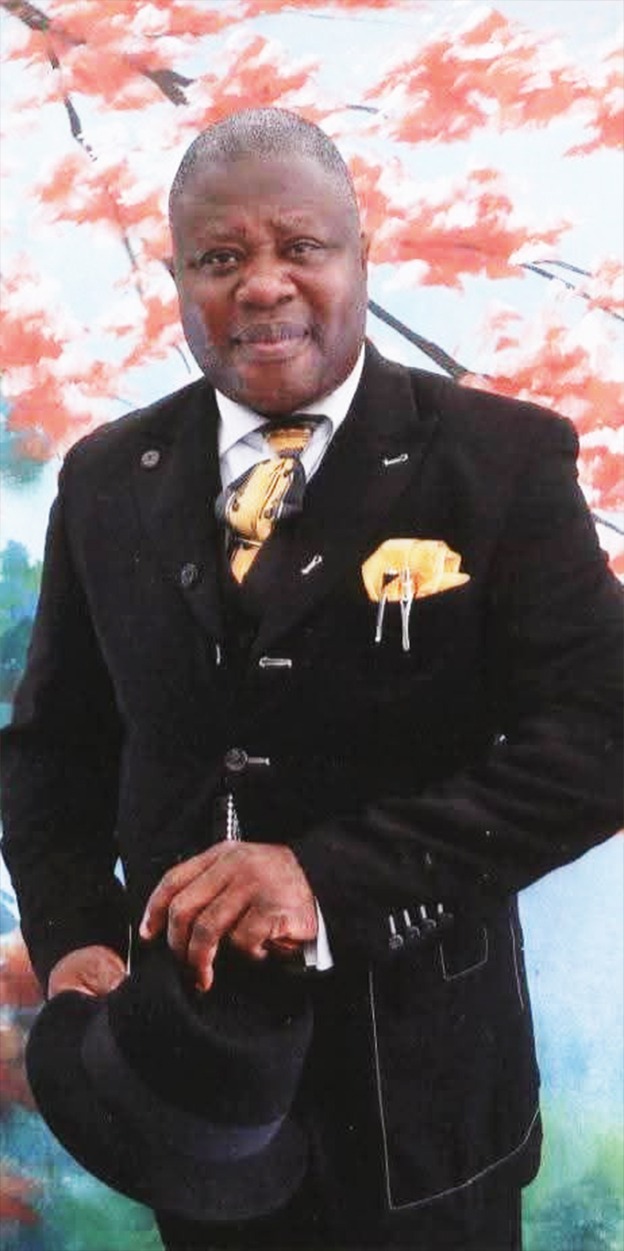
Seth Kwame Awuku is a Ghanaian writer and political analyst specializing in law, governance, diplomacy, and foreign policy.

By Seth Kwame Awuku


For more news, join The Chronicle Newspaper channel on WhatsApp: https://whatsapp.com/channel/0029VbBSs55E50UqNPvSOm2z
 

The views expressed in this article are the author’s own and do not necessarily reflect The Chronicle’s stance.

Ejisu Assembly Distributes Start-up Equipment to Disabled Persons

0
Cash donation being presented to a beneficiary

The Ejisu Municipal Assembly has distributed start-up equipment to selected persons with disability in the municipality to improve their living standards.

Deaconess Jerryn Asante, Municipal Chief Executive, explained that the gesture was made possible through the Assembly’s Common Fund, which allocated 5% of its resources to support people with disabilities.

The MCE presenting a package to a beneficiary

She noted that the equipment, including industrial sewing machines, fufu pounding machines, printers, ovens and wheelchairs would help reduce the hardship faced by the beneficiaries.

Some beneficiaries had previously resorted to begging for alms due to lack of employable skills thus becoming a burden to their families and society.

The items for distribution on display

MCE Asante advised beneficiaries to use the equipment for its intended purpose, warning that selling it would lead to legal consequences.

She said the Assembly would monitor the use of the equipment by the Social Welfare Department.

Mr. Eric Kwabena Bediako, Municipal Coordinator of the PWDs, thanked the government for the support and assured that the equipment would be used productively.

He appealed for continued support to improve the living standards of people with disabilities through inclusive governance.


For more news, join The Chronicle Newspaper channel on WhatsApp: https://whatsapp.com/channel/0029VbBSs55E50UqNPvSOm2z

Adansi South District receives 10,000 Nkoko Nketenkete to help improve livelihoods

0
The DCE Oheneba Kobena Andoh (left) addressing the beneficiaries

Scores of residents in the Adansi South District of Ashanti region, at the weekend, thronged the District Office of the Ministry of Food and Agriculture at New Edubiase to receive the first batch of 10,000 Broilers and Layers from the government, under the “Nkoko Nketenkete” programme.

A section of the Nkoko Nketenkete

The DCE, Oheneba Kobena Andoh, said 300 to 400 people are expected to benefit from the number allocated to the district.

He mentioned that the programme is the government’s way of helping to improve the poultry industry and also help improve livelihoods in the various communities.

He appealed to the beneficiaries to take good care of the birds to prevent death.

The DCE also advised those who did not benefit from the current stock not to feel disappointed but rather wait patiently for the next batch of the birds.

Some of the beneficiaries waiting for their turn

The Adansi South District Director of Agriculture, Mr. Alfred David Mensah, expressed delight that the birds have arrived at the right time and encouraged the beneficiaries to take good care of them.

He pointed out that the government will not come back to them to demand anything in return and that the programme was geared towards helping the beneficiaries to get something out it for their own good.

A beneficiary, Mr. Salifu Issaka, Chief Farmer of Adansi Praso noted that the initiative is really going to improve livelihoods in the various communities.

From Frederick Danso Abeam, New Edubiase


For more news, join The Chronicle Newspaper channel on WhatsApp: https://whatsapp.com/channel/0029VbBSs55E50UqNPvSOm2z

US Lawmakers introduce Bill to sanction Miyetti Allah, Kwankwaso and Fulani Militia

0
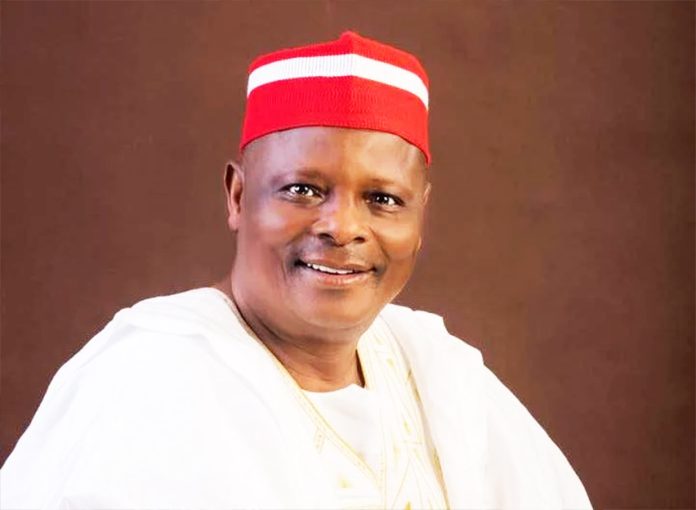
Former Kano State Governor Rabiu Kwankwaso

Five US lawmakers have introduced a bill to the US Congress, seeking to impose sanctions on former Kano State Governor Rabiu Kwankwaso, the Miyetti Allah Cattle Breeders Association of Nigeria (MACBAN), and Miyetti Allah Kautal Hore for alleged violations of religious freedom.

The bill, titled “Nigeria Religious Freedom and Accountability Act of 2026,” was introduced by Chris Smith, Riley Moore, Brian Mast, Mario Diaz-Balart, and Bill Huizenga, and alleged that Kwankwaso was one of the individuals contributing to systemic religious “persecution of Christians that has persisted” in Nigeria.

If the proposed legislation, introduced to Congress on Tuesday, becomes law, the Departments of State and Treasury are expected to impose sanctions, including a visa ban and asset freeze, on “individuals or entities responsible for severe religious freedom violations” in Nigeria.

“The Department of State and the Department of the Treasury should impose targeted sanctions, including visa bans and asset freezes under the Global Magnitsky Human Rights Accountability Act, on individuals or entities responsible for severe religious freedom violations, or report to Congress the reasons such sanctions have not been imposed, including— Fulani-ethnic nomad militias in Nigeria; Rabiu Musa Kwankwaso, former Kano State Governor; Miyetti Allah Cattle Breeders Association of Nigeria (MACBAN); and Miyetti Allah Kautal Hore,” part of the bill read.

Others targeted included those the bill described as “Fulani-ethnic nomad militias in Nigeria”.

As of the time of this report, neither Kwankwaso nor the groups have commented on the allegations contained in the proposed legislation.

The move came months after US President Donald Trump redesignated Nigeria as a Country of Particular Concern (CPC) over what he described as the persecution of Christians.

Credit: channelstv.com

Farmers, Herders sign peace pacts to end killings in Plateau

0
Plateau State governor, Caleb Manasseh Mutfwang

Farmers and herders in six rural communities across Bokkos and Riyom Local Government Areas of Plateau State have signed 25 peace agreements aimed at restoring peace and rebuilding trust after years of deadly conflict.

The agreements were reached by men and women drawn from the communities of Sha, Bum and Sopp, where recurrent clashes have claimed many lives and led to the destruction of property.

The peace accords followed a series of dialogue and reconciliation engagements facilitated by the Institute for Integrated Transitions (IFIT), as part of efforts to strengthen social cohesion and find lasting solutions to violence in fragile, conflict-affected rural communities.

A participant and senior district head from Bokkos Local Government Area, Lazaros David, described the peace process as timely and critical, given the scale of challenges faced by the communities.

According to him, the organisers succeeded in bringing the communities together at the grassroots level through sustained engagement.

“They followed the programme time after time to ensure its success. They identified our problems and discussed them together with us,” he said.

David expressed confidence that the agreements would be implemented, noting that community leaders would use platforms such as churches and mosques to reinforce the peace process.

“Where you often see your people, we’ll make sure this peace holds,” he added.

Another participant, Chiroma Haruna Idris, said the initiative would go a long way in restoring peace and stability between farming and herding communities.

“Our coming here has helped us understand the challenges, and we’re confident that what we’ve learned will assist us in addressing our common concerns peacefully without further disruption and confusion,” Idris said, adding that the signed agreements would help resolve lingering issues between the groups.

Credit: channelstv.com

Senate demands full implementation of defence budget, warns against delays

0
Chairman of the Senate Committee on Defence, Senator Ahmed Lawan (R)

The Chairman of the Senate Committee on Defence, Senator Ahmed Lawan, has called for the full and timely implementation of Nigeria’s defence budget, warning that delays could undermine the country’s security efforts.

Speaking during a budget defence session where the Minister of Defence presented the ministry’s 2025 performance and 2026 budget proposal on Wednesday, Sen. Lawan assured that the Senate is committed to ensuring the armed forces receive the necessary resources to carry out their duties effectively.

“We are prepared on this side of government to ensure that our armed forces are given the resources they need,” he said. However, he expressed concern over the slow pace of implementation of the 2025 budget.

“The exercise of implementation has been slow. How are we prepared to move forward if we are unable to implement the 2025 budget fully? How do we deal with 2026?” he asked.

The chairman emphasized that defence spending cannot be postponed, noting that any delay in funding could give an advantage to criminal elements and insurgents.

“It is defence; you cannot postpone the implementation of the defence budget because that gives an edge to the enemy. We have to insist that our armed forces and other security agencies have their budgets implemented to secure the lives of Nigerians,” he said.

Describing the session as an accountability exercise, Sen. Lawan noted that lawmakers were scrutinizing the ministry’s 2025 budget performance, particularly as parts of the budget were not fully implemented and were instead rolled over into 2026.

Credit: channelstv.com

Bomb explosion hits Bayelsa State Secretariat Complex

0
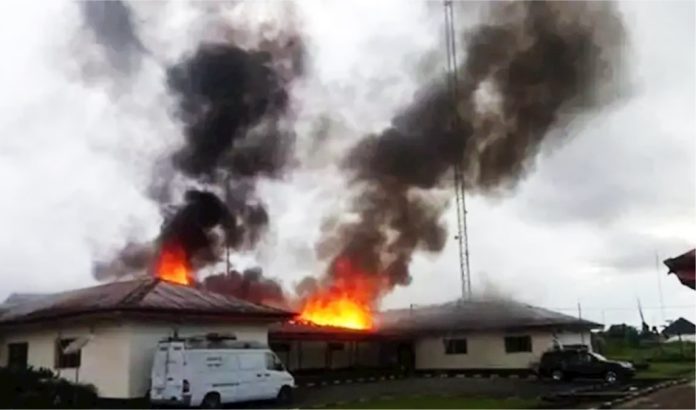
Bomb explosion site

An explosion suspected to have been caused by an improvised explosive device, IED, has hit the Bayelsa State Secretariat Complex in Yenagoa early Wednesday morning.

The blast, which occurred at about 6:00am prompted an immediate security response as operatives moved swiftly to secure the area and prevent further danger.

Movement in and out of the complex was temporarily restricted while thorough safety checks were conducted.

The Bayelsa State Police Command confirmed that the explosion did not result in any casualties or damage to buildings within the premises.

In a statement issued shortly after the incident, the Commissioner of Police, CP Iyamah, detailed the rapid deployment of security personnel to the scene.

He said, “The Bayelsa State Police Command wishes to inform the general public of a suspected IED explosion which occurred today, 11th February 2026, at about 0600hrs within the State Secretariat Complex.”

“The area was immediately cordoned off and upon detailed search one unexploded IED was identified by EOD operatives and was rendered safe. No lives lost, no property destroyed. One Pentecost Elijah, ‘m’ 60 year old from Otuan Community in Southern Ijaw LGA, Bayelsa State, was arrested at the scene in connection with the incident.”

“He is currently undergoing interrogation at the State Criminal Investigation Department and upon conclusion the suspect will be charged to court.”

“The situation is under control and normalcy has been restored. Members of the public are advised to remain calm and continue with their lawful business activities.”

Following the explosion, the Bayelsa State Government ordered a temporary four-hour suspension of activities at the secretariat as a precautionary measure.

Credit: dailypost.ng

The Ghanaian Chronicle