Home Blog Page 1976

Editorial: Kudos to Otumfuo for his $10m KATH campaign

0
Editorial

According to a graphiconline report yesterday, the Asantehene, Otumfuo Osei Tutu II, is to lead a campaign to raise US$10 million to renovate inpatient wards of the Komfo Anokye Teaching Hospital (KATH) in Kumasi.

 The hospital has not seen any major renovation since its establishment in 1955, and this is having an effect on inpatient care.

The renovation of the blocks is expected to be executed as part of the legacy projects marking the 25th Anniversary celebration of the enstoolment of the Asantehene next year.

The Chronicle is glad that Otumfuo Osei Tutu II is not only heralding the 25th Anniversary celebration of his enstoolment with only pomp and pageantry, but is also seeking to build legacy projects as historical monuments for the Asante Kingdom.

The Komfo Anokye Teaching Hospital occupies a unique position in the healthcare system of the country, and was the main referral hospital for the AshantiBono, Ahafo and northern regions of Ghana until the Tamale Regional Hospital was upgraded to a Teaching Hospital.

The Komfo Anokye Teaching Hospital should be supported to enable it to play its role effectively and efficiently. Much as the government is yet to complete other health facilities in the Ashanti Region, such as the Afari Military Hospital, the Sewua Regional Hospital and the Kumawu District Hospital, all efforts must be made to ensure that the Komfo Anokye Teaching Hospital is in good condition and to provide the healthcare needs of the people in the region and beyond.

Otumfuo Osei Tutu II’s commitment to raising US$10 million for KATH reflects his deep understanding of the importance of accessible and quality healthcare for the Ashanti Region, and Ghana in general. Beyond the financial contribution, this pledge resonates as a symbol of the Asantehene’s dedication to fostering positive change in the healthcare of Ghanaians.

Otumfuo’s initiative if it sees the light of day will significantly bolster the hospital’s capacity to provide advanced medical care, training and research, benefiting both patients and healthcare professionals.

The Asantehene’s involvement serves as a model for collaboration between traditional leadership and modern healthcare institutions. This partnership bridges historical traditions with modern healthcare needs, emphasizing the potential for diverse stakeholders to address contemporary challenges.

By taking an active role in raising funds for KATH, Otumfuo Osei Tutu II inspires all citizens to actively participate the initiative. It echoes the importance of influential figures utilising their platforms to effect positive change, advocating for critical issues, and instilling a sense of shared responsibility among citizens.

The support for KATH exemplifies the role that partnerships play in strengthening public institutions. This collaboration not only elevates healthcare infrastructure but also emphasizes the significance of citizen engagement in governance and development.

The commitment of His Majesty Otumfuo Osei Tutu II to raise US$10 million for KATH is a clarion call for all Ghanaians to rally round his leadership and collaborative effort to support national development.

In recognising the vital role of healthcare in national development, Otumfuo’s initiative inspires us all to look beyond personal interests and contribute to the well-being of our communities. As we stand united in supporting KATH, we affirm that leadership dedicated to progress can make a profound impact on the lives of Ghanaians and set a shining example for generations to come.
Zongo heads unhappy with Omanhene of Amanten

0
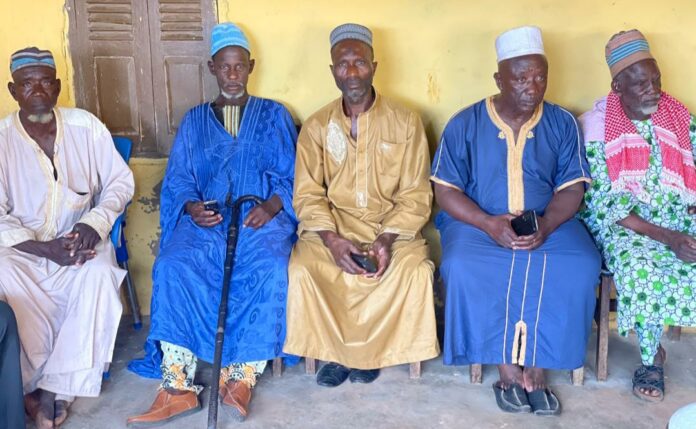
From right -Mallam Issah, Zongo Chief Linguist; Abubakar Haruna, Grumah Chief; Moro Chandam, Chorkosi Chief; Musah Abubakar, Mossi Chief and Mallam Mahama, Deputy Busanga Imam

Zongo Community heads at Amanten in the Bono East Region have vehemently kicked against the decision of the Paramount Chief of Amanten traditional area, Osabarima Bonsie Appau Bonsu II, to nominate a chief for the Zongo community.

The Omanhene, who was installed on November 13, 2022 has reportedly selected Abdulai Salifu, the Dagomba Chief, to head the Zongo community.

Abdulai Salifu succeeds Alhaji Adam Ali, the late Zongo Chief who passed away about six months ago.

But Abubakar Haruna, the Grumah Chief and  Mallam Issah, Zongo Chief Linguist, on behalf of the Zongo community disclosed at a press conference held at Amanten, that the right to chose a leader solely lies in the hands of the Zongo community.

According to the spokesmen, it is not proper for the Amanten chief to elect somebody to head the Zongo community.

The Gruma Chief, Abubakar Haruna, stated that the Amanten chief had no right to appoint a leader for the Zongos and indicated that the chief’s selection is not acceptable and questioned the Omanhene’s authority to install a chief for the Zongo community at Amanten.

The concerned representatives and heads of the various communities have petitioned His Royal Majesty, Otumfuo Osei Tutu II, to call the Amanten chief to order, so as not to meddle in the selection of their leaders.

He hoped the Royal intervention of the Asantehene would ensure fair play and bring about absolute justice.

Also at the meeting were; Moro Chandam, Chorkosi Chief; Musah Abubakar, Mossi chief and Mallam Mahama, Deputy Busanga Imam.

Government commissions DFO in Kumasi

0
Comptroller-General of the Ghana Immigration Service, Kwame Asuah Takyi speaking at the function

The Government of Ghana has commissioned the Document Fraud Office (DFO) for the Ashanti Regional Command of the Ghana Immigration Service (GIS), with a call on Ghanaians to report fraud related activities to the security agencies.

Located at the Jubilee Park of Kumasi, the DFO, which came into fruition by the auspices of the Denmark government, would serve the middle belt and northern sector of Ghana.

The DFO is aimed to clamp down on fraud documents of immigrants and other related crimes.

It would be manned by personnel of the International Centre for Migration Policy Development (ICMPD) of the GIS, with collaboration from other security agencies to assist the GIS to curb documents of immigrants and other related crimes.

Commissioning the DFO in Kumasi, Naana Eyiah Quansah, Deputy Minister for Interior, disclosed that there had been an upsurge in the usage of fraudulent documents across various sectors of the economy, including the Immigration Service.

“It must be emphasised that the use of fraudulent documents cut across so many fields, including migration.

In this case, prospective travelers manage to acquire fraudulent passports, among others, to enable them travel across borders for various reasons.”

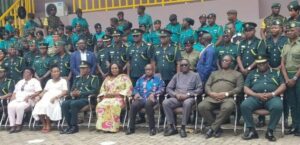
Dignities pose for photography after commissioning the DFO in Kumasi

Naana Quansah, however, expressed optimism that, with the coming on stream of the Kumasi DFO, fraud document related crimes would be curbed.

“It is hoped that users of fraudulent documents would be brought down to the barest minimum, and [the] perpetrators behind this crime would be brought to book.”

She implored Ghanaians to report fraud related cases to the security agencies.

“I would like to express the important roles of institutions and individuals reporting incidences of fraud to [the] law enforcements agencies.”

According to Eyiah Quansah, reporting of such cases was not the sole responsibility of the state, rather all and sundry.

She urged: “It is the interest of not only the government bodies, but also in the interest of the business community, private organisations, and the general society to prevent and combat fraud and related crimes.

“The renovation of the ICMDP presents an important and collaborating step in this process, and I know it will produce the necessary service, augment in the work of the documents expertise centre office in Accra that serves the entire country and some parts of West Africa.”

She expressed appreciation to the Government of Denmark for the various roles it played in the completion of the DFO.

The Ashanti Regional Minister, Simon Osei-Mensah, explained that the DFO office would shorten the period for the examination and detection of fraudulent document since in the years gone by, documents would have to be taken to Accra for verification and examination.

Osei-Mensah continued that the DFO was going to augment the work of the Regional Security Council to a greater extent a bit easier, because sometimes some foreigners were arrested and they were sent to the GIS office in Kumasi, the documents would have to be taken to Accra for verification and examination, which takes some time.

The Comptroller-General of Ghana Immigration Service, Mr. Kwame Asuah Takyi, disclosed that there had been an uptick in cases involving verification and authenticity of documents, hence, the establishment of the DFO.

“Following the increase in cases of verification or authentication of documents from security and non-security agencies at the Document Fraud Expertise Centre in Accra, there was the need to revamp the Documents Fraud Office (DFO) in Kumasi, to improve service delivery.”

Comptroller-General Asuah Takyi noted that the International Centre for Migration and Policy Development (ICMPD), which was being implemented by the ISMPD under the Strengthening Border and Migration Management in Ghana (SMMIG) project, facilitated the conducts of the gabs and needs assessment of the DFO document in Kumasi, which led to the renovation of the office and the provision of document verification equipment, as well as office equipment.

According to him, combating fraud involved fraudulent acquisition of passport, visas, permits and other document related crime, requires an integrated approach that was the whole government and non-government and societal approach.

The GIS Comptroller-General called for a collaborated approach between the security and non security agencies.

“As the Service is equipping itself with the technical tools available and sufficient capacity, there must also be an integrated approach, especially between the security agencies, non-security agencies, and individuals in the society.”

Giving a gist about the nature of immigration cases, which are arraigned before the courts, Kwame Takyi revealed that it had been evidenced for years that most of the immigration cases forwarded to the law courts by the Service for prosecution were document fraud, false declaration among others.

He said: “Fraudulent acquisition of passports, visas, birth certificates and permits, do not respect the boundaries of countries.”

This, he said, was that “collaboration between us remained critical for tackling this problem effectively. We continue to urge more corporate corporation with the service.”

He admonished all and sundry to invest in combating fraud, support for good governance and improving the rule of law.

Govt compulsorily retires four senior police officers

0
Police Service Commission

The Police Service Commission has compulsorily retired four Deputy Inspectors General of Police. The affected DIGs are Dan-Mallam Mohammed, Moses Jitiboh, Hafiz Inuwa and Adeleke Bode.

The PSC, in a statement by its spokesperson Ikechukwu Ani, said it took the decision following the refusal of the officials to resign after the appointment of their junior, Kayode Egbetokun, as the new Inspector General of Police.

“In the wake of the appointment of the acting Inspector General of Police, IGP Kayode Egbetokun on the 19th of June, 2023 by Mr. President, the Commission had expected in consonance with the revered tradition of discipline and regimented culture of the Nigeria Police Force that those DIGS who were seniors in rank prior to his elevation will voluntarily apply for retirement or elect to leave the Force.

The Commission, having waited for ample time with no such application from any of them, took the decision to compulsorily retire them in order to uphold discipline which is the bedrock of the Force, and to discourage status reversal which is inherently inimical to the exercise of authority by the Inspector General.”

It also announced the appointment of four new senior police officers to replace the relieved DIGs.

Credit: premiumtimesng.com

Nigeria’s Ambassador to Niger Republic not expelled, says Govt

0
Nigerian Ambassador to Niger, H.E. Mohammed Sani Usman

The Ministry of Foreign Affairs says contrary to speculation, Nigeria’s Ambassador to Niger Republic Mohammed Sani Usman was not expelled from the country. 

“The attention of the Ministry of Foreign Affairs has been drawn to news making the rounds on social media that the Nigerian Ambassador to the Republic of Niger, H. E. Mohammed Sani Usman was on Friday, 25th August 2023 expelled and given 48 hours to leave the country,” the ministry said in Sunday statement by its spokesperson Francisca K. Omayuli.

“The Ministry of Foreign Affairs wishes to inform the general public that this information is false and as such should be disregarded.

“The Federal Government of Nigeria warns against the circulation of unverified information capable of jeopardizing the ongoing mediation efforts by ECOWAS in the political impasse in Niger.”

Credit: channelstv.com

You can’t gag Obaseki from speaking truth to power –Edo govt replies FG

0
Governor Godwin Obaseki

The Edo State Government has expressed its displeasure with the response of the Federal Government to Governor Godwin Obaseki’s remark about President Bola Tinubu’s economic policy.

DAILY POST reports that Obaseki had on Thursday, while addressing journalists in Benin, said that the removal of fuel subsidy and foreign exchange reforms of Tinubu’s administration has led to increased hardship for Nigerians.

The FG, reacting to Obaseki’s remark through the Minister of Information and National Orientation, Mohammed Idris, stated that Obaseki was trying to shift focus from his “poor performance” at the state level, noting that the governor has been absent from the National Economic Council, NEC, meetings under Tinubu’s administration.

In response to the FG in a statement on Sunday, the Edo State Commissioner for Communication and Orientation, Chris Nehikhare, said, “It is unfortunate and sad that the Federal Government now wants to gag citizens, and even a popularly elected governor from speaking truth to power, expressing himself in the light of the perilous times we have fallen into.”

“The claim that the governor failed to attend NEC meetings is blatantly false. The records are there to prove this fact.”

Credit: dailypost.ng

Peter Obi denies bribing Arise TV’s Rufai Oseni

0
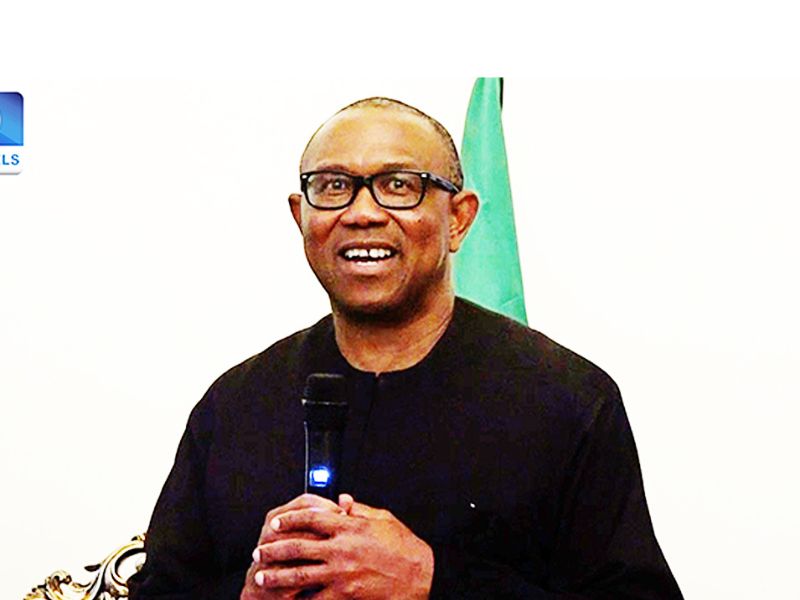
Peter Obi

Presidential candidate of the Labour Party in the 2023 election, Peter Obi has denied reports alleging that he bribed a Nigerian Television presenter, Rufai Oseni.

Rufai of Arise Television was recently accused of receiving bribes from the former Anambra Governor with the aim of promoting his good reputation.

It was alleged that Obi had financially sponsored the burial of Rufai’s father, which stimulated the tie between the duo.

But reacting to the allegations, Obi in a statement tweeted on his page on Monday, declared that the report was a categorical lie, stressing that it had no element of truth.

According to Obi, Rufai is a Television presenter who sternly speaks truth to power including himself.

The statement reads partly, “Anyone who has followed my corporate and political life knows that I always stay on issues, with my focus on finding solutions to societal challenges and ameliorating the suffering of the people.

“I do, however, need to clarify a few issues, especially since a third party is involved.

“There is a recent case where my name has been mentioned in a malicious and cheap blackmail against one of Nigeria’s best Television presenters, Mr. Rufai Oseni, who has stood sternly for what is right and has challenged me fearlessly on some occasions while speaking truth to power.

“Let me clearly state that this is a categorical lie. It is not true, cannot be true and will never be true. Everyone who understands or follows my approach to things will attest to the fact that I do not give anyone money to promote my name”.

Credit: dailypost.ng

Tinubu bars government officials from travelling to US

0
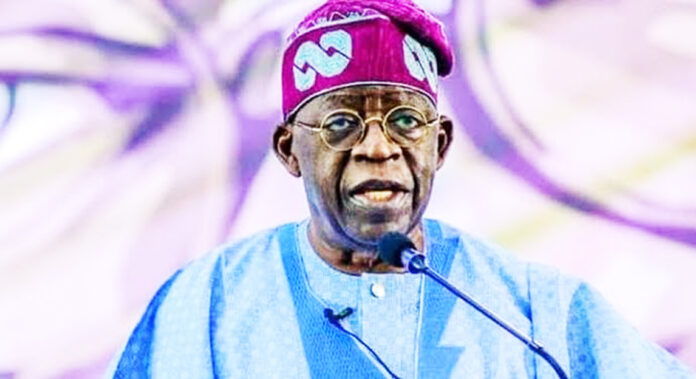
President Bola Tinubu

President Bola Tinubu has directed the Federal Ministry of Foreign Affairs to discontinue the processing of visas for all government officials seeking to travel to New York for the United Nations General Assembly.

The directive which came from the President this afternoon is believed to be part of a broader effort to reduce the cost of governance in Nigeria, a statement by his media aide, Ajuri Ngelale noted.

It added that the directive is especially to those without proof of direct participation in UNGA’s official schedule of activities.

The presidency also noted that to prevent any sharp practice in this regard, the U.S. Mission in Nigeria is accordingly guided on official visa processing while Nigeria’s Permanent Mission in New York is further directed to prevent and stop the accreditation of any government official who is not placed on the protocol lists forwarded by the approving authority.

“By this directive of the President, all Federal Ministries, Departments and Agencies are mandated to ensure that all officials, who are approved for inclusion in the UNGA delegation, strictly limit the number of aides and associated staff partaking in the event. Where excesses or anomalies in this regard are identified, they will be removed during the final verification process.

“The President wishes to affirm that, henceforth, government officials and government expenditure must reflect the prudence and sacrifice being made by well-meaning Nigerians across the nation,” the statement added.

Credit: dailypost.ng

Excise duties on Sweetened Juices, Spirits and Tobacco Products expected to reduce Ghana’s health bill

0
Kwabena Anto Apau, Head, Excise Unit, GRA

The Ghana Revenue Authority has said that the introduction of the excise duties to cover sweetened juices, wines and liquors, e-cigarettes among others falls within government’s overall objective to reduce the health bill.

Basically, the government through the GRA has imposed additional excise duties on these products and made amendments to the charging method on certain products like cigarettes and tobacco products in accordance with ECOWAS recommendations all geared towards reducing the consumption of these products.

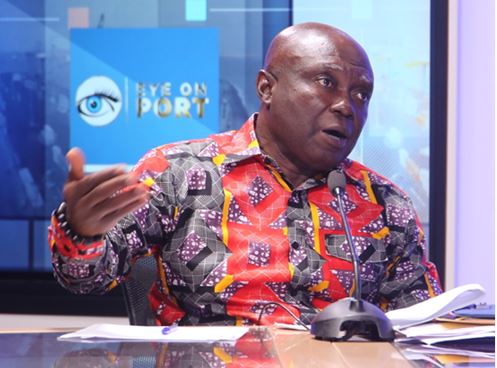
Speaking with Kennedy Mornah on the Eye on Port TV program, the Head of the Excise Unit at GRA, Kwabena Anto Apau, said while this may translate into reduced imports of such products, government is convinced this is a move in the right direction so far protecting the wellbeing of citizens.

“Previously we had excise duties to cover only carbonated soft drinks but now we have extended the scope to cover all sweetened soft drinks. We have noticed that the other soft drinks are harmful and the intake of them cause diabetes, hypertension and other non-communicable diseases on the rise. It is tax, and definitely it will bring in revenue but the focus is to try to introduce fiscal measures to discourage purchase.”

He said the ECOWAS directive on the harmonisation of the exercise duty of the Tobacco products direct that excise duty on Tobacco product must include ad valorem and specific duty rate.

The ad valorem rate is required to be 50% or more on the value while the specific tax rate is required to be a minimum equivalent of two cents per stick in the case of cigarettes, cigar, cigarillo and the cedi equivalent of $20 per net kilo for all other tobacco products.

“For fruit juices we have introduced excise duty rates of 20% and the other sweetened beverages the excise duty is also 20% but certain products have not been touched for example bottle water.

The excise duty was 17.5% and it remains the same. Also we had an anomaly where excise duty rates for beer was higher than spirits so we had to correct that. So now excise duty on spirits is 50% from the previous 25%.”

The GRA says this policy is necessary to make these products expensive to deter the unregulated consumption of them in the society.

ACET holds dialogue on Exploring Opportunities for Domestication of the AfCFTA Protocols to Drive Trade and Investment in Africa

0

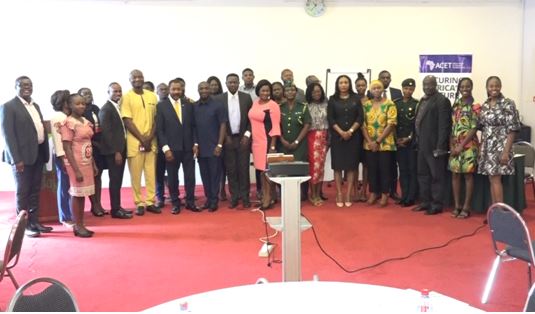
The African Center for Economic Transformation, ACET, has held a roundtable dialogue on exploring opportunities for domestication of the AfCFTA protocols to drive trade and investment in Africa.

The dialogue was meant to address the status of domestication of specific provisions of the AfCFTA protocols related to free movement of persons, including labor mobility.

The dialogue also discussed how the continental trade is implemented, the strength and flaws of it as well as review the outcomes to date and how effective it is in terms of AfCFTA objectives, while identifying key areas for support and improvement.

The dialogue brought together relevant stakeholders in Ghana’s trade industry.

A Senior Director, Research, Policy & Programs at ACET, Dr. Edward Brown expressed worry that intra-African trade remains very low as it accounts for 17% of Africa’s exports when compared to other regions.

“11 years now and we’re still at a very low level of intra-Africa trade. It is important that we try and continue to collaborate given the endowments in each of these countries. The importance of trying to compete and ensure that your private sector is resilient and competitive is very important and that can only be done through intra-Africa trade.”

A Senior Policy Analyst at ACET, George Boateng indicated that the AfCFTA when rightly implemented and supported will bring several prospects to the Africa continent.

“What the trade deal provides us with is that Africans can really speak with one voice that means it gives us an upper hand in negotiations when we go to the table with others outside the continent, and this for me is the most important thing that the trade deal offers. I mean when you promote free trade we are looking at it being able to address the skills gaps in each country.

We’re also looking at labour markets trying to solve the problem of skills mismatch and also curb the phenomenon of the brain drain which is now very prominent on the continent.”

A Principal Researcher at ACET, Louis Yaw Afful revealed some findings of a research ACET conducted under the continental trade.

“There is no harmonization of Institutions. I will wish that whatever is being done by the immigration ministry in Ghana will be replicated by Nigeria, other state parties and that is where the difficulty is. Specifically, in Ghana there is a lack of inter institutional cooperation.” 

The Ghanaian Chronicle