Home Blog Page 1944

Jinapor assures legal mining coys of adequate protection

0
Minister for Lands and Natural Resources, Samuel A. Jinapor

The Minister for Lands and Natural Resources, Samuel A.  Jinapor has assured the mining industry, particularly licensed large-scale mining companies in the country of the firm commitment and unflinching determination of the government to protect their concessions by activating all the necessary security protocols.

Delivering the keynote address at the Mining for Development Forum held on Tuesday, September 12, 2023 the Lands Minister stressed the need for the mining companies through the Chamber of Mines to collaborate with the government to protect their concessions.

Speaking on the theme: “Ensuring The Security Of Operations in Ghana; The Role of Stakeholders”,  Jinapor noted that the fortunes of the large-scale mining firms has direct bearing on  government’s economic projection hence the need for an effective coordination to grow the sector and maximize its gains and benefits to the country.

While indicating his worry with reports of illegal invasion of large-scale mining companies, the Minister outlined two important pillars on which he believes, if implemented to the letter, would cure the menace of encroachment on large-scale mining concessions.

He maintained that these two factors are equally important and must work in tandem to attain the objective guaranteeing the absolute safety and protection of the concessions of large-scale mining concessions.

“There are two ways of protecting mining companies in the country. Across the world, these issues of illegalities, contentions between the locals and the investors, conglomerates or companies”, he stated.

“There are two fundamental pillars on which I believe we can chart our path. One in my view is brute enforcement. What you do with brute enforcement is that when such issues happen, you move in immediately uproot them, you sack them, arrest, prosecute and convict them”, he added.

Another aspect of securing large scale concessions, the Minister said, “is putting in place sustainable measures to carry the community with you. It is absolute important. Any group which suggests that just by deploying law enforcement agencies will resolve issues of encroachment of large scale enforcement will not work.

The enforcement is absolutely important and the principle of carrying the community along is also important”.

Jinapor also commended the Ghana Chamber of Mines for the program and urged them to work hand-in-hand with government to carry out short-term sustainable measures to develop their communities.

The Chief Executive Officer of the Ghana Chamber of Miners, Sulemana Koney in his welcome address stated that the forum will afford the various stakeholders the opportunity to deliberate on the various means of ensuring the protection of concessions and contributing to the community and country development.

He commended the Ministry of Lands and Natural Resources under the leadership of  Samuel A. Jinapor for its consistent efforts in seeking to address the teething challenges of the large-scale mining firms.

The Forum also had in attendance the Deputy Minister responsible for Mining, Hon. George Mireku Duker, the Western Regional Minister, Hon. Kwabena Okyere Darko, President of the Central House of Chiefs, Odeefuo Amoakwa Buadu, players and captains of the Mining Industry, some security Personnels among others.

Feature: The Ghana Police Service saga: Citizen’s view and inside story

0
Dr George Akuffo Dampare, IGP

Ghanaians woke up a few weeks ago to a leaked tape featuring the former NPP Chairman of the Northern Region, Bugri Naabu, in conversation with some serving police officers including COP George Mensah.

The tape, which has now become a subject of Parliamentary Inquiry, has opened a can of worms within the service.

At his appearance before the Parliamentary Committee, COP Mensah accused the Inspector General of Police (IGP) Dr. George Akuffo Dampare of being the worse in recent times. A claim, I stand to differ, given all the positive reforms that we see.

As a concerned citizen and a former journalist, I believe the IGP’s commitment to weeding out corruption and ensuring officers adhere to a strict code of conduct has rather ruffled feathers among those accustomed to old practices.

Change is different thing to embrace in every human institution, with the current IGP at the helm of sweeping changes, which have undeniably improved the image and effectiveness of the police force in the eyes of the public will undoubtedly created friction among a few elements within the Service.

It is, therefore, not surprising the internal rift he faces within certain elements of the police force due to his elevation to the high office of IG at a time when some commissioners felt they were more deserving and also the changes he has introduced.

Against all odds, IGP Dr. George Akuffo Dampare, transformative leadership has progressively reformed the Service and improving its public image.

Reforms in the Ghana Police Service

Under the stewardship of the IGP, the Ghana Police Service has experienced a wave of reforms aimed at modernizing the force and enhancing its effectiveness.

These reforms have touched upon various aspects of policing, ranging from improving training and equipment to implementing community-oriented policing strategies. Perhaps, the most significant shift has been the emphasis on police visibility and the use of technology to drive safety.

The IGP has also brought accountability and transparency within the force. The successful implementation of technology-driven initiatives to streamline police operations including, body-worn cameras, and a revamped emergency hotline system has not only increased efficiency but also enhanced public trust. These are visible for any member of the public to attest to.

He also introduced the body-worn cameras, digital record-keeping, and a revamped emergency hotline system has improved the efficiency of the force and fostered public trust.

The IGP has emphasized community-oriented policing strategies, fostering stronger ties between the police and the communities they serve. Police visibility is one of his hallmarks . This approach has led to a decline in crime rates and improved public perception of the police.

Resistance

Some accuse the IGP of being an NDC plant in the Service, having served as aide-de-camp (ADC)to late President John Atta Mills when he was Vice President. The role of the ADC is a professional and non-partisan position.

As a member of the security detail for the Vice President, his primary duty was to ensure the safety and security of the Vice President and his official engagements. This role did not involve any political affiliations or activities.

COP George Mensah and former IGP David Asante Appeatu have all also once served as ADCs during the NDC era in the 1990’s. In recent times, Hon.PeterToobu was Secretary to Akufo-Addo-appointed IGP David Asante Apeatu’s, but he went to contest an NDC parliamentary seat.

Attempts to politicize Dampare’s previous ADC role and use it to cast aspersions or insinuate that it reflects on his performance is therefore unfounded.

As the parliamentary inquiry unravels a lot of the issues, it remains to be seen how the IGP will weave the complex narrative of overwhelming public confidence in him and the dissent of a few within the serving officers points to three areas as part of Dampare’s legacies. These include a renewed commitment to professionalism, accountability, and transparency within the force.

Power Dynamics

Commissioner of Police George Mensah, a prominent figure within the Ghana Police Service, has emerged as a notable opponent of Dr. Dampare’s reforms. While Commissioner Mensah’s specific grievances may vary, they are emblematic of the broader challenges within the Service which Dampare inherited.

The clash between Commissioner Mensah and IGP Dampare represents a fundamental clash in leadership styles and philosophies. Whilst both may have their support networks, definitely, the IGP might have made efforts to reach out to several factions within the service to unify the Police Service under a common vision.

COP Mensah, contrary to what he told Parliament, is a well known NPP member who is lacing his boots to contest the NPP seat in Bekwai currently occupied by Deputy Speaker, Hon. Joe Osei-Wusu.

Conclusion

While Dampare’s reforms have undoubtedly improved the Service’s image and effectiveness, they have also triggered resistance from within. Political actors have jumped into the fray. I will continue to monitor this unravelling story.

From Yaw Appiah, former journalist and a concerned citizen

Man arrested for sprinkling concoction on judge’s car

0
Accra Circuit Court

A middle aged man has been arrested for sprinkling a whitish substance at the entrance and on a car used by the Accra Circuit Court ‘9’ judge, Samuel Bright Acquah. He was arrested about 7:30 am on Monday by the court security, whilst in the middle of the act.

The suspect’s name is unknown and it is also not clear what his mission was or what he wanted to achieve with the act.

According to sources, the suspect was whisked away to the Accra Regional Police for interrogation.

Information gathered by The Chronicle indicated that the suspect’s son, Micheal Okai Afoakwah, was to be arraigned on a stealing charge before another judge, Kizita Naa Quarshie, later on that day.

The pandemonium outside court ‘9’  compelled to Mr. Acquah to unfortunately use the same entrance that the whitish substance had been sprinkled  to find out what was happening.

Ironically, a day after the incident, The Chronicle court reporter visited Court ‘9’ to ascertain whether the whitish substance has had any effect on the judge, but His honour was looking fit, as he presided over the court session.

Michael Okai Afoakwah’s offence

The Accra Circuit Court ‘4’ was told that Michael Okai Afoakwah was arraigned for allegedly stealing US$37,000.00 from his aunty, one Akua Poku, who is domiciled in the United States of America.

According to the brief, Madam Poku, who is being represented by Nana Yaw Sarfo, sent the accused money to establish a block factory for her. Michael, 29, and unemployed, was given the amount somewhere in the year 2022.

According to the brief, after the establishment of the block factory, Madam Akua Poku will relocate to Ghana to operate the factory herself.

Nevertheless, the accused, upon receipt of the money, failed to use it for the stated purpose and rather diverted same for his personal use.

At a point in time, the accused sent pictures of a block factory he took elsewhere and sent it  to Akua Poku, but after a series of enquiries, it turned out to be false.

On September 1, 2023 a report was made to the Police station and the accused was arrested.

The accused admitted to the offence in his caution statement, and after investigations he was charged with the offence as stated on the charge sheet.

Funeral home agency trains workers on safety measures 

0
Emmanuel Okyere, facilitator and acting Director, lead technical advisor MOFFA at the training session

Mortuary, Funeral and Facilities Agency (MOFFA) has organised a four-day training programme for workers at the various mortuaries in the Ashanti Region on Infection, Prevention and Control (IPC) to enhance their knowledge and experiences in the line of duty.

This is geared towards stopping the transmission of diseases to vulnerable communities, themselves, and their families.

Dr. Yaw Twerefour, Chief Executive Officer of MOFFA, explained that the Agency had, so far, trained about 800 workers nationwide to ensure expansion in knowledge and experience in their operations at their work places.

According to him, the key concept of transmission was micro-organisms mostly invisible, but they were everywhere, and that the transmission required a source and a susceptible host, and route of transmission as the main routes include contact droplets, airborne or vehicles like foods.

He disclosed that the participants would acquire certificates that would bring value to their operations as professional workers to secure their jobs.

He stressed that the Mortuary Funeral Facilities Agency had come to ensure that workers get the technical know- how and basic knowledge about their work to help acquire certificates and also improve on their working experiences and capacities.

The CEO disclosed that, the aim and benefit of the training is to ensure that the workers protect themselves, patients, family and community, including mosques, churches and market places and healthcare associated infections.

The healthcare associated infections, he said, are infections occurring in a patient, during the process of care in a hospital or other family care facility that was not present.

Mr. Emmanuel Okyere, facilitator and Lead Technical and acting Director for MOFFA (IPC) at the training disclosed that, the infection, Prevention and Control (IPC) is a Policy Procedures and Practices use to reduce the risk of spreading infections, especially in healthcare setting including morgues and in the community.

According to him, the exercise would enhance participants’ scientific approach with practical solutions designed to prevent harm caused by infections to patients.

Mr. Okyere disclosed that the goal was to protect the vulnerable population at risk of acquiring infections in the healthcare facilities.

The Lead Technical and acting Director for MOFFA stressed that, the infection agents which were the disease causing or pathogenic microorganisms, susceptible host that was a human with poor immune defenses against the micro-organisms and right environments.

He noted that, for infections to spread all links must be connected and for that matter, the need to break any link will stop disease transmission.

Police okay ‘Occupy BoG’ demo

0
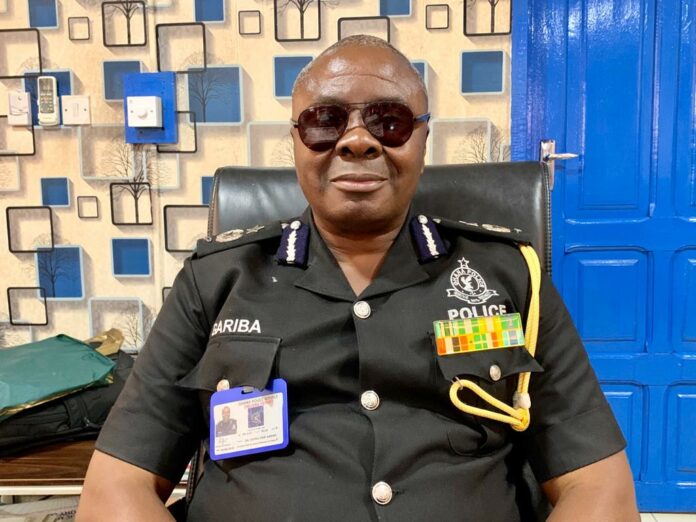
Dr Sayibu Pabi Gariba - Accra Regional Commander

The Accra Regional Police Command has given the organisers of the much-anticipated civil protest against the Governor of the Bank of Ghana (BoG) the green light to go ahead with intended demonstration.

Additionally, in line with the public Act 1994 (Act 491), the Command had pledged its commitment to providing adequate security for the demonstration, which is expected to receive massive attendants.

The final decision of the police to consent to the planned demonstration to demand the resignation of the Governor was contained in a letter addressed to the Minority Leader, Dr. Ato Forson, by the Regional Commander, Dr. Sayibu Pabi Gariba.

He conveyed his sincerest gratitude to the leadership of the Minority in Parliament, civil society organisations, progressive forces, and other well-meaning Ghanaians for the honouring invitation.

“Pursuant to our earlier deliberations and in line with our mandate, the Accra Regional Police Command will provide the required security,” the letter read in part.

The police, however, reminded the organisers of the protest to keep to their stated route of Obra Spot-Adabraka-Ridge Roundabout-National Theatre Traffic Light, High Court Complex Traffic Light-Atta Mills Highway, and u-turn to Independent Square as indicated to the police.

Dr. Ato Forson and other leaders of the planned protest were further encouraged to take the necessary steps to ensure that there would be no breach of the peace.

The leadership of the protest was to further ensure that the demonstrators would conduct themselves in a peaceful manner before, during and after the demonstration.

The opposition National Democratic Congress (NDC) had earlier issued an ultimatum to the Governor of the Bank of Ghana, Dr. Ernest Addison, and his lieutenants to vacate their posts after they allegedly supervised over the loss of GH¢60.8 billion.

The NDC posited that staggering loss of GH¢60.8 billion recorded by the Bank of Ghana was equivalent to $6 billion which is twice the amount sought from the IMF in the country’s recent bailout.

According to the NDC, Governor Addison and his collaborators within the government had not just been clueless, but unresponsive, insensitive and reckless in all their dealings which had worsen the plights of Ghanaians.

At a press briefing to give their verdict on the activities of BoG, Minority leader, Dr Cassiel Ato Forson asserted that the recklessness of Dr Addison and his traitors has unleashed economic hardship on Ghanaians.

He continued that the Governor and his deputies had perpetrated the highest order of impunity against the suffering masses, which could no longer be tolerated, because it would set a dangerous precedent

In his views: “Those who have by their reckless and criminal conduct unleashed economic hardship and financial distress on the suffering people of Ghana must be held to account.”

Call for the governor to resign or incurred their wrath

Dr. Ato Forson emphatically mentioned that the Central Bank had been terribly desecrated by the Governor, his deputies, and the government to a point that it had become bankrupt.

The Minority Leader, therefore, called for the resignation of the Governor within 21 days from yesterday, when the press briefing was held or face their wrath.

He said: “We are resolved to embark upon popular action to Occupy the Central Bank and drive out the team of inept, callous and criminal [bad] managers of the finances of this country and Save the Bank of Ghana.”

The march, which he indicated would ensure accountability, was, however, thwarted by a lot of bottlenecks, including an injunction order secured by the police to restrain protestors.

This led to a legal fuse between the police and the organisers of the civil protest until a determination was made by the court which described the action by the police as frivolous.

Following the court’s decision, the organisers, led by Dr. Cassiel Ato Forson, had fixed Tuesday, October 3, as the new date for the demonstration.

A peaceful, freer and prosperous Africa can defeat coups – African think tanks

0
Opinion

Africa’s rise has consistently been truncated by repressive governance, large-scale centralised government, extractive institutions, and headstrong leaders who see politics as an avenue to harvest their loot by hook or crook.


Long before Covid-19 and the Russia- Ukraine war the building blocks of an effective, and inclusive society in many African countries were often ignored, leaving many Africans to suffer injustice, indignity, corruption, and exploitation by their leaders.


Recently, an increasing number of African economies have hit rock bottom and tail-spinned into ceaseless coups. It seems out of the 416 attempted coups globally since 1950, Gabon’s coup is not enough to seal Africa’s place as the continent with the most attempted and successful coups hitting a record high of 214. There are fears some African countries are waiting their turn.


Today, there is a growing number of young Africans who no longer find Africa as a hub for human flourishing. According to the African Youth Survey 2022 published by the Ichikowitz

Family Foundation, 44 % of young Africans between the ages of 18 to 24 years who consider moving abroad gave “economic reasons”. 41% are yearning for “educational opportunities,” and 25% “want to experience something new and different.”


In a related story, about 16 million young Africans are facing unemployment and n Egypt, Ghana, Morocco, Nigeria and South Africa at least 75% of the youth think that their governments do not care about their needs according to the 2019 Ibrahim Forum Report.  This is a scar on human development.


Does this suggest Africans no longer want Democracy? Certainly no. Africans hate tyranny. According to a weekly Afrobarometer by the Washington Post, “Only 4 in 10 Africans (42 percent) say elections in their country are effective in ensuring that representatives to parliament reflect the views of voters. The same proportion think elections enable voters to remove leaders who don’t do what the people want”


However, keeping democracy alive is an uphill battle. Suffice it to say the ruling elites have hijacked Africa’s political economy and it has been structured in a way that it keeps producing ramshackle gangs, presided over by political thugs, financed by cronies, and benefitted by foot soldiers, political stooges, and monopolistic fee-collecting cabals.


Of course, one cannot downplay foreign interference and the role of external authoritarian regimes in derailing democracy in Africa. For example, in 23 countries where Russia has been active in undermining democracy, 11 of these have since remained major hotspots for conflicts.


Here we see a gradual loss of sovereignty, weakened voices, and little or no self-determination. This has led to widespread agitation, insurgency, hardship, poverty and misery.


All these suggest the cascading problems of Africa stem from both endogenous and exogenous factors.


Tackling these challenges will require a more united front of active citizens resilient and focused on compelling governments to prioritize and work in the interest of Africans by addressing critical socio-economic problems such as unemployment and underemployment, health, infrastructure/roads deficit, fallen standards of education, water supply, crime and insecurity, poverty, famine, mismanagement of the economy, power crises, corruption, food scarcity and barriers to trading.


Regional economic groups such as The Economic Community of West Africa (ECOWAS) should be proactive in calling out leaders who are democratically elected but sow seeds of discord, poverty and ultimately autocracy when in power. That way, ECOWAS would not have to resort to military intervention to reverse coups.


And it rings true as ever what the renowned Ghanaian economist George Ayittey once said, – the secret to economic prosperity in Africa is not hard to find. Three words unveil this secret: “peace, infrastructure, and economic freedom”.


Source: citinewsroom.com


The views expressed in this article are the author’s own and do not necessarily reflect The Chronicle’s stance.

Editorial: City authorities should kick-out animals roaming the streets

0
Editorial

It is shameful to see animals roaming the streets of the capital, Accra, indiscriminately in this 21st Century. The streets of Accra and other preserved vegetations in the capital city have become grazing fields for livestock. These livestock are destroying the environment and causing other havoc, with the city authorities doing very little about the situation. These animals are seen grazing on green grasses without any herdsmen guiding them.

As we try to brand Accra, as the official gateway to the West Africa sub-region, it is worrying that we allow livestock to roam the streets and cause havoc, with the authorities doing nothing about it, and the situation keeps deteriorating.

It is particularly common in areas like the Tetteh Quarshie Interchange, Dzorwulu, Roman Ridge, Shiashie, East Legon, Airport Residential, Achimota and its environs. These are areas considered as prestigious in the national capital, since they host the large infrastructure, institutions and luxurious hotels in the country.

It is crucial for the assemblies to recognise the potential dangers and address the issue promptly. We must bear in mind that the city’s reputation, public safety, and the welfare of both humans, especially children walking to and from school, and animals are at stake.

The Chronicle strongly bemoans that the presence of live animals on our streets pose a significant threat to public safety. Vehicles maneuvering through crowded streets are forced to navigate around these unexpected obstacles, increasing the risk of accidents.

Pedestrians, too, face potential harm as they attempt to navigate through bustling streets teeming with animals. The potential for injury, both to humans and animals, cannot be ignored.

Beyond the immediate safety concerns, the presence of cattle roaming freely on our streets can have detrimental effects on public infrastructure. Animals that are left to roam can cause extensive damage to gardens, parks and other public spaces undoing the hard work and resources invested in maintaining these areas for aesthetic value and the public’s enjoyment. Moreover, the cleanliness and hygiene of our streets are compromised when animal waste is left unattended to.

To tackle this issue effectively, it is crucial for the various Municipal Assemblies to take immediate action. Educating the public about the consequences of allowing animals to roam freely is essential. Awareness campaigns can help individuals understand the risks and encourage them to take proper responsibility for their goats, sheep and cattle.

Also, the need for enforcement of existing animal control laws should be intensified. Stray animals should be promptly captured and placed under the care of animal shelters or rescue organisations, where they can receive proper attention and care.

Implementing very strict penalties, including fines, for herdsmen who allow their animals to roam freely can act as a deterrent. This, combined with increased monitoring and enforcement, will encourage responsible ownership of these animals.

The presence of live animals roaming freely in the streets of our capital city demands immediate attention. It is crucial for authorities to recognise the potential risks to public safety and the damage to public infrastructure. By adopting a comprehensive approach that includes public awareness, stricter animal control measures, collaboration with animal welfare organisations and the implementation of fines and penalties, we can address this issue effectively.

Manhyia North MP commissions 3-unit KG block

0
Nana Owusu Bempah being assisted to commission to the facility

The Member of Parliament for Manhyia North Constituency, Mr. Akwasi Konadu, has commissioned a newly-built three-unit kindergarten classroom block at Buokrom Estate for the local M/A Basic School.

The fully furnished classroom block, with a head teacher’s office, was officially commissioned last week Tuesday.

The newly-built 3-Unit KG classroom block

The Member of Parliament, who single handedly funded the project, expressed joy at providing a befitting classroom block and encouraged the school authorities to see to the proper maintenance of the facility.

The handing over ceremony was graced by dignitaries, including Nana Owusu Bempah, Buokromhene, District Director of Education for Kumasi Metro, and the Co-ordinating Director for the Kumasi Metropolitan Assembly.

The Headteacher, Mr. James Opoku, thanked the Manhyia North Lawmaker for the provision of the new facility.

Fifty 50 Club supports four patients to undergo various surgeries

0
The beneficiaries and some members of Fifty 50 club

Fifty 50 Club, an Obuasi-based Non-Profit Association made up of employees of AngloGold Ashanti and its subsidiaries and that of other corporate organisations across the country and abroad, has donated a total amount of GH¢25,000 to enable four patients undergo surgery.

The patients include a two-year-old Hole-in-Heart patient, a 42-year-old man diagnosed with Severe Mitral Valve Regurgitation, and a 9-year-old girl diagnosed with Hodgkin’s Lymphoma (Cancer), and a sickle cell patient.

Founded in 2020, the Fifty 50 Club, with 245 members, makes monthly contributions in support of its objectives.

Blessing Ama Woode Kwamba, a 2-year-old girl from Obuasi diagnosed with Ventricular Septal Defect (VSD), also called hole-in-heart), at the National Cardiothoracic Center, Korle-Bu Teaching Hospital, was given an amount of GH¢10,000 towards a procedure/surgery to correct her condition.

James Danquah, 42, from Obuasi,  who was diagnosed with an acquired heart disease called Severe Mitral Valve Regurgitation at the University of Ghana Medical Center, also received GH¢10,000 towards the cost of his surgery. The condition, as reported, was seriously affecting his health and required open heart surgery to replace the diseased valve with a mechanical prosthetic valve.

Nine-year-old Federica Owusu Yeboah was diagnosed with Hodgkin’s Lymphoma (Cancer) at the AGA Health Foundation in 2022, and was referred to the Komfo Anokye Teaching Hospital (KATH) in April 2022, where cycles of treatment were started on May 5, 2022 and completed on May 27, 2023.

After her treatment, it was prudent to know if she had been completely cured off the cancer, for which she needed to do a CT Scan of her neck and chest at the cost of GH¢3,440.00, an amount Frederica’s family could no longer afford, because of previous expenditure son her treatment.

The Foundation, therefore, came to her aid with an amount of GH¢3,500 to pay for the cost of the CT Scan.

Frederick Agyeman Duah, a 6-year-old with sickle cell disorder with increased susceptibility to infections, low blood levels, bone and joint pains was also supported with an amount of GH¢1,000.

On the average, heart surgery in Ghana costs between $6,000 and $13,000, with the cost of heart surgery out of the reach of most Ghanaians, resulting in many patients left to wait for the benevolence of individuals and organisations, and in some cases, die before help would arrive.

Mr. Jacob Edmund-Acquah, President and Founder of the Club, lauded its members for their generosity and contributions towards the objectives of the group, and hoped the donations would go a long way to ease the plights of the beneficiaries.

He appealed to other corporate institutions and individuals to consider joining the Club or making donations to support its activities.

Dr. Kwadwo Anim, Executive Director of AGA Health Foundation, expressed profound gratitude to Fifty 50 Club for the donation, which, he described as a swift intervention to help the beneficiaries undergo treatments.

He noted that while there was advancement in technology for the treatment of heart conditions in particular, financing it had always been a challenge, and called on individuals and organisations to emulate the shining example of the Fifty 50 Club and donate towards the treatment of such diseases.

Gladys Adu, mother of Blessing Ama Woode Kwamba, on behalf of the beneficiaries, commended the Club for coming to their aid.

She appealed to well-meaning individuals and institutions to come to their aid.

Open defecation, a threat to public health -WASH Technical Specialist

0
Yaw Atta Arhin, WASH Technical Specialist, World Vision Ghana

Mr. Yaw Atta Arhin, Water, Sanitation and Hygiene (WASH) Technical Specialist, World Vision Ghana, has stated that open defecation was a threat to public health.

He has urged stakeholders and policy makers in the Water and Sanitation sector to put pragmatic measures in place to speed up the fight against open defecation, as a threat to public health.

He has also urged the government, through policy makers, to collaborate with all stakeholders in the sector to launch and implement the roadmap for ending open defecation, establish a National Sanitation Authority to enforce the building code and Metropolitan, Municipal and District Assemblies (MMDAs) bye-laws, adopt and implement innovative approaches to ensure increased access to household toilets.

According to him, although Ghana had achieved notable progress in terms of access to safe water, it was disappointing that the same could not be said about environmental issues.

The Technical Specialist was of the view that progress towards ending open defecation and ensuring improved sanitation for all continued to be very slow.

Speaking to The Chronicle in Kumasi during the establishment of the Media Coalition on Open Defecation (M-CODe) on the Open Defecation Free Stakeholder Engagement Platform, as well as the launch of the Eastern Regional branch of the M-CODe, he stated that, the goal of the training was to hasten the fight against the practice in the area, because the country depended on its eradication by 2030.

Mr. Arhin tasked the M-CODe to step up its efforts across the nation through creative campaigns, the employment of well-known individuals as open defecation-free ambassadors, and the regular use of conventional and social media.

Mr. Francis Ameyibor, M-CODe National Convenor, noted that the media coalition aimed to foster collaboration among media professionals and other stakeholders in order to identify problems and operational gaps, and work towards a common objective in the battle against open defecation.

Mr. Ameyibor expressed the need for stakeholders to collaborate with the media in order to end open defecation.

He commended World Vision Ghana for supporting the “M-CODe 2023 Anti-Open Defecation Nationwide Advocacy” efforts, which included the journalist empowerment event and launch.

The Ghanaian Chronicle