Home Blog Page 1915

FDA presents findings of implementation research on Med Safety App

0
Dr. Delese Darko, CEO, FDA

The Food and Drugs Authority (FDA) has presented the first phase findings on the Implementation Research (IR) to identify factors contributing to the low uptake of the Med Safety App.

The Med Safety App is a mobile application that can be downloaded free of charge from Google Play and the App Store for Android and iOS devices, respectively.

The FDA launched the Med Safety Mobile App in 2019 to, among other things, make it easier for patients, consumers and healthcare professionals to report adverse reactions (side effects) of medicines, vaccines, and other medicinal products to the Authority.

It also provides users with safety information and allows them to create their own watch list to receive personalised product-specific news.

The current study is under the FDA’s Work Package Four of the Sustainable Access and Delivery of New Vaccines in Ghana (SAVING) Consortium, to build the capacity of multiple stakeholders to identify and address implementation challenges for effective delivery and uptake of new medical interventions.

At a meeting to disseminate the   findings with stakeholders, Dr Delese Darko, the Chief Executive Officer of the FDA, reiterated the Authority’s commitment to ensuring the safety of efficacy of medicines on the Ghanaian market.

The meeting was to identify key interventions for incorporation into the second phase of the IR, to improve the usage of the App.

In a speech read on her behalf, Dr Darko expressed gratitude to the SAVING Consortium in building the capacities of not just the FDA staff, but multiple stakeholders in identifying and addressing the implementation challenges and their invaluable contributions towards the utilisation of the App.

She indicated that the meeting was not just about sharing results; but also, to chart innovative ways forward that would enhance the utility of the Med Safety App and potentially transform medication safety in Ghana and globally.

Presenting the findings of the study, which was conducted using a mixed approach, Mrs Adela Ashie of the Safety Monitoring Department of the FDA, said among the key bottlenecks identified in the use of the App were: poor user friendliness, log-in and internet challenges, and the lack of provision of reminders or notifications when feedback and news items were posted.

She said the results showed that there was a statistically significant association between the use of the App and participants’ age, employment status, religion, healthcare professional status and current access to the internet.

Although the FDA had estimated to receive at least 20 per cent of reporting on adverse drug reactions by 2022 it is currently receiving only about seven per cent.

Participants at the meeting deliberated on strategies to address the bottlenecks identified in the first phase of the study.

They recommended an update of the App to be user friendly, improving log-in process, public education and awareness on its existence, provision of frequent update, feedback and pop-ups and ensuring the use of simple language to make it reader friendly.

Professor David Ofori-Adjei, a Physician, and medical researcher, who chaired the meeting, emphasised the importance of stakeholder engagements and assured participants that their recommendations would go a long way to improve the use of the App.

Participants included healthcare professionals, patient groups, regulatory authorities such as South African Health Products Regulatory Authority and Medicines and Healthcare products Regulatory Agency, UK.

Others were the United Nations Development Programme, World Health Organisation, Access and Delivery Programme, the media and AUDA NEPAD’s African Union Smart Safety Surveillance programme.

The SAVING Consortium project builds on the framework of the Access and Delivery Partnership value chain and stresses on the importance of an efficient regulatory control systems using IR.

This will help build technical and research capacities in its partner institutions, namely- the University of Health and Allied Sciences, Ministry of Health and the FDA.

Source: GNA

Anlo Traditional Council signs Ga Manye’s book of condolence

0

The Anlo Traditional Council has signed the book of condolence in memory of Naa Deidei Omeadru III, the late Queen mother of the Ga State.

The delegation, led by Togbi Agbesi Awusu II, the Awadada of Anlo, was also scheduled to visit the Ga Traditional Council and mourn with King Tackie Teiko Tsuru II, the Ga Mantse.

Togbi Agbeshie Awusu led a retinue of chiefs and queens, numbering about 50, including Togbi Gbordzor III, the Paramount Chief of Fugo and Dusifiaga of Anlo, Togbi James-Ocloo V, the Dufia of Keta, and Togbi Kadzahlo IV, the Dufia of Afiadenyigba.

They were received by Nii Ahele Nunoo III, the Abola Mantse, Nii Ayikai III, Akamanjen Mantse, Nii Afufu Afragaja I, Jorbu Mankralo and other staff of the Ga Traditional Council.

The Awadada, on behalf of the people of Anlo, donated  packs of bottled water and assorted drinks as a sign of their goodwill and sympathy and promised to do more during the funeral rites, scheduled for October.

Nii Ayikai, who accepted the gifts expressed gratitude for the gesture and said they looked forward to hosting the chiefs and people of Anlo and their rich culture, especially their ever popular “agbadza” dance during the funeral.

“On behalf of Nii Tackie Teiko Tsuru II, we are very happy with your visit and accept your gifts… during the funeral, we plead you come with your iconic Agbadza dance troupe to entertain our mourners,” he said.

Other Chiefs and Queens among the retinue were Togbi Agbeve III, Togbi Subo II, Togbi Solanga Akakpo II, Togbi Tudoabor III, Mama Awotsu Adzagba II, Mama Duti IV and Mama Nugorgbe I.

A delegation of chiefs from the State had earlier visited the Awadada at Anloga to officially announce the passing of the Queen mother and the funeral rites, which would be held from October 23 to 29, 2023.

Source: GNA

The West’s climate crisis is bad news for the Global South too

0
Opinion

The global investment and lending systems are on the verge of a climate-centric metamorphosis as the consequences of global warming on economies around the world become impossible to overlook.

That change should be good news but it is the economically-challenged Global South that could bear the heaviest burden of this shift.

Before 2021, climate change was primarily regarded as a concern that disproportionately affected the Global South. International financial institutions and advanced economies directed significant amounts of their finance earmarked for climate-related mitigation and investments towards vulnerable areas to enhance their ability to adapt.

However, the past two years have brought about a radical shift. The year 2023, specifically, has witnessed an unprecedented surge in dramatic climate change effects across North America, Europe, the Middle East and East Asia. Prolonged heatwaves, floods, raging wildfires and devastating hurricanes have struck these wealthier regions, leaving them bewildered.

Against this backdrop, it should surprise no one if richer nations redirect financing that was previously allocated for the Global South’s adaptation efforts, channelling it instead towards domestic recovery efforts.

The shift is already noticeable in mechanisms like multilateral climate funds, as highlighted recently by the struggles of the Green Climate Fund (GCF) in securing pledges from rich countries for its upcoming funding cycle. Remember, there are only limited dedicated sources of climate financing to begin with.

And while accessing funding from such platforms is exceedingly challenging, they play a crucial role and may be the only lifeline for many vulnerable regions. If these funds run dry, the Global South will have no doors left to knock on. The Loss and Damage (L&D) Fund, established just last year, might also fall prey to this changing landscape. To some degree, it already has.

The fund doesn’t yet have enough commitments, let alone necessary capital, to address climate change. Additionally, it regularly encounters dismissive comments from rich countries concerning contributions. The United States, in particular, remains opposed to the idea of holding historical emitters responsible for the current climate landscape, or compensating countries affected by disasters.

COP28 is expected to include the operationalisation of the L&D fund on its agenda. It will be intriguing to witness how delegates will navigate the challenge of operationalising a fund that’s nearly empty.

Another implication of the climate-driven transformation of financial systems, which could have the most significant impact on the Global South, relates to concessional elements within global debt.

For institutional lenders like the International Monetary Fund (IMF) and the World Bank, climate exposures are becoming increasingly evident through an elevated probability of loans that borrowers are not able to repay due to hardships.

Such challenges stem from borrowers facing recurring climate-induced disasters or depreciation of their existing assets caused by the escalation of global inflation, which itself may be driven by climate change.

Lenders face a quandary. On the one hand, their core mandate is to provide financial assistance to countries in need. However, they must also exercise caution when extending loans to countries that may be unable to repay them.

Consequently, as a delicate balancing act, institutions are now moving away from the concessional nature of debt instruments, relinquishing their prior leniency.

Pakistan serves as a notable example.

Last year’s floods plunged the country into poly-crises, pushing it dangerously close to a sovereign debt default. Ultimately, the economic collapse was averted through the approval of a $3bn loan program by the IMF.

One would expect that the IMF would provide this amount on favourable terms to help alleviate Pakistan’s economic woes. However, the reality is quite the opposite.

Reforms tied to the bailout package have resulted in a surge in annual inflation in Pakistan, reaching a historic high of 38 percent in May. Interest rates have also climbed, and the Pakistani rupee has reached unprecedented lows, with a 6.2 percent decline against the US dollar last month.

Climate-vulnerable African nations present other cases in point. According to the IMF’s own assessment, 13 African countries are currently teetering on the edge of climate and debt distress. Drought-stricken Zambia and, more recently, flood-prone Ghana have already defaulted on their debt payments.

The prospect of debt pardoning, a plea the debt-burdened Global South fervently advocates for, is not one that lenders like. The climate has changed, not the tenets of capitalism.

“We want to pay,’’ said Kenyan President William Ruto during the New Global Financial Pact Summit in June. ‘’But we need a new financial model,’’ he argued. “The current financial architecture is unfair, punitive and inequitable.’’

To be sure, the Global South will need to depend on its internal resources for the most part to drive climate investments. These countries must look to break free from the relentless cycle of debt and climate crises.

Yet, to accomplish this, they need a financial system founded not on the principle of survival of the fittest, but rather on equitable opportunities for all.

Mere sympathy from the rich will no longer suffice. What the Global South needs, and rightfully deserves, is systemised empathy.

By Rizwan Basir

Source: aljazeera.com

The views expressed in this article are the author’s own and do not necessarily reflect The Chronicle’s stance.

Editorial: Enough of the Article 71 gymnastics

0
Editorial

Article 71 of the 1992 Constitution determines certain emoluments for specific public servants listed in clause one of this article. Clause one says: “the salaries and allowances payable, and the facilities, and privileges available to

(a) the Speaker and Deputy Speakers and Members of Parliament;

(b) the Chief Justice and the other Justices of the Superior Court of judicature;

(c) the Auditor-General, the chairman and deputy chairmen of the Electoral Commission, the Commissioner for Human Rights and Administrative Justice and his Deputies and the District Assemblies Common Fund Administrator;

(d) the Chairman, Vice Chairman and the other members of (i) a National Council of Higher Education howsoever described; (ii) the Public Services Commission; (iii) the National Media Commission; (iv) the Lands Commission; and (v) the National Commission for Civic Education.

The conversation about the payment of emoluments to article 71 office holders, popularly referred to as ‘ex-gratia’, becomes convenient to engage in, depending on the parties involved.

Mostly, beneficiaries, who are the political elite, would shy away from such discussions for the payments to be scrapped, often championed largely by non-beneficiaries, the ordinary public sector workers. Further, the two main political parties, whose members have enjoyed the goodies of this article, find interest in this discussion and, in fact, choose contrary positions based on their being in power or opposition.

We refer to former President John Dramani Mahama, who has pledged to scrap the payment of ex-gratia when he returns to Jubilee House, hopefully after the 2024 general elections. He made the promise at the launch of his campaign to lead the National Democratic Congress again into the next elections.

This he did not do when he had the chance as president from July 2012 to January 7, 2017. But we may pardon him, on the back of a possible benefit of hindsight on his part.

President Akufo-Addo, on the other hand, has not in his entire period indicated steps to scrap the payment of ex-gratia. On the contrary, he prays that the recently inaugurated Dr. Janet Fofie-chaired emoluments committee will recommend very moderate ex-gratia, considering the public concerns raised about the economic situation of the country.

He cited the practice in America, “where the principles are established and automatically adjusted according to certain objective criteria. This may well be an issue for further constitutional debate and decision.”

Parliament and the Judiciary are reported to have complained about the payment of ex-gratia to them. They have argued that they do not receive ex-gratia but the accumulation of their outstanding salaries.

The Parliament approves the emoluments of the executive arm on the recommendation of the committee, but in a situation where the government has majority representation, the minority can only have their say.

We agree with the Secretary General of the Trades Union Congress, Dr. Anthony Yaw Baah, who, according to a Daily Graphic report, opined that Article 71 smacks of discrimination between the political elite and the people.

His position, which has been on the lips of many, emphasises the need for a concerted effort by the political class, which can only effect the change needed.

Though we do not say anything new if we say there is no hope left for the majority of Ghanaians that the call to scrap ex-gratia will be heeded by the politicians, we want to prick the conscience of those who begged for votes to serve and not be served, to listen to the people on issues such as this.

We recommend that the arguments of the Legislature and the Judiciary, whether true or not, be properly put forward and implemented. At the end of the four-year term, the state should only pay the accumulated amount of the outstanding salaries to those listed under Article 71 and nothing more.

The current situation is akin to that of a teacher, and other public sector workers who are not part of Article 71 have their salary calculated by the number of years served before retirement. This is not constitutional, but will the politician amend the constitution to reflect this to favor ordinary public sector workers who do not hold political appointments? What is good for the goose should equally be good for the gander.

NDA Charity donates to the less privileged

0
Kwame Agyenim-Boateng, a Ashanti Regional representative of the NDA Charity, presenting a dummy cheque to Mr. Kwadwo Kufour, a visually impaired farmer, at Apinkra in the Bosomtwe District of the Ashanti Region

The Nana Donkor Arthur Charity has embarked on a philanthropic mission to support persons on the lower side of social ladder.

The exercise was begun with a donation to Mr. Kwadwo Kuffour, a visually-impaired farmer, who owns a four acreage farm at Apinkra, in the Bosomtwe District.

During the presentation, the NDA Charity presented Kwadwo Kuffour with agricultural equipment such as overalls, wellington boot, fertilisers, gloves, and clothes among others, which amounting to GH¢2,000.

The Charity further presented him with a cheque of GH¢3,000.

In another development, the NDA Charity presented a cheque of GH¢2,300 to Sadat Samba, a one-year-old son of Kofi Boakye at Bremang UGC in the Suame Municipality.

The Charity has also supported the surgery of a woman in the Central Regional city of Mankessim with a cheque of GH¢5,000.

Speaking to the media, Kwadwo Kuffour expressed appreciation to NDA Charity for coming to his aid.

According to him, his unwavering goal was to become a farmer and impart the knowledge acquired to his fellow visually impaired colleagues and ordinary people to help them eke out a decent living.

Quizzed about why I he choose to be a farmer, Kuffour responded that he turned to farming because he did not want to beg and depend on others for a living.

This career path, according to Kuffour, who was named the best farmer at Apinkra in the Bosomtwe District in 2014, said farming had impacted on his life positively, hence, he wanted his colleagues to learn it and become financially independent in life.

“If I beg and beg, what will I depend on in future?” adding that farmer was good.

He, however, expressed worry about theft at his farm.

Kuffour, who is farming on school land, appealed to the state to assist people with disabilities with arable lands to farm since it was not easy to come by.

Kwame Agyenim Boateng, the Ashanti Regional Representative of NDA Charity, told the media that the foundation embarked on this exercise to help the poor and needy and give hope to the hopeless in society.

Ohwim Amanfrom Astro Turf named after late Okyem Aboagye

0
The new Astra Turf at Amanfrom

The Member of Parliament (MP) for Bantama, Francis Asenso-Boakye, has commissioned the fourth Astro Turf in the Constituency at Ohwim Amanfrom, a suburb of Kumasi.

The facility, which boasts of numerous features, includes floodlights, inner perimeter fencing, and reserved players seating, was funded by the Ghana Gas Company Limited and is expected to help nurture the athletic talents of the youth in the locality.

MP Asenso-Boakye in a tete-at-tete discussion with late Okyem Aboagye

The MP, who is also the Minister for Works and Housing, announced his decision to name the Astro Turf pitch after his predecessor, the late former Member of Parliament for Bantama, Daniel Okyem Aboagye, who passed on last Saturday after a short illness.

Okyem Aboagye served as the MP for the area from 2016 to 2021 and had been a Member of the Finance Committee of Parliament during his time in the legislative arm of government.

Mr. Asesnso-Boakye explained that “Hon. Okyem Aboagye was my dear friend from our early days, even before our political careers. His loss is deeply saddening, and in his memory, we have decided to name this facility after him in his honour.”

The Minister of Youth and Sports, Mustapha Ussif, who commissioned the facility, commended Asenso-Boakye for his remarkable efforts in securing the project and praised his dedication to the development of the youth in Bantama.

Asenso-Boakye kicks a ball to inaugurate the turf

Sam Pyne, Mayor of the Kumasi Metropolitan Assembly (KMA), emphasised the significance of these recreational facilities.

He also urged the youth to take good care of the facility.

Biden appoints Nigerian Americans to Advisory Council

0
Biden appoints Nigerian Americans

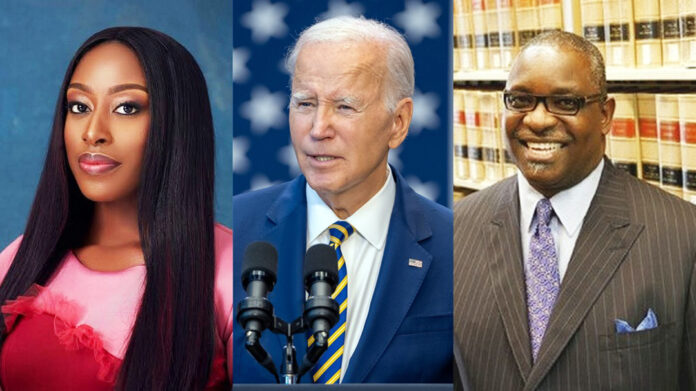
US President Joe Biden has appointed two Nigerian Americans to the President’s Advisory Council on African Diaspora Engagement.

Chinenye Ogwumike and Osagie Imasogie are among the 12 members appointed to the council within the Department of State.

“These 12 leaders have all played important roles in strengthening United States-Africa relations and shaping United States foreign policy toward Africa,” US Secretary of State Antony Blinken said, adding that they reflect the diversity of the African diaspora from African American and African immigrant communities.

He said he would rely on their advice and counsel on how to strengthen cultural, social, political, and economic ties between African communities and the African diaspora.

Abike Dabiri, chairperson of the Nigerians in Diaspora Commission, while congratulating the duo said their appointment serves as a source of inspiration for not only Nigerians but also Africans at large.

In a statement by the commission’s spokesperson, Abdur-Rahman Balogun, Mrs Dabiri described the appointment as a highly positive and welcomed development.

Ms Ogwumike is a two-time WNBA All-Star with the Los Angeles Sparks. She is also a full-time sports commentator on ESPN and an NBA analyst.

Mr Imasogie is the Chairman of Quoin Advisors and an SEC/FINRA registered Broker-Dealer. He co-founded PIPV Capital, a private equity firm that has invested over $1 billion in life sciences.

With a diverse career, including senior roles at pharmaceutical giants like GSK, Smithkiline Beecham, and DuPont Merek, he has also been a Price Waterhouse Corporate Finance Partner and an attorney.

Credit: premiumtimesng.com


Confusion as works minister, Umahi locks out workers

0
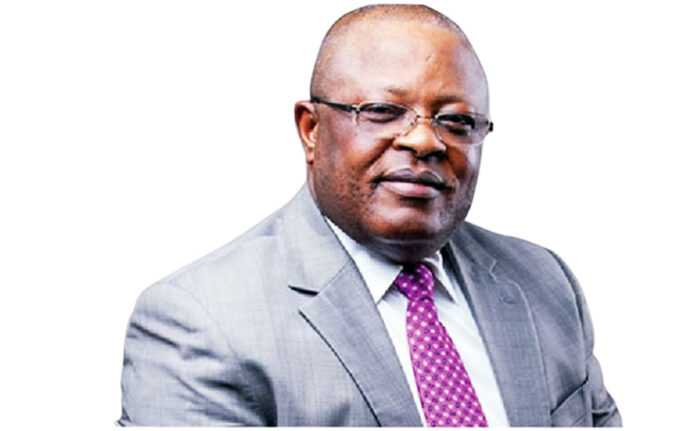
Minister of Works, Dave Umahi

Confusion erupted on Thursday as workers were locked out by the Minister of Works, Dave Umahi.

The minister was said to have prevented workers who came to work late from gaining access to the ministry.

However, after the gate was opened, the workers, comprising the Housing and Works Ministry, refused to enter into the ministry.

Instead, they occupied the entrance gate, insisting that the minister must come out to address them.

They also claimed that he stopped engineers and directors from doing their work, and has been breaking public service rules since his appointment, by bringing in consultants to run the affairs of the ministry.

The protesting staff were chanting “Umahi Must Go”, and lamented that they reside far away and there was no way they could come to the office early.

Credit: dailypost.ng

Kano State governor appoints 138 social media influencers as aides

0
Governor of Kano State, Abba Yusuf

The Governor of Kano State, Abba Yusuf, has announced the appointment of 94 social media influencers as media aides.

Their appointment came after the governor’s appointment of 44 social media influencers in September as “special reporters”.

With the latest appointment, the governor now has 138 special reporters working for him.

The governor’s spokesperson, Sanusi Bature, in a statement on Tuesday, said the governor directed the appointees to cover various government ministries, agencies and parastatals.

Mr Bature said the appointments aimed to provide access to information about the activities of the government and the promotion of good governance. “In tandem with the commitment of his administration to promote accessibility to information as a prelude to improving good governance in the state, Governor Abba Kabir Yusuf has approved the appointment of additional Senior Special Reporters (SSRs) and Special Reporters (SRs).

“The SSRs and SRs are posted to various Ministries, Departments and Agencies of government to complement the drive for transparency and accountability through information dissemination on government policies and programmes.

“While congratulating the new appointees, His Excellency urges them to discharge their responsibility by the ethics of media and digital communication, Mr Bature said in the statement.

The appointments of the 138 special reporters were in addition to about 200 people earlier appointed as senior special advisers, senior special assistants and assistants.

Credit: premiumtimesng.com

Nigeria customs remitted N343bn to FG in two months –Comptroller General of Customs

0
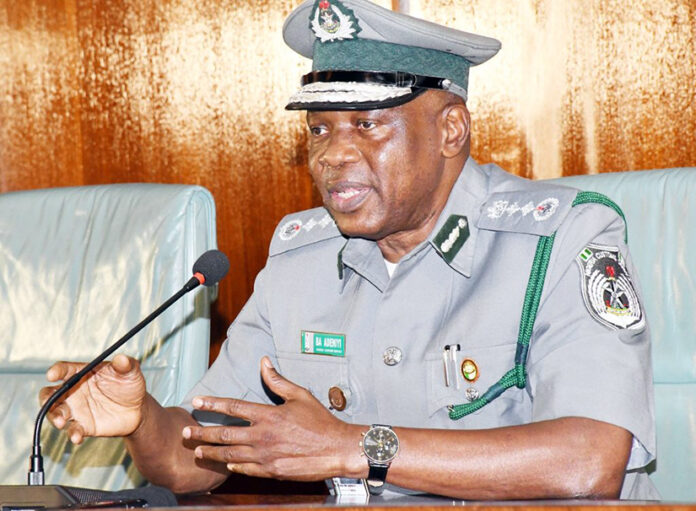
Acting Comptroller General of Customs, Bashir Adeniyi

Nigeria Customs Service says it remitted N343 billion in revenue to the federation account in July and August 2023.

The Acting Comptroller General of Customs, Bashir Adeniyi, disclosed this on Thursday while speaking with Journalists regarding his achievements in his first 100 days in Office.

According to the CGC, the agency generated an average revenue of N202 billion in the first half of 2023.

He noted that Nigeria Customs exceeded the monthly target collection of N307 billion in the period under review.

The service had announced a N3.6 trillion revenue target for 2023.

DAILY POST recalls that President Bola Ahmed Tinubu appointed Adeniyi as the Acting CGC in June.

“One of our early achievements has been a remarkable boost in monthly revenue collection.

“We’ve witnessed a substantial increase, with an average monthly collection of N202 billion in the first half of the year that concluded in June, surging to an impressive N343 billion in the past two months (July and August).

“This outstanding growth amounts to a remarkable 70.13 per cent increase in revenue collection.

“I’m delighted to announce that we’ve consistently exceeded the monthly target collection of N307 Billion, marking a remarkable departure from previous performances.

“The ongoing Revenue Recovery review activities have contributed an additional 8 billion Naira during this period, underlining our commitment to revenue generation.

“Subject to unforeseen circumstances, our aim is to sustain and even expand this momentum until the end of the year. This commitment is driven by our resolve to minimize the deviation from the target, especially in light of the substantial shortfalls recorded during the first half of the year”, he stated.

Credit: dailypost.ng

The Ghanaian Chronicle