Home Blog Page 1910

Unique Benefits of Coffee

0
Coffee

Coffee does more than boost your energy. A few daily cups of coffee may also lower your risk of type 2 diabetes and depression, support weight management, and help you live a longer life. Just keep in mind that experts recommend limiting caffeine if you’re pregnant or nursing.

Coffee is a beloved beverage known for its ability to fine-tune your focus and boost your energy levels.

In fact, many people depend on their daily cup of joe right when they wake up to get their day started on the right foot.

In addition to its energizing effects, coffee has been linked to a long list of potential health benefits, giving you all the more reason to get brewing.

This article takes an in-depth look at 9 of the top evidence-based benefits of coffee.

  1. Boosts energy levels

Coffee contains caffeine, a central nervous system stimulant that is known for its ability to fight fatigue and increase energy levels.

This is because caffeine blocks the receptors of a neurotransmitter called adenosine, and this increases levels of other neurotransmitters in your brain that regulate your energy levels, including dopamine.

One small study found that consuming caffeine increased time to exhaustion during a cycling exercise by 12% and significantly reduced subjective levels of fatigue in participants.

Another study had similar findings, reporting that consuming caffeine before and during a round of golf improved performance, increased subjective energy levels, and reduced feelings of fatigue.


  1. May be linked to a lower risk of type 2 diabetes

Some research suggests that consuming coffee regularly could be associated with a decreased risk of developing type 2 diabetes over the long term.

In fact, one review of 30 studies found that each cup of coffee people consumed per day was linked to a 6% lower risk of developing type 2 diabetes.

This is thought to be due to coffee’s ability to preserve the function of the beta cells in your pancreas, which are responsible for producing insulin to regulate blood sugar levels.

Plus, it’s rich in antioxidants and may affect insulin sensitivity, inflammation, and metabolism — all of which are involved in the development of type 2 diabetes.

  1. Could support brain health

Although studies have turned up mixed results, some research suggests that coffee may help protect against certain neurodegenerative disorders, including Alzheimer’s disease and Parkinson’s disease.

According to one review of 13 studies, people who regularly consumed caffeine had a significantly lower risk of developing Parkinson’s disease. What’s more, caffeine consumption also slowed the progression of Parkinson’s disease over time.

Another review of 11 observational studies in more than 29,000 people also found that the more coffee people consumed, the lower their risk of Alzheimer’s disease.

Additionally, several studies have demonstrated that moderate coffee consumption could be associated with a lower risk of dementia and cognitive decline.

  1. May promote weight management

According to some research, coffee could alter fat storage and support gut health, both of which may be beneficial for weight management.

For example, one review of 12 studies concluded that higher coffee consumption could be associated with decreased body fat, especially in men.

In another study, increased coffee intake was linked to decreased body fat in women.

Furthermore, one study found that people who drank one to two cups of coffee per day were 17% more likely to meet recommended physical activity levels, compared with those who drank less than one cup per day.

  1. Linked to a lower risk of depression

Some studies have found that drinking coffee could be associated with a lower risk of depression.

According to one review of seven studies, each cup of coffee people consumed per day was linked to an 8% lower risk of depression.

Another study found that drinking at least four cups of coffee each day was associated with a significantly lower risk of depression, compared with drinking just one cup per day.

What’s more, one study in more than 200,000 people showed that drinking coffee was linked to a lower risk of death by suicide.

  1. Could protect against liver conditions

Interestingly, several studies suggest that coffee could support liver health and protect against disease.

For instance, one study found that drinking more than two cups of coffee per day was linked to lower rates of liver scarring and liver cancer in people with liver disease.

Other research shows that the more coffee people drank, the lower their risk of death from chronic liver disease. Drinking one cup of coffee per day was tied to a 15% lower risk, while drinking four cups per day was linked to a 71% lower risk.

Another recent study found that coffee consumption was associated with decreased liver stiffness, which is a measure healthcare professionals use to assess fibrosis, the formation of scar tissue in the liver.

  1. Supports heart health

Some research shows that drinking coffee may benefit heart health.

In fact, one review found that drinking three to five cups of coffee per day was tied to a 15% reduced risk of heart disease.

Another review of 21 studies showed that drinking three to four cups of coffee daily was associated with a 21% lower risk of stroke.

What’s more, one study in more than 21,000 people also found that increased coffee intake was associated with a significantly decreased risk of heart failure.

However, keep in mind that caffeine could affect blood pressure levels. Therefore, people with unmanaged blood pressure may need to limit or moderate their caffeine intake.

  1. Could increase longevity

Some research suggests that coffee could help extend longevity, thanks to its multitude of potential health benefits.

For example, one review of 40 studies concluded that drinking two to four cups of coffee daily was associated with a lower risk of death, regardless of factors like age, weight status, and alcohol consumption.

Similarly, another study in 1,567 people found that drinking caffeinated coffee was linked to a lower risk of death after 12 and 18 years of follow-up. Furthermore, drinking at least one cup of coffee per day was also associated with a lower risk of death from cancer.

Interestingly, one test-tube study showed that coffee was able to significantly extend the life span of yeast by protecting against free radicals and DNA damage.

  1. May enhance athletic performance

Coffee is often used as an ergogenic aid by athletes looking to improve performance and increase energy levels.

An ergogenic aid is also called a performance enhancer.

One review of nine studies reported that drinking coffee before exercise improved people’s endurance and decreased their perceived exertion, compared with a control group.

Another study in 126 older adults found that drinking coffee was associated with improved physical performance and faster gait speed, even after the researchers adjusted for factors like age, belly fat, and physical activity levels.

Additionally, a large review reported that moderate caffeine consumption could slightly improve power output and time-trial completion time. However, results varied, so the researchers also noted that caffeine may affect people differently.

The bottom line

Coffee is a popular beverage that researchers have studied extensively for its many health benefits, including its ability to increase energy levels, promote weight management, enhance athletic performance, and protect against chronic disease.

Keep in mind that some people may need to limit their intake, including people who are pregnant or breastfeeding, children and adolescents, and people with certain health conditions.

Still, drinking coffee in moderation — about three to four cups per day — has been associated with several health benefits and is generally considered safe for most adults
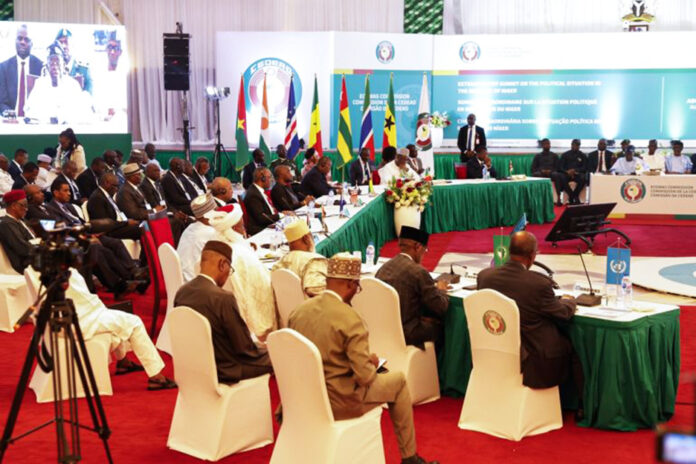
Feature: ECOWAS Is Undoubtedly In Trouble, But It Still Has Potential

0
Leaders of the Economic Community of West African States (Ecowas)

In the past three years, four countries from the 15-member Economic Community of West African States (ECOWAS) have experienced a military coup and an unlawful change of leadership

Consecutive coups in Niger (July 2023), Mali (August 2020 and May 2021), Guinea (September 2021) and Burkina Faso (January and September 2022) have raised questions about the future of democracy in the region and cast significant doubts on the regional bloc’s ability to fulfil its stated goals.

ECOWAS was established in 1975 through the Treaty of Lagos with the sole mission of achieving economic integration across the region. However, the bloc struggled to advance its agenda due to extreme political volatility and perpetual civil wars crippling many of its members. Acknowledging that true economic integration can only be built upon sustainable peace and political stability, it revised its founding treaty in July 1993 to include a mandate to facilitate peace, security and stability in West Africa.

In December 2001, the bloc went on to adopt the Supplementary Protocol on Democracy and Good Governance, which states “every accession to power must be made through free, fair and transparent elections” and member states must demonstrate a “zero tolerance for power obtained or maintained by unconstitutional means”. The protocol – which contains several other provisions on elections, the rule of law and human rights – also established that the “armed forces, the police and other security agencies [in member states] shall be under the authority of legally constituted civilian authorities”.

ECOWAS has notched several noteworthy achievements since it adopted the protocol and made protecting and deepening peace, stability and democracy its priority.

In April 2012, for example, it negotiated the restoration of constitutional rule in Mali after the ousting of President Amadou Toumani Toure in a military coup. Then in September 2015 after a military putsch in Burkina Faso, it facilitated the return of interim President Michel Kafando. In January 2017, it secured a democratic transition of power in The Gambia after longtime leader Yahya Jammeh, who had lost the December 2016 presidential election to current President Adama Barrow, tried to unlawfully remain in office.

For a while, it really seemed like ECOWAS could effectively protect democracy within its region of influence. Admirably, there was not a single undemocratic change of power in West Africa from 2015 to 2020.

Yet during this period of rare stability, the bloc’s failure to introduce strict term limits for its members’ presidents proved disastrous for the region, paving the way for a new wave of political violence and seriously hindering its stated aim of improving stability and economic integration among West African nations.

In May 2015, ECOWAS abandoned a proposal to restrict West African presidents to two terms after opposition from Togo and The Gambia.

To this end, the ouster of Guinea’s first democratically elected president, Alpha Conde, in September 2021 has exemplified the preponderance of leadership failures in the region and ECOWAS’s underwhelming response to repressive rule and highly regressive political developments.

In March 2020, Conde pushed through a new constitution, which allowed him to extend his stay in office beyond two terms despite extensive opposition to the move.

He won a fiercely disputed election in October 2020 that was tainted by electoral irregularities and violence.

Although he began a third term in office in December 2020, senior officers from Guinea’s Special Forces toppled him in September 2021.

The coup sparked wild celebrations in the capital, Conakry, and exposed a litany of systemic failings by ECOWAS.

In months preceding the October 2020 election, it failed to condemn Conde’s nefarious political scheming and the obvious democratic backsliding it enabled in Guinea.

Plus, it didn’t explicitly denounce the violence and human rights abuses unleashed on opposition supporters by the Guinean government or attempt to dissuade Conde from seeking a third term.

In fact, ECOWAS didn’t firmly state that an election held in a climate of fear and extreme repression couldn’t be regarded as “free, fair and transparent” in its books.

That’s because it wouldn’t satisfy the election principles enshrined in the Supplementary Protocol on Democracy and Good Governance.

Instead, it called for a de-escalation of “tension and violence” and “constructive dialogue between the Government, the opposition and civil society in order to achieve a lasting, consensual and peaceful solution to the current situation”.

That same year, Ivorian President Alassane Ouattara also secured a controversial third term in office after he won the October 31 presidential election – which was boycotted by the opposition – with 94 percent of the vote.

Much like Conde’s disputed electoral win, Ouattara’s questionable triumph at the polls was marred by intimidation, violence and electoral transgressions.

Nevertheless, ECOWAS leaders didn’t launch timely and effective interventions to prevent Conde and Ouattara from inflicting untold damage on their countries.

They found it expedient to ignore the political violence and electoral shams that fostered the heavily contested third terms.

Their collective silence and palpable inaction sent a clear message to West Africa’s aspiring coup leaders: The rules don’t matter.

Once it provided a pass each to Conde and Ouattara, ECOWAS willingly ceded its moral authority.

In February 2022, Ghana’s president, Nana Akufo-Addo, who was ECOWAS chairman at the time, said Mali’s August 2020 coup had a “contagious influence” that set a dangerous trend.

However, he didn’t point out that ECOWAS’s failure to reign in Conde and Ouattara had already left it powerless and without any authority when the putschists made their move on the presidency in Mali.

While army officers are certainly the conniving masterminds behind the cataclysmic coup epidemic in West Africa, unscrupulous leaders like Conde and ECOWAS’s limp response to their attacks on democracy have made the region a fertile ground for regime change.

Currently, ECOWAS is seized with its efforts to reverse Niger’s July 26 coup, in which General Abdourahamane Tchiani, the coup leader and former presidential guard chief, has been made the head of state.

ECOWAS has suspended Niger’s membership, imposed sanctions, closed borders, cut off the electricity supply and threatened to use military force if the coup leaders fail to reinstate lawfully elected President Mohamed Bazoum.

As expected, Guinea’s military junta has opposed the trade sanctions and the plans to launch armed intervention. Burkina Faso and Mali, meanwhile, have gone a step further and announced that military intervention against the coup leaders in Niger would be considered a “declaration of war” against their nations.

ECOWAS now stands at a dangerous crossroads.

Armed intervention could trigger a war, if not an outright implosion of the region. If a regional war breaks out, several states will undoubtedly leave the union, leaving it limp and powerless in the face of unprecedented turmoil.

Yet the bloc’s authority and structure could also undergo extensive and irreversible damage if it fails to restore Bazoum to power, either through diplomacy or armed force. After all, the bloc cannot even pretend to be working to deepen democracy, improve stability and lay the foundations of a tight-knit economic union while nearly one-third of its members are led by unelected military juntas uninterested in economic integration.

Indeed, ECOWAS might not survive the Nigerien debacle in its current 15-member format if it stays the course.

A divided ECOWAS, meanwhile, would be disastrous for West Africa.

It would struggle to form a united defence against rebel groups operating in the region and secure peace for its long-suffering citizens.

And it wouldn’t achieve the regional economic integration and growth its leaders envisaged in May 1975.

Nonetheless, ECOWAS can overcome its present tribulations and entrench democracy throughout the region if it consistently enforces its rule book and follows through with implementing new regulation that would help it maintain stability, such as presidential term limits.

Many West African countries have already displayed incredible and commendable commitment to uphold democratic norms.

They includes countries such as Guinea-Bissau and Liberia that were once wreaked by political strife and war. The group’s leading democracies – Ghana and Nigeria, which both experienced decades of military rule – can help steer other nations to improved democratic outcomes and better times. Nigeria’s president and current ECOWAS chair, Bola Tinubu, for example, was once an outspoken pro-democracy advocate and a fervent opponent of military rule in Nigeria.

ECOWAS now has the political will at the highest level to truly promote democracy in West Africa.

This is the perfect time to draw a line in the sand once and for all and make clear the bloc will not tolerate any further violations of either its values or its Supplementary Protocol on Democracy and Good Governance.

By Tafi Mhaka

Source: aljazeera.com

Victor Osimhen affirms love for Napoli and calls for unity

0

Napoli striker Victor Osimhen has expressed his “unwavering” love for the club and called for unity among its fanbase following recent controversy.

The Serie A club faced criticism for sharing a TikTok video that appeared to mock Osimhen for missing a penalty. Napoli later clarified that they “never meant to offend” the 24-year-old.

After scoring in Napoli’s 4-0 victory over Lecce on Saturday, Osimhen took to Instagram to reaffirm his affection for the club and its supporters. He stated, “Coming to the city of Naples in 2020 was a wonderful decision for me,” and emphasized the kindness and love he has received from the people of Naples.

Osimhen also expressed his gratitude to Nigerians and everyone who supported him and urged for unity, respect, and understanding. He concluded with “Forza Napoli Sempre” (which means “Go Napoli Always”), showing his commitment to the team.

The TikTok video had prompted Osimhen’s agent to threaten legal action against the club, but the post has since been deleted. Napoli manager Rudi Garcia stated earlier in the week that he remains “invested 100%” in the Serie A club despite the incident.

Credit: 3news.com

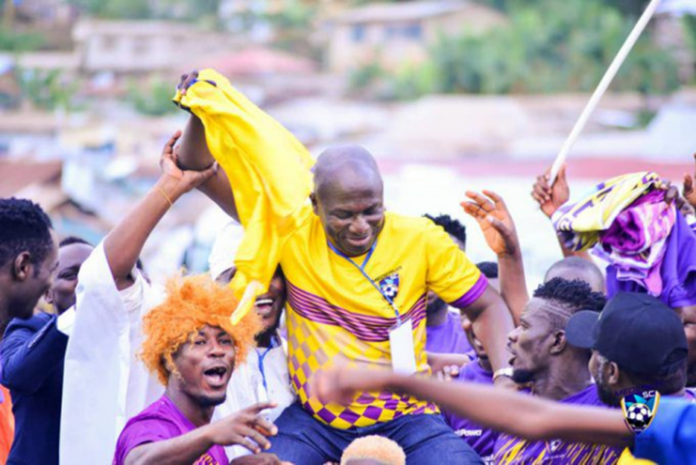
Champions League qualification did not come easy – President of Medeama

0
Medeama President Moses Armah being carried by his players

President of Medeama Sporting Club, Moses Armah, says the club had to face a lot of challenges en route to reaching the group stage of the CAF Champions League.


Medeama sealed a slot to represent Ghana at this year’s competition after winning the Premier League while they also overcame two teams in the qualifiers to earn a spot in the Money Zone.


Their last game in the qualifiers saw them lose 2-1 to Horya but a first-leg score of 3-1 at the Cape Coast Stadium made it possible for them to advance to the group stage.


Speaking at a presser organised by the club on Monday, October 2, Armah highlighted the ordeal the club suffered in reaching the stage.

“We made his history together in Conakry last Saturday and this is a memorable event we must all cherish,” he said.


“Even though we qualified, we want to highlight that it didn’t come on a silver platter and we know a far more difficult task ahead as we will play against the giants in African club football in the group stage.

“As a result, we will need most and all forms of support to make our Champions League journey successful.”


Medeama are expected to be back in action on Thursday when they play Nsoatreman in their m matchday three fixture of the Ghana Premier League.

Credit: myjoyonline.com

My players will get better -Kotoko coach

0
Head coach of Kotoko, Dr. Prosper Narteh Ogum,

Dr. Prosper Narteh Ogum, head coach of Kumasi Asante Kotoko Sporting Club, has called for patience for his young players to grow into their own as the club struggles in the opening weeks of the 2023-2024 Betpawa Premier League.

Kotoko endured another frustrating draw at home after playing out a 1-1 draw with Karela United; the Porcupine Warriors remain winless three games into the season.

Dr. Prosper Narteh Ogum says despite his team’s profligacy in front of goal, he is impressed with his side’s ability to create goal scoring chances.

He said this in the post game interview after Kotoko drew 1-1 with Karela at the Baba Yara Stadium in the third round of games in the 2023-2024 Betpawa Premier League.

The draw means Kotoko is still winless in the league this season after losing 1-2 to Bibiani Gold Stars and drawing goalless with Kpando Heart of Lions in the previous games.

While lamenting the wastefulness of his side in front of goal, Dr. Ogum was upbeat that creating chances was a positive sign from his lads.

“All that we have to do is to keep practicing more goal scoring drills, giving them the confidence to be composed in front of goal, they need to pick their spot, apply the right technique and then that should be it.

So we need to encourage them, it’s better to create the chances and if you miss, it’s good than you don’t create at all because if you create it means the possibility of scoring is high. We are creating more…so it’s a good signal for the team.”

Kotoko plays Accra Lions on Monday, October 9 at 18:00 GMT at the Accra Sports Stadium next.

Credit: citisportsonline.com

Partey returns to training after injury setback

0
Thomas Partey

Ghana midfielder Thomas Partey has returned to training with Arsenal after recovering from a reported groin injury.

The 30 year old player was welcomed back to the group by his teammates who playfully integrated him back into the fold. Partey’s latest injury forced him to miss crucial league games against Everton, Tottenham Hotspurs and AFC Bournemouth.

The former Atletico Madrid player also missed Arsenal’s UEFA Champions League 4-0 win over PSV Eindhoven. The game marked Arsenal’s return to the Champions League after a six year hiatus.

On the international front, Partey’s injury meant he missed Ghana Black Stars games against Central African Republic (CAR) and Liberia.

Ghana’s 2-1 win over CAR sealed the Black Stars qualification to the 2023 AFCON; Ghana in the process made it to the AFCON for the 10th time in a row.

Prior to the injury, Partey was deployed mainly as a right full back who slid into midfield when Arsenal attacked. This decision by Arsenal manager Mikel Arteta divided opinions.

His return is timely as Arsenal plays Man City, Chelsea and Sevilla in upcoming games this month.

Credit: citisportsonline.com

Today’s Champions League Group Stage Fixtures & Previews

0
Bruno Fernadez and Rashford

Manchester United to bounce back against Galatasaray

Manchester United will be aiming to bounce back from a damaging home defeat in the Premier League when they continue their Champions League group-stage campaign against Galatasaray on Tuesday night.

The Red Devils suffered a 1-0 loss to Crystal Palace in the league on Saturday, while Galatasaray will enter the contest off the back of a 2-1 victory over Ankaragucu in Turkey’s top flight, which has left them top of the division.

The next crisis is never too far away for Man United, who have lost five of their opening nine matches in all competitions this season, including four of their first seven Premier League matches of 2023-24.

The Red Devils have made their worst start to a league season in 34 years and are already playing catch-up in Group A due to their loss to Bayern Munich, and there is certainly pressure on Ten Hag to deliver a positive result on Tuesday.

Man United have faced Galatasaray on six previous occasions, leading the head-to-head two wins to one, while three of their meetings have finished all square; the two teams last met in the group stage of the 2012-13 Champions League, with the Red Devils winning 1-0 at Old Trafford but losing 1-0 in Turkey.

This is a huge football match for Man United, and Galatasaray are certainly capable of causing more misery for the Red Devils on Tuesday night. However, under the lights at Old Trafford, and backed by a crowd that remain behind the manager, we are expecting the 20-time English champions to navigate their way to a huge three points.

Credit: sportsmole.co.uk


 Group B leaders Arsenal  face Lens

Group B leaders Arsenal will head to Stade Bollaert-Delelis brimming with confidence to face Lens in gameweek two of the Champions League on Tuesday evening.

Arsenal players

The hosts played out a 1-1 draw against Sevilla to earn their first point of the competition in week one, while the visitors sent a clear message to the rest of the group by recording a 4-0 win over PSV Eindhoven at the Emirates Stadium on the same day.

It has been an incredible journey for Lens over the last three years, rising from Ligue 2 to missing out on a top-flight league title by the slenderest of margins last season, though returning to Europe’s most elite club competition after a 21-year wait is still a more than worthwhile consolation prize.

Arsenal made their return to the Champions League following a six-year hiatus and marked the occasion with a sublime performance as they smashed four goals past a PSV side that have not dropped a single point in the Eredivisie this season.

The Gunners are also unbeaten after seven league matches with five wins and two draws, including a 4-0 win over Bournemouth last weekend.

Arsenal are now one of only two sides in the Premier League that are yet to suffer defeat this season and come into this one having won all four of their away matches in all competitions

While Lens have shown improvement over the last couple of weeks, they now face a completely different type of opponent in Arsenal, who are firing on all cylinders. We expect the hosts to put on another good performance here, but we are backing the visitors to claim the points.

Credit: sportsmole.co.uk


Napoli host Real Madrid in top of the group clash

One of the standout matches in the group stage of the Champions League will take place in Naples on Tuesday evening, with Italian champions Napoli welcoming Real Madrid to Stadio Diego Armando Maradona.

Napoli will enter the contest off the back of a thumping 4-0 victory over Lecce in Serie A, while Real Madrid were 3-0 winners over Girona in La Liga last time out.

Real Madrid players

Napoli have been far from perfect in Serie A this season, but they picked up their fourth league win of the campaign on Saturday by putting four unanswered goals past Lecce, with the result moving them onto 14 points from seven games.

Napoli last met Real Madrid in the round of 16 in 2016-17, with the Spanish giants winning 3-1 both home and away to advance into the next stage of the competition courtesy of a 6-2 aggregate success.

Real Madrid’s immense history in this competition means that they cannot be underestimated when it comes to this season’s trophy, and it would be a shock if they did not advance deep into the tournament once again.

This has all of the makings of a fascinating match, and both managers will be desperate to avoid defeat, which could create a cagey affair, and we are expecting the spoils to be shared in Naples.

Credit: sportsmole.co.uk


Inter Milan welcome Benfica to the San Siro

Inter Milan return to Champions League action on Tuesday when they welcome Benfica to San Siro in matchday two.

Last season’s beaten finalists were held by Real Sociedad on matchday one, while the Portuguese outfit were stunned by Red Bull Salzburg. Simone Inzaghi got criticism for rotating heavily for Inter’s opening game at Sociedad, but the Nerazzurri boss could lean on his tried and tested side against Benfica.

The star could be Lautaro Martinez, who netted the 87th-minute equaliser in the 1-1 draw with La Real at Anoeta and has been on fire at the start of the season.

Benfica players

Martinez was the game-changer for Inter in their Serie A victory over Salernitana on Saturday, coming on for the second half to score four times in the 4-0 triumph.

Inzaghi will hope his captain is at his best on Tuesday as the Nerazzurri look to get the better of a side they eliminated en route to last year’s continental success.

Inzaghi is expected to be without the injured Davide FrattesiMarko ArnautovicStefano Sensi and Juan Cuadrado.

Inter could start with Martinez and Marcus Thuram up top, with the pair’s embryonic partnership bearing fruit in the early weeks of the season. Inzaghi’s cup expertise means backing Inter to secure a win over Benfica is a safe bet, with the Nerazzurri extending their unbeaten run against the Portuguese outfit.

Credit: sportsmole.co.uk

Assin Dompim ‘Showboy’ Dreads Alan’s Exit

0
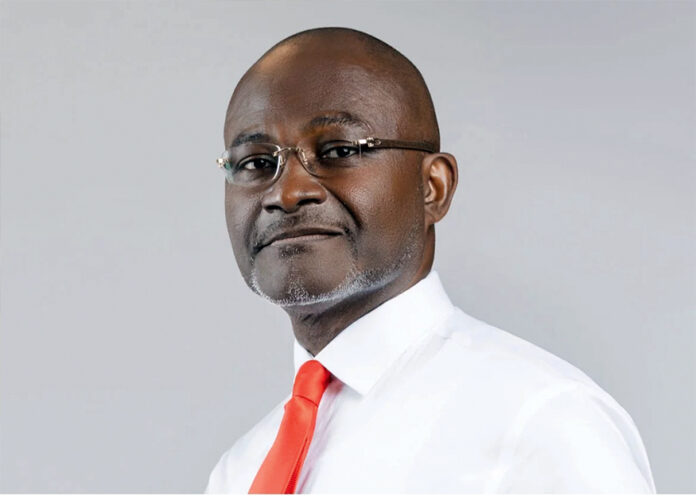
Kennedy Ohene Agyapong

A leading contender in the New Patriotic Party (NPP) flagbearership race, Kennedy Ohene Agyapong, has said in Kumasi that the exit of Mr Alan Kwadwo Kyerematen from the party will greatly affect the electoral fortunes of the party.

He has cautioned Ashantis against the neglect of their own, because Mr Alan Kyerematen is more relevant in Ghana. The presidential aspirant cautioned the NPP against treading on dangerous grounds because whether Alan is insulted or not, he is still relevant in the NPP.

Alan John Kwadwo Kyerematen

The Assin Central lawmaker, who was addressing a mammoth rally after he had taken his ‘Ken For President Showdown Health Walk’ to Kumasi on Saturday, said Alan would pull surprises because the Traditional Ashantis would vote for him.

He also cautioned against revisiting the mistake of 1979. “Don’t let history repeat itself by allowing the avarice of some politicians to push the party into the ditch (opposition) and cause their own defeat with the emerging divisiveness and insults.

Mr. Agyapong also alleged that the National Council and Executive Committee of the party had been turned into a hooliganism group by Chairman Wontumi and four other regional chairmen.

The Assin Central Member of Parliament expressed disappointment in the National Executives for their actions and inactions towards other aspirants in the Presidential race.

According to him, Chairman Wontumi and his colleagues have succeeded in making the National Council an avenue to summon any aspirant, other than Vice President Dr. Mahamudu Bawumia, and explained that while his agents and that of other aspirants were beaten during the party’s Super Delegates Conference, the National Council or the national executives have done nothing about the issue. Instead they summoned him for declaring a ‘showdown’ for the President and Vice President.

Mr. Agyapong alleged that Dr. Bawumia, Chairman Wontumi and the greed of ministers of state and party chairmen were collapsing the NPP, with threats and intimidation. He promised a “showdown” to protect and defend Ghana should they make any wrong move on November 4, 2023.

He said. he does not intend to play tribal politics but emphasised that there will be “an eye for an eye and tooth for a tooth” scenario and a bombshell if it becomes necessary.

“I’m not like Alan who is gentle, let them try…” Ken warned, amidst thunderous cheers from his supporters.

He claimed he was a man of vision with big dreams, the kind of leader Ghana needs to empower the youth by creating job opportunities and promote Ghanaian businesses.

He explained his vision in “Patriotism, Honesty and Discipline”, which he called PHD, to focus on youth empowerment.

The flagbearer hopeful, believing that there was something wrong with Ghana as a nation, pledged to sacrifice to make Ghana a better place.

“I am going to promote Ghanaian businesses by using the Asian magic to maximise profit for Ghana and change the economy of  Ghana,” he said, amidst applause.

He did not understand why foreigners are allowed to exploit our resources at our expense and announced plans by his government to regulate galamsey, such that it would benefit Ghanaians by allowing Ghanaians to own mining companies.

Ken Agyapong said he remains resolute and that he will win the November 4 election and urged delegates to give him the mandate to lead the party into 2024 elections.

Adutwum is so creative; Mr. Prez, you have made the right choice – Presby Moderator

0
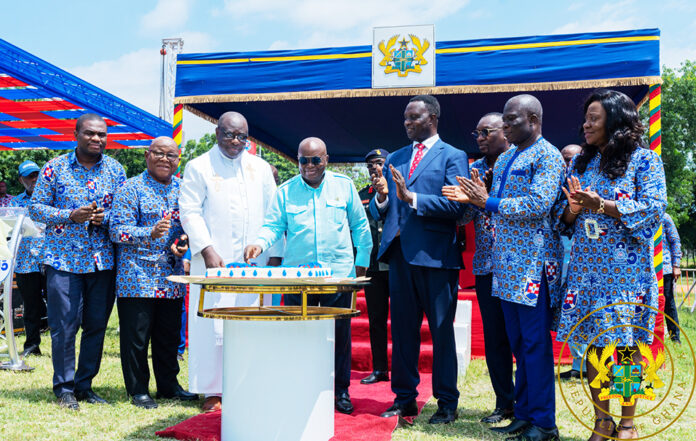
President Akufo-Addo, Moderator Mante about to cut the annivaersary cake

The Moderator of the Presbyterian Church of Ghana, Rev Prof. Joseph Obiri Yeboah Mante, has described the Education Minister, Dr Yaw Osei Adutwum as exceptionally creative, influential and innovative figure in the field of education in Africa.

“Allow me to say that your Minister of Education, without prejudice, is one of the most creative and innovative leaders of education in Africa that I know”, he said.

He was giving his closing remarks on Saturday, during the 85th anniversary of the Presbyterian Boys Senior High School, at Legon, in Accra.

Prof. Joseph Obiri Yeboah Mante commended the president for searching the entire world for a leader like him to come to Ghana, stating “I mean what I have said, this man is so creative, so weighty, I think Ghana will go far with people like him”.

He argued that Dr. Yaw Osei Adutwum’s improvement in the country’s educational system were appropriate and progressively changing the fortunes of the country through education.

The event, which was under the theme: ‘Building upon a Legacy of Excellency – Come along and join us’, was attended by the President, Nana Addo Dankwa Akufo Addo, Prof. Michael Oquaye, a former Speaker of parliament, Dr. Eric Nkansah, the Director General of the Ghana Education Service and other leaders from around the world.

According to the Moderator, if the ongoing transformation in the Education sector is allowed to continue, it would go a long way to speed up the transformation of the nation’s economy.

Former Moderator of the Presbyterian Church of Ghana Rev. Prof. Mante urged all parties involved in the education sector to keep playing their parts well, in order to hasten the nation’s growth.

Nana Addo Dankwa Akufo Addo praised the founding fathers, leadership of the school, alumni and others who have been working very hard towards ensuring that the school maintains its quality training of students especially in the sciences.

Breaking the “8”

The President challenged the leadership of the school to work hard so that the school would be able to “Break the 8” this year in the National Maths and Science quiz after the school’s seven successful victories and being the defending champions.

President Nana Akufo Addo stated that everything possible is being done to improve upon the human resource base of the nation through education, so that it could shape the fortunes of the country.

Achievements

The school’s headmaster, Mr. David Odjidja, listed the many accolades and honors the institution has received over the years, crediting the successes to the hard work, cooperation and dedication of the teaching and non-teaching personnel, as well as the assistance of other stakeholders.

He urged the government to assist in funding the purchase of a new assembly hall and a mini-van for the school to improve efficient teaching and learning processes there.

The Headmaster praised the Nana Akufo-Addo-led government for its work on different development projects and pleaded with workers to finish tarring the campus roads, so that students could move around more easily.

$1.76b Agenda 111 projects at 52% completion

0
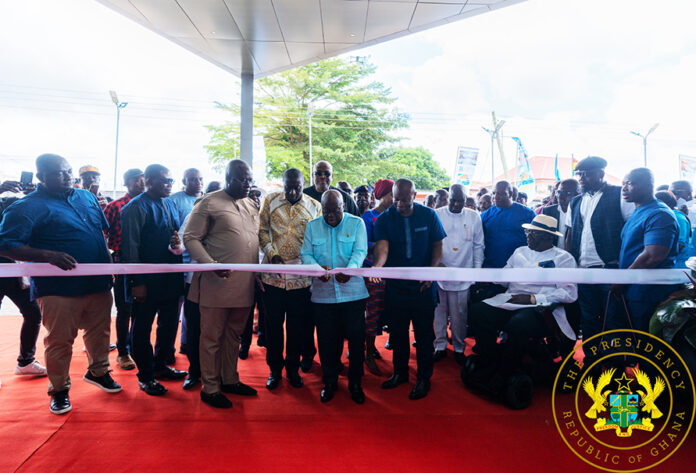
President Akufo-Addo officially commissioning the hospital project

The ongoing construction of some 89 districts, two psychiatric hospitals and six regional hospitals is estimated at US$1.765 billion. The projects, dubbed Agenda 111, whose ground-breaking ceremony occurred on Tuesday, August 17, 2021 are about 52% complete.

The President, Nana Addo Dankwa Akufo-Addo, announced the total estimate of the entire projects on Saturday, September 30, 2023 at Lapaz, Accra, where he opened the St. Michael’s Specialist Hospital.

The President did not, however, give further information on the cost, but presenting the mid-year budget review in August, the Minister for Finance, Ken Ofori-Atta indicated that as of May, this year, total payment under the Agenda 111 initiative was US$189.34 million.

JOBS

These projects, the government has said, are being constructed by indigenous Ghanaian contractors and are providing direct and indirect jobs.

President Akufo-Addo, during his address last Saturday, spent some time on the Agenda 111 initiative and gave a breakdown of the jobs created and what would be created after the construction.

According to him, over sixty-seven thousand (67,635) people will be employed in the Agenda 111 hospitals.

Presidents Akufo-Addo and Kufuor at the function

“There is an average number of one hundred and twenty (120) workers on each construction site, which when completed an average of five hundred and forty-nine (549) persons will be employed in a district hospital, one thousand, three hundred and forty-three (1,343) in a regional hospital and nine hundred and forty-seven (947) in each psychiatric hospital,” the President said.

He continued, “this means that sixty-seven thousand, six hundred and thirty-five (67,635) people will be employed in the Agenda 111 hospitals.”

CONSTRUCTION

The Agenda 111 initiative provides 101 standard 100-bed hospitals and accommodation for doctors and nurses in districts without district hospitals.

The reception for the hospital

The six new regions created in 2018 will also have a regional hospital each, and the Effia-Nkwanta hospital in the Western Region is witnessing rehabilitation.

There are two psychiatry hospitals in two of the three zones of the country, that is, the middle and northern zones.

The President opined that the other interventions by his government to improve the healthcare delivery system, such as the 307 new ambulances, the drones for emergency medical supplies, the 58041 recruitment of health workers and the improvements in the national health insurance scheme, add to Agenda 111 to demonstrate the government’s commitment to better healthcare delivery.

ST MICHAEL’S HOSPITAL

The President cited the touching life story of the vision bearer and encouraged others not to throw their hands up in despair, when life’s challenges bear its teeth at them.

“Let me conclude by applauding once again, Mr. Michael Banahene, and all those who worked tirelessly to bring this project to fruition. I want to reiterate the call to the administrators of this hospital to embrace and strengthen the culture of maintenance. This edifice has been put at great cost and you should be in a position in the foreseeable future to keep it in good condition. It should not fall the way current institutions like this in Ghana have gone,” he advised.

St. Michael’s Specialist Hospital is a multidisciplinary, ultramodern facility that provides excellent customer care and exudes true comfort.

The dignitaries who attended the official inauguration of the project

Designed like a hotel-style, the hospital has a vision to be the preferred healthcare service provider in Ghana and West Africa.

The facility comprises 20 consultation rooms, 100 inpatient beds including suites, executive suites, 10 intensive care beds, 8 neonatal intensive care cots, private delivery rooms, 3 operating theatres, a cardiac catheterisation laboratory, CT, X-ray and ultrasound, a laboratory, a pharmacy and a dental suite.

The hospital has come about “after 12 years of preparation and construction,” the Board Chairman, Michael Banahene, stated in his welcome address and thanked all who had played a role.

He mentioned that over 600 Ghanaians will be employed to work 24 hours a week at the facility.

The executive floor of the hospital is named after former President John Agyekum Kufuor. Speaking at the ceremony, the Gentle Giant commended his grandnephew for the bold initiative.

The Ghanaian Chronicle