Home Blog Page 1822

Daniel-Kofi Kyereh nears injury return after long absence

0
Daniel-Kofi Kyereh

Black Stars midfielder Daniel-Kofi Kyereh could be back in action earlier than expected following his swift recovery after sustaining an anterior cruciate ligament injury.

The midfielder after the 2022 World Cup sustained the terrible injury and has been sidelined for an extended period spanning nine months.

However, the latest update by the coach of SC Freiburg suggests that the 27-year-old might be on his way sooner than expected.

According to Streich, the 27-year-old is currently engaged in running training, a significant step forward in his recovery journey.

Streich commented, “It is better now. We’ll see that he no longer has any problems running.

I can’t make a prediction”. The midfielder was poised to make a mark in the Bundesliga having been transferred to Freiburg in the summer of 2022 following an impressive stint with lower-tier side St Pauli but has been hindered by the unfortunate injury.

Credit: ghanasoccernet.com

Nana Addo-Twum buried at Akropong

0
Nana Addo-Twum

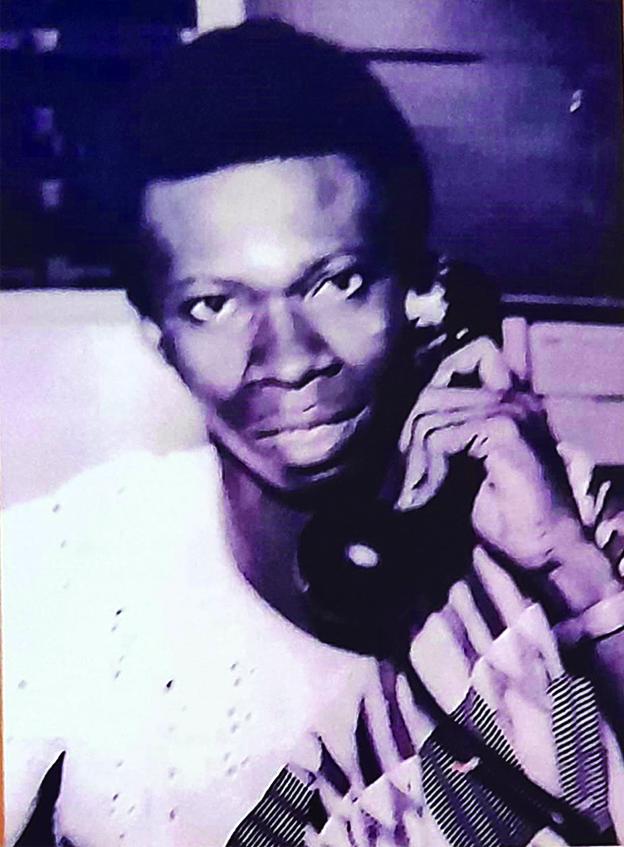
Hundreds of sports fans defied the heavy vehicular traffic on the Akuapem ridge on Saturday, to attend the funeral of veteran journalist and horse racing pundit, Nana Addo Twum, at Akropong Akuapem.

He was affectionately known in horse racing circles as Dan Rana, Ghana’s top tipster.

A product of Accra Academy, he started journalism as a free lance horse racing correspondent for the Daily Graphic in 1953, before gaining full time status as Deputy Sports Editor to legendary sportswriter, Kofi Badu.

When the legend, Kofi Badu, left for the then newly established Ghanaian Times in 1957, Nana Addo Twum took over and was for several years Sports Editor of the mass circulation Daily Graphic.

When theSports Writers Association of Ghana (SWAG) was inaugurated in 1968, Addo Twum was unanimously elected the first Treasurer.

In 1973, he was a novelty production manager of the Daily Graphic and in 1977 promoted to be Editor.

He worked hard to maintain the status of Graphic as the leader of the pack, but he was unfortunately sacked in 1982 by Jerry Rawlings PNDC, following the 31st December 1981 coup.

Nana died at age 93, leaving behind two wives and six children.

Beware Of Reckless Driving! … The police are monitoring you

0
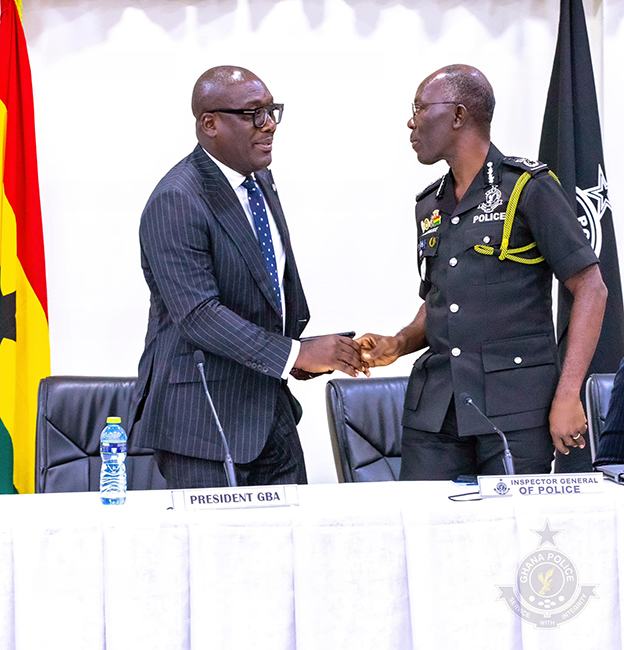
IGP George Akuffo Dampare with Mr. Yaw Acheampong Boafo, GBA president

The Ghana Police Service says it would soon introduce ‘Traffitech–Gh’, an automated spot fine system meant to enforce road traffic laws and regulations to improve road safety in the country.

The system would use cameras and sensors different from the already existing surveillance cameras to automatically take pictures and videos of vehicles that flout road traffic laws and regulations.

The project, which is currently at nationwide engagement level, seeks to increase compliance of road traffic laws and regulations to reduce road traffic crashes, deaths and injuries.

This was disclosed by the Director-General of Motor Transport and Traffic Directorate (MTTD), Commission of Police (COP) Francis Ebenezer Doku during the police administration engagement with the leadership of the Ghana Bar Association (GBA) in Accra recently.

According to him, the Traffictech-Gh will deploy fixed, mobile/in vehicle and radar gun devices to capture errand drivers speeding, jumping traffic lights and other traffic offences.

Pictures and/or videos recorded of the offence would be transmitted to the back office, a special office created to validate and issue notification of fine, via SMS, for the vehicle owner to pay.

The SMS notification would be accompanied by a link for the vehicle owner to watch where he or she committed the offence and this will include date, time and location.

Furthermore, the Trafftech-Gh notification would indicate the vehicle registration number, offence description, payment amount and deadline of 14 days, after which it will attract one percent (1%) penalty daily.

Unless the errand driver or vehicle owner challenges the ticket, payment of Traffitech-Gh fine could be made through mobile money or online, via www.Traffitech.gov.gh, or at any bank within the stipulated period.

Similarly, data of the offence can be found on – www.Traffitech.gov.gh – when the offence is keyed in and the prompt is followed to review the photo or video evidence of the offence.

COP Doku said if the data showed that a driver had been fined six times, that person would no more be fined again and that, the police would proceed to court.

He said the errand driver would be blacklisted or his or her driver’s license revoked for one year.

The only remedy available after serving the one year period for the repeated offender, would be reapplying for the license as a new driver.

COP Doku was responding to questions from the GBA leadership on indiscipline on the roads.

The GBA leadership also raised concerns over gaps in prosecution and investigations, human resource and logistics of the police.

The Inspector General of Police, Dr. George Akuffo Dampare, on his part told the Association that they were engaging them as part of the police administration series of engagements with stakeholders to discuss security, Public Order Act and address some of their concerns.

He said the engagement was to seek their support in enhancing the security of the country and to put security in a proper context of socio-economic development of the nation.

Dr. Dampare was of the opinion that the public has a reactive posture towards security than being proactive and, therefore, called for a paradigm shift.

EC to create new constituencies

0
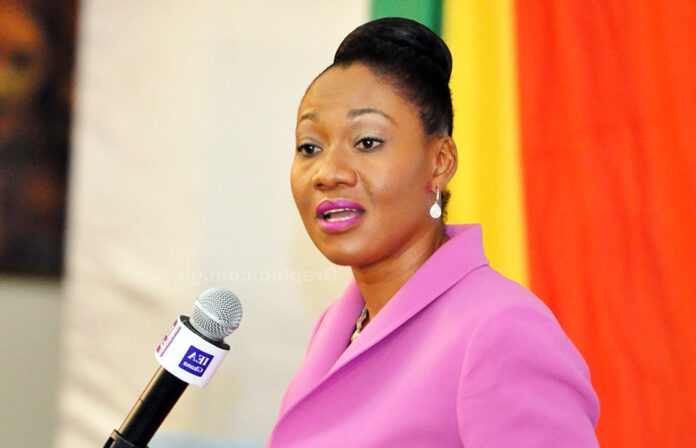
Jean Mensah, EC boss

The Electoral Commission (EC) has commenced processes to create a new parliamentary constituency or constituencies to add to the existing 275.

The EC, through the Majority Leader, Osei Kyei-Mensah-Bonsu, on Tuesday, October 31, 2023, presented a paper to Parliament on the creation of the new constituency or constituencies.

Parliament resumed sitting yesterday, after almost three months of recess, to begin with the Third Meeting in the Third Session of the Eighth Parliament of the 4th Republic.

On the order paper addendum for the first sitting of the Third Meeting, the title read “Representation of the People (parliamentary constituencies) (amendment) instrument 2023.”

Apart from the title that was read for the first time, no other information was given, as per parliamentary procedure.

However, it would be recalled that following the creation of the Oti Region and the Guan District, it became necessary that the people of Santrokofi, Akpafu, Lolobi, and Likpe have representation in Parliament.

It is not known whether the new constitutional instrument is mainly for the creation of the Guan Constituency, or if there would be more.

ARTICLE 47

Article 47 stipulates when the EC could review the constituencies in the country, with clause two indicating that no constituency shall fall within more than one region.

Clause 3 also states that the boundaries of each constituency shall be such that the number of inhabitants in the constituency is, as nearly as possible, equal to the population quota.

Clause five says, “The Electoral Commission shall review the division of Ghana into constituencies at intervals of not less than seven years, or within twelve months after the publication of the enumeration figures after the holding of a census of the population of Ghana, whichever is earlier, and may, as a result, alter the constituencies.

“(6) Where the boundaries of a constituency established under this article are altered as a result of a review, the alteration shall come into effect upon the next dissolution of Parliament.

“(7) For the purposes of this article, “population quota” means the number obtained by dividing the number of inhabitants of Ghana by the number of constituencies ‘into which Ghana is divided under this article.”

After the December 2000 general elections, the EC, under the government of President John Agyekum Kufuor, increased the number of constituencies by 30–200 to 230.

Six months to the 2012 general elections in that year, the EC, under the government of President John Dramani Mahama, created 45 new constituencies that brought the number from 230 to the current 275.

SUSPICIONS

There are discussions amongst some parliamentarians from both sides of the political divide with regards to the new CI.

The Minority MPs dread the creation of the new constituencies, which may not be to their benefit as far as winning more seats is concerned, but the majority appears to be comfortable.

The Chronicle understands, albeit unofficially, that the number of seats may move from 275 to 300, a move the legislators are split over in their informal discussions, even before it officially pops up on the floor.

The former Minority Leader, Haruna Iddrisu, had hinted about the move by the EC to create new constituencies after the 2021 housing and population census.

The Minority Chief Whip, Ahmed Ibrahim, had also stated the same, but accused the government of putting pressure on the EC to create those 25 new constituencies.

In an interview with TV3 in September 2023, ahead of the limited registration exercise, Dr. Eric Bossman Asare, the Deputy Commissioner of the EC responsible for Corporate Services, also mentioned the creation of the new constituencies, but did not give a figure.

In the interview, he noted that the Guan District was among the areas slated for a new constituency.

“We are in the process of creating some new constituencies, and Guan District is one of them. If not because Parliament is on recess, we should have started the process in parliament,” Dr. Bossman said.

 

Akatsi North DCE advises residents to pay their taxes for development

0
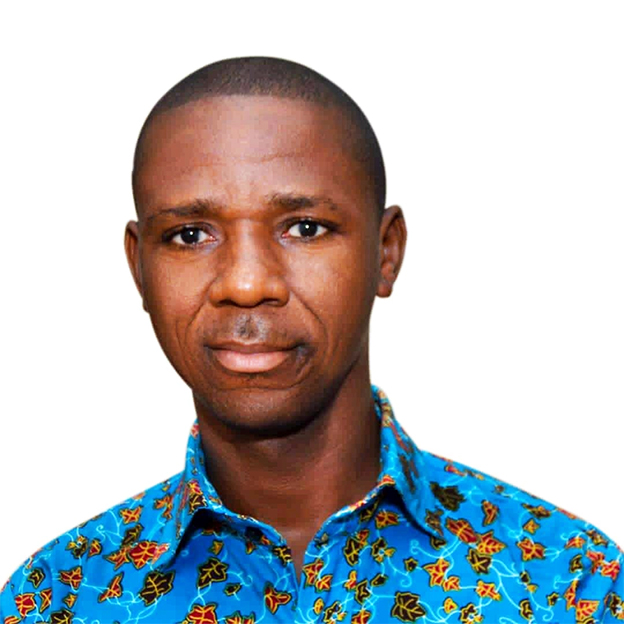
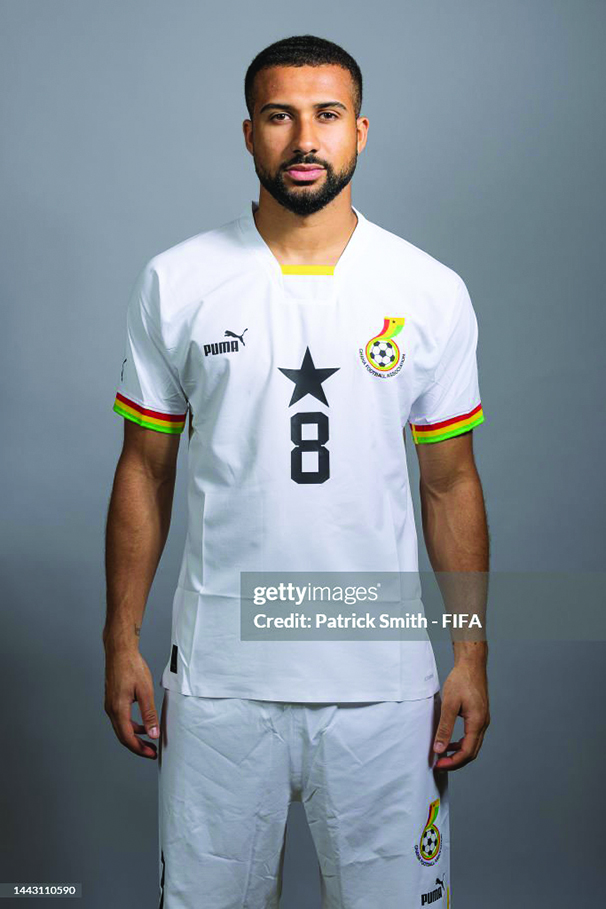
Mr Simon Peter Kofi Ofosu, DCE for Akatsi North

The Akatsi North District Assembly (ANDA) in the Volta region has organised stakeholders’ engagement meeting at the capital, Ave-Dakpa, where the District Chief Executive (DCE) rendered account of his stewardship to the people. He also educated them on the need for the Assembly to fix its fees for 2024.

The programme, which was attended by chiefs, civil society organisations, market women, farmers, hairdressers, dressmakers, Okada riders and drivers, among others, exposed the people to the development activities of the assembly and its future development plans.

The District Chief Executive, Mr Simon Peter Kofi Ofosu, said the programme was part of efforts being made by the assembly to deepen democratic practices, which would promote participation of the people in the activities of the assembly.

Mr Ofosu also explained that the programme was basically designed to enable him account to the people about the development activities carried out in the area under his leadership and to solicit for views of the people.

According to him, the assembly had completed a number of development projects including roads, educational and health infrastructure. They have also built a new market at Ave-Dakpa to promote economic activities in the District and stressed the need for the people to collaborate with the assembly.

He assured the people that the assembly was committed to ensuring that all projects started by his predecessor had been completed.

Mr Ofosu commended the chiefs and elders in the district for their effective contributions towards the development of the area and stressed that the assembly would appreciate constructive criticisms that help the assembly to develop.

The DCE urged the people to live up to their tax obligations by paying taxes regularly and timely to enable the assembly to mobilise adequate resources through such internally generated funds for the development of the district.

The Akatsi North District Planning Officer (DPO), Mr Kwaku Baffour Asare, educated the stakeholders on the medium term development plan of the assembly, which he said, would ensure that critical development projects had been executed to help improve on the living conditions of the residents.

Mr Asare mentioned the provision of additional boreholes, upgrading and building of markets to promote economic activities, provide more educational and health infrastructure.

The Planning Officer explained that the medium term development plan was in line with the National Development Planning Commission (NDPC) to ensure that such plans  directly benefit the poor and ultimately improve their standard of living.

The Presiding Member of the Assembly, Mr Patrick  Kwame Ahiabu stressed the need for residents to consider the assembly as their own by contributing meaningfully towards its development, saying the development of the district largely depended on them since nobody would help develop the area.

Mr Ahiabu asked the people to consider development as a process that called for the collective efforts by all.

He noted that all over the country, assemblies largely depended on the internally generated funds to embark on development projects, therefore, if the people refused to pay their taxes, the district would lag behind in terms of development.

He said it was important for residents in the area, to be law abiding particularly traders in the new market at Dakpa to ensure that space and sheds allocated to individual traders would be maintained to help bring sanity to the market.

Ofori-Atta, others hunt for $30bn to tackle sanitation

0
Ken Ofpro Atta, Finance Mimister

Finance ministers from across Africa convened today to deliberate on political and institutional reforms that will help mobilise an additional $30 billion annually for water and sanitation. This is as much about financing as it is about political will, participants heard.

The virtual meeting was hosted by Sanitation and Water for All (SWA), UNICEF, and the African Ministers’ Council on Water (AMCOW). It gathered over 50 finance and sector ministers and development partners.

Funding needs to be, at least, three times higher in Africa to meet the UN Sustainable Development Goal targets. However, this is far less than the $170 billion – nearly 5% of GDP – lost by sub-Saharan African each year due to inadequate water resources, contaminated water and poor sanitation.

By mid-century, the economic toll from water-related climate impacts on African nations could reach $50 billion annually. Every dollar invested in climate-resilient water and sanitation in Africa yields a return of at least $7.

Finance ministers discussed several specific approaches that can close the investment gap for water and sanitation:

  • Increasing the national budget allocation for water and sanitation to 5% and 0.5%, respectively.
  • Partnering with development banks to secure long-term finance that aligns with universal water and sanitation access goals.
  • Ensuring that sufficient finance is available for universal access to safely managed sanitation – a key development indicator that significantly reduces the public health burden.
  • Investing in climate-resilient water and sanitation infrastructure by tapping into climate finance.
  • Reducing debt and ensuring African nations can access a fair share of Special Drawing Rights.

The event organizers urged participants to mobilise political will and view investment in water and sanitation as a means to achieve economic growth, improve public health and reduce inequalities.

“Today’s meeting serves as a reminder that the challenges in the water and sanitation sector are as much about financing as they are about political priorities,” said Catarina de Albuquerque, CEO of SWA. “It’s equally vital for governments to prioritize water and sanitation in their budgets and on their policy agendas. We’re glad to see so many finance ministers committing to lead the way.”

Source: AMA

I’m afraid food shortages may hit Ghana …Parliament must act fast -Majority Leader

0
Osei Kyei-Mensah-Bonsu, Majority Leader in Parliament

The Majority Leader and Leader of Government Business in the Parliament of Ghana, Osei Kyei-Mensah-Bonsu, has lamented over the aftermath of the spillage of the excess water in the Akosombo Dam, expressing fear that it may plunge the country into a food crisis and further worsen the plight of affected communities downstream.

He prayed that should food shortages hit the country, it would not lead to the skyrocketing of prices to add to the already high levels of food inflation.

“We were preparing ourselves for a bounteous harvest. Unfortunately, we have this inundation of farm lands. No thanks to the massive rainfall and also the spillage of the Bagri Dam.

That certainly is going to compound the food situation in the country and the hope is that it will not lead to the skyrocketing of food prices to add to the already high levels of food inflation in the country,” he noted.

Addressing members of the Parliamentary Press Corps prior to the sitting of Parliament on Tuesday, October 31, 2023, he described the situation as dire, and called on the House to act swiftly and alleviate the plight of the people and ensuring that food security was sustained in the country.

“I believe that as representatives of the people, we should have a dialogue with the Speaker to know exactly what we will be able to do to assist. The spillage has also exacted considerable toll on some of our colleagues who are MPs in the affected communities. It is not easy for any of us,” he noted.

Kyei-Mensah-Bonsu, who is also the Minister of Parliamentary Affairs, said that it would be important for the Legislature to invite the leadership of the Volta River Authority (VRA) to brief the House about “what has happened, the repercussions and how to avoid any of such occurrences in the future.”

The Minister responsible for Water Resources and Energy, he added, may also be invited to be part of the briefings.

He said in all the discussions that they would have, it would be important to also consider the integrity of the dam, wondering what would have happened if it had been breached.

“If the dam itself got breached, you know the effects of the impounded water – it stretches from Yeji and beyond and all this impounded water will be gone,” he underscored.

The Majority Leader later on the floor of the House when delivering his welcome remarks told the Members of Parliament (MPs) to be wary of politicising the spillage of the Akosombo dam.

“I have heard about some comments that have been made by some colleague Members of Parliament. It is scary the extent some Ghanaians and MPs go to politicise every single event in this country. As MPs, one of our core responsibilities is to inform and by that educate the citizenry.

The education must be done in sincerity and truthfulness; nothing short of that. We should educate the people in order for them to make informed choices. Mr. Speaker, serving citizens with propaganda is corruption of the night,” he advised.

By Stephen Odoi-Larbi

Who Will Build a Temple for The Lord?

0
Opinion

71% or twenty-four million Ghanaians out of the current population of over 34.1 million are Christians. If Ghanaian Christians are serious about their God, then we must see the Christian identity in Ghana.

Unfortunately, what Christians are generally offering this country is a competition for followers, with the New-Religious Groups going out to win souls for Christ by twisting the Word of God to favour their leadership.

The powerful message of God found in Psalm 105:15 and 1 Chronicles 16:22, where God said “Touch not my anointed,” has been carefully misinterpreted to favour only the leadership of such churches. When in that message God was directly referring to His anointed, the people of Israel, and in these times the faithful in general.

Tithe and tithing, have become another big issue in Christendom, today.

In the true definition, tithes must go to pastors and leaders of churches who are not suppose to be in any business or income generating venture, but rely solely on the church (Levitical Tithe – Deuteronomy 14:27). Tithes must also be kept by the congregants for the celebration of annual religious festivals and in these times, we mention Easter festivities (Feast Tithe – Deuteronomy 12: 5-7).

And tithes must be used to provide for the needs of the poor, orphans, fatherless and strangers (Poor Tithe – Deuteronomy 14:28).The question is, is that what we see today? Pastors in big time businesses are demanding tithes for their upkeep.

And by the way, in the New Testament, Christians were not commanded to tithe anymore but rather are encouraged to voluntarily give to God (through the poor and needy) and to the church in proportion to their wealth (Mark 12:42). The question again is, what do we see today? Tithes, offerings and sowing of seeds. Even blessings from God are priced.

Back to the issue at hand. Ghana has over 71% of its population being Christians, but Christianity in the true sense and meaning is not felt. Apart from places of worship, nothing stands out distinctively to show the Christian nature of this country.

Christianity is the personification of love and togetherness and a Christian is someone whose behaviour and heart reflect Christ. So, if this country is truly a Christian country, it must be felt and seen all over the place. But not so, divisions, quarrels and with some very confident in their own righteousness and always looking down on others (Luke 18: 9-14).

Christian love and unity are what need to be manifested in Ghana and one way is to have an icon that will benefit the whole of Christendom and unite Christians as one (John 17:21). One such icon is to have a temple (church) that will belong to and unite all Christians of the various denominations.

There is the need for such edifice in Christian Ghana. And H.E. President Nana Akufo-Addo came with the idea of building a national cathedral to honour a pledge he made to God.

Instead of seizing this opportunity to unite as one and build this cathedral, Christendom in general, in Ghana decided to wait and see whether the president can fulfil that dream. This is very sad indeed, because if the president had singled out one particular church and attached this project to it, it would have been embraced by all the church members and today, the cathedral would have been at lentil level.

Even as the president called together leadership of Christian churches to oversee the project, we started hearing things that are un-Christlike. For how could we hear of corruption and rumours of corruption where people who are supposed to be upright in the Lord have gathered? Can one imagine that even some Christian leaders are resigning from the committee due to lack of accountability.

Some of us are forced not to be surprised because of something that happened in the eighties. That was the time when the Holy Spirit swept across the land and many youths gathered in various churches to worship God as they deemed fit.

These churches, who prided themselves as always in the Light and looked down upon the main line churches, decided to have fun games among themselves. Then set in the vice of greed and desire to win by any means possible, even if foul.

So, some of these churches went outside Christendom to poach good footballers from the Islamic community. Muslims came to play soccer in Christian teams and jerseys. When it was found out, the friendship games were cancelled.

Maybe, some of these pastors today were among those who implemented that dishonesty and maybe we find such elements in the committee to supervise the construction of the national cathedral. The question is must corruption and rumours of corruption come out from areas where the righteous have gathered?

Instead of selling the idea of the national cathedral to their congregants and asking a donation of not less than GH¢100.00 a month targeted at, at least a quarter of Christians (six million people), where an amount of GH¢600 million or over US$52 million could be raised every month for the project, they are messing things up.

Meanwhile, the Muslims, knowing the importance of the National Cathedral, contributed their widow’s mite.

Today, some Christians are condemning the president for thinking of this national cathedral project. So, who will build a Cathedral for the Lord?

Hon Daniel Dugan

The views expressed in this article are the author’s own and do not necessarily reflect The Chronicle’s stance.

Editorial: IGP Dampare, please ‘wake up’ II

0
George Akuffo Dampare, IGP

We noted in this column yesterday (Tuesday) that about two or three years ago, the police, in collaboration with Citi TV, were on the streets of Accra arresting drivers who were disobeying traffic rules. The exercise, which was carried out during the peak traffic hours, saw the arrest of several people, irrespective of their status in society.

The development, we stated, brought orderliness on our roads, as those driving Land Cruiser vehicles and other expensive cars began to respect traffic regulations.

The Chronicle, however, noted that because Citi TV cameras have stopped going round the city, the police have also relaxed.

As a matter of fact, we continued, there is a complete breakdown of law and order on our roads. The V8 and Land Cruiser vehicle owners have gone back to what they were doing in the past – disrespecting traffic rules.

On the Accra-Kasoa, Accra-Nsawam, Tema-Aflao roads and some of the inner roads in the national capital, these vehicles are driven with careless abandon.

The drivers see themselves as supper humans who do not have to join traffic queues. They sometimes drive in the opposite lanes, forcing incoming vehicles to adopt defence driving techniques to avoid a head on collision.

Interestingly, the police, we again argued, are sometimes seen around, but they are afraid to rein in these erring drivers. We, therefore, pleaded with IGP Dampare to deal with the situation.

However, at the time we were expressing our opinion on the issue, the police Management Board was also meeting members of the Ghana Bar Association in Accra.

At that meeting, the police revealed that they would soon introduce ‘Traffitech –Gh’, an automated spot fine system meant to enforce road traffic laws and regulations to improve road safety in the country.

The system would use cameras and sensors different from the already existing surveillance cameras to automatically take pictures and videos of vehicles that flout road traffic laws and regulations.

The project, which is currently at the nationwide engagement level, seeks to increase compliance of road traffic laws and regulations to reduce road crashes, deaths and injuries.

According to the police, the Traffictech-Gh would deploy fixed mobile/in vehicle and radar gun devices to capture errant drivers speeding, jumping traffic lights, and other offences.

Pictures and/or videos recorded of the offence would be transmitted to the back office, a special office created to validate and issue notification of fine via SMS for the vehicle owner to pay.

The SMS notification would be accompanied by a link for the vehicle owner to watch where he or she committed the offence and this will include date, time, and location.

Furthermore, the Trafftech-Gh notification would indicate the vehicle registration number, offence description, payment amount and deadline of 14 days, after which it will attract one percent (1%) penalty daily.

Clearly, this is an innovation the current police administration is introducing and we applaud them for that. As we indicated yesterday, people are nowadays driving carelessly on our roads because there is nothing to check them.

Trafftech-Gh app will, therefore, help to sanitise the situation. Our only concern is how drivers using low standard mobile phones, popularly known in Ghana as ‘Yam’ can receive videos and pictures of the offence they have committed.

It is our hope that the police management board would look at the issue critically before rolling out the app nationwide. No matter what happens, we still think the police have done a yeoman’s job and must be congratulated for that. The technology they are about to introduce has been in existence especially in the advanced countries for years, but as the adage goes, it is better late than never.

Host communities benefit from Gold Fields, Rotary club medical outreach exercise

0
A patient having her vitals taken at the outreach programme

The Gold Fields Ghana Foundation (GFGF) has partnered Rotary Club of Ghana to embark on a medical outreach for about 1,800 people in five host communities of the mine in the Prestea Huni-Valley Municipality of the region.

The medical outreach programme covered Samahu, Abekoase, Tebe, Pepesa, Bompieso, Tarkwa and Damang.

The activities undertaken included health education, breast and prostrate screening, eye test, test for blood sugar, blood pressure, malaria and administering of medication.

In an interview with journalists, the Executive Secretary, Mr. Abdel- Razak Yakubu, indicated that 70 health officials from the Tarkwa Municipal Hospital, Apinto Government Hospital, Euracare Diagnostic Centre, Huniso, Abosso Community Health Planning and Services (CHPS) compounds joined officials of the Foundation and Community Relations Department for the outreach.

He said the GFGF spent about GH¢590,000.00 for this year’s annual medical outreach as part of its interventions to promote good health and the well-being of its host communities.

“The medical outreach programme is organised to extend healthcare to the doorsteps of host communities. GFGF is excited with this programme. Our host communities are dear to us because they give us the peace of mind, and the fact that, there’s the trust that we deliver on our promises,” Mr. Yakubu said.

He added that health was critical to the economic activities of the community members who provided the labour and also fed the mine.

He told journalists, however, that exciting stories of breast cancer patients from Damang, who two years ago tested positive for the diseases, but successfully went through surgery were alive and well.

The Executive Secretary said: “The Foundation has invested US$2.9m in support of health and wellbeing activities since inception. For this year, we have added prostate cancer, and any patient diagnosed to be positive would be referred to hospital for further investigations and treatment.

He indicated that six doctors and a nurse, who were past beneficiaries of GFGF scholarships, volunteered to assist in this year’s outreach.

Dr. Charles Yiway, from the Emergency Unit, University of Cape Coast (UCC) Teaching Hospital, explained that the community health outreach was critical, as it had helped to rope in patients who needed urgent attention.

He said: “A patient came with high fever and is diabetic and had defaulted on his medication for two months. We have referred him to the hospital at Tarkwa. Another also came in with high blood pressure complaints. The outreach helps to pick emergencies and we will advise people to take opportunity of such programmes to check their health status.”

The Ghanaian Chronicle