Home Blog Page 168

Gifty Oware Challenges CMC Disclosure Order, Seeks Supreme Court Interpretation

0
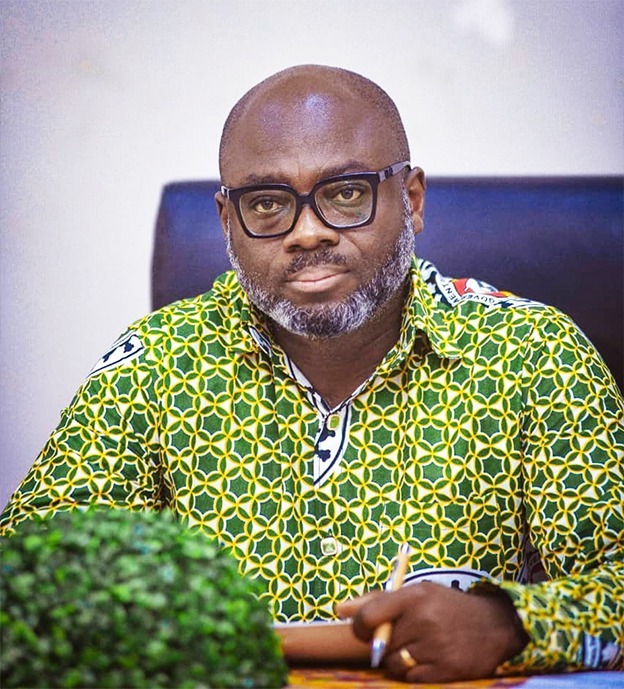
Former Deputy Executive Director,Mrs. Gifty Oware-Mensah.

Former Deputy Executive Director of the National Service Authority (NSA), Gift Oware Mensah, has challenged an order by a High Court in Accra directing her to disclose the names and addresses of her witnesses at the Case Management Conference (CMC) stage of her criminal trial.

Through her defence counsel, Gary Nimako Marfo, the court presided over by Her Ladyship Justice Audrey Kocuvie-Tay was urged to refer the matter to the Supreme Court for constitutional interpretation, arguing that the disclosure requirement violates the presumption of innocence guaranteed under the 1992 Constitution.

Counsel contended that compelling an accused person at the CMC stage to disclose witnesses and their addresses imposes a burden on the defence and is inconsistent with Article 19(2)(c), which guarantees the presumption of innocence, and Article 19(10), which protects an accused from being compelled to give evidence at trial.

He further argued that the burden of proof in criminal proceedings lies solely on the prosecution, citing Sections 11 and 15 of the Evidence Act, 1975 (NRCD 323).

According to the defence, Part 2(3)(a) of the Practice Direction on Disclosure and Case Management Conference in Criminal Proceedings, 2018, which provides that an accused person “shall” disclose the names and addresses of all witnesses, is mandatory and therefore unconstitutional.

Counsel relied on Rule 42 of the Interpretation Act, 2009 (Act 792) to argue that the word “shall” is mandatory, not permissive.

He maintained that although the practice direction attempts to cushion the disclosure requirement with the phrase “without prejudice to the constitutional presumption of innocence,” the Constitution itself does not provide for any such qualification, rendering the practice direction inconsistent with the Constitution.

He cited State v Sowah & Essel (1961) GLR 743–747 and invoked Articles 130(1) and 130(2) of the Constitution, urging the trial court to stay proceedings and refer the matter to the Supreme Court for interpretation.

The defence also challenged Part 5(f) of the practice direction, which encourages day-to-day hearings or short adjournments, arguing that it breaches Article 19(2)(e) of the Constitution by denying an accused adequate time and facilities to prepare a defence.

Reference was made to Republic v Baffoe-Bonnie and Others (2017–2020) SCGLR 342, as well as Republic v High Court (General Jurisdiction), Accra; Ex parte Zenator Rawlings (Ashirtey & NDC, Interested Parties).

Opposing the application, the Director of Public Prosecutions (DPP), Yvonne Atakora Obuobisa, argued that the defence had failed to properly invoke the court’s jurisdiction for a referral under Article 130.
She submitted that Part 2(3)(a) of the practice direction is not inconsistent with Articles 19(2)(c), 19(2)(e), or 19(10) of the Constitution.

The DPP explained that the disclosure requirement at the CMC stage does not compel an accused to lead evidence or prejudice the right to remain silent.

Rather, it is intended to assist the accused by enabling the court to issue witness summonses where necessary, should the accused later be called upon to open a defence after the prosecution closes its case.

She stressed that the practice direction must be read holistically, particularly together with Part 5, which ensures that adequate time and facilities are granted to the accused to prepare a defence.

On the issue of expeditious trials, the DPP argued that day-to-day hearings benefit accused persons by reducing prolonged trials and easing the burden of criminal proceedings, noting that timely justice is consistent with constitutional safeguards.

She further relied on authorities including Aduamoah II v Twum II (1999) 2 GLR 409, Republic v Court of Appeal, Cape Coast; Ex parte James G. Quayson (SC, July 27, 2022), and Republic v Regional Tribunal; Ex parte Akorsah (1980) GLR 592, to submit that no real or genuine issue of con
For more news, join The Chronicle Newspaper channel on WhatsApp: https://whatsapp.com/channel/0029VbBSs55E50UqNPvSOm2z

OSP Hails President Mahama for Halting Move to Abolish Anti-Corruption Office

0
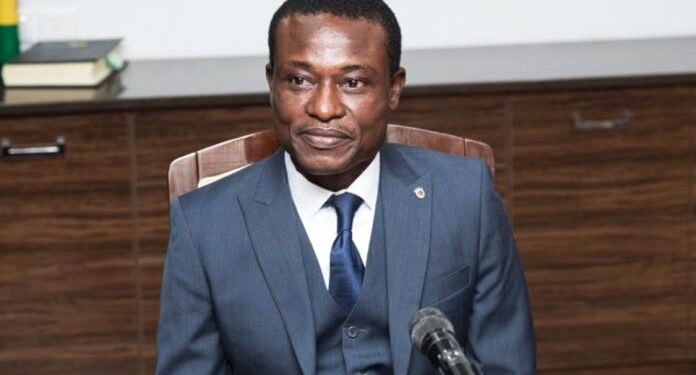
OSP-Mr-Kissi-Agyebeng-Special-Prosecutor
The Office of the Special Prosecutor (OSP) has praised President John Dramani Mahama for what it described as a swift and decisive intervention that halted attempts to abolish the Office and weaken Ghana’s independent anti-corruption framework.

The commendation is contained in the OSP’s Half Yearly Report for December 2025, sighted by The Chronicle.

According to the report, President Mahama’s public call for the withdrawal of a private member’s bill seeking to scrap the OSP reaffirmed Ghana’s national commitment to accountability, transparency, and the rule of law.

Last year, the Majority Leader, Mahama Ayariga, and the Majority Chief Whip, Rockson Dafeamapkor, sponsored a motion in Parliament seeking the abolition of the Office of the Special Prosecutor, despite the institution being in its formative years. President John Dramani Mahama later intervened and called for the withdrawal of the bill.

The bill, introduced in late 2025, sought to transfer the OSP’s mandate and prosecutorial powers to the Attorney-General’s Department. Its sponsors argued that the Office duplicated functions, imposed high operational costs, and delivered limited impact.

However, the President’s intervention preserved the institutional independence necessary for effective anti-corruption enforcement.

“The Office highly commends the President—and the nation has His Excellency to thank—for the swift and decisive call for the withdrawal of the bill,” Special Prosecutor Kissi Agyebeng stated in the report.

Mr Agyebeng said the President’s intervention reaffirmed the collective wisdom underpinning Ghana’s National Anti-Corruption Action Programme and the creation of the OSP as an institution independent of the Attorney-General.

“The Attorney-General, being a member of Cabinet and the chief legal adviser to Government, is not well-suited to investigate and prosecute members of a government to which he belongs,” he said, stressing that separating the two offices shields anti-corruption enforcement from political influence.

An emblem of the Office of the Special Prosecutor (OSP).

The Special Prosecutor rejected claims that consolidating prosecutorial authority under the Attorney-General would improve efficiency or reduce costs, describing such arguments as unsupported by evidence and inconsistent with Ghana’s anti-corruption policy framework.

He noted that the attempt to abolish the Office came at a time when the OSP had recorded significant results, including saving the Republic billions of cedis through investigations and corruption-risk assessments, prosecuting dozens of accused persons, and seizing and managing substantial tainted assets.

“If the Office is not performing as expected in its formative years, the solution is not abolition,” Mr Agyebeng said. “The answer lies in forbearance, careful nurturing, enhancement of powers, and assurance of adequate resourcing.”

The report further linked the President’s intervention to broader national reform thinking, citing the Constitution Review Commission’s December 2025 recommendations, which called for strengthening Ghana’s anti-corruption framework through an independent body with prosecutorial powers separate from the Attorney-General.

Mr Agyebeng said resistance to the work of the OSP was inevitable, particularly from individuals and entities facing investigation or potential scrutiny.

“No one welcomes corruption-related investigations where they or their associates are the subject,” he cautioned, warning against allowing such resistance to influence national policy.

The Office expressed gratitude to President Mahama, Parliament, civil society organisations, and citizens who stood in defence of its mandate, stressing that institutional independence remains central to safeguarding the public interest.


For more news, join The Chronicle Newspaper channel on WhatsApp: https://whatsapp.com/channel/0029VbBSs55E50UqNPvSOm2z

High Court fixes February 26 for CMC in Ken Ofori-Atta, others trial

0
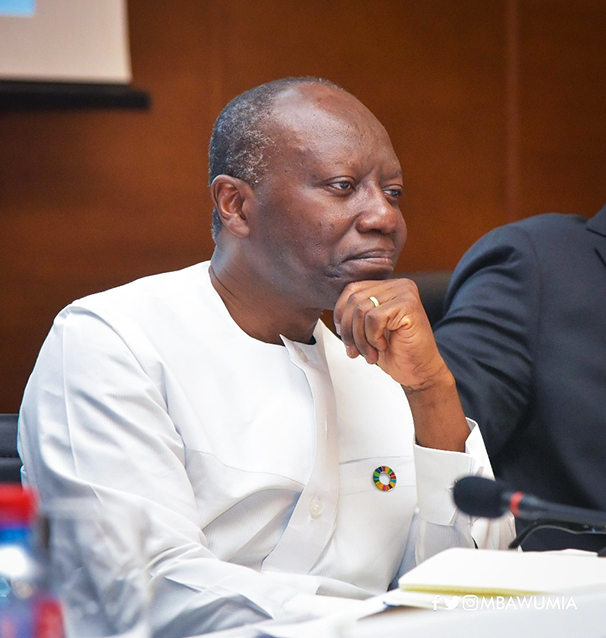
Ken Ofori-Atta

The High Court in Accra has fixed February 26, 2026, for the conduct of a Case Management Conference (CMC) to commence the trial of former Finance Minister, Kenneth Nana Yaw Ofori-Atta, and seven others over matters relating to the Strategic Mobilisation Ghana Limited (SML) and Ghana Revenue Authority (GRA) case.

The date was set by the presiding judge, Justice Francis Aponga Achiponga, following a request by the Office of the Special Prosecutor for additional time to complete and file outstanding disclosures.

According to the prosecution, led by Adelaide Kobiri Woode, two witness statements have so far been filed and served, but more disclosures—some accompanied by voluminous exhibits—are yet to be compiled and filed.

At yesterday’s hearing, Ms. Kobiri informed the court that amendments had been made to the charge sheet to reflect the appropriate titles of the accused persons, including Hon. Ken Ofori-Atta, and that the amended charge sheet had been duly served.

She further disclosed that although some witness statements with attached exhibits had been filed and served, the accused persons were “short-served,” adding that additional disclosures were still being prepared.

The prosecution also drew the court’s attention to the absence of A1, Ken Ofori-Atta, and A2, Ernest Akore, explaining that extradition and summons processes were ongoing.

“Extradition processes, which were triggered through the Attorney-General, are still ongoing. The Attorney-General has transmitted relevant documents to the United States,” Ms. Kobiri told the court.

She added that documents relating to summons issued by the court for A1 and A2 had been forwarded to the International Desk of the Attorney-General’s Department and were being processed for service through authorised institutions in the United States.

“In view of the additional disclosures the Republic wishes to file, and also the international processes relating to A1 and A2, we humbly pray for some more time for the Case Management Conference,” the Principal State Attorney submitted.

The court granted the request and extended the time for the Republic to file and serve all additional disclosures on or before February 26, 2026, adjourning the case to that date at 10:00 a.m. for CMC.

Those standing trial include Ken Ofori-Atta (A1); his Chief of Staff, Ernest Akore (A2); Emmanuel Kofi Nti (A3); former Commissioner-General of the GRA, Rev. Dr. Ammishaddai Owusu-Amoah (A4); Isaac Crentsil (A5); Evans Adusei (A7); and Strategic Mobilisation Ghana Limited (A8).


For more news, join The Chronicle Newspaper channel on WhatsApp: https://whatsapp.com/channel/0029VbBSs55E50UqNPvSOm2z

Ashanti Region Backs Bryan … After Delivering His Message Of Hope To 11,000 Delegates

0
Dr Bryan Acheampong acknowleding cheers from the delegates

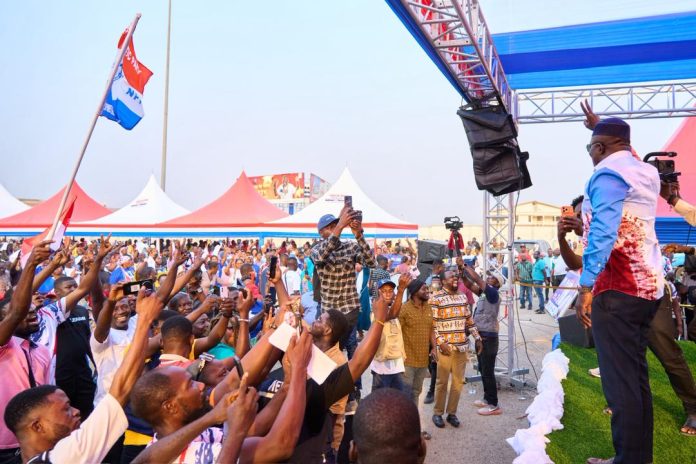
Thousands of delegates from across the Ashanti Region on Sunday converged at Heroes Park in Kumasi as New Patriotic Party (NPP) flagbearer hopeful, Dr Bryan Acheampong, concluded his campaign engagements in the party’s traditional stronghold with a call for unity, discipline and renewal.
More than 11,000 delegates attended the event, which marked Dr Acheampong’s final major interaction with party members in the region ahead of the upcoming primary.

The gathering was characterised by chants, singing and dancing as supporters clad in party colours welcomed the aspirant.
In his address, Dr Acheampong outlined what he described as a clear roadmap for rebuilding the party and positioning it for victory in the 2028 general election.

Dr Bryan Acheampong addressing the delegates

He stressed that electoral success would require careful planning, internal cohesion and disciplined leadership.
“This campaign has been about listening and learning. I have travelled to all 276 constituencies across the country, not once but twice, engaging with our people and understanding their concerns. Leadership must be deliberate, strategic and disciplined,” he told the gathering

Several delegates who spoke to reporters expressed confidence in his message and leadership style, noting his emphasis on grassroots engagement and party unity.
“He speaks to us as colleagues, not from a distance,” said Afia Serwaa, a polling station organiser from Ejisu.

“Many of us believe he has what it takes to bring the party together and lead us to victory.”
Dr Acheampong also highlighted the organisational structure of his campaign, arguing that winning future elections would depend on early preparation and coordinated effort rather than chance.

Recent surveys by the Future Governance Analytics Project (FGAP) suggest a surge in support for Dr Acheampong, with analysts indicating that he is making strong gains in the race and positioning himself to secure the required majority in the contest.Delegates from various constituencies across the region echoed similar sentiments.
“We want leadership that values the grassroots, and he has shown that he listens,” said Kwaku Mensah, a constituency executive from Nhyiaeso.

Others pointed to his organisational approach and energy as strengths they believe could help the party regain momentum nationally.
With Ashanti regarded as a critical base for the NPP, Dr Acheampong’s strong showing at Heroes Park underscored his determination to consolidate support in the region as the primary draws near.
As the party prepares to choose its next flagbearer, observers say the Ashanti engagement could play a significant role in shaping the outcome, with Dr Acheampong emerging as a key contender in the race for the party’s future direction ahead of the 2028 general election.

News Desk Report


For more news, join The Chronicle Newspaper channel on WhatsApp: https://whatsapp.com/channel/0029VbBSs55E50UqNPvSOm2z

APL Poll Reveals: Bawumia Will Win One Touch

0
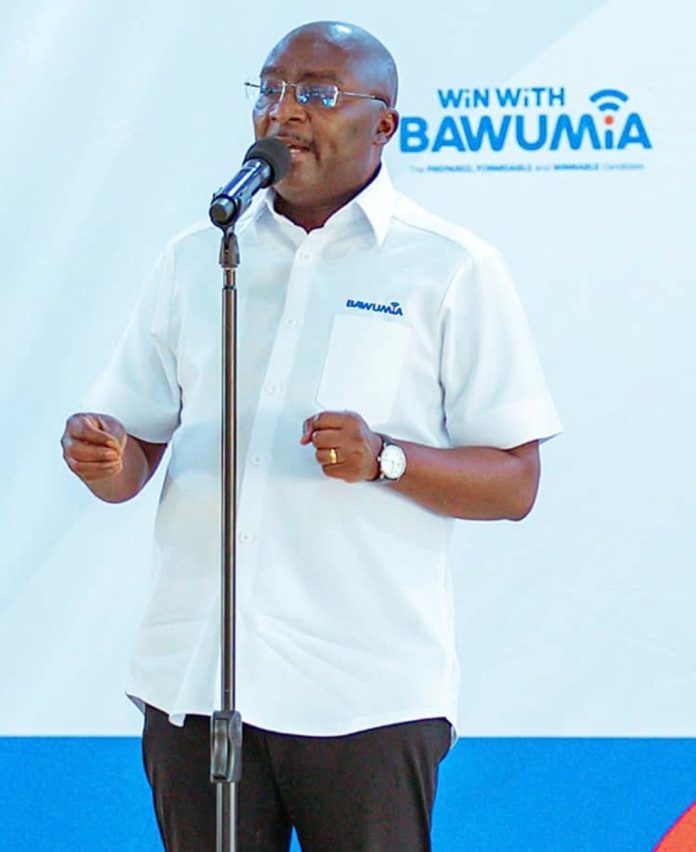
Dr. Mahamudu Bawumia

A nationwide poll conducted by Africa Policy Lens (APL) has placed former Vice President, Dr. Mahamudu Bawumia, in a commanding position ahead of the New Patriotic Party’s (NPP) presidential primary, following constituency-level engagements with party delegates.

The poll, conducted between December 8, 2025 and January 23, 2026 was led by Dr. Hayford Mensah Ayerakwa, Director of Research, Administration and Partnerships at APL, under the supervision of Dr. George Domfe, President of Africa Policy Lens.

Methodology

The research was sponsored and carried out by APL as part of its public opinion and policy analysis programme. Data was gathered through telephone interviews conducted from APL’s Accra-based call centre. A team of 12 trained field assistants reached respondents in all 276 constituencies nationwide.A total of 9,122 respondents were interviewed. The poll has a 2% margin of error at a 95% confidence level.

Respondent Profile

The survey was dominated by polling station executives (99.3%), with constituency executives accounting for 0.3% and electoral area coordinators 0.4%. No Members of Parliament were captured.Male respondents constituted 76.1%, while 23.9% were female.

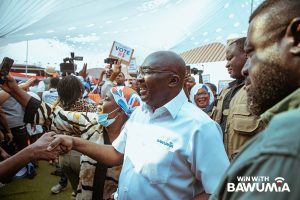
Dr Bawumia interacting with delegates

Respondents aged 36–45 years formed the largest group (38.2%), followed by those aged 40–60 years (33.6%). Delegates aged 25–35 years accounted for 20.8%, with 7% above 60 years. Only 0.5% were aged 18–24.

In terms of education, 43.8% had completed Middle School, JSS or JHS, 26.4% were SHS graduates, and 19.8% had tertiary education. About 5.5% attained primary education, while 4.5% had no formal education.

Constituency Outreach

On constituency visibility, Ken Ohene Agyapong recorded the highest reach, with 98.4% of delegates confirming his visits. Dr. Bawumia followed closely with 97.9% while Bryan Acheampong recorded 82.6%. Kwabena Agyapong and Yaw Osei Adutwum recorded 3.6% and 1.1%, respectively.

Message Clarity

Despite the extensive outreach by several aspirants, Dr. Bawumia emerged as the candidate with the clearest and most convincing message, polling 69.7%.

He was followed by Ken Ohene Agyapong (48.3%) and Bryan Acheampong (40.5%). Kwabena Agyapong and Yaw Osei Adutwum recorded 0.6% and 0.4%, respectively, while 1.16% said none of the candidates impressed them.

APL noted that although three aspirants were perceived to have clear messages, Dr. Bawumia made the strongest overall impression on delegates.

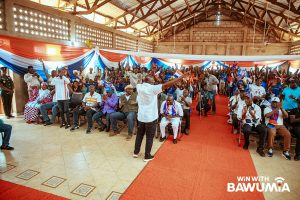
Dr Mahamamu Bawumia addressing delegates in the Kwabere district

Delegates identified party unity and reconciliation (52.9%) and support for grassroots and delegates (51.9%) as the issues most effectively addressed by the aspirants.

Policy vision for the country recorded 28.3%, strategy to win national elections stood at 16.6%, while internal party reforms recorded 10.5%.

Other issues accounted for 29.5%.

Shifts in Support

The poll further revealed notable shifts in delegate preferences following constituency engagements.Support for Bryan Acheampong increased from 3.14% before visits to 5.20% after.

Ken Ohene Agyapong, however, saw his support decline from 27.74% to 25.10%.Dr. Bawumia recorded the most significant gain, with delegate support rising from 54.09% before engagements to 61.0% after.

Support for Kwabena Agyapong rose marginally from 0.26% to 0.30%, while Yaw Osei Adutwum dipped slightly from 0.15% to 0.10%.The proportion of undecided delegates fell sharply from 14.34% to 8.00%, suggesting that constituency-level engagements significantly influenced voting intentions.

Outlook

According to APL, the findings indicate that ground engagement, message clarity, and party cohesion remain decisive factors in the NPP’s internal contest, with Dr. Bawumia currently enjoying the clearest advantage as the race intensifies.


For more news, join The Chronicle Newspaper channel on WhatsApp: https://whatsapp.com/channel/0029VbBSs55E50UqNPvSOm2z

Bawumia Will Bring Victory To NPP – Says Jinapor

0
Samuel Abu Jinapor

Samuel Abu Jinapor, Member of Parliament for Damongo and a member of the Dr Mahamudu Bawumia campaign team, has endorsed the former Vice President as the New Patriotic Party’s strongest option for the 2028 general election.

Speaking on The Point of View on Channel One TV on Monday, January 26, Mr Jinapor said he holds all five presidential aspirants in high regard, noting that he has worked closely with most of them at various stages of his political career.

He explained that Dr Yaw Osei Adutwum and Dr Bryan Acheampong served with him in the same cabinet, while Kennedy Agyapong is a long-time friend.

He also described former General Secretary, Ing. Kwabena Agyepong, as a respected figure within the party.

Despite his admiration for all the contenders, Mr Jinapor stressed that the NPP must be strategic if it intends to return to power in 2028.

He acknowledged that winning the election would require hard work regardless of the candidate but argued that Dr Bawumia stands out among the five.

According to him, Dr Bawumia’s long experience at the highest levels of governance gives him a clear advantage.

He noted that the former Vice President has been on the presidential ticket since 2008 and has remained at the centre of national politics for nearly two decades.

Mr Jinapor also cited Dr Bawumia’s nationwide recognition as a major asset in a national election, describing him as a public servant of unquestionable integrity with no corruption allegations or scandals against his name.

He added that Dr Bawumia has consistently demonstrated competence, ideas, and solutions to national challenges, while showing the capacity to develop policies that respond to the needs of ordinary Ghanaians.

Although he acknowledged the challenges faced by the previous NPP government, he said Dr Bawumia’s conduct in office reflects strong leadership qualities.

Highlighting humility, temperament and vision as critical attributes in Ghanaian politics, Mr Jinapor said Dr Bawumia possesses the calmness and maturity required to lead the country and rally public support behind a clear national vision.

“I think he’s shown also to be formidable. He’s shown to be humble, and humility in Ghanaian politics is absolutely important. He’s shown to have the temperament to be president. And above all, I think he’s also shown to have the vision.

“You have a vision which, if he puts before the Ghanaian people, we will have the chance of the Ghanaian people coalescing around the vision that he put before them.

“All five of them are conversing to lead and be presidential candidates, but we need to choose the best among the five. And if you look at the five of them, and you look at the factors that I’ve listed, and if NPP is not considering 2032, in other words, presenting a candidate for 2028 for strategic reasons and expecting not to win, and then repeating the candidate for 2032 and hope that the traditional eight-year cycle will favour the NPP, then maybe we can look at another candidate. But if we want to win in 2028, I think our best shot should be Dr Mahamudu Bawumia.”


For more news, join The Chronicle Newspaper channel on WhatsApp: https://whatsapp.com/channel/0029VbBSs55E50UqNPvSOm2z

Ex-convict allegedly steals $20k, €16k from A Chinese’s car

0
Abdul Rahman Kofi Asiedu - Accused

An Accra Circuit Court has charged a 36-year-old driver and ex-convict, Abdul Rahman Kofi Asiedu, for allegedly breaking into a vehicle belonging to Chinese national and stealing cash and valuables running into thousands of Ghana cedis.

Abdul Rahman Kofi Asiedu (A1) is standing trial alongside Daniel Cobblah, also known as Asaawa (A2), while a third suspect, Kafui Agroh (A3), is currently on the run.

Abdul Rahman Kofi Asiedu and Agroh are facing charges of conspiracy to steal and stealing. Abdul Rahman Kofi Asiedu has also been charged with causing unlawful damage after allegedly smashing the driver-side door glass of the vehicle, valued at GH¢1,000.

Daniel Cobblah, on the other hand, has been charged with dishonestly receiving stolen property. Both Asiedu and Cobblah pleaded not guilty to their respective charges.

Presiding judge, Her Honour Susana Eduful, remanded Asiedu into police custody pending the final determination of the case. Cobblah, however, was admitted to bail in the sum of GH¢50,000 with two sureties, each earning not less than GH¢1,500 monthly.

The case has been adjourned to February 16, 2026.

Charges and particulars

According to the prosecution led by Chief Inspector Ebenezer Teye-Okuffo, on November 5, 2025, at Community 6, Tema, Asiedu and Agroh allegedly conspired to steal items from a black Toyota Highlander with registration number GN 5666-23, owned by Wu Xiao Ju, a Chinese national resident in the area.

The items allegedly stolen include an iPhone 16 Pro Max (gold) valued at GH¢18,000, a non-citizen Ghana Card, a Chinese citizenship card, a Chinese passport, Zenith and Ecobank Visa cards, GH¢80,000, US$20,000, and €16,000.

Daniel Cobblah, a 38-year-old lotto agent and resident of Dansoman, is accused of dishonestly receiving the stolen iPhone, knowing it to have been obtained through theft.

Prosecution’s case

Presenting the brief facts, Chief Inspector Teye-Okuffo, told the court that police intelligence intercepted CCTV footage on November 18, 2025, which captured Asiedu breaking into the complainant’s vehicle and stealing items from it.

Subsequent investigations led to the arrest of Cobblah on November 19, 2025 during which the stolen iPhone 16 Pro Max was retrieved from him.

In his caution statement, Cobblah reportedly admitted buying the phone from Asiedu for GH¢2,300, despite knowing its market value was about GH¢18,000.

Further investigations led to Asiedu’s arrest, during which he allegedly confessed to selling the phone to Cobblah.

Police also disclosed that Asiedu, upon learning he was wanted, allegedly gave GH¢30,000 from the stolen cash to a third party to be passed on to the police in an attempt to compromise the investigation.

Asiedu is facing similar charges in other courts in Accra and was previously tried for a related offence at the Kaneshie District Court, a background the court would be invited to take note of.

Efforts are ongoing to arrest the third suspect, Kafui Agroh, to face trial.

The court is expected to continue hearing the matter on the next adjourned date.


For more news, join The Chronicle Newspaper channel on WhatsApp: https://whatsapp.com/channel/0029VbBSs55E50UqNPvSOm2z

Editorial: When The Commander-In-Chief Complains

0
Editorial

The Chronicle observed President John Dramani Mahama’s address at the West Africa Security Association (WASSA) forum at Burma Camp with mixed feelings. The commissioning of new military vehicles, the announcement of a 2,000-unit housing project for the Ghana Armed Forces (GAF) and plans to procure armoured personnel carriers, drones, advanced communication systems and establish a Cyber and Electronic Warfare Centre at the Tamale Air Force Base, all projected a government mindful of national security imperatives.

However, beyond the impressive optics,The Chronicle finds that a disturbing lapse in leadership was on full display.Standing before disciplined officers and men of the Ghana Armed Forces, President Mahama chose not to command but to complain. He publicly lamented that more than GH¢1 billion gratuity arrears under Constitutional Instrument (CI) 129 and laid blame squarely at the doorstep of the previous administration for failing to make budgetary provision for its operationalisation.

The Chronicle finds this posture unacceptable.A Commander-in-Chief does not lament before troops. He commands. He resolves. He assumes responsibility. Complaining in a military setting weakens authority, erodes morale and undermines the ethics of command. Burma Camp is not a political platform and the Ghana Armed Forces is not a partisan audience.

Yes, the arrears may have been inherited. Yes, the figures may be accurate. But leadership is not a public exercise in blame-sharing. The Chronicle maintains that responsibility begins where mandate starts.

The Chronicle is aware that the President later directed the Minister of Finance to release funds to address the gratuity arrears. That directive, rather than redeeming the moment, deepens the concern. If remedial action was within immediate reach, then the public lamentation before soldiers was unnecessary. Leadership acts first and explains later. Complaint before command inverts the moral order of authority.

Even more troubling is the contradiction between the President’s conduct and his own repeated sermons on ethical leadership. Only recently, President Mahama charged public officials to lead by example, demonstrate accountability and uphold integrity. Yet, when faced with an opportunity to embody those virtues, he chose lamentation over leadership.

The Chronicle cannot ignore this inconsistency.Ghana’s governance culture is increasingly polluted by a politics of excuses. Every challenge is inherited. Every failure is explained away. The Chronicle finds this trend corrosive, unpatriotic and dangerous to democratic accountability.

Ghanaians did not vote for explanations; they voted for solutions. They did not hand the National Democratic Congress (NDC) a decisive mandate for a recital of past failures. Public office exists to correct problems, not to narrate them.

Leadership, as former Presiding Bishop of the Methodist Church Ghana and Vice-Chancellor of Christian Service University College, Prof. Emmanuel Kwaku Asante, aptly observed, is not conferred by office alone. “Being an office bearer does not make one a leader.”

Similarly, the late Rev. Prof. Kwame Bediako warned against the dangerous confusion of office-holding with leadership. Office is constitutional; leadership is moral. Authority can be assigned; character must be demonstrated.

We acknowledge the economic gains recorded under President Mahama’s administration. However, the burden of leadership requires responsibility, not nagging.

If President Mahama desires to be remembered as one of Ghana’s great leaders, The Chronicle believes he must abandon the politics of lamentation. Great leaders absorb responsibility; they do not export blame.

As a professed Christian and member of the Assemblies of God, the President is expected to model servant leadership marked by humility, decisiveness and accountability. Complaining from the highest office in the land does not meet that standard.

The Chronicle, therefore, urges the President to align his rhetoric on ethical leadership with his conduct. The tone set by the Commander-in-Chief cascades through every institution of state.

Ghana needs leadership not lamentation. Command not complaint.History will judge posture, not speeches.


For more news, join The Chronicle Newspaper channel on WhatsApp: https://whatsapp.com/channel/0029VbBSs55E50UqNPvSOm2z


When Money Consumes The Human Conscience

0
Opinion

In basic school, there was a poem I remember very well because it taught deep lessons about human life and values. The poem focuses on money and how it affects relationships and conscience. It is titled “Money, O” by William Henry Davies (1871–1940).

The poet explains how having money attracted many false friends, while losing it revealed who his true friends were. Even today, the message of this poem feels painfully real. Money seems to have consumed the conscience of many people. Sadly, even children.

There have been disturbing reports of children using their peers and parents for money rituals. Some have admitted that they aimed to buy expensive cars and live flashy lives. This shows how early the unhealthy desire for money can corrupt moral judgment.

This problem is not limited to one group or place. It cuts across society; in courts, schools, roads, hospitals, markets, businesses, politics, and homes.

In courts, some judges and lawyers accepted bribes and twisted justice. As a result, innocent people suffer in prison while the guilty walk free.

In schools, some educators accept money to support examination malpractice. Learners who do not qualify are promoted, while hardworking and honest learners are ignored.

On the roads, some police officers accept bribes and allow unqualified drivers to operate vehicles, putting innocent lives at risk.

In hospitals, patients are sometimes forced to pay “tips” to receive quicker attention. Those who cannot afford to pay may wait for hours, even in critical situations. How cruel!

In markets, some traders inflate prices or allow goods to spoil rather than reduce prices. Some landlords also prefer to leave houses empty instead of reducing rent.

When it feels justifying…

When people begin to justify such actions, danger looms.

In businesses, this behaviour is common. Some employers inflate the cost of services and blame economic hardship. They argue that without cutting corners, the business will collapse.

Some employees also steal from company funds and justify it with the Akan saying “obiara didi wo n’adwuma ho”—meaning everyone should benefit from their occupation even when the act is clearly wrong. Sadly, this mindset has become normal.

A director once told me that in Ghana, if you do not exploit customers, your business may fail. This raises serious questions about our values.

Many people also believe that having more money even if acquired illegally makes them wiser, stronger, more respected, and more attractive. In the quest to belong to a “higher class,” conscience is often silenced.

In homes and relationships, money has also caused damage. Some women practise “chobo”, secretly keeping part of the housekeeping money given by their partners. Some boyfriends and girlfriends have duped their partners financially and excused it by saying, “But he is my boyfriend” or “She is my girlfriend.” This is cruel and irresponsible.

Greed and indiscipline have also pushed many people into Ponzi schemes. They justify their actions by calling it “investment,” only to lose everything.

In politics, money is often used to buy loyalty instead of winning people with good ideas and sound policies.

Even marriages suffer. Some partners hide their finances, destroy trust, and break families. Others stay in relationships they do not truly value, simply because of money.

Many people have lost dignity, wealth, relationships, and even their lives because money took control of their conscience. Families have broken apart, friendships have ended, and once-powerful nations have collapsed. This is deeply disappointing.

So, what is the real issue?

In Ghana today, hard work and honesty do not always seem to pay. Money can open doors, create connections, and influence decisions, sometimes without effort. As a result, some people are willing to sacrifice dignity and reputation for wealth.

A few years ago, a man confessed that he helped university graduates travel abroad for prostitution and shared the proceeds with them. Shockingly, many graduates accepted the offer. He later claimed to have repented.

In another case reported by MyJoyOnline (2014), a man named Kumi, with foreign sponsors, recruited young Ghanaian women and sent them to Kuwait, where they were arrested and forced into prostitution. He collected what he called “processing fees” from unsuspecting victims.

Money is necessary for survival, but its influence on society raises serious moral concerns.

The late Charles Kwadwo Fosu (Daddy Lumba) captured this reality in his music when he sang about how money has made life harder for the poor and damaged relationships between parents and children.

Money is a powerful tool. When not controlled, it controls human behaviour.

A respected Ghanaian marriage and relationship counsellor, Opanyin Kwadwo Kyere, has often advised that people must learn to control money and not allow it to consume their conscience.

The Bible also recognises the usefulness of money but warns against excessive love for it. Judas betrayed Jesus because of money.

In a world filled with pressure to appear successful, jealousy, and unhealthy competition, wise handling of money must be part of our values.

Remember: a good name is better than riches.


WRITTEN BY:

Henry Atta Nyame

Institutional Assessment Practitioner

hattanyame@gmail.com


For more news, join The Chronicle Newspaper channel on WhatsApp: https://whatsapp.com/channel/0029VbBSs55E50UqNPvSOm2z

Chief Directors and HR urged to uphold professionalism 

0
Prof. Lord Mensah, Head of Local Government Service

Professor Lord Mensah, Head of Local Government Service (LGS), has urged Chief Directors and Human Resource Managers to uphold professionalism, teamwork and integrity.

He emphasised accountability in financial stewardship, time management, logistics, and public resources.

Speaking at the Validation and Signing session of the 2026 Performance Contract for Regional Co-ordinating Councils, Professor Mensah disclosed the importance of a strengthened Performance Management System for informed decisions on postings, promotions and capacity development.

Professor Lord Mensah noted that the LGS aims to support local government in delivering value-for-money services through quality human capacity and resources.

He encouraged participants to critically review Key Performance Indicators and develop strategies for achievement.

According to him, the Performance Management System includes Performance Contracts and Appraisals, focusing on General Administration, Human Resource Management and Financial Management.

He said the LGS will monitor progress, and Regional Ministers will supervise signing of contracts with MMDCEs and MMDCDs by January 30th 2026.

The Head of Local Government Service has directed Regional Ministers to submit a comprehensive report, photographs, and scanned copies of signed contracts to the Office of the Head of the LGS by February 6, 2026.

He emphasized that leadership is crucial to achieving agreed targets and urged Regional Ministers to provide direction, oversight, and support, ensuring that statutory meetings are held, recommendations implemented and public financial management laws are adhered to.

Dr. Frank Amoakohene, Ashanti Regional Minister, highlighted decentralization and accountability to the people, commending the Local Government ministry’s commitment.


For more news, join The Chronicle Newspaper channel on WhatsApp: https://whatsapp.com/channel/0029VbBSs55E50UqNPvSOm2z

The Ghanaian Chronicle