Iran has denied involvement in a drone attack in Jordan that killed three US military personnel and injured dozens of others, state media has reported.
US President Joe Biden and UK Foreign Secretary David Cameron have blamed Iran-backed groups for Sunday’s attack near the border with Syria.
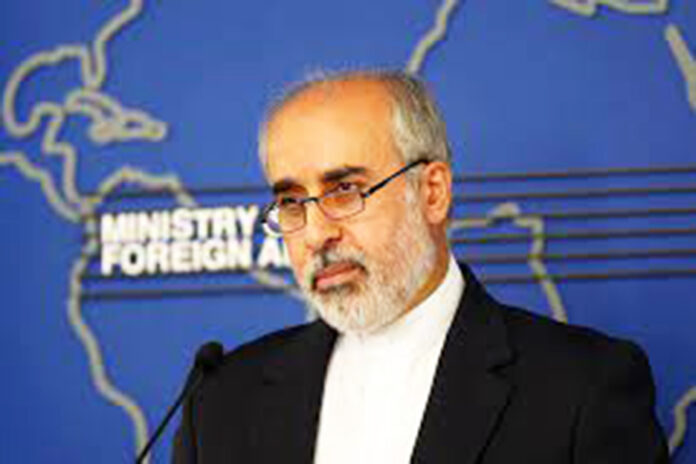
“As we have clearly stated before, the resistance groups in the region are responding [to] the war crimes and genocide of the child-killing Zionist regime and… they do not take orders from the Islamic Republic of Iran,” Iranian Ministry of Foreign Affairs spokesman Nasser Kanaani was quoted saying by IRNA on Monday.
“These groups decide and act based on their own principles and priorities as well as the interests of their country and people.”
Kanaani said claims of Iranian involvement were motivated by “specific political goals to reverse the realities of the region” and were “influenced by third parties, including the child-killing Zionist regime”.
The drone strike on Tower 22, a logistics support base, marked the first loss of American life by enemy fire since the start of the war in Gaza.
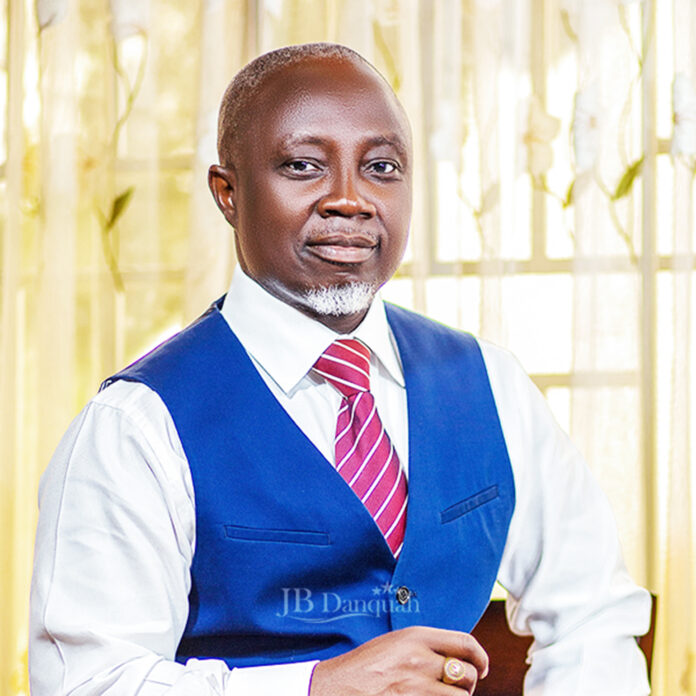
Joseph Boakye-Danquah – Independent candidate for Subin
Mr. Joseph Boakye Danquah, an economic development expert and a registered member of the New Patriotic Party (NPP) since 1997, has broken ties with the party and declared his intention to contest the 2024 elections as an independent candidate in the Subin constituency.
He has cited the monetisation that has characterised the selection of candidates, describing the delegate system as corrupt and unsustainably monetized.
The 2016 Subin parliamentary aspirant complained at a press conference last week that he has been side-lined over the past ten years and not treated fairly, and feels the party does not need him.
According to him, the party which wrote “The Stolen Verdict” after the 1992 General elections is broken and not acting in tandem with the founding principles for which he joined the party.
To end the suffering of Ghanaians from the corrupt NDC/ and NPP duopoly, he intends represent constituents and help address Poverty, Youth unemployment, Lack of Leadership and advocacy and arrogance of Power as an independent and courageous voice to speak to truth to power and pursue strategies to enhance the quality of life of Subin constituents, consult and build consensus with stakeholders to strengthen democracy and advocacy.
According to him, his success as an individual is linked with the success of Subin as a community, hence the motivation to take up a leading role in the development of the community.
He said his bid is informed by the fact that the Parliament of Ghana needs independent and courageous voices that can speak truth to power and work to protect the interest of the people and believes he has the courage, intelligence and the motivation to be one of those voices.
He assured that: “I will serve you in humility and in the fear of God” and offer an inclusive leadership based on the deeper understanding of the Subin community
J.B. Danquah, 58, has proposed a paradigm shift for the development of the constituency and has therefore adopted a transformational plan dubbed ‘Subin Reimagined’ which is anchored on three main pillars to tackle the issues namely, Job creation and skills development to tackle youth unemployment/hopelessness, improved access to health and education and strong representation and advocacy.
He has chosen the Eagle as his symbol – representing strength, vision, focus and commitment to bring improvement to the lives of the people of Subin.
He said his father was a strong believer in the principles and traditions of the Danquah/Busia/Dombo fraternity, for which he named him after Joseph Boakye Danquah and believed the people of Subin will act in the interest of their community and the future generations and vote for him and disprove the claim that it is impossible for an independent candidate to win in Subin.
He explained that Subin may be a stronghold of the NPP, but the party does not have a stranglehold on the electorate and that the people are free to elect whoever they deem fit and will help them to realize their aspirations.
He said people vote for persons to control the destiny of the nation, for which reason it is not good enough to vote for a candidate just because the candidate belongs to a particular party.
According to him, he registered as a member of the party in 1997 and contested the NPP primaries alongside Isaac Osei, Eugene Antwi and others in 2015, but his agonies with the party began in 2020, when attempts to pick a nomination form was rebuffed by the region, in collaboration with the constituency, because for more than three weeks the party refused to allow him to pick a nomination form.
The frustration in 2020 was even worse, hence the decision to go solo this time. “I am therefore declaring to the good people of Subin and Ghana that I will be running to become a Member of Parliament for Subin constituency in December 2024 as an independent candidate”, he announced.
By the declaration, J.B. Danquah promises to give the good people of Subin “a better alternative and an opportunity to vote for someone who shares your values and principles but is not a product of a corrupt system”.
He said he will not stand aloof and watch politicians perpetrate fraud and arrogance of power on the people but I will stand up and fight for the principles that he believes in and fight for the well-being of the community, no matter the cost to his personal life, so long as it is for the betterment of the community and the country at large.
The parliamentary hopeful has, therefore, advised that it is the responsibility of voters and constituents to vet the candidate to determine if the candidate has what it takes to lead and called on the constituents to vote for him as their leader to defend their interests against all odds and preserve the sanctity of the society.
Two sitting Members of Parliament in the Sekondi-Takoradi Metropolis will not be returning to the August House in 2025 as they lost their respective primaries.
Joseph Cudjoe, MP for Effia and Minister of State in charge of Public Enterprise, together with the first time MP for Shama, Erickson Abakah, lost the primaries.
Four others – George Mireku Duker – Tarkwa, Kwabena Okyere Darko Mensah -Takoradi, John Sennie – Mpohor and Dr. Prince Hamid Armah – Kwemintsim were retained.
In the case of Erickson Abakah, his own bankroller, Isaac Kwamina Afful, who is the Chief Executive Officer (CEO) of Lower Pra Rural Bank denied him the chance to go back to Parliament.
It is not known whether there is a rift between the two, a reason the bankroller decided to contest him. Afful polled 363 votes to beat Abakah, who came second with 248 votes.
Former DCE for Shama, Joseph Amoah, who was recently called to the Bar came third with abysmal 21 votes.
In Effia constituency, the signs were boldly written on the wall that incumbent and Minister of State in charge of Public Enterprise and three time MP, Joseph Cudjoe, was going to lose to new entrant, Yaw Boamah, a lawyer and deputy Commissioner at Ghana Revenue Authority.
So it was not surprising when at the end of the poll, Yaw Boamah beat the incumbent, polling a whopping 321 votes as against 164 for the incumbent.
In Takoradi, incumbent MP and Regional Minister, Kwabena Okyere Darko Mensah showed that he has firm grip over the delegates, despite the fact that the primary was keenly contested.
One of his contenders, Kakraba Sam, who was disqualified in the 2020 primary, for instance, was very optimistic to unseat the sitting MP.
But in the end, MP Kobby beat his two contenders by polling 339 votes. Kakraba Sam got 276 votes whilst Richard Addison, son of late Addison, a bankroller of the party in Takoradi, polled 1 vote.
In the Kwesimintsim constituency, Dr. Prince Hamid Armah managed to beat Dr. Yaa Pokua, a Lecturer at Takoradi Technical University to remain the candidate for the party, going into the 2024 parliamentary elections.
In the Mpohor constituency, an attempt by former MP, Alex Agyekum, to stage a comeback did not materialise, as incumbent John Sennie floored him again for the second time.
Alex Agyekum only managed an abysmal 70 votes whilst the incumbent carried the day with 286 votes.
When your snoring is broken up by pauses in your breathing, your brain may not be getting enough oxygen. It will send signals to your blood vessels and heart to work harder to keep blood flow going. This raises your risk for high blood pressure, abnormal heart rhythms, strokes, and heart failure. Fortunately, sleep apnea is treatable.
Yellow-Orange Bumpy Rash
Extremely high triglyceride levels can make your skin break out around the knuckles of your fingers and toes and on your bottom. A lot of these fats in your blood may play a role in hardening your arteries, and high numbers are often related to other conditions that put you at risk for heart disease and strokes, too.
Poor Grip Strength
The strength of your hand may tell you something about the strength of your heart. Research suggests the ability to squeeze something well may be associated with a lower risk of heart disease. If it’s hard for you to grasp an object, odds are higher that you have or could develop problems.
Dark Spot Under Nails
If you haven’t banged or hurt your finger or toe recently, little dots of blood trapped under your nail could point to an infection in the lining of your heart or valves, called endocarditis. You can also get these blood specks when you have diabetes, and people with that condition are two to four times more likely to have heart disease and strokes.
Dizziness
Lightheadedness is often a direct result of something wrong with your heart because it isn’t pumping enough blood to your brain. Dizziness could be a symptom of an abnormal rhythm, called an arrhythmia. Heart failure, meaning the weakening of the muscle, can also make you unsteady. Feeling woozy is one of the many lesser-known symptoms of a heart attack, too.
Sexual Problems
Some troubles in the bedroom could mean you have heart disease and a greater risk for a heart attack or stroke. Men with erectile dysfunction may have circulation problems related to high blood pressure or narrow arteries from cholesterol buildup. These blood-flow problems can also lessen a woman’s libido and ability to enjoy sex.
Skin Color Changes
Blue or gray fingers and toes could be from poor circulation of oxygen-rich blood, often due to a heart defect you were born with or narrowed or blocked blood vessels. A lacy, mottled, purple pattern shows up when bits of built-up cholesterol plaques break off, then get stuck in small blood vessels. You might get bloody splotches just under the skin on the inside of your hands and the soles of your feet when you have endocarditis.
Bleeding Gums
Experts don’t totally understand the link between gum disease and heart disease. But studies suggest that bleeding, swollen, or tender gums may lead to trouble with your ticker. One theory is that bacteria from your gums gets into your bloodstream and sets off inflammation in your heart. Having gum disease, which can lead to tooth loss, may also raise your chances of a stroke.
Dark, Velvety Skin Patches
You may find these thick spots, called acanthosis nigricans, in skin folds and creases such as your neck, armpits, and groin when your body has trouble using the hormone insulin. The patches could have skin tags, too. If you aren’t being treated for insulin resistance, metabolic syndrome, or type 2 diabetes, see your doctor for help controlling your blood sugar and protecting your heart.
Trouble Breathing
Feeling short of breath can be a symptom of heart failure, an abnormal heart rhythm, or a heart attack. Tell your doctor if you struggle to catch your breath after doing things that used to be easy for you, or if it’s hard to breathe while lying down. Have chest pain, too? Call a doctor.
Swelling In Lower Legs
It happens when you stand or sit for a long time, and it’s also common during pregnancy. Fluid build-up can also stem from heart failure and poor circulation in your legs. Swollen legs could be from a clot that’s blocking the return of blood from your lower limbs to your heart. Call your doctor right away if swelling comes on suddenly.
Fatigue
Don’t always chalk it up to poor sleep. Heart failure can leave you tired and drained, because the muscle no longer pumps well enough to meet your body’s needs. Watch for other symptoms, such as coughing and swelling, too, since feeling wiped out and weak can be a warning sign of many different conditions, including anemia, cancer, or even depression.
The past, they say, is a better teacher if we pay attention to successes and mistakes that we might avoid and embrace the other.
There is no group more destructive than politicalidiots with even a whiff of power. They are likeaddicts overdosing on drugs when it comes to energetically imposing their selfish, visionless will on people.
We have to care, honestly, when idiotic voters elect these people, we cannot blame political parties who put up such worthless candidates who have no developmental vision and, cannot message their way out of a wet paper bag.
That is one of the lessons of the 2020 election. Our idiots are becoming younger, and they come to the table visionless, with no clear ideas for developing a nation like Ghana.
Our tragedy is that most of our politicians running for national office are not informed about a range of local, national, and international issues. This includes, but is not limited to, inflation, the budget; taxes, government spending, crime; education; health care; ECOWAS, the environment; health care; health insurance; social security; and whether we have a legal system that helps economic growth.
We stand at a critical point in our democratic history —- a history dominated by an interventionist passion that affects all aspects of public life. The spirit of planning for development has turned Ghana into a source of economic interventionism, with each new leader and government promising a great leap forward based on:
Higher taxes that discourage work and production
Tariffs that raise prices and deprive local entrepreneurs of getting the most from business innovations
Higher government spending, that takes money away from the private sector
A general failure to implement and enforce the rule of law.
A history of no accountability and power abuse.
These policies create poverty. No doubt our history isdominated by rent collectors, political profiteers, swindlers, women, and men in high and low places whose policy prescriptions are turning citizens into consumers. Our elected leaders appear more interested in generating personal wealth than in having the populace become wealthy.
They seek bribes, and demand 10 percent on inside trading contracts. Their actions divide the country divided permanently…, the tribalists, the nepotists ‘idiots’, whose lack of economic knowledge, disengagement, and demands for immediate gratification define our system.
People often express their desire for honest politicians. However, as the government grows larger and more bureaucratic, it becomes burdened with parasites who contribute nothing to the economy and have no sense of responsibility.
The government is now the largest employer in the country, and to maintain that status, it taxes hardworking citizens and redistributes their money to those who do not contribute to society.
This is what has happened since 1992. An imperfect egalitarian democracy was established under the cover of giving ‘power to the poor’, with disastrous effects of chronic monetary instability, high inflation, punitive tax levels, and state appropriation of private property. Under cover of a people’s democracy, wealth and power were concentrated in a thieving, idiotic oligarch.
Anyone watching and listening to the so-called “debate” among 2024 office seekers and hoping to witness something that elevates the political rhetoric from the corrosive to the sensible, even tolerable, would probably be disappointed. Many are.
Instead of showing voters something different from what they have become accustomed to, the current rhetoric is still a verbal slugfest and insult festival. Most candidates call their opponents a liar or an idiot. Most will not acknowledge the validity of the most obvious achievement of the opponent. Neither would they admit that some of the things said might be true. Their attitude shows nothing but childishness.
Aspirants fail to address how they plan to improve Ghana’s economy and eradicate corruption in all levels of government. Their policies may expand the government at the cost of the private sector. Instead of promoting productive industries, they focus on increasing public sector employment, which is plagued by partisan corruption.
What cuts would aspirants make to reduce the national debt, approaching unredeemed proportions?That would be useful information for voters to choose their next leader.Instead, the insults are flying. This, unfortunately, is the new normal.
Ghanaian voters need to know the inner thinking and inner being of their leading presidential aspirants and their parliamentary counterparts. Returning Parliamentarians should tell votersif they made mistakes in supporting certain Bills, what those Bills were, and whether they have learned anything from their experience.
There are many questions for which we do not yet have answers. Here is another one: Do our political leaders believe that they are superior to us and have all the solutions? Do they acknowledge the admirable qualities of their opponents? And finally, is there any sign of humility in our leaders? It would be reassuring to know if our leaders possess even a little bit of modesty.
Another question voters might want to ask is: How would each person seeking our votes make this country economically viable? Would it be through more government in our lives or less?
The public must know the inner workings of a politician’s heart and soul beyond the studied NPP-NDC talking points. Let us see if we can unravel the minds and motives of all the would-be presidents, who are now campaigning to RULE us. We should brace ourselves for the noise.
While some aspirants understand the problems that exist, their conscience has been taken over by the concept of political correctness and moral relativism. Many people still believe that the government has the power to solve all problems like magic.
While not knowing the basics of economics is not necessarily a disqualification, it can introduce interpretive biases. This is especially true when it opens old wounds rooted in decades of authoritarian false promises, which have led to anti-wealth, anti-middle class, and anti-market policies.
The question remains if a few of the hopeful presidential candidates are up to the challenge of getting Ghana’s economy under control.
John Mahama, the former president, still fails to recognize that leaders are not omniscient. Nobody has the God-given right to create wealth for another. He failed as a president because he did not understand the broad institutional framework within which developing economies function.
His ridiculous “you will all get poultry equipment to enable you to rear chicken” is a perfect example of a worthless pile of economic garbage, but he is selling it to a gullible electorate desperate for something, and it is exactly what Ghanaian politicians have been doing for decades. In this mode, leaders cannot entertain important course corrections.
We, the people are going to have to change things. We, the people, are going to have to let our politicians know that we are not going to tolerate their failures any longer. The 1979 revolution brought nothing but indiscipline, unfriendly investment policies, and envy.
The revolution that will bring Ghana back to decency, economic prosperity, strong property rights, low regulation, investment friendly policies, and greater market access for our farmers. This is not going to come from the top down, the army, or the pulpit.
Meanwhile, before you vote for your idiot, remember Ghanaian politicians are the problem, not the solution to our economic prosperity. The revolution forward to true Ghanaian greatness will start with us.
South Africa will be making their bid to qualify for the quarterfinals of the 2023 Africa Cup of Nations (Afcon) when they go up against Morocco in their Round of 16 tie at the San Pedro Stadium on today.
Bafana Bafana faced a loss in their opener against Mali but redeemed themselves with a stunning performance against Namibia, where they won 4-0.
They played to a goalless draw against Tunisia and ultimately secured their qualification for the Round of 16 by finishing second in Group E.
The Atlas Lions started off their Afcon campaign on a winning note, comfortably beating Tanzania 3-0.
Their next match in Group F saw them draw 1-1 with Congo, who have just registered their spot in the quarterfinals. Their final group match ended with a 1-0 win over Zambia.
TEAM NEWS
Morocco’s head coach, Walid Regragui, will return to the touchline after his two-match suspension was lifted following an appeal.
Hakim Ziyech is a doubt for Morocco after suffering an ankle injury against Zambia. The winger sat on the bench with an ice pack on his ankle as he was taken off and it remains to be seen whether he will recover in time for the clash.
South Africa was concerned about Khuliso Mudau’s fitness after being forced off at halftime against Tunisia due to an ankle injury. However, he is making good progress in his recovery and may feature.
Hugo Broos, Bafana Bafana’s head coach, is also optimistic that Mothobi Mvala will be available after receiving a knock in the same match.
HEAD-TO-HEAD
The fixture is evenly balanced as Morocco have won three times in their encounters and South Africa have also won the same amount of times. The nations have played to a draw three times as well.
Bafana Bafana coach Hugo Broos believes that if they can beat Morocco, the team will have a path to the final of the tournament.
Atlas Lions head coach Walid Regragui is targeting a win and hopes his nation will get their hands on the Afcon trophy since they had a solid run in the 2022 World Cup, making it to the semifinal.
Credit: supersport.co
Burkina Faso face off with Mali
Burkina Faso head coach Hubert Velud believes the Stallions are in for a tough evening when they face Mali in a crucial Round of 16 tie at the 2023 Africa Cup of Nations, with the game set to commence at the Amadou Gon Coulibaly Stadium on Tuesday night.
Mali players
Mali head into their next game on the back of a 0-0 draw against Namibia, as Brave Warriors coach Collin Benjamin conducted a defensive masterclass against Eric Chelle at Stade Laurent Pokou on the 24th of January. The stalemate saw Mali top Group E ahead of their Round of 16 qualification.
Burkina Faso on the other hand finished second in Group D after their 2-0 defeat against Angola at Stade Charles Konan Banny de Yamoussoukro on the 23rd of January. The Stallions claimed a 1-0 win over Mauritania in their opening game at the tournament, while a 2-2 draw against Algeria saw them accumulate enough points to advance to the Round of 16.
HEAD-TO-HEAD:
Mali have the clear upper hand against Burkina Faso going into their Round of 16 clash against the Stallions. In the last five matches played in all competitions, the Eagles managed to claim four wins with one draw played during this period.
TEAM NEWS
Both Mali and Burkina Faso reported no injury concerns ahead of their all-important Round of 16 clash in Korhogo and are expected to field their strongest starting XIs.
Credit: supersport.com
Egypt coach not drawn on future after shock loss
Egypt coach Rui Vitoria would not be drawn on his future after his side’s disappointing last-16 exit at the Africa Cup of Nations on Sunday, blaming bad luck for the record seven-winners going home early.
The Pharaohs were beaten by DR Congo 8-7 on penalties following a 1-1 draw in which neither side created many clear-cut chances and Egypt finished with 10 men following the second-off of Mohamed Hamdy in extra-time.
Egypt depart the Ivory Coast without having won a game. It was a fourth draw in a row for them at the Cup of Nations, and a sixth in succession dating back to the last tournament in Cameroon, as well as and a fifth extra-time in a row in knockout games.
Their inability to kill off weaker teams has been a real Achilles heel, not helped by an injury to talismanic forward Mo Salah in their second pool game.
“This is not the time for hasty decisions; we will think before any decision,” Portuguese coach Vitoria said when asked about his future. “This is not the end; we did not expect the defeat. Bad luck was the reason for Egypt’s loss against the DR of Congo.
“The players were very good, and this is football – it has both happy and sad times.
“We prepared this team for the Africa Cup of Nations, but there are times when you put in all your effort and the result is not as expected. We need to look at our future goals.”
Egypt coach Rui Vitoria
After no continental title since 2010, Vitoria dismissed any notion that the Egyptian’s aura had slipped.
“We cannot be like that; history proves that Egypt is a very big team, but it has undergone many changes,” he said. “We need to set the foundations and be better in the future.”
Meanwhile, former national team defender Wael Gomaa has lashed out at Vitoria and put the blame for their failure squarely on his shoulders.
“Since the beginning of the tournament, I have said that we have a very good team,” Gomaa told reporters. “The current team’s average age and capabilities qualify us to win the title. All the positions have good players.
“We suffered from mishandling by Rui Vitoria, who is responsible for the players. He brought out the worst in them and did not help them to perform well.
“Unfortunately, it’s the worst football I have seen from the Egyptian national team in my life. How could you qualify with four draws? We couldn’t win any match. His changes were pointless, player after player, there was no creativity in dealing with the game.
“Our path to the final was the easiest. If we had won, we would have faced Guinea. But we hired a coach to teach him about Africa. We brought in a coach to teach him how to deal with African football.
“A major loss and Egypt’s name does not deserve that. Everyone involved in this farce must be held accountable.”
Returning to the stadium where their Premier League title dreams crashed and burned last season, Arsenal lock horns with Nottingham Forest at the City Ground on Tuesday evening.
The Gunners returned to winning and scoring ways with a 5-0 battering of Crystal Palace last weekend, while Nuno Espirito Santo‘s side were forced to accept a 0-0 draw with Bristol City in Friday’s FA Cup tie.
Since taking over at Nottingham Forest, Nuno Espirito Santo has overseen a spate of end-to-end, goal-packed affairs in the Forest dugout, with a staggering 26 strikes flying in during his opening six fixtures at the helm.
Returning from Dubai with a shiny new pair of shooting boots, Arsenal consigned their previous attacking woes to history with a five-star performance against lowly London rivals Crystal Palace.
Question marks hang over the heads of Rice and Gabriel – two of Arsenal’s most influential performers in both boxes – hardly makes for ideal preparation for the Gunners, whose recent trips to the City Ground have proven unfruitful.
However, Forest’s wealth of absentees may have finally caught up to them against Bristol City, and they could prove easy pickings for a re-energised Arsenal team, who have their attacking confidende back and should enjoy at least 24 hours in second place.
Both aiming to bounce back from shipping five goals last time out, Premier League strugglers Crystal Palace and Sheffield United meet at Selhurst Park today. While Palace still sit five points clear of the drop zone, the Blades are rock-bottom and have yet to win away from home.
Following a dismal 5-0 defeat to Arsenal in their most recent outing, Crystal Palace have won just one of their last 10 Premier League matches, and dismay with both the club ownership and first-team management has been made apparent by frustrated Eagles fans.
Jordan Ayew, Crystal Palace
Palace have won their last three Premier League games against Tuesday’s opponents, keeping a clean sheet on each occasion – including a 1-0 victory in this season’s reverse fixture: Hodgson knows extending that streak is all but essential if he is to keep his place in the Selhurst Park hotseat. Jordan Ayew is available again after Ghana’s Africa Cup of Nations campaign ended in the group stage.
Not only have Sheffield United won on just one of their last six league visits to Selhurst Park, but they travel there this time around having endured a miserable run of results on the road.
Sure to be an intense encounter, with both sides scrapping for survival, there may be little to choose between two teams that have been leaking goals at an alarming rate. A score-draw is the most likely outcome at Selhurst Park, where the disgruntled home fans will witness another frustrating result.
Two teams intent on unnerving the Premier League’s elite clash at Villa Park on Tuesday, as high-flying Aston Villa take on last season’s surprise package Newcastle United.
While Villa still occupy a place inside the top four despite a slight downturn in results, their ailing visitors could slip into the bottom half if they lose again in midweek.
Emery has forged an attacking outfit, but their recent rise has also been based on defensive solidity: they have conceded just nine times in the first half of top-flight matches this term, with no side shipping fewer before the break.
Ihon Duran, Aston Villa
Unbeaten in their last six home games against Newcastle United, Villa have won the last four in a row without conceding. Having last lost to the Toon as hosts in September 2013, they will now aim to keep that streak going and also gain revenge for their woeful opening-day defeat on Tyneside.
Following that spectacular 5-1 success back in August, Newcastle are now looking to complete a Premier League double over Aston Villa for the first time in a decade.
However, the Magpies will arrive in the second city having lost their last four Premier League matches – conceding at least three goals in each of the last three – while plummeting down to 10th place in the table.
Neither side has been at their best in recent weeks, with Villa’s goal count slowing significantly and Newcastle’s back four being exploited on several occasions. Both have benefited from a recent break, so it should be a close contest played at full throttle, with little to choose between them.
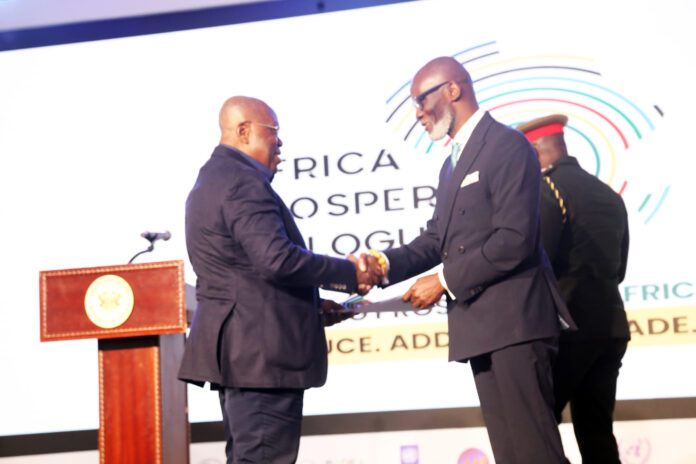
President Akufo-Addo receiving the poicy document from Gabby Okyere-Darko, founder of the APN at the closing ceremony of the APD at Peduase
Business gurus and governments on the continent of Africa have promised to pursue the production of manufactured goods, including value-addition to raw materials and also boost the intra-African trade.
President Akufo-Addo (middle) with Dr. Mohamed Irfaan Ali, President of Guyana, (left) and Sahle-Work Zewde, President of Ethiopia (right) at the APD.
They made the promise at the just ended 2024 Africa Prosperity Dialogues (APD), which was organised by the Africa Prosperity Network (APN), the Africa Continental Free Trade Area (AfCFTA), under the auspices of the government of Ghana, at Aburi, in the Eastern Region.
It was on the theme: “Delivering Prosperity in Africa: Produce, Add Value, Trade.”
Overall, there were eight (8) high-level sessions. Panel members who participated in the sessions brought multiple perspectives to bear on various topics.
Gabby Otchere-Darko, Founder and Executive Chairman of the APN, addressing attendees of the APD
Among the topics that were considered and discussed were; Doing Business Differently – Adding Value to What We Produce, Unleashing Africa’s Food and Agribusiness Potential, Getting on the Global Value Chain of Africa’s Natural Resources and Accelerating Intra-African Trade through Enhanced Transportation and Logistics.
The rest are; Critical Enablers for Single Market Success – Leveraging Infrastructure, Innovation, and Technology, Critical Enablers for Single Market Success – Strategic Financing and Investment in Infrastructure, Scaling Up Mobile Interoperability to Deepen Financial Inclusion and Intra-African Trade, and Critical Enablers for Single Market Success through Manufacturing – Smart Market Access Strategies and Enabling Incentives.
Context Setting
Ahead of each of the high-level panel discussions, leading business personalities and industry players set the context by bringing issues into perspective and setting the stage for the deliberations.
President Akufo-Addo (3rd from left), with the touch and flanked by Dr. Mohammed Irfaan (2nd from left), President of Gayana and Sahle-Work Zewde (3rd from right), President of Ethiopia at the closing ceremony
Among the context setters were; Briggette Harrington, President & CEO, Igire Coffee, Josefa Leonel Correia Sacko – AU Commissioner, Agriculture, Rural Development, Blue Economy and Sustainable Environment, and Abu Jinapor, Minister of Lands and Natural Resources, Ghana.
The remaining context setters were; Ousmaila Joof – Minister of Trade, Industry, Regional Integration and Employment, Solomon Quaynor – Vice President, Private Sector, Infrastructure and Industrialisation, African Development Bank (AfDB), Dr. Sidi Ould Tah – President, Arab Bank for Economic Development in Africa (BADEA), Dr. Ernest Addison – Governor, Bank of Ghana and Serge Ekué – President, West African Development Bank (BOAD).
Business Leaders
Top business leaders who participated in the dialogues after their extensive deliberations committed to five major endeavours.
Ibrahim Mahama, founder of engineers and planners and CEO of Dzata Cement speaking during the first high-level session at the APD
First, was to collaborate with central banks, financial institutions and key stakeholders to bolster investments in technology, ensuring the interoperability and standardisation of payment systems across the continent, while actively pursuing enhanced efficiency and consistency in the payment ecosystem.
Second, enhance the production of diversified and value-added manufacturing goods to elevate African nations along the value chain, and third, increase investments in digitalisation and technology to bolster integration within regional and global value chains.
The fourth commitment was to embrace technologies that enhance agribusinesses through the adoption of modern agricultural practices, including precision farming, drone technology, and Internet of Things (IoT) – based solutions, aiming to significantly improve productivity, efficiency and sustainability within the agricultural sector.
Lastly, business leaders and captains of industry pledged to prioritise investments in critical minerals essential for various emerging technologies while ensuring environmentally sustainable mining practices.
Heads of governments
The Heads of State and representatives of various governments across the African continent who participated in the dialogues included Nana Addo Dankwa Akufo-Addo, President of Ghana, Dr. Mohamed Irfaan Ali, President of Guyana and Sahle-Work Zewde, President of Ethiopia.
Another group of people holding discussion at the summit
The rest are; Adriano Maleiane – Prime Minister of Mozambique, Tiémoko Meyliet Koné – Vice President of Côte d’Ivoire, Mr Ibrahim Boughali – Speaker of the People’s National Assembly of Algeria, Mohammed M. Abou El Enein – Deputy Speaker of Egypt’s House of Representatives and Chairman & Founder – Cleopatra Group, Egypt.
After their summit with business leaders on the third day of the dialogues, the Heads of State and government representatives committed to thirteen (13) strategic policies.
The first was to “leverage public-private partnership (PPP) arrangements to increase investments in infrastructure development, with a specific focus on transportation, logistics and digital infrastructure, while fostering deeper intra-African trade and enhancing connectivity for African countries to global markets.
Secondly, “incentivise financial institutions to increase their support for businesses in the manufacturing sectors to charge favourable interest rates. These institutions can provide loans to manufacturers for capital investment, expanding production facilities, or acquiring machinery and equipment.”
Third, “oil-rich African nations would actively foster the development of integrated refineries by leveraging innovative financing mechanisms and private sector participation. The adoption of such integrated operations aims not only to diminish reliance on imported petrochemicals but also to relieve pressure on the country’s constrained foreign exchange reserves, ultimately contributing to improved macroeconomic stability.”
Fourth, “enhance trade facilitation by simplifying customs procedures, reducing trade barriers, and standardising regulations and simultaneously, strengthen Africa’s integration into regional and Global Value Chains.”
Fifth, “establish an enabling environment for industrialisation by promoting diversified and value-added manufacturing, fostering innovation, skill development and investments in sectors beyond primary commodities, both within and beyond the Global Value Chains”.
Sixth, “deepen regional integration efforts and leverage the AfCFTA agreement to integrate into regional and global value chains and utilise regional economic communities to enhance intra-African trade, creating larger markets and economies of scale.”
Seventh, “formulate and implement policies that bolster African companies, including start-ups, enabling their integration at higher levels within regional and global value chains. The overarching goal is to achieve substantial economic growth, prosperity, poverty reduction and sustainability in the social sector.”
Eight, “increase investments in agriculture to significantly support smallholder farmers, providing them access to modern farming techniques, high-quality seeds, fertilisers, irrigation systems, and essential agricultural infrastructure. This will enhance food production and increase productivity.”
Ninth, “promote climate-smart agricultural methods, encompassing conservation farming, agro-forestry and the cultivation of drought-resistant crop varieties and provide support to farmers in adapting to shifting climate patterns and mitigating crop losses caused by extreme weather events.”
Tenth, “emphasise the value addition of natural resources through a strategy of refining, manufacturing, and producing finished or semi-finished goods to attract higher prices in global markets.”
Eleventh, “ensure that mining practices are environmentally sustainable, with costs aligned with global standards, and implement stringent enforcement measures.”
Twelve, “utilise innovative financing mechanisms to mobilise the necessary funding for addressing the infrastructure gaps on the continent, including advancing road transportation and services, energy, railway, air, and maritime transportation systems.”
Thirteen, “nurture the development and uptake of innovative financial technologies (FinTech), including mobile payments, digital wallets, and online payment platforms. Also, to enhance telecommunication networks, expand internet accessibility, and establish resilient financial infrastructure to support electronic transactions efficiently.”
Interoperability
Interoperability, which is referred to as the basic ability of different computerised products or systems to readily connect and exchange information, was one actionable item that resonated throughout the dialogues among business leaders, heads of state, and industry players.
Selorm Adadevoh – Group Chief Commercial Officer of MTN, Patricia Obo-Nai – Chief Executive Officer, Vodafone Ghana, Dr Ernest Addison – Governor of the Bank of Ghana and President Akufo-Addo, in their various submissions at the dialogues, supported the concept and called on decision-makers on the African continent to give interoperability and the architecture needed to implement it all the attention it deserves.
AfCFTA
The Africa Continental Free Trade Area (AfCFTA) Secretariat on their part promised to “provide support to member States of the African Union that have not ratified the agreement, encouraging them to do so and to pursue “progress from the Guided Trade Initiative and implement comprehensive trading among all state parties under the AfCFTA agreement.”
Multilateral Development Banks, Regional Development Finance Institutions, commercial banks, investors and other financiers noted that they are committed to continuing “to collaborate with governments and the private sector to make available attractive and affordable trade finance, supporting private sector engagement with the AfCFTA market.”
Development partners, such as UNECA, UNDP, Africa Development Bank, Afriexim Bank, and others, during the dialogues, note that they will continue to provide coordinated support to governments, businesses, and the AfCFTA Secretariat, to expedite the full implementation of the AfCFTA.
The New Patriotic Party (NPP) has successfully conducted its parliamentary primaries for their constituencies, with 28 incumbents falling out of the race to December 7, 2024 parliamentary elections.
The sitting Members of Parliament (MPs) failed to secure another mandate from the party’s delegates to be the parliamentary candidates for those constituencies in the upcoming elections.
In the Ashanti Region, the world bank of the Danquah-Dombo-Busia tradition, eight incumbent MPs were booted out. The eight who fell were; Isaac Kwame Asiamah – Atwima Mponua, Emanuel Agyei Anwhere – Atwima Nwabiagya South, Akwasi Darko Boateng – Bosome Freho and Emmanuel Akwasi Gyamfi – Odotobri.
The rest are Ama Pomaa Boateng – Juaben, George Kwabena Obeng Takyi – Manso Nkwanta, Ntim Augustine Collins – Offinso North and Eugene Boakye Antwi – Subin.
The Greater Accra Region saw Sheila Bartels – Ablekuma North, as well as Akwasi Owusu Afrifa-Mensah – Amasaman, Dickson Adomako Kissi, Anyaa Sowutuom and Sarah Adwoa Safo – Dome Kwabenya.
Others were Yves Hanson-Nortey – Tema Central, Moses Anim – Trobu and Tina Gifty Naa Ayeley Mensah – Weija Gbawe.
In the Eastern Region, about five incumbent MPs lost their seats. They are Kwabena Amankwa Asiamah – Fanteakwa North, Kwadjo Asante – Suhum, Gifty Twum-Ampofo – Abuakwa North, Kofi-Okyere-Agyekum – Fanteakwa South and Osei John Frimong – Abirem.
The two incumbents who lost their seats in the Central Region are Elvis Morris Donkoh – Abura Asebu Kwamankese, Bright Wireko-Brobby – Twifo Hemang Lower Denkyira.
The Western Region saw Joseph Cudjoe – Effia and Samuel Erickson Abakah – Shama lose.
In the Ahafo Region, Freda Prempeh lost Tano North constituency.
Mahama Seini and John Benam lost at Daboya and Zabzugu respectively.
INCUMBENT
However, some incumbents managed to retain their slots. They include Kobina Tahir Hammond – Adansi Asokwa, Kojo Oppong Nkrumah – Ofoase-Ayirebi, Francis Asenso Boakye – Bantama, Sylvester Tetteh – Bortianor Ngleshie Amafrom, Henry Quartey – Ayawaso Central, Amidu Chinnia Issahaku – Sissala East, Collins Adomako Mensah – Afigya Kwabre North, Adelaide Ntim – Nsuta Kwaman Beposo and Ursula Owusu-Ekuful – Ablekuma West, among others.
PREVIOUS CASUALITY
This is not the first time the NPP in government has witnessed casualties. In the 2020 elections, for instance, the NPP had 40 of its incumbent MPs lose their primaries.
In that election, some aspirants who defeated incumbents have also been defeated this Saturday.
The contest was stronger this year than the last four years, and as usual, allegations of vote-buying re-emerged.
The election come off last Saturday, though a few were injuncted, completing the internal polls of the ruling NPP, ahead of the 2024 general elections.
MESSAGE
The President, Nana Addo Dankwa Akufo-Addo said in a congratulatory message that the NPP, through the successful conduct of the internal elections, has demonstrated to Ghanaians that “we are the party of democracy and the rule of law.”
According to the president, the party has elected “a good blend” of experienced and youthful parliamentary candidates, who he is confident will help secure majority seats for the NPP in the ninth Parliament.
He consoled losers and asked them to support the winners, arguing that if the party was to ‘Break the Eight’, there must be unity and unalloyed support from losers to victors.
“I appeal to all who lost to remember that, in elections, there are winners and losers, and that today’s losers can be tomorrow’s winners.”
He also urged all party supporters to unite firmly behind the presidential candidate, Dr. Mahamudu Bawumia, and all parliamentary candidates “and deliver another resounding victory for the party.”
This victory, he continued, would ensure that the NPP continued the process of bringing progress and prosperity to the country.
CONSOLATION
The Vice President, Dr. Mahamudu Bawumia, who is the flag bearer of the ruling NPP also consoled the losers in his congratulatory message after the elections.
He indicated that he, together with the rank and file of the party, need the support and contributions of the losers to secure majority seats and the presidency in December 2024.
He urged “unsuccessful aspirants to leave the elections behind, consider the supreme interest of the party, and work closely with the elected parliamentary candidates to secure success for the NPP.”
Seth Kwame Acheampong, lost the New Juaben North primary
The usual tension and misunderstanding that characterise political activities were at play during the New Patriotic Party (NPP) parliamentary primary held on Saturday, in the New Juaben North constituency of the Eastern Region.
Tension was high in the lead-up to the primary, following the determination of all the five (5) candidates aspiring to win the race.
The Eastern Regional Minister with some members of the party in a happy mood prior to the declaration of the results
The five were; Seth Kwame Acheampong, the current Eastern Regional Minister, Mr. Joseph Osei Djaba, Mr. Sampson Kwesi Annor, Mr. Twum Yeboah and Nana Osei Adjei, popularly known as Djoe.
On the voting day, which was a Saturday, there were allegation of superstition directed at the camps of the Regional Minister and Nana Osei Adjei, popularly known as Djoe, at the Effiduase Methodist School, the venue for the election.
An intense verbal and physical fight (between the factions) ensued in an effort to neutralise each other.
Mr. Benjamin Asirifi , a victim from Djoe’s camp speaking to the media
In the process, it was alleged that Djoe’s supporters attacked the security officer attached to the Eastern Regional minister, resulting in a head injury, whilst one Asirifi Benjamin, from Djoe’s camp, also became unconscious after he allegedly received a hefty slap from an unidentified member from the minister’s camp.
Both victims were rushed to the Koforidua Regional Hospital and have since been treated and discharged.
Speaking to the media after he was treated and discharged, Mr. Asirifi Benjamin, who is also a member of Djoe’s operational team and Effiduase Polling Station chairman, indicated that they (the operational team of Djoe) went to the venue for the election at about midnight on Friday to look at the preparations.
One of the entrances with the sprinkled local salt
According to him, upon reaching the venue, they saw a mixture of salt and maize sprinkled at the various entrances to the venue, with others buried at the sitting places of the Electoral Commission (EC) officials.
The Effiduase Polling Station chairman and operational team for Djoe continued that, just as they were wondering who could have done that, a pastor came to them looking for a place to pray.
According to him, they gladly asked the pastor, whose name was not given at the time of filing this report, to use the election ground after they had narrated the frightening situation to him.
A victim from the Regional Minister’s camp with a head injury
Mr. Asirifi hinted that the pastor then brought out anointing oil and started pouring it on the sprinkled salt and maize as he prayed.
He stated that before the first pastor could finish praying, a second pastor arrived, telling them the sprinkled salt and maize was done for spiritual purposes and that they needed to pray to reverse whatever the unknown people had done.
The member of Djoe’s camp mentioned that one of his colleagues later decided to go for a broom to sweep away the sprinkled salt and maize at the election grounds, as the two pastors continued praying.
He said at this point they saw the constituency Secretary, Mr. Afram, also coming to the venue so they approached him to tell him what they had seen, but the Secretary asked them to leave the grounds.
They (Djoe’s team), however, decided not to leave, a situation that the constituency Secretary was not happy with and called some people, believed to come from the Regional Minister’s camp, to come to the venue.
Mr Asirifi stressed that the misunderstanding later led to verbal and physical exchanges between the two camps and in the process, someone from the minister’s camp that he could not immediately identify, gave him a heavy slap and he fell unconscious.
All efforts to speak to the minister’s camp proved unsuccessful because they were not interested in the matter.
The election was, however, conducted peacefully as all parties, including delegates, supporters and candidates were calm.
At the end of the election, Nana Osei Adjei, popularly known as Djoe, recorded 253 votes out of a 490 that were cast.
The Eastern Regional Minister, Seth Kwame Acheampong polled 183 votes whilst Mr. Joseph Osei Djaba, Mr. Sampson Kwesi Annor and Mr. Twum Yeboah had 47, 2 and 3 respectively with two (2) rejected votes.








 At the end of the election, Nana Osei Adjei, popularly known as Djoe, recorded 253 votes out of a 490 that were cast.