MESSAGE ON THE STATE OF THE NATION BY THE PRESIDENT OF THE REPUBLIC,
NANA ADDO DANKWA AKUFO-ADDO,
ON TUESDAY, 27TH FEBRUARY 2024, AT PARLIAMENT HOUSE, ACCRA.
It is always exhilarating to be back in Parliament, and to discharge the duty, in fulfillment of Article 67 of the Constitution, of delivering to the House a Message on the State of the Nation on this occasion for the penultimate time.
In accordance with protocol and convention, it is good to see that First Lady Rebecca Akufo-Addo, Vice President Mahamudu Bawumia, Second Lady Samira Bawumia, Spouse of Mr. Speaker, Alice Adjua Yornas, Chief Justice Gertrude Torkornoo, and Justices of the Supreme Court, Chairperson Nana Otuo Siriboe II, and Members of the Council of State, the new Chief of Defence Staff, Lieutenant General Thomas Oppong- Peprah, the Inspector General of Police, Dr. George Akuffo Dampare, and Service Chiefs, are all present, as are the Dean and Members of the Diplomatic Corps.
Mr. Speaker, the House is duly honoured by the welcome attendance of the former President of the Republic, His Excellency John Dramani Mahama, and former First Lady, Her Excellency Nana Konadu Agyemang Rawlings.
Mr Speaker, I am glad to be able to report that the entire territory that makes up our nation is safe, secure and under the control of the government and people of Ghana.
This might sound like a pedestrian statement with which to start a Message on the State of the Nation. Unfortunately, far from it being an everyday truism, this is no longer a statement or claim that can be easily made in these times in the neighbourhood in which we are. West Africa is under threat of terrorism and violent extremism, rapidly spreading southwards from the Sahel to coastal West Africa.
We can no longer take the territorial integrity of our countries for granted. Indeed, many of our neighbours have already fallen victim, and lost large portions of their territories to extremist groups, and Ghana, by the grace of the Almighty, is the only coastal state along the Gulf of Guinea that has so far not recorded a terrorist attack.
Mr Speaker, the peace and security we have in our country has not happened by chance. It has taken deliberate policy and planning on the part of Government, and a lot of hard work and dedication on the part of our security services to keep our country safe and secure.
I might add that it has also meant we have had to spend a lot of money that would otherwise have been available to spend on many of our development needs. But I believe we are all agreed that the primary responsibility of the state towards its citizens is to provide and guarantee peace and security, and we are doing just that.
Since we came into office, we have ensured a significant expansion of the Armed Forces and all the other security agencies. We are paying diligent attention to their welfare as well. The accommodation and physical environment generally of the security agencies are being improved. We have quickened the pace of the retooling and equipping of the security agencies to ensure readiness towards the emerging security threats.
For the majority of us and our everyday activities, it is the security of our streets and homes and communities that concern us most. We want our children and grandchildren to grow up in a safe atmosphere, and the Ghana Police Service play the lead role in this. Again, Government has performed most creditably. They are much better equipped than they have ever been, and their increased visibility on the streets goes a long way to reassure the community. The changing image of the Police is, perhaps, best exemplified by the dramatic facelift they have given to the frontage of the Police Headquarters on the Ring Road in Accra. It is beautiful, and I recommend it to all institutions and, indeed, households.
Whilst we are spending money, time, energy and lives keeping the country safe from external dangers, I must add that it is a matter of great concern that we continue to have so many chieftaincy and land disputes around the country, which tend to be breeding grounds for internal tensions and destabilisation.
Mr Speaker, I must make special mention of the troubles in Bawku. The tragedy is not only that a thriving and dynamic town is being reduced to a wasteland of destruction and distrust, we are spending money and energy that would have been better spent on development needs of Bawku, providing security to keep brothers and sisters from killing each other.
Mr Speaker, what should concern all of us and not just the people of Bawku is that, in its current state, Bawku is an alluring magnet to mischief makers and extremists operating a few kilometres across from the border. In the bid to find a lasting solution to the conflict, Government has, in the past year, undertaken a number of measures, including the establishment of a special Bawku Taskforce, and the intensification of engagements with the factions for the resolution of the chieftaincy dispute. On the recommendation of the Upper East Regional and National Security Councils, four (4) radio stations, that have been broadcasting incendiary language and propagating hate speech, have been shut down by the National Communications Authority. The Chief Justice has also recently established specialised Courts in Accra and in Kumasi to deal expeditiously with criminal matters emanating from the Bawku conflict.
Government is determined to do all it can to ensure there is security in every inch of the territory of our country, but it also is very much up to the citizens to help create the needed atmosphere, and I am, thus, appealing to all citizens to take the See Something, Say Something campaign of the Ministry of National Security very seriously.
There is, indeed, Mr Speaker, a state of palpable anxiety and tension in every corner of West Africa, raising the spectre of regional instability, which we thought had been banished. Unconstitutional changes in Government in parts of Africa, especially in West Africa, through a series of coup d’états and military interventions in governance, testify to an unfortunate democratic regression in the Region. It is in the interest of democratic growth that this development is reversed as soon as possible, and we, in Ghana, continue to give maximum support to ECOWAS, the regional body of West Africa, and the African Union, Africa’s continental organisation, in their efforts to restore democratic institutions in the affected nations. We must help stem the tide of this unwelcome evolution, and help entrench democracy in West Africa. We believe also that a reform of the global governance architecture, such as the Security Council of the United Nations, to make it more representative and accountable, will help strengthen global peace and stability, and, thereby, help consolidate democratic rule in the world.
Mr Speaker, we in Ghana have had our fair share of political instability and experimentation about how we should govern ourselves. There might be new names being ascribed to some of the supposed new ideas being canvassed by some today, but I daresay, on close examination, we would discover they are not new, we have tried them here, and they have failed. We know about all-powerful, cannot-be-questioned Messiahs, we know about liberators, and we know about redeemers and deities in military uniform.
It might sound new to some, but those of us who have been around for a while have heard the argument made passionately that democracy was not a suitable form of Government if we wanted rapid development. It is a tired argument that was regularly used by coup d’etat apologists.
It is also not new to have political parties and politics, in general, being denigrated, indeed, there used to be national campaigns of fear waged against politics and political parties.
It took time and it took long battles, but, in the end, a consensus did emerge, and we opted for a multi-party democratic form of Government under the Constitution, which ushered in the Fourth Republic.
Mr Speaker, it is not a perfect document, Constitutions do not ever pretend to be; but it has served us well these past thirty-two (32) years, considering where we have come from. It is a sacred document that should not be tampered with lightly, but, I hasten to add, our Constitution did not descend from heaven, we, Ghanaians, drew it up to serve our needs, and we can amend it to suit our changing needs and circumstances. We should work towards finding a consensus on the changes that the majority of Ghanaians want made to the Constitution.
Mr Speaker, democracies are founded on elections, and the holding of free and credible elections ensure that people have confidence in the government that emerges at the end of the process.
The Honourable Members of this House, who are at the centre of it all, know more than the rest of us that this is an election year. The increased decibel level in all communications would ensure that even the most politically uninterested person among us would know that, on December 7, we shall be going to the polls to elect a new President and Members of Parliament.
A lot of the responsibility lies on the Electoral Commission to put the organisation in place that would ensure that we have credible elections. Government is doing its part to make the work of the Electoral Commission go smoothly.
A lot of responsibility lies on the political parties as well, and I hope that the parties recognise that their credibility is also on the line, with some people wanting to undermine the multi-party democratic system of government. It is up to the parties to demonstrate that competitive elections are an honourable, character enhancing experience, and, at the end of the process, the loser will congratulate the winner, and the world does not come to an end because an election has been lost.
There is nothing inherently dirty or corrupt about politics, and nothing about elections that should generate violence. We, who are in politics and we who are members of political parties, owe it to ourselves, the institutions we claim to belong to, and, above all, we owe it to Ghana and the people of Ghana to make politics and elections the serious and joyful phenomenon they should be.
In discharging their responsibility, I urge the Electoral Commission to work with the political parties to iron out whatever problems there might be, and I am happy that the Electoral Commission, after engaging the parties, has shelved plans to change the 7th December date. Politics, after all, has been described as the art of the possible, and, if that is what we are engaged in, it should not be beyond us to resolve the problems that come up, and concentrate on working to build the happy and prosperous country we want.
Government, on its part, will do what is expected of it to make sure that the reputation of Ghana is not damaged, and the free will of the people is manifested at the end of the electoral process; and I want to reassure the people of Ghana that I will do everything in my power to help ensure the conduct of transparent, free and fair elections on 7th December.
I have confidence in the security services to ensure that those who might want to cause havoc or any kind of mischief to disrupt the electoral process will have no room to operate.
Mr Speaker, there are those amongst us who, for ideological or other unstated reasons, have never accepted multi-party democracy, and, therefore, take every opportunity to portray the governance efforts in the most disparaging manner.
There are also those amongst us who consider the rough and tumble of politics to be beneath them, and would not want their sainted images to be soiled by what they term the dirt of politics. Mr Speaker, we can and we should continuously improve upon the performance of the institutions that hold the state together, but nobody should undermine the integrity of the arms of government for parochial reasons. There is definitely much room for improvement in the workings of the Executive arm of Government, the Judiciary and our Parliament.
Even those who have had Parliaments as part of their governance systems for hundreds of years still make mistakes, and, sometimes, get things alarmingly wrong. It would be surprising if our thirty-one (31) year old Parliament did not get things wrong sometimes.
This august House, which holds so many fond memories for me of my personal political journey, does not always measure up to the expectations of the people or, even sometimes, of its own members.
There is a lot of anxiety currently about how our MPs get elected, there is anxiety about the rapid turnover of Members in the House, and the loss of institutional memory. There is a lot of anxiety about some of the procedures in the House. We would not all agree with everything that Parliament does and, I daresay, Mr Speaker, that I do not agree with everything that goes on in here, but that is the beauty of what we, as a people, are trying to do in our governance structure.
Mr Speaker, the president and his appointees are not universally loved, and it will be strange and unproductive if they were. It is probably worthwhile making what I consider to be important observations at this stage on some of the issues in our public discourse, in the lead up to the elections for a new President.
Under the Constitution, the executive power of the state is vested in the President of the Republic. He or she is the Executive.
There is no ambiguity about where the buck stops, when it comes to responsibility for what happens in the government. It stops with the President, he or she has ultimate responsibility. It would be an unwise
President that would pretend to have all the answers, and refuse the advice of his officials, but the fact remains that the President holds the executive power.
The Cabinet, the Ministers of State all act in an advisory manner. Of course, a member of the government might take an idea, be it generated by the President or the official or a committee, and turn it into a huge success, and the honours would be claimed or shared where public perception falls. But, ultimately, the President is responsible, and, therefore, takes the credit or the blame for whatever happens in his or her government.
Let me make a second point. The programmes that come from the Executive benefit from the rigorous public examination and debates to which they are subjected.
We all now take for granted and, sometimes, even bemoan the vigorous media and civil society organisation scrutiny that characterise public discourse.
It gives me quiet satisfaction and great pride to hear young Ghanaians, today, who believe that criticising the President of the Republic and challenging government proposals are normal, regular activities. Some of the young people listen with incredulity when they hear about a Ghana that was once without private radio stations, and people had to tune in to foreign stations to hear critical and opposition voices. Today, there are some five hundred and fifty (550) radio stations in operation in the country.
In spite of all its shortcomings and difficulties, the people of Ghana have shown admirable commitment to multi-party democracy, and have not fallen for the instigations to resort to the violent overthrow of an elected government.
The past thirty-two (32) years of the Fourth Republic have witnessed the most sustained period of stability and economic growth in our country, and we should be proud of what we have achieved, and seek to protect and build on it, and that is why the theme for the sixty-seventh (67th) independence anniversary celebration, on 6th March, is “Our Democracy, Our Pride”.
Mr Speaker, I am pleased to report on the progress we are making in the administration of justice. This past year, a total of seventy-six (76) Judges and Magistrates were appointed. They comprised a new Chief Justice, two (2) new Justices of the Supreme Court, twenty-three (23) new High Court Judges, twenty-nine (29) new Circuit Court Judges, and twenty-one (21) new Magistrates. Two hundred and sixty-two (262) staff were recruited to address some of the human resource gaps created because of the newly established courts throughout the country. In January 2024, three (3) additional Justices have been appointed to the Supreme Court to replace three (3) Justices who have retired from the Court.
We have made unprecedented progress in the provision of court buildings and residences for judges around the country. In 2020, Government set out to construct one hundred (100) courthouses with residential facilities nationwide. As at 31st January 2024, sixty-seven (67) courthouses had been successfully inaugurated, and are in use at various sites around the country. Twelve (12) completed projects have been slated for inauguration by the end of this month of February 2024. The remaining twenty-one (21) projects are at various stages of completion, and are expected to be completed and inaugurated before May 2024. In addition, one hundred and twenty-one (121) residential units have been constructed for judges throughout the country. Further, twenty (20) fully furnished 4-bedroom units, together with social amenities, have been constructed for Justices of the Court of Appeal in Kumasi.
The project is not complete yet, but we have done enough to be able to say that we have resolved the problem of the disgraceful state of court buildings. The attention now is to the digitalisation process of the courts to modernise the entire system.
The Judicial Service has undertaken a digitalisation initiative to modernise legal operations, and foster greater access to justice. A virtual court system was introduced during the COVID-19 pandemic to ensure the continuity of business. The virtual court system was rolled out to seventeen (17) courts, and then, subsequently, to nineteen (19) High Courts for the smooth hearing of court cases. By the end of December 2023, one hundred and sixty (160) courts had been equipped with devices for the real-time transcription of cases, in addition to fifty-one (51) courts piloting the paperless court system in Accra. The integration of real-time transcription devices in one hundred and sixty (160) courts has revolutionised the way in which court proceedings are recorded and documented. The service is rolling out a comprehensive digitalisation of the court system.
The Attorney-General has continued, in a very effective manner, the tradition under this administration of contesting every civil litigation against the state, and has avoided the numerous judgement debts that used to be given against the state. The Office, as a result, has saved the country over ten trillion Ghana cedis (GH¢10 trillion).
I shall be performing a pleasant duty, in a few weeks’ time, when I commission the Law House, the twelve (12)-storey office building, which will house the offices of the Attorney-General and his Ministry, and, finally, bring an end to the age-old office accommodation problem. I must declare a personal interest in it, as the building was started when I was Attorney- General in the Government of President John Agyekum Kufuor, back in 2001.
Mr Speaker, I acknowledge and share the frustration and deep disappointment we all have that a convergence of events and fate have conspired to place impediments on the path of the rapid development trajectory we were on.
I am proud that, in spite of the dramatic financial crisis that we encountered in 2021, whose worst effects became manifest in 2022, the transformative measures we introduced in the first four years of office make it possible to showcase an impressive array of developmental projects across the length and breadth of the country. I do not intend to go through the long, even if interesting process of enumerating the projects the Akufo-Addo Government has undertaken since coming into office, their location and what stage of completion they are in.
Mr Speaker, with the best will in the world, there simply will not be the time to do that, even if we spent all day here.
It will be recalled that last year, during the Message on the State of the Nation, faced with a similar problem about road projects, I came to the House, armed with a fat book that had the details of the road projects around the country, and all Honourable Members were given copies to go through at their own leisure.
This year, we are taking things to a higher level. This Government, after all, is the Digitalisation Government, and the man who has led the entire digitalisation process these past seven (7) years, my indefatigable Vice President, Dr Mahamudu Bawumia, Dr Digitalisation, the NPP’s excellent presidential candidate for the 2024 election, is coming up with what will allow everyone and anyone to check on every project being undertaken by the government without having to listen to the President’s Message on the State of the Nation. We are calling it the Performance Tracker.
You can check and satisfy yourself about the status of the projects and their location, and you could stop by and make a physical inspection if you were so minded.
Mr Speaker, if you want to check on roads, classroom blocks or CHIP compounds or Agenda 111 hospitals, or bridges, or science laboratories, or water projects, or sanitation projects, or landing sites and harbours, and other infrastructural projects, or whatever this Government used your tax money to execute, the key to your query is right there on your phone. Mr Speaker, the Performance Tracker will be formally launched in March, and I am offering it as the device which would help bring accountability into your hands. With the Performance Tracker, we can be sure that never again will pictures of an artist’s impression be offered as projects that have been executed.
I am able to recommend the Performance Tracker in the sure knowledge that the Akufo-Addo Government has done more in education in terms of student enrolment, teacher training and employment, provision of infrastructure, than any government; we have similarly done more in health, agriculture, security, roads, railways, tourism, digitalisation than any other Government. Thanks to the Performance Tracker, the President no longer has to go through lists, and I have the confidence to say that every performance indicator used shows we have done more in these seven (7) years than in any of the eight (8) years under the NDC.
Indeed, Mr Speaker, on coming into office seven years ago, my government took the decision, as we promised, to modernize and formalise the economy through digitalisation. In this regard, we have embarked on one of the most far-reaching digitalisation exercises in Africa. Up from the figure of nine hundred thousand (900,000), which we inherited when we came into office in 2017, we have, thus far, enrolled 17.6 million on the Ghanacard, and, therefore, provided unique biometric
identity to the majority of Ghanaians. We have also implemented a digital property address system with unique addresses for all properties in Ghana.
Furthermore, through the implementation of mobile money interoperability, we have also provided access to financial services for adult Ghanaians through mobile money accounts that are interoperable with bank accounts. Ghana is now ranked number one in Africa in terms of access to financial inclusion. We have digitalised the provision of public services at the ports, DVLA, NHIS, GRA, Births and Deaths, Registrar of Companies, ECG, Ghana Water, amongst others. Ghana is ranked number one in West Africa and number seven in Africa in e-Governance. We have also implemented the use of drones in the delivery of medicines, blood and vaccines, and Ghana currently runs the world’s largest medical drone delivery service.
We have also networked all teaching, regional and district hospitals and patient records can easily be accessed in these hospitals without the need for a folder. Ghana is making giant strides in the area of digitalisation, thereby improving transparency, accountability and efficiency in the public sector, and accelerating the growth of our economy. We are definitely going to be part of the digital revolution that is sweeping the world.
Mr Speaker, last year when I came to the House to deliver the annual Message on the State of the Nation, we were in the midst of negotiations with the International Monetary Fund.
We were faced with a very difficult situation, and had to take a lot of unpleasant, but unavoidable measures, to bring stability and confidence back to the economy. These included tax measures that we did not like, but we knew we had to take in the knowledge that the medicine would be bitter, but temporary.
Mr. Speaker, a year ago, I also stated the decision to undertake a comprehensive debt restructuring of our domestic and external debt to ensure we remain resolute in our objective to restore macroeconomic stability and sustainable growth.
The decision was not an easy one, considering the complex and diverse domestic debt landscape. We had to consider safeguarding the financial sector, preserving social and economic conditions, and protecting our domestic debt market.
A year on, I am happy to inform you, Mr. Speaker, that we have made significant progress.
We requested an unprecedented number of bondholders to participate in a voluntary exchange, and we were able to exchange successfully some two hundred and three billion cedis (GH¢203 billion) worth of bonds. Not only was the exchange successful, but it helped us to secure, within five (5) months, the shortest possible time in recent debt restructuring history, a Staff Level Agreement to an Executive Board Agreement with the IMF. My gratitude goes to all financial sector players, organised labour, firms, regulatory institutions, and all individuals who made this painful exercise successful.
Mr. Speaker, as you may recall, Government successfully paid the first coupon of two-point-three billion cedis (GH¢2,369.67 million) on the new bonds on 22nd August 2023. At the time, that was the single biggest payout of domestic payments in a single day for Ghana. We, then paid two billion and sixty million cedis (GH¢2,060.72 million) for the last leg of the domestic debt exchange on 5th September 2023. A week ago, last Tuesday, on 20th February 2024, the second coupon of five-point-eight billion cedis (GH¢5,847.72 million) was paid to domestic bondholders. This is the largest coupon paid in a day in Ghana’s history.
On the external debt side, we achieved a significant milestone by reaching an agreement with our public creditors, and I will use this occasion to express our appreciation to the Republic of France and the People’s Republic of China, co-Chairs of the Official Creditors Committee, for their positive roles in this achievement. We have also intensified our engagement with our external bondholders on the principles of transparency, fair treatment, consistency with the IMF debt sustainability analysis, and good faith. We are focused and committed to accelerating the process.
Mr. Speaker, we are committed to concluding the external debt restructuring process as soon as possible, so we move past the crisis. This will enable us to complete substantially projects that have been constrained due to financial challenges. In the meantime, some of the priority projects have been transferred onto the GOG budget within the same fiscal space to ensure their completion.
This will enable the Kumasi International Airport, which is some ninety- eight (98%) complete, to be completed by May. Other projects like the Komfo Anokye Teaching Hospital (KATH) Maternity Block in Kumasi, the Takoradi Interchange, the Obetsebi-Lamptey Interchange in Accra, the University of Environment and Sustainable Development Project at Bunso in the Eastern Region, phase two of the construction of roads in Tamale, and the construction of the eighty-four-kilometre (84km) railway line between Tema and Akosombo, would also be completed.
Mr. Speaker, I am happy to announce that an alternative source of funding has also been secured for the reconstruction and completion of La Hospital Project, as a fully functional modern hospital, with the necessary equipment for diagnosis and treatment. The contractor has been paid an advance mobilisation of fifteen percent (15%), representing some seven-point-five million dollars (US$7.5 million), and work is has begun. The project commenced, effectively, in January this year, and will be completed in twenty-eight (28) months.
Mr Speaker, it is important to underline that the recent change in the leadership of the Finance Ministry will not affect Government’s commitment to implementing the terms agreed with the IMF to ensure that we restore the economy to healthy growth as soon as possible.
Indeed, the macroeconomy was much stronger at the end of 2023 than in 2022. Inflation, which peaked at 54.1% in December 2022 has reduced to 23.5% in January 2024. Real GDP Growth for the first three quarters of 2023 averaged 2.8 percent, higher than the targeted growth rate of 1.5% for 2023. The cedi has been largely stable since February 2023, with a cumulative depreciation of nine percent (9%) between February and December 2023. Gross International Reserves reflected a significant build- up of at five-point-nine billion dollars (US$5.9 billion), enough to cover 2.7 months of imports of goods and services. The current account turned positive at 1.4% of GDP at the end of September 2023, from negative- two-point-one percent (-2.1%) at the end of December 2022. Generally, the macroeconomic indicators are, once again, pointing in the right direction.
I should point out that, in all our discussions with the Fund, a paramount consideration has been to ensure that the poor and vulnerable do not bear the brunt of the sacrifices that have to be made. Programmes like LEAP, School Feeding and Capitation Grant have been protected, and, indeed, enhanced.
Mr Speaker, right from the start of this Government coming into office, we have sought to place the maximum effort on the education and training of the youth as the base for building the prosperous nation we seek. A foreign statesman once posed the question: “Why am I the first member of my family in a thousand generations to have gone to the university?”
In the past seven years, I have met many people, young and old, across this country, who have told me about the first person in their families and in their communities to have gone to Senior High School. They might well ask the question, why are they the first boy or girl in their family to have gone to Senior High school. The answer is not far-fetched. Not being able to go to secondary school for lack of money was so widespread and an accepted phenomenon that it led to some people thinking Senior High School was not meant for them or their children or for people from their village, and, therefore, a child in the family finishing Junior High School and moving on to Senior High School was simply not factored in their expectations.
Mr Speaker, Free SHS might be labelled by its detractors as a mere political slogan that must be demonised, but it is, in fact, a transformative programme that has broken myths and liberated minds. It is humbling on the one hand and frightening on the other, to think of the sheer number of talents that Free SHS has unearthed that would otherwise have ended their formal education at BECE.
I know we will get more engineers, doctors, architects, scientists, writers and poets out of the increased numbers of those attending Senior High School, who will go on to further education. Even if they stop at Senior High School, imagine what a million more Secondary School educated young people will do to our self-confidence and the value of our workforce. That, alone, makes Free SHS worthwhile.
I am proud that the NPP government, under my leadership, has been able to bring this transformative policy into our education system.
Mr Speaker, I believe the success of the Free SHS has answered its critics, and the arguments about it should cease, and we should simply concentrate on finding ways to improve it. I am particularly glad that the fears about lowering of standards have been allayed. Refreshingly, we witnessed, through the 2023 batch of Free SHS students, the best WASSCE results in a decade.
Mr Speaker, there is more to education than Free SHS, and Government has been paying equal attention to all the other sectors. Kindergarten, Primary School and Junior High School must work together to give a solid foundation, and strengthen the Free SHS policy.
The implementation of various programmes such as Capitation Grant, Feeding Grants to Special Schools, BECE registration for pupils in public Junior High Schools, amongst others, have significantly increased access to education at the basic level.
The focus of the comprehensive reforms within the sector has been to improve learning outcomes and ensure every child that goes through our education system is equipped with literacy and numeracy skills by the time they exit primary six (6). A National Standardized Test for numeracy and reading skills is now being conducted at primary four (4).
Unfortunately, quite a number of children still manage to slip out of the net, and miss going to school altogether or drop out at primary school. The Ministry of Education partnered with key development allies to launch an innovative financing programme called the Ghana Educational Outcome Project (GEOP). The goal of GEOP is to provide educational support to seventy-two thousand (72,000) out-of-school children, helping them access complementary education and transition into formal schools. I am happy to report that seventeen thousand, three hundred and forty (17,340) out-of-school children have been taken through the programme and mainstreamed into formal schools in 2023. This programme has worked so well it won the GOVTECH PRIZE award in February 2024, at the World Government Summit held in Dubai.
Government has remained committed to improving the teaching and learning of STEM education at the pre-tertiary level. Key interventions have included increasing our ability to produce STEM professionals, and also meeting 21st century skills. Accordingly, the curriculum has been overhauled to include STEM Career Pathways such as Aviation and Aerospace Science, Biomedical Science, Engineering, Computer Science, Manufacturing, Robotics and Artificial Intelligence.
Government has also increased its investment in infrastructure for Science, Technology, Engineering and Mathematics (STEM) education at the pre-tertiary level. The construction of ten (10) STEM Schools and ten (10) STEM Centres has commenced across the country, with seven (7) STEM Model Schools having been operationalised.
These schools have been equipped with state-of-the-art laboratories and classrooms, dormitories, assembly halls, dining halls and conducive environments to foster teaching and learning. The operationalized schools have a total enrolment of two thousand, four hundred (2,400) students reading General Science and STEM.
Mr. Speaker, in recognizing the critical role of Technical and Vocational Education and Training (TVET) in the country’s industrialization agenda, the government continued implementing key reforms in the TVET space, including the expansion of the Free Senior High School programme to include students in public TVET institutes.
Mr Speaker, a lot of resources has gone into the provision of infrastructure at all levels of the education system. But a lot remains to be done. Many basic schools require more adequate classrooms and furniture, and the environment in some of these schools can be made more suitable for learning and teaching. Some of the Senior High Schools, especially the community schools recently absorbed into the formal GES structure, lack the facilities that the established schools take for granted. We must all express our gratitude to the teachers in such schools who manage, in spite of the difficulties, to bring out the best in their students and sometimes succeed in achieving great results. They exemplify the best in the Ghanaian, and give us hope for the future. Indeed, the one-tablet- per-student policy at the Senior High School level is being rolled out, and will formally be launched by me next month. It is a great tool to help bridge the gap between disadvantaged and privileged students.
Mr Speaker, Free SHS and our “No Guarantor” policy, under the Student Loan Trust Fund, are breaking down financial barriers for students seeking higher education. By eliminating the requirement for a guarantor, we have empowered students from economically disadvantaged backgrounds to pursue their educational aspirations without undue financial burden. This has meant a substantial increase in the numbers of students seeking tertiary education, and it is in response to this increase that Government has decided to establish four (4) new universities in Mampong in Ashanti Region, Akrodie in Bono Region, Bunso in Eastern Region and Kintampo in Bono East Region, and expand the facilities in existing ones. We are pursuing interventions towards achieving, by 2030, the forty percent (40%) Gross Tertiary Enrolment Ratio, up from the current level of 18.84%, as well as the sixty-forty (60:40) science to humanities ratio, from the current one of forty to sixty (40:60), as captured in the Education Strategic Plan of 2018 to 2030.
Mr Speaker, between 2012 and early 2017, there was nothing more demoralising than the phenomenon we called DUMSOR. It was symptomatic of a dysfunctional system, and it caused widespread depression amongst businesses and households.
After that experience, my government was determined that DUMSOR would not be inflicted upon Ghana and Ghanaians under an NPP government, and I am glad to be able to say, SO FAR, SO GOOD, we have managed to keep the lights on these last seven (7) years, even in the midst of a financial crisis.
We have managed the energy sector with discipline and expertise, to avoid a repetition of the hardships inflicted on Ghanaians some years ago. Furthermore, through determined, skilful negotiation, we have been able to reduce considerably the energy sector debt that we inherited. Indeed, the Government Negotiating Team carried out a successful reconciliation exercise with the IPPs and ECG, which established that the IPP arrears position was not the one-point-six billion dollars (US$1.6 billion) that had been previously reported in the media, but was actually one-point-two billion dollars (US$1.2 billion), that is savings of some four hundred million dollars (US$400 million). Additionally, the Government Negotiating Team has reached commercial agreements on headline terms for the restructuring of power purchase agreements and arrears with AKSA, Amandi, Cenpower, CENIT and Early Power, and is finalising remaining definitive documentation of such terms, which will result in total expected savings in excess of nine-point-one-billion dollars (US$9.1 billion) over the lifespan of the IPP projects. In the meantime, ECG has been able to secure a fixed monthly energy purchase price with all the IPPs. This has led to a monthly payment of forty-three million dollars (US$43 million), instead of seventy-seven million dollars (US$77 million), that is monthly savings of thirty-four million dollars (US$34 million) or a forty-four percent (44%) reduction in monthly payments, a far better outcome than the “Take-Or- Pay” system we inherited.
Mr. Speaker, I am happy to report that we are making admirable progress in the provision of electricity to all parts of the country. Last year, two hundred and seven (207) communities were connected to the grid, taking the current national electricity access rate to eighty-eight-point-eight-five percent (88.85%). We are aiming to achieve universal access this year, by connecting an additional four hundred (400) communities to the national gridunder the Self-Help Electrification Programme (SHEP) and other Turnkey Projects.
As part of efforts to improve power system reliability in the middle and northern parts of Ghana, Government took a decision to relocate the two hundred and fifty megawatt (250MW) Ameri Plant from Aboadze to Anwomaso in Kumasi. The Volta River Authority (VRA) has successfully relocated six (6) Units of the Ameri Plant, with capacity of one hundred and fifty megawatts (150MW), which are currently being tested and commissioned in Kumasi. The Authority is taking steps to relocate the remaining four (4) units before the end of the year.
Mr Speaker, we are also making steady progress in our commitment to increase the component of renewable energy to our energy generation mix. A four-megawatt floating solar PV on the Bui Reservoir, as well as the fifteen megawatt (15MW) solar PV at Kaleo, have been completed and are both operational. They have contributed to increasing our share of solar energy to the generation mix to three-point-two percent (3.2%). A one hundred megawatt (100MW) solar PV under is under construction at Bui, as is the Mini-grid Electrification Programme ongoing in the Ada East District, all of which will help us attain our target of ten percent (10%) renewable energy in our generation mix by 2030.
Mr Speaker, furthermore, we have committed ourselves to the development of nuclear energy for peaceful purposes. As I indicated at the US-Africa Nuclear Energy Summit and the International Framework for Nuclear Energy Co-operation (IFNEC) Ministerial Conference, held in Accra in November last year, the first of its kind in Africa, our energy transition plan envisages thirty percent (30%) of our electricity production to be from nuclear energy by 2070, which is the core mandate of the Ghana Nuclear Power Programme Organisation (GNPPO), an entity under the Office of the President. This strong commitment and position are geared towards the provision of clean and affordable electricity to drive our industralisation agenda. It is also meant to position Ghana as a net power exporter in the ECOWAS region through the West African Power Pool.
Mr Speaker, we have also succeeded in having the Secretariat of the Climate Vulnerable Forum, an inter-governmental forum of fifty-eight (58) of the most climate vulnerable countries, representing some 1.4 billion people, located in Accra.
Mr Speaker, we have all heard about the Gold for Oil Programme. It has been explained, debated and talked about. At this moment, all I want to say about it is that the Gold for Oil Programme has worked well, and reduced significantly forex pressures on bulk energy storage, transportation and bulk imports, distribution and export companies, and enabled them to negotiate more competitive premiums with suppliers. Premiums dropped from one hundred and eighty to two hundred dollars per metric tonnes ($180-200/MT) to seventy dollars per metric tonnes ($70/MT) or less. This also resulted in reduced and stabilized prices at the pumps of between twelve to thirteen cedis (GH¢12-13) per litre for the whole of 2023.
We are taking steps to rectify some of the handicaps that have limited the full participation of Ghanaians in the oil and gas industry. For years, the well-paid jobs in the industry were taken exclusively by foreign nationals, because we did not have people qualified in those fields.
Last year, one hundred and fifty (150) young Ghanaians were trained and certified as mechanical maintenance technicians, electrical technicians, instrumentation technicians and production process technicians up to the industry standards. Additionally, five young Ghanaians underwent a ten- month welding inspector training programme at the North Alberta Institute of Technology, Canada. They have since been placed in various technical institutions in Ghana as instructors. Ghanaians will soon fill the well-paid positions on our oil fields, because we have the trained and qualified personnel. Things are looking up.
Mr Speaker, it is quite likely that the most talked about subject in our country is roads and highways. When I appeared in the House last year, as I said earlier, I took the extraordinary step of coming with a fat book that detailed all the works that the Government had done, and was doing on roads since coming into office in 2017. I believe it was generally agreed that it was impressive, but it was not enough to satisfy everyone.
Well, the work continues, even though some of the major road works have been temporarily interrupted as a result of the debt negotiations. As I have said earlier, all the details will be available on the Performance Tracker. Other modes of movement around the country are being built and upgraded to open up the country, and make travel easier.
Mr Speaker, the new standard gauge railway line from the Port of Tema to Mpakadan in the Asuogyaman District of the Eastern Region, covering a distance of some one hundred kilometres (100kms), is at the final stage of completion. By the middle of the year, the line will be commissioned for operations to commence with brand new standard gauge diesel multiple unit trains, the first of their kind to be used in our country.
It is worth mentioning a rail bridge has been built across the Volta, as part of this railway line. I have no doubt it will attract a lot of interest. I am a great believer in the importance of aesthetics, as much as the practical, and that is why I encouraged the contractors to construct the rail bridge, which was not part of the original contract, across the Volta to make the journey more scenic.
The development is on course of a new standard gauge Western Railway Line to serve passengers, the mining sector, as well as support industrialisation to boost the development and growth of this nation. The plans for the extension of the railway line to Paga might not materialise during my administration, but I am sure they will not be abandoned.
Mr Speaker, there is no argument that food self-sufficiency is the basic requirement for national security and the foundation for building a prosperous nation. Last year, Government reviewed the Planting for Food and Jobs (PFJ) Programme, which had been implemented since 2017. Based on lessons learnt, Government developed and launched, under the dynamic leadership of the new Minister for Food and Agriculture, the second phase of the PFJ.
The second phase of the PFJ sets out a 5-year agenda to ensure food self- sufficiency and resilience. Strategic targets have been set for eleven (11)
priority products in the immediate term (September to December 2023), short term (year 2024), medium term (2025 -2026), and the long term (2027-2028). The selected products are maize, rice, soybean, sorghum, tomato, pepper, onion, cassava, yam, plantain and poultry.
Mr. Speaker, I am happy to report that production estimates for these priority products revealed that the planned targets for the year have been exceeded for all the products, except poultry. Poultry, obviously, requires extra attention, and that is exactly what we are doing. We have every intention of meeting the domestic production targets for poultry this year, 2024, and moving onto production levels that will lead to reduction in poultry imports. We envisage a vigorous co-operation between government and the private sector to achieve the set target.
Mr Speaker, the surest way of making agriculture attractive to young people is to take the drudgery out of farming, and Government is continuing to make agricultural machinery and equipment easily available. Under the third and final tranche of the Brazilian More Food Programme, tractors with accompanying implements, power tillers with accessories, maize shellers, units of combine harvesters, and rice millers have been distributed to farmers, processors and mechanisation service providers on hire purchase arrangement. This year, under the Indian Exim Facility, tractors with matching implements, planters, boom sprayers, combine harvesters and corn pickers will also be made available.
Mr Speaker, having determined that large scale commercial farming is the easiest way to achieve our set goal of food self-sufficiency, Government, under the second phase of the PFJ, will establish Agricultural Zones as a complementary initiative to address the issue of access to large tracts of agriculture land, to drive sustainable and commercially oriented agriculture. This will significantly expand Ghana’s productive capacity in products such as rice, soybean, maize and tomato. Indeed, between 2021 and 2023, rice imports fell by some forty-five percent (45%). In 2021, rice imports amounted to eight hundred and five thousand metric tonnes (805,000MT); in 2022, six hundred and fifty thousand metric tonnes (650,000MT); and, in 2023, four hundred and forty thousand metric tonnes (440,000MT). This healthy trajectory will continue until we achieve full self-sufficiency in rice production.
For each Agricultural Zone, Government will partner with the private sector to provide the necessary irrigation infrastructure, develop access roads, extend power (solar/hydro) and provide mechanization services. Various locations across the country with potential to be food baskets have been identified for the establishment of the Agricultural Zones. They include Afram Plains, Tsopoli, Kumawu, Krachi and Nkoranza, amongst others.
Mr Speaker, we all witnessed the spectacular increment of the cocoa price from eight hundred cedis per bag (GH¢800) to one thousand, three hundred cedis (GH¢1,300) per bag in the current cocoa season, the highest increase in fifty (50) years. With the current trend of the world cocoa price, cocoa farmers can be sure that I will do right by them in the next cocoa season.
Mr Speaker, Government has begun the development of seven thousand, one hundred hectares (7,100Ha) irrigation infrastructure in five (5) identified economic enclaves within the Afram Plains Agricultural Zone. Work is also continuing towards the completion of the Tamne Phase III Extension and Vea Irrigation Schemes. This will make additional one thousand, two hundred and fifty hectares (1,250Ha) of irrigable land available for cultivation of rice and vegetables.
The Ghana Irrigation Development Authority will continue with the development of small earth dams in the Northern, Upper East, Upper West, North East and Savannah Regions to support the “One- Village One- Dam” (1V1D) Initiative.
Whilst at it, Mr Speaker, we have not forgotten about the welfare and wellbeing of our fisherfolk. My government has completed the construction of twelve (12) coastal fish landing sites at Axim and Dixcove in the Western Region, Moree, Mumford, Winneba, Senya Beraku, Gomoa Feteh, Otuam and Mfantseman in the Central Region, Teshie and Osu in the Greater Accra Region, and Keta in the Volta Region. Additionally, I had the pleasure, in May last year, of commissioning the newly constructed Elmina Fishing Harbour in the Central Region, much against the hopes of the naysayers, and, God willing, soon this year, I will also commission the Jamestown Fishing Harbour, which currently stands at eighty-eight percent (88%) complete, and is expected to be ready by August 2024.
Mr Speaker, to help address the incidence of premix fuel diversion and hoarding, Government, last year, completed the installation of fifty (50)
out of the three hundred (300) premix fuel automated dispensers. My expectation is that the remaining automated dispensers will be installed by September this year, to help optimise the distribution of premix fuel.
Government will continue to take decisive actions, such as the close season, to help safeguard the ocean’s capacity to regenerate and to continue to deliver substantial economic, environmental, and social value for our development.
Mr. Speaker, last year, Ghana regained her position as the leading producer of gold in Africa, having overtaken South Africa. Our gold production reached an unprecedented four million ounces (4 million oz), according to preliminary reports. This is as a result of the progressive policies we have been implementing, which have led to the revival of dormant mines like the Obuasi and Bibiani Mines, and the expansion of existing ones. The reduction in withholding tax on unprocessed gold by small scale miners, from three percent (3%) to one and a half percent (1.5%), has resulted in some nine hundred percent (900%) increment in gold export from the small-scale sector, over the last two (2) years. Leveraging on these resources, we introduced the innovative Gold for Oil Policy, which accounts for some thirty percent (30%) of our total crude oil consumption.
Currently, three (3) large scale mines are under construction in Ahafo, Upper East and Upper West Regions, with Cardinal Namdini set to pour its first gold in the Upper East Region in the last quarter of this year. With these new mines, our gold production is expected to increase to some four point five million ounces (4.5 million oz) annually.
Mr. Speaker, to add value to these volumes of production, we have constructed, through a public private partnership, a four hundred kilogramme (400kg) capacity gold refinery, and we are in the final stages of negotiations for a London Bullion Market Association (LBMA) Certificate. For our green minerals, including lithium, we have put in place a policy for their exploitation and management, to ensure beneficiation across the value chain of these critical minerals.
Mr. Speaker, as it has been widely reported, Newmont Corporation, the world’s largest gold producing company, which operates two huge mines in our country, and is constructing a third, has announced its intention to sell its Akyem Mine in the Eastern Region, the third largest mine in the country, which produced some four hundred and twenty thousand (420,000) ounces of gold in 2022. As part of Government’s policy to indigenize the mining sector, we will engage with Newmont to give priority to Ghanaian investors who will want to acquire this mine, to ensure that our mineral resources better benefit the Ghanaian people.
Mr. Speaker, we continue to work to ensure the protection of our forest and wildlife resources, while reclaiming degraded forests. Some forty-two million (42 million) trees have been planted over the last three years, under the Green Ghana Project, and some six hundred and ninety thousand hectares (690,000 ha) of degraded forest have been cultivated between 2017 and 2022, under the Ghana Forest Plantation Strategy.
Mr. Speaker, the main cornerstone of our move towards the industrial transformation of Ghana is the “One-District-One Factory” policy, this Government’s iconic flagship initiative. It demonstrates how government can stimulate and incentivize the private sector to expand and diversify manufacturing across the country by harnessing locally available raw materials. It is significant to note that, within the relatively short span of six (6) years, Government has directly intervened to stimulate interest in, and support many private sector business promoters to make significant investments in manufacturing under the One-District-One-Factory Programme.
Mr. Speaker, this has led to the development of three hundred and twenty-one (321) 1D1F projects, consisting of two hundred and eleven (211) new, medium to large scale factories, and the conscious enabling of one hundred and ten (110) existing companies, to inject significant capital investments into the expansion of production facilities, and diversification of products. These business promoters have so far invested in one hundred and forty-two (142) districts across the country, across all sixteen (16) regions, and achieving fifty-four percent (54%) district coverage. The aspiration is to bring a 1D1F project to every district.
Mr. Speaker, within this period, some one hundred and seventy thousand (170,000) jobs have been created under the novel 1D1F Programme by companies in operation.
Mr. Speaker, Government approved a number of incentives, including duty exemptions to support the implementation of the 1D1F Programme. In 2019 and 2020, thirty-seven (37) 1D1F companies were granted exemptions approval by this august house. However, from 2021 to date, no exemptions have been granted.
Mr. Speaker, I urge the House to consider and approve all the outstanding exemption applications as a matter of urgency, to send positive signals to the business community. The exemptions law that you have passed provides for such exemptions under existing laws.
Mr. Speaker, the other initiative aimed at stimulating industrial growth that we have been actively promoting is automotive assembly and component manufacturing. It is universally recognized as a key strategic sector for stimulating industrial transformation. The comprehensive Automotive Development Policy, launched by Government in August, 2019, has undoubtedly been the catalyst that has attracted a record number of twelve (12) Original Equipment Manufacturers, including Volkswagen, Toyota, Suzuki, Nissan, Peugeot, KIA, Hyundai, Honda to set up assembly plants, and produce a range of models here in Ghana.
Mr. Speaker, it is noteworthy that these investments have been accompanied with complimentary initiatives to build the necessary engineering and technical skills in Ghana. Toyota Ghana has partnered the School of Engineering Sciences of the University of Ghana to establish and operate a modern Auto Engineering Training Centre for engineering students and the industry to acquire applied auto engineering training. Similarly, KIA Motor Company of Korea has upgraded the Rana Motors West African Vehicle Academy (WAVA), with state-of-the-art equipment for training of auto repair and maintenance technicians, including repair and maintenance of Electric Vehicles.
Mr. Speaker, to spur our industrialisation, we are implementing the Four Project Agenda of the Ghana Integrated Aluminium Development Corporation (GIADEC), with Projects 1 and 2 having, already, taken off, and last month, we signed an agreement for the implementation of Project 3. Mr. Speaker, we will lay before this august House, at this First Meeting of this Session of Parliament, a Legislative Instrument to prohibit the export of bauxite in its raw state. We are, also, in the concluding phase of discussions for the establishment of a four hundred and fifty million US dollar (US$450 million) refinery to refine the manganese we produce.
Mr. Speaker, we have all long acknowledged that trade between African countries must increase if we are to make any headway with our dreams of prosperity on the continent. I am happy to report that the setting up of the AfCFTA, with headquarters here in Accra, is beginning to show positive results. Ghana is one of the seven (7) countries selected to participate in the Guided Trade Initiative (GTI) of the AfCFTA Secretariat, and this has enabled us to make significant inroads into East Africa, notably Kenya and Tanzania. Over seven hundred (700) AfCFTA certified products from Ghana, like cosmetics, processed foods, beverages, coconut oil, shea butter and garments have been targeted at the AfCFTA market under the Guided Trade Initiative. I would like to make special mention of Kasapreko Company Limited, one of our iconic local beverage manufacturers, which has commenced exports to the Kenyan market.
It is a fact worth celebrating that many other Ghanaian companies now have set their horizons way beyond the shores of our country, and see the entire African continent as the market to aim at.
Mr Speaker, in speaking about the work space and jobs, our thoughts invariably turn to young people and for some people, to the formal sector and formal sector jobs. We often forget that formal sector employees form only a small part of the working population. This small percentage of the working population tends to be the ones that are covered by pension schemes and, unfortunately, the majority of workers in the country do not have any pensions.
To that extent, in May last year, SSNIT launched the Self-Employed Enrolment Drive (SEED), an initiative which seeks to improve coverage and increase the contributor base of the SSNIT Scheme. Since the launch of the SEED initiative, some six hundred thousand (600,000) self- employed persons have been enrolled onto the programme, and now have some form of social security cover.
Effective 1st January 2024, all pensioners on the SSNIT Pension Payroll as of 31st December 2023, have had their monthly pensions increased by fifteen percent (15%). This translates to ten-point-zero-five percent (10.05%) effective increase for the highest-earning pensioners, and thirty-six-point-three-seven percent (36.37%) effective increase for the lowest-earning pensioners. The fifteen percent (15%) indexation rate will result in an additional expenditure of six hundred and ninety-seven million cedis (GH¢697.64 million). The total benefit expenditure for Government, under the SSNIT Scheme alone, is projected to increase from five-point-four billion cedis (GH¢5.446 billion) in 2023 to seven billion cedis (GH¢7.034 billion) in 2024.
Mr Speaker, I believe we can say with certainty that, in the tourism sector, Ghana is finally realising her long-promised potential. Starting from the events and excitement of the Year of Return in 2019, Ghana has truly become an attractive tourist destination, with visitor numbers increasing every year. “December in GH” is now an established and increasingly attractive phenomenon, which brings visitors to our country in the month of December, and has changed the events calendar around the Christmas holiday season in Accra and many other towns.
Mr Speaker, for the first time since the Kwame Nkrumah Memorial Park was constructed in 1992, Governmenthas undertaken a full modernisation rehabilitation of the facility. Since the commissioning of the modernised park in July 2023, the number of domestic and international visitors has risen dramatically.
A national newspaper, reporting on activities at the revamped Park, had a screaming headline which said AKUFO-ADDO RESURRECTS NKRUMAH. That gave me pause for a moment, but, on reflection, I decided I would accept it, be it a compliment, or criticism or an addition to the collection of sayings by our elders. Whichever it is, since the commissioning, there have been two hundred and eight thousand, five hundred and fifty-seven (208,557) domestic and international visitors to the Park between 14th July and 31st December 2023. Mr Speaker, compare that, if you may, with the best performance until then, which was in the Year of Return in 2019, when there were one hundred and twenty-six thousand, one hundred and ninety (126,190) visitors in the year. Other facilities are being upgraded, and it is good to note that the private sector is showing interest, and getting into the development of tourist attraction sites.
Mr Speaker, the National Museum Gallery, which had been closed down since 2015, has also been fully refurbished. It attracted over thirty-five thousand (35,000) visitors in 2023, and I am particularly pleased that school children form a good part of the visitors to these sites.
The first-ever Kente Museum, aimed at preserving the cultural heritage in Ghana, has been built at Bonwire in the Ashanti Region, and was recently commissioned by the Second Lady. Preparatory works and designs for the
construction of the Heroes Park, a museum to commemorate the founding fathers of Ghana, the Big Six, JB Danquah, Emmanuel Obetsebi-Lamptey, Edward Akufo-Addo, Ebenezer Ako Adjei, William Ofori-Atta, Kwame Nkrumah, were completed in December 2023, and construction will commence very soon.
Mr Speaker, Government, through the National Film Authority, is committed to supporting the production of world class content and films, as well as increasing the cinema infrastructure in Ghana and, by extension, on the continent. To this end, a favourable fiscal (tax) regime for cinema projects, including income tax and VAT incentives, import duty exemptions on film production equipment, twenty percent (20%) tax rebate for strategic film productions and film financing reliefs, is being elaborated by Cabinet, which should be out-doored very soon, and should provide another tangible reason for the choice of Ghana as a film production country.
Mr. Speaker, in line with government’s commitment to ensure gender equality, the revised National Gender Policy and the Affirmative Action Bill were approved by Cabinet in October 2023. The Affirmative Action Bill is currently before Parliament for consideration and approval. We count on the support of Parliament for speedy passage of the Bill. The Ghana Enterprises Agency (GEA) is implementing an only women support programme, where micro, small and medium enterprises, owned by women, with the potential for scaling up their operations, increasing sales and creating sustainable jobs, will receive liquidity support.
The GEA is also implementing the YouStart Programme, a youth empowerment programme, which recently disbursed one hundred million cedis (GH¢100 million) to some three thousand youth beneficiaries to upscale their businesses.
Mr. Speaker, we are also implementing some interventions directed at providing support for persons with disabilities. In June, last year, a significant boost was given to micro, small and medium enterprises owned by persons with disabilities, when Government launched the twelve- million-cedi (GH¢12 million) PWD Enterprise Support Programme. This grant support programme, under the Ghana Transformative Project, is being funded by the World Bank. Again, the Youth Employment Agency has initiated a ground breaking employment drive targeting two hundred and eighty-two (282) persons with disabilities who worked at tollbooths.
Mr. Speaker, let me now turn to football, a sport that is dear to the hearts of all Ghanaians. I am sure I disclose no state secret if I state that I am myself, an ardent football enthusiast – and once played in the University of Ghana team with my friend, the late President John Evans Fiifi Atta- Mills.
Throughout the years, the national team, the Black Stars, has held a special place in the affection of Ghanaians. They lifted up our spirits, as they dominated Africa, and won four (4) continental trophies. They have, at other times, broken our hearts. But it was not until 2006 that the Black Stars finally broke through to the world stage, when they qualified for the World Cup for first time. You would remember that we rose up as one in our support and they did not disappoint. Then came the spectacular South Africa 2010 World Cup and its drama, when we almost became the first African side to reach the semifinals of the World Cup.
It is fair to say that, since the sad events of Brazil 2014, many Ghanaians have been left disappointed by some of the recent results of the Black Stars. Various attempts have made to revive the fortunes of the national team, and rebuild the enthusiasm of the people with varying degrees of success.
The recent AFCON in Cote d’Ivoire was probably the nadir of the performance of the Black Stars, and has left the nation saddened. However, I am quite certain that the young men and the technical handlers would, themselves, have wanted to make our nation proud, and I believe that the captain, Andre Dede Ayew, meant every word when he rendered heartfelt apologies on behalf of his team-mates to all Ghanaians for the team’s early exit.
Mr Speaker, I believe it is time for us to take a long-term, far-sighted approach to correct what has gone wrong. It is time to return to scouting, grooming and developing talent at the district grassroots level under a Presidential Policy on Football that I intend to unveil. The school sports department of the Ministry of Education will work hand in hand with the Ministry of Youth and Sports, in collaboration and synergy with the Ghana Football Association (GFA), to build district, regional and national juvenile teams for both boys and girls.
The more than one hundred and fifty (150) astro turf pitches constructed throughout the country, under this administration, provide the foundational facilities to make a start, as we strive to provide more of them. We should see a steady progression of talent up the ladder from the junior juvenile teams to the senior sides based on merit, and nothing else.
A similar approach has been tried before, under the five (5)-year football development plan, led by the late Ben Koufie, and initiated under the NPP administration of President JA Kufuor. It was under this plan that talents such as Michael Essien, Sulley Muntari, John Mensah, Derrick Boateng and later, Asamoah Gyan and Stephen Appiah, were discovered and nurtured. The results became evident to us and the world. It takes time, dedication and patience. We cannot harvest where we have not planted and irrigated. I have no doubt at all that the Black Stars will rise and make us proud again.
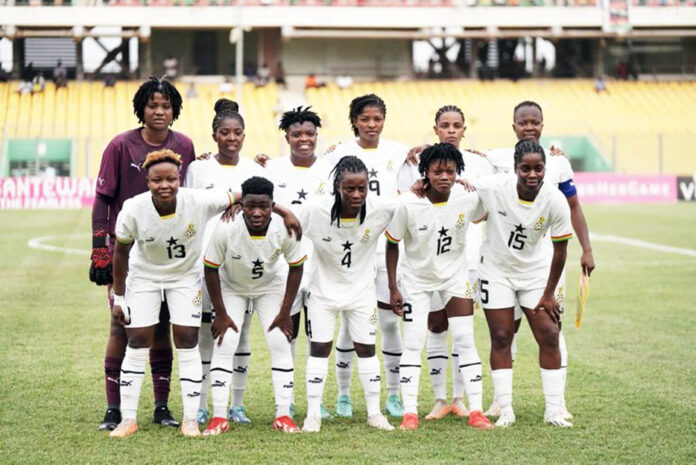
Mr. Speaker, the senior Women’s team the Black Queens who do not get half the attention the Black Stars get, have been performing quite creditably. They had gone for ten (10) matches without any loss until last December’s when they lost narrowly to Namibia in Windhoek in the final qualifying round for the 2024 Women’s Africa Cup of Nations. Even though they lost narrowly to Zambia in the first leg of the qualifiers for the 2024 Olympic Games, let us wish them well in the second leg to be played in Lusaka tomorrow, and hope they give us something to cheer about.
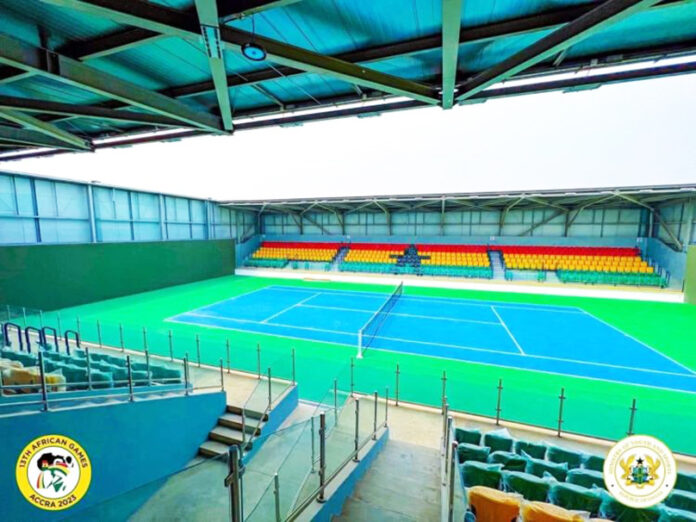
Mr Speaker, it gives me great pleasure to report that all the preparations are ready for Ghana to welcome sports men and women from around the continent to participate in the 13th edition of the African Games. It seems incredible, but this is the first time that Ghana will be hosting these games. It has taken a lot of courage to have persisted with the decision to host the games, especially when our financial problems came in the midst of the preparations. But I am glad we went ahead.
The preparations are all complete, and I was excited and very pleased with what I saw at Borteyman when I went to commission the Games village some two (2) weeks ago. We have high class sporting facilities which should serve us well long after the games are over.
Some of the events will take place at the University of Ghana Sports Stadium. It is worth noting that this is a facility started under former President J.A. Kufuor, and was abandoned by successor governments.
I am exceedingly proud that this project has been finished under my stewardship, not just because of the games, but also because it has taken seventy-five (75) years of existence for Legon, Ghana’s Premier University, to have a sports stadium. I urge all Ghanaians to make our visitors welcome, and to patronise the games and cheer on the participants.
Mr Speaker, this is the seventh time that I have appeared before this House, as President, to give an accounting of the state of our nation. Luckily for me, I know my way around the place, having spent twelve memorable (12) years here as a Member of Parliament, and, therefore, even on the few occasions that sections of the House did not want to make me welcome, I was still able to manage.
I have one more scheduled date with the House, when I would be here to give an accounting of my time in office. By that time, my successor would have been elected, and we would be getting ready for the swearing-in ceremony. The elections will be held peacefully, and the candidate with credibility to take us on to a higher level will win. Let me wish all of us well in the elections on 7th December.
Before then, there a number of important tasks lie ahead of us, one of which will be commissioning the Nana Agyeman Prempeh I International Airport in Kumasi, and naming the recently commissioned airport in Tamale the Yakubu Tali International Airport.
Mr. Speaker, we stumbled, but we are rising again. We were bruised, but we are healing. We have recovered our footing. We have dusted ourselves off, and now we face tomorrow with confidence.
Every day we pray and hope that adversity may spare our families, our communities and our dear nation. But should we be confronted by misfortune; we must face it like people with a proud history who fight and do not flee. Yenim ko; yen nim adwane. That is the Ghanaian spirit. That is our armour and our shield. This is our ethos.
Let us believe in Ghana.
I believe in Ghana. I thank you for your attention.

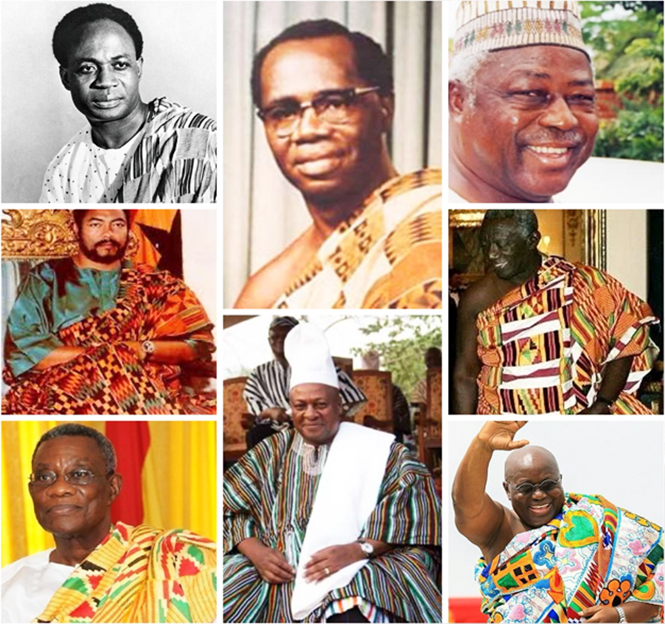
 I examine the linguistic profiles of Ghana’s presidents, past and present. Hear my words that day:
 The other intriguing example is Jerry Rawlings who dominated the leadership of Ghana for nearly two decades (1982-2000). President Rawlings, born of an Ewe mother and Scottish father spoke Ewe his mother tongue, but also Twi and Ga, but none with native proficiency.