Pedro Sánchez has said he will stay on as Spain’s prime minister, following five days of speculation over his future. Mr Sánchez cancelled official engagements last week after a court opened an initial inquiry into his wife over corruption claims. He denounced them as a harassment campaign by right-wing media. “Expressions of solidarity from all sections of society” meant he decided to remain in office, he added.
A series of demonstrations were held around Spain over the weekend, calling for the prime minister to continue in his post. More than 10,000 people gathered in front of the Socialist Party (PSOE)’s headquarters in Madrid in a show of support from the prime minister.
“Thanks to this mobilisation, I have decided to continue leading the presidency,” Mr Sánchez said, vowing to carry on “with more strength if possible”.
“This isn’t about the destiny of one leader – it’s about deciding what kind of society we want to be. Our country needs this self-reflection. We have let the mud soil our public life for too long,” he said.
The accusations against Mr Sánchez’s wife, Begoña Gómez, were brought against her by the organisation Manos Limpias (Clean Hands), led by a man linked to the far-right called Miguel Bernad.
Having both doused English hopes of Champions League stardom, German giants Bayern Munich and Spanish titans Real Madrid clash in the first leg of a mouthwatering semi-final at Allianz Arena on Tuesday night.
Thomas Tuchel‘s troops navigated their way past Arsenal in the last eight, while the 14-time winners of Europe’s premier tournament eliminated holders Manchester City in a nerve-jangling penalty shootout.
Deposed as perpetual Bundesliga champions, dumped out of the DFB-Pokal at the hands of minnows Saarbrucken and being put to the sword by RB Leipzig in the Super Cup curtain-raiser, Champions League supremacy will be Bayern’s only saving grace before Tuchel clears out his Bavarian locker.
The narrow beating of the Gunners represented the second victory in a four-match winning sequence for Tuchel’s side, who have since earned back-to-back Bundesliga successes over Union Berlin (5-1) and Eintracht Frankfurt, scraping past the latter thanks to Harry Kane‘s 34th and 35th Bundesliga strikes of the campaign.
Harry Kane To Strike Again
Also hitting the 400-goal career mark with his match-winning brace at the Allianz Arena, Kane’s next mission is to help extend Bayern’s brilliant 15-match unbeaten run at home in the Champions League, and the German giants also have three clean sheets to show from their last three European contests on familiar territory.
Carlo Ancelotti, Real Madrid boss
Not since Paris Saint-Germain’s 3-2 triumph almost exactly three years ago have Bayern emerged on the wrong end of the scoreline in a home Champions League match, and either the French champions-elect or Borussia Dortmund shall lie in wait at Wembley if Tuchel’s men can extinguish Real dreams of crown number 15.
Real Madrid
Also on the brink of recapturing the La Liga title thanks to a mesmerising Clasico success over Barcelona and smash-and-grab 1-0 win over Real Sociedad, courtesy of teenage sensation Arda Guler, Real Madrid arrive in Munich with an 18-game unbeaten run to protect, winning seven of their last eight in all tournaments.
With not a single European loss on their notebook in 2023-24, Ancelotti’s men also enter the semi-finals unbeaten in 10 straight Champions League contests, one shy of their all-time record of 11 successive games without defeat in their triumphant 2016-17 campaign.
The omens will therefore be highly promising if Los Blancos can at least take a draw back to base on Tuesday, and the visitors can proudly boast a six-match unbeaten sequence against Bayern in Champions League action, sending them packing in 2013-14, 2016-17 and 2017-18 before their continental coronations in each year.
Injuries
Bayern did not miss the banned Alphonso Davies too much in their second leg with Arsenal – Noussair Mazraoui and Raphael Guerreiro marshalled Bukayo Saka to brilliant effect – but the Canada international is now available again after serving his one-match suspension.
That is more than can be said for long-term absentees Sacha Boey (hip), Gabriel Marusic (ACL), Bouna Sarr (ACL) and Tarek Buchmann (hamstring), and while none of the quartet should have started this one anyway, Tuchel is also working around an injury crisis with a plethora of first-team regulars.
Thomas Tuchel, Bayern Munich manager
Konrad Laimer and Matthijs de Ligt were both victims of the win over Frankfurt with ankle and knee issues respectively, but Tuchel is keeping his fingers crossed that the pair will make it for the first leg. Jamal Musiala – absent at the weekend with tendon pain – is in the same boat.
Also taking up beds in the overcrowded Bayern infirmary are Leroy Sane (groin), Serge Gnabry (hamstring), Dayot Upamecano (ankle) and Kingsley Coman (groin), although only the latter will definitely miss the first leg as of now.
Harry Kane, Bayern
Real Madrid’s medical bay is nowhere near as packed as their hosts’, and Ancelotti is expected to receive a major boost with the anticipated return of Jude Bellingham, rested for the duel with Sociedad due to a sickness bug.
Rodrygo (illness) and Ferland Mendy (fatigue) have also recovered from their own afflictions, leaving knee victims Courtois and David Alaba as the only occupants of the Bernabeu treatment room.
Prediction
Real Madrid were counting their lucky stars to come away with all three points from their battle with Sociedad, but Ancelotti saw fit to rest many of his first-team regulars, and there is no doubt which semi-finalist will be in better shape on Tuesday.
While the Kane-inspired hosts are always a threat in the final third, Bayern’s unenviable injury situation should catch up to them in the first leg against a Real side who almost always find a way in the Champions League, so we expect Los Blancos to take a slender lead back to the Spanish capital.
Credit: sportsmole.co.uk
Silva to leave Chelsea at end of season
Chelsea defender Thiago Silva will leave the club at the end of the season.
The Brazilian, who joined the Blues on a free transfer from Paris St-Germain in 2020, has made 151 appearances for the Blues.
He has won three trophies in that time, including the 2020-21 Champions League.
Silva, 39, says his love for the club is “indescribable”.
Thiago Silva
“Chelsea means a lot to me. I came here with the intention of only staying for a year and it ended up being four years,” he said.
“It is already hard saying goodbye in the most normal of circumstances but when there is a mutual love, it’s even harder. But once a Blue, always a Blue.”
Silva joined the club when Frank Lampard was manager and has since also played under Thomas Tuchel, Graham Potter and Mauricio Pochettino.
He has made 34 appearances in all competitions for Chelsea this season, including 25 starts in the Premier League.
The former AC Milan centre-back, capped 113 times by Brazil, says he hopes to return to Stamford Bridge in a new role in the future.
“I hope to leave the door open so that in the near future I can return, albeit in another role here,” he said.
Muscle pain that affects a small part of your body is usually caused by overuse — sore arms from lifting boxes all day, for example. Or it could be a minor injury, like a bruised shoulder after a fall. But when you ache all over your body, it’s more likely caused by an infection, illness, or medicine you’ve taken.
Blood Flow Problem
If you have pain in your arms, legs, or both, your muscles may not be getting enough blood — a problem called claudication. At first, you may notice it only when you exercise, but in time, you might feel it when you sit or walk. This is usually caused by a condition called arteriosclerosis, which is when there’s blockage in the tubes that carry blood to your muscles.
Hypothyroidism
This is when your thyroid gland doesn’t make enough of certain key hormones. It can cause muscle and joint aches, as well as swelling and tenderness. It can make you tired and lead to memory problems, thinning hair, dry skin, high cholesterol, slowed heart rate, and other issues. Your doctor can do a simple blood test to find out if you have it, and if so, drugs can help replace the missing hormones.
The Flu or Other Infections
When a flu virus hits, it brings on fever and congestion, and it can make your muscles ache, especially in your back, legs, and arms. It usually gets better on its own in a week or so, but call your doctor if it doesn’t. You also should see them if you have other health problems and you get the flu or you have a cough that doesn’t go away. Other infections can also give you muscle aches, including COVID-19 and HIV.
Medications
Drugs called statins are used to control high cholesterol, and about 30% of people who take them say they have muscle pain. If this is happening with you, talk to your doctor. They may be able to give you a different medication.
Lupus
This is a kind of autoimmune disease — it causes your immune system, which normally helps protect your body, to attack your tissues and organs. When lupus affects your joints or muscles, it can make them stiff, and it can hurt to move. There’s no cure, but medication and certain exercises can help control your symptoms. Talk to your doctor about what would work best for you.
Rheumatoid Arthritis
This is also an autoimmune disease — it mainly affects your joints and can lead to bone loss. It can cause pain and inflammation all over your body, and your joints may swell into odd shapes. Medication and physical therapy can help with your symptoms, but there’s no cure. In some cases, you may need surgery to repair the affected joints.
Dermatomyositis
This autoimmune disease makes your muscles and joints ache and causes painful, itchy, red or purple rashes on your eyelids. It also makes spots on your knuckles, elbows, knees, and toes, can dry your skin, thin your hair, and cause swollen, irritated skin around your fingernails. It can be triggered by infection, drugs, or cancer. There’s no cure, but your doctor can help you manage your symptoms with drugs and physical therapy.
Polymyositis
This happens when something — possibly a virus or a problem with your immune system — inflames muscles all over your body, especially in your belly, shoulders, upper arms, hips, and heart.
Over time, your muscles can start to break down, and it might be hard to swallow or catch your breath. Your doctor may suggest drugs to ease inflammation or calm your immune system and physical therapy to help you regain muscle strength.
Chronic Fatigue Syndrome
The main symptom of this condition is extreme tiredness (fatigue) that can’t be explained by anything else. It may get worse with exercise or mental strain, but rest doesn’t make it better.
You also may have muscle pain, memory problems, sore throat, joint pain, and headaches, and you may not be able to sleep well. There’s no cure, but medication and physical therapy can help manage your symptoms.
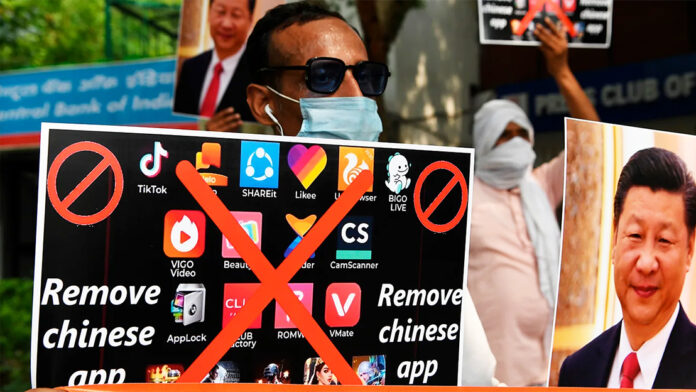
TikTok was one of India’s most popular apps – until it was banned in 2020. It’s a lesson for what might unfold if a US ban goes ahead.
Four years ago, India was TikTok’s biggest market. The app boasted a growing base of 200 million users, thriving subcultures and sometimes life-changing opportunities for creators and influencers. TikTok seemed unstoppable – until simmering tensions on the border between India and China erupted into deadly violence.
After the border skirmish, the Indian government banned the app on 29 June 2020. Almost overnight, TikTok was gone. But the accounts and videos of Indian TikTok are still online, frozen in time when the app had just emerged as a cultural giant.
In some ways, it could offer a preview of what might lie on the horizon in the United States. On 24 April, President Joe Biden signed a bill into law that could ultimately ban TikTok from the US, marking a new chapter after years of threats and failed legislation. The law requires the company that owns TikTok, Bytedance, to sell its stake in the app within the next nine months, with a further three-month grace period, or face a potential ban in the country. Bytedance says it has no intention of selling the social media platform and has vowed to challenge the legislation in court.
Banning a massive social media app would be an unprecedented moment in American tech history, though the looming court battle currently leaves TikTok’s fate uncertain. But the Indian experience shows what can happen when a major country wipes TikTok from its citizen’s smartphones. India is not the only country to have taken the step either – in November 2023, Nepal also announced a decision to ban TikTok and Pakistan has implemented a number of temporary bans since 2020. As the app’s 150 million US users swipe through videos in limbo, the story of India’s TikTok ban shows that users are quick to adapt, but also that when TikTok dies, much of its culture dies with it.
Sucharita Tyagi, a film critic based in Mumbai, had grown her account to 11,000 followers when TikTok came down, with some of her videos racking up millions of views.
“TikTok was huge. People were coming together all over the country, dancing, putting up skits, posting about how they run their homestead in their small town in the hills,” says Tyagi. “There was a massive number of people who suddenly had this exposure that they had always been denied, but now it was possible.”
The app was a particular phenomenon because of the ways its algorithm gave opportunities to rural Indian users, who were able to find an audience and even reach celebrity status not possible on other apps.
“It democratised content creation for the first time,” says New Delhi-based technology writer and analyst Prasanto K Roy. “We began to see a lot of these very rural people fairly low down on the socio-economic ladder who would never dream of getting a following, or making money on it. And TikTok’s discovery algorithm would deliver it to users who wanted to see it. There was nothing quite like it in terms of hyper-local videos.”
TikTok holds a similar cultural significance in the US, where niche communities flourish and an untold number of small creators and businesses base their livelihood around the app. It’s a kind of success that’s less prevalent on other social media platforms. Instagram, for example, is generally tuned more for consuming content from accounts with big followings, while TikTok places a heavier emphasis on encouraging regular users to post.
When TikTok went offline in India, the government banned 58 other Chinese apps along with it, including some that are currently growing in popularity in the US today, such as the fashion shopping app Shein. As the years rolled on, India banned over a hundred more Chinese apps, though negotiations recently brought an Indian version of Shein back online.
The same could happen in the US. The new law sets a precedent and creates a mechanism for the American government to get rid of other Chinese apps. The privacy and national security concerns politicians voice about TikTok could apply to a host of other companies as well.
And when a popular app is removed, others can attempt to fill the gap. “As soon as TikTok was banned it opened up a multibillion-dollar opportunity,” says Nikhil Pahwa, an Indian tech policy analyst and founder of the news site Media Nama. “Multiple Indian start-ups launched or pivoted to fill the gap.”
For months, the Indian technology press was flooded with news about these buzzy new Indian social media companies, with names Chingari, Moj and MX Taka Tak. Some found initial success, luring former TikTok stars onto their platforms and securing investments and even governmental support. It splintered the Indian social market into different corners as the new apps battled for dominance, but that post-TikTok gold rush didn’t last long.
In August 2020, Instagram launched a short-form video feed called Reels, just months after the TikTok ban. YouTube followed suit with Shorts, its own copycat TikTok functionality, a month later. Instagram and YouTube were already entrenched in India, and the field of new start-ups didn’t stand a chance.
“There was a lot of buzz around alternatives to TikTok, but most faded away in the long run,” says Prateek Waghre, executive director of the Internet Freedom Foundation, an Indian advocacy group. “In the end, the one that benefited the most was probably Instagram.”
For many of Indian TikTok’s bigger creators and their fans, it wasn’t long before they moved to Meta and Google’s apps, and many found similar success.
For example, Geet, an Indian social media influencer who only goes by her first name, rose to full-blown stardom on TikTok teaching “American English” and giving life advice and pep talks. She had 10 million followers across three accounts by the time TikTok was banned.
In a 2020 interview with the BBC, Geet shared concerns about the future of her career. But four years later, she’s gathered nearly five million followers across Instagram and YouTube.
However, the users and experts the BBC spoke to say something was lost in the post-TikTok transition. Instagram and YouTube may have snatched up TikTok’s traffic, but the apps didn’t recreate the feeling of Indian TikTok.
“TikTok was a comparatively different kind of user base as far as creators go,” says Pahwa. “You had farmers, and bricklayers, and people from small towns uploading videos on TikTok. One doesn’t see that as much on YouTube Shorts and Instagram Reels. TikTok’s discovery mechanism was very different.”
If TikTok is banned in the US, the American social media landscape may follow a similar path to India’s. Four years after the ban, Instagram and YouTube have already established themselves as a home for short videos. Even LinkedIn is experimenting with a TikTok-style video feed.
The app’s competitors have proven they don’t need to recreate TikTok’s culture to find success. It’s possible, if not likely, that America’s hyper-local and niche content would vanish, just like it did in India. In fact, the cultural ramifications on the US would be far more significant. Nearly one-third of Americans aged 18-to-29 get their news from TikTok, according to the Pew Research Center.
The US has fewer TikTok users than the 200 million India had in its prime, but India is home to 1.4 billion people. TikTok reportedly has 170 million users in the US, more than half the country’s population.
“When India banned TikTok, the app was not the behemoth that it is now,” says Tyagi. “It has turned into a cultural revolution over the last few years. I think banning it now in America would have a much larger impact.”
What’s already different is TikTok’s response. The company has vowed a legal battle over the US government’s new law, a fight that may wind its way up to the US Supreme Court. TikTok could have launched a similar legal challenge to India’s ban, but chose not to.
“Chinese companies have good reason to be hesitant to go to courts in India against the Indian government,” says Roy. “I don’t think they would find them to be very sympathetic.”
There’s also a far greater chance a US TikTok ban would spark a trade war. “I think there’s a distinct possibility of reciprocity from China,” says Pahwa. China condemned India for banning TikTok, but there wasn’t any overt retaliation. The US may not be so lucky.
There are numerous reasons for China’s response to the Indian ban. One is the fact that India’s tech industry is essentially non-existent in China. America’s tech industry, on the other hand, offers plenty of opportunities for a reciprocal attack. China has already launched an effort to “delete America” and replace US technology with domestic alternatives. A TikTok ban could ramp up that project.
“The TikTok ban was so sudden when it happened,” says Tyagi. “For me it wasn’t that big of a deal, I was just using the app to promote my other work. But it felt weird and unfair to a lot of people, especially people who were actually making money and getting brand deals.” Losing TikTok didn’t affect Tyagi’s livelihood, but it did cut her off from her account. That is, until she took a trip to the US.
“When I visited America and l was surprised to see my profile was still active,” says Tyagi. It was like a trip back in time. She even posted a few videos. Most of her followers back home couldn’t see them of course, but she got a little engagement from Indians living abroad.
Chief Executives of the various Metropolitan, Municipal and District Assemblies across the nation are astonished on how education has been transformed in Ghana, within a relatively short period of time.
Dr Yaw Osei Adutwum, Minister for Education
The MMDCEs, after attentively listening and understanding a comprehensive presentation on the progress the Akufo-Addo government had made in the education sector were amazed and demanded a comprehensive publication for Ghanaians to also know what is happening in the sector
The Minister for Education, Dr Yaw Osei Adutwum, engaged the MMDCEs in Kumasi recently. The MMDCEs applauded the massive transformation of the education sector in the last seven years.
PURPOSE
The goal of the engagement between the Minister for Education and the MMDCEs was to enlighten the representatives of the president at the local level on the achievements of the government in the education sector.
Providing the MMDCEs with such information is to enable them to tell the success stories of the government. It is also to explain the innovative policies being pursued by the ministry to improve education in Ghana.
PRESENTATION
The minister’s presentation touched on investments made at all levels of the educational structure, Technical and Vocational Education and Training (TVET), as well as Science, Technology, Engineering and Mathematics (STEM) education.
The Bosomtwe Member of Parliament, Dr Adutwum, used PowerPoint to do his presentation. He walked the MMDCEs through what the ministry has been doing across the country with pictorial and video evidence to bring them up to speed with the paradigm shift in the sector.
The minister showed the participants both figures and statistics, which put the NPP miles ahead of its predecessors.
He also spoke about deliberate policy interventions that target the holistic training of students to be relevant in the global community as the world shifts towards the fourth industrial revolution.
APPLAUSE
The MMDCEs, who were amazed at the massive achievements and the vision to transform education in the country, applauded the minister and his team for a great job done.
The appointees were convinced that Ghana’s education was on the path of progress with the level of investments made in the sector since 2017.
The MMDCEs paid glowing tribute to Dr. Yaw Osei Adutwum for changing the mind-set of stakeholders to embrace 21st-century education as a tool for accelerated development.
Some of them who spoke to the media after the engagement attested to the fact that, despite being part of the government, they are not privy to a lot of the information shared by the minister.
They said that, as much as they are aware of the strides being made by the government in the education sector, the engagement with the minister has made them appreciate the direction Ghana is heading even better.
“I am overwhelmed by what the minister and his team have been doing at the ministry, having listened to the presentation he made,” Mr. Francis Oti Boateng, the District Chief Executive for Asante-Akim North, stated.
He added that STEM education was one of the most brilliant policies ever introduced in Ghana by the government and urged Ghanaians to embrace it to change the face of education in the country.
“Our quest to break the eight largely depends on the works of the likes of Dr. Adutwum, and so if we really want to achieve that target, he should be considered for the running mate slot,” Mr. Eric Tetteh, Municipal Chief Executive for Yilo Krobo, submitted.
UP TO SPEED
Dr Adutwum said the engagement was to keep the MMDCEs updated with the giant accomplishments of the government in the education sector so that they bring the same to the attention of people within their jurisdictions since, as key actors, they directly deal with citizens at the local level.
“Inasmuch as we think they know what is going on, it is also important to bring them together and show them what the government has done elsewhere so they appreciate the development beyond their jurisdictions,” the minister explained.
He said that in addition to creating access and equity for Ghanaian children, the ministry was also working towards the creation of more high-performing schools to eliminate the phenomenon where every parent wants their wards to attend schools they perceive to be better than the ones they are placed to learn in.
“We are affiliating new schools with existing high-performing schools, and our goal is to make sure that high-performing schools will be able to mentor the new schools so that in no time, they will also become high-performing schools,” he noted.
Agencies under the ministry, as part of the engagement, took turns presenting their activities and how they are contributing to the transformation agenda of the government.
A 35-year old man, Richard Tetteh, alleged to have links to the recent killings of women in both Lower and Upper Manya Municipalities in the Eastern Region, is in the grip of the police.
Information available to The Chronicle from the enclave has it that at least, three women have fallen victim over the last two months.
The investigation to unravel the mysterious murders started when on February 2, 2024 one Rebecca Tetteh was killed and her naked body dumped close to the bridge, over River Pawnpawn at Oterkporlu, on the Odumase Krobo-Asesewa area.
On that fateful night, Richard, an ex-convict, reportedly lured Rebecca from Odumase to Oterkporlu, under the pretext of securing a job for her.
He, however, led Rebecca like a lamb into the bush, killed and dragged the body under the bridge.
After committing the heinous crime, Richard Tetteh took the mobile phone of his victim, sold it at Oterkporlu for just GHS30 and used the proceeds to board a vehicle back to Odumase.
After some days, the family of the deceased got a hint about her murder and contacted the police at Asesewa District who had earlier gone to remove the body in a state of decomposition to the mortuary for preservation and autopsy.
In the cause of the investigation, police using the intelligence tools at their disposal were able to track the phone number of the assailant.
In early April, 2024 an 18-year old female disappeared from her home at Manya Kpongunor, a suburb of Odumase Krobo.
Her decomposed body, with breasts and private parts removed, was found down Aklomuase, also a suburb of Odumase.
On April 16, 2024 one Maku Tettehfio’s body, also in a state of decomposition was found on a farm at Sekesua, near Asesewa.
Members of the community who highly suspected Richard Tetteh promised to apprehend him for questioning.
By this time, the Eastern Regional Police Command had put together a joint team of investigators, led by the Regional Crime Officer, Akosombo Divisional Commander, Crime Officer, Odumase and Asesewa Commanders, ably assisted by the Regional Police Intelligence Department (PID) to go into action.
On Sunday April 20, 2024 the volunteers from Sekesua, as they promised, assisted the police and physically arrested Richard Tetteh from his hide out.
During the intense interrogation and at the golden hour of the process, Richard allegedly confessed killing the women.
The Chronicle’s dependable source in the police hinted that, the assailant, a jailbird, some years ago was a resident of Asante Akyem in the Ashanti Region, where he allegedly committed several crimes.
Along the line, he was convicted and sent to the Kumasi prison for robbery. Due to the seriousness of the crime he committed, the youth reportedly set his grandfather’s house where he was staying ablaze.
According to the source, his mother relocated to Odumase, where the son joined her after serving the prison sentence.
There, he was again jailed for one year for assaulting a lady.
Meanwhile, he has been remanded in prison custody to enable police investigation to continue.
Dr. Mustapha Abdul-Hamid, Chief Executive of the National Petroleum Authority (NPA), has been re-elected as President of African Refiners and Distributors Association (ARDA) for a second term in office.
The re-election was unanimously confirmed by the Annual General Meeting(AGM) of the association, following the re-nomination by the Executive Secretary and unanimous approval by the Executive Committee in Cape Town, South Africa.
Dr. Abdul-Hamid has in the last one year led the continental body to achieve its strategic objectives.
Over the period under review, he has led ARDA to improve its presence and visibility by securing key continental and global energy platforms to advocate for the inclusion and participation of the African downstream in the global energy transition conversations.
These global platforms have helped to secure strategic partnerships and alliances.
The leadership of Dr. Abdul-Hamid has also secured financial stability for the association through improved membership drive with dues payment and sponsorships from strategic partners.
He has also initiated structural reforms in the organisation to improve inclusion and working conditions of staff at the Secretariat of the association.
Dr. Abdul-Hamid will serve his last one year term.
Drama unfolded at an Accra High Court trying Dr Stephen Opuni, a former Chief Executive of Ghana Cocoa Board (COCOBOD) and others, when the case was called last week Thursday.
It all started when Counsel for Dr Opuni, Mr Samuel Codjoe, rose from his seat to object to a question posed by the prosecution, led by the Chief State Attorney (CSA), Evelyn Keelson, to a Witness in the case, during cross examination.
“Again your testimony on these documents is not informed by your personal knowledge of what happened at the time the documents were signed, but only on the experiential learning that you have referred?” Evelyn Keelson asked the Witness.
The question did not, however, sit well with Counsel Codjoe and he rose from his seat to object to it.
“I object, that is an unfair question. The Witness in answer to a question in respect to these exhibits, that is, 51,52 & 53 stated that it was the practice in COCOBOD and, therefore, to ask a question limiting it to experiential basis is unfair “, Counsel Codjoe argued.
Court chairs
Keelson (Prosecutor) then responded: My lord, there is no basis for the objection the witness has answered a number of questions stating why he gave testimony in respect of these documents and the question is only referring to his answer. There’s nothing unfair about the question”.
But the court ruled that, the Witness is in the position to answer this question as to whether his knowledge in respect to Exhibits 51,52 & 53 are only limited to his experiential…the objection is overrated and the Witness is called to answer.
After the court had overruled his objection, Counsel Codjoe decided to resume his seat as lawyers usually do during court proceedings.
But immediately his buttocks touched the cushion of the wooden seat, it caved in, sending the respected lawyer to the floor.
The unfortunate development forced some members sitting in the public gallery, including Dr Stephen Opuni himself, to rush to the scene and lift him (Codjoe) up from the ground.
A new chair was immediately offered him by his junior at the bar, but he initially refused to accept it.
He took a strong exception to what had happened to him, telling the court that he came there to work and not to suffer any physical harm.
Whilst Counsel Codjoe was protesting against what had happened to him, his colleague – Benson Nutsukpui, Counsel for Seidu Agongo and his son, who is also a lawyer, decided to inspect the seats they were also sitting on.
After he had completed conducting the immediate check on the condition of the seats he and his son were sitting on, he informed the court that they were not good and that they should be changed immediately, which the court obliged and proceedings resumed.
The evidence
Before the drama unfolded, Dr Francis Baah, a Witness and Director of Research at Ghana Cocoa Board (COCOBOD) had told the court not to dismiss his experiential knowledge of how contracts are generated and signed by Chief Executive of the board.
He said this after being told by the prosecution that his testimony on Exhibits X and BB was only based on what the general position had been.
The Exhibits are contract documents requesting to sole source lithovit fertiliser and the response from the Public Procurement Authority.
But the prosecution was of the view that Dr Baah who had been subpoenaed to testify for Seidu and Agricult had nothing to do with the exhibit or know the circumstances surrounding their generation.
Mrs Keelson further made a case that during the time Dr Opuni was signing contracts to sole source lithovit and other fertilisers, the Witness had ceased working directly under him as his office manager.
Although the witness agreed, he argued that experiential learning or knowledge ought not to be disregarded or ignored.
He also told the court that Cocoa Heath and Extension Division (CHED) of COCOBOD conducted a research on farmers’ perceptions about lithovit and the data gathered was very positive.
He also explained to the court that CHED, which was responsible for distributing fertilisers to farmers, did not give more than one type of fertiliser to a farmer in a season.
Speaking to a published research data, he said 95% of farmers in Ghana did not buy additional fertiliser besides the ones supplied to them by COCOBOD.
Thus giving credit to farmers’ perception that they prefer lithovit fertiliser to other fertilisers as it induces flowering and increases yields.
Except of cross-examination by Mrs Keelson
Q. Dr Francis Baah, have a look at Exhibits X and BB. With Exhibits X at the time the letter was written, you were not in the first Accused office as office manager. Is that not true?
A. My lord that is correct
Q. Then with Exhibit BB, again you were not working in A1 office as office manager when that letter was written. Is that not so?
A. My lord that is so.
Q. So your testimony on Exhibit X and BB is only based on what the general position to be is that not so?
A. Yes my lord. My lord I believe I have been invited by this honourable court because of the experience I have had. And that my lord, on the basis of that experience that is why… just a causal look of Exhibit X and BB by way of the structure and content these types of letters, my lord because of the subject matter, will emanate from procurement with substantial inputs from Codapec/Hitect my lord.
And to finish up my lord, again on the basis of my experience, such letters are not written in the office of the Chief Executive. They are brought in as other letters to sign by the Chief Executive.
Q. So what you told the court is your opinion based on your experience rather than personal knowledge in the specific situation of these letters. That is correct?
A. That may be the case. However, personal knowledge, respectfully my lord, is acquired from experiential learning. To finish that, all the commemorative knowledge Francis Baah has on cocoa matters come largely from experiential learning.
Q. I’m putting it to you that, you cannot have personal knowledge of the circumstances of these letters because you were not there and had nothing to do with those letters and you have nothing do with it?
A. That may be the case, nevertheless, the same knowledge that I have enabled me to comment on the other Exhibits that were shown to me in terms of how they could have evolved.
Q. Exhibit Z and Exhibit DD are contracts signed at a time when you were not working in the A1 office as office manager. That is right?
A. My lord, that is correct on the basis of the date that the contracts were signed.
Q. You had nothing to do with those documents. Is that not so?
A. Yes my lord in so far as they were not signed in my presence and I did not author them
Q. once again your evidence in this court in respect of these documents I is not personal knowledge of what happened at time, but rather what you called experiential learning?
A. Yes my lord that is correct. However, my lord experiential knowledge I will submit is not to be discarded or discounted if it provides some emulated on the issues.
Q. So, even with Exhibit U, which was signed at the time you were in the A1 office as office manager, you had nothing to do with that document. Is that not so?
A. My lord, per Exhibit U, that is so.
Q. Now you testify about a number of documents including Exhibits 51, 52, 53, which are also contracts entered into by the Chief Executive of COCOBOD for the supply of various fertilisers?
A. Yes my lord.
Q. Again your testimony on these documents is not informed by your personal knowledge of what happened at the time the documents were signed but only on the experiential learning that you have referred?
Codjoe: I object that is an unfair question. The witness in answer to question in respect to these exhibits i.e 51,52 & 53 stated that it was the practice in COCOBOD and therefore to ask a question limiting it to experiential basis is unfair
Prosecution: My lord, there is no basis for the objection the witness has answered a number of questions stating why he gave testimony in respect of these documents. And the question is only referring to his answer. There’s nothing unfair about the question .
B/C: the witness is in the position to answer this question as to whether his knowledge in respect to Exhibits 51,52 & 53 are only limited to his experiential…the objection is overrated and the witness is called to answer.
Q. Question repeated…
A. It is partially so in the sense that Exhibits 51,52 & 53 come in the state, which they are now through an organic process. What I have brought to bear in terms of experience provides significant contribution as to the development of these documents.
Q. I’m putting it to you that your testimony does not address the specific issues of what happened with the specific documents as the specific times because you simply don’t know what happened because you were not there?
A. Yes my lord I agree that I was not there. But I believe that I have offered insights of related documents are developed at COCOBOD.
Q. Now Exhibit U, Z and BB were signed by the A1 as CE of COCOBOD. Is that not so?
A. Yes my lord Exhibits U, Z and DD were signed on behalf of the purchaser and the purchaser I believe of Ghana Cocoa Board.
Q. Now you in your evidence, you told this court that no signal fertiliser could determine cocoa yield in Ghana?
A. Yes I said that. I meant the aggregate cocoa obtained. No signal fertiliser or input can determine the aggregate output of cocoa that we get.
Q. But the farmers who used the fertiliser used various fertilisers at various times for the cocoa?
A. Yes my lord. So that when one is interested in a specific fertiliser that the farmer has used, one has to ask specific questions and elicit responses …or any
Q. You also told this court the effect of fertilisers is evaluated by CRIG as an institution in COCOBOD with?
A. That is so…my lord when a product, agrochemicals, fertilizer or machine is intended for use on cocoa in Ghana it is the mandate of CRIG to evaluate the report in the suitability or otherwise of that particular production and that is one level of evaluation. That is the scientific evaluation of the product.
When the product is approved by CRIG of COCOBOD and it is given to the extension wing of COCOBOD that is CHED, which I headed sometime ago, there is another level of evaluation which the functions of CHED permit it to undertake. And that is my lord, farmers’ perceptions or reactions on the product. That kind of evaluation is not exclusive to CRIG.
Q. Dr Baah, you told the court that in respect of Exhibit 138/A2/A3 that you were with the team for only one day?
A. Yes my lord.
Q. The report covers only the period between 7th to 25 April 2015.
A. Yes my lord.
Q. Do you know as at the time to this report whether the farmer in this region covered by the report, do you know the other fertilisers, which had been supplied to farmers in this region?
A. Yes my lord. Other fertilisers were supplied if my memory serves me right and it is not captured in the report, other fertilisers that were supplied to farmers are sidalco, asase wura cocoa feed, natural organic fertiliser, there is a fertiliser like that.
Q. So clearly from the report, Lithovit fertiliser was not the only fertiliser the farmers had used?
A. That is correct. No signal farmer would receive more than one particular type of fertiliser in a season. At least not the ones supplied by COCOBOD.
Q. But you know that the farmers would not use only the fertilisers supplies by cococod
A. Yes my lord that is correct but …95% of farmers in Ghana and this is based on published data in research, do not buy additional fertiliser besides the ones supplied by cococod but some do
Isaac Boafo, Coordinator flanked by other Campaign Team members to address the press
The Campaign team of Ing. Kwabena Owusu-Aduomi, an Independent parliamentary candidate in tomorrow’s by-election at Ejisu, is smelling a rat in the voting exercise.
They have accused the Ashanti Regional chairman of the New Patriotic Party (NPP), Bernard Antwi-Boasiako and some leading government officials of reckless attempts in a bid to manipulate Tuesday’s by-election.
According to the team, the NPP is planning to rig the elections and mentioned stuffing of Ballot boxes, attempts to bribe Electoral Commission officials on voting day, use of military personnel and deployment of police officers from different regions to seize control of ballot boxes, as some of the plans to achieve their aim.
Also among the alleged schemes by the NPP are threats of power outages during vote counting, use of macho men to forcibly snatch ballot boxes from new site and smaller towns, transporting over 500 SHS students to vote, all in an attempt to manipulate the outcome of the election,
Mr Isaac Boafo, Campaign Co-ordinator of the Independent Candidate, who raised these concerns at a press conference last Friday, said these behaviours constitute a cowardly tactic to sow confusion and undermine transparency in a blatant attempt to undermine the integrity of the electoral process.
He described the bid as a shameful exploitation of young voters as well as a brazen assault on the sanctity of the electoral process and, therefore, a despicable act that strikes at the heart of democracy.
He said the intended utilization of military personnel to intimidate strongholds of Hon Owusu Aduomi, is a clear abuse of power aimed at suppressing the will of the people and an indication of a flagrant violation of electoral norms.
Mr Boafo said the attempts by the NPP to tag Owusu Aduomi as an NDC sympathizer to incite discord among constituents are unfounded, baseless and malicious tactics.
The concerned Campaign team has cautioned that, “we will fiercely defend our ballots with every fiber of our being” and that “despite their desperate attempts to subvert the democratic process, Ejisu will stand firm and resolute on Tuesday”.
The team also condemned what it described as “wasteful expenditure of state resources for vote buying”, which should have gone into addressing the pressing challenges facing the communities in the constituency.
Mr. Boafo also explained that the Bonwire market project, which was personally financed by Owusu Aduomi does not fall under the Middle Belt Development Projects and that the claim is not only misleading, but a deliberate attempt to diminish Owusu Aduomi’s significant contributions to the community.
“The claim is a disservice to the constituents of Bonwire and Ejisuman and a blatant distortion of the truth”, Mr. Boafo stressed.
He said Owusu Aduomi’s personal investment and tireless efforts have propelled the Bonwire market project and others within the constituency towards fruition, benefiting the local economy and enhancing the livelihoods of countless individuals for which the constituents would honour his genuine commitment to community development during the by-election.
The Minister of Transport, Kwaku Ofori Asiamah, has been inducted into the Chartered Institute of Supply Chain Management (CISCM) as a Fellow in Integrated Supply Chain Management.
This follows the recognition of his remarkable performance at the ministry, where he has made some structural reforms and blended technological innovation with strategic management to impact the economy.
A total of fourteen agencies operate under the Ministry of Transport with each of these agencies making significant strides in their operations over the more than seven-year period Asiamah has been their political head.
At the 5th Induction & Investiture ceremony held in Accra, on Friday, April 26, 2024 Asiamah was lauded by CISCM for his exceptional service to Ghana.
This was also boldly captured in a well-designed citation inscribed on a plaque, projecting him as an outstanding achiever in the portfolio he has handled since 2017.
The citation read: “Call to Fellowship – Demonstrating exceptional service to Ghana and supporting CISCM’s effective organisation teams to execute its operational mandate successfully. Chartered Institute of Supply Chain Management has the pleasure to confer on you Fellow in Integrated Supply Chain Management.
It is our belief that you will accept this honour and commit to collaborate with CISCM to propagate and mainstream the adoption and use of integrated Supply Chain Management Principles, to drive the National and global agenda of pursuing effective, sustainable and inclusive socio-economic growth and development. Please accept our congratulations”.
100 people from different professional backgrounds were inducted into CISCM with the inductees categorized into Eminency, Full Members and Associates & Affiliates.
Induction into CISCM is a significant milestone in a leader’s career where his/her accomplishments are honoured. Fellows are selected on merit with special focus on their contributions and impact on society.
Asiamah’s work at the Ministry of Transport has led to the development and application of cutting-edge and innovative methods in technology to drive growth in the maritime, aviation and road transport sectors of the Ghanaian economy.
For instance, in the maritime sector, Asiamah’s strategic management role, prioritizing enhanced physical infrastructure and services, especially, at the seaports and airports, to bolster economic growth and development, has led to the completion and operationalisation of a dedicated container terminal (MPS Terminal 3) at the Tema Port to address inefficiencies that resulted in a general dissatisfaction with port services.
The Takoradi Port has also undergone massive transformation where a new dry bulk terminal equipped with state-of-the-art, high-performance ship loaders have been completed and operational, resulting in increased cargo handling capacity from 400 tons per hour to between 2,000 and 2,500 tons per hour. The Takoradi Port has also seen the construction of an oil jetty to service the oil and gas sector.
Other complimentary development programs such as the operationalisation of a paperless port, deployment of drones to augment the activity of security at the ports, implementation of Electronic Data Interchange (EDI) Messaging to share real-time cargo information, deployment of an e-payment solution among others have impacted the average vessel turnaround time which was 103.66 hours for the Tema Port and 118.70 hours for Takoradi Port as of December 2016 to 72.66 and 106 hours respectively as at December 2023.
Under the leadership of Asiamah, collaboration between the Ministry of Transport and other Ministries, has also led to the development of twelve (12) coastal fish landing sites to support artisanal fishing to address the high post-harvest losses and unhygienic conditions that, hitherto, were confronting the fishing industry.
The Elmina Fishing Port Project has also been completed with the construction of a new Fishing Port at Jamestown under the oversight leadership of Asiamah, nearing completion.
Growth and development in the aviation sector has also been massive under Asiamah, The Tamale Airport has been upgraded to international status. He also ensured the rehabilitation of the Sunyani Airport and also completed the construction of the Terminal 3 Project at the Kotoka International Airport (KIA).
Expansion works at the Kumasi Airport are nearing completion with the project said to be commissioned on Friday, May 10, 2024.
Asiamah has also ensured the establishment of an independent body responsible for aircraft incident and accident investigation and prevention.