Home Blog Page 1449

Feature: Dubai: The Emerging Haven For African Investors Seeking Prosperity And Opportunity

0
Dubai City

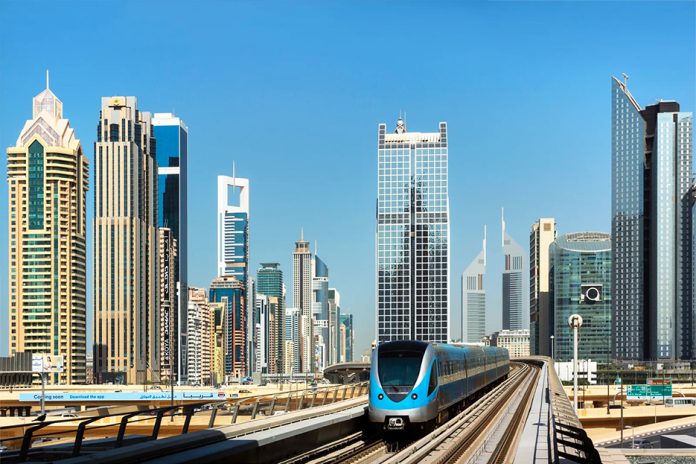
As Dubai continues to solidify its position as a global financial center, it presents a unique and compelling opportunity for African investors to partake in its success story. Enabled by the government’s ambitious initiatives, incentivizing regulatory frameworks, tax policies, long-term residency visas, a robust financial ecosystem, high quality of life, and strategic geographic location, Dubai has become a preferred destination for private wealth and family offices, both homegrown and global.

The city boasts the highest concentration of ultra-high-net-worth individuals (UHNWIs) among cities in the Middle East, with projections indicating that this trend will not slow down. According to Henley & Partners, Dubai’s population of centi-millionaires is expected to surge by 78% within the next decade.

A Preferred Destination for Family Offices and Private Wealth

Dubai’s appeal to private wealth and family offices is multifaceted. The city offers a favorable regulatory environment, tax incentives and a high standard of living, making it an ideal hub for wealthy individuals and their families. Key factors contributing to Dubai’s attractiveness include:

Government Ambition and Regulatory Frameworks

The Dubai government’s ambition to establish the city as a global financial hub is central to its strategy. The D33 Agenda, Dubai’s ten-year economic plan, aims to position the city among the top four global financial centers. This agenda includes initiatives to attract family offices and private wealth, with more high-net-worth individuals (HNWIs) relocating and diversifying their investments in Dubai.

The city has taken notable measures to maintain favorable tax policies, implement expat-friendly regulations, and improve the regulatory landscape for family offices. For example, the Dubai International Financial Centre (DIFC) enacted the DIFC Family Arrangements Regulations, which simplify the legal framework for family offices and set a benchmark for good conduct.

Robust Financial and Banking Infrastructure

Dubai’s financial ecosystem is highly developed and continuously growing, offering a hyper-connected environment for family offices and UHNWIs. The city is home to some of the world’s most reputable banking institutions, hedge funds, and wealth management firms.

The DIFC houses over 300 wealth and asset management companies, representing an industry size of $450 billion. Additionally, Dubai ranks first in the Middle East and among the top 10 globally in the Global Financial Centres Index 2023. The city is the only financial center in the Middle East, Africa and South Asia (MEASA) region included in this classification.

Strategic Geographic Location

Dubai’s strategic geographic location offers unparalleled access to the world’s largest growth markets, including Africa, India, and Asia. With 2.4 billion people living within a four-hour flight and five billion within an eight-hour flight, Dubai provides a unique advantage for global business operations. This ideal time zone positioning, between the East and West, makes Dubai an attractive hub for global headquarters, financial giants, and executive nomads.

High Quality of Life and Luxurious Lifestyle

Dubai is renowned for its high quality of life and luxurious lifestyle, making it a desirable destination for UHNWIs. The city is ranked as one of the safest in the world, offering political stability and a luxurious living environment. Dubai’s real estate market is particularly attractive, with luxury property transactions and rental yields outperforming global benchmarks.

The city’s luxury property market recorded a 42% increase in sales transactions in the first half of 2023, totaling AED 178 billion ($48.4 billion). Moreover, Dubai offers significant value and return on investment (ROI), with luxury properties providing more space for the same price compared to other global cities.

Attracting Private Wealth, HNWIs and Family Offices

Dubai’s success in attracting private wealth, HNWIs, and family offices is evident from various reports and statistics:

– The UAE saw the highest net influx of HNWIs globally in 2022, with over 5,200 HNWIs relocating to the country, according to Henley & Partners’ 2022 Global Citizens report.

– Dubai houses $517 billion of wealth, the highest in any Middle Eastern city, and more than 55,000 HNWIs and UHNWIs. Over $3 trillion of private wealth is within an hour’s flight of Dubai, and $8 trillion across the region, according to DIFC.

– Dubai’s population of HNWIs rose to 67,900 in 2023, up from 54,000 in June 2021, according to Henley & Partners’ 2023 Private Wealth Migration report.

Ongoing Government Initiatives

Dubai’s government is committed to cementing the city’s position as a global hub for financial services and private wealth. The D33 Agenda aims to double Dubai’s economy over the next decade and position the city among the top three global cities. Additionally, the DIFC’s 2030 Strategy aims to double its size and economic contribution to Dubai’s GDP, promoting investment and encouraging financial institutions to establish themselves in the DIFC.

Factors Contributing to the Influx of Private Wealth

  • Favorable Policies and Regulatory Incentives

Dubai offers business-friendly tax policies, including zero personal income tax and a low corporate tax capped at 9% for annual profits above AED 375,000. Expat-friendly regulations have also been implemented, such as new laws governing marriage, divorce, inheritance, and child custody for non-Muslim residents. The Golden Visa residency system, introduced in 2019, has been a significant draw for investors and high-net-worth individuals. Over 150,000 golden visas have been granted, providing long-term residency for investors.

  • Growing Financial Ecosystem

Dubai’s capital market is thriving, demonstrated by the Dubai Financial Market (DFM), the leading financial market in the region. In 2022, AED 31.15 billion ($8.4 billion) worth of capital was raised through five IPOs, and the market cap of equities listed during the same year reached AED 582 billion ($158 billion). Dubai is home to some of the world’s most reputable banking institutions, private banks, hedge funds, and wealth management firms. The DIFC is a top global financial center, housing more than 300 wealth and asset management companies and 5,523 active companies.

  • Access to Capital, Funding, and Investment Opportunities

Dubai’s venture funding has seen tremendous growth, with the city becoming the only one in the MENA region to host startups raising funds in Series E and Series F rounds. In the first half of 2023, Dubai recorded a 70% year-on-year growth in total announced FDI projects, with greenfield FDI projects accounting for 65% of the total. The city maintained its ranking as the world’s top destination for greenfield FDI projects.

  • Luxury Lifestyle and High Quality of Life

Dubai offers a luxurious lifestyle and high quality of life, attracting UHNWIs from around the world. The city is ranked as the world’s third greatest city by The Economist and retains its leading position in the MENA region in Kearney’s Global Cities Index 2023. Dubai is also named the world’s best city to relocate to in a 2023 report by Remitly and the best city for remote workers according to Savills’ 2023 Executive Nomad Index.

The city’s luxury living options are unmatched, with Dubai ranked seventh in the Julius Baer 2023 Lifestyle Index. Dubai’s education system caters to all demographics and age groups, with numerous universities and higher education institutions from around the world. The city is also a leading healthcare destination, ranking first in the MENA region and sixth globally.

Dubai’s strategic initiatives and favorable environment have positioned it as a global financial hub and a preferred destination for private wealth and family offices. African investors have a unique opportunity to participate in Dubai’s success story, leveraging the city’s robust financial ecosystem, strategic location, high quality of life, and luxurious lifestyle.

As Dubai continues to attract and retain UHNWIs, the city promises unparalleled opportunities for prosperity and growth, making it an ideal destination for investors seeking new pathways to success.

Who will be Euro 2024 top scorer?

0
Cristiano Ronaldo, Romelu Lukaku and Harry Kane

The iconic Henri Delaunay Trophy may be the ultimate prize at this summer’s European Championship, but for individual players there is also the chance to finish top scorer and take home the Golden Boot.

Gerd Muller, Marco van Basten, Alan Shearer and Fernando Torres are among those to have topped the scoring charts over the years.

So who will do so this time?

Romelu Lukaku (Belgium)

Romelu Lukaku will be well fancied by many after hitting 14 goals to break the scoring record for a single European Championship qualifying campaign.

The 31-year-old is Belgium’s all-time top scorer with 83 goals in 114 appearances and this summer’s Euros will be his sixth major tournament with the Red Devils.

He took home the Bronze Boot at the 2018 World Cup after scoring four times in seven appearances.

Robert Lewandowski (Poland)

Robert Lewandowski’s Poland broke Welsh hearts with a play-off victory on penalties to become one of the final sides to secure their place in Germany.

The 35-year-old certainly knows where the net is. He is Poland’s all-time top scorer with 82 goals in 148 appearances and has scored more than 600 times for club and country over his 19-year career.

Cristiano Ronaldo (Portugal)

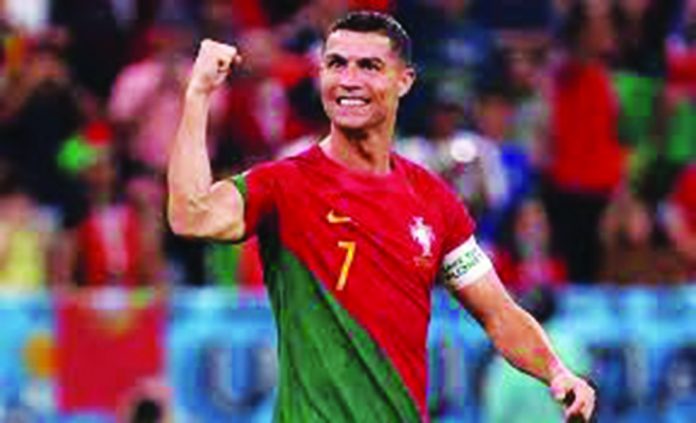
Another player who needs no introduction. Footballing superstar Cristiano Ronaldo is showing little sign of slowing down even at the age of 39.

He is international football’s all-time top scorer with 128 goals for Portugal and the record appearance maker with 206 caps.

Harry Kane (England)

England’s all-time top scorer Harry Kane will again be central to their hopes of ending 58 years of hurt this summer.

The Three Lions captain goes into tournament off the back of a prolific first season with Bayern Munich, where he scored 45 goals in 45 games. Despite a successful campaign personally, Kane’s long wait for a first career honour goes on as Bayern ended the campaign trophyless

Kylian Mbappe (France)

Prolific France striker Kylian Mbappe is the bookies’ favourite to be top scorer at Euro 2024.

The 25-year-old has scored 46 goals in just 77 appearances for Les Bleus, who are aiming to lift the trophy for a third time after victories in 1984 and 2000.

Mbappe won the Golden Boot at the 2022 World Cup with eight goals – including a hat-trick in that epic final defeat by Argentina.

Rasmus Hojlund (Denmark)

Rasmus Hojlund is a rising star of Danish football who already looks at home on the international stage.

The 21-year-old scored a hat-trick on his international debut in a European qualifier against Finland in March 2023 and ended the campaign as their top scorer with seven goals in eight appearances.

Alvaro Morata (Spain)

As well as leading the line, Alvaro Morata will also captain Spain as they look to lift the trophy for a third time.

The experienced Atletico Madrid forward, who spent three years at Chelsea between 2017 and 2020, has scored 34 goals in 74 international appearances. No other player in Spain’s Euro 2024 squad has yet reached double figures.

Credit: www.bbc.com

Which records could Ronaldo break at Euro 2024?

0
Cristiano Ronaldo

At the age of 39, Cristiano Ronaldo is back to spearhead Portugal’s bid to become European champions again – in what could be the final major tournament of his incredible career.

Ronaldo helped Portugal win Euro 2016 and played a vital part in qualifying for this one as Roberto Martinez’s side won all 10 of their matches.

BBC Sport has studied Ronaldo’s stellar Euros career and taken a look at the records he holds at European Championships – and those he could well break in Germany over the next four weeks.

Ronaldo first played in the Euros in 2004, aged 19, and can stretch a record he holds simply by getting on the pitch. He is already the only male player to have represented his country at five Euros and, as long as he doesn’t get injured, will surely extend that to six this month.

He marked his debut with a goal against Greece in a 2-1 defeat on 12 June 2004 – and the goals keep on coming.

A double against Hungary in Portugal’s opening match three years ago took him past Michel Platini’s total of nine for the men’s record, although all of those nine came in the same competition as France won the 1984 title.

Ronaldo also holds the distinction of being the only male to score three or more goals in multiple Euros.

But Ronaldo does not hold all the attacking records, yet.

Again since 1980, the record for most chances created is held by a Portuguese great, but not Ronaldo, as Luis Figo sits on top of the charts with 42. Ronaldo is only one behind on 41, with Germany’s Mesut Ozil on 40, Karel Poborsky of the Czech Republic on 39 and Zidane on 38.

Former Manchester United winger Poborsky is currently sharing the record with Ronaldo for most assists with six each, although Manchester City and Belgium midfielder Kevin de Bruyne is among those on five and will be looking to bolster that number in Germany.

Even at 39, Ronaldo is not the oldest player in the Portugal squad, with that honour falling to team-mate Pepe.

Credit: bbc.com

All you need to know about Euro 2024

0
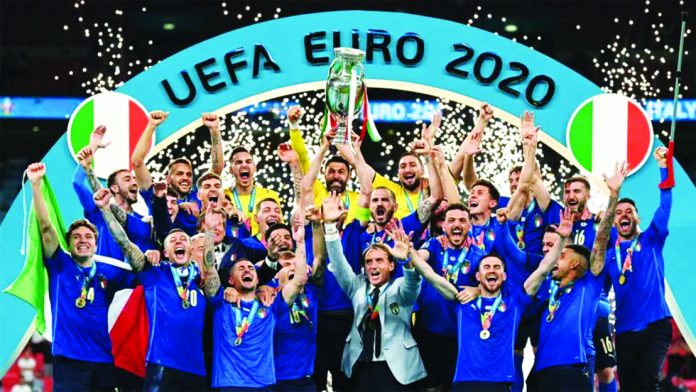
Defending champions Italy will be at Euro 2024 in Group B

It won’t be long before the summer comes around and Euro 2024 is upon us.

With the draw already completed, and each team’s potential route to glory established, BBC Sport provides the lowdown on all the key details for Euro 2024.

When will the tournament start?

Held in Germany, Euro 2024 will officially begin on Friday, 14 June 2024 at the Allianz Arena, home of Bayern Munich. Scotland will be the team facing the hosts in the first match to kick off the tournament.

It will continue for a month and conclude on Sunday, 14 July at the Olympiastadion in Berlin.

This will be the first time that Germany has hosted the tournament since reunification, with the 1988 edition held in West Germany.

Who are the favourites?

At the time of writing, England and France are both 4/1 with the bookmakers, while hosts Germany are 7/1.

The next closest is Spain at 8/1, while Scotland are 80/1 to go all the way.

Who are the form teams?

Coming into the tournament, six teams were unbeaten during qualifying – France, England, Portugal, Belgium, Romania and Hungary.

Portugal are the only side who won every match, ending qualifying having scored 36 goals and conceding only two.

Spain and Scotland lost only one match, while Turkey and Austria also qualified with equally impressive records.

What are the groups?

Group A: Germany, Scotland, Hungary, Switzerland

Group B: Spain, Croatia, Italy, Albania

Group C: Slovenia, Denmark, Serbia, England

Group D: Poland, Netherlands, Austria, France

Group E: Belgium, Slovakia, Romania, Ukraine

Group F: Turkey, Georgia, Portugal, Czech Republic

Credit: bbc.com

Adutwum catches attention of Akufo-Addo

0
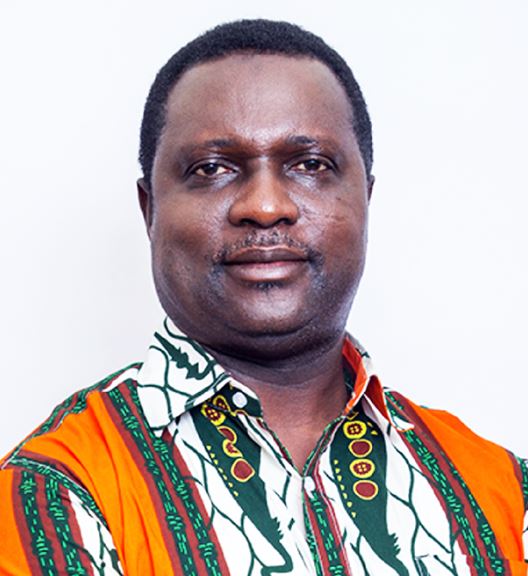
Dr. Yaw Osei Adutwum

The Minister of Education, Dr. Yaw Osei Adutwum, has received praise from the President, Nana Addo Dankwa Akufo-Addo, for his outstanding performance.

Dr. Yaw Osei Adutwum, Minister for Education

According to the President, the Ministry of Education has chalked successes owing to the tremendous work of its minister, whom he said was one of the best appointees of his government.

“The Ministry has been blessed by the extraordinary work that its leader, the Minister, the Hon. Yaw Osei Adutwum, Member of Parliament for Bosomtwe, one of the outstanding ministers of my government has been doing to modernise our education,” he remarked.

ARCTUS 2024

The President said this on Wednesday, May 29, 2024 in Suyani, where he addressed the 3rd Applied Research Conference of Technical Universities in Ghana (ARCTUG 2024).

The President said that the conference emphasised the critical partnership between universities, industry and the government to drive innovation and entrepreneurship, which are vital for national development.

“We must work together to harness our intellectual, technical and financial resources to overcome challenges and seize opportunities,” the president stated.

ROLE

President Akufo-Addo indicated that technical universities in the country play a crucial role in fostering innovation and bridging the gap between theory and practice.

He noted that by engaging with industry partners, the technical universities ensure their research aligns with real world challenges, enhancing students’ educational experiences and providing businesses with cutting-edge insights.

He remarked that it was essential that industry support education through funding and active participation, creating a robust educational system that produces a skilled workforce ready for future demands.

COMMITMENT

Meanwhile, President Akufo-Addo said his government remained committed to advancing education and research.The commitment, he stated, was evidenced by the substantial investments in research and book allowances. Additionally, he said the National Entrepreneurship and Innovation Programme (NEIP) has significantly impacted Ghana’s start-up ecosystem, creating over 100,000 jobs and positioning Ghana as a hub for innovation in West Africa.

The government, according to the President, aims to build a brighter, more innovative future for our nation through continued collaboration and investment in STEM education.

TRANSFORMATION

The Minister for Education, Dr. Yaw Osei Adutwum, on his part said the old, dilapidated structures in schools are being replaced with 21st-century state-of-the-art equipment, assuring the country that public schools in Ghana are no longer housed in brown and yellow buildings.

He cited recent examples of schools, such as Azzaman Zongo Al-Qalam (AZZA) Senior High School in the Ashanti Region and Dzertokoe in the Volta Region, as well as the model junior high STEM schools, as clear indications of the government’s commitment to transform Ghana’s education.

“The Ghanaian government is making significant strides in improving the educational infrastructure in the country. Gone are the days when students had to learn in dilapidated classrooms with outdated equipment. In their place are modern learning facilities equipped with the latest technology,” he asserted.

“Moreover, the government has established model junior high STEM schools across the country. These schools focus on Science, Technology, Engineering, and Mathematics (STEM) education. The latest additions to this network of schools are the Juaben and Sunyani facilities. These schools have state-of-the-art laboratories equipped with modern technology that enable students to conduct experiments and learn through hands-on experience.

“These initiatives demonstrate the government’s commitment to providing a conducive learning environment for students in Ghana.

“By investing in educational infrastructure, the government aims to attract more students to schools and improve academic performance,” he said.

I’ll Restore Confidence in Ghana’s Economy -Alan 

0
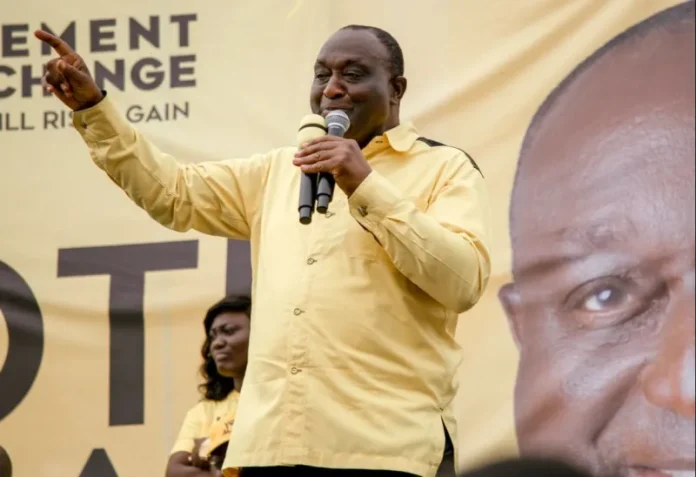
Mr Alan Kyerematen

Mr Alan Kwadwo Kyerematen has pledged to restore confidence in the Ghanaian economy if elected as President of Ghana. During his campaign tour in Koforidua, on Monday, Mr Kyerematen outlined several measures to revive the economy and strengthen the cedi’s value.

“The strength of the cedi depends on the demand and supply of foreign exchange. There is no other way to strengthen the cedi unless you produce and export.

“If you produce locally and also export abroad, you can reduce the demand for dollars in the country and make the cedi more competitive internationally,” he said.

He argued that among the prominent candidates running in the 2024 General Election, he is the only one capable of driving production and exports to revive the cedi.

“So between Alan, ex-president Mahama and Dr Bawumia, if it’s production and exports that will revive the cedi, who among the three of us can do that? Ghana needs an industrial revolution now to create a brighter future for its people, and I am the leader with the action plan to achieve this transformation.”

Alan Kwadwo Kyerematen

Alan Kyerematen also outlined his plan to create jobs and increase incomes by developing unique “growth pole” industries in each region of Ghana to attract investment. He pledged to transform the Eastern Region into a research and innovation hub of West Africa, by leveraging private sector investment and the existing networks of government agencies and human resources.

This approach would allow each region to contribute to the national development agenda in a focused and sustainable way based on their competitive advantage.

Alan Kyerematen envisions moving Ghana beyond manifesto promises to a long-term national plan, where all Ghanaians can contribute to and benefit from the country’s progress.

Specifically, he will advocate for constitutional reforms that facilitate building consensus on the national development plan by gaining input from various stakeholders, including business leaders, religious leaders and traditional leaders.

This way, successive governments would continue strategic projects that will have a long-lasting impact on Ghanaian lives. His leadership in initiatives like the Presidential Special Initiatives (PSI) and One District One Factory (1D1F) demonstrates his capability to lead Ghana’s industrial revolution and economic transformation.

In conclusion, Alan Kyerematen asserted that the right leader is crucial in restoring confidence in the economy.

“Voting for me as President of Ghana, with the unique vision I have, will send the right signals about the next stage of Ghana’s development.

“Among all the candidates, I have the needed experience, track record and integrity to transform Ghana and lead us towards a prosperous future. Ghana needs change now and it is the people of Ghana who have the power to bring about this change by voting for the right leader in this year’s elections.”

Alan Kyerematen was accompanied by leading members of the Alliance for Revolutionary Change (ARC) including; Dr. Abu Sakara Foster, Mr. Akwasi Addai Odike, Nana Ohene Ntow, Henry Asante, Mr. Samuel Ampofo, Mrs. Augustina Cudjoe and Yaw Buaben Asamoa.

Sustainable urban development is Akufo-Addo’s priority -Minister

0
Martin Adjei-Mensah Korsah

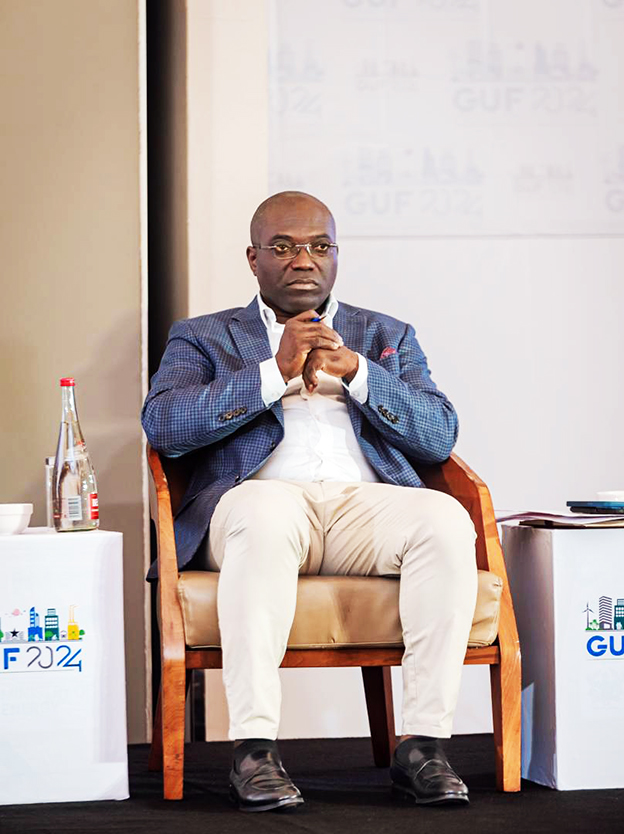
The Minister for Local Government Decentralisation and Rural Development, Martin Adjei-Mensah Korsah says the Akufo-Addo government is committed to the advancement of sustainable urban development.

Speaking at the Ghana Urban Forum in Accra yesterday, he said government was bent on fostering resilient urban areas and stands poised to navigate the complexities of urbanisation to build a thriving communities for generations to come.

“Urbanisation presents a lot of opportunities that have the potential to change the face of our development,” he said.

The forum, which was on the theme: “Nurturing Roots, Growing Futures,” brought together government officials, civil society organisations, businesses and international partners. Knowledge sharing and innovative solutions were at the heart of the event, with discussions focusing on urban issues like traffic congestion, environmental concerns and inadequate infrastructure.

Minister Korsah outlined the government’s comprehensive approach to sustainable urban development.

He detailed flagship programmes and projects initiated by the Ministry, including the Ghana Urban Management Pilot Programme, the Local Government Capacity Support Programme and the Sustainable Cities Project – Phase 1.

These initiatives, coupled with strategic partnerships and inter-sectoral collaboration, the Minister said, aim to address multifaceted challenges and create resilient urban ecosystems.

“Our determination is reflected in the mandatory and periodic global and national reports, which show the significant progress being made in our urban spaces,” Minister Korsah affirmed, citing tangible evidence of Ghana’s strides towards achieving sustainable urbanization.

However, he acknowledged the persistent threats posed by emerging challenges such as pandemics, extremism, and climate change, underscoring the need for adaptive and forward-thinking approaches.

In alignment with global frameworks such as the Sustainable Development Goals (SDGs) and the New Urban Agenda, Ghana remains committed to fostering inclusive, safe, resilient, and sustainable cities, the Minister said, emphasising the importance of grassroots engagement, citizen participation and decentralised governance in driving meaningful urban transformation.

“As a Ministry responsible for coordinating the implementation of urban development policies, we wish to entreat stakeholders to take ownership of policies focused on urban development to effect the needed change and transform our urban areas,” Minister Korsah urged, emphasising the imperative of collective action and shared responsibility.

The forum concluded with a renewed sense of purpose among participants, determined to work towards effective urban planning and development.

Dame, Jakpa slug it out in court

0
Court

At exactly 12:05 pm, Godfred Yeboah Dame, Minister for Justice and Attorney-General (A-G), walked into the Financial and Economic Division 2 of the Accra High Court.

The court, as usual, was full to capacity and a bench meant for six people was occupied by nine. The front rows of the court were heavily occupied by members of the opposition National Democratic Congress (NDC), who stole glances and kept on looking at the A-G as he entered the courtroom.

The lawyers at the time had finished introducing themselves and the focus was on Justice Afia Serwah Asare-Botwe, a Court of Appeal judge sitting with an additional responsibility of the High Court.

The sitting started with the judge requesting Thaddeus Sory to raise his objection to the A-G’s affidavit in opposition to a motion filed to discontinue the trial of his client, Richard Jakpa.

Godfred Dame’s arrival in court

Justice Asare-Botwe paused, upon noticing the arrival of the A-G and ordered the recorders to record the time that Mr. Godfred Yeboah Dame arrived, at 12:05 pm.

The judge indicated that four applications filed by the accused persons, Dr. Cassiel Baah Ato Forson, first accused (A1) and Richard Jakpa (A3), are before her, but the court will take the objection of Sory only.

Dr. Cassiel Ato Forson, former Deputy Minister for Finance and the Minority Leader in Parliament, through his lawyers, had file three applications – Stay of Proceedings, an Order for Enquiry into the conduct of the Attorney-General and Order of Mistrial.

Mr. Sory has filed a single application for the court to make an order to strike out the charges against Mr Jakpa.

The judge held that she will not take oral submission on the other three applications, but will give her ruling on them, come this Thursday.

She pointed out that she would base her ruling on the applications and attached affidavit.

With Mr. Sory given the leeway to raise his objection, he argued that the A-G’s affidavit in opposition to strike out the charges against A3 failed to disclose the deponent’s source of information.

He told the court that they are objecting to the affidavit in opposition filed by the respondent on May 31, 2024 on two grounds.

Mr Sory’s objection 

First of all, that affidavit fails to disclose the source of the information in respect of the matters contained in the affidavit, specifically the matters relating to the third accused person’s direct interactions with the Honourable A-G and for that matter…contains matters, which are not in his personal knowledge and are, therefore, inadmissible on grounds of hearsay.

My lady’s attention is specifically drawn to paragraphs 13, 16 and 20 of the affidavit in opposition and the deposition of which is paragraph 1.

Paragraph 1 of the affidavit says, “he says he has the authority of the A-G to depose to the affidavit in the course of …”

Our submission is that that deposition does not disclose the source of the information, which is contained in this affidavit in opposition.

Being a PSA at A-G’s office does not mean that you have personal knowledge of direct interactions that took place between the A-G and Jakpa. He referred to matters that took place in chambers, where he wasn’t presence.

Paragraph 15, in which the despondent talks about meetings held between the third accused person and the A-G at the house of a Justice of the Supreme Court, where he was not present.

Paragraph 16, most importantly, there is paragraph 20 which he says that the A-G has never replied or read any of the messages the accused sent him.

Rule 20 of High Court Civil Procedure Rule and it’s very clear that the despondent to an affinity must depose to matters of which he has personal knowledge…

A-G’s opposition

Mr. Dame, in response said the objection was completely unfounded and without any merit, adding that the manner in which the objection itself has been raised defeats the requirements of fairness. He argued that Mr. Sory curiously did not state any particulars of the objection.

He continued that it is not accurate for counsel for A3 to say that the despondent did not disclose his source of information.

“I refer to paragraph 1 of the affidavit. He indicated that they came to his knowledge in the course of his work —that’s the source.”

According to him, the authorities that were cited by Mr. Sory are completely irrelevant because the authorities are civil while the instant trial is criminal.

The A-G noted that paragraph 16 also says the A-G has never met Jakpa, he is supposed to dispute through a supplementary affidavit. It is a material allegation I have made and he must refute with affidavit and not on point of law. Mr Dame stated that he has met Jakpa at the Supreme Court judge, Yoni Kolendi’s house, only once.

Background 

The applications are in respect of a tape recording alleging that the A-G had a telephone conversation with A3, an exposē, which follows A3’s testimony of May 23, 2024, that the AG has been impressing upon him to cooperate with him to secure a sentence against A1.

Charges 

Jakpa is the founder of japka@business, a local representative Of Dubai based company, Big Sea, which was contracted by the Government of Ghana to supply ambulance to support the health sector.

Thirty out of the 200 ambulance supplied were said not to be fit for purpose and thus occasioning financial loss to the state to the tune of €2.3 million

Editorial: We Need Proactive And NOT Reactive Measures To Fight Sanitation

0
Editorial

The Ga State is set to collaborate with the government and sanitation giants, Zoomlion Ghana Limited, to embark on a massive clean-up exercise aimed at cleaning the capital city, Accra.

The initiative, dubbed the Homowo Clean-up Exercise, is part of the activities put in place to mark this year’s annual Homowo festival of the Ga people.

His Royal Majesty, King Tackie Teiko Tsuru II, Ga Manste, has thrown his weight behind the initiative, urging all chiefs and people of the Ga State to fully participate in the clean-up exercises. He also called on the Metropolitan, Municipal and District Assemblies (MMDAs) to support the traditional council in carrying out the project. “Let’s get to work and get Accra clean and working again,” he emphasised.

Indeed, one cannot deny the fact that sanitation is one of the major problems confronting this country. Despite all the good works being done by Zoomlion and allied companies, the issue of sanitation is still a challenge.

A research out carried by Water and Sanitation Programme (WSP) in March 2012 indicated that Ghana was losing GHC420 mannually due to poor sanitation. This sum is the equivalent of US$12 per person in Ghana per year or 1.6% of the national GDP at the time. Since this research was carried out in 2012, one can imagine the amount of money the country is losing through poor sanitation today.

To help tackle the problem, the government in 2014 promised to inject $50 million into the sanitation sector with development partners, the private sector was expected to complete the efforts of the government by bringing on board US$352 million. This means in 2014 alone, Ghana was expected to inject a total sum of US$402 million to deal with the sanitation problems.

Once again, one can imagine the figure that will be needed today to fight the sanitation related issues in the country. Regrettably,the budget for the sector ministry has plummeted from GHȼ1,847,454,545 in 2023 to a significantly lower figure of GHȼ591,052,380 in 2024. This sharp decrease is primarily attributed to a staggering 76% reduction in funding from Development Partners (DPs), overshadowing a modest 10% increase in government’s contribution.

The above figures we have quoted clearly indicate that the fight against poor sanitation is not an easy task and the current economic situation has even escalated the situation. But in the face of all these difficulties, should we, as a country, continue to fight poor sanitation with reactive measures alone? The answer, in our opinion, is no!

The best way to deal with the situation is to rather take proactive measures and not reactive measures which we have adopted over the years. It is repugnant to sometimes hear from a section of Ghanaians that they can litter our streets because Zoomlion is there to sweep the mess they have created. This backward thinking is what has pushed us deeper into the problem of unsanitary conditions.

The Chronicle is, therefore, suggesting to the authorities to consider public education as an integral part of the sanitation fight. The government must liaise with all the radio and television stations to use part of their prime time to educate Ghanaians on the need to stop indiscriminate littering of our streets and other public places.

As we suggested in this column some years ago, the teaching of sanitation must be included in the curriculum of our basic schools. When the children get the fundamentals about how to properly dispose off garbage at the basic level, they would grow with it. This is succinctly elucidated in the biblical quotation found in Proverbs 22:6 which says, “Train up a child in the way he should go and when he is old he will not depart from it.”

If we fail to tackle the problem from the right sources, we will continue to pump millions of dollars into fighting poor sanitation, including the efforts being made by Ga Mantse and his elders, but no positive results will ever be achieved.

We should let the people know that the indiscriminate disposal of waste materials is not the best way to go. Zoomlion is sweeping our streets everyday yet we are been swallowed by filth. This tells a story that we need attitudinal change to first stop the indiscriminate littering and the rest will fall in line.

End Galamsey Now; Public Health Is At Risk

0
Opinion

Illegal mining popularly known as ‘galamsey’ has sustained the media for some years now, raising concerns and discussions among people in the Ghanaian society. Beautiful water bodies including River Ankobrah, River Pra, River Birim, River Densu among others are currently bleeding due to activities of galamsey.

According to the Water Resources Commission (WRC), about 60% of Ghana’s water bodies are polluted, with many in critical condition. They further stated that, the polluted water bodies are mostly in the south-western parts of Ghana where illegal mining activities (galamsey) is widespread.

That is not all, galamsey has led to deforestation and Soil erosion where the topsoil, trees, and vegetation are removed with machines or through human labor to make the digging of pits and trenches easier.

In the deforestation process, poisonous chemicals such as arsenic, cyanide and explosives are used and this serve to render the land infertile and unproductive for agricultural purposes. When lands lose their fertility, food crops would refuse to grow, which can lead to food scarcity in the country.

Not forgetting that, deforestation is one major cause of climate change. Therefore, galamsey is a reason for the country’s climate change problem. It is obvious that the introduction of galamsey to exploit minerals (Gold) is gradually destroying Ghana to the core.

Did you know galamsey activities pose threat to our health as Ghanaians? Yes, galamsey activities pose threat to human health, hence, the more reason illegal mining should be critically looked at and avoided.

Heavy chemicals such as Mercury used by galamsey operators contaminate and pollute water bodies, which increases risk of illness in affected Communities. Various media reports have also shown that some communities can only access contaminated water and this has caused an increase in skin infections and waterborne diseases.

For instance, diarrhea cases increased from 5,000 to 10,000 in three years in the Shama District located in the Western region of Ghana where there is increased illegal mining in its six Communities. Contaminated water also leads to typhoid, cholera and other water born illnesses.

According to the Ghana Health Service (GHS), one of the toxic chemicals, Mercury used by illegal miners in their activities has a dire effect on the health of humans as it could cause the breakdown of the central nervous system. Ghanaians are exposed when the drink and inhale gaseous mercury into their blood. Once the gaseous mercury gets into the circulatory system, it can pass through the blood–barrier and accumulate in the brain, damaging the central nervous system.

Most galamsey operators view mercury use to be the only means of extracting Gold. Millions of Ghanaians live along the banks of these rivers, streams, and lakes meaning that, they depend on the heavily contaminated water for their domestic needs. However, Ghanaians who also depend on pipe-borne water may be consuming small amounts of mercury, arsenic and other chemicals, which would negatively affect their health in some days to come.

The Ghana AIDS Commission (GAC) in December 2022 disclosed that illegal mining is a major factor in the increase of HIV/AIDS infections in the country. The commission stated that galamsey activities have propelled a lot of indiscriminate sex activities, which in the long run, increases the risk and number of HIV/AIDS cases in the country.

In most mining Communities, abandoned lands with stagnant water by galamsey operators have become convenient breeding places for mosquitoes. That is why malaria is one of the commonest diseases in mining Communities. Currently in galamsey Communities, malaria fever is rated as the number one cause of infant mortality. Infant mortality  refers to the death of an infant between 1 day and 1 year.

Government go and government come, but none of them have been able to fight galamsey activities to the core. Ghana can fight this galamsey battle well when Ghanaians change their minds and make the country their number one priority. The race for quick money in this country is just horrible to the extent that people do not mind harming others for it. The government cannot fight it alone, but with the help of the people.

If galamsey is not critically addressed, Ghana would be recording high deaths in galamsey communities in the near future following the impact galamsey activities have on people’s health. Again, Ghana may be forced to import water some years to come when we keep mute and watch galamsey operators destroy all our water bodies. The time for action is now, not tomorrow.

By Rachael Agyemang Kudzonu

University Of Media, Arts And Communication – Institute Of Journalism

(rachael2003ag@gmail.com)

The views expressed in this article are the author’s own and do not necessarily reflect The Chronicle’s stance.

The Ghanaian Chronicle