Home Blog Page 1435

Dr Abdul-Hamid – A Political And Academic Giant Celebrates His Birthday Today

0
Dr. Mustapha Abdul-Hamid, Chief Executive of NPA

A great politician, an astute academician, a renowned Islamic scholar, a communications guru, and a philanthropist is celebrating his birthday today. Dr. Mustapha Abdul-Hamid, the Chief Executive of the National Petroleum Authority (NPA), has a personality with different shades. He is a politician and public servant with impeccable honesty, a communicator with flawless oratory, and an Islamic scholar with considerate viewpoints. That has earned him many titles – Honourable, Sheikh, Doctor, Chief.

As he celebrates his birthday today, let’s have a brief journey into his leadership and communication prowess.

Dr. Abdul-Hamid is indeed a leader, a leader by birth; some argue that the training he had in the hands of his military father shaped his leadership acumen. Others say no, he is a born leader.

His burning desire is to impact people’s lives through counseling, coaching, offering financial support, and extending development projects in every organization he heads. That is anchored on his principle of hard work and sacrifice which he exhibits and echoes in his admonitions that “nothing good comes easy.”

Indeed, Dr. Abdul-Hamid fits into the description given by Bill George, a professor of management practice at Harvard Business School: “Good leadership isn’t about status or power or faking it till you make it. Instead, good leaders take the time to discern who they are and to follow the deeply held beliefs, values, and principles that guide them. ”

No wonder he set a record at the University of Cape Coast (UCC) for concurrently serving as the President of the Ghana Muslim Students Association and the Students Representative Council. He delivered seamlessly in both roles.

His rich communication skills began to glow while in secondary school; he was a prolific debater – first in Bawku Secondary School where he had his Ordinary Level education, and then in Tamale Secondary School where he had his Advanced Level education.

His communication prowess caught the attention of political bigwigs in the country leading to his appointment as the Spokesperson for the then NPP Presidential Candidate, Nana Addo Dankwa Akufo-Addo, in 2007 until 2017. It was a role he performed to the admiration of many given his spotless oratory skills and great exposition of national issues. It was an endorsement of such performance that President Akufo-Addo appointed him Minister for Information and Government Communications in 2017. He again proved his mettle as a prolific communicator in that position charting the course for government information flow. He was credited for preparing his deputy, Mr. Kojo Oppong Nkrumah, to later take up the substantive position.

While at the Ministry of Inner City and Zongo Development, he spearheaded the development of Zongo communities in terms of infrastructure in the areas of classrooms, libraries, ICT centres, mechanized boreholes, and health centres.

His communication mastery again came to the fore when was appointed as the Deputy National Campaign Manager for the NPP for the 2020 Presidential Elections. His stellar drive, in terms of disseminating the achievements of the ruling party and refuting allegations against the government, contributed significantly to the NPP’s victory in the 2020 general elections.

Dr. Abdul-Hamid’s appointment as the NPA Chief Executive in 2021 came as a blessing to the members of staff; he has put smiles on their faces by way of general promotions, which have been delayed for years.

The impact is also evident in the implementation of key policy programmes of the Authority. He has implemented the cylinder recirculation model (CRM) policy to eliminate the current intricate distribution concept and ensure safety in the distribution chain of LPG and introduced open tender for the importation of LPG.

Besides, the collection of levies and margins have increased from a little over 50 percent to above 90 percent. He is credited for ensuring uninterrupted importation and supply of fuel products in difficult moments while other African countries were experiencing shortages.

Besides, he promoted religious tolerance and cohesion at NPA; he allowed for morning prayer services for Christians and created an opportunity for Muslims to observe their daily and Friday (Jum’a) prayers at a designated place, which was unprecedented. His modesty is also sublime as he introduced a policy of sitting in common buses with his Deputies, Directors, Heads of Department, and officers for external meetings and sporting activities. No wonder he won many awards, including the 2021 and 2022 CEO for the Year and 2022 Outstanding Public Sector Leader.

His peers saw the leadership traits in him at continental conferences on the downstream petroleum industry, through his articulation of industry challenges and propositions for solutions, and consequently elected him as the President of the African Refiners and Distributors Association (ARDA). He is making waves there as well leading to his reelection.

Testimonies of Dr. Abdul-Hamid’s impact on people’s lives abound from his former and current workers and friends. He is seen as a generous, motivational, and progressive leader who is fair to all irrespective of religious or ethnic affiliation.

The prayer is that Dr. Abdul-Hamid continues to soar higher so that the fruits that he bears will be plucked by many in the country and beyond.

Happy birthday, Honourable, Sheikh, Doctor, Chief Mustapha Abdul-Hamid

More blessings from Allah upon you. Ameen

Editor’s note: Views expressed in this article do not represent that of The Chronicle

Editorial: Government Must Take Decisive Action Against Child Labour

0
Editorial

The 2023 Annual Household Income and Expenditure Survey indicates that over  900, 000 children, aged 5 to 17 years were involved in different forms of work and employment in the fourth quarter of 2023, which represents one in every 10 (10.3%) children in this age range, according to the Ghana Statistical Service.

Among these children, about 893,000 are involved in employment work, which is mostly paid work. More of the children who are involved in different forms of work are males (56%). Almost half a million (458,443) of these working children are not attending school, comprising 68,500 who have never attended school and 389,943 who attended school in the past.

The Survey has revealed a distressing reality as we observe the World Day Against Child Labour, with this year’s theme: “Let’s Act on Our Commitments: End Child Labour.” It is imperative that we intensify our efforts to protect the rights of children and ensure their access to education. What is particularly alarming is that almost half a million of these children are not attending school, with 389,943 dropping out of school.

Given the significant number of children not attending school, it is critical for the Ministry of Education and the Ghana Education Service (GES) to take decisive action. The introduction of free education should serve as a catalyst to reintegrate these children into the education system. It is unacceptable that in a country with free educational programmes so many children are deprived of their right to education.

The Ministry of Education and GES must deploy targeted interventions to identify these children and facilitate their return to school. This involves conducting outreach programs to utilize community-based approaches to reach out to families and communities where child labour is prevalent. This can include door-to-door campaigns and collaboration with local leaders and organisations to identify children who are out of school. Providing support services is also crucial as many of these children come from economically disadvantaged backgrounds.

The Ministry should offer support services such as school feeding programs, provision of school uniforms and learning materials to alleviate the financial burden on families. Additionally, strengthening monitoring and enforcement is essential. Implement robust monitoring systems to track school attendance and prevent dropouts. There should be strict enforcement of policies that mandate school attendance and penalise those who employ children illegally.

The Ministry of Labour and Employment also has a pivotal role to play in eradicating child labour. As we mark the World Day Against Child Labour, the Ministry must reaffirm its commitment to eliminating child labour through strengthening legal frameworks to ensure that the laws prohibiting child labour are rigorously enforced.

This includes conducting regular inspections and imposing penalties on employers who violate child labour laws. Promoting decent work for adults is also critical as addressing child labour involves tackling the root causes, such as poverty and lack of decent work opportunities for adults.

By promoting decent work for parents, the financial pressure on children to contribute to household income can be reduced. Additionally, raising awareness is necessary by launching awareness campaigns to educate communities about the harmful effects of child labour and the importance of education. These campaigns should also highlight the legal consequences of employing child labour.

The statistics from the 2023 Annual Household Income and Expenditure Survey are a clarion call for immediate action. As a nation, we cannot afford almost a million children be denied their right to education and a bright future.

The future of our nation depends on the education and well-being of our children. Let us act on our commitments and work together to build a society where every child can thrive and reach their full potential.

Bawumia presents tablets to Opoku Ware students

0

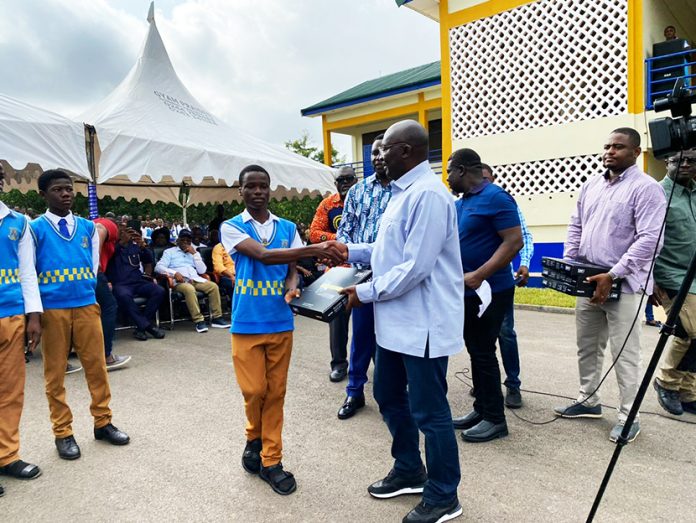
The Vice President, Dr Mahamudu Bawumia has presented tablets to students of the Opoku Ware School at a special ceremony in Kumasi.

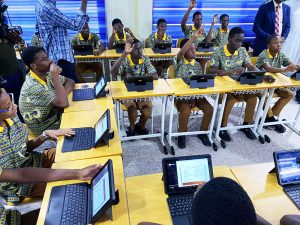
The tablet presentation which is an initiative of the government dubbed ‘One Student One Tablet’ is part of efforts being made by the government to digitise the learning processes in schools across the country.
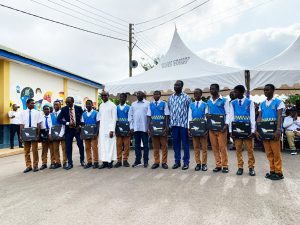
Making the presentation, Dr Bawumia assured the students that everything possible was being done to equip Ghanaian students with the critical skills needed to be globally competitive.

He explained that the tablets, which are being distributed in batches to schools, have been preloaded with all the textbooks, as well as exams question to enhance their studies.

Digital age

Dr Bawumia said, “The world is getting prepared into a digital world and we are also getting prepared as a nation to be part of it and participate fully in it, in the digital age.”

He again stated that, “As the world is going digital, Ghana cannot be left behind and this is why the idea of making sure that every Senior High School student is provided with a tablet preloaded with all the textbooks, as well as exams question to enhance their studies”.
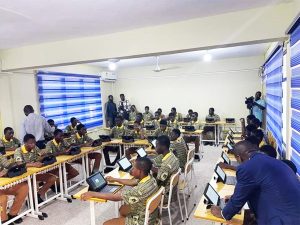
He praised the leadership, staff and students of Opoku Ware School for the stride made so far in both academic and other facets of education.

The Vice President used the occasion to commission a new smart classroom block named after the President, Nana Addo Dankwa Akufo-Addo.

It is equipped with an Avocado Board which enhances teaching and learning electronically.

Smart School

The Education Minister, Dr Yaw Osei, mentioned that with the inauguration and the presentation of the tablets, Opoku Ware School has become the first digital school in the country.

He was upbeat that the various interventions and initiatives introduced into the nation’s education space would serve as a catalyst to speed up the transformation of the economy.

Dr Adutwum promised to continue supporting Dr Bawumia to promote his development agenda for the country to make Ghana the first port of call in Africa.

The Headmaster of OWASS, Rev Fr Stephen Owusu, praised the government for its support and pledged to make good use of the facilities to promote education development in the school and the nation as a whole.

Present at the function were the Most Rev. Gabriel Justice Yaw Anokye, the Metropolitan Archbishop of the Catholic, old students, politicians and other stakeholders in the nation’s education sector.

Background

Opoku Ware School, until the inauguration of the Akufo-Addo Smart Block had three smart boards and the introduction of the new smart block will boast teaching and learning electronically.

The school is expected to benefit from 10 smart boards as part of the smart school issues, as two had been installed at the time of the inauguration.

All the 4,229 students of the school are expected to receive a tablet each. Teachers in the school have been trained on the proper use and handling of smart boards and tablets for the students.

By Felix Baidoo

Kenya delegation tours Jospong’s waste management plant in K’si

0
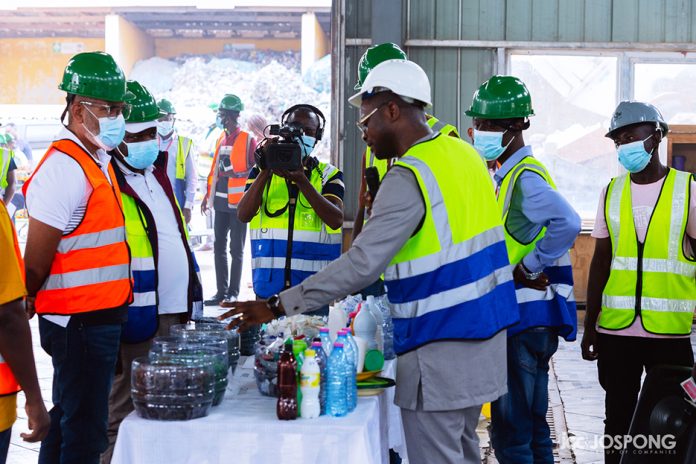
The delegation being briefed about some of the products

A high-level delegation from the Kenyan Council of Governors have expressed confidence in Jospong Group’s capability of partnering with Kenya to address its sanitation challenges, saying Jospong can become a key partner with Kenya in environmental sanitation.

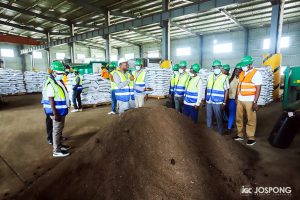
The delegation in the processing room

“Partnering with Jospong will help us improve all aspects of sanitation management in Kenya and enhance the lives of our citizens,” says the Wajir County Govenor and Vice Chairperson of the Council of Governors.

“We are impressed by Jospong Group’s expertise and achievements in waste management,” he added.

Speaking after a tour of Jospong Groups plants in Kumasi on Wednesday June 12, 2024 H.E. Ahmed Abdulai, Wajir County Governor and Vice Chairperson of the Council of Governors said the team is grateful for the opportunity.

After observing the separation process, production of plastic pellets and youth entrepreneurship initiatives at JGC, the Kenyan delegation praised Jospong’s commitment to environmental sustainability and community well-being.

The General Manager of the KCARP, Ing. Samuel Ntumy, was optimistic that the visit will yield positive results.

“We are looking forward to further discussions and timelines with them to finalise the arrangements,” Mr. Ntumy said.

Besides KCARP, Kumasi Waste Water Treatment Plant and the Kumasi Medical Waste facilities, the delegation also visited ACARP, SSGL, Zoomlion’s Pantang Solid Waste Transfer Station, JA Plantpool, among other key facilities.

The potential partnership between Jospong Group and the Kenyan Council of Governors is expected to lead to improved sanitation services in Kenya, benefiting millions of citizens.

The delegation is on a five-day mission to study Jospong Group’s waste management systems, following Kenyan President H.E. William Kipchirchir Samoei Arap Ruto’s visit to Ghana in April, 2024. The mission aims to foster knowledge sharing and collaboration between the two countries, aligning with the theme: “Driving Investment and Intra-Africa Trade: The Ghana-Kenya Experience.

“This business development mission demonstrates the Kenyan government’s admiration for Jospong Group’s contributions to Ghana’s economy and its desire to replicate similar successes in Kenya,” said.

‘Global economy is Stabilizing for the First Time in Three Years’

0

The global economy is expected to stabilize for the first time in three years in 2024—but at a level that is weak by recent historical standards, according to the World Bank’s latest Global Economic Prospects report.

Global growth is projected to hold steady at 2.6% in 2024 before edging up to an average of 2.7% in 2025-26. That is well below the 3.1% average in the decade before COVID-19. The forecast implies that over the course of 2024-26 countries that collectively account for more than 80% of the world’s population and global GDP would still be growing more slowly than they did in the decade before COVID-19.

Overall, developing economies are projected to grow 4% on average over 2024-25, slightly slower than in 2023. Growth in low-income economies is expected to accelerate to 5% in 2024 from 3.8% in 2023. However, the forecasts for 2024 growth reflect downgrades in three out of every four low-income economies since January. In advanced economies, growth is set to remain steady at 1.5% in 2024 before rising to 1.7% in 2025.

“Four years after the upheavals caused by the pandemic, conflicts, inflation, and monetary tightening, it appears that global economic growth is steadying,” said Indermit Gill, the World Bank Group’s Chief Economist and Senior Vice President. “However, growth is at lower levels than before 2020. Prospects for the world’s poorest economies are even more worrisome.

They face punishing levels of debt service, constricting trade possibilities, and costly climate events. Developing economies will have to find ways to encourage private investment, reduce public debt, and improve education, health, and basic infrastructure. The poorest among them—especially the 75 countries eligible for concessional assistance from the International Development Association—will not be able to do this without international support.”

This year, one in four developing economies is expected to remain poorer than it was on the eve of the pandemic in 2019. This proportion is twice as high for countries in fragile- and conflict-affected situations.

Moreover, the income gap between developing economies and advanced economies is set to widen in nearly half of developing economies over 2020-24—the highest share since the 1990s. Per capita income in these economies—an important indicator of living standards—is expected to grow by 3.0% on average through 2026, well below the average of 3.8% in the decade before COVID-19.

Global inflation is expected to moderate to 3.5% in 2024 and 2.9% in 2025, but the pace of decline is slower than was projected just six months ago. Many central banks, as a result, are expected to remain cautious in lowering policy interest rates. Global interest rates are likely to remain high by the standards of recent decades—averaging about 4% over 2025-26, roughly double the 2000-19 average.

“Although food and energy prices have moderated across the world, core inflation remains relatively high—and could stay that way,” said Ayhan Kose, the World Bank’s Deputy Chief Economist and Director of the Prospects GroupThat could prompt central banks in major advanced economies to delay interest-rate cuts. An environment of ‘higher-for-longer’ rates would mean tighter global financial conditions and much weaker growth in developing economies.

World Bank approves $260m cash for Ghana to support Energy Sector Recovery Programme

0
World Bank

The World Bank has approved a $250 million credit from the International Development Association (IDA) and a $10 million grant from the Energy Sector Management Assistance Program for a 4-year Ghana Energy Sector Recovery Program for Results (PforR). The PforR will support Ghana’s Energy Sector Recovery Programme (ESRP) to improve the financial viability of electricity distribution and increase access to clean cooking solutions.

Electricity distribution losses are high in Ghana due to a low collection rate and below-cost recovery tariffs, undermining the operational and financial performance of energy utilities in the country. The Government of Ghana transfers about 2 percent of GDP annually to cover the energy sector’s financial shortfall.

Through this important results-based financing, the World Bank is committed to supporting the recovery of Ghana’s energy sector and its financial sustainability. The operation aims to strengthen revenue collection and improve the quality of energy supply, including through investments in prepaid metering and in the commercial and meter management systems of distribution utilities,” said Robert Taliercio, World Bank Country Director for Ghana, Liberia, and Sierra Leone.

The PforR complements regulatory and policy reforms of the energy sector supported under the World Bank’s Development Policy Finance series (such as the IDA-supported First Resilient Recovery Development Policy Financing operation that was approved in January 2024) and the ongoing IMF Extended Credit Facility Program for Ghana. The PforR focuses on improvements in institutional capacity and accountability and provides financing directly to energy sector utilities to implement capital expenditure programs.

The PforR aims to reduce the cost of electricity service provision by improving the economic dispatch of generation and by strengthening the commercial and operational performance of distribution utilities,” said Dhruva Sahai, Program Leader for Infrastructure.

The Clean Cooking Component of the Program will increase the access of Ghanaian households, schools, and businesses to Liquified Petroleum Gas for domestic and commercial use. The PforR will provide direct incentives to subsidize the cost of stoves and accessories – excluding cylinders – for first-time domestic users, commercial caterers, and second-cycle schools.

Through these efforts, the Program aims to increase women’s access to clean cooking solutions, reduce time poverty, reduce health risks from smoke exposure from charcoal stoves, and improve women’s income generating opportunities and employability. 

The International Development Association (IDA), established in 1960, helps the world’s poorest countries by providing grants and low to zero-interest credits for projects and programs that boost economic growth, reduce poverty, and improve poor people’s lives. IDA is one of the largest sources of assistance for the world’s 74 poorest countries, 39 of which are in Africa. Resources from IDA bring positive change to the 1.3 billion people who live in IDA countries. Since 1960, IDA has provided $458 billion to 114 countries. Annual commitments have averaged about $29 billion over the last three years (FY19-FY21), with about 70 percent going to Africa.

Camidoh tells his broken-heart story in ‘Nothing Lasts Forever’ 

0
Ghanaian Afrobeats artiste Camidoh

The Ghanaian Afrobeats artiste Camidoh is back to his usual music business, after a lull in his activities.

The velvety-voiced singer has released a new song that reveals an unfortunate incident that happened to him about a year ago.

‘Nothing Lasts Forever’ is a real-life story told through lyrics, melodies and rhythm.

The song was produced by Camidoh himself, Nawtyboi Tattoo, and Baba Wood.

According to Camidoh, the song talks about love having its up and down moments. It advises people to apply some logic so as not to go through as much pain as midoh did.

“I wouldn’t say much but losing a partner I loved very much to a few arguments or misunderstandings here and there hurts so bad,” he says indicating that the incident has nothing to do with infidelity.

He further mentions that he broke down completely, got depressed and had to go through a therapy session.

“I made a lot of life long plans with this person,” he added.

The music video to ‘Nothing Lasts Forever’ complements the story by accentuating the essence of seeking help in situations like this.

Camidoh’s songs keep gaining prominence among music lovers, with his global hit ‘Sugarcane Remix’, which features Mayorkun, King Promise, and Darkoo, clocking over 100 million views on YouTube, in just one year. This makes it the most viewed Ghanaian music video on YouTube.

Camidoh is an Afrobeats, Afropop and R&B artiste from Ghana.

After years of chasing his music dreams he shot into the limelight in 2018 when he was signed by Grind Don’t Stop Records. That was when he released For My Lover which features Darkovibes. He later released The Best with Kelvynboy, Available with Eugy and Dance with You featuring Kwesi Arthur.

His 2021 released ‘Contingency Plan EP’ won him a lot of spurs in the music industry.

To cap it all, ‘Sugarcane’ and its remix earned him global acclaim, winning Afrobeats Song of the Year award at the 2023 Ghana Music Awards.

He was nominated in the ‘Viewer’s Choice: Best New International Act’ category at the 2023 Black Entertainment Television Awards.


Source: Joy Entertainment

Ghana not part of Grammy Africa founding members – Dentaa

0
Dentaa

Ghana is not part of the countries that have signed up for the Grammy Africa model that is being initiated, this was revealed by the Chief Executive Officer of GUBA Enterprise, Dentaa Amoateng.

Although Ghana will be allowed to take part in the awards, it cannot host activities that come with this new development, according to Dentaa.

The four founding countries are Nigeria, Kenya, Rwanda and South Africa.

Speaking on Hitz FM, Dentaa said Ghana could not be part of the founding members of Africa’s version of the Grammys because the country couldn’t finalise certain requirements with the Recording Academy.

“It is little bit unfortunate but the agreement that was supposed to be signed did not happen so at the moment those are the four countries that will be able to host the Grammys. It doesn’t stop any artiste from being nominated but it is just the hosting and other benefits that the country will have. At the moment Ghana is not apart of it,” she said.

When asked what could have prevented Ghana from signing the agreement in question, she said: “I think it is resources and a few things that the country will need to be part of it which I can’t say on the radio.”

That notwithstanding, Dentaa noted that the window is still open for that part of the bargain to be made. She indicated that Ghana and Ivory Coast have signed an MOU and that once they are able to fulfill the other requirements, they get to be part of the founding members and enjoy the benefits thereof.

Talking about how important the Grammy Africa will be to the creative economies in continent, the GUBA Enterprise boss noted it will open Africans to many business opportunities.

“It means a whole lot because when you look at the Grammy Awards and the 90 awards that they give, they can’t recognise all of Africa’s music; the variety of music that we do on the continent is vast. It comes with different languages and all of that, and this gives us the opportunity to celebrate Africa. When you look at the Latin Grammys that has been going on for 25 years, it is dedicated to celebrating Latin music and so to have our own, it will give us that cultural recognition, it will give us that promotion on the global stage and it will give us economic opportunities, industrial growth, it will boost tourism,” she noted.

King Paluta spotted singing ‘Aseda’ with Dr. Bawumia and others in a bus

0
King Paluta and Dr Bawumia singing ‘Aseda’ with Adwoa Sarfo and Chairman Wontumi singing along

King Paluta, the 2024 Telecel Ghana Music Award’s (TGMA) winner for New Artiste of the Year has been spotted with Vice President Dr Mahamudu Bawumia and others singing an acapella version of his hit song ‘Aseda.’

The Vice President, along with Dome Kwabenya MP Adwoa Sarfo, the Ashanti Regional Minister Simon Osei-Mensah, and the New Patriotic Party (NPP) Ashanti Regional Chairman, Bernard Antwi Boasiako, enthusiastically sang along.

Dr Bawumia, who appeared excited, could not help but enthusiastically throw his hands around to the tune.

Antwi Boasiako also known as Chairman Wontumi could not help but keep nodding and singing along while the Dome Kwabenya MP gave a few dance moves.

This took place during the climax of Dr Bawumia’s Ashanti Regional tour.

It comes a day after he was seen dancing at his Youth Connect event to conclude his regional tour.

During the Wednesday event, he was joined by the musician Guru. The singer performed his popular “Lapaz Toyota” song to the excitement of the crowd.

But the crowd was not the only group of people on their feet. Vice President Dr Bawumia joined in, doing the signature dance of the song.

No economy can grow without embracing digitalisation – ECOWAS Resident Representative

0

Mr Baba Gana Wakil, ECOWAS Resident Representative in Ghana,

has underscored the critical role of digitalisation in the economic growth of member states

He said in an era where digitalization stood as a cornerstone of economic growth, young people worldwide were leveraging information and communication technology (ICT) to tackle unemployment.

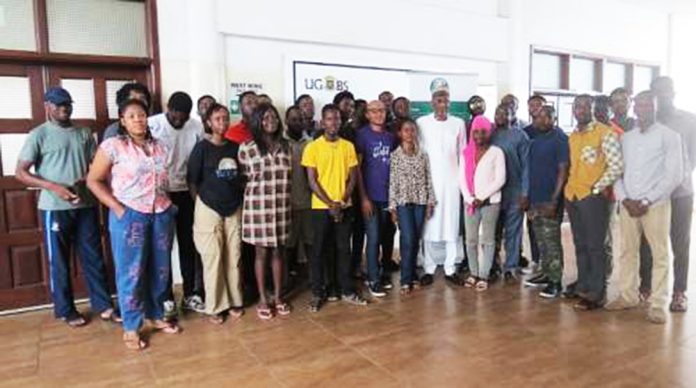
Speaking in an interview during a 10-day intensive programme aimed at equipping over 200 Ghanaian youth with essential digital skills, Mr Wakil said no economy could thrive in the modern era without embracing digital technologies.

This initiative, which started from 3rd June to 14th June, is expected to empower hundreds of young individuals, providing them with the tools needed to thrive in the rapidly evolving digital economy.

It is a significant move to address the rising unemployment rates among young people in the country.

The programme, part of ECOWAS’s broader regional development strategy, focuses on key areas such as coding, software, mobile and web development (front and backend) for the first week, and cable TV development for the succeeding week.

It aims to bridge the skills gap and prepare participants for opportunities in the global digital marketplace.

Mr Wakil said the future of the sub-region lied in the hands of its young people.

He said youth unemployment was one of the existential threats to national and regional security as about 65 per cent of the population in the sub-region were youth.

“Because of the over reliance on government and White colour jobs, the youth are unable to get employment in government circles. The best way for them to escape this circle is to be able to train in ICT to aquire digital skills and create their own jobs,” he added.

According to Mr Wakil, if the potential of the youth were not properly harnessed and developed, the economy of Ghana and all the others in the sub-region could not  compete favourably with the rest of the world.

He observed that the younger generation must embrace digital transformation and possessed digital credentials, digital access and digital assets for them to participate fully in developing the future the sub-region expects.

The ECOWAS Resident Representative said as the traditional job markets evolved and new opportunities emerged, the integration of digital skills had become essential for economic sustainability and personal career advancement.

He reiterated that the ECOWAS Commission itself had fully embraced ICT with its new department on Innovation and Digitalisation Department to bring the sub-region at par with the rest of the world and to compete favourably with other developed countries.

Mr Wakil said ECOWAS had a Regional Action Plan on Digitalisation to spearhead digital technology at all levels, consolidating plans of member states to accelerate growth, enhance productivity and generate employment in the sub-region.

By James Amoh Junior

GNA

The Ghanaian Chronicle